OCEAN STATES INITIATIVE
The OCEAN STATES INITIATIVE is a 10-year action plan announced by The Nippon Foundation Honorary Chair Yohei Sasakawa at the Island States Ocean Summit in June 2026. The Initiative is built around three pillars: (1) Strengthening support for island states through human resource development; (2) Establishing OCEAN HUB as a base for utilizing the strengths of those human resources; and (3) Developing innovative projects in cooperation with United Nations bodies and other organizations. The project seeks to work with island states toward both the conservation and sustainable use of the ocean, including through the further development of projects targeting the next generation, with an interim report to be released at the second Island States Ocean Summit, planned for 2031.
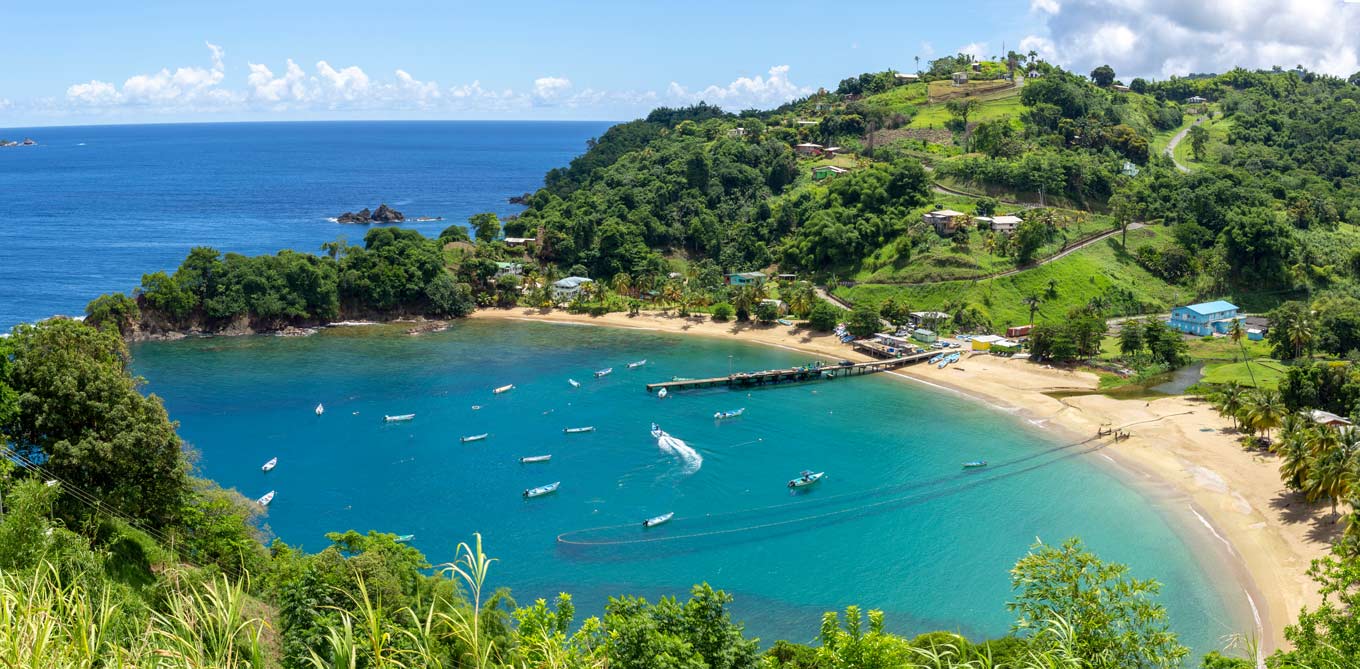
- Photo source: shutterstock_1469166878: © Darryl Hernandez/Shutterstock.com
Island States Ocean Summit
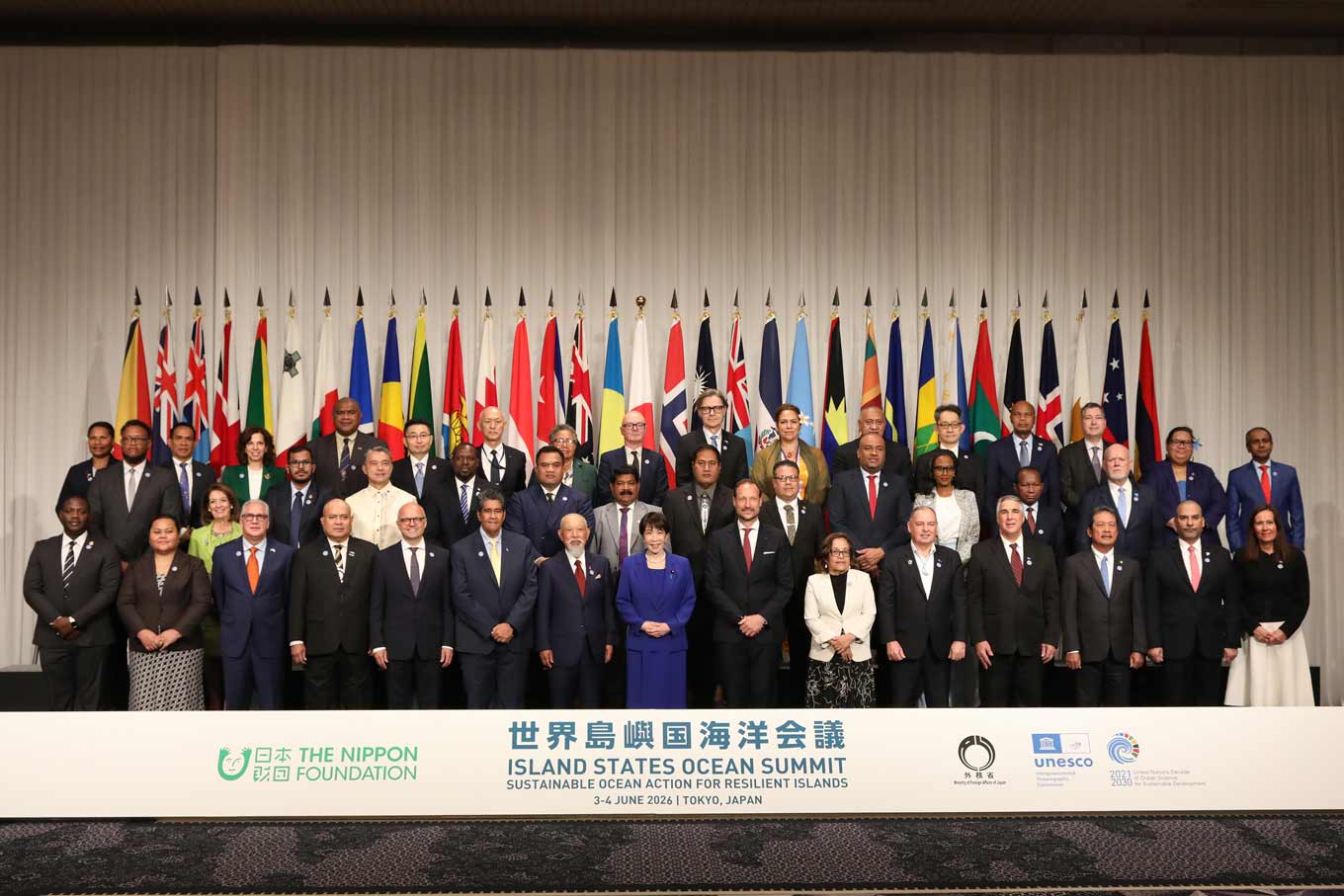
The ocean, which covers the entire world, is facing increasingly complex and serious issues that cannot be resolved by one country alone, from rising sea levels caused by climate change to ocean pollution and the management of marine resources. Island states are entirely bordered by the ocean, and Small Island Developing States (SIDS) in particular face existential threats from rising seas encroaching on their national territory, creating the need for discussions that will lead to specific countermeasures. Against this backdrop, The Nippon Foundation held the Island States Ocean Summit, the first international conference on the theme of the ocean and island states, in Tokyo on June 3-4, 2026, in partnership with the Intergovernmental Oceanographic Commission (IOC) of UNESCO and the Japanese Ministry of Foreign Affairs.
Roughly 300 people, including Emperor Naruhito and representatives of 23 international organizations and 35 countries, including heads of state and cabinet-level officials from island states, attended the Summit. How to achieve a path to both the “sustainable use” and “conservation” of the ocean was discussed over two days. The Nippon Foundation redefined island states as “ocean states” that have responsibility over vast expanses of the ocean and announced the OCEAN STATES INITIATIVE, a 10-year action plan to support island states. The plan has three specific pillars: (1) Strengthening support for island states through human resource development; (2) The establishment of OCEAN HUB as a base for collecting the latest scientific evidence to for use in policymaking; and (3) The systematic development of new projects to promote international cooperation including among island states and United Nations institutions. The Foundation also announced that it plans to hold a second, interim Island States Ocean Summit in 2031.
Island States Ocean Summit
| Host | The Nippon Foundation |
|---|---|
| Co-Hosts | Ministry of Foreign Affairs, Intergovernmental Oceanographic Commission (IOC) of UNESCO |
| Endorsement | National Ocean Policy Secretariat, Cabinet Office; Ministry of Education, Culture, Sports, Science and Technology; Ministry of Land, Infrastructure, Transport and Tourism; Ministry of the Environment, Fisheries Agency |
| Cooperation | Sasakawa Peace Foundation |
| Dates | June 3-4, 2026 |
| Location | Hotel New Otani Tokyo |
Three pillars of the OCEAN STATES INITIATIVE
The OCEAN STATES INITIATIVE, the culmination of the Island States Ocean Summit, marks a major step forward in support for island states, building on activities that have been ongoing since the Sasakawa Peace Foundation held the Pacific Island Nations Conference in 1988. It is intended to support, with leadership from The Nippon Foundation, the “ocean states” that have responsibility over vast expanses of the ocean to enable them to achieve autonomous, sustainable economic development. Specifically, over the next 10 years, the Foundation will provide global support to island nations for training the needed human resources and providing the latest scientific evidence under a new framework for international cooperation that will tie in to policymaking in respective countries. With three integrated pillars – human resource training, creation of scientific knowledge, and international cooperation – the Initiative aims to achieve both the sustainable use and conservation of the ocean with a view 100 years and 1,000 years into the future.
Pillar 1: Strengthening support for island states through human resource development
To date, in cooperation with the United Nations, leading universities around the world, and research institutes, The Nippon Foundation has supported the training of more than 2,000 specialists from 158 countries and regions in the fields of maritime law and policymaking. The Initiative will build on this to strengthen training of human resources in island states who will be responsible for dealing directly with the issues facing their respective countries. This will involve training specialists who are directly addressing the various urgent issues facing their respective countries to come up with unique measures that are aligned with their specific circumstances, while also strengthening cross-border support by training global human resources who are able to support island states by advocating broad-based, innovative ocean-related policies.
Pillar 2: Establishing a ‘venue’ to connect these specialists and draw out their strengths
As a legacy of the Island States Ocean Summit, The Nippon Foundation will establish an OCEAN HUB in Tokyo as a base for collecting the latest scientific evidence required by various countries. In addition to developing new projects to strengthen human resource training and the collection of new evidence, OCEAN HUB will be an organization that seeks to tie together the actions of various countries and international organizations for the integrated formulation and advocacy of ocean-related measures that will lead to the resolution of urgent issues facing island states that they cannot address on their own. Given the ocean’s many unknowns, this base will work proactively to create consortia of the world’s leading research institutes to promote innovative projects to collect the latest evidence swiftly and accurately, and advocate for and contribute to global ocean policies, based on the new knowledge created by these specialists.
Pillar 3: Develop innovative programs incorporating countries from around the world and the United Nations
Island States Ocean Summit joint hosts The Nippon Foundation and IOC-UNESCO will work together to develop new programs to support the formulation and implementation of policies for island states’ Sustainable Ocean Planning and Management (SOPM). For these countries to appropriately manage, sustainably use, and conserve their vast expanses of ocean, they need to know what resources are present in their own part of the ocean and objectively understand the extent to which those resources can be used while conserving the environment 100 years and 1,000 years into the future. Understanding and contributions from various countries will be important keys for these programs to provide support closely tailored to each country’s circumstances. To create a stable operational foundation for these programs, The Nippon Foundation and IOC-UNESCO plan to work proactively with island states as well as other U.N. bodies and international organizations to launch autonomous, ongoing programs that accurately and continuously address each country’s needs.
Related Links
Inquiries
Ocean Affairs Team
The Nippon Foundation
- Email: kaiyo_info@ps.nippon-foundation.or.jp