Offshore Wind Farm Support Vessel Powered by Hydrogen Fuel Cell ConsortiumWorld's first offshore wind farm support vessel utilizing hydrogen fuel cells × biodiesel
Project overview
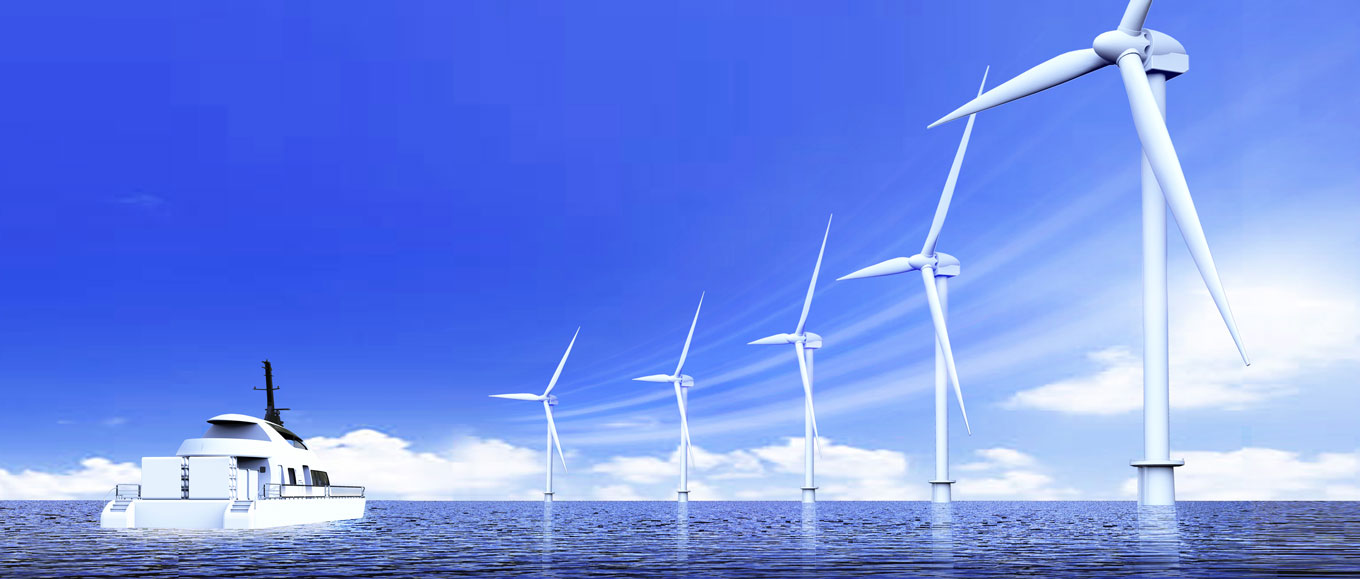
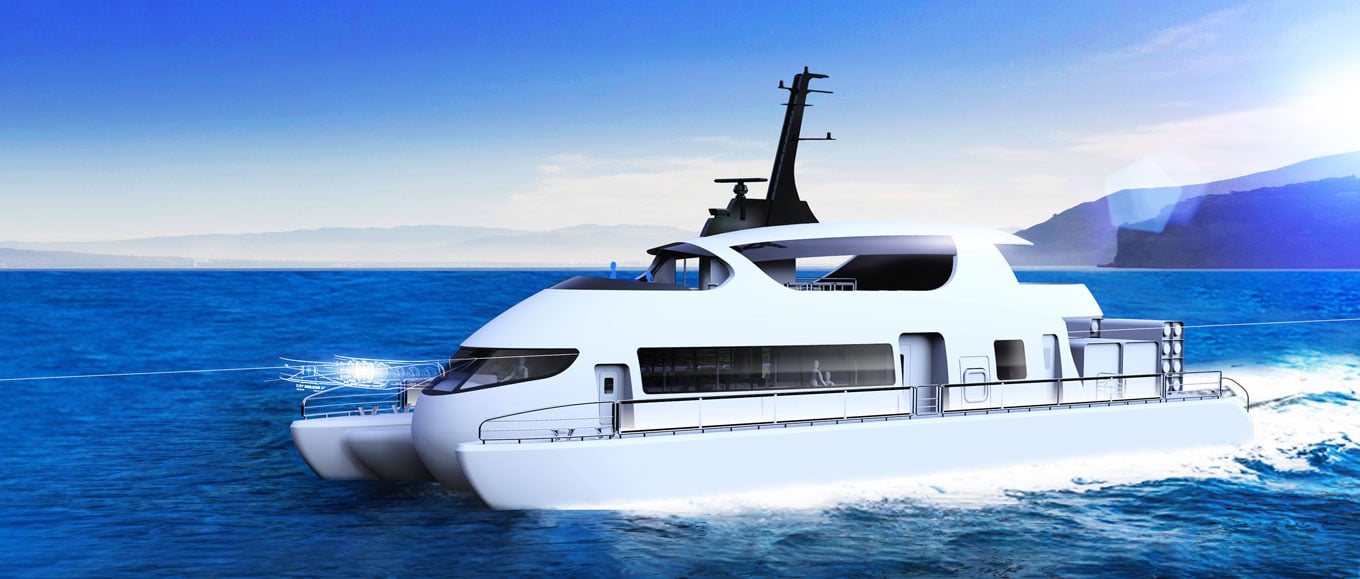
This consortium is developing a hydrogen fuel-cell-powered crew transfer vessel (CTV) that can be used by maintenance crews and others for on-site inspections of offshore wind power generation facilities. The vessel will contribute to reducing the marine transport industry’s greenhouse gas emissions by being able to reduce CO2 emissions by 53%-100% compared with similar conventionally powered vessels. The passenger area also incorporates a barrier-free design that takes into account step heights and aisle widths and spacing, ensuring a comfortable onboard environment for all passengers.
Development status (as of June 2023)
A project supported by The Nippon Foundation completed the basic design that would form the concept for the hydrogen fuel-cell-powered vessel in fiscal 2022. The design referenced the Ministry of Land, Infrastructure, Transport and Tourism’s “Safety Guidelines for Hydrogen Fuel Cell Ships,” and took into account the vessel’s envisioned area and patterns of operation as well as the results of water tank and wind tunnel testing using a model hull, to come up with an optimal design for use as a CTV.
Although demonstration testing has been carried out for small watercraft like pleasure boats powered by hydrogen fuel cells, this is Japan’s first effort that aims for commercial use. In addition, because almost no ship-use hydrogen-related equipment exists, technologies and equipment from hydrogen-fueled automobiles and onshore gas manufacturing plants were considered and selected for use in the design.
Development highlights
The hydrogen fuel-cell-powered vessel being developed will be powered by hydrogen fuel cells, lithium-ion batteries, and biodiesel fuel. It’s modes of operation can be broadly broken down as: (1) A zero-emission mode (using hydrogen fuel cells and lithium-ion batteries) and (2) A standard mode (using hydrogen fuel cells, lithium-ion batteries, and biodiesel fuel), and the system will allow for the crew to select which mode is used depending on the circumstances.
This will be the world’s first vessel for which the navigation system can be changed between zero-emission mode and standard mode according to the navigational conditions, and this configuration is seen being able to be incorporated and adopted for a wide range of vessels including coastal logistics and passenger ferries.
Looking ahead
The basic design was formulated with cooperation from the Ministry of Land, Infrastructure, Transport and Tourism and research institutions, and along with the detailed design of the vessel, a risk assessment will be carried out for an appropriate safety evaluation. Various certifications will also be obtained for the hydrogen fuel-cell-powered vessel and onboard hydrogen-related equipment, with the aim of technological development of offshore wind farm CTVs and coastal CTVs that are environmentally friendly with a high degree of safety.