Awareness Survey of 18-Year-Olds – Damage from BearsResults of 75th installment announced – 65% of respondents say bears should be ‘culled,’ while a majority feel that ‘complaints do not need to be addressed’

The 75th installment of the Awareness Survey of 18-Year-Olds was carried out in late December 2025 on the theme of “Damage from Bears,” asking young people about their awareness and impressions of damage from bears and their thoughts regarding culling.
Damage to crops and human casualties from bears was one of the main news topics in Japan during 2025. With bears increasingly encroaching on farms and even residential areas, a record 230 human casualties, including 13 fatalities, were reported from April to November 2025. Reasons for this increase include the depopulation and aging of rural towns and villages, making bears less afraid to search for food in inhabited areas, and weather factors in 2024-25 that resulted in a shortage of the beechnuts that are one of their main foods. A related issue is the aging and declining number of people engaged in hunting nationwide.
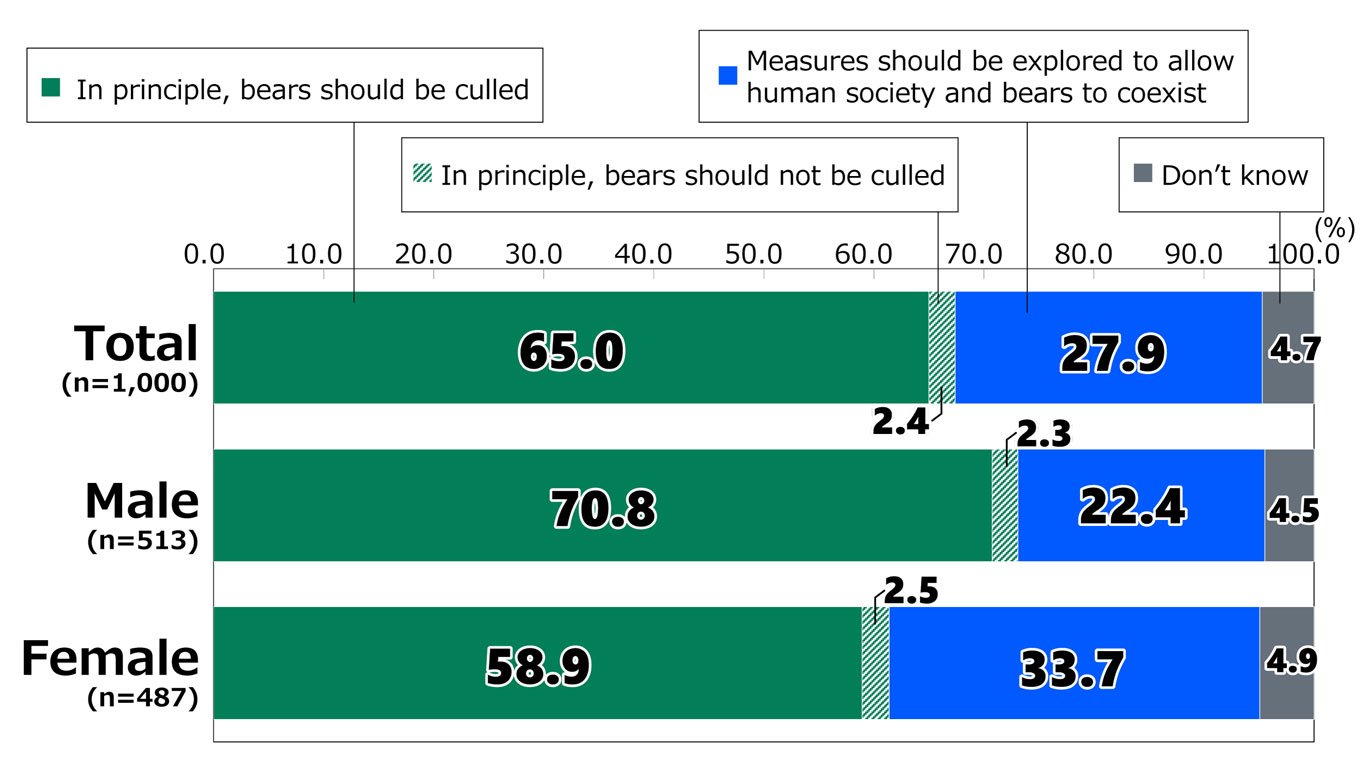
With regard to what should be emphasized when dealing with bears that enter inhabited areas, the top response, at close to 70%, was “Ensure the safety of humans.” In terms of how to respond, 65% of respondents replied “In principle, bears should be culled,” while close to 30% replied that “Measures should be explored to allow human society and bears to coexist.” The response rate for “In principle, bears should be culled” was 10 percentage points higher for men than for women, while the response rate for “Measures should be explored to allow human society and bears to coexist” was 10 percentage points higher for women than for men.
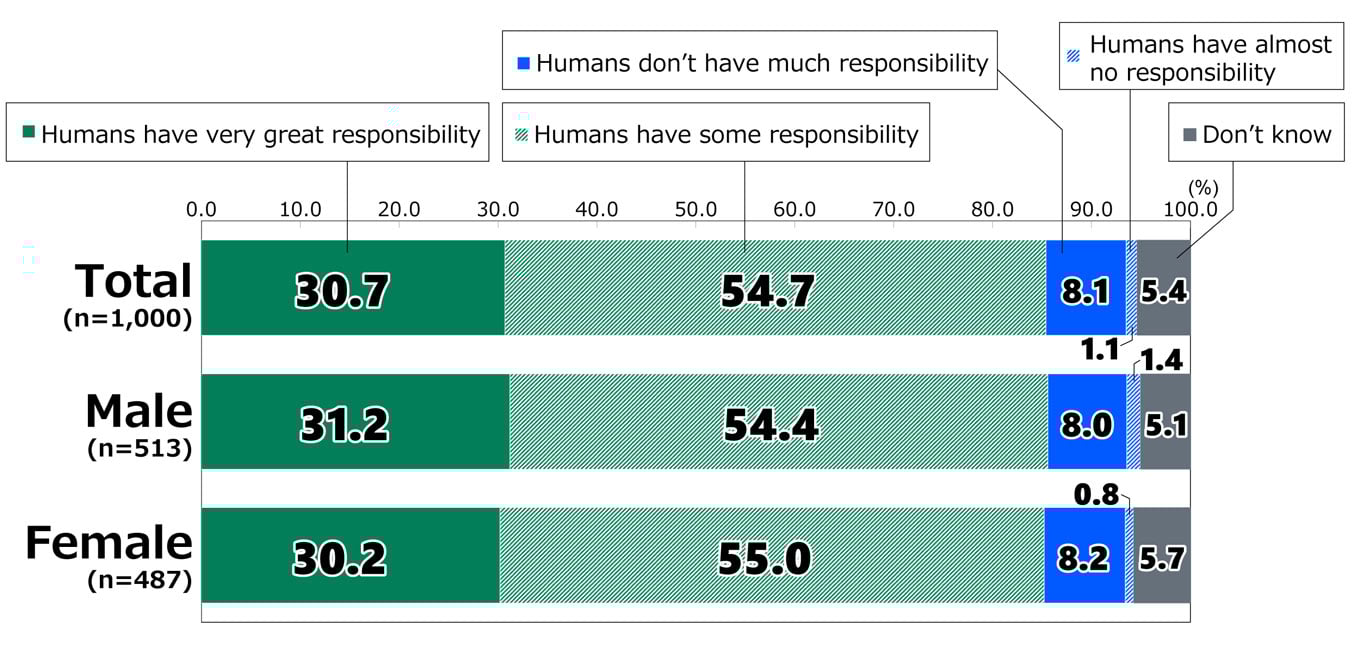
When asked what they knew about the reasons for the increase in bear sightings, the top response (with multiple replies possible) was “Bears have become used to eating fruit from trees in orchards and scavenging from human trash,” followed by poor beechnut yields. As rural communities experience rapid population decline, 30% to 40% of respondents were aware of “Increases in abandoned sites because of depopulation, etc.” and “Bears being less afraid of people as populations decline.” In addition, 85% of all respondents felt that humans have responsibility for the increase in bear sightings.
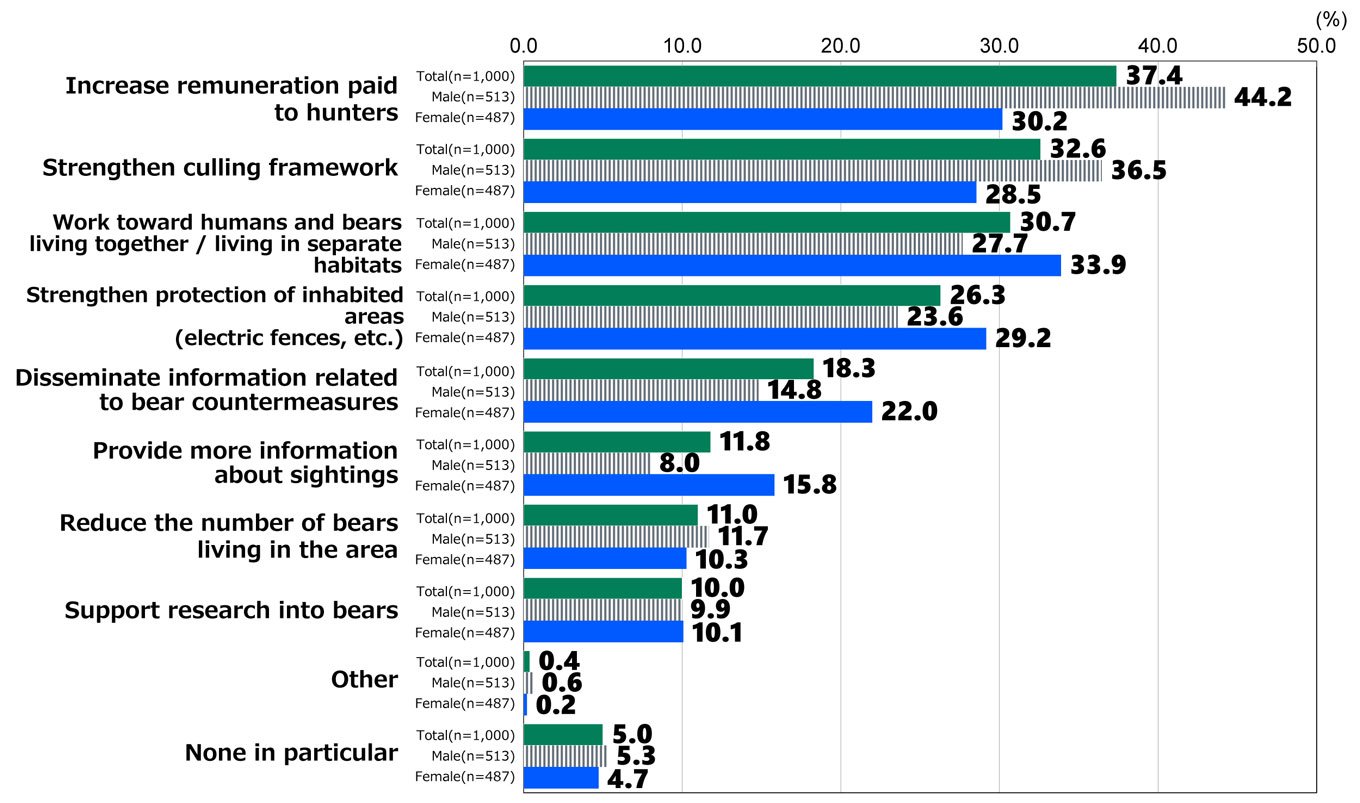
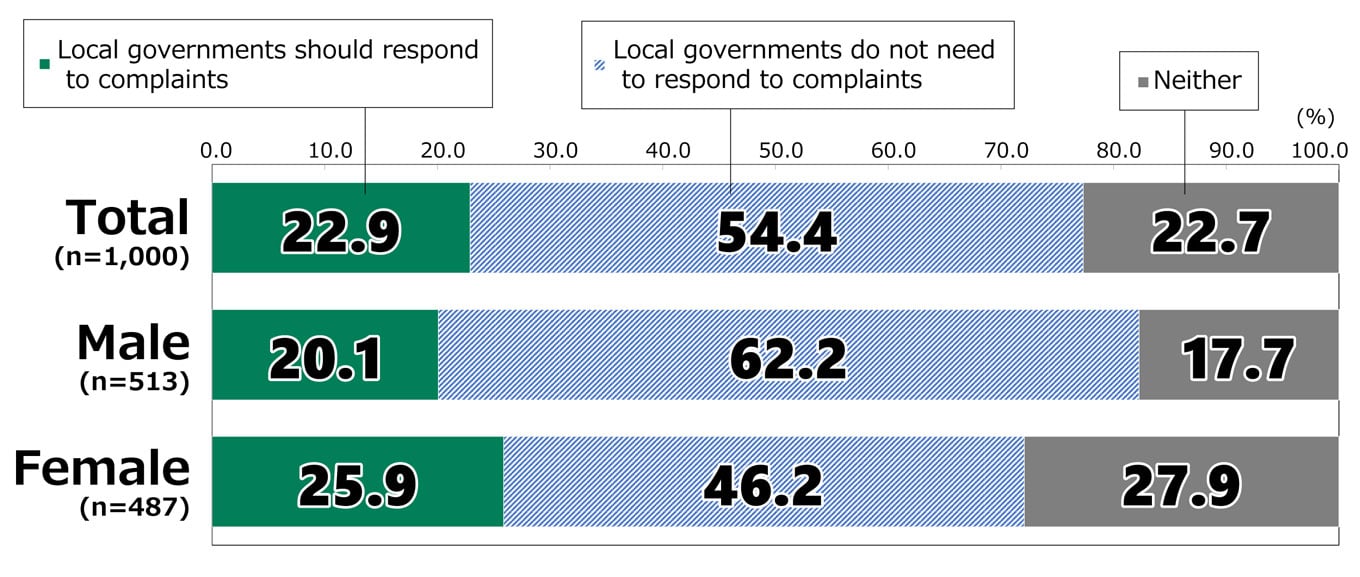
Going forward, more than 40% of all respondents cited “hunting associations” as the organizations that should be the focus of culling, followed by local governments and the Self-Defense Forces. When asked about what measures respondents wanted to prevent damage from bear attacks, the most-cited response, at close to 40%, was to “Increase remuneration paid to hunters.” When asked about employees of the local governments that have carried out culling being overwhelmed responding to large numbers of complaints by telephone, more than 50% of all respondents, and more than 60% of male respondents, replied that “Local governments do not need to respond to complaints.”
Topics covered in the 75th survey
- Responses to bears entering inhabited areas
- Background behind increase in bear sightings and humans’ responsibility
- Decline in number and shortage of people able to carry out culling
- Impression of complaints made to local governments that have carried out culling
- Opportunities to learn about safety countermeasures for damage to crops and livestock and when encountering bears
- Expectations for countermeasures to prevent damage from bears
Survey Excerpts
Opinions regarding responses to incursions of bears in inhabited areas
What is your opinion of responses to incursions of bears in inhabited areas?
Humans’ responsibility for increase in bear sightings
How responsible are humans for the increase in bear sightings?
Expectations for countermeasures to prevent damage from bears
What countermeasures do you want to see to prevent damage from bears? (Up to two replies allowed)
Impression of complaints to local governments that have carried out culling
How do you think complaints made to local governments that have carried out smuggling should be addressed?
About the Awareness Survey of 18-Year-Olds
Revisions to Japan’s Civil Code lowering the age of adulthood to 18 for a range of activities, including voting, took effect in April 2022, making it even more important to understand and record the awareness of the 18-year-olds who represent Japan’s next generation. With this in mind, in October 2018 The Nippon Foundation launched the Awareness Survey of 18-Year-Olds as an ongoing survey of young men and women across Japan aged around 18, to survey their values, attitudes toward politics and elections, understanding of social issues, and other current themes on an ongoing basis.
About the 75th Installment – Damage from Bears
| Survey coverage | 1,000 respondents comprising male and female respondents aged 17-19 from across Japan |
|---|---|
| Survey period | December 26-28,2025 |
| Survey method | Internet survey |
Related Link
Contact
The Nippon Foundation
- Email: cc@ps.nippon-foundation.or.jp