Building a Support Model for University Students with Disabilities in Indonesia
Building a support model for university students with disabilities in Indonesia
Universities in Indonesia are legally required to have a disability service unit[1] to support students with disabilities, but with a shortage of staff who are able to operate these units, a framework needs to be built to support the studies and graduation of students with disabilities.
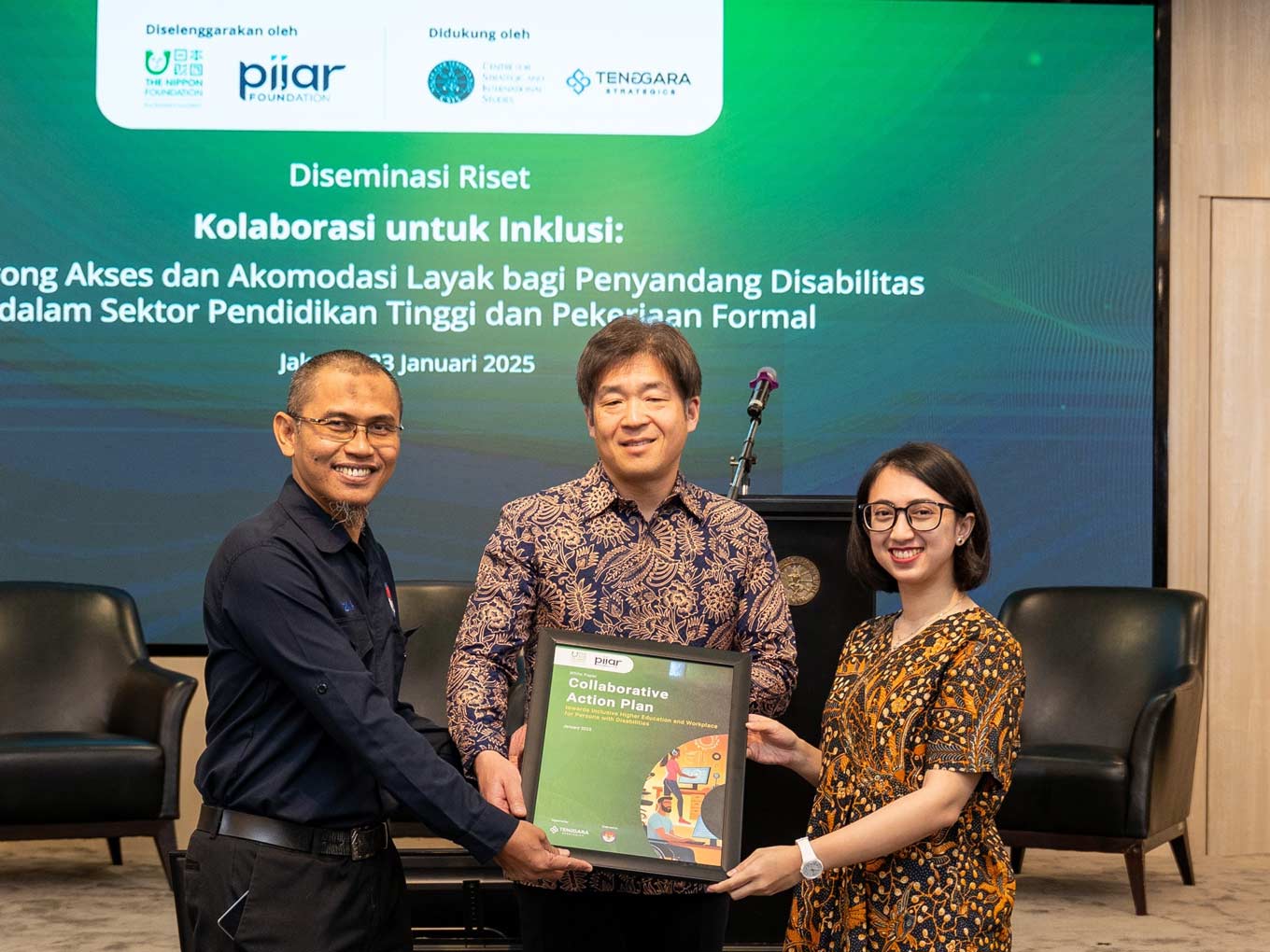
This project is primarily being carried out by Indonesia’s Pijar Foundation[2] with participation by the Asia Human Development Center,[3] and is using Japanese expertise to implement a support model at base universities that will lead to policy proposals and the framework being rolled out at other universities.
- 1. Disability service unit: A unit that identifies the individual needs of each student with disabilities and acts as a hub for coordinating support within the university.↩︎
- 2. Pijar Foundation: An Indonesian foundation that addresses social issues through human resource training and policy proposals. The foundation also participated in the preparation of the project’s white paper.↩︎
- 3. Asia Human Development Center: A Mongolia-based nonprofit active across Asia, AHDC is comprehensively engaged in surveys and research, policy proposals, and human resource training in the disability field, and conducted the project’s survey.↩︎
Environment for university students with disabilities
Officially, universities in Indonesia are required to have a disability service unit, but in fact only roughly 100 of the country’s approximately 4,000 universities have them, and their operation and position within universities are still developing.
The government’s information portal shows a total of 220 students with disabilities enrolled at 71 universities, but the preliminary survey confirmed 98 unregistered students with disabilities at one university alone, meaning that identifying the actual situation with regard to students with disabilities is an issue.
Even at universities that are providing support, the units focus on securing opportunities for admission and creating basic environments, and are unable to provide sufficient highly individualized support that is essential for students to continue learning.
Project background
Through this white paper, The Nippon Foundation considered issues and how they could be resolved with the aim of creating a framework to support university students with disabilities in their learning and graduation.
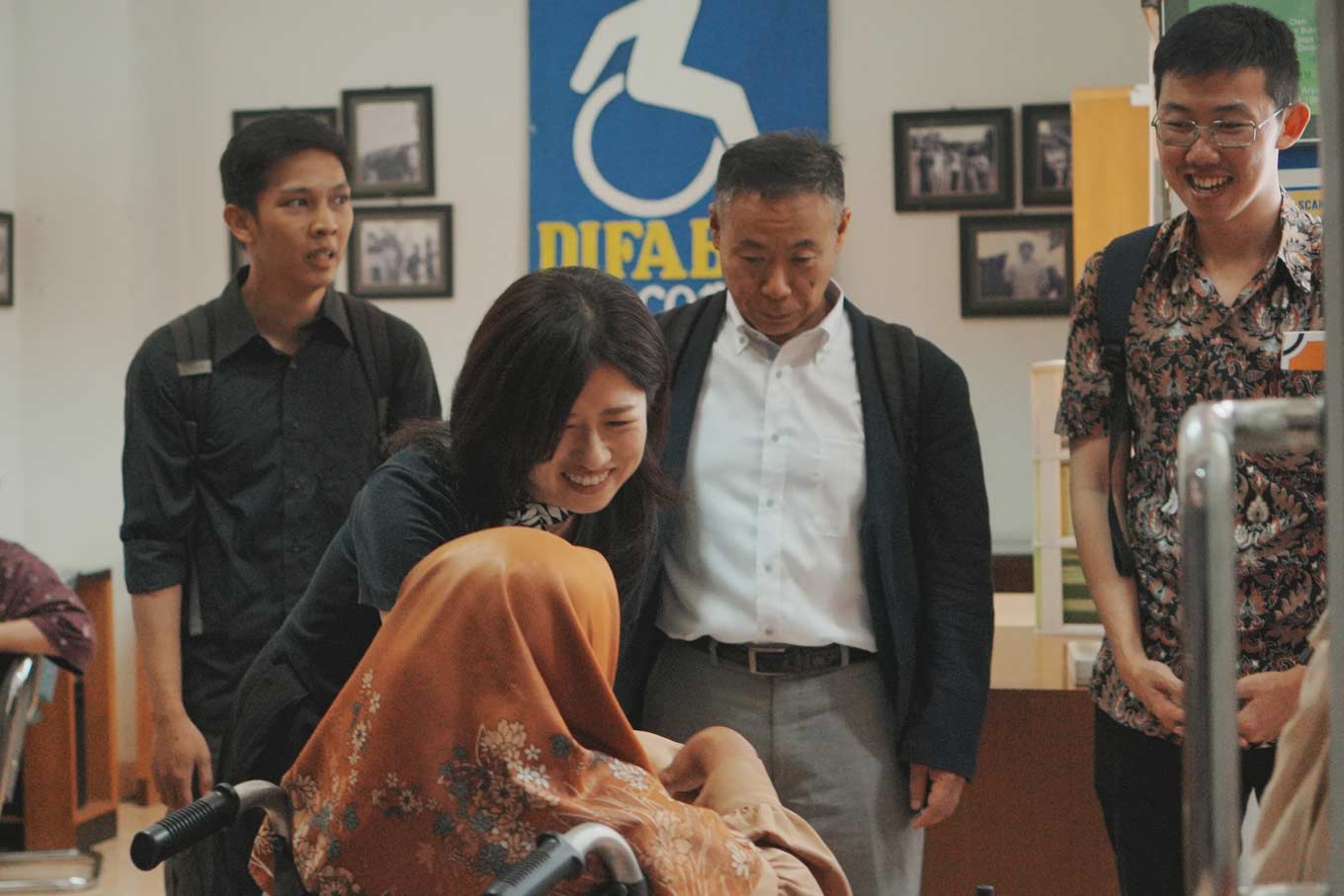
Indonesia’s Ministry of Higher Education, Science, and Technology has identified higher education for students with disabilities as a priority issue, and certain universities including Sunan Kalijaga State Islamic University and the State University of Jakarta are taking the lead in addressing the issue.
This project is primarily being carried out by the Pijar Foundation, which has expertise in human resource training and policy proposals, with participation from the Asia Human Development Center, which has expertise and networks related to resolving issues for persons with disabilities, and is seeking to build and develop a support model using knowledge and experience from Japan.
Project overview
The project is implementing support for disability service units to act as hubs for support at five universities annually for three years, to have 15 base universities in three years. The project will also promote coordination among universities and with government agencies, make policy proposals, and disseminate the achievements made at the base universities to other universities. Japanese universities and organizations that support persons with disabilities are also participating in the project’s activities.
- Promoting understanding of disabilities within universities
Conducting workshops and seminars for decision-makers, support staff, instructors, and students to increase understanding of the “social model of disability.” - Training support staff within universities
Conducting training on disability equality and visits to Japan for decision-makers and support staff, to train human resources who have the knowledge and skills needed to support students with disabilities. - Strengthening operations at disability service units
Preparing internal guidelines and procedures at base universities to implement support using advice from experts in Japan, to strengthen the units’ operational foundations. - Creating networks of universities and people
Broadening activities at individual universities through knowledge sharing among base universities, project committees of experts, and policy proposals.
Related Links
Inquiries
Inclusion Team
Global Issues Department
The Nippon Foundation
- Email: 100_inclusion_suishin@ps.nippon-foundation.or.jp