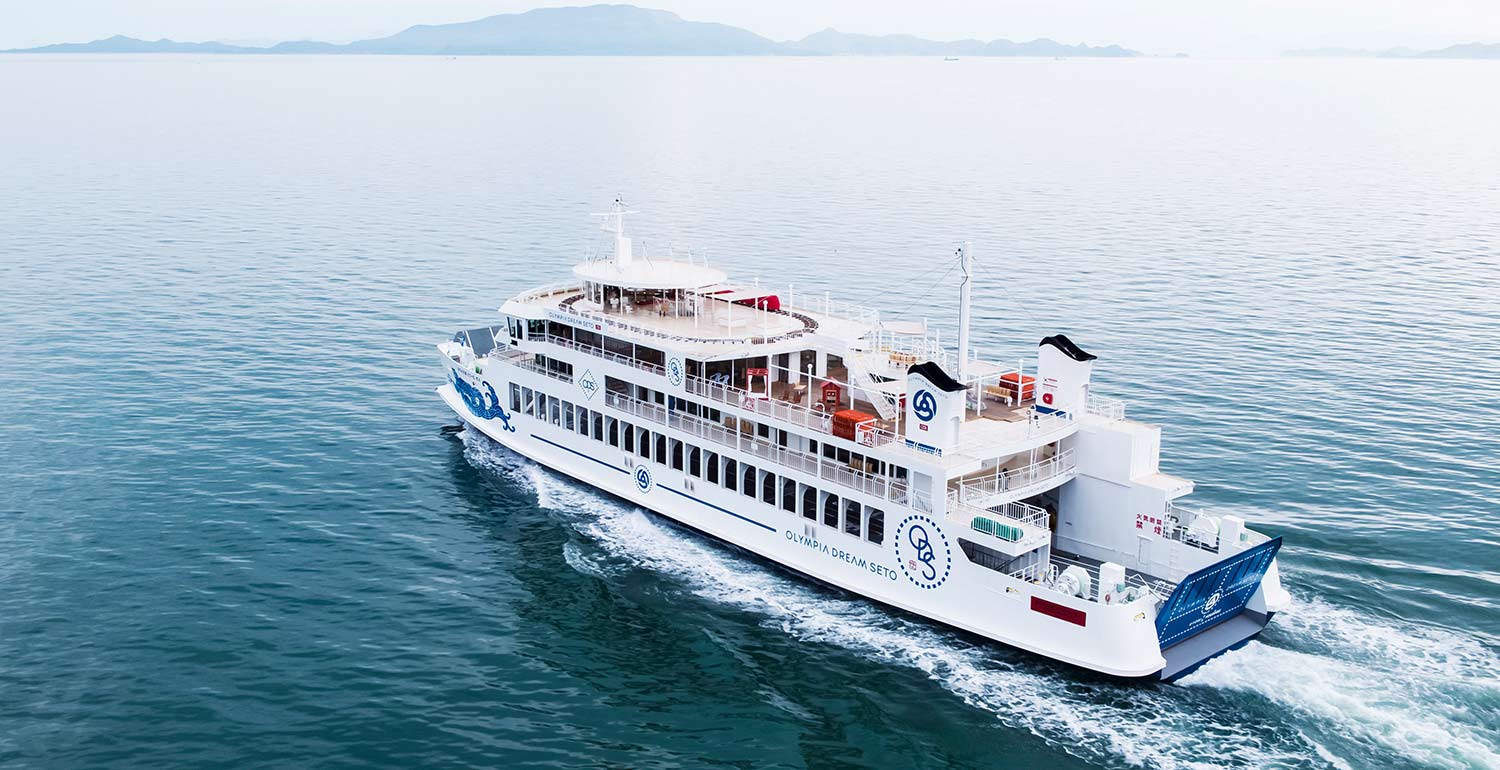
Olympia Dream Seto(Remote Island Ferry Working Group)Aiming to become star of safe and exciting remote island routes
Project overview and development status
Consortium members (as of April 2024)
- Japan Marine Science Inc.
- Furuno Electric Co., Ltd.
- TSUNEISHI SOLUTIONS TOKYOBAY Co., Ltd.
- Mitsubishi Shipbuilding Co., Ltd.
- Mitsubishi Research Institute, Inc.
- Kokusai Ryobi Ferry Co., Ltd.
- TSUNEISHI KURE DOCKYARD Co., Ltd.
- Fujiwara Shipbuilding Co., Ltd.(Japanese)
Others
Project overview
Japan Marine Science, Kokusai Ryobi Ferry, and six other companies are working as part of the MEGURI2040 project to address the issue of sustainability in coastal transport and shipping routes against the backdrop of an aging and contracting population. The ferry operating between Japan’s main island of Honshu and the island of Shodoshima is particularly affected by this trend, and the project is pursuing the challenge of using autonomous navigation systems to maintain these remote island routes.
An aging, contracting population raises the likelihood of a decline in ship crews. Many crew members on remote island routes are from the area the route serves, and there is a possibility of crew shortages on these routes. This will make reduced service on remote island routes unavoidable, inconveniencing the people who live in these areas. This in turn could lead to further population decline and industries moving elsewhere. Autonomous navigation systems would reduce crews’ workloads, helping to maintain the frequency of service on these routes and creating increased possibilities for nighttime navigation, and is seen being able to contribute to the continued development of Japan’s almost 300 remote island routes.
Development status (as of April 2024)
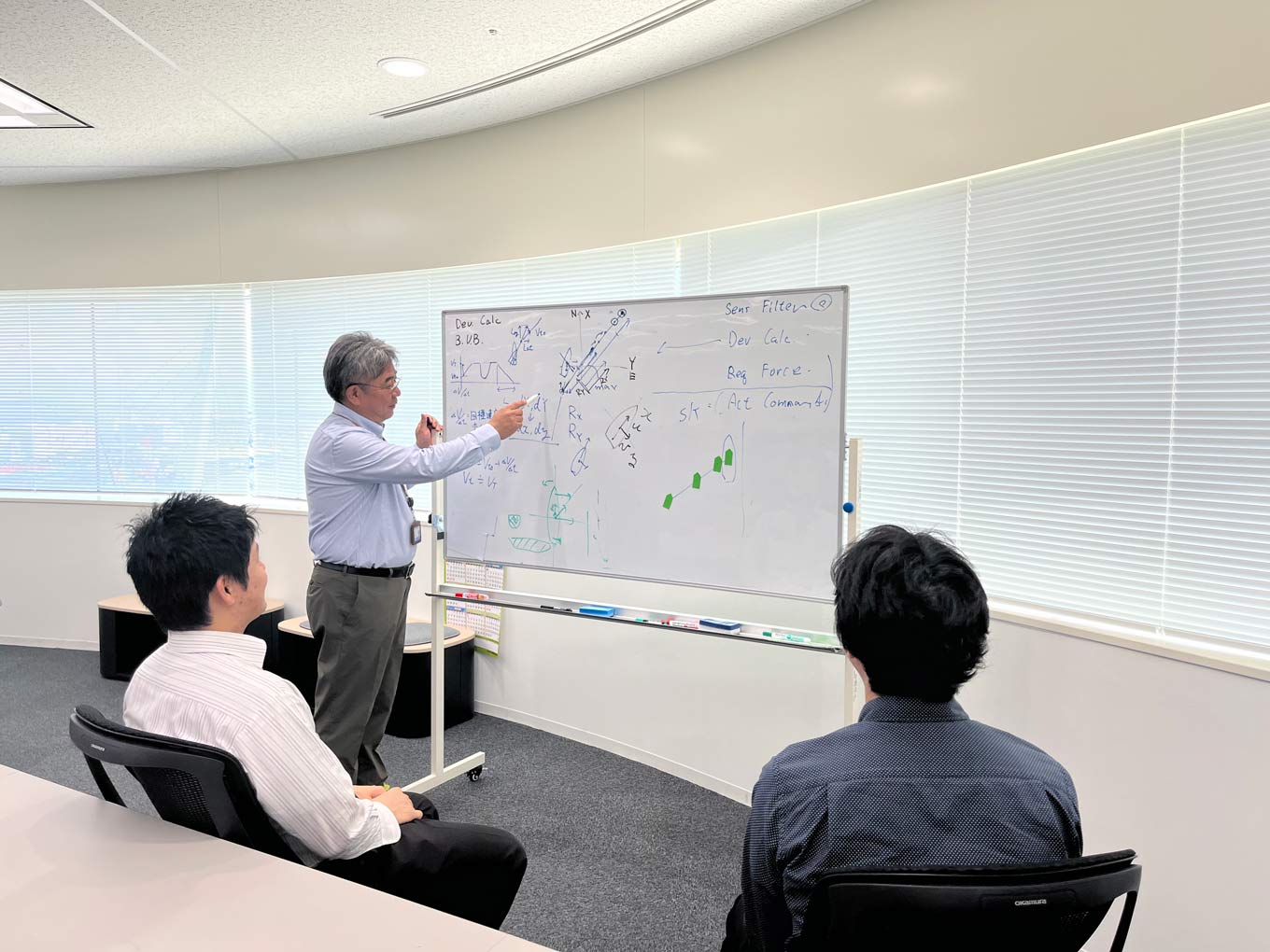
Development highlights
Looking ahead
Participants’ comments
Ryu Ueda (Okayama Route Division, Kokusai Ryobi Ferry)
We have begun renovating our Olympia Dream Seto and are building a land-based support system and are building a land-based support system to implement autonomous navigation technologies on remote island passenger vessels. This project is expected to lead to the resolution of the ferry industry’s important issues of crew shortages and ensuring safety. We are excited to see the progress being made on a daily basis in the evolution of automated navigation technology. I hope that our efforts will contribute to even safer, more efficient ocean voyages.