What Is an ‘Ally’ and What Role Can They Play?Having the perspective required to understand LGBTQ issues and gender and sexual diversity and act accordingly
Key Points
- Although understanding of LGBTQ issues and gender and sexual diversity is becoming more widespread, discrimination and unresolved legal issues are among the many challenges that remain to be overcome.
- In striving to create a society in which gender and sexual minorities can live comfortably, “Allies” who understand and support them are vital.
- Acting with the awareness that there may be sexual minorities near you can help create a society in which anyone can live comfortably.
LGBTQ* is a term that adds Queer and Questioning to Lesbian, Gay, Bisexual, and Transgender to indicate sexual minorities.
- “Lesbian” indicates female homosexuals, “gay” signifies male homosexuals, “bisexual” refers to people who are attracted to both sexes, “transgender” means people whose gender identity differs from the sex they were assigned at birth, “queer” is a comprehensive term used to describe those who do not fit into typical patterns of sexuality, and “questioning” is used to describe people who do not have fixed gender identities or sexual orientations or intentionally leave them undetermined.
In the past, sexual minorities were sometimes treated as being non-existent in Japan, but these days, they are featured on an almost daily basis in the mass media and on social media, so there is heightened awareness and more widespread understanding of them.
The Tokyo Rainbow Pride 2024 Parade (external link, in Japanese) was held in April 2024 and included not only LGBTQ people, but also many allies who support them, drawing a great deal of attention.
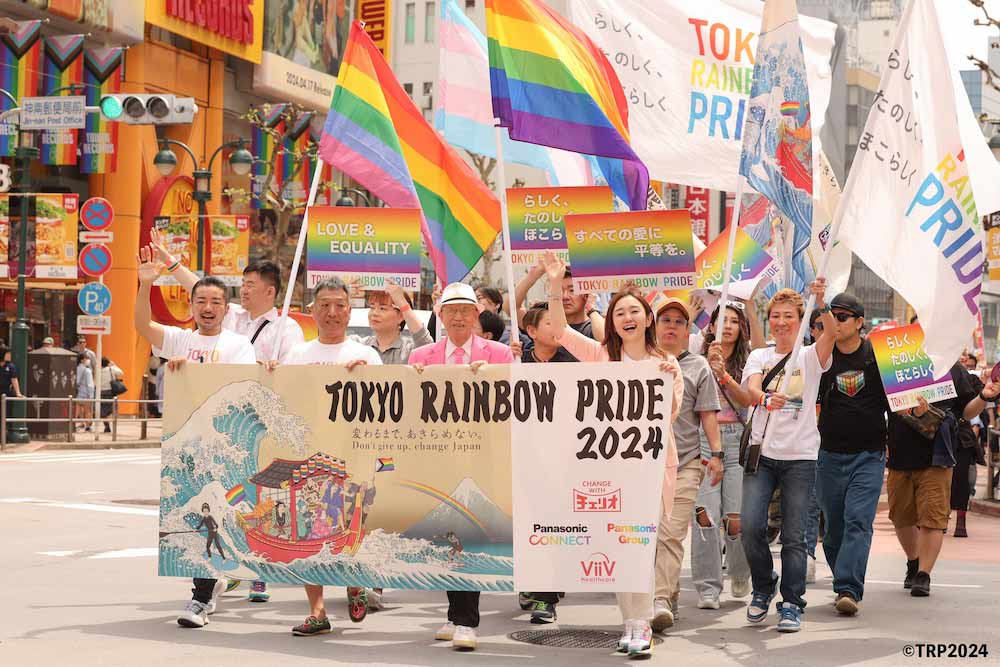
An “Ally”* is a person who understands and tries to support LGBTQ people and other sexual minorities and acts to prevent prejudice and discrimination against them. Thus, allies are an important element of the movement to respect gender and sexual diversity and create a society in which anyone can live comfortably.
- This Japanese term is derived from the English word “ally,” which means a member of an alliance or a comrade in arms.
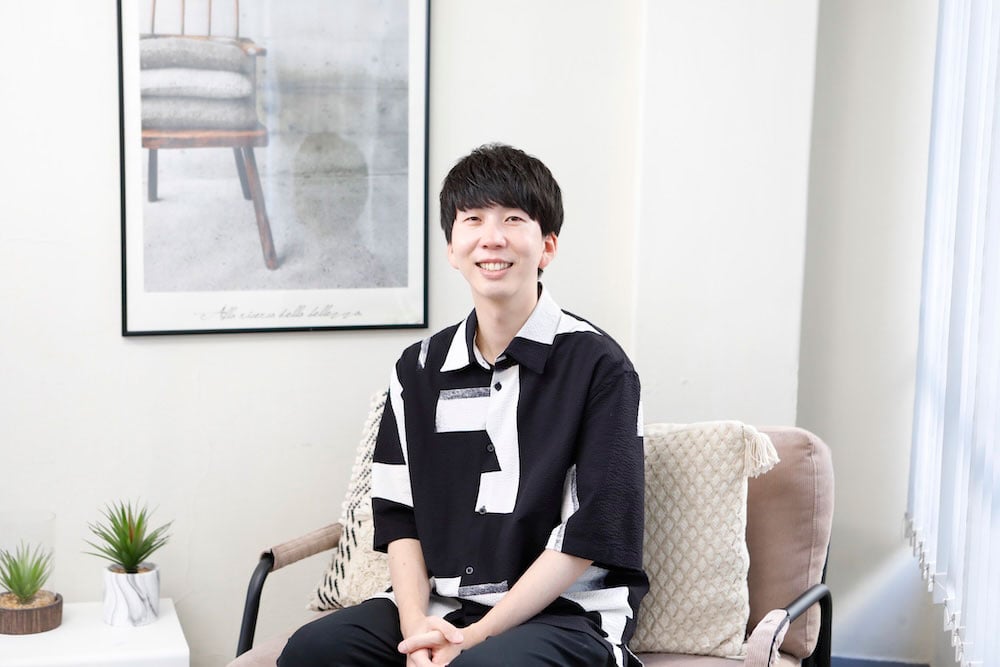
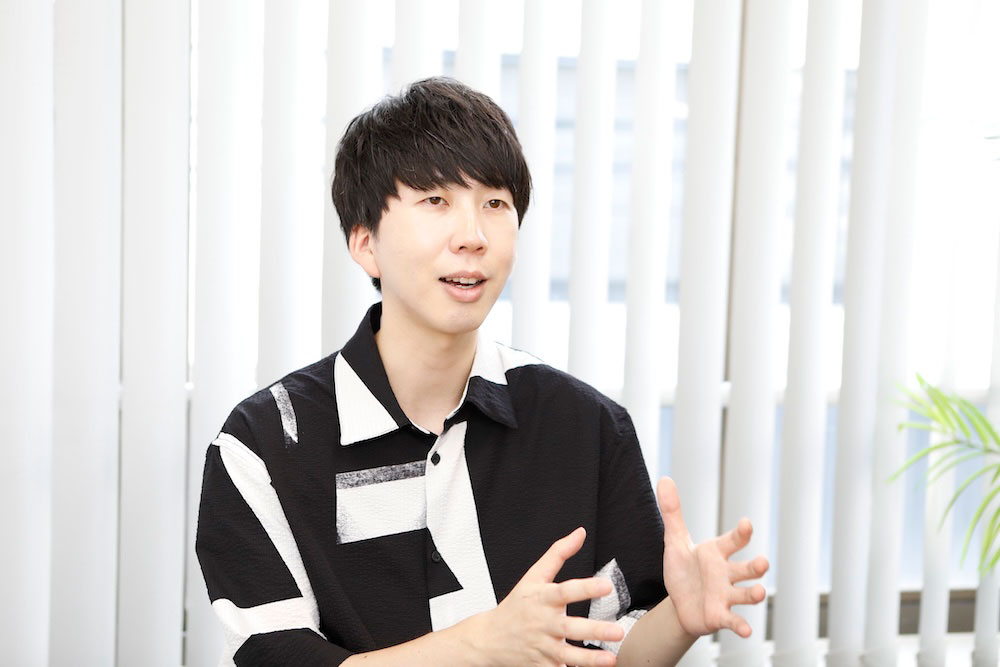
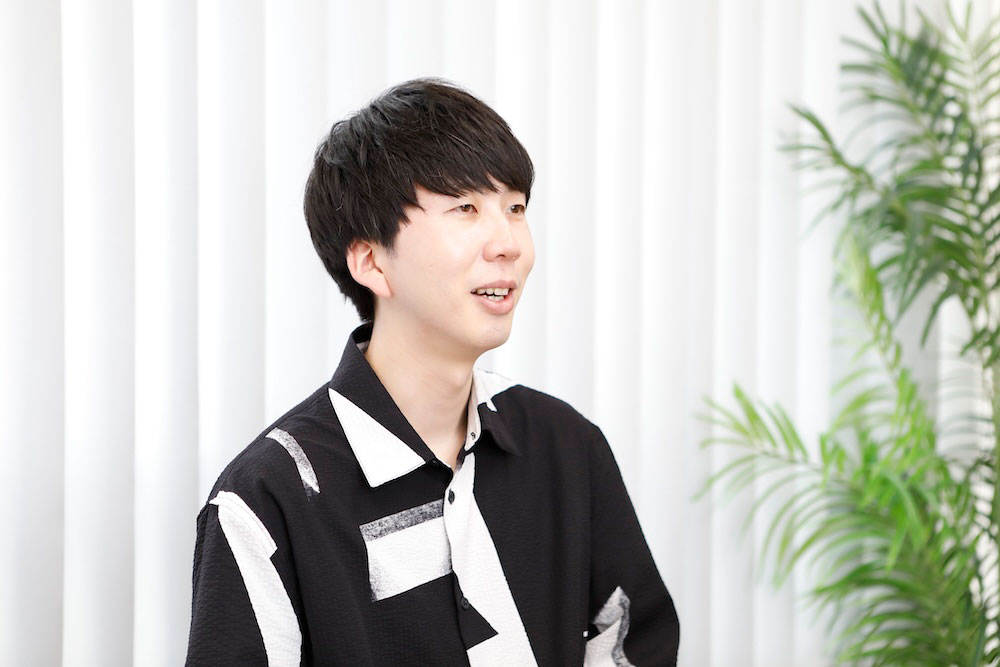
For this article, we spoke to Soshi Matsuoka, the Head of “fair” (external link, in Japanese), an organization that aims to create a society in which people of any sexuality will be treated equitably. We asked him about the current situation of sexual minorities in Japan, the role of allies, and the kind of perspective needed to create a society in which anyone, regardless of their sexuality, can live comfortably.
Mr. Matsuoka is open about the fact that he is gay, and is therefore directly affected by this issue. He is concentrating his efforts on informing people about issues concerning sexual minorities, focusing primarily on policies and legal systems that affect them.
An ally is a supporter who fights alongside sexual minorities
The Nippon Foundation Journal Editing Department: I feel that understanding of sexual minorities in Japan has deepened a great deal compared with what it was in the past. How do you see the current situation?
Soshi Matsuoka: Certainly the proliferation of social media and increased news coverage of topics related to LGBTQ issues have led to more widespread understanding of sexual minorities. Moreover, the LGBT Understanding Promotion Act* was enacted last year (2023) in June. While the law leaves many issues unaddressed, it marked a step forward in a long-stagnant legislative process, so I think it’s fair to say that things are changing little by little.
All the same, isn’t it true that the number of people who are aware that there are sexual minorities in their immediate surroundings is still low?
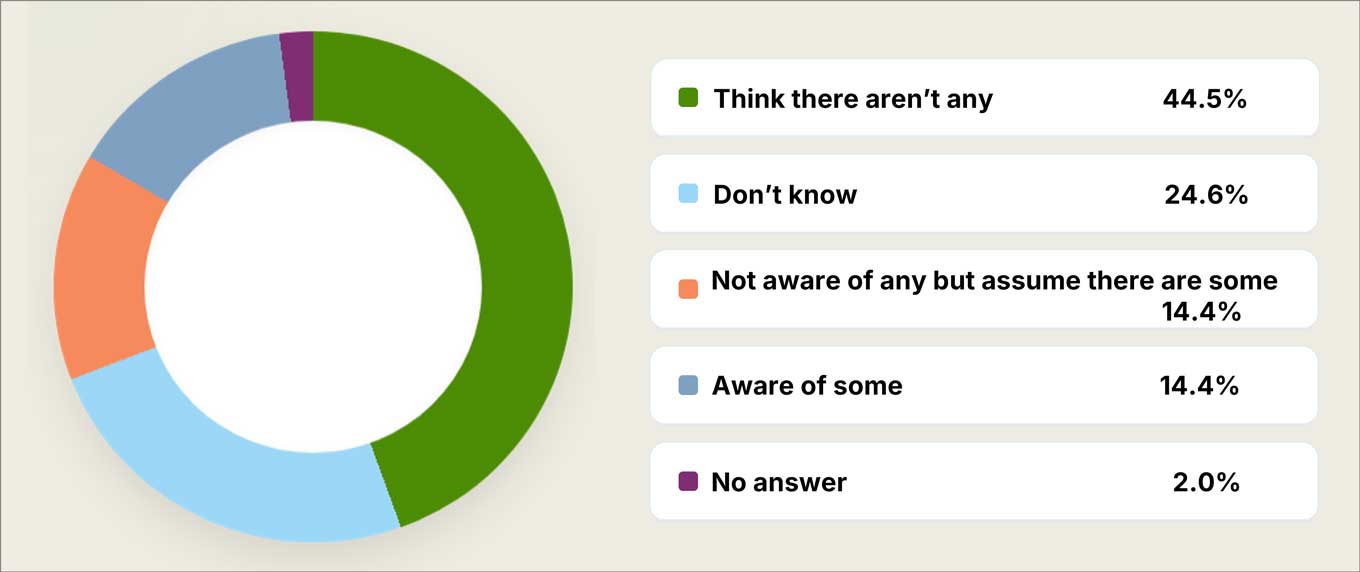
Survey of Workplace Conditions (external link, in Japanese), a survey about treatment of sexual minorities in the workplace published by the Ministry of Health, Labour and Welfare in 2020, revealed that almost none of the respondents were aware that there were sexual minorities in their workplace: approximately 70% answered “Don’t know” or “Think there aren’t any.”
It seems that many people understand that sexual minorities exist, but do not think of them as people in their immediate surroundings.
- The official name of this law is the Act on the Promotion of Public Understanding of the Diversity of Sexual Orientation and Gender Identity. It establishes basic principles requiring efforts by national and local governments as well as businesses to promote citizens’ understanding of gender and sexual diversity and aims to create a society in which all citizens, regardless of their sexuality or gender identity, can live together while respecting each other’s character and individuality. It contains no provisions for penalties. Reference: Promotion of Public Understanding of the Diversity of Sexual Orientation and Gender Identity, Cabinet Office (external link, in Japanese)
Journal: Given these trends, what changes have you perceived in the problems faced by sexual minorities?
Matsuoka: More and more people are revealing their gender identity and sexuality, in other words, they’re “coming out,” but this is still a small proportion of LGBTQ people, so I don’t feel that we’ve reached the stage where anyone can come out.
While some people are accepted after they come out, there are still quite a few cases of those who come out being harassed in the workplace, bullied at school, or having their lives seriously impacted after they do so.
In such cases, an ally becomes a key person.
Journal: Can you please explain in more concrete terms what the term ally means in this context and what role an ally can play?
Matsuoka: In general, it refers to a person who is not a sexual minority themselves, but who understands gender and sexual diversity, wants to support sexual minorities, and takes actions to eliminate prejudice and discrimination. I believe that originally, they were positioned as those who fought alongside sexual minorities in the movement to protect LGBTQ people’s rights.
Because of this stance, when they raised their voices as allies, they faced the possibility that they would have the same kind of discriminatory remarks hurled at them as sexual minorities do, so it took courage to act as an ally.
Today, allies still fulfill the same role, but now, even people who simply say they want to understand sexual minorities are called allies. The definition and role have become more elastic, so you could say that the hurdles to becoming an ally have been lowered.
Journal: I imagine that as the hurdles are lowered, the number of people who openly say they are allies will increase.
Matsuoka: That’s true. When I was in college, we held a number of LGBTQ awareness events, and one of our slogans was “Anyone can be someone’s ally.” I still believe that everyone should be able to become a supporter.
Of course, ideally, we hope that people will not just empathize with us, but that they will also go on to become “Allies” who also raise their voices with us to protect LGBTQ rights. However, I think everyone needs to take things in steps, so I believe that it’s important to widen the range of our supporters and envision as many people as possible as allies.
Strongly feeling the significance of allies in the activities
Journal: You are currently serving as the Head of “fair.” Can you explain what made you get it started?
Matsuoka: What made me want to start it up was the discomfort I felt when I began getting involved in LGBTQ activities in college.
I personally was able to come out as gay to my family and friends relatively smoothly, but almost none of my LGBTQ friends had come out to those around them.
Among them, some had the experience of wishing they could die, and others were thrown out of their family when they came out. When I heard such stories, I strongly felt that the LGBTQ people were not to blame — that the problems arose because of walls created on society’s side.
Journal: So, if “fair” was established to dispel difficulties LGBTQ people face in life, what are you actually doing to achieve that goal?
Matsuoka: To achieve our goal of creating a society in which people of any gender can live equitably, I figure we need to modify the legal system to provide a safety net, and to that end, we’re trying to disseminate information about sexual minorities.
We let people know about the kind of problems LGBTQ people face and the problems of the legal system that lie behind these problems. We also clarify what can be done to alleviate the difficulties they face in life. I believe that if we can make this information known to the world, it will lend support to the movement to retune the legal system.
We also give lectures and seminars about gender and sexual diversity at businesses, schools, and local governing bodies, and recently, we have been involved in consulting about LGBTQ media content and corporate messaging.
Journal: Giving lectures and seminars at businesses and schools should lead to greater understanding of sexual minorities among a wide range of age groups.
Matsuoka: It certainly does. And to adjust business and school systems and impart appropriate awareness as widely as possible, it’s vital to have the cooperation of key persons as allies.
Among them, there are allies who are quite passionate about this work and wish to make their school or business more comfortable for even a slightly more diverse range of people and who are actively engaged in making this issue their own. Whenever I encounter such people, I’m reminded of the importance of allies and want to increase their number.
Pitfalls of reliance on allies: The perspective required to promote understanding
Journal: Are there challenges you have become aware of as a result of your activities to promote understanding of sexual minorities?
Matsuoka: I have come to think that there are a number of pitfalls in the concept of allies. One is clearly separating people into two groups: sexual minorities impacted by these issues and allies who are not directly affected by the issues. Sexuality is a gradation, so you need to be careful about going overboard by dividing people into affected groups and unaffected groups.
Another is that people who see themselves as allies can subconsciously take on a condescending attitude, regarding LGBTQ people as “unfortunates” and thinking that as allies, they are providing help to the affected parties.
In fact, in an anonymous survey conducted to promote efforts related to LGBTQ people at a certain business, an LGBTQ respondent apparently said they’d like the business to stop these measures; hearing that, the ally in charge of the efforts was heard to say, “But we’re doing this for them.”
LGBTQ people who have continued to hide their sexuality for many years may have a feeling of rejection when a business takes such measures, as if their sexuality is suddenly being dragged out into the open. The LGBTQ community is not always monolithic. People need to be careful not to think of themselves as saviors who are “helping others out.”
What’s important is to not draw clear lines between sexual minorities and their allies, and instead of thinking of their actions as “helping others out,” regard them as “eliminating inequalities and imbalances.”
Journal: What kind of attitude can help prevent allies from falling into such pitfalls?
Matsuoka: Maybe what they need to do is to not identify themselves as allies, but instead, always try to maintain a posture of “trying to be an ally.”
In concrete terms, they should learn about the social conditions sexual minorities face, try to change their own consciousness, speech, and actions, then convey a message to society. In the process of doing this, they will come to see things they hadn’t known about before and use these new insights to update their consciousness and actions. I think that maintaining this cycle of action, reflection, and adjustment is what “allyship” is all about — maintaining a posture of “trying to be an ally.”
Journal: So on the other hand, what can sexual minorities do on their part to promote understanding of their challenges?
Matsuoka: I feel that in order for more people to become familiar with sexual minorities, it is necessary for LGBTQ people and those in the majority to actually engage with each other.
To that end, it is important for LGBTQ people to come out, but they should never be forced to do so. The people themselves need to decide if and when to do so. Their wishes need to be respected.
But there are some LGBTQ people like me who are in an environment where coming out can be a smooth process. If such people have extra energy, I hope they will offer some kind of support to the other LGBTQ people around them or for the sexual minorities of the next generation.
For example, they could negotiate with their company’s human resources department to implement benefits for same-sex partners… If more people knew that there are actually affected people nearby, there may be fewer inappropriate remarks about LGBTQ people by their superiors and colleagues. I think it would be good for people to think about what they can do in their own environment.
Journal: If sexual minorities work more with allies, it would make understanding more widespread within their organization, wouldn’t it?
Matsuoka: Yes. It’s often hard for those directly impacted to point out that prejudiced remarks are problematic; they may feel harassed and be hurt emotionally. On the other hand, voices raised by unrelated parties can be more persuasive and may make it easier to deepen understanding throughout the organization.
What is important is not just knowledge, but regarding sexual minorities as a nearby presence
Journal: It seems that even though understanding of sexual minorities is gaining ground, our society is still not one in which they can live comfortably. What kind of measures do you think are needed to create a society in which people of all sexualities can live comfortably?
Matsuoka: In terms of the social framework, I feel that putting the legal system in order is quite important. Sometimes we hear that it would make sense to promote understanding first before trying to fix the nation’s laws, but I personally believe that a system that ensures equality could be the trigger to change people’s consciousness.
Take, for example, the LGBT Understanding Promotion Act that has already been enacted: it does not prohibit discrimination, so it cannot be applied in actual cases of harm caused by discrimination such as firing and refusal of service. I believe a law that prohibits discrimination on the basis of sexuality or gender identity is needed.
If there is a fundamental rule that says discrimination is wrong, individuals will begin to wonder what discrimination is and what kinds of discrimination are prohibited, and their consciousness will likely change. Likewise, there has been a lot of news coverage about same-sex marriage* recently, and if same-sex marriage were legalized, marriage equality would be realized and the number of people who regard same-sex couples as equal to heterosexual couples would increase.
- The marriage of same-sex couples is not legally recognized under Japanese law.
Journal: In addition to social action, what can each of us do?
Matsuoka: Although the term LGBTQ has become widely known, it still cannot be said that there are many people who are aware of sexual minorities in their own environs. To overcome this barrier, I think it is important for people to learn about the conditions surrounding LGBTQ people in society and to actually get to know them on a deeply personal level.
There are actually many things each of us can do. For instance, actively checking out news about sexual minorities on social media or in the mass media, and starting by leaving “likes” and thumbs up feedback on social media sites, or even sharing such news would be helpful. It might also be a good idea to use such news as an opening to bring up such issues during conversation with the people around you, or to talk about your positive take on gender and sexual diversity.
I’d also like people to be aware that how you talk about yourself can signal your own understanding of gender and sexual diversity.
For example, a male acquaintance of mine said that in his workplace, he referred to his wife as his “partner.” It seems that no one else in that workplace referred to their spouse in that way. A few months later, one of his colleagues came out to him as a sexual minority. So even a single word choice may make a sensitive LGBTQ person feel that it is safe to tell things to this person.
Journal: So, since same-sex lovers often use the term “partner,” your acquaintance’s use of that word was taken as a signal that he had a positive attitude toward sexual minorities.
Matsuoka: That’s right. Like my acquaintance, people can change the language they use to talk about themselves to gender-neutral wording, thereby creating the opportunity to convey a posture of wanting to be an ally.
In addition, if they are able to get more deeply involved in this kind of activity, they could join a nonprofit organization. There are groups that are seeking to ensure marriage equality through the legalization of same-sex marriage and groups that are trying to expand education about gender and sexual diversity. I would be delighted to see people start their engagement with this issue by doing what they can do and gradually raising the level of their support.
Editor’s Note
During this interview, we were moved by Mr. Matsuoka’s statement that “Anyone can be someone’s ally.”
This is certainly not limited to the problems of sexual minorities. We felt that whether they are in the majority or the minority, if people can empathize with each other’s problems and concerns and support each other, this may lead to the creation of a society in which anyone can live comfortably.
Text: The Nippon Foundation Journal Editing Department
Photo: Emi Enishi
Profile
Soshi Matsuoka
Soshi Matsuoka is the Head of “fair,” an organization that disseminates information about sexual minorities, focusing primarily on policies and legal systems that affect them. In addition to writing a number of articles on gender and sexual diversity for media such as Yahoo! News, the HuffPost, and GQ Japan, he has also conducted seminars and lectures at educational institutions, businesses, and local governing bodies. While he was a student, he initiated “Meiji Ally Week,” Japan’s first campaign to increase the number of allies in the country. Among the books Matsuoka has authored are Aitsu Gei Datte: Autingu ha naze mondai nanoka “I hear that guy’s gay: Why outing others is not OK,” published by Kashiwa Shobo. He also coauthored LGBT to harasumento “LGBT and Harassment,” which was published by Shueisha Shinsho.