Surveying ‘Bilingual Deaf Education’ EvidenceSurvey conducted to verify effectiveness of ‘bilingual deaf education’ method
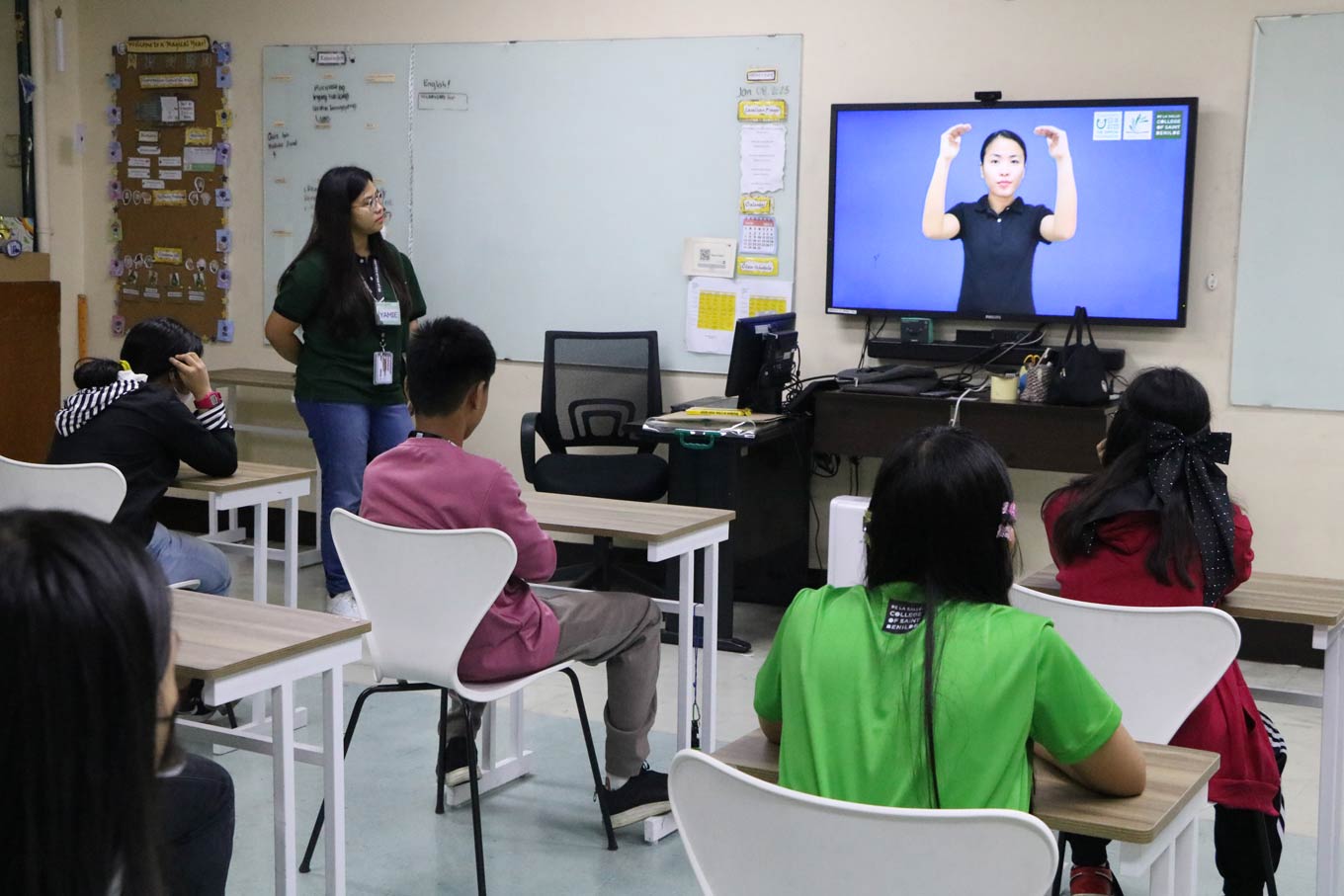
The Nippon Foundation has been supporting school enrollment for deaf and hard-of-hearing students in Southeast Asia for more than 20 years. During that time, we have positioned sign language as a language in its own right, and used and adopted the “bilingual deaf education” method, where students learn the local sign language alongside the written form of the official language. We recently reviewed our activities to date, examined changes in the educational environment, and commissioned the International Development Center of Japan to conduct a literature review and interviews to set the direction of our activities going forward.
Survey overview
A literature review was carried out from June to December 2025 to examine research being carried out and trends in implementation in advanced countries. Because academic papers and reports on bilingual deaf education in developing countries are limited, interviews were primarily used to understand the situation in the countries where The Nippon Foundation is engaged (the Philippines and Laos) and to verify the effectiveness of teaching methods.
Survey hypotheses and results
Survey hypotheses
To dig deeper into the question of whether bilingual deaf education is effective, the survey asked the question, “In what contexts and for which deaf and hard-of-hearing children is bilingual deaf education more effective than other teaching methods?” Two hypotheses were set out.
Hypothesis 1
Bilingual deaf education is the optimal solution for supporting deaf and hard-of-hearing children in developing countries where insufficient medical infrastructure makes it difficult for deaf and hard-of-hearing children to obtain spoken language ability.
Hypothesis 2
In terms of support for deaf and hard-of-hearing children in developing countries, bilingual deaf education also makes it possible for children who use hearing aids or who have had a cochlear implant to acquire sufficient learning.
Survey results
- Multiple studies have shown that bilingual deaf education is effective to some extent in building social-emotional skills, self-esteem, and Deaf identity. On the other hand, there is limited evidence demonstrating age-level achievement in academic performance, and in reading comprehension in particular, and there is also criticism of the theoretical premise itself.
- Analysis of the situation in the Philippines and Laos, where hearing-related medical infrastructure and a framework for early intervention are lacking, suggests that bilingual deaf education can be a practical and effective educational approach that does not rely on spoken language acquisition.
- Other structural issues were also confirmed: A lack of teachers with natural fluency in sign language; The impact of manually coded sign language, a form of manual communication representing spoken words with signs; Compatibility with inclusive education policies; and Severe language deprivation from the adverse effect on cognitive development from the delay in being exposed to natural language in early childhood.
Recommendations for future activities
The survey showed that supporting bilingual deaf education in developing countries is not simply a matter of choosing an educational method, and involves addressing the complex issues of guaranteeing language rights and ensuring the quality of learning.
The survey recommends that going forward, in accordance with the circumstances in each country, early access to sign language should be guaranteed, while at the same time, on an ongoing basis, specialist human resources who are able to teach in sign language should be trained and evidence related to the effectiveness of bilingual deaf education should be collected to establish sign language as a language for education.
- The Nippon Foundation carries out its support projects in accordance with the individual circumstances in the country or region where they are carried out. The recommendations made in this report are therefore items for future consideration, and there is no guarantee that they will necessarily be carried out.
Report
- Summary: “Evidence-Based Research on Bilingual Deaf Education” (PDF / 136KB)
- Full Report: “Evidence-Based Research on Bilingual Deaf Education” (PDF / 803KB)
Inquiries
International Projects Division
The Nippon Foundation
Email: nf_kokusai@ps.nippon-foundation.or.jp
Related Themes
Related Links
- Raising Social Awareness of Sign Language
- Bilingual Deaf School Opens in Indonesia
- Restoring Access to Education for the Deaf and Hard of Hearing People(April 15, 2026)