Expanding the Role of Business in Social ChangeHow The Nippon Foundation is helping bring disability inclusion into the global boardroom
Valuable 500 is a UK-registered charity launched at the World Economic Forum Annual Meeting in Davos in 2019. Its founding mission was to secure commitments from 500 CEOs of global companies to address disability inclusion, bringing the issue firmly into the boardroom.
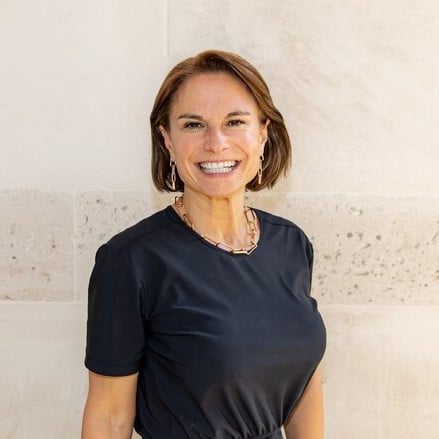
“What really sits at the heart of the mission of Valuable 500 is a steadfast belief that disability inclusion is one of the most powerful drivers of business transformation,” says CEO Katy Talikowska.
The Nippon Foundation became a major Global Impact Partner during Valuable 500’s early growth phase. Although a nonprofit organization, it intentionally partners with an initiative focused on major corporations, recognizing that meaningful, systemic change is most effectively achieved by working with organizations that have the resources and influence to transform mainstream business practices.
Approximately 16% of the global population identify as living with a disability, with the broader impact extending further to families and communities. Ms. Talikowska points out that persons with disabilities represent an estimated US$18.3 trillion in spending power, and that disability should not be regarded as a niche issue, but rather as an intersectional one that transcends race, gender, age, and sexual orientation.
“If you are a business creating products and services, it doesn’t make business sense to not include persons with disabilities,” she says. “They have that huge spending power and effectively represent up to 20% of your potential target market.”
Changing the narrative on inclusivity
The premise behind the Valuable 500 philosophy is that companies—not governments or NGOs—are the primary drivers of employment and the creation of products and services. Although there is a clear moral imperative to build inclusive businesses and, by extension, an inclusive society, the organization places particular emphasis on the business benefits of developing inclusive and accessible workforces.
While there has been some recent pushback against diversity, equity, and inclusion (DEI) initiatives in certain quarters, Ms. Talikowska says that disability inclusion remains highly relevant for business leaders, regardless of their broader views on DEI.
Framing the issue in practical terms, she points out that business leaders recognize the value of building a workforce capable of attracting, developing, and retaining top talent—employees who are engaged and able to contribute to grow while creating products and services that can be used by as many people as possible.
“Ultimately, we at the Valuable 500 have worked really hard to shift the narrative and make sure that disability is seen as a core part of the business agenda to create systemic change,” she notes.
Business and C-suite leaders can drive meaningful change that genuinely transforms the lives of persons with disabilities through a single decision or boardroom discussion, often achieving in a short time what may take other stakeholders much longer.
‘A fundamental tenet of good business’
Having reached its initial target of securing commitments from 500 CEOs at major global companies to act on disability inclusion, Valuable 500 currently works with a collective of over 500 global organizations. The collective is now undergoing a critical shift—from a compliance-based approach to a deeper understanding of the issues, with inclusion becoming part of core business practices.
“The critical thing for the business case, as it evolves, is that companies are no longer seeing disability inclusion and accessible practices as an add-on, a separate department, or a nice-to-have,” explains Ms. Talikowska. “They’re seeing it as a fundamental tenet of good business because it allows them to grow and sell more products and services.”
To truly understand their market, companies must include employees with lived experience. Language remains an important area of focus, particularly in discussions around self-identification. While terms like “disclosing” are commonly used, many organizations, including those in the Valuable 500 collective, are increasingly favoring the term “sharing” for its more open and accessible tone.
This shift helps create an environment in which employees with disabilities feel more comfortable speaking up about what they need to perform their roles effectively. “Within that, you also have the opportunity to share other details, including, ‘I am neurodivergent, and having a quieter corner of the office to work in would help, as I can become overstimulated,’” says Ms. Talikowska by way of example.
Japan’s role in leading social inclusion
Japan can be seen as an early adopter of community-based social inclusion models. This is exemplified by Kazuma Tateishi (1900–1991), founder of Omron Corporation, who promoted the idea that businesses should address social challenges by creating employment opportunities for persons with disabilities.
In 1972, Omron opened a facility in Beppu, Oita Prefecture, which was designed around the employment of workers with disabilities, and continues to operate to the present day. The Nippon Foundation brings this model into a new age for philanthropy, with strategic investment as a means of launching systemic social change.
“When the Valuable 500 was still a nascent, growing organization, it was the Foundation that had the vision to see what we could potentially achieve,” Ms. Talikowska points out. “The role and nature of the partnership have evolved, but it is their long-term vision and commitment that have enabled us to do this work and, critically, move beyond awareness into action.”
While direct support ended in June 2024, the Foundation continues to support the initiative through white papers, research, and mentoring programs that have delivered tangible impact and helped drive action.
“The benefit of working with global organizations is that we can all learn from each other,” Ms. Talikowska says. “My observation from visiting Japan is that it leads the way in simple, effective design. Returning to the principles of universal design, if you design with disability in mind, everybody benefits.”
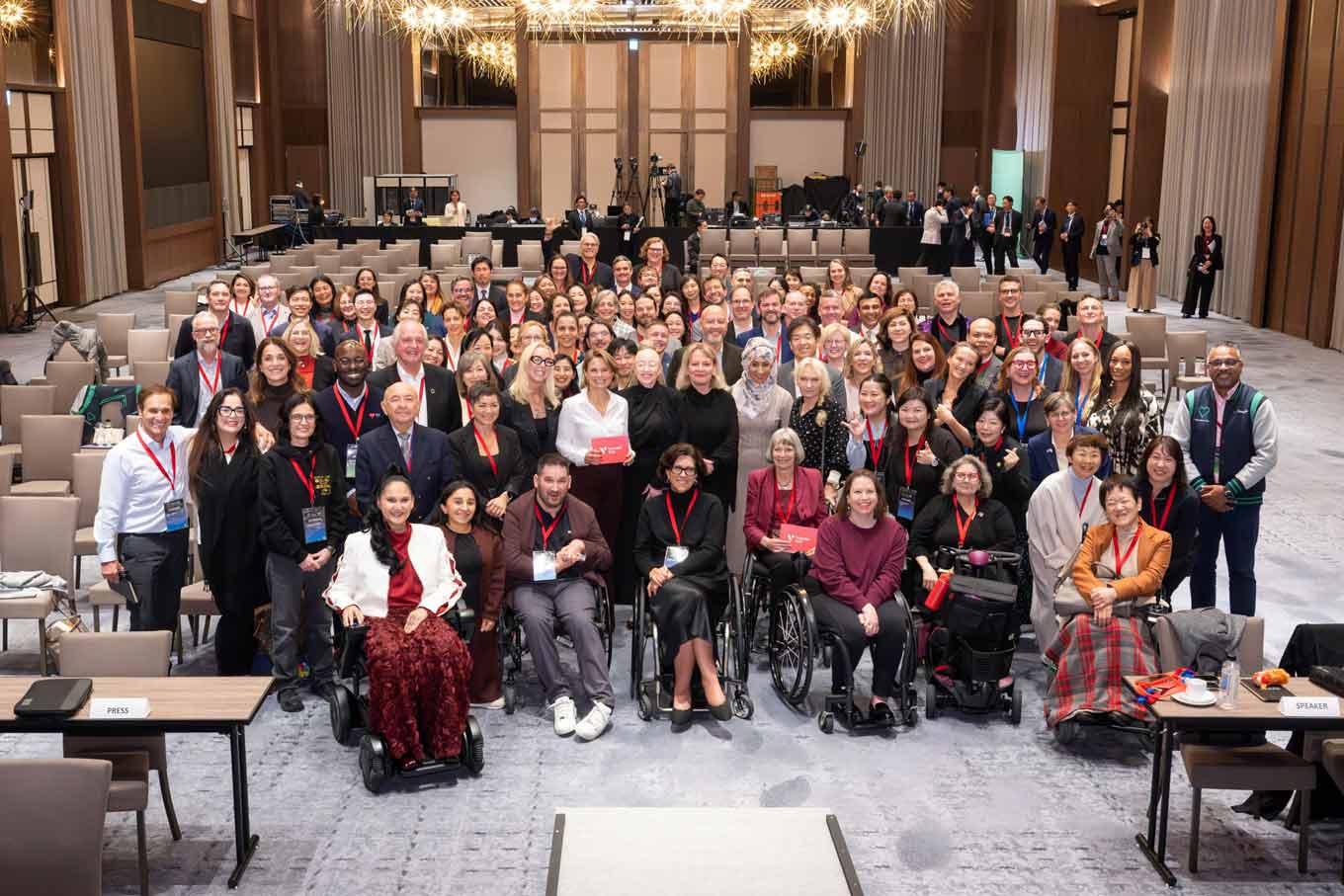
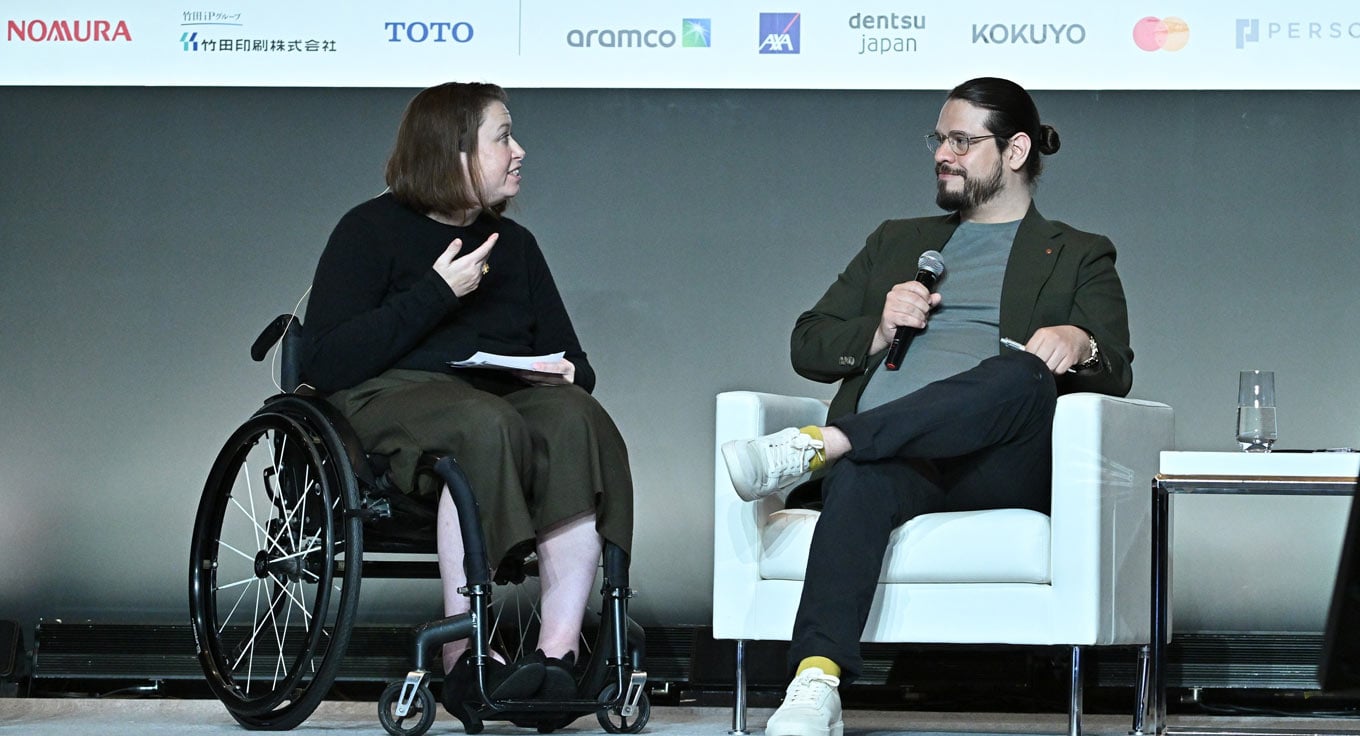
In December 2025, CEOs and C-suite leaders from major global companies met in Tokyo with disability inclusion experts and advocates at SYNC25—the first global accountability summit on disability inclusion in business—to share progress, highlight innovations, and build momentum for the next decade. The Foundation served as a co-host for SYNC25 and will continue its involvement, with talks of SYNC27 underway.
Meeting new challenges; building strong connections
While conversations around inclusion continue to evolve, challenges remain, like the need to avoid “disability washing.” This refers to the tokenistic representation of persons with disabilities to enhance a company’s public image or boost profits, without enacting meaningful change. It can also involve only superficial consultation with the community of persons with disabilities, rather than genuinely engaging people in the design and planning of products, services, and policies.
Ms. Talikowska notes that another challenge for Valuable 500 is securing decision-grade, comparable data across member organizations. “We impress upon companies that they have to collect data and understand the representation of persons with disabilities in their workforce to set milestones and improve.”
To support this, it is essential to foster a workplace culture in which people feel safe to be their authentic selves. “When a company says, ‘We are collecting this data because we want to create inclusive and accessible workplaces for you to be happy and productive,’ it is critical to provide that cultural context and reassurance,” she explains.
The Global Disability Innovation Hub (GDI Hub), a UK-based research and practice center at University College London, was established as a legacy of the London 2012 Paralympics. GDI Hub is partnering with Valuable 500 on a project to deliver the first global CEO-led initiative to generate investment-grade evidence on the financial returns of disability inclusion and innovation.
Another initiative already showing impact is Generation Valuable, launched in 2023, which pairs C-suite executives who do not identify as having a disability with next-generation talent with disabilities within their organizations. Ms. Talikowska describes this as “a reciprocal mentoring program,” noting that mentors benefit as much as mentees, as senior leaders gain firsthand insight into the lived experience of disability within their own organizations.
A global pipeline through the Foundation
Japan represents a significant presence within the Valuable 500 network, with more than 60 companies engaged—accounting for a notable share of its 500-plus global members. This level of participation reflects the commitment of Japanese companies, alongside the role of the Foundation in supporting engagement and strengthening connections between Valuable 500 and companies in Japan.
One example comes from Mirairo Inc., a company focused on universal design. Two account managers from Mirairo have been seconded to work alongside the core Valuable 500 team, strengthening engagement with Japanese companies and accelerating disability inclusion efforts across the country.
Ms. Talikowska also cites the upcoming launch of a disability-confident leadership program through the United Nations Institute for Training and Research (UNITAR) and its global network of CIFAL training centers. Developed in partnership with Akiko Ito, a UN disability policy expert and leader in global inclusion initiatives, and Osaka University, the program will be tailored for leaders of Valuable 500 companies as a leadership initiative for Japan.
As Valuable 500 moves into the next phase of its operations, the Foundation will continue to support its activities, both as a core partner and a pipeline between Japanese companies and the global community.