EU–Japan Relations in a Changing Global LandscapeBy Patrik Ström
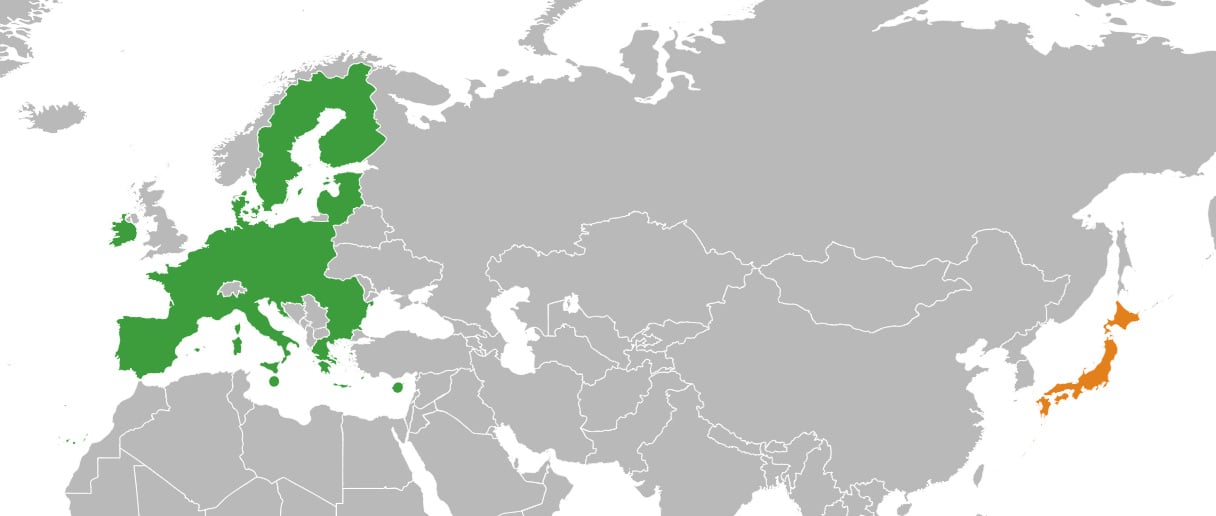
Relations between Japan and the European Union have entered a new phase. What was once primarily economic cooperation has matured into a broad strategic partnership spanning trade, climate policy, digital governance, infrastructure, and security. For scholars across Japanese Studies, this evolution matters.
The global environment is unsettled. Strategic competition—especially between the United States and China—has reshaped supply chains, technological standards, and diplomatic alignments. Japan and the EU both maintain close ties with Washington while remaining economically intertwined with Beijing. Navigating this dual reality requires balance. It also creates incentives for deeper coordination between Tokyo and Brussels.
Some of this cooperation is practical: securing trade flows, protecting investment, and strengthening supply chain resilience. But some of it is strategic. At a time when multilateral norms are under strain, EU–Japan collaboration signals a commitment to openness and rules-based governance.
The 2019 Economic Partnership Agreement (EPA) was a turning point. By creating one of the world’s largest open trade areas and embedding high regulatory standards, it did more than reduce tariffs—it sent a message. The accompanying Strategic Partnership Agreement (SPA) broadened dialogue to include political coordination, security issues, and global governance. Together, these frameworks form the institutional backbone of the relationship.
Recent initiatives push the partnership into new terrain. The EU–Japan Green Alliance advances joint decarbonization efforts and sustainable growth strategies. The Digital Partnership addresses data governance, cybersecurity, and artificial intelligence—areas where technical standards increasingly carry geopolitical weight. Meanwhile, the Connectivity Partnership promotes high-quality, transparent infrastructure investment in third countries. Each initiative reflects a shared ambition: to shape global standards rather than merely respond to them.
Common structural pressures reinforce this alignment. Demographic aging. Energy insecurity. Technological disruption. The aftershocks of the COVID-19 pandemic. These are not abstract concerns; they shape labor markets, fiscal systems, and political debates on both sides. Cooperation offers not only policy coordination but also the exchange of experience.
Security cooperation, too, has expanded. Once largely economic in focus, EU–Japan relations now include maritime security, cybersecurity, and Indo-Pacific dialogue. Stability, freedom of navigation, and adherence to international law are shared priorities.
For scholars of Japanese Studies—whether working on policy, economics, culture, or history—these developments frame the context in which intellectual and institutional exchanges unfold. EU–Japan relations are not simply diplomatic arrangements. They represent a sustained effort to align economic, technological, and political strategies in an era of fragmentation.
The partnership is still evolving. But its direction is clear: deeper integration across sectors, anchored in shared commitments to democracy, rule of law, and multilateral cooperation. Understanding this trajectory offers insight into Japan’s changing role in the global system—and into the broader forces reshaping international order.
References:
- Nakamura, H. R., & Ström, P. (2025). How Geoeconomics Advances Geopolitical Cooperation: The Case of EU-Japan Relations. Czech Journal of International Relations, 60(3), 45-71.
- Richard Nakamura, H., Ström, P., & Alvstam, C. G. (2022). Japanese Economic Engagement With the EU: Geopolitics Meets Business. Journal of Applied Business & Economics, 24(2).
- Ström, P., & Vadi, M. (2023). Europe and Japan: Embracing a multidimensional partnership for the future: Relations between Europe and Japan. Trames, 27(3), 191-197. DOI: 10.3176/tr.2023.3.01
About the researcher:

Patrik Ström, PhD
Director
Associate Professor, SJSF Nordic Lecturer
European Institute of Japanese Studies
Stockholm School of Economics
Readers interested in contacting the author are encouraged to reach out to The Nippon Foundation at tnfsa@ps.nippon-foundation.or.jp
Related Themes
Related Links
- The Nippon Foundation Scholars Association (TNFSA)
- European Institute of Japanese Studies (external link)
Related Articles
Preserving Fire: Documenting Bizen Pottery Through Archaeology, Craft Knowledge, and Science
Deep-Dive