Major Natural Disasters More Frequent WorldwideIs global warming the cause of abnormal weather like that of 2023, with the hottest summer on record?
Key Points
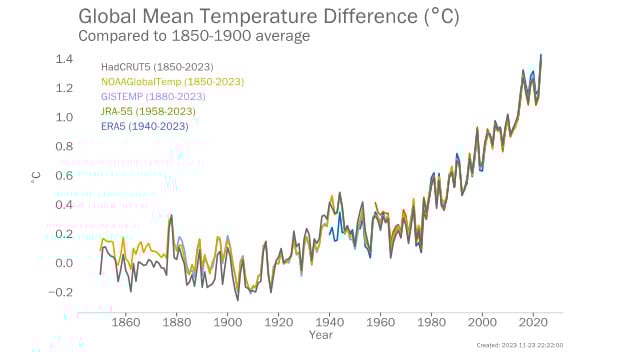
- The WMO reported that the global average temperature in 2023 made it the hottest year on record, with extreme weather phenomenon observed worldwide.
- Global warming is making natural disasters more frequent and more severe. Damage expected to be more widespread in the future.
- Global warming can be alleviated if each individual rethinks their lifestyle and takes concrete action.
The Japan Meteorological Agency reported that both the average temperature in Japan and the average surface temperature of the oceans around Japan in 2023 reached the highest levels since it began compiling these statistics.[1] Moreover, the WMO (World Meteorological Organization) report for 2023, which stated that the average global temperature in 2023 was the highest on record,[2]
also drew wide-spread attention.
- Note 1: Japan Meterological Agency: 2023 Weather Roundup (News Flash) (external link; in Japanese)↩︎
- Note 2: WMO: 2023 Shatters Climate Records, with Major Impacts (external link)↩︎
In addition to the unusually high temperatures that were reported around the world in 2023, the year also saw frequent heat waves[3] and droughts,[4]
as well as large-scale floods and wildfires. As a result, crop failures were aggravated and, as readers no doubt clearly remember, food prices soared.
- Note 3: A heat wave is defined as a phenomenon in which the air temperature in a wide area is significantly hotter than the average for the region for a period of four to five days or longer. ↩︎
- Note 4: A drought occurs when the soil of a region completely dries up due to lack of rain for prolonged periods, and as a result, crops do not grow. ↩︎
This article looks back at the environmental disasters that occurred around the world in 2023 and suggests things we can all start doing right away to alleviate the cause: global warming.
Large-scale natural disasters seen around the world in 2023
New records for average temperatures were set in many countries around the globe in 2023, making the year the hottest on record. In addition to the unusually hot temperatures around the globe, the year also saw reports of damage from a wide range of abnormal weather and natural disasters.
The Japan Meteorological Agency defines “abnormal weather” as “phenomena that normally appear less than once every 30 years in a specific place (region) and a specific time period (week, month, or season).” This includes weather such as heavy rains and strong winds lasting for hours, as well as droughts that last for long periods of time and extremely cold summers and warm winters.
The following link contains a summary of abnormal weather events that caused particularly great damage in Japan and around the world in 2023.[5]
- Note 5: Japan Meteorological Agency: Major Abnormal Weather and Meteorological Disasters Around the World in 2023 (News Flash) (external link / PDF, in Japanese) ↩︎
Japan
Record-breaking heavy rains were experienced throughout Japan in 2023, starting with the storms that hit across the country from western Japan to the Pacific coastal areas of eastern Japan on June 2 to 3. Damage caused by heavy rains occurring between June 1 and July 31 included 93 cases of injury and loss of life to humans and 25,262[6] incidents of property damage.
- Note 6: Japan Meteorological Agency: Storm Damage From the Seasonal Rain Front and Typhoon Mawar Between June 1 and 3, 2023 (News Flash) (external link; in Japanese); Japan Meteorological Agency: Seasonal Rain Front Brings Heavy Rains Between June 28 and July 16, 2023 (News Flash) (external link; in Japanese); Japan’s Ministry of Land, Infrastructure, Transport and Tourism: Damage Caused by Heavy Storms Starting on July 15 (News Release No. 13) (external link / PDF; in Japanese)↩︎
Africa
Storm Daniel, the “medicane” (Mediterranean tropical-like cyclone) that pounded Libya especially harshly in September 2023, led to the loss of 12,350 human lives. The total rainfall in the northeastern city of Benina in September of that year soared to 963% of the monthly average in a normal year.
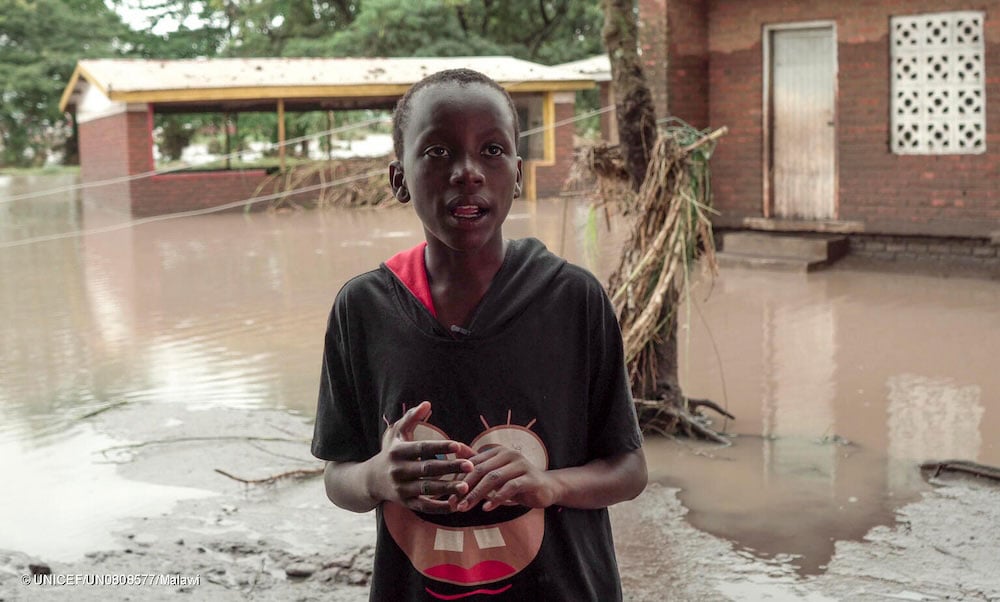
Somalia, Cameroon, Madagascar, Malawi and other countries also reported major damage from heavy rains, floods and cyclones.
Canada, the United States (Hawaii)
Canada reported average temperatures throughout the country in 2023 that were 2.4 C to 8.0 C higher than average. According to the Canadian Interagency Forest Fire Centre (CIFFC), approximately 185,000 square kilometers of forests were burned in wildfires during that year — reportedly the largest area consumed by wildfires since 1983.
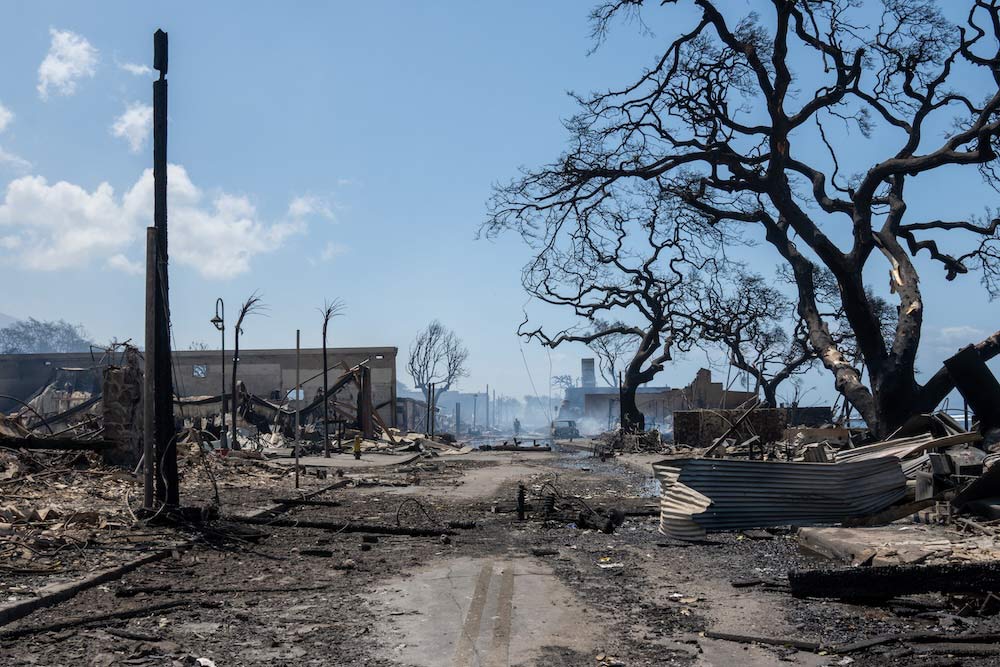
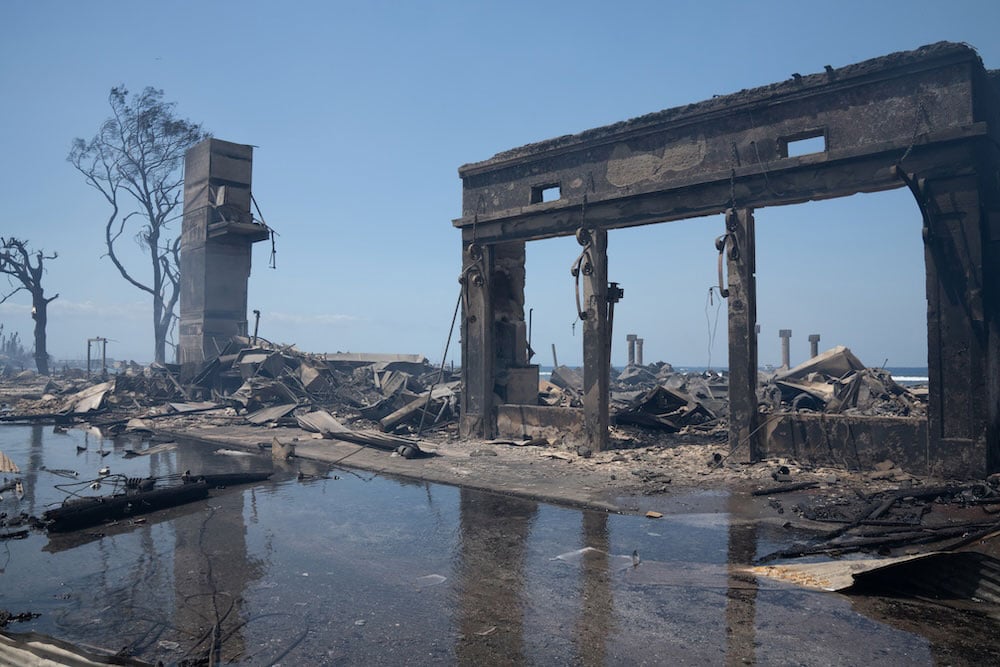
Moreover, extensive wildfires broke out on the island of Maui in Hawaii from Aug. 8 to 11, leaving at least 120 people confirmed dead.
Brazil
The Amazon River basin suffered the worst drought in recorded history, with falling water levels leading to massive fish die-offs and a shrinking of the width of the river to roughly half its normal size.[7]
This had a major negative impact on the lives of more than 600,000 people who make their living through fishing, water transport, tourism and other jobs related to the river.
- Note 7: Global Warming Reduces Width of Amazon River by Half in 1 Year… Brazil’s Minister of Indigenous Peoples Says ‘The Earth Can’t Take Any More’↩︎
Abnormal weather is closely connected to food shortages and not only leads to lower crop yields and crop quality, but also has a severe impact on livestock and fishing industries.
In Japan, record-breaking heat dealt major blows not only to rice crops, but also to the production of vegetables such as tomatoes, daikon radishes and leeks as well as to fruits like apples, mandarin oranges and grapes. Moreover, overseas, droughts and flooding led to increased severity in food shortages, especially in developing nations.
Deepening threat of global warming: damage expected to mount
Why has abnormal weather become so widespread? On top of the weather changes brought about every few years by the El Niño and La Niña phenomena, global warming is thought to have greatly contributed to climate change.
The El Niño effect that we often hear about in weather reports occurs when the surface temperature of the waters that flow from the coast of Peru across the dateline in the Pacific Ocean continue to be higher than average for about a year. In contrast, the La Niña effect refers to the periods when the temperature of the same waters remains lower than average for six months or longer. Both of these phenomena are said to cause abnormal weather in a wide range of areas around the world.
Now let’s examine another major cause of abnormal weather: the global warming mechanism. The surface of the earth is enclosed by a blanket of air containing nitrogen and oxygen as well as greenhouse gases such as carbon dioxide and methane, and these gases help keep air temperatures stable.
However, after the industrial revolution began in the 18th Century, humanity began burning massive quantities of coal, oil and other fossil fuels to use as energy, causing a rapid increase in emissions of greenhouse gases into the air. It is thought that global warming began because the earth could no longer stabilize the temperature of its air.
In 2021, the group of world scientists who are members of the UN’s IPCC[8] (Intergovernmental Panel on Climate Change) released a report (external link) that for the first time clearly stated that the cause of global warming is human activity. It reads: “Human influence has warmed the climate at a rate that is unprecedented in at least the last 2000 years.”
- Note 8: The IPCC is an intergovernmental organization composed of international environmental experts that was established in 1988 by the WMO and the UNEP (United Nations Environmental Programme) to compile and organize scientific research on climate change and global warming.↩︎
This report pointed out that the warmer the world gets, the higher the frequency and greater the strength of extreme weather phenomena such as heat waves and heavy rains, droughts and tropical low-pressure fronts will rise around the globe, so it issued a renewed call to the world to urgently address climate change.
During the winter spanning the end of 2023 and beginning of 2024, the phenomenon known as a Super El Niño — a particularly large-scale El Niño — caused a record-breaking warm winter in Okinawa, with January highs of over 25 C — as balmy mid-summer days.
World Weather Attribution (WWA), an organization that analyzes the relationship between abnormal weather and climate change, has predicted that temperatures will be even higher in 2024[9] and expressed concerns that the number, frequency and severity of natural disasters will dramatically increase around the world.
- Note 9: World Weather Attribution: Climate Change Fuelled Extreme Weather in 2023; Expect More Records in 2024 (external link)↩︎
If things are left to go on as they are and urgent measures are not undertaken on a worldwide scale to deal with this crisis as soon as possible, it is predicted that not only will there be more massive natural disasters, but also that rising temperatures and droughts will lead to food and water shortages, decreased production in the fishing and agricultural industries, damage to ecosystems, and increases in infectious diseases, while environmental changes in residential areas will lead to an increase in “climate refugees.”

Mitigation and adaptation: the key elements of a global warming strategy
Strategies that may alleviate the impact of global warming can be divided into two main types: mitigation strategies that involve cutting emissions of the greenhouse gases that cause warming, and adaptation strategies to avoid or decrease damage that has already occurred or that is predicted to occur in the future.
Mitigation strategies
These include the promotion of renewable energy, the reduction of greenhouse gas emissions through more efficient energy use and increases in the absorption of greenhouse gases by forests and oceans.
Adaptation strategies
We also need to take appropriate action to respond to the impact of changes in local weather, land characteristics and other effects of climate change. Specifically, we should take measures such as constructing seawalls along coastlines to prevent flooding and forestall the impact of tsunamis, managing water resources, developing agricultural crops that can withstand high heat and droughts, and formulating evacuation plans and developing hazard maps to help in times of disasters.
Unfortunately, even the best mitigation strategies cannot completely prevent the march of global warming, so to keep damage to a minimum; it is vital that nations and local governments, businesses and individuals engage in long-term adaptation measures.
The UN suggests the following 10 actions that we can all take right now to help stop global warming. 10 Actions (external link / PDF)
- Save energy at home
- Walk, bike or take public transport
- Reduce consumption of meat and dairy products and eat more vegetables
- Reconsider the means used for long-distance travel.
- Throw away less food
- Reduce, reuse, repair and recycle
- Switch to renewable energy sources for your home.
- Switch to an electric vehicle
- Buy eco-friendly products
- Speak up
Small changes in our everyday life can reduce greenhouse gas emissions and help stop global warming. Why not start today doing what you can to help to leave our earth safe for coming generations?
Text: The Nippon Foundation Journal Editing Department