Musashino University Opens Japan’s First Department of Sustainability StudiesPlace where future leaders of a sustainable society can network and develop
Key Points
- The first Department of Sustainability Studies in Japan was opened in April 2023 at Musashino University.
- The department aims to promote the realization of a sustainable society by serving as a place to train leaders in the creation of a society that takes a comprehensive approach to finding solutions for environmental, social, and economic problems.
- Posing questions and then holding creative conversations with people in the same environment will lead to the realization of a sustainable society.
The Department of Sustainability Studies in the Faculty of Engineering of Musashino University (external link, in Japanese) is based in Koto Ward in Tokyo and was established in April 2023 as the first academic department in Japan whose name includes the word “sustainability”[1].
One impetus for the founding of the new department was the shortage of leaders in the field of social design who had the capacity to help realize a sustainable society. This is why Musashino University’s Department of Sustainability Studies aims to produce leaders who can work on solving not only specific environmental problems like climate change, waste disposal, and biodiversity, but can also promote comprehensive solutions to a wide range of social issues, including economic development and social inclusion[2].
The distinctive characteristic of the Department of Sustainability Studies is its emphasis on learning through practical experience, with a required project course starting in the second semester of the first year. Students enroll in a faculty member’s lab (seminar), where they pose their own questions and then take action to try to answer them.
We spoke with Professor Nobuo Shirai, Chairperson of Department of Sustainability to find out about the Department and the transformations its students undergo while studying there.
- Note 1: The term means sustaining a balance between the natural environment and the socioeconomic spheres not only at present, but also into the future.↩︎
- Note 2: Social inclusion refers to the concept of supporting everyone, including people in weak social positions, as members of society.↩︎
Training human resources who can lead efforts to create a society that can comprehensively solve environmental issues as well as other problems
The Nippon Foundation Journal Editing Department: Please explain why the Department of Sustainability Studies was founded.
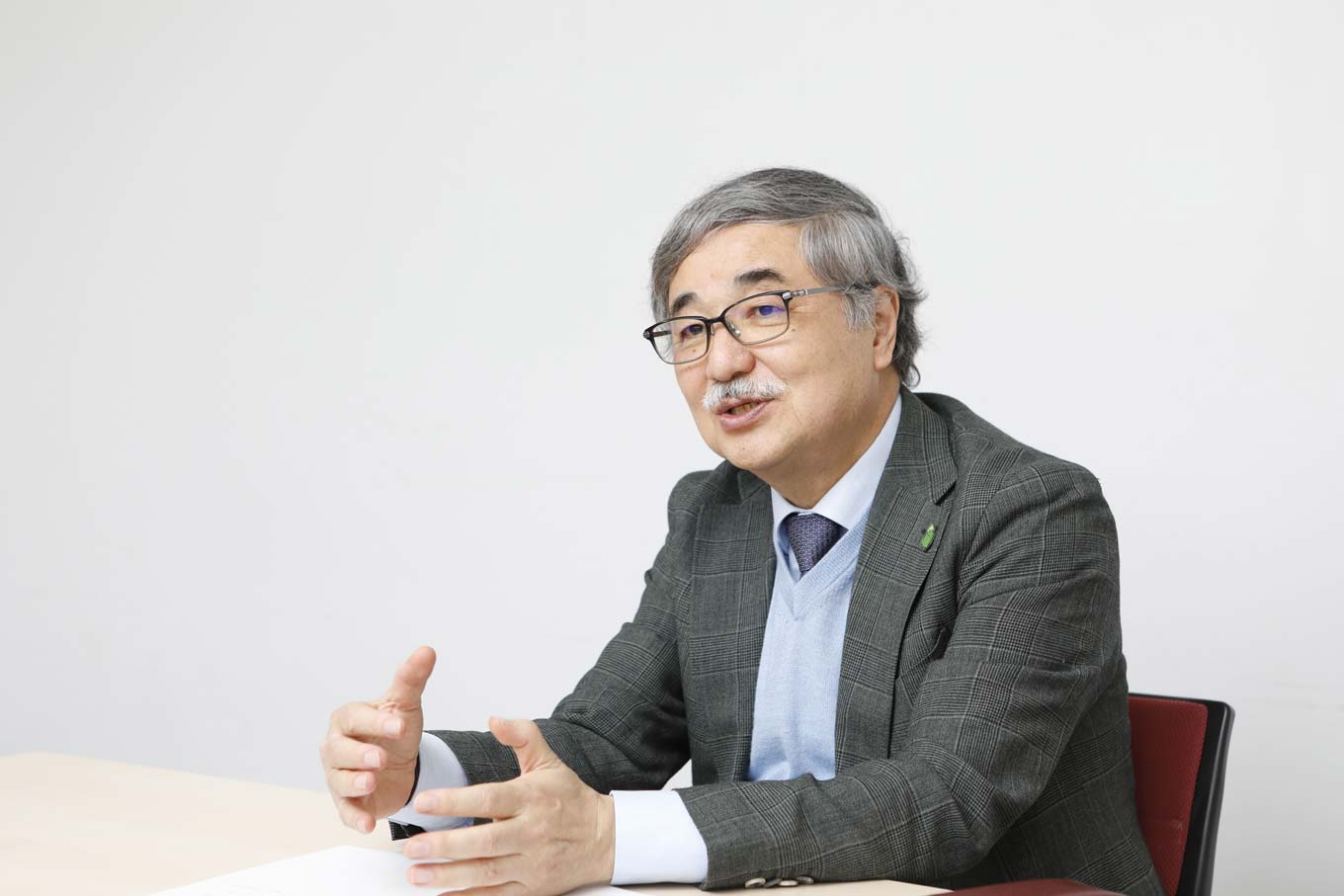
Nobuo Shirai: The Department was established to nurture leaders to help create a society able to take a comprehensive approach to solving various problems rather than trying to solve environmental issues separately. In fact, Musashino University already had a Department of Environmental Systems Sciences that was searching for ways to train leaders who could solve environmental problems.
However, we realized that a sustainable society cannot be developed simply by solving environmental problems; social issues such as economic development, economic disparities, social isolation, disaster preparedness, and more need to be tackled at the same time.
The Department of Sustainability Studies was therefore established as an evolution of the University’s Department of Environmental Systems Sciences, with the goal of cultivating human resources to promote development that takes the environment, economics, and society into consideration.
Journal: Is there really a shortage of leaders who can deal with the problems occurring in society in a comprehensive manner?
Shirai: Yes, there is. I often visit community development projects and local governments, and while I’m there, I feel that there just aren’t many people who realize the need for ties between people working in different fields of endeavor, such as those trying to solve different environmental issues, or the people trying to solve environment and economic issues or between those tackling environmental problems and welfare issues, and who can then promote comprehensive solutions. Actually, it might be more accurate to say that there are almost none.
In addition, the concept of LCA (Life Cycle Assessment*) is being emphasized more in recent years, with the trend to rate enterprises based on the environmental impact (CO2 emissions, etc.) for entire processes, from production to shipping to sales, rapidly taking hold. It is no longer considered enough to simply create products and services that sell; we are now expected to minimizing environmental impact.
It is therefore increasingly important for enterprises to grasp their own overall life cycle assessment and strive to comprehensively solve problems based on the structure of their systems.
There is rising demand in our society for coordinators who can bridge the gap between companies and companies, between governments and companies, or between citizens and companies, and help solve problems between them. There are limits to the efforts each party can make, so there is a need to form cooperative affiliations and help parties learn from each other.
- A means of evaluating companies by quantifying the multi-faceted environmental impact of goods and services.
Journal: What kinds of things do your students learn?
Shirai: They study a wide variety of subjects, starting with environmental ethics and justice, systems thinking, design thinking, facilitation, social research, media creation, life cycle assessment, and other courses where they learn basic methodology to give them both norms and overall understanding.
In addition, both the Social Design Course and the Environmental Engineering Course provide specialized courses in these majors.
The Social Design Course offers lectures on environmental policy, environmental economics, environmental psychology, sustainable management, social business, sustainable community development, education for sustainable development (ESD), and so on. Lectures offered in the Environmental Engineering Course cover such topics as environmental meteorology, biodiversity conservation, environmental analytic chemistry, risk management, resource recycling, and carbon management.
There is a vast range of fields in sustainability studies and the students in principle have only four years to study, so they have to customize their studies by selecting the lectures they want to attend. Nonetheless, we want all of the students to gain an integrated perspective on things through a comprehensive approach involving observation and analysis as they strive to become leaders who can help shape the future of our society.
Learning focuses on practical projects rooted in society through which students interact with others as they try to solve actual problems
Journal: Can you please explain the “Sustainability Project” course?
Shirai: This course starts in the second semester of the first year and continues through the first semester of the third year, and is scheduled for the entire day every Monday. Because they have the whole day to spend on this course, students are able to go off campus and actively work on their projects.
Faculty members choose key words to serve as titles for their projects — for example, climate change education, community design, circular center, ethical consumption, environmental labels, aquatic environment and watershed management, heat measures, green infrastructure, waste wood use, banana paper, marine plastic, and so on — and students refer to these titles when they choose which project to work on.
It is quite difficult for freshmen to pose their own questions and start doing research on their own, so usually they get support from the faculty member in charge of their seminar, but they are in charge of determining concrete policies for their projects. There have been cases, however, in which students were able to clearly state what they wanted to do from the beginning and then go on to form a team and start their activity.
Journal: Can you give an example of a Sustainability Project?
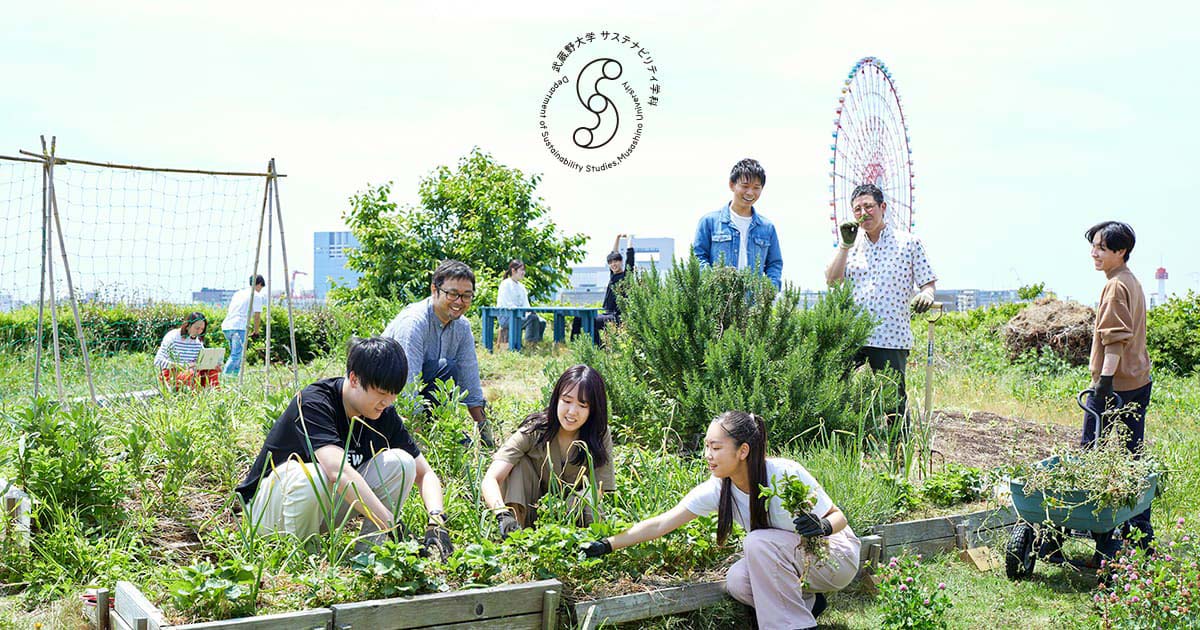
Shirai: One project was called Urban Permaculture. Permaculture refers to a design methodology aimed at a sustainable lifestyle in which human beings and nature coexist.
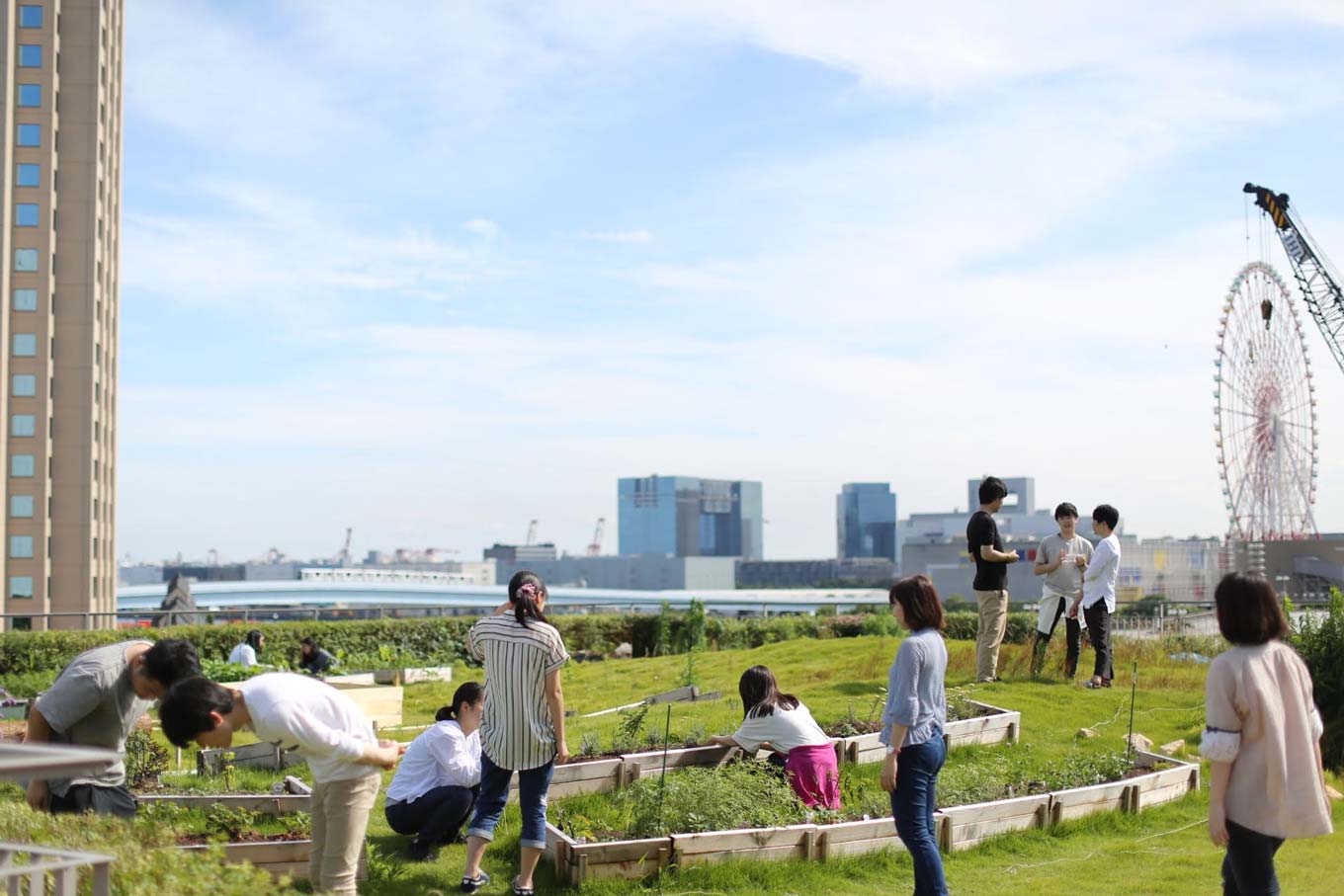
On the roof of a building on the Ariake Campus, where the Department of Sustainability Studies is situated, research is being conducted and a space is being created based on permaculture concepts. There, in an urban environment, people can develop ties to nature as well as to other people to develop a sustainable lifestyle based on circulating resources.
This space was originally a rooftop green space covered with a lawn, but now, fallen leaves are collected from the trees that line the streets in the area and made into compost, while the dirt is ploughed and natural farming methods are used to grow vegetables and herbs there. It welcomes not only students from our own department but also students from other departments, as well as people from local companies and school children who come to work in what is now our Community Garden.
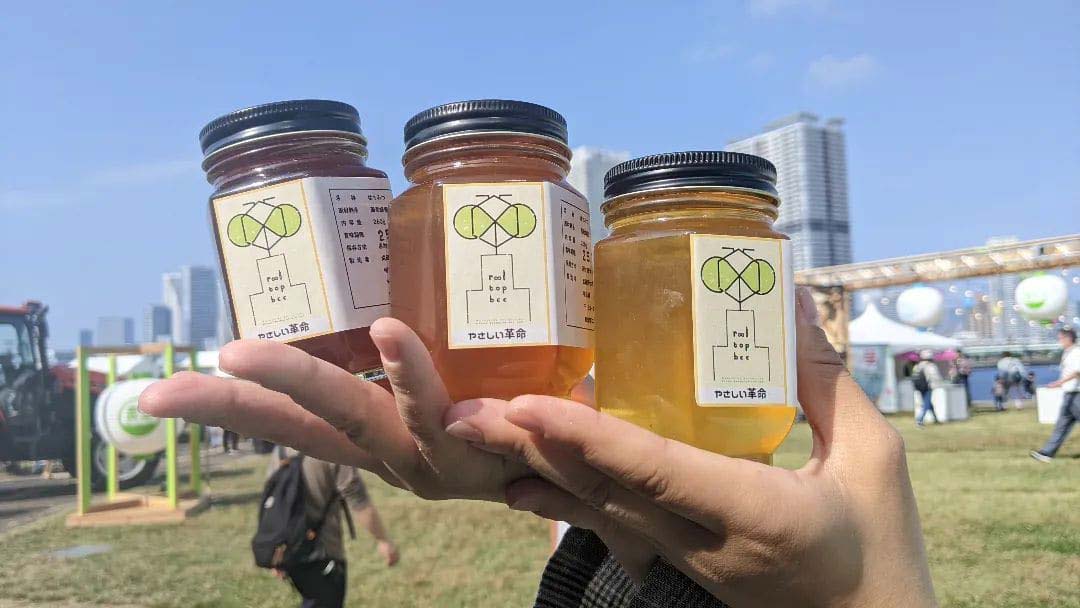
Shirai: We also keep bees in the rooftop garden. Honey is produced and also turned into products that are sold in the Musashino University café and through Muji outlets and other stores. The honey has been highly evaluated and is even used in a Michelin-starred restaurant.
Journal: It is wonderful that these activities have expanded outside the university.
Shirai: It truly is. We feel that to realize a sustainable society, it’s vital to generate the power of co-creativity through ties with the local community and businesses. We therefore place great value on opportunities to network with outsiders. The students involved in these projects go out to hear from the actual people coping with the issue they are learning about and in some cases, they reach out to people in the locality and enlist them to work on the project together.
Journal: Do many of the incoming students have clear awareness of environmental problems?
Shirai: Many of our students are quite interested in the environment, but probably not many have a clear awareness of environmental problems [laughs]. We held a workshop for students after they entered the university to help them think about what they want to consider during their four years at the university; some of the students posed questions like “What is peace?” “How can society eliminate wealth differentials?” and other questions unrelated to the environment.
It is important that the questions students try to answer come from the students themselves, so we let them go ahead and keep coming up with questions unrelated to the environment as long as they are related to sustainable development goals. We think that it’s fine for students with a range of questions about sustainability to come together; as they expand their perspective, they learn that they are all heading in the same direction even if they come in from different angles.
Journal: It has only been a little less than a year since the department was founded, but do you see any changes in the students?
Shirai: I can’t say that I can see any major concrete changes, but I think that their consciousness is changing. Since they are in an environment where they cannot just wait for the faculty to teach them things, but instead, have to learn on their own, I believe their consciousness will inevitably have to change.
Also, when students have just begun working on their projects, they have to deal with a range of difficulties and challenges: that in itself may be a kind of change. Recently the students were required to make presentations about their projects, and their presentations revealed the difficulties they faced learning how to decide on a topic, present it, and deal with a lack of progress even when members of the group had been at work discussing things.
Such difficulties cannot be avoided when people come together or people and organizations work together to try to solve problems, so I hope they will learn a lot from this process and work constructively to overcome their challenges.
Posing questions and engaging in creative conversations is the way to realize a sustainable society.
Journal: Climate change and other issues can only be solved if everyone changes their behavior. From what you personally have seen, do you feel that Japanese people’s awareness of environmental problems is changing?
Shirai: I have conducted a survey about people’s awareness of climate change in the city of Iida[1] in Nagano Prefecture for 10 years now, and find that their awareness is not necessarily rising. And this is in a city that has continued to carry out pioneering endeavors, and in an area where there are many environmentally conscious residents.
Even though climate change is clearly becoming more serious and residents are feeling its impact, many people do not know what they can do about it, so I think they just leave it to others to handle.
This is a region where environmental awareness has been high for a long time, but I think the people there have come to feel that they themselves have done everything that they can do on their own. They feel that when it comes to efforts to reach zero carbon[2] emissions, it is the government and businesses that have to act, and they don’t know how to get them to do so, so things have stagnated. This impasse is not limited to Iida.
Journal: How can we change that consciousness?
Shirai: I believe that creating opportunities to participate in social change and cooperation, to develop human resources who learn through civic action — in other words, education — is really important. In 2021, a notice from the Ministry of the Environment and the Ministry of Education, Culture, Sports, Science and Technology to all boards of education in Japan instructed them to put more effort into climate change education, but even so, I feel that there are not enough opportunities to think and learn about it more deeply.
There are increasingly more chances for young people to learn about SDGs in elementary, junior high, and senior high school, so the younger generation has a wealth of knowledge about these goals. I think it is important for them to use this as a gateway to begin to look at a range of problems and feel that social action is not so far removed from their lives.
Journal: What can each of us do to realize a better, more sustainable society?
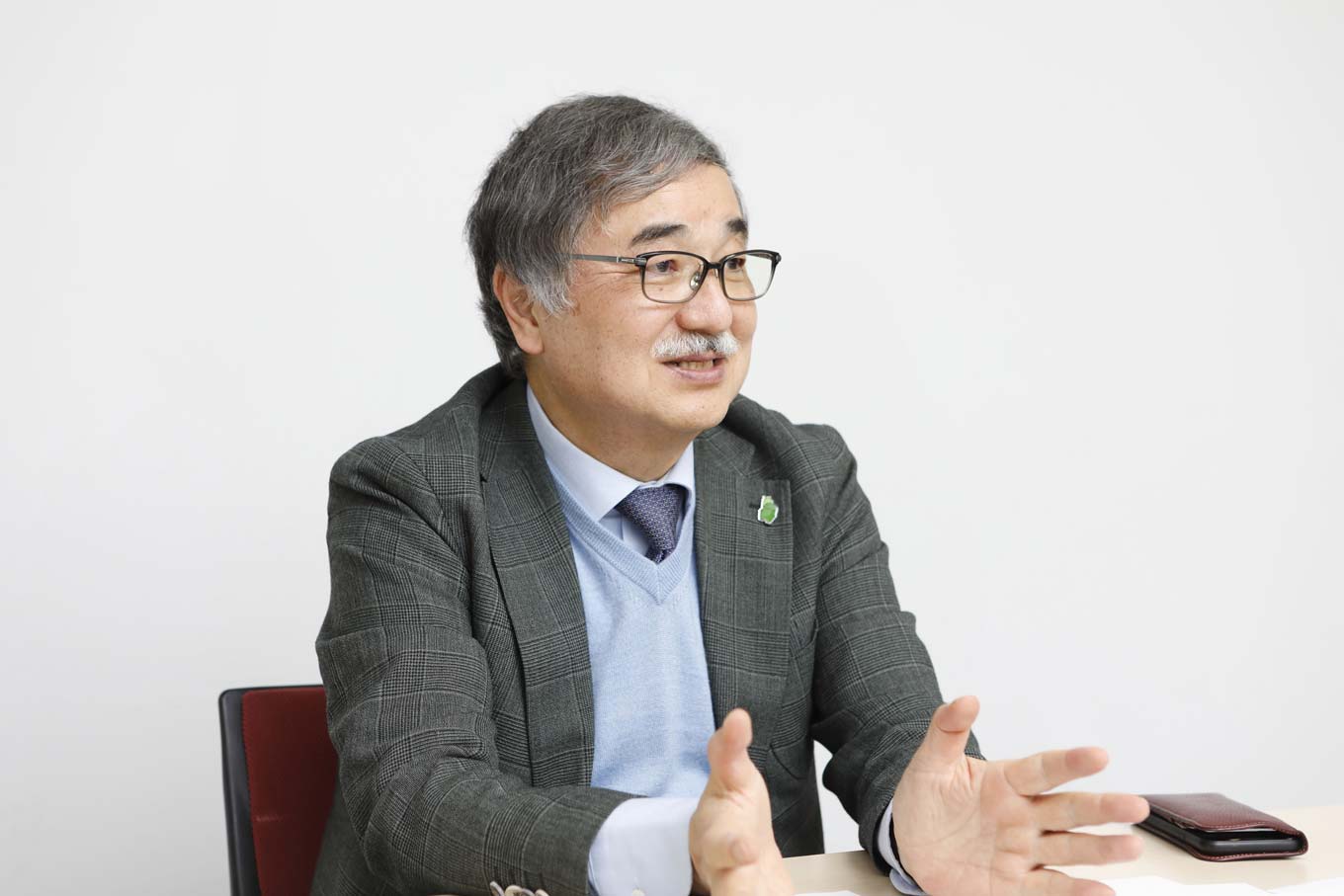
Shirai: First, it is important to think about what kind of society we should be aiming for. If people would think about what a sustainable society where people can be happy would look like and share their ideas, we should get a clear idea of the areas where more work needs to be done.
Also, one of the things we are emphasizing a lot in the department’s projects is having each person pose questions for themselves. What’s important is searching for the answers to those questions not through majority opinion or even debate, but through creative conversations with others.
Understanding others leads to personal introspection. Relationships are built on mutual understanding, and places where relationships are formed — that is, society — can be transformed.
This means not thinking alone, but creating places where you can forge bonds with people who don’t think like you do. I feel that it is important to develop the capacity to use the ties you develop to change yourself and society, too.
In the fall of 2023, the Department of Sustainability Studies of Musashino University published the textbook “Key Words for Sustainability” (external link, in Japanese), which brings together the Department’s sphere of learning and emphasis as well as its fundamental philosophy. It should serve as a good reference.
- Note 1: The city of Iida is aiming to become an eco-model city, with local businesses, citizens, and NGOs working together to carry out a variety of efforts to solve environmental issues. Reference: “The Example of Iida City, Nagano Prefecture, Pioneering Energy Autonomous City, SDGs and Regional Revitalization” (Volume 3, Issue 1); Kodansha SDGs by C-Station (external link, in Japanese).↩︎
- Note 2: Efforts to reduce emissions of greenhouse gases, including CO2, to zero.↩︎
Editor’s Note
Consider environmental problems that are growing more serious by the year, develop some questions, and then engage in creative conversations: these are the tasks given to the students of the Department of Sustainability Studies. We felt that these are the same activities each of us in society at large should be engaged with.
It takes courage to take a seat at the same table with people whose ideas differ from yours, but the synergy born of such conversations will surely be useful to society.
Text: The Nippon Foundation Journal Editing Department
Photo: Emi Enishi
- Note: Information is accurate as of the date of the original publication.
Profile
Nobuo Shirai
Chairperson of Department of Sustainability Studies, Faculty of Engineering, Musashino University. B.E. in Environmental Engineering, School of Engineering, the University of Osaka. Completed the Doctoral program at the Division of Environmental Engineering, Graduate School of Engineering, the University of Osaka. Professional Engineer (Environmental Division), specializing in social research. After working at a private think tank, Shirai became a Professor at the Sustainability Research Institute, Hosei University, moved on to work as a Professor in the Sanyo Gakuen University Faculty of Regional Management, and then assumed his current post in April 2023. His research focuses include sustainable community development, environmental policy, and sustainability studies.
Related Themes
Related Links
Related Articles
From Streets to the Sea: How The Nippon Foundation Turns Cleanup into a National Movement
Field Notes