Collaboration and Connection: Reimagining the Global Nikkei CommunityExploring the evolving identity of the global Nikkei diaspora and the community-driven platforms shaping its future
Nikkei is typically defined as the worldwide community of people with Japanese lineage, including descendants of Japanese migrants who built communities abroad, particularly in Latin America and North America. There are an estimated 3.8 million Nikkei living around the world, spanning up to six generations, mixed-heritage families, and increasingly diverse identities that stretch beyond the traditional definitions of diaspora.
According to the 2020 Global Young Nikkei Survey, 74% of young Nikkei respondents reported a strong sense of Nikkei identity, 79% felt connected to Japan, and 90% expressed a desire to connect with Nikkei across borders. But despite this desire for connection, many younger Nikkei are moving away from formal community organizations, with traditional prefectural associations and local cultural groups reporting aging memberships and declining enrollment. Meanwhile, institutions that have historically preserved community memory are struggling with limited resources and generational transition.
These shifts are prompting organizations around the world, including The Nippon Foundation and the Japanese American National Museum (JANM), to rethink what Nikkei identity means in the 21st century and how global Nikkei communities connect with each other and with Japan itself.
The evolution of a global Nikkei network
The Nippon Foundation’s relationship with Nikkei communities dates back more than 50 years, but the nature of that work has evolved from support to partnership. In the 1970s, its work focused on humanitarian and infrastructure initiatives, including funding hospitals and nursing homes for Japanese communities in Latin America and assisting stateless Nikkei in the Philippines in regaining their nationality. As recently as 2024, the Foundation provided emergency aid to those affected by severe floods in southern Brazil.
Most of the Foundation’s work with the Nikkei community during the 2000s had expanded into human capital development through scholarship and exchange programs designed to nurture the next generation of bridge-builders between Japan and their home countries.
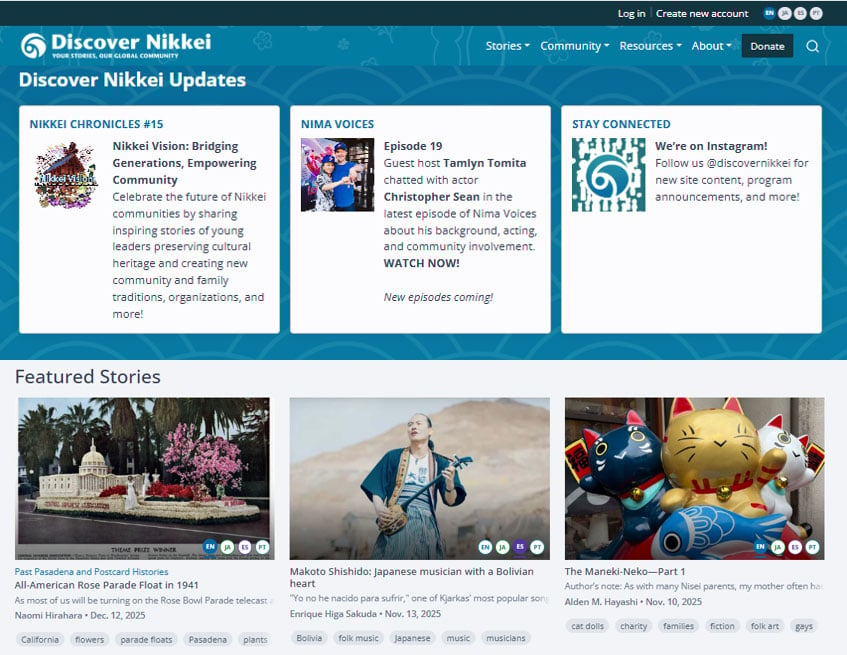
The organization’s approach is still evolving, focusing on collaboration, infrastructure building, and global networking. It aims to serve as a catalyst—supporting the platforms, partnerships, and opportunities to encourage Nikkei communities themselves to connect, collaborate, and shape their own future. That transition is perhaps most visible through its partnership with JANM’s Discover Nikkei project, a community website that aims to highlight Nikkei identity, culture, and history. The site launched in 2005 as an academic and archival resource documenting Nikkei histories worldwide. 20 years later, it has evolved into a global, community-driven platform operating in English, Japanese, Spanish, and Portuguese.
“We think about ‘Nikkei’ as referring to Japanese immigrants and their descendants who have created communities throughout the world,” says Ann Burroughs, president and CEO of JANM. But she stresses that Nikkei identity today is “not defined solely by lineage to Japan.”
“It is also shaped by a whole range of cultural elements, whether it’s food, fashion, or holiday traditions, but really those cultural elements sustain a sense of belonging across generations and geographies,” she says. “It’s about sharing stories about cultural identity and the identity bonds that remain very strong, even though they might evolve very differently in different parts of the world.”
“We’ve had two decades of producing what I believe is a very rich and meaningful body of knowledge and community,” Ms. Burroughs says. “When it was started, it was primarily centered on academic networks and researchers. Over the past 20 years, it’s evolved really quite dramatically into a community-driven and globally connected platform.”
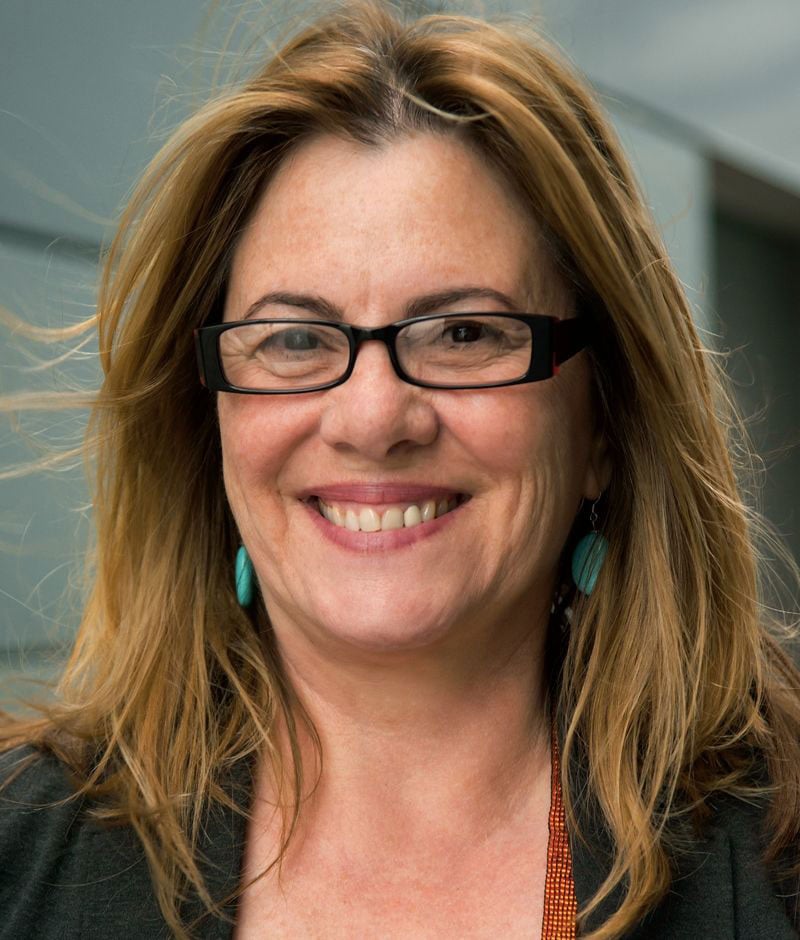
Users contribute essays, oral histories, creative writing, and discussions from across the diaspora. Ms. Burroughs describes the platform less as a static archive and more as “an extended family gathering space.”
“It’s become an incredibly valuable crowdsourcing platform,” she says. “It’s made the stories visible, documented, and shared the stories of Nikkei communities around the world, many of whom may only have had a loose connection to Japan itself.”
Redefining the Nikkei community
The transformation reflects generational changes throughout the diaspora. Ms. Burroughs suggests that younger Nikkei aren’t abandoning community but are redefining what it looks like.
“The existing formal community organizations were originally built in response to social conditions and community needs of earlier periods,” she says. “But that’s not always what the younger generation needs.” Instead, younger Nikkei increasingly create communities around shared interests, identities, and experiences rather than inherited institutional structures.
Some seek cultural reconnection, others are drawn toward activism, mutual support networks, creative collaboration, or professional exchange. Many are multiracial, multilingual, and globally mobile, making older, more rigid definitions of Nikkei identity feel inadequate.
“We can’t treat Nikkei as a single uniform category in the way that we could have in older generations,” Ms. Burroughs says. “Younger Nikkei are themselves very, very diverse, multiethnic, multiracial.” This evolution is also reshaping how the Nikkei identity itself is understood. Ms. Burroughs describes many contemporary Nikkei as inhabiting a “third culture” space; neither fully Japanese nor fully defined by the countries in which they live. “Nikkei identity often exists as one element, one part of broader overlapping identities,” she says. “They’re hybrid identities and hybrid communities.” That hybridity, she suggests, may actually be one of the diaspora’s greatest strengths.
Beyond preservation
Historically, conversations around diaspora communities often centered on cultural preservation: maintaining language, traditions, and heritage abroad. But Ms. Burroughs believes Nikkei communities now have a much broader global relevance. Shared cultural understanding, transnational experience, and familiarity with multiple social systems position Nikkei communities as important bridges across diplomacy, business, and policymaking.
“Nikkei themselves function less as a defining identity and more as a relational framework that can support communication, collaboration, and mutual understanding across a multiplicity of global contexts,” she says. That role may become increasingly important as Japan confronts social changes at home, including demographic decline, increasing immigration, and growing debates around diversity and multicultural coexistence.
“Nikkei communities around the world already possess lived experiences that are highly relevant to some of the challenges Japan is increasingly having to confront today,” Ms. Burroughs says. “There’s an enormous amount Japan can learn from the lived experience of Nikkei in the diaspora.”
For Ms. Burroughs, this reframes the relationship between Japan and overseas Nikkei communities. Rather than seeing diaspora communities primarily as recipients of cultural outreach, she sees them as equal participants in shaping future conversations about identity, migration, and belonging.
Building a living global network
The changing political climate globally has also added urgency to these connections. Ms. Burroughs notes that while Discover Nikkei does not have hard data on the emotional impact, the importance of diaspora connections became especially evident during the COVID-19 pandemic’s isolation and amid rising polarization worldwide.
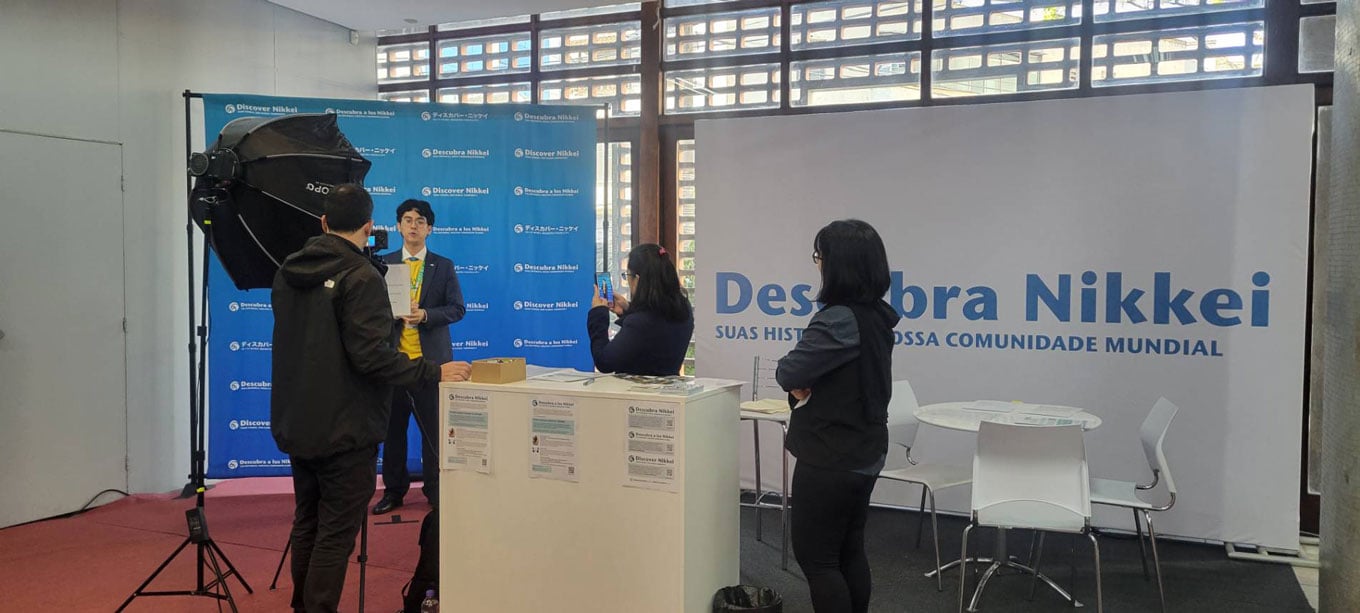
“In a diaspora community, resilience comes from connection,” she says. “There’s no question that Discover Nikkei plays an important role in this.” That emphasis on resilience, built through storytelling, shared memory, and transnational connection, has become central to the platform’s evolution.
Ms. Burroughs believes the future lies not only in preserving history but also in creating living, interactive networks that allow younger generations to reinterpret that history for themselves. “We want those stories to have meaning,” she says. “They only come to life when people engage with them.”
The Nippon Foundation’s long-term involvement, she says, has been crucial precisely because it has approached the project not simply as a funder, but as a collaborative partner helping shape the platform’s direction and possibilities. “It’s been a very different relationship,” Ms. Burroughs says. “There’s a shared vision for engagement, for what that shared knowledge can look like and where we can go with it.”
Reimagining diaspora for a global age
The challenges of the Nikkei community are similar to those facing societies worldwide: how diaspora identities evolve across generations, how hybrid identities reshape culture, and how communities maintain connection in increasingly fragmented political and digital environments.
For Ms. Burroughs, those questions extend well beyond Nikkei communities themselves. “History today is often understood through frameworks of national identity defined by present-day borders,” she says. “Yet the existence of Nikkei communities around the world demonstrates that people have lived and moved across borders in deeply global ways across generations.”
Her hope for the next decade is the emergence of a truly interconnected global Nikkei network, in which local stories, identities, and experiences remain distinct while still contributing to a broader sense of solidarity. “My aspiration is that there will be a meaningful global network in which Nikkei communities around the world can learn from each other’s diversity while also celebrating their shared experience as a source of hope and resilience,” she says.
As younger generations continue to redefine their identities, organizations like The Nippon Foundation and JANM are increasingly focused less on preserving an unmoving idea of Nikkei culture and more on building the infrastructure that allows those identities to evolve organically.
Related Themes
Related Links
- Together with Nikkei Communities
- The Nikkei Scholarship
- Discover Nikkei
- Japanese American National Museum