Men Have It Tough, TooWhat men’s studies teach us about gender equality

Key Points
- Gender equality is urgently needed to sustain Japanese society, with its low birthrate and ageing population.
- Instead of wrangling with each other, men and women need to come together to change the root causes of the common problems they face.
- We need to deepen our understanding of the social system that continues to reproduce the inequality of the sexes.
Although gender equality is emphasized all over the world, Japan lags behind in efforts to reach this goal, with its ranking in the World Economic Forum’s Global Gender Gap Index[1] for 2023 falling to 125 out of the 146 countries in the survey — its lowest ranking ever. On the other hand, one survey[2] showed that Japan’s men are less happy than its women and that the gap between them is widening.
“Gender issues” are often conflated with “women’s issues,” and while men might not argue with this perspective, it is not at all unusual for them not to have given much thought to the topic of gender.
In thinking about how to create a society in which people’s options and way of life are not limited because of their biological sex and all can fully utilize their capacities and potential, we realize that a key to making the needed changes in the world lies in increasing the number of men who consider gender issues to be their own problem.
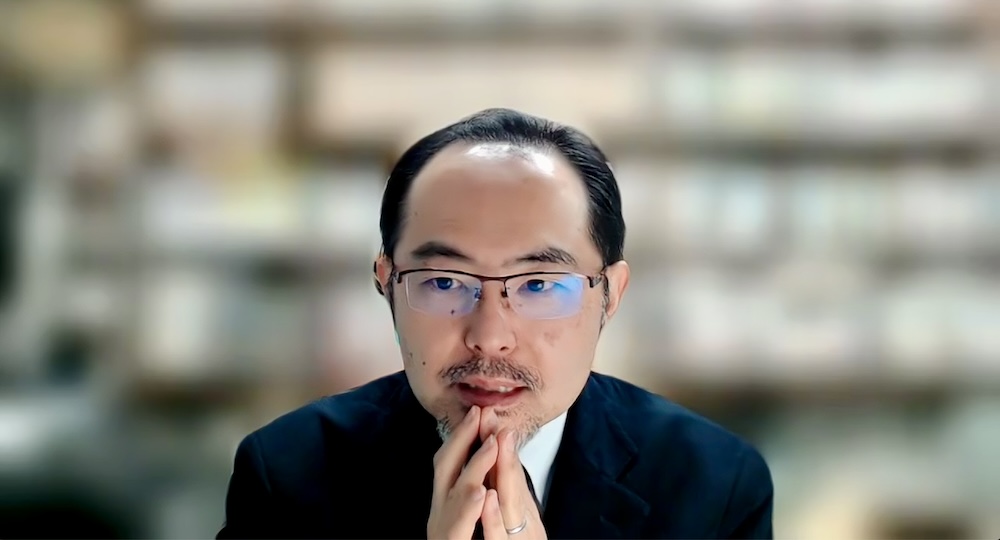
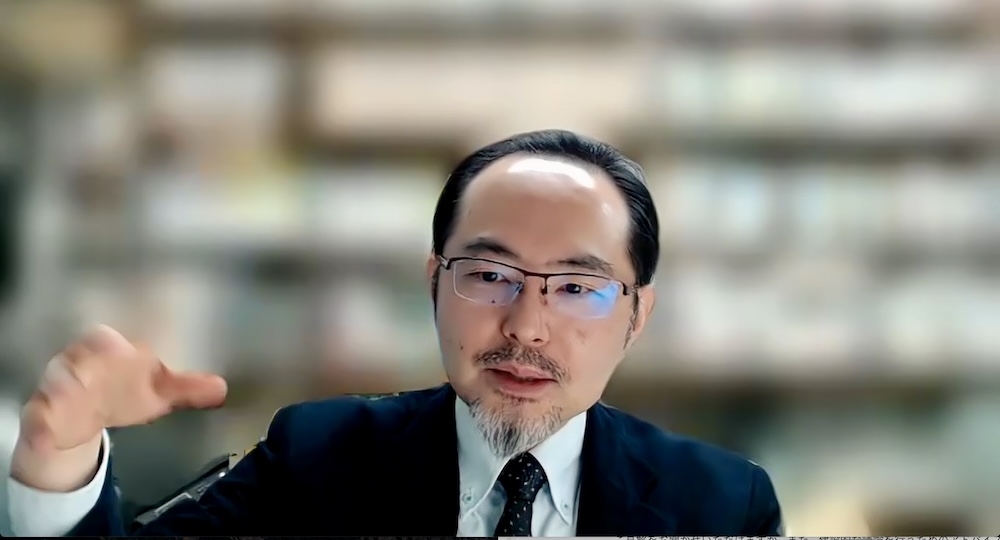
We therefore decided to learn more about the issue of gender as seen from the male perspective by interviewing Futoshi Taga, Professor in the Faculty of Letters of Kansai University, whose field of research is men’s studies and masculinity.
- 1. Reference: “Global Gender Gap Report 2023,” World Economic Forum (external link / PDF)↩︎
- 2. Reference: “Second Well-Being Survey,” Asako Sustainable Lab® (external link, in Japanese)↩︎
Men’s studies: investigating how masculinity is constructed in society
The Nippon Foundation Journal Editing Department: Can you please start by explaining what the field of men’s studies involves?
Futoshi Taga: As we can surmise when we consider norms of masculinity, males, too, feel the impact of society’s gender norms in their daily lives. The field of men’s studies therefore regards males as gendered beings and investigates how they are differentiated from females.
During the 1960s and 70s, the women’s liberation movement (second-wave feminism) spread in the West as well as in Japan, resulting in the establishment of the academic field of women’s studies, which strives to incorporate women’s perspective into reconsidering norms for women and the way women are viewed in all academic fields. The women’s liberation movement and women’s studies argued that the norms that place women in an inferior position to men and restrict their life choices are not a result of their biological destiny, but are actually created by society, and therefore it must be possible to change them.
In response to these claims, men began to realize that concepts of men were also formulated by society in a way that was different from women, and they began to question their own ways of being male. This led to the start of men’s studies.
Journal: What role does the field of men’s studies play in dealing with gender issues?
Taga: I think it plays at least three roles. First, it adds the perspective of how male norms are related to the problems women face.
Obviously, in striving to solve the difficulties women face, it is important to pay attention to women and clarify what their actual situation is. However, many of the problems women face are actually born of their relationship to men. So, they can’t be solved by simply changing women without changing men as well. Rather, changes in men may well be the key to solving women’s problems. It is therefore important to pay attention to the norms society constructs for men and clarify how they are related to the problems women face, and then promote changes in men.
The second role played by men’s studies is illuminating how hard it can be for men to live their lives. Feminism and women’s studies helped women verbalize the difficulties they faced just because they are women and thereby clarify these realities. Seeing women’s claims, men began to realize that men have hardships and stresses in their lives that are not the same as those women face, and they began to verbalize them.
Many of the difficulties men face in life are not due to their being looked down upon; instead, many arise because men are expected to be superior to women, and are forced to compete and advance more than women, to put up with more and meet unreasonable demands. Instead of thinking of this as discrimination against men, we should think of these stresses as the price they pay for dominance.
In any case, men’s studies shed light on the fact that men also suffer from socially constructed gender norms, making men realize that gender issues are their issues, too. These studies also point out that the promotion of gender equality has direct benefits for men themselves and is therefore quite significant in motivating them to change.
The third role played by men’s studies is to reveal the diversity and power relations among men. The word “men” covers males in a wide range of conditions: there is discrimination among men and dominating/dominated relationships between them.
Differences in social positions and economic power are tied to the achievement of masculinity, with those who are seen as ideal men looking down on those who are not…. These problems are not unrelated to gender, but they can be hard to deal with in the field of women’s studies. Using the perspective of gender to clarify the diversity and discrimination among men is also one of the roles of men’s studies.
Social systems and people’s consciousness reproduce gender inequalities
Journal: What are some of the gender issues that men in Japan unconsciously deal with?
Taga: Probably the biggest gender issue for men in Japan is the pressure to earn money.
As one exercise in my university courses, I ask my students to predict their future life course — the kinds of life events they think they will experience and when they think they will experience them. Then I have them think about how their future might be different if they were the opposite sex. Many of the male students say they would do the kind of work they’d like to do without thinking about how much income they would earn. I then ask the male students what kind of standards they are using to choose occupations, and they tell me that they prioritize earning a stable income. If they were not held responsible for earning an income, they would choose a different occupation and workstyle, they say.
Even among the younger generation, where it is now taken for granted that both husband and wife will work, the males feel that it would be hard to choose not to earn money; in the end, the idea that they have to provide support is quite strong. I get the impression that even among students around the age of 20, the pressure to earn money is firmly instilled in males.

Journal: Why is it that Japanese men feel this pressure to earn money?
Taga: After World War II, Japan’s economy developed under a system in which men were the breadwinners. They were expected to work long hours to earn enough money to support a family, while women were expected to rely on men economically while taking responsibility for the home.
In the West, after the oil shock of 1973, the system of men serving as the sole breadwinner gradually lost steam and dual-income couples became the norm. In Japan, however, the economic growth under the system of male breadwinners was sustained until the early 1990s, when the so-called “bubble economy” collapsed, so there was no need to change this social structure until then.

Taga: However, this kind of social structure cannot be maintained without people supporting it and conforming to it. If the number of people who think that it is all right for a man not to support his family increases, the justification for the male breadwinner system will be shaken. So, isn’t the pressure on males to earn money a cultural construct to prevent this?
I feel that there is a kind of force field around us that is trying to maintain the male breadwinner system.
Journal: So, are you saying that this force field is created by a combination of social mechanisms and people’s consciousness?
Taga: That’s right. They drive men to compete and succeed at work and put pressure on them not to step down. They put breadwinners on a pedestal, extolling them as “real men,” while disparaging men who don’t earn a lot or who rely on women economically as “unmanly.”
When they are in this kind of force field, it is hard for men to think it is all right not to earn money. Women also tend to think poorly of men who are not earning a lot, and don’t regard them as attractive partners, so they also tend to be caught up in this force field.
Moreover, there are a host of social systems that shape the force field that leads people to take part in the male breadwinner system. These include Japan’s insurance system for dependent spouses and special tax exemption for spouses, as well as extremely high overtime pay rates and spouse allowances for workers. These are all designed to actually make it more economical for wives to be their husband’s dependent and for husbands to act as the breadwinner who works long hours. People don’t like belittling the choices they’ve made, so they speak of them approvingly or at least accept them as unavoidable. This is why the male as breadwinner system has persisted.
So, when considering gender issues, I believe it is important to be aware of this kind of force field in our society.
In a male-dominant society, men themselves are forced to continue playing an unreasonable role
Journal: It is easy to think that gender equality benefits women. Can you explain why it is also necessary for men to promote gender equality?
Taga: There are three main reasons. First, promoting gender equality is essential to achieving a sustainable society. No matter what men’s sense of values may be, if we don’t advance gender equality, it will not be possible to sustain Japan’s economy, let alone the functioning of its society. That’s the actual situation Japan is facing today.
During Japan’s period of high economic growth, young people made up a high proportion of the country’s total population, so society was able to function thanks to an abundant supply of men who did paying work and a plentitude of women who took care of housework and childrearing without being paid. But with the current low birthrate, Japan’s society is aging, so there will be severe labor shortages if we limit the workforce to men. There will be increasing demand for women to work, so we can no longer ask women to shoulder the burden of homemaking and community support on their own. We therefore need to ask everyone, regardless of sex, to do both paid work and housework as much as possible, while also raising productivity and efficiency in order to sustain the nation. It’s essential that everyone — including men — recognize that gender equality is a pressing issue.
Taga: The second reason why men should support gender equality is that, while it is true that one aspect of the promotion of gender equality is undoubtedly that it will solve problems that women face, it is not something that is totally unrelated to men.
When discussing gender issues, people often think that the relationship between men and women is hostile, but are they really enemies? There are many women among the people men are close to and who are precious to them, including their mothers and daughters, lovers and wives, as well as female friends and colleagues.
Men must find it sad that these valued women are treated unfairly in the male-dominant society and that they may become victims of violence. On the other hand, wouldn’t a society where women are not threatened by such discrimination and violence be a happy one in which it would be easy for men to live, too?
Even if the promotion of gender equality is carried out to solve women’s problems, if it ensures the peace of mind and security of people important to men, it really is not someone else’s concern; it makes sense for them to be engaged in it, too.
The third reason is that the promotion of gender equality will benefit men and help solve their problems, too. Building a society in which anyone, regardless of their gender, can live easily will be a very potent way to boost the well-being,* health, and quality of life for men.
Under the male as breadwinner system, men are expected to embody the image of the ideal man who is successful at his job and earns a stable income, but not all men can live up to this ideal, and many suffer because of it.
Moreover, many of the men who are fulfilling their role as breadwinner may be forced to work undesirably long hours in exchange for their income and may not be able to spare time for childrearing or their personal life even if they want to; they may even be forced to endanger their health.
Therefore, the promotion of gender equality frees men from the onus of being the sole provider and may be the key to their being able to lead a more balanced, healthier life.
- “Well-being” refers to a positive physical, mental, and social state. In particular, it signifies a condition in which people have a satisfactory lifestyle with full social services.
Why there are still conservative young people despite progress in gender equality
Journal: Although challenges remain, it seems that society is gradually moving toward gender equality.
Taga: Yes, such values are actually becoming more widespread and systems are becoming more gender-equal little by little.
On the other hand, there are undoubtedly people who were not particularly uncomfortable with the conventional norms for men and women who may feel anxious or grumble about being forced to change when they don’t feel the need to.
While we should promote gender equality, we should not completely ignore such people’s feelings; instead, we need to give them a certain amount of consideration while offering support so that they can make a soft landing as they move towards gender equality.
And while it is generally thought that the younger generations understand the promotion of gender equality better, that is not entirely true.
For example, in a number of surveys, it was found that young people tend to have negative views of fixed gender roles as expressed in the Japanese saying, “Men work, women mind the home,” while older people tend to view such ideas more positively. On the other hand, the proportion of younger people who oppose the promotion of gender equality is higher than that of the older generations.
Journal: That is surprising! I thought young people were more conscious of the need for gender equality.
Taga: For better or for worse, older men tend to have paternal sentiments, and while they view fixed roles for men and women positively, they have personally experienced how men have received preferential treatment in society, so I think they have a tendency to think of women as weak and in need of protection.
Moreover, they find it hard to believe that the position they have obtained through this preferential treatment will be threatened, even if policies supporting women are put in place in the future. This is why they are not so put off by policies promoting gender equality.
In contrast, young men today have heard much more about the concept of gender equality since they were children than men of the older generation did, so they tend to oppose fixed gender roles. At the same time, however, precisely because they are accustomed to the values of gender equality, they have little awareness that they are getting preferential treatment because they are male, and therefore don’t feel much of a need to actively promote gender equality.
This is probably why they may easily fall into the trap of thinking support policies for women are “reverse discrimination.” I imagine that this is what is behind the phenomenon of some young men speaking out and acting out in antifeminist ways, rather than seeing it as a lack of understanding or simply as deepening conservatism.
Today’s middle-aged and older men are the ones who have benefited from preferential treatment. Of course, it is necessary to support women, but when doing so, I feel it is also important to make efforts to detect the feelings of young men and take measures to deal with them.
Journal: So, we need to move beyond the stage where, when women say they have it tough, men retort that they have it tough, too.
Taga: As I just explained, while there are males who rebel against policies designed to support women as weak members of society, there are also women who respond to males who say men have it tough by saying that in a society where men are given preferential treatment, it is not right for them to claim that they have it tough, or claim that women have it tougher. There are also some males who support these women’s statements.
Yet, silencing men who feel that it is tough to live as a man will not solve any problems, and it cannot be denied that it might possibly transform the dissatisfaction of the males who have nowhere to go into hostility towards females.
The goal of the gender equality movement is to eliminate the situations in which people suffer actual disadvantages, are disrespected, or have their choices in life unfairly restricted on account of their sex.
This is why, instead of fruitless debates over which sex has a harder time, males and females should reach out to each other and explain their cares and struggles to each other and try to find the common roots of their problems so that they can work together to change them. Won’t this help them create a win-win situation?
One person sharing their awareness of the problem with many others can change public opinion
Journal: What actions can each of us take to bring about gender equality?
Taga: Gender issues tend to be talked about in terms of individual male and female relationships and values, but it’s also important to understand them in terms of social constructs.
Earlier, I mentioned the force field that creates a society in which men serve as the breadwinners, but we need to be aware of the fact that our lives are largely constrained by society’s laws, its economic norms, and employment conditions.
For instance, if a wife works part time and her husband has a full-time permanent position and his overtime pay is higher than her hourly wage, it makes more sense economically for the husband to work longer hours and the wife to do the housework than it would for them to work similar hours and split the housework. However, if the husband really does not want to work overtime and the wife would like to work more, this choice would be one which both would be psychologically reluctant to make.
This is why I feel that if we can understand the social mechanisms that are the root causes of both men’s and women’s problems, and think about how we can work together to improve the situation, we may be able to mitigate the unfortunate hostility between men and women.
Journal: I imagine it would take a tremendous amount of energy to change the system.
Taga: Of course, it’s not the kind of thing that can be changed by a shift in one person’s consciousness. All the same, individuals are not completely powerless either. Today, anyone can send out information on social media and collect signatures online.
First, each of us needs to verbalize our worries and our pent-up feelings and share them with others in the same position. At the same time, we need to refrain from aggrandizing interpretations that are favorable to us: we also need to listen carefully to the voices of people in positions that differ from our own.
By doing this, many people will come to understand the common underlying causes of the problems we discover and these ideas will be transformed into public opinion, perhaps even being reflected in the political sphere and leading to improvements in social systems.
Editor’s Note
Listening to Professor Taga, we learned that even though ways of working and lifestyles have diversified greatly in Japan, gender issues in this country remain firmly rooted in the social system that boosted postwar economic growth, and the resulting gender gap is causing pain not only to many women, but also to many men. We also felt that the many negative consequences of this system are a serious problem for the young people who will lead Japan in the future.
Instead of a battle of the sexes, we think that it is vital for men and women to listen to each other’s opinions while keeping the overall picture of Japan today in mind and then share ideas about what they feel the problems are and what issues they need to solve.
Text: The Nippon Foundation Journal Editing Department
Profile
Futoshi Taga
Futoshi Taga is a Professor in the Faculty of Letters of Kansai University. He graduated from the School of Education of Kyushu University in 1991 and completed his doctoral studies in the graduate school of the same university in 1996, receiving his PhD from the university upon acceptance of his thesis entitled “Research on the Formation of Male Gender” in 1999. After serving as an associate professor in the Faculty of Literature in Kurume University, he moved to the Faculty of Letters at Kansai University, where he assumed the post of associate professor and then became a full professor in 2009. He has served on the Board of Directors of the Japan Society for Child Study, is a Representative Director of the White Ribbon Campaign Japan, a Director of DV Boushi Network (a nationwide nonprofit organization dedicated to prevent dating violence), a member of the Council of the Japan Association for Women’s Education, and serves on the Councils for Gender Equality in Nara Prefecture and Kyoto City, among other activities. His research areas include the sociology of education, gender studies, and men’s studies. His many publications include “Jenda de Yomitoku Dansei no Hatarakikata / Kurashikata: Waku Raifu Baransu to Jizoku Kanou na Shakai no Tameni” (“Understanding Male Working Styles and Lifestyles Through the Lens of Gender: Towards the Development of Work-Life Balance and a Sustainable Society;” published by Jiji Press) and “Otokorashisa no Shakaigaku: Yuragu Otoko no Raihukosu” (“The Sociology of Masculinity: The Wavering Male Life Course;” World Ideology Journal).
Note: Positions current as of March 2024.