With Regional Healthcare Disparities Widening Amid an Aging and Declining Population, Air Ambulance Services Are a Potential Solution
Key Points
- Regional disparities in the availability of healthcare are widening in Japan as the country’s population declines due to a low birthrate and aging society.
- Mesh Support, an organization that provides medical support across the Ryukyu Islands, is working to address this disparity by using aircraft and helicopters.
- The goal is to establish small aircraft air ambulance services as a public service. To achieve this, raising awareness of the current state of healthcare in remote and island areas is essential.
One reason we are able to live with peace of mind in Japan is the availability of healthcare services. We can rest easy knowing that even in the event of a sudden illness or injury, high-quality medical treatment is available. Sound healthcare is a crucial factor in building a safe and secure society.
At the same time, however, regional disparities in the availability of healthcare are widening in Japan as the population declines due to a low birthrate and aging society. Many remote islands in particular face a shortage of medical personnel, as well as a lack of facilities and equipment. At the same time, demand for medical services is increasing as residents age.
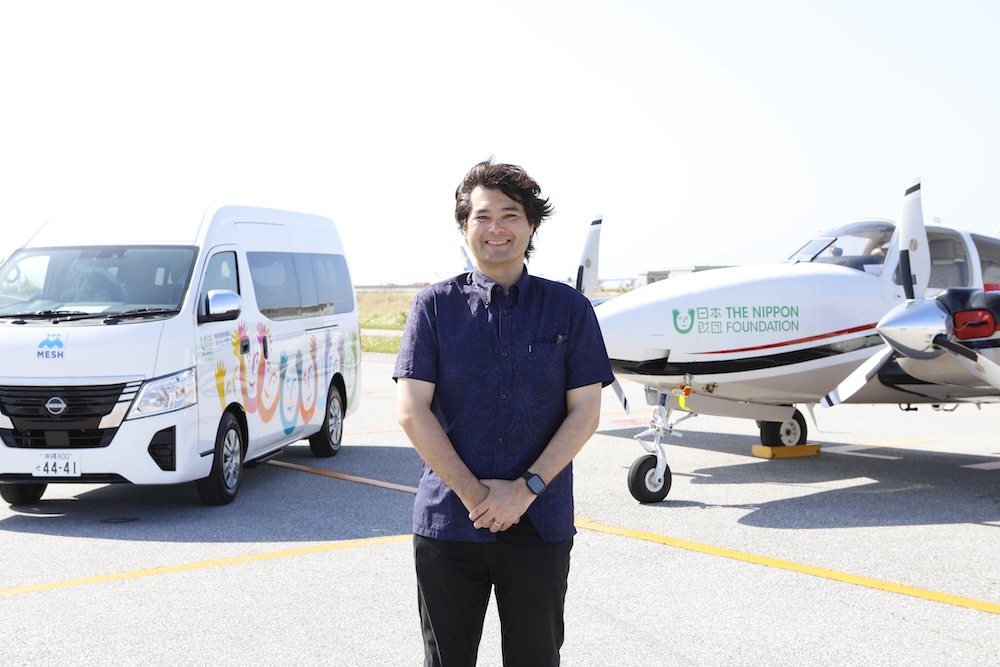
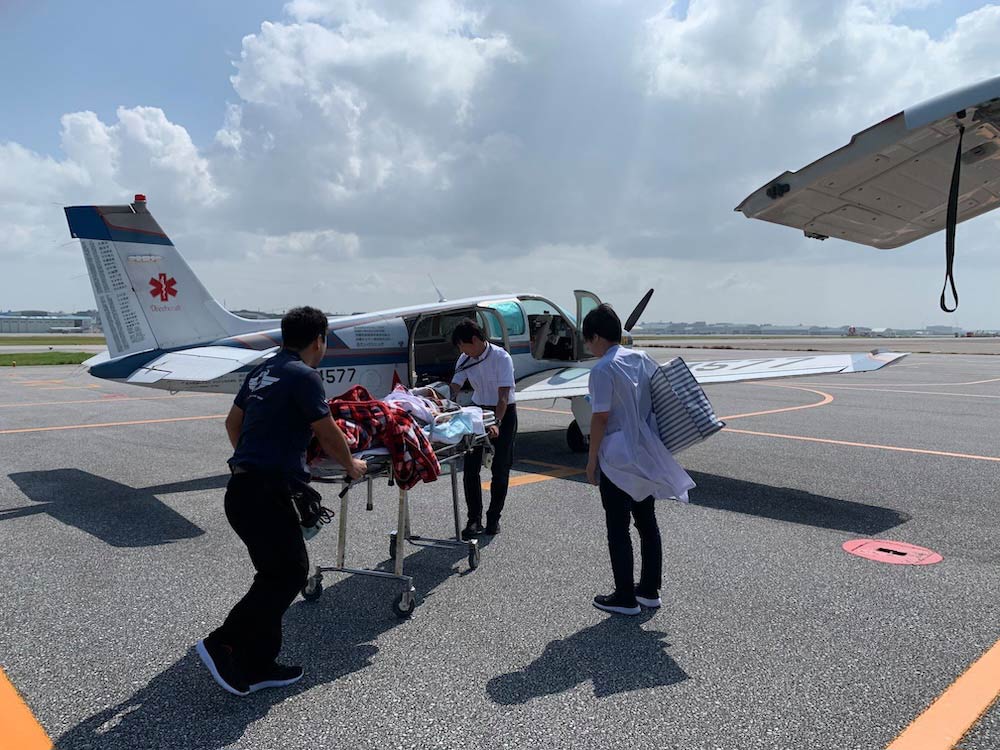
Working to address these disparities is Mesh Support (external link, in Japanese), an organization that provides medical assistance across the Ryukyu Islands, including Okinawa Prefecture. The organization uses small aircraft and helicopters to provide life-saving medical treatment to people living on remote islands.
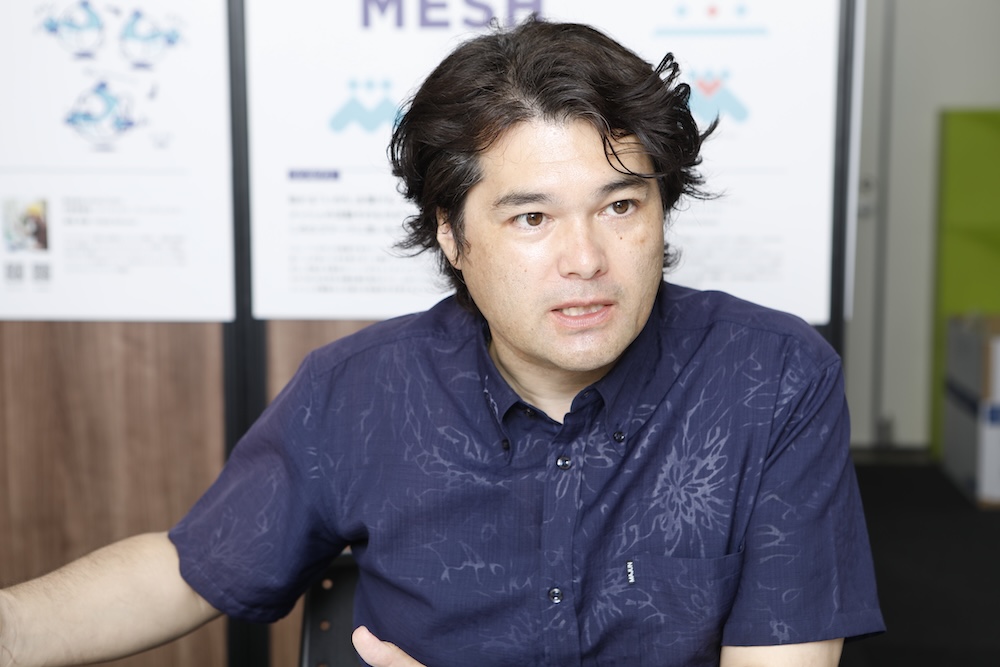
Just how important are these services for those living in remote and island areas? We spoke with Hiroki Tsukamoto, the organization’s director.
There are too many remote islands for government medical helicopters alone to cover
The Nippon Foundation Journal Editing Department: Could you start by outlining what kind of activities Mesh Support conducts?
Hiroki Tsukamoto: We use aircraft to help reduce disparities in healthcare availability in remote and island areas across the Ryukyu Islands. We are a private organization working to address regional healthcare challenges that national and local governments are unable to fully cover at present. At the same time, we are working in partnership with Okinawa and Kagoshima prefectures and advocating for our initiatives to eventually be incorporated as a government-operated service.
That is not to say that the government is doing nothing to address this challenge. The issue of disparities in healthcare availability in Okinawa and Kagoshima is complex, and responses have not kept pace.
In 2007, the Act on Special Measures for Securing Emergency Medical Care Using Helicopters* was enacted, leading to the deployment of medical rescue helicopters across Japan. Today, every prefecture has at least one such aircraft. Kagoshima, Amami Oshima Island, and Okinawa each have one helicopter serving their respective populations.
However, the Ryukyu Islands stretch roughly 1,200 kilometers (746 miles) from Kagoshima to Taiwan in a vast chain of scattered islands. The government helicopters available are not sufficient to cover such an expansive region. The services provided by Mesh Support fill that gap.
- Officially titled the “Act on Special Measures Concerning Securing of Emergency Medical Care Using Helicopters for Emergency Medical Care,” this law establishes provisions for subsidies for costs related to emergency medical services, registration of corporations that administer services supported by public grants, provisions for the application of health insurance, etc., and related matters, with the aim of ensuring the emergency medical helicopters across Japan. Reference: Ministry of Health, Labour and Welfare (external link, in Japanese / PDF)
Journal: What specific healthcare disparities do remote and island areas face?
Tsukamoto: There is a well-known concept in emergency medicine called the “Golden Hour Principle.” In simple terms, it is a chart that shows how many minutes death occurs after the onset of medical incidents like cardiac arrest, respiratory arrest, or severe bleeding.
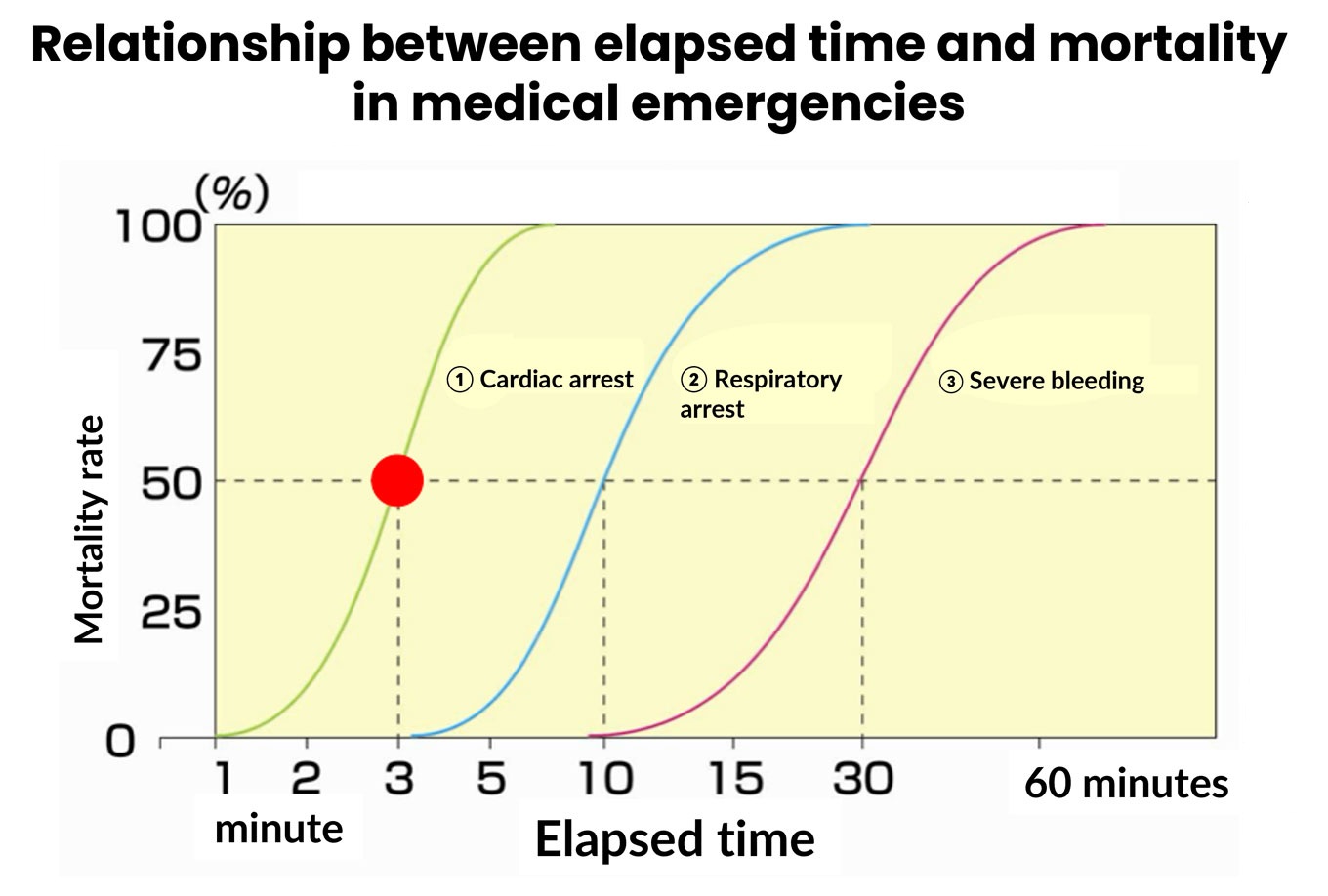
Tsukamoto: For example, according to this principle, you can see that in cases of severe bleeding it is critical to administer initial treatment within 15 minutes. However, for people living in remote areas or on islands, transporting them to a hospital can take hours. By the time they arrive, it may already be too late to save them.
Then there are other challenges. Even if patients are transported from an island to a hospital and their lives are saved, returning home can be difficult due to distance and financial constraints. Some patients end up remaining hospitalized until they pass away. In some cases, their families even struggle to visit them in hospital.
Journal: So the distance involved makes moving between locations difficult.
Tsukamoto: Exactly. That’s why our aircraft can make a difference in such situations. We’ve had patients express their sincere gratitude to us after being transported back to their families. Some people have also visibly regained their energy the moment they realized they would be able to return home.
Journal: I understand that Mesh Support is committed to independent operations, funded primarily through donations.
Tsukamoto: In the past, a company from outside Okinawa acquired an Okinawan airline and tried to run similar air ambulance operations as a business. But the service wasn’t financially viable.
As the need for patient transport is infrequent, they tried offering sightseeing flights and helicopter taxi services during downtime. However, it ultimately didn’t succeed as a business. As a result, there was no one left to operate emergency medical helicopters in the region.
This is why we concluded that a non-profit business model was necessary, and settled on a plan of conducting independent operations as a nonprofit organization.
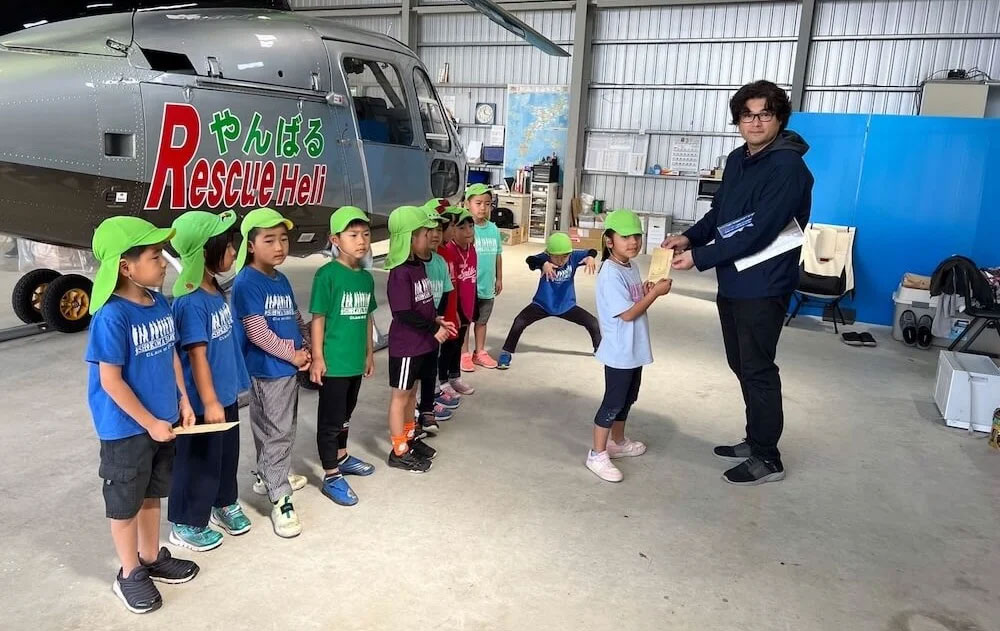
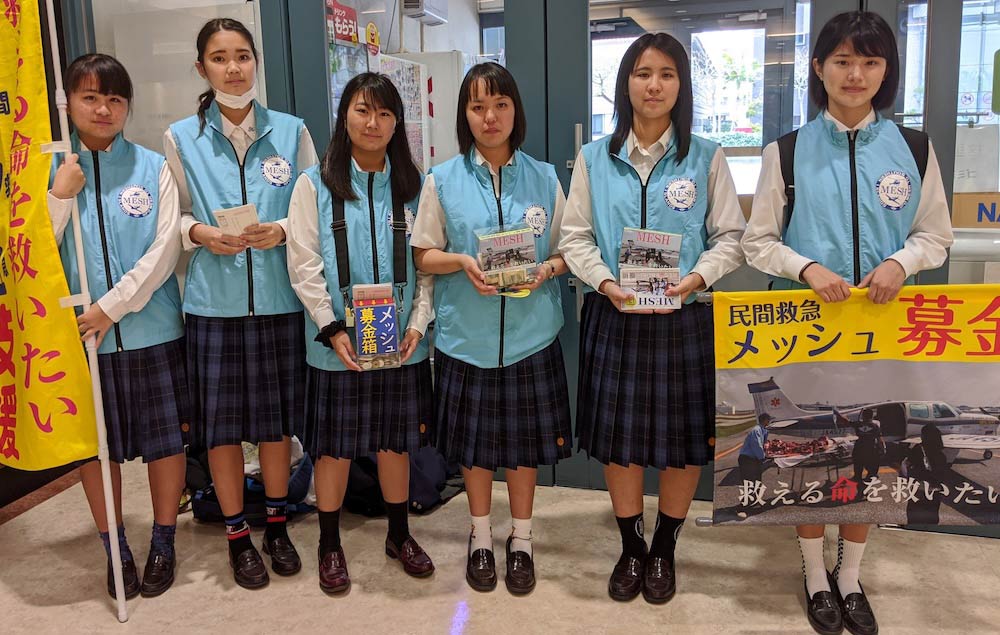
Some people take on large debts to be with ill family members
Journal: How have residents in Okinawa and Kagoshima responded to Mesh Support’s services?
Tsukamoto: I remember one episode from a briefing session we held. An attendee shared that in the past one of their family members had collapsed and was transported via emergency flight from Yoron Island to Okinawa Main Island.
At the hospital, they were told the patient had only a few days to live, so the family decided to stay by their relative’s side until the end. In the end, the patient lived for about two months, and during this time the family had to stay in hotel accommodation in Okinawa. The costs mounted, and during this time they were, of course, unable to work. As a result, they ended up with debt of around 2 million yen.
If they had lived on the Main Island, they could have traveled to the hospital by car and avoided such expenses. That family told us, “If a service like Mesh Support existed, fewer people would have to go through what we did.” That left a strong impression on me.
Journal: Can you share some cases where people have been helped by Mesh Support’s services?
Tsukamoto: There are many examples. For instance, one time we transported a woman who suddenly went into labor on a remote island. Traveling by ferry to a hospital on Okinawa Main Island would have taken too long, so we used a helicopter.
In another case, an individual who was visiting from outside the prefecture to participate in a triathlon race collapsed during the event. As roads were closed, ambulances couldn’t reach the scene quickly, so we dispatched a helicopter to deliver emergency treatment.
Journal: So some of the people you transported were visitors from outside the region. It appears that Mesh Support also helps to ensure the safety of tourists in addition to residents.
Tsukamoto: Some people reading this might think, “Why don’t people just stop living on such inconvenient remote islands?” But I don’t think that’s the right attitude to take.
Each of these islands is part of Japan’s territory, surrounded by seas where a range of activities like fishing are conducted. You could say that these residents are, in a sense, protecting these islands and waters on behalf of all of us.
When you think about it from this perspective, providing key infrastructure for those who live there is an important duty. However, it’s not realistic to equip every island with advanced medical facilities. That’s where emergency transport plays an essential role.
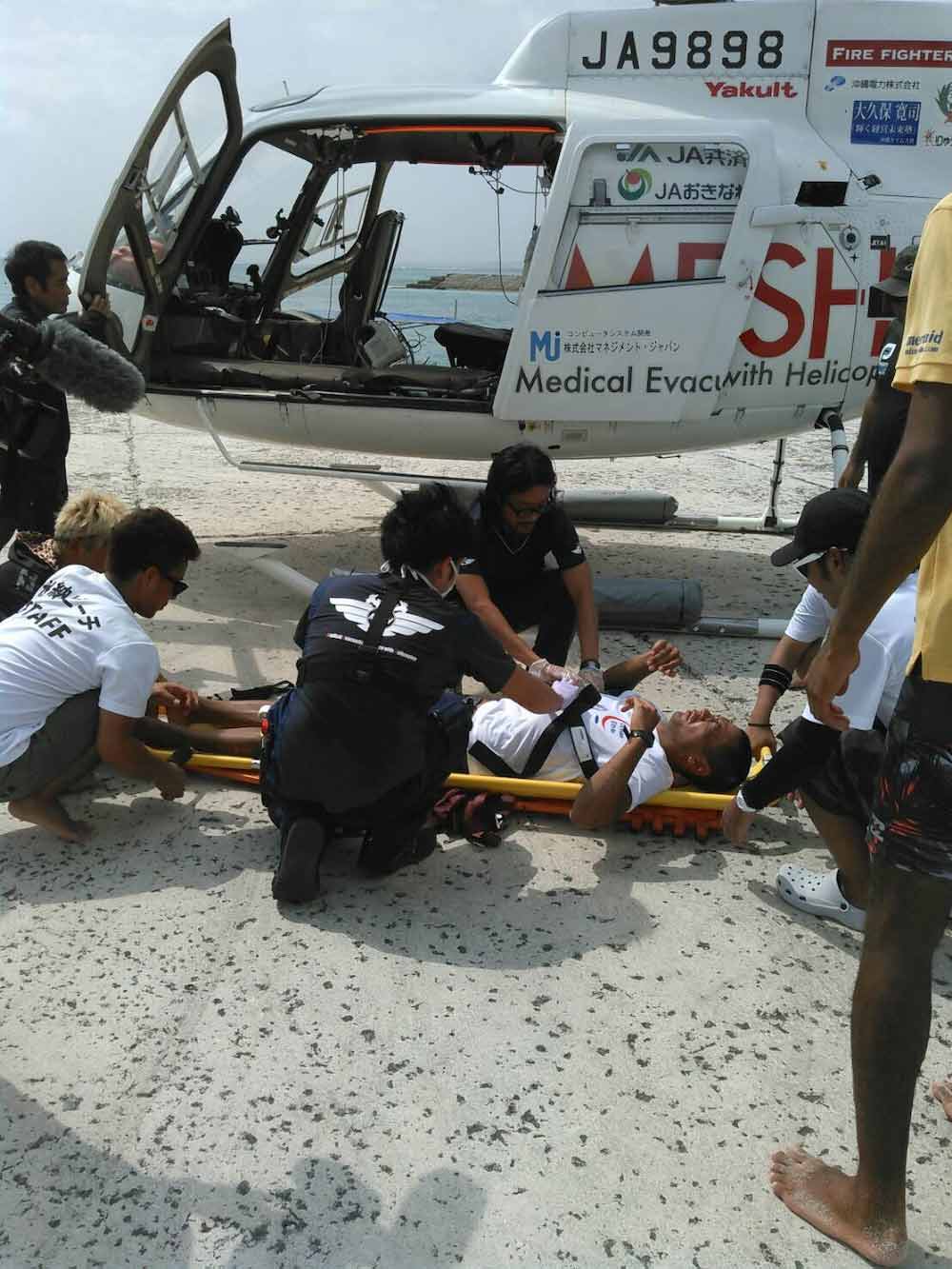
Tsukamoto: Ensuring that a means of transport is available also helps reduce the burden on doctors battling to provide medical care on remote islands. The doctors on these islands shouldn’t have to handle everything alone. By relying on off-island medical institutions when necessary, they can collaborate with other facilities and share information, which will also enhance their individual skills.
Understanding the disparity between urban and rural healthcare is the first step toward solving the problem
Journal: What challenges do you see in continuing these efforts?
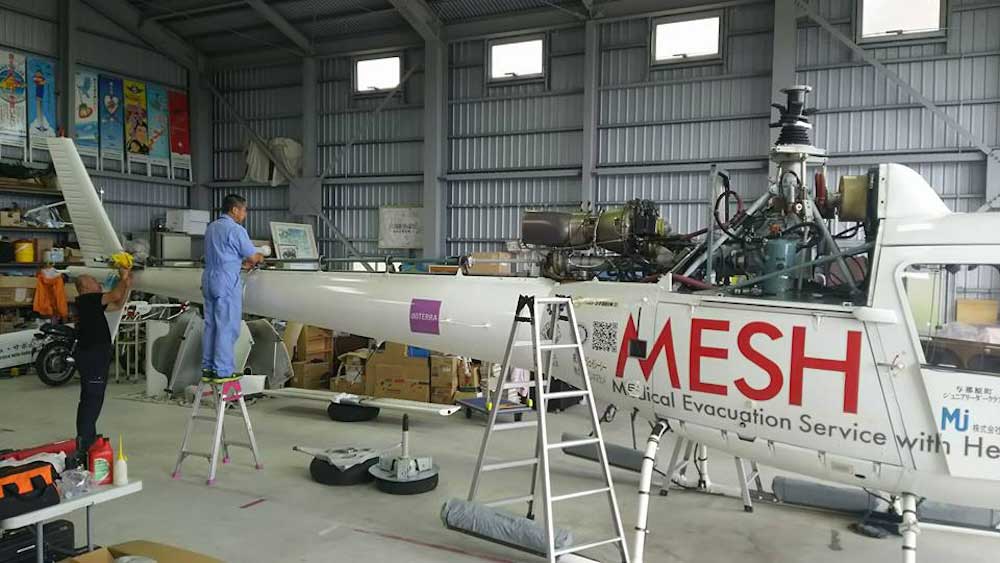
Tsukamoto: Funding our operations is always a major challenge. It took 13 years to transition emergency helicopter rescue services into a government-funded program. However, medical rescue operations using small aircraft are still funded by donations.
If our services could also be integrated as a government program, this would allow us to focus more on achieving better outcomes without financial concerns. But reaching this next phase is difficult, so we are continuing to explore solutions through a “trial and error” approach.
Journal: What can we as individuals do to help Mesh Support?
Tsukamoto: Of course, we would be most grateful for donations, but we understand that donating straight away is a lot to ask. So first, I hope people will learn more about the reality of healthcare disparities in remote and island areas.
The infrastructure available differs greatly between urban and rural areas. Without an understanding of this reality, visitors from urban areas may feel surprised or dissatisfied when they encounter those differences. At the same time, there are nonprofit organizations like us that exist to help bridge that gap.
I believe that simply educating people about this reality will help to gradually close the healthcare gap in remote areas and islands.
Editor’s Note
Healthcare disparities in remote and island areas are not just a problem for those who live there. For example, what would happen if you fell ill while traveling there? Health care disparities are an issue that could potentially affect any one of us.
This is why it is important for each of us to do whatever we can to support organizations like Mesh Support that are striving to address this challenge. That could involve making a donation, or simply sharing information about this issue. In any case, why not start by learning about the reality of the problem — and then thinking about what you can do to help?
Text: The Nippon Foundation Journal Editing Department
Photo: Emi Enishi
Profile
Hiroki Tsukamoto
After graduating from Chuo College of Technology in 1996, Tsukamoto joined the college’s architectural design department as a faculty member. In 2001, he began working in design at Urban Design System Co., Ltd. During a business trip to Okinawa in 2007, he met the former director of Mesh Support and participated in establishing the organization as a nonprofit corporation. He subsequently worked to establish an independent aircraft operation system and promote the organization’s activities, assuming the role of director in 2018.