‘Home Hospice’ for End-of-Life CareNeither a nursing care facility nor hospital
Key Points
- Many people say they want to spend the end of their lives at home, but in reality, most people die in hospitals.
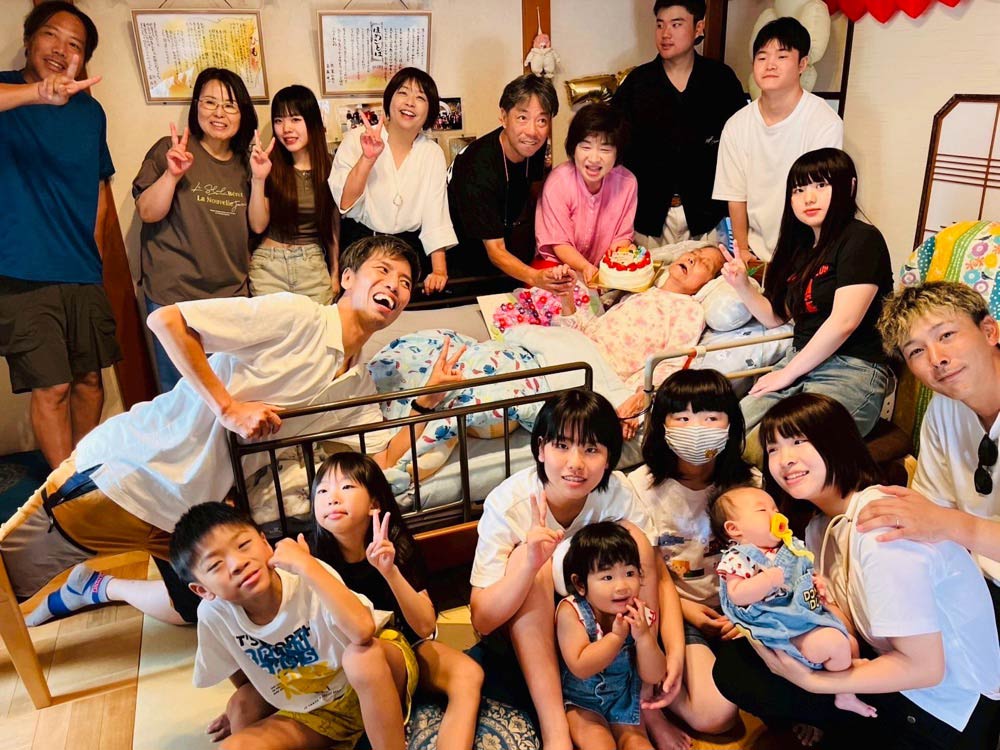
- A home hospice is a care facility designed to meet the need to live authentically until the end of life in a place that feels like home.
- One major challenge in care and support is the lack of places where people can easily seek advice. Home hospices can serve as such a place.
In the Nationwide Survey on End-of-Life Preferences (open in a new tab, in Japanese) released by The Nippon Foundation in 2021, 58.8% of respondents said they would like to spend the end of their lives at home. By contrast, 42.1% said they absolutely wanted to avoid their child’s home, and 34.4% said they wanted to avoid nursing care facilities.
However, according to Handbook of Health and Welfare Statistics (external link, in Japanese), released by Ministry of Health, Labour and Welfare in 2024, the actual place of death was a hospital in 67.4% of cases, the person’s home in 17.0%, a home for the elderly in 11.5%, and a nursing care facility in 4.0% of cases.
Home hospices were created to respond to the desire to live authentically until the end of life in a place that feels like home. The philosophy behind home hospices originated in 2004 at the home hospice “Kaasan no Ie (Mom’s House)” in Miyazaki City, Miyazaki Prefecture. Later, The Nippon Foundation established the Home Hospice Program Advisory Council and began supporting nationwide expansion, allowing this initiative to spread across Japan.
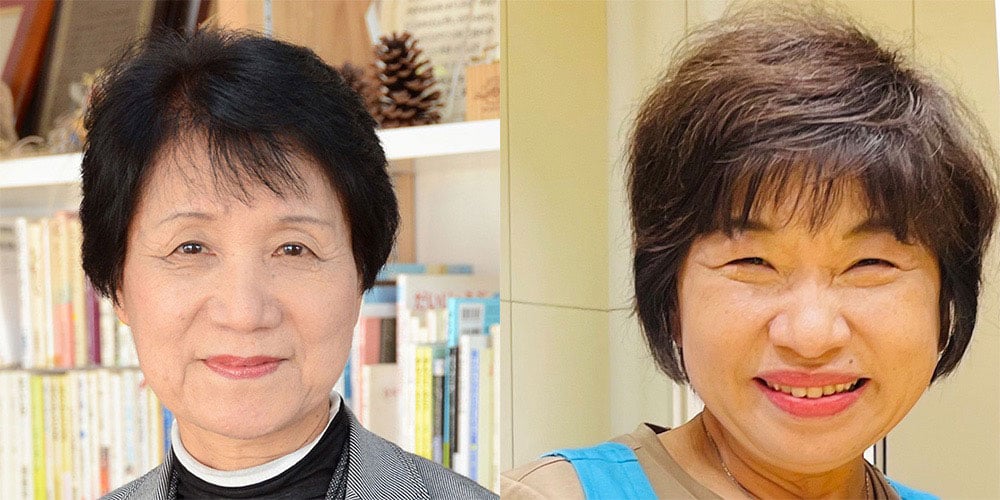
In this article, we speak with Miho Ichihara, Chair of the Homehospice Japan Association (external link, in Japanese), which works to establish and promote home hospice care, and Chiaki Sakakibara, who operates the NPO Home Hospice Komatsu (external link, in Japanese) in Ishikawa Prefecture,
Home hospices are neither home nor hospital, but another place to belong
The Nippon Foundation Journal Editing Department: To begin with, what exactly is a “home hospice”?
Miho Ichihara: First, the word hospice comes from the Latin roots for “host” and “guest” and means “to warmly welcome visitors.” Originally, it refers to a concept or philosophy, and care provided based on this philosophy is known as “hospice care.”
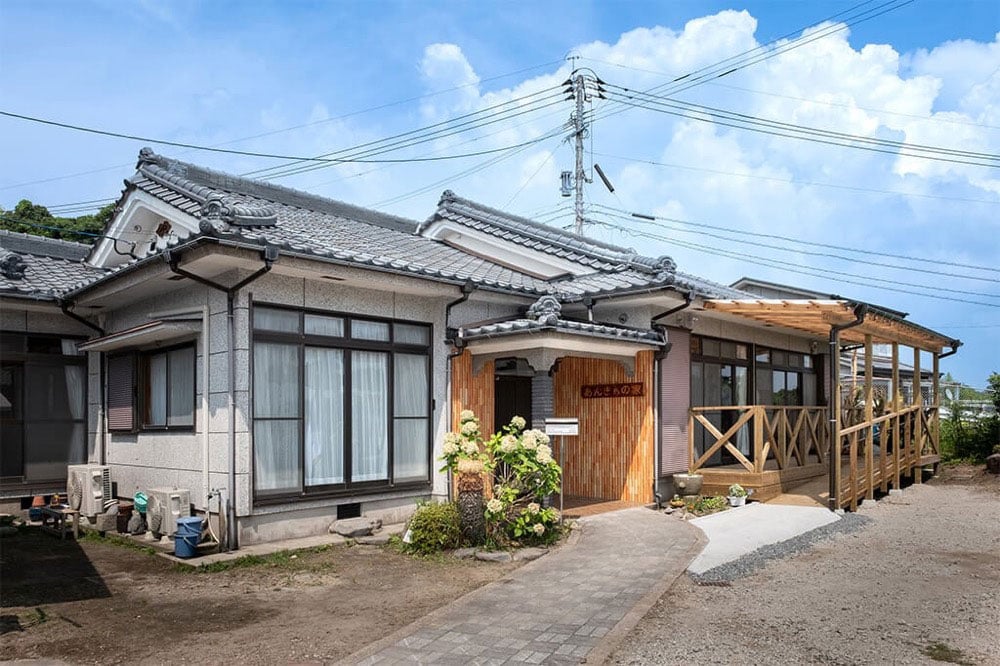
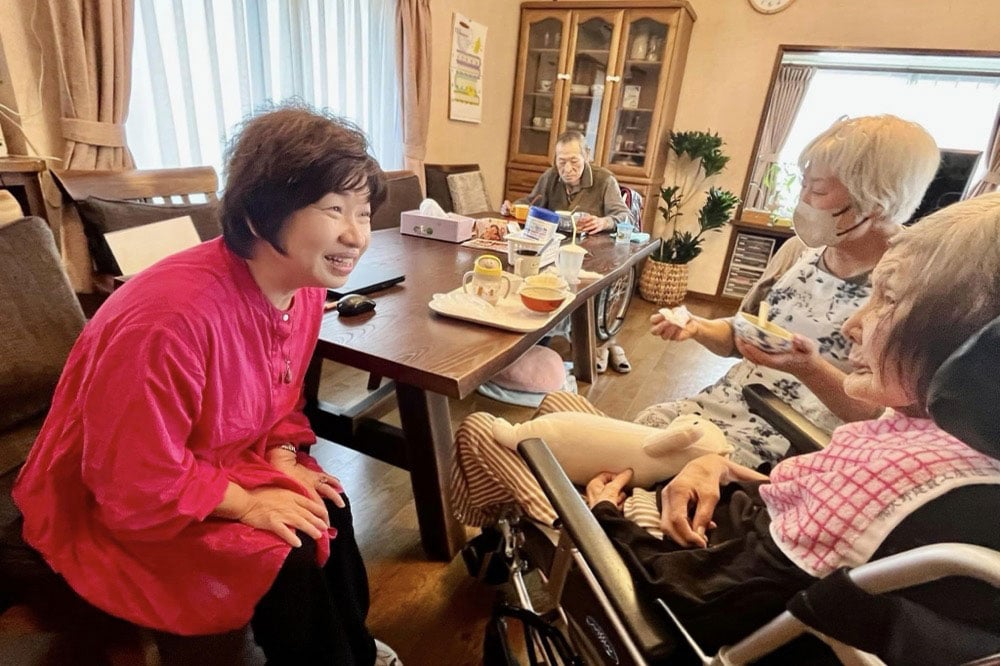
The home hospice we promote refers to a care facility that places importance on a person’s way of living, allowing them to spend the end of their life authentically in a place where they feel at ease, much like their own home. From both a care and operational perspective, we also place importance on a shared living arrangement in which five to six residents live together. We believe this number is an appropriate scale for maintaining connections among residents and their families.
Home hospices were created about 20 years ago as a place for people who wished to remain at home but could not do so due to high medical needs or the inability of family members to provide care. In 2013, Homehospice Japan Association also registered the term as a trademark.
Journal: How does a home hospice differ from a palliative care ward?
Ichihara: In palliative care wards, treatment is given top priority, whereas home hospices prioritize living there. For that reason, even if someone is ill, they are not treated as a patient, but as a person who lives there, and we place importance on creating an environment where residents can live as if they were at home.
When medical care is needed, depending on the resident’s condition, visiting nursing services, which provide medical care by nurses or physical therapists, and visiting caregiving services, which provide daily living support by certified care workers or home helpers, are available in the amount needed.
To achieve these, collaboration among local hospitals and clinics, visiting nursing stations, visiting pharmacists, and other professionals is essential for team-based medical care.
Chiaki Sakakibara: Home hospices provide individualized care that respects each person’s wish for how they want to live, allowing them to spend their time in comfort. In large-scale facilities, visiting hours are often restricted, but in home hospices, there are no such restrictions, visits are possible at any time, 24 hours a day, and overnight stays are also allowed.
In addition, precisely because they are small in scale, families of residents naturally grow closer to one another, sometimes forming relationships like those of extended family. This is another appealing aspect of home hospices.
- Palliative care is an approach that improves the quality of life of patients facing problems associated with life-threatening illness and their families. It aims to prevent and relieve suffering by identifying pain and other physical, psychosocial, and spiritual problems early and addressing them appropriately. A palliative care ward refers to a specialized hospital ward dedicated to palliative care. Reference:“Palliative Care,” Cancer Information Service, National Cancer Center (external link, in Japanese)
Journal: What kinds of initiatives does Homehospice Japan Association undertake?
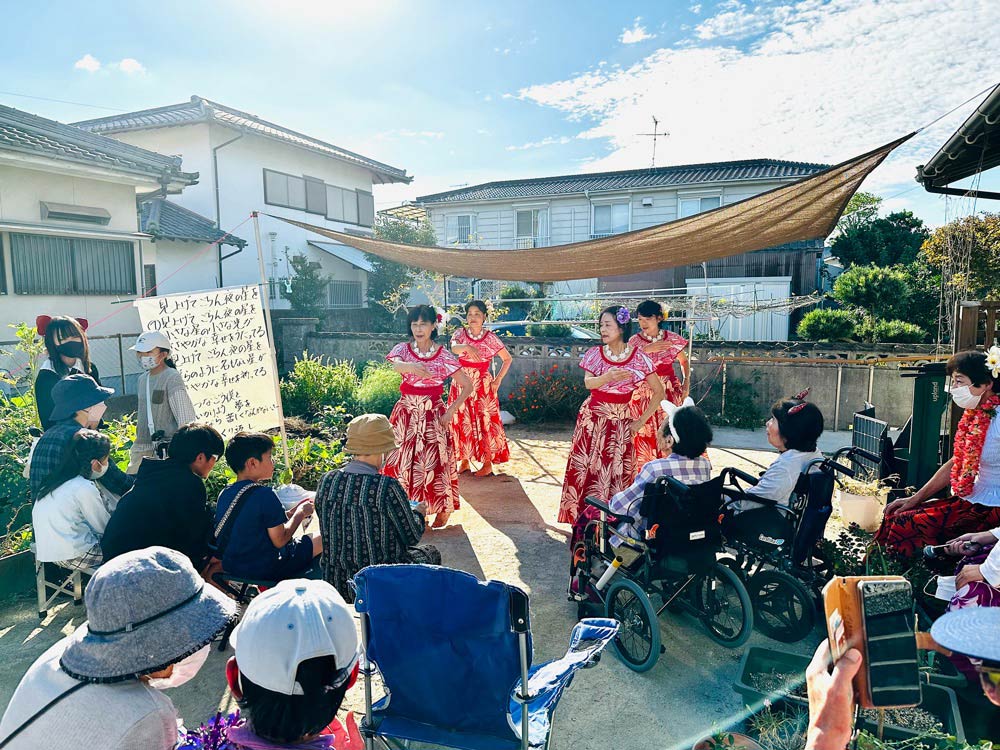
Ichihara: In addition to promoting home hospices, the association establishes standards for care and operations, conducts evaluations to ensure care quality, offers courses on labor management and organizational operations, and provides consultations on issues faced at care sites, implementing a wide range of initiatives to support operators. In addition, for those who want to establish a new home hospice and those who want to learn more, we also run a training program called the Home Hospice School (external link, in Japanese).
As of July 2025, 45 organizations across Japan were operating 66 home hospices, with another 12 home hospices in preparation.
Living environment changes can also improve physical and mental well-being
Journal: What kinds of feedback have you received from people living in home hospices and from their families?
Ichihara: According to The Nippon Foundation’s 2025 “Survey on the Effects of Care for Residents in Home Hospices,” families of residents reported outcomes such as “an improved ability to live in a way that reflects who the person truly is” and “improvements in physical condition.” In addition, some families who had been concerned about worsening dementia said that the condition did not worsen and was instead maintained.
Sakakibara: As one example, there was recently a woman who spent her final days at Home Hospice Komatsu. She had run a family home caring for children who, for various reasons, were unable to live with their families. Five years ago, she developed a brain tumor, and when chemotherapy became difficult, she moved into our facility. Many people came to visit her, including children she had cared for as a foster parent over the years.
Shortly before she passed away, we received the following words from a member of her family.
“Good morning. Thanks to you, our entire family has been able to spend precious time with our mother. For just a little while longer, we would like to stay with her as she completes her final connections with the children from her family home.”
These words brought me deep joy and remain etched in my heart. I realized that a home hospice is a place that embraces not only the resident themselves, but also the relationships they have built, offering that gift to their families after they are gone.
Journal: Have you seen any changes in people who moved to a home hospice from another type of facility?
Sakakibara: Let me share my father’s story. My hometown is Uwajima City, Ehime Prefecture, which is 15 hours away from Komatsu City, Ishikawa Prefecture. At age 86, my father suffered a myocardial infarction, followed by heart failure and fractures, and he also developed dementia. He was almost completely bedridden, had ongoing digestive issues, and required diapers at all times.
From March to May 2024, every weekend I spent 15 hours traveling to visit him at the hospital in Uwajima City. Even after traveling for 15 hours, visiting time was limited to just 15 minutes. During the May holidays, my family had extensive discussions, and we decided it would be best for him to spend time at Home Hospice Komatsu, which I, his daughter, runs.
At first, when I called out to him “Dad,” there was no response, and he would not make eye contact. We were struggling to communicate with him, partly because of his local dialect. But one day, when a staff member, while giving him a foot bath, asked, “What were you usually called, Mr. Takeda?” he answered, “They called me Take-san.” “May we call you Take-san too?” “That’s fine.”
Then, vitality visibly returned to his expression. Of course, appropriate care played a role, but I believe it was also because family-like relationships were built in a shared living environment.
Remarkably, my father, who had been almost entirely bedridden, recovered to the point where he could walk and even use the toilet independently.
Because we had lived far apart, my relationship with my father had gone through strained periods, but the three months we spent at the home hospice allowed us to reconnect as father and daughter in a way that felt true to who we are.
Ichihara: After moving to the home hospice, Ms. Sakakibara’s father began saying things like “I want to drink beer,” and started wearing the glasses and watch he had long cherished. Changes like these are not unusual in home hospices.
Few places offer easy access to consultation. Home hospices can be one such option
Journal: Are there any challenges you feel when operating home hospices?
Ichihara: In recent years, facilities operating under a business model known as “hospice-type nursing homes”* have increased rapidly, and confusion with home hospices has become an issue. In some companies operating hospice-type nursing homes, there have been reports of generating revenue by providing visiting nursing services more frequently than necessary.
Sakakibara: In these facilities, while high salaries are paid, schedules are managed down to the minute, and work is controlled in a mechanical manner, resulting in practices that deviate from the original ideals of nursing and care. I believe this is an issue of ethics among medical professionals and companies.
There are also many cases where people who worked at such facilities become physically and mentally exhausted, resonate with the philosophy of home hospices, and come to us for advice, seeking to establish a home hospice of their own.
- This refers to fee-based residential homes for elderly people with care services, as well as housing with services for seniors (known as Sakouju in short), where residents are limited to individuals with high medical dependence, such as terminal cancer patients or those with nationally designated intractable diseases. Reference:“Rapid Increase in Hospice-Type Nursing Homes: Time Spent with Family,” Nikkei, (external link, in Japanese)
Journal: Do home hospices receive support from local governments?
Ichihara: At present, there is none. As a result, operations must rely on out-of-pocket payments by users, requiring costs of around 200,000 yen per resident per month, which limits who can use these services.
Even so, because more than twice as many staff members are needed for five to six residents, operating financially is challenging. While we do think it would be nice to have support, if we were to receive support from local governments, budgetary constraints would likely lead to restrictions such as limiting end-of-life care to six months.
No one knows how long a person will live, nor can it be decided in advance. It is not uncommon for someone diagnosed with a six-month prognosis to live for several years. Considering the risk that support could undermine the philosophy of home hospices, we believe that formal systems could actually reduce flexibility.
Journal: What initiatives are needed across society to enable people to live true to themselves until the end of life?
Ichihara: I believe there needs to be a place where people can seek advice easily. There are many things people only realize when a family member becomes ill or requires care. Community-based home hospices could serve precisely that role.
Sakakibara: I truly agree. When someone wants to address care-related challenges in their community, they establish a home hospice, bringing together knowledge and experience. Then, staff members who have gained that knowledge and experience go on to establish home hospices in other regions, creating what we hope will be a “chain of care.”
What each reader can do to help build a society where people can live true to themselves until the end of life
Finally, we asked both interviewees what each reader can do to help build a society where people can live true to themselves until the end of life.
(1) Viewing the death of someone close as an opportunity to cultivate one’s own view of life and death
When someone close to you reaches the end-of-life stage, make an effort to visit them. Witnessing what they were thinking and how they spent their final moments can become an opportunity to cultivate your own view of how you wish to face the end of your life.
(2) Recognizing death as part of life and coming to terms with it
Recognizing the fact that everyone will eventually die and coming to terms with one’s own mortality leads to living fully in the present.
In an increasingly aging Japan, we feel that demand for hospice and palliative care will continue to grow, and wanting to learn more about home hospices, which place importance on each person’s way of living, we requested this interview.
It is natural not to think about caregiving while one’s parents are still healthy. However, talking about caregiving and end-of-life care isn’t something that brings bad luck, but rather an expression of care for those we love, as we felt through this reporting.
Even a small first step is enough. Talking as a family about the future would be a meaningful place to start.
Homehospice Japan Association Official Website (external link, in Japanese)