Doronko Nursery Schools Provide an Environment for Male Teachers to ThriveWhat Is Doronko’s Vision for Early Childhood Education?
Key Points
- Childcare at nursery schools is not “babysitting,” but education. It is important to properly understand the expertise the profession requires and the value it provides.
- Having male nursery school workers helps break down gender role stereotypes and contributes to gender equality.
- Creating an environment where diverse staff members can thrive enables children to gain richer experiences.
The Nippon Foundation is launching a new series on gender equality titled “The Men Working With Gender Bias.” According to the Global Gender Gap Report, Japan ranked 128th out of 146 countries in the 2024 Gender Gap Index[1], its lowest ranking to date.
Gender issues are often framed as concerns that affect minorities such as women and LGBTQ+ individuals. However, meaningful social change also requires shifts in awareness among men, who are often considered the majority.
In this series, we will shine a spotlight on the men working in areas of society where gender biases exist, and explore ways to make gender issues relevant to everyone, regardless of gender.
The first installment in this series focuses on the topic of male nursery school teachers. In 1999, Japan enacted the Basic Act for Gender Equal Society[2], with the aim of achieving gender equality. More than two decades later, although women are achieving successful careers across many professional fields, from the perspective of gender equality, increasing male participation in fields that have been traditionally dominated by women is equally important.
The profession of nursery teacher is one field where male participation remains limited. According to data compiled by the Ministry of Health, Labour and Welfare[3], as of April 2020, men accounted for just approximately 5% of registered nursery school teachers, and the proportion of males who are actually active in nursery teacher roles is thought to be even lower.
Although there has been gradual progress in breaking down traditional gender stereotypes such as “child-rearing is women’s work,” why does the number of male nursery school teachers remain low?
Understanding the reasons behind this and creating an environment free from gender bias where diverse individuals can thrive is a critical challenge that will also enhance the quality of childcare.
Against this backdrop, the Social Welfare Corporation Doronko (external link) has actively worked to hire male teachers at its nursery schools for over 20 years. As of 2024, men account for 12.5% of its teaching staff — more than three times the national average.
Additionally, while management positions in childcare facilities such as school director tend to be dominated by women, at Doronko, 23.5% of managerial roles are held by men.
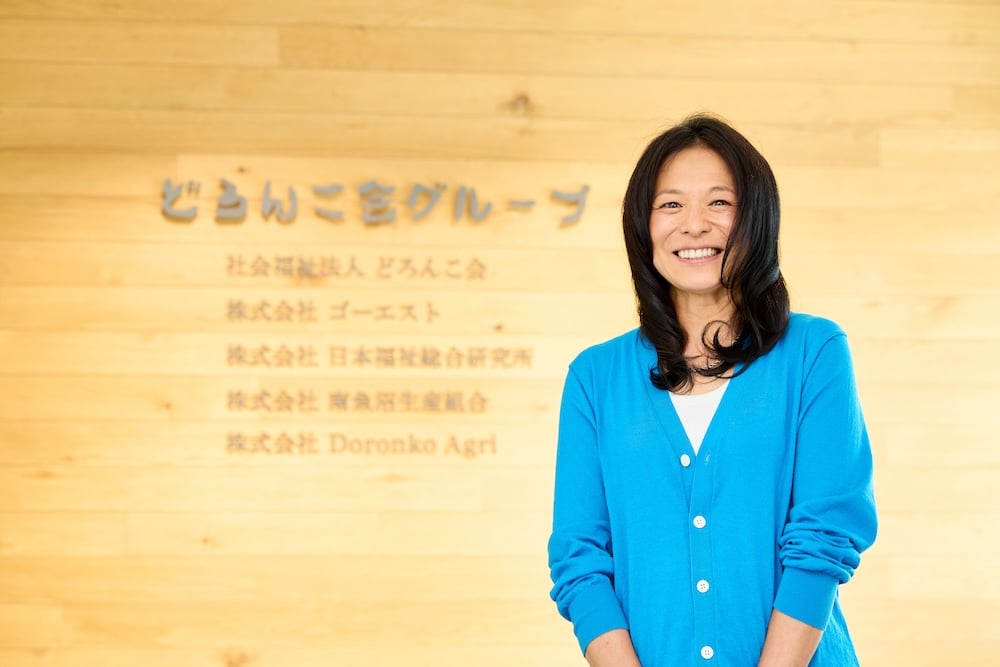
We spoke with Aika Yasunaga, Chief Director of Doronko, and Keita Sato, a childcare worker and Nursery Director of Uchiminowa Doronko Nursery School (external link, in Japanese) in Kimitsu City, Chiba Prefecture, about Doronko’s efforts to achieve gender equality in the nursery school field.
- Note 1: An international index published annually since 2006 by the World Economic Forum (WEF) (external link) that quantifies countries’ gender gaps across four key dimensions: economic participation and opportunity, educational attainment, health and survival, and political empowerment.↩︎
- Note 2: A law that establishes the basic principles and policy directions for Japan to achieve a society in which both men and women respect each other’s human rights, share responsibilities, and can fully express their individuality and realize their potential regardless of gender.↩︎
- Note 3: Source: “Number of Registered Childcare Workers by Gender,” Ministry of Health, Labour and Welfare (external link, in Japanese / PDF)↩︎
A ‘natural state’ is a society that includes both male and female nursery school teachers
The Nippon Foundation Journal Editing Department: When did Doronko begin actively hiring male nursery school teachers, and what was the goal in doing so?
Aika Yasunaga: Ever since opening our first small home-based nursery in Saitama Prefecture in 1998, through to today, where we operate approximately 170 childcare-related facilities across Japan, we have consistently operated under the belief that it is only natural to have male teachers on our staff, and we have recruited both men and women accordingly.
There are several reasons for this. One is that we felt a need for transformational change in the childcare industry.
In 1947, when Japan was launching reconstruction efforts after much of the country had been reduced to ruins in the war, the nursery school system was established to support women who had to work, and the profession of nursery school teacher was born. Although the original name hobo in Japanese for such workers specifically referred to women, this term has evolved into today’s hoikushi, which is gender-neutral.
While this history is understandable, the role of nursery schools has since evolved into one centered on early childhood education, yet the industry remains overwhelmingly female-dominated. Many facilities still lack robust performance evaluation systems, human resources policies, and career development frameworks. Accordingly, there is a lack of long-term career paths with salary growth for employees in the nursery school industry.
Unless we move away from a structure that keeps labor costs down by hiring new graduates with the assumption they will eventually resign from their jobs due to marriage or childbirth, the profession will struggle not only to attract more men, but to elevate its status to an industry in which teachers can lead a fulfilling and rewarding career.
Another reason we actively hire men is that nursery schools are a place to nurture children as part of society, and we therefore believe that the childcare environment should reflect the actual state of society, with both male and female staff serving as role models.
At elementary and junior high schools, the ratio of male and female teachers is typically balanced, yet the childcare industry remains heavily skewed toward women. This imbalance is unnatural. Furthermore, children will grow up in a future society in which they may even have a robot for a supervisor or AI for a subordinate.
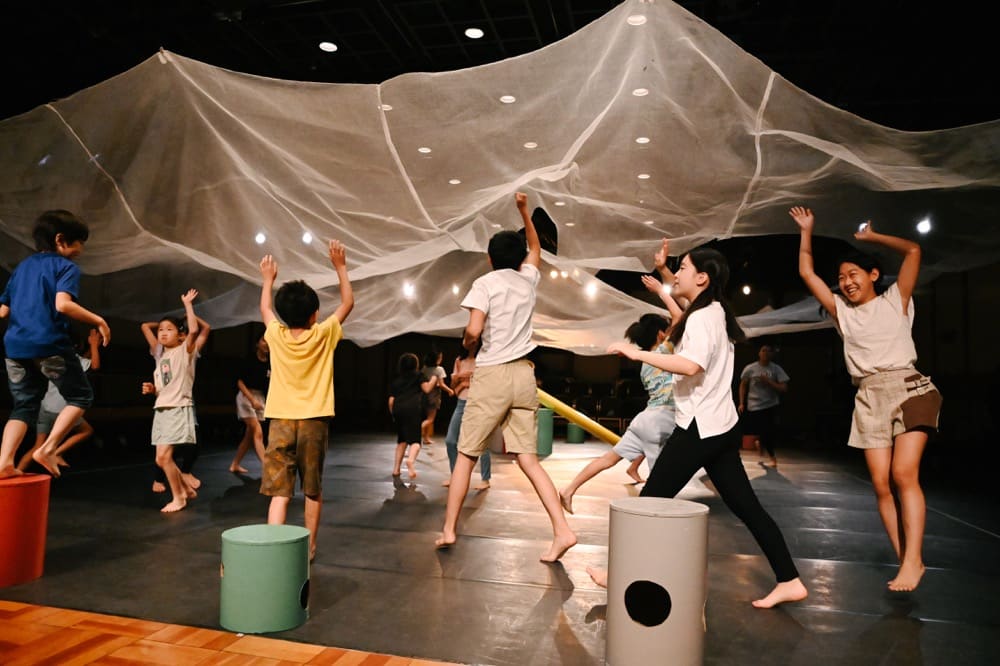
In such a world, what will matter most is their ability to think and act independently. To foster this ability, at Doronko, we aim to provide children with diverse experiences, such as trying their hand at farming or visiting a public bathhouse. We believe that having both male and female teachers broadens the range of experiences we can offer children.
Journal: What positive effects have you seen as a result of increasing the number of male childcare staff?
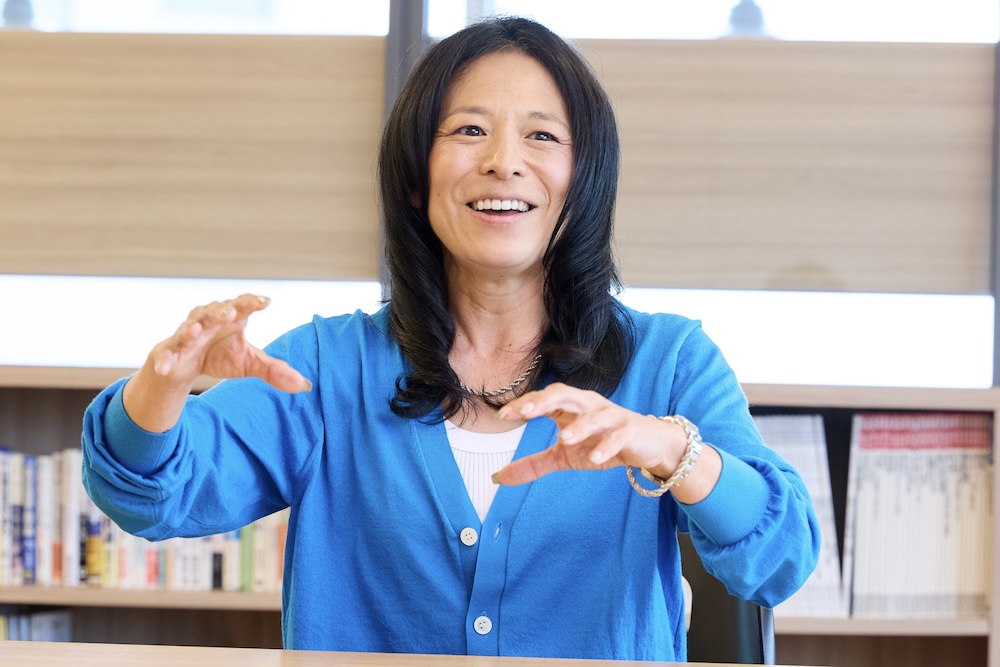
Yasunaga: While I should start by clarifying that the quality of childcare does not depend on gender, having more male staff has broadened the scope of activities we can offer.
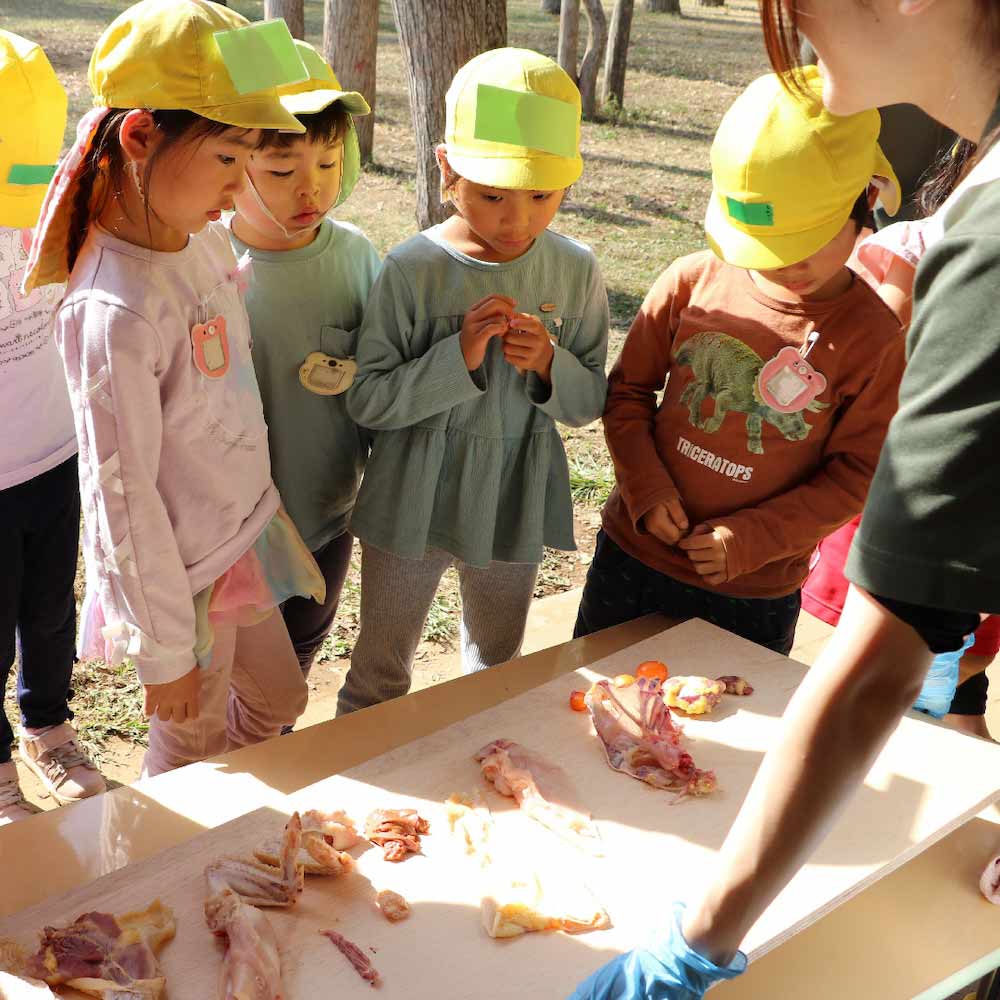
For example, one of our male staff members set up fish traps in a nearby river so the children could observe the fish that were caught.
We also conduct activities that involve fire and water, supervised by teachers, such as building a bonfire on the school grounds in winter using firewood or branches we have collected. In these situations, it tends to be the male staff who come up with outdoor-inspired ideas, like, “Why don’t we cook some sausages on the fire for the children to have as a snack?” I see the female staff realize, “Oh, this is a different way the children can learn through play.” These ideas then spread throughout the school and eventually become established practices.
I believe that the creativity and initiative sparked by having both men and women among our staff help provide children with new experiences.
Additionally, certain regions such as Okinawa Prefecture have a high rate of single-mother households, and many children who attend our nursery schools in Okinawa are raised by single mothers. For children without a father at home, male childcare staff can play an invaluable role in their lives, allowing them to seek comfort from and build an intimate relationship with a father figure.

Children need to learn from both “masculine” and “feminine” approaches
To hear the perspective of a male nursery school teacher, we also spoke with Keita Sato, Nursery Director of Uchiminowa Doronko Nursery School.
Journal: What inspired you to become a nursery school teacher?
Keita Sato: I first learned about the profession when I was considering my future direction after high school and a friend invited me to an open campus event at a college specializing in early childhood education. I’ve always liked children, and I wanted to pursue a career I genuinely enjoyed, so I decided to enroll at the college.
My commitment to this career path solidified during my third year at the college. During a practical training session, I visited a nursery school, where I was responsible for planning an entire day’s activities. I had planned to show the children how to make airplanes from straws and then play with our creations in the playground.
I had wanted them to experience the sense of accomplishment from playing with a toy they had built themselves, but the task proved too complex for four-year-olds, and they needed constant assistance from the staff to complete it. I was frustrated by this failure, but I simplified the activity and tried again the following week — and this time the children really enjoyed it.
That experience showed me just how much children’s experiences can differ depending on how adults engage with them, and made me realize just how complex and fulfilling a profession in early childhood education is.

Journal: What brings you a sense of fulfillment in your day-to-day work?
Sato: When I see the children fully absorbed in something. Watching them take on a difficult challenge with an earnest expression on their faces, struggling, and eventually succeeding — it’s incredibly rewarding to witness those special moments.
For example, at our school we encourage the children to climb trees. At first, a child might be too afraid to climb to the higher branches, but after trying again and again, they improve and eventually succeed. Seeing both the look of hesitation on their faces that says “I want to go higher but I’m a bit scared” and the elation when they excitedly tell us “I made it to the top!” really sticks with me. I find real fulfillment in supporting them through that process.
Journal: As a male nursery school teacher, do you ever sense gender bias during interactions with children or parents?
Sato: Fortunately, I’ve never really experienced bias. However, I do take particular care to respect children’s human rights — for example, by being mindful when the children are changing clothes.
Although parents have never raised concerns, and I believe they trust me, there have been incidents involving male nursery workers reported in the media, so I believe it’s best to be cautious and mindful of these concerns.
Journal: What changes do you envision in the future as the number of male nursery school teachers increases?
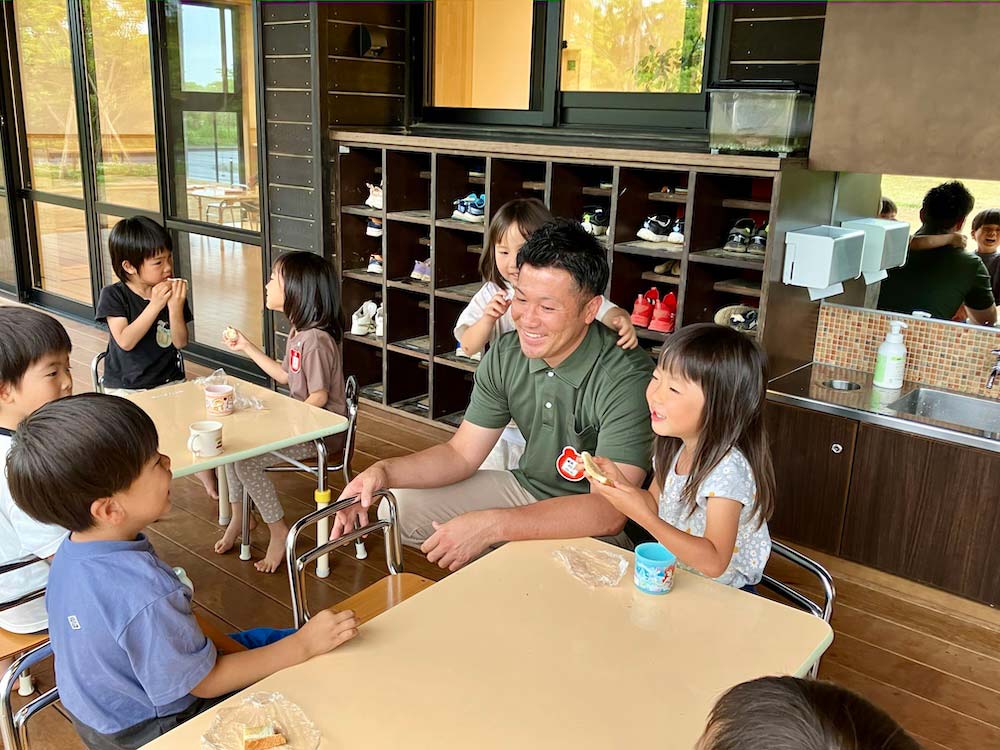
Sato: While there’s no difference in the ability of men and women to be nursery school teachers, there are differences in the way they interact with children — more “masculine” and “feminine” approaches respectively. Children benefit from experiencing both. Especially when playing with children, teachers’ own experiences are reflected in their interactions.
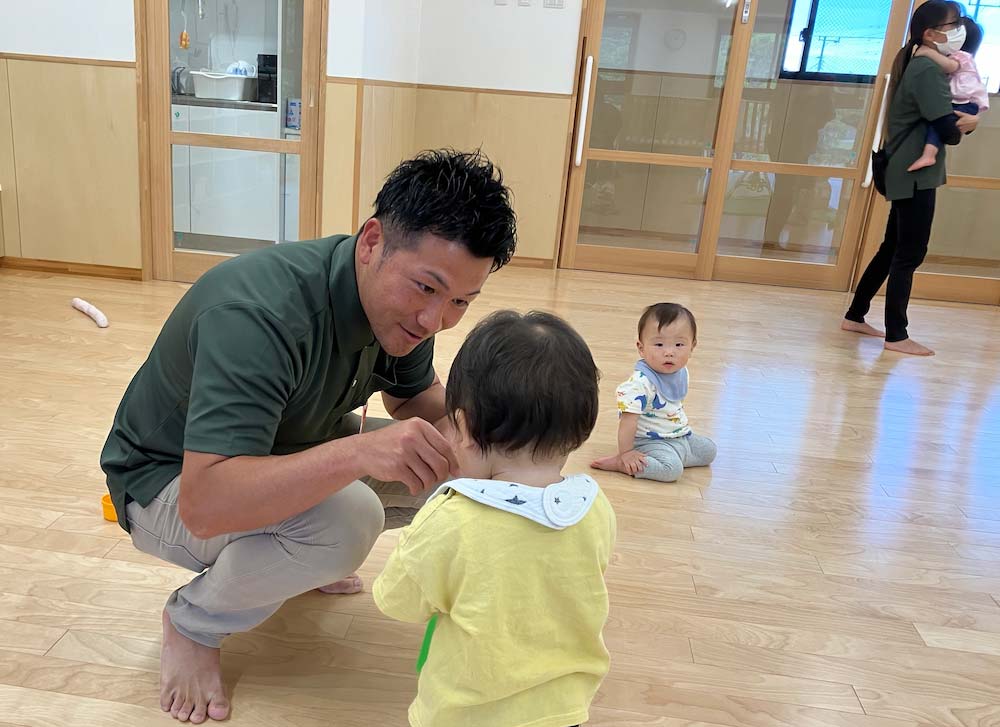
For instance, at our school, the male staff tend to be more comfortable engaging in messy play like getting covered in mud. Since the period from infancy to early childhood is when a child’s personality develops, having a diverse group of teachers allows children to gain a wide range of experiences. I believe that such exposure helps lay the groundwork for them to lead self-directed lives in the future.
Journal: As a male nursery school teacher yourself, what challenges do you see in creating that future?
Sato: I feel that improving pay and working conditions across the entire industry is an urgent priority. In particular, there is a significant disparity in pay between public and private nursery schools, and I believe that is the issue we need to address.
Around my third year as a nursery teacher, I began to question whether I could really continue this career long term, and the main reason for this was the salary. However, since I had gone to the trouble of obtaining qualifications and I found the work itself fulfilling and enjoyable, I decided to give it another try at a different nursery school. This was how I ended up moving to Doronko.
One event that I remember in particular when I joined Doronko was when senior male nursery school teachers from a neighboring school invited me to a training session shortly after I started. Since then, we’ve gone camping together, met up for meals, and maintained a close relationship both professionally and personally.
Although there may be no inherent gender differences in our workplace roles, in a work environment where men are in the minority, connections with others of the same gender provide a certain sense of reassurance. In this sense, perhaps developing informal networks between male colleagues where people can easily confide in one another when in need of support, and making their presence visible so that men feel that they have “comrades” in the industry would help create a more supportive work environment for men in nursery school teaching roles.
Promoting a proper understanding of the profession’s expertise and value
In response to Mr. Sato’s comments from his perspective as a male nursery school teacher, we asked Ms. Yasunaga, Doronko’s chief director, about the current challenges and her vision for the future.
Journal: What are your thoughts on the comment that “improving pay and working conditions is an urgent priority for the entire industry”?
Yasunaga: In 2017, Japan’s “Child-care guidelines of the day care center”* underwent a significant revision, explicitly defining nursery schools as “facilities that provide early childhood education.” As nursery schools are places where children are nurtured and educated, it seems only natural that the gender ratio of nursery school teachers should be 50:50, just as it is for teachers in the compulsory education system.
To achieve this, as Mr. Sato mentioned, improving pay and working conditions for nursery school teachers is essential. However, I also feel that the childcare industry as a whole needs to shift its mindset away from relying on government subsidies and instead focus more on finding creative management solutions and improving efficiency in order to improve pay and conditions for staff.
Improved working conditions for childcare workers will attract more people to the profession and enable them to pursue early childhood education as a lifelong career. To accomplish this, I believe that Doronko’s efforts to develop as many nursery directors as possible with management and business acumen will help solve the challenges facing the industry.
- Guidelines defining the fundamental concepts, objectives, and specific childcare practices for nursery school operations, as well as related administrative matters. Source: “Explanation of Child-Care Guidelines of the Day Care Center,” Children and Families Agency (external link, in Japanese / PDF)
Journal: Finally, what societal efforts are needed to build a future in which both men and women can choose a career as a nursery school teacher without feeling constrained by gender bias?
Yasunaga: In junior high and high school career counseling classes, there are still some cases where the profession of nursery school teacher is described as “a job for people who like children and enjoy playing with them.” This highlights the fact that there is still a lack of understanding about just how much expertise is required for the role and the value it provides.
The nursery school industry has undergone significant changes in recent years, and I hope the government will help promote a more up-to-date understanding of the profession — one that acknowledges that nursery school teachers, just like elementary and junior high school teachers, have an important responsibility in ensuring the safety of children and supporting their growth and development.
For example, at Doronko we offer internships for high school students in partnership with Hiroo Gakuen Junior and Senior High School, in order to raise awareness among those in their teens and twenties of the value that childcare services and nursery school teachers provide. After explaining the external environment surrounding childcare and discussing Japan’s educational reforms in a systematic manner, we invite students to experience an actual nursery school firsthand. We often hear teachers voice their surprise, saying, “I had no idea the nursery school industry had changed so much.”
In order to bridge the gap between the information currently provided during career counseling and the actual realities of the nursery school industry, I believe that expanding these types of programs connecting elementary, junior high, and high school teachers with the nursery school sector on a national scale will play a crucial role in eliminating gender bias.
Editor’s Note
Behind the issue of the low number of male childcare workers lies a broader question: how can we make nursery school teaching a profession with long-term career prospects and the opportunity for promotion. We felt that this issue requires further discussion, including how to structure human resources and performance evaluation systems. While it is important that individual facilities continue improving their management and operational practices, there is also plenty of room to enhance support systems in order to encourage such efforts.
As Ms. Yasunaga noted, the fact that this problem has persisted for so long reflects a lack of societal understanding that nursery schools are educational facilities that support children’s health and development and lay the foundation for shaping their character.
Rather than leaving the issue solely to educators and parents, we believe it is crucial that each of us, as members of society, properly recognizes the professionalism demanded of nursery school teachers. Such understanding can drive improvements in pay and working conditions for nursery school teachers, support the development of stable career paths, increase the number of males in the profession, and ultimately contribute to a more gender-equal society that embraces diverse ways of living.
Text: The Nippon Foundation Journal Editing Department
Profile
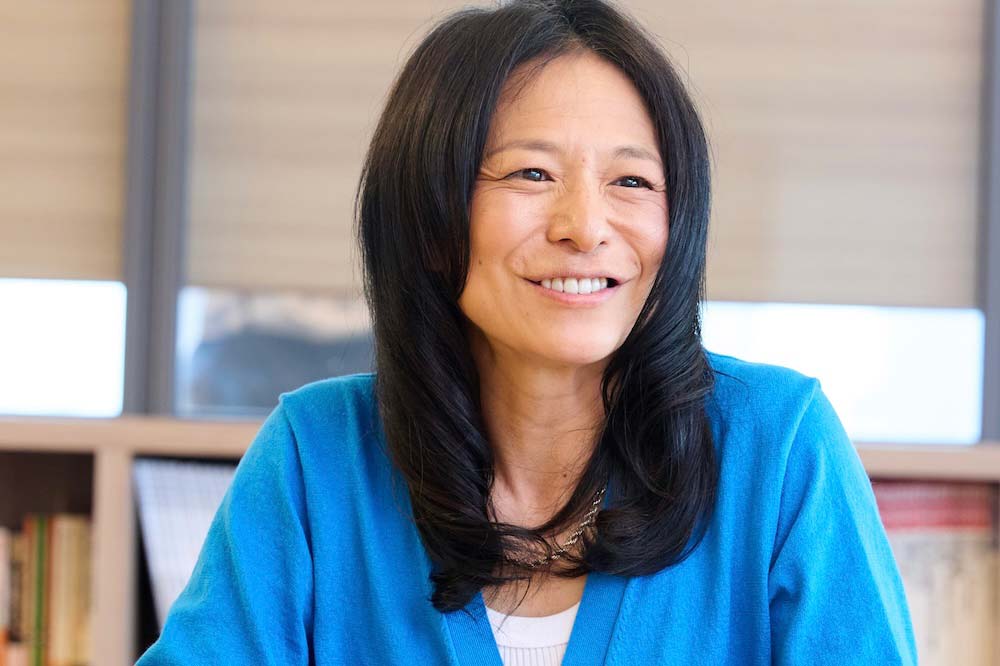
Aika Yasunaga
Born in 1974. She married while studying at the Faculty of Engineering at Tokyo University of Science, later joining a foreign-affiliated bank before giving birth soon after. Doubts over the approach to childcare at the nursery school her son attended led her to open her own unapproved nursery school in Asaka City, Saitama Prefecture, in 1998. Later, in 2015, she launched a pioneering facility that combines an approved nursery school with child developmental support services, where children with and without disabilities share the same spaces and spend the day interacting with each other. She currently serves as Chief Director of Doronko and Representative Director of the Japan Welfare Research Institute.