Why Is Preferential Treatment for Women a Sensitive Issue for Men?Sociologist Tomomi Shibuya and writer Takayuki Kiyota discuss gender issues
Key Points
- A tendency among men to dismiss initiatives providing assistance for women as preferential treatment for women is the result of subconscious prejudice at the very roots of society.
- For men to reach the point where they address gender issues as something that affects them, they need opportunities to lay bare their feelings and vulnerability in a safe space and with people they can trust.
- It is important to adopt the perspective that every one of us is a person in their own right, rather than being constrained by a preconceived notion of gender.
Statistics from the World Economic Forum on the global gender gap showed that in 2024 Japan ranked 118th of 146 countries[1] and lowest among the G7 nations[2] . In efforts to change this, initiatives are being pursued in Japan to promote the advancement of women in society, including participation in politics and various other fields.
In the field of politics, for instance, there has been discussion on the introduction of a quota system. This measure is aimed at encouraging more women to take roles in politics by establishing a certain quota that ensures that there are equal numbers of male and female candidates for seats in the national Diet or local assemblies.
An increasing number of businesses are likewise adopting approaches such as setting numerical targets to increase the percentage of women in managerial positions or implementing training aimed at nurturing more women leaders.
Such initiatives have, however, been met with criticism suggesting, for example, that providing special treatment exclusively for women is reverse discrimination, or that it does not make sense to hire women just to fulfil a quota if merit-based evaluation is so important.
Why do some men react so strongly to such measures? There are also rather interesting common themes in what they are saying, such as: “effort and ability are not being giving proper recognition,” “why are men always treated like perpetrators?” and “life can be difficult for men too.”
These appear at first glance to be grievances that relate to the speaker personally, and yet to properly understand them we need to focus on the kinds of values that are entailed in the concept of otoko-rashisa (the typical stereotypes of what it means to be a man or to be manly, translated here as “masculinity”), which are at the root of the pressure and hardship suffered by men. With the end of the era where men went out to work and women were responsible for the family, women pursue careers just like their male counterparts, and the male roles and positions that were formerly a given have changed significantly.
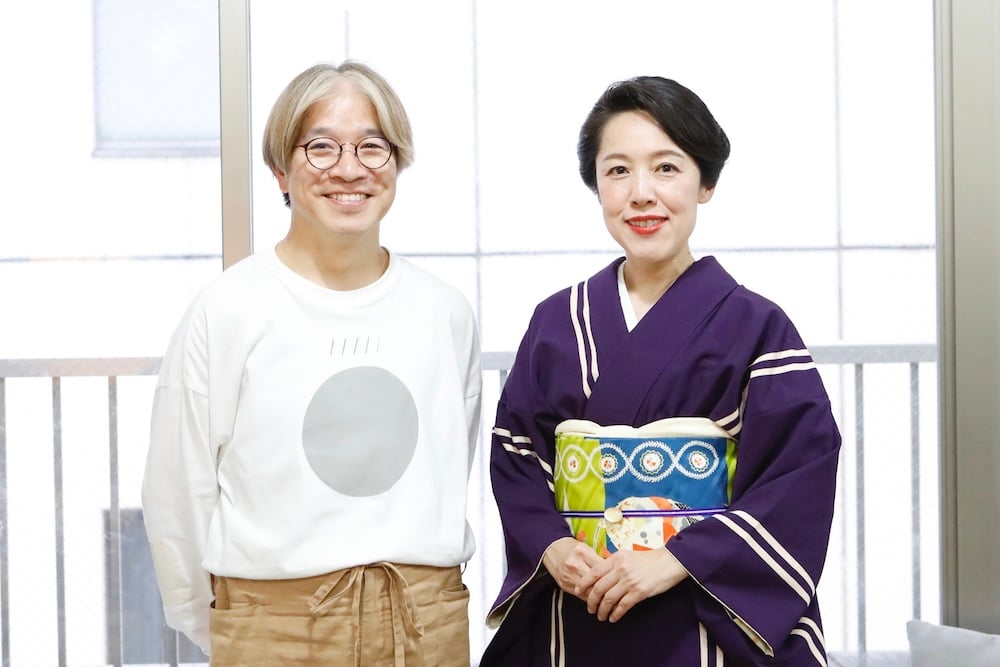
What kinds of mental impacts have these changes had on men? In this dialogue between sociologist Tomomi Shibuya, whose research explores the history of male sexuality, and writer Takayuki Kiyota, who has interviewed numerous men from the general public on the topic of masculinity, we seek to identify what background factors generate the values of masculinity and the social impacts of the gender bias that dictates how men should be.
- Note 1: Reference: “Global Gender Gap Report 2024,” World Economic Forum (external link/PDF) ↩︎
- Note 2:The G7 nations refers to Canada, France, Germany, Italy, Japan, the UK, and the US.↩︎
What are the background factors that prompt men to feel like only women are receiving preferential treatment?
The Nippon Foundation Journal Editing Department: While progress is being made with initiatives encouraging women to take greater roles in society, such measures are almost always criticized as reverse discrimination. What kind of constructs or mentalities do you think prompt such a response?
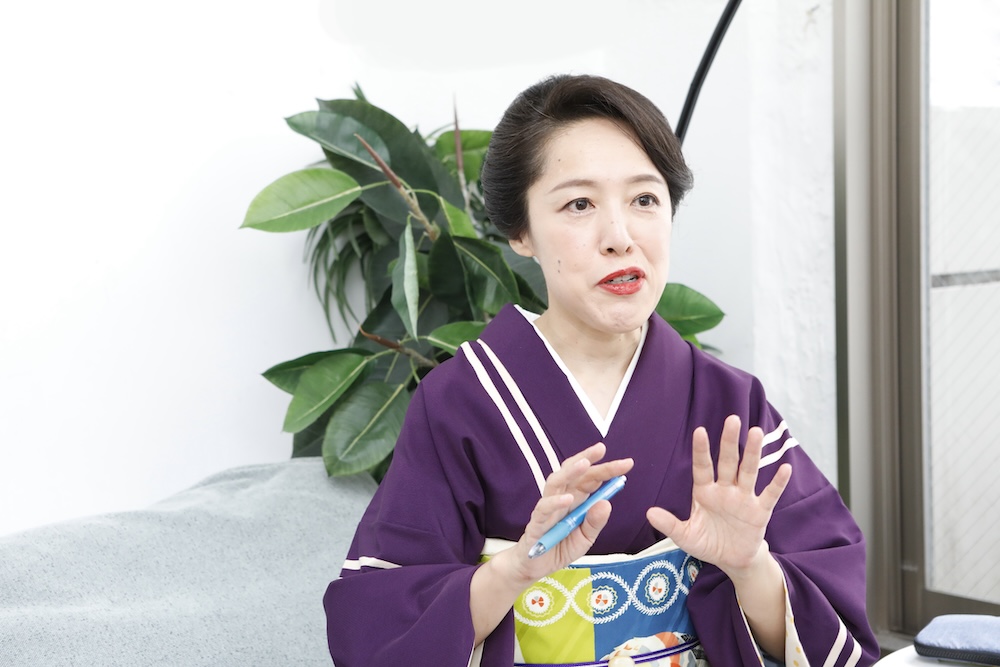
Tomomi Shibuya: My research is specialized on gender research and male sexuality from a sociological perspective. I think that men who criticize such measures as reverse discrimination are being guided by an emotional response questioning why support is only provided for women despite the fact that things may be difficult for men too, and by an unfounded misconception that men are more competent than women.
There is, for example, a government target aimed at ensuring that 30% of managerial or other such leadership roles are occupied by women. This target is often criticized as reverse discrimination against men on the grounds that it means filling 30% of managerial positions with women simply because they are women. However, it is rarely argued that it is discrimination against women for men to occupy the majority of managerial positions because they are men.
At the heart of this is the ungrounded misconception that the reason why managerial positions are largely occupied by men is that men are more competent than women. The fact that men occupy the majority of managerial positions is due to the fact that the current ways of working were developed to suit men who have no responsibilities to care for family members and are in turn able to work long hours. Under such a system, women who shoulder the care responsibilities, such as housework or raising children, are unable to dedicate time to the company and are naturally unable to take on managerial roles.
According to University of Chicago professor Kazuo Yamaguchi’s research on Japanese corporations, we understand that in comparison with female university graduates, male high school graduates are more likely to secure a managerial position at section manager level or above. He suggests that emphasis is placed on one’s birth — that is, whether one was born a woman or man — as opposed to academic record or other such achievements, and such a society is not a performance-based society.
Takayuki Kiyota: Interviewing ordinary men and looking at the gender discussions on social media, I do often come across the argument that when a man secures a role, it was because he was the final candidate remaining in a selection process based on ability, and gender did not play a role.
However, it has for instance been revealed in surveys by specialist bodies in various countries that female students achieve better results than male students. Therefore, if selection was truly based on ability, it would make sense for women to occupy more positions in various fields of society.
There is also data that indicates that in business, hiring women will lead to positive results. Yet for some reason there are no efforts to recognize this. It is as if there is some form of blind belief, and I get the sense that this is in some part a result of the kind of trend in thinking that Ms. Shibuya just touched on — the feeling that only women are receiving special treatment, even though men are struggling too.
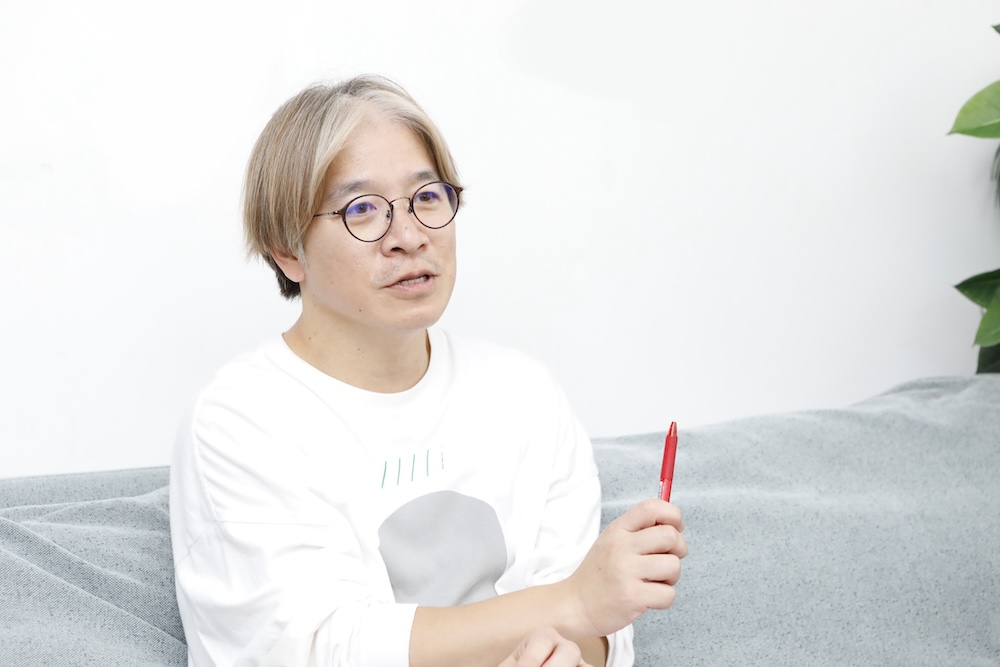
Journal: What kind of constructs contribute as factors behind such sentiment and reactions from men?
Shibuya: When looking at social relations between men, “homosociality” is an important concept. This refers to the non-sexual social connections and bonds between fellow men. Under this concept, there are men who can become members and men who cannot become members, and those who can are men who have wives and girlfriends. They feel superior to men who do not.
Such men are also grading each other on various criteria such as whether they perform well at work, whether they are proficient academically, or whether or not they are good at sports. The men with the higher position then have a sense of superiority over those in the lower position. Whether it is consciously recognized or not, such a construct exists all around.
Kiyota: I certainly get the sense that men are preoccupied with the perception of ranking, not only in the workplace or other such organizations but also in truly trivial everyday situations. This is also something that I recognize from personal experience, for instance thinking back to when I was a junior and senior high school student at a boys’ school, there were to some extent invisible rankings within the class according to some kind of criteria you fulfill, such as whether you did well academically, whether you were physically fit, or whether or not you were fashionable.
Once position and character within the group is generally decided, communication proceeds smoothly on the surface according to that structure. And yet if you look closely, it can in fact be a construct by which those with a lower position are adapting themselves to an atmosphere and rules that are comfortable for those in higher positions.
Shibuya: Such dynamics have also been observed in office meetings and other such scenarios. The men from the middle layer of the organization do not share their own opinion but bow to that of the CEO, their manager, or other such figure in a higher position, only ever giving safe statements.
Journal: Does such a perception of ranking also exist in relations between fellow women?
Shibuya: The kind of invisible ranking that Mr. Kiyota was describing also exists in the relationships between women. However, its existence is clearly acknowledged — it has even been described by manga author Yukari Takinami and essayist Kamiko Inuyama in Onna ha egao de naguriau (“Women punch each other with smiles”), which attracted attention for its exploration of the social behavior among women referred to in Japanese as “mounting” (mauntingu) in reference to the way animals physically mount others to display social status, and by prominent psychiatrist Hiroko Mizushima in her book to navigating relations between women, Joshi no ningenkankei (“Women’s relationships”). And yet, there does not appear to be such an awareness of the ranking among men.
Although there is a lot of communication in everyday scenarios that makes us sense such a ranking, such as one-sided teasing or poking fun, these are talked away as “just a joke” or “only kidding,” which makes the ranking invisible.
Kiyota: Men teasing each other and giving each other a hard time is a common source of humor on Japanese tv talk shows or YouTube videos.
Shibuya: In homosociality, we see the trend that men who have a wife or girlfriend or men with sexual experience have a higher position and men who do not are teased or made a fool of. It is hard to watch, even as an onlooker.
Kiyota: I think there are a lot of men who are secretly suffering because they are treated as having a low position in the ranking. And yet, admitting there is a ranking would mean that they would have to accept the fact that they have a low rank. They therefore try to convince themselves that it is just messing around. Besides, the social norm dictating that expressing weakness or becoming emotional is not masculine behavior prevents men from acknowledging they are lonely or emotionally distressed.
I cannot help but think that such a trend leads to a power dynamic between men in which men do their best to ensure they do not slip down the ranking and to achieve as a superior position as they can.
Shibuya: There is probably a connection between the idea that expressing emotion is not masculine behavior and the belief that efforts to promote gender equality constitute reverse discrimination. There is no shortage of men who are concerned that the promotion of gender equality threatens their own position or the interests that they have secured. And yet showing insecurity is not masculine and will compromise their position in the ranking. This is probably why they choose to describe the promotion of gender equality as reverse discrimination, rather than admitting that they are feeling insecure.
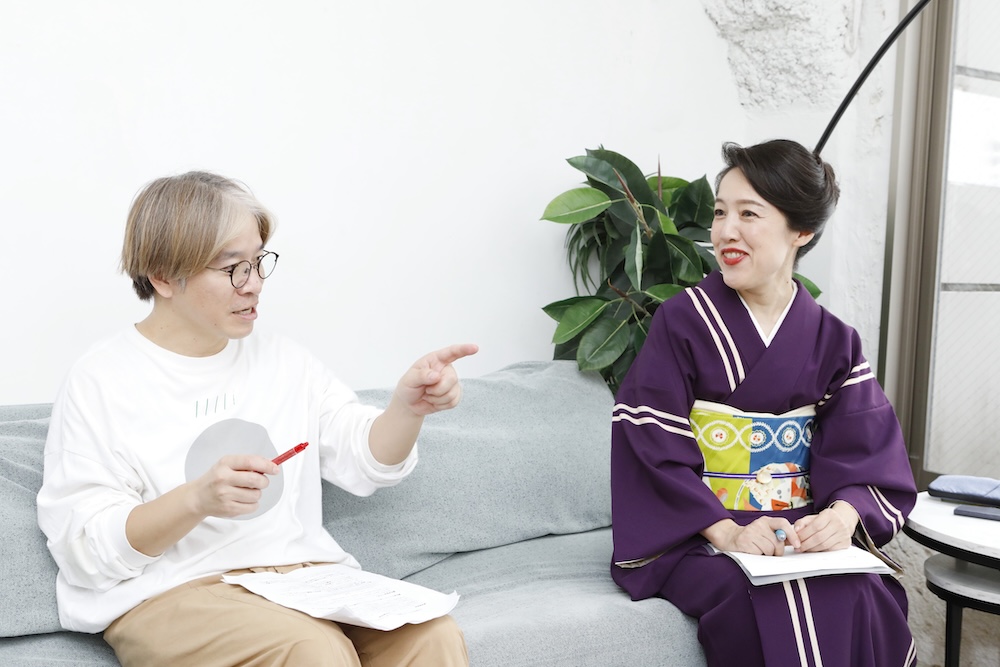
The sense of masculinity that is instilled in men from a young age
Journal: How do men come to adopt such behavior uniquely characteristic to men, such as the perception of rank, which is a key example?
Kiyota: I have twin daughters who go to nursery school in the four-year-olds class at the moment, and you already get a sense of the influence of gender at that age — they often say things like: “boys really like robots and trains” or “a princess is a girl.” However much you try to be careful at home, in all kinds of everyday scenarios the roles and images dictated by gender penetrate our values.
For instance, on television shows often the main presenter will be a middle-aged or older man with a female reporter playing a supporting role, or the train stations are covered with advertisements showing women cooking.
If they are exposed to such images, children will adopt the sense that these are essentially men and women’s roles, and once they have repeatedly seen such images for tens of thousands of hours, perception and sense of values regarding gender will develop like a thick layer, so I think that whatever we do, it is impossible to avoid the influence from society.
Shibuya: While you would expect that today there is a stronger tendency to pursue gender equality and raise children without making distinctions, in reality, people still say things like “men don’t cry” and “act like a man.”
I have asked university students, and even those who were born in the 2000s say that they have heard such things from their parents or teachers.
Kiyota: It used to be that men who occupy themselves with dressing fashionably were not considered masculine, but today the growing popularity of the idea that men who do not take care of their appearance are uncool and other such trends reflect that the norm of masculinity may itself change or be open to variation.
And yet, while the specifics of what it is to be masculine may vary, there is no change to the very construct that being non-masculine should be reproached. I get the feeling that that construct alone has been consistently preserved by society.
Journal: That is to say, there is unlikely to be any change in the dynamics that men suppress displays of their true feelings and emotions in order to avoid showing weakness, for fear that that would render them “not masculine,” leading their ranking to decline and placing them at a disadvantage.
Shibuya: Exactly. Men who are suffering in the ranking that exists between men will be increasingly hurt if they speak up and complain that they hate the ranking or that it is hard. They therefore eventually find they have no choice but to keep quiet. However, because they keep quiet, their pain will not be alleviated. This prompts the idea that men have it hard but don’t receive any care, and that it is not fair for only women to receive help.
Kiyota: I think that it is a deep-seated issue. When I conduct interviews, I get the sense that men have a unique approach to evaluating circumstances. For instance, I think we can all somewhat relate to the image of an empty can rolling around inside our train carriage — it is not nice to look at and even dangerous, but if we stare at it or it rolls under our feet, we will be compelled to do something about it, so we make ourselves invisible and pretend we haven’t noticed.
Such an approach has developed into habit in our everyday lives and relations with others in all kinds of scenarios. It gives the impression that our antennas for perceiving risk are constantly in operation — for example, “if I volunteer now, I will probably be burdened with responsibility,” “if I express my opinion now, it will probably meet with opposition” — and we act in such a way as to not be disadvantaged in the ranking.
Shibuya: This behavior is what we could describe as a kind of survival strategy. While such a strategy may allow us to survive within the group, our true intrinsic feelings die. The dissatisfaction of not being able to say what we really want to say finds an outlet and may manifest itself as violence or discrimination toward the men lower than us or to women.
Journal: What kind of impact do you think that such a behavioral principle has on society?
Kiyota: For example, a brilliant proposal that has come up through the company from the workers on the shop floor is shifted in a nonsensical direction at the authority of those in higher management who have no idea of the conditions on the shop floor, and, as no one voices criticism, it takes on a different shape from what was originally intended. I think many of us have had such an experience. I believe that such a phenomenon directly reflects the negative impacts that can be exerted by the perception of ranking and risk avoidance within male groups.
Shibuya: I think that the impacts have even begun to manifest themselves as inflexibility in organizations and, in turn, economic stagnation. Calls from foreign investors for Japanese corporations to ensure that women occupy 30% of managerial positions and to reduce the wage discrepancy between men and women are not simply in the name of promoting diversity. They are based on a pragmatic judgment aimed at allowing the organization to progress by correctly utilizing competent human resources, regardless of their gender. Statistics from the World Economic Forum do in fact indicate the correlation between gender equality and economic progress.
Kiyota: I think that there are many men who have repeatedly been treated as a foot soldier in an organization or handled poorly, and have been hurt as a result. And yet for some reason rather than directing such pain and dissatisfaction at the hierarchy right before their eyes, they express it in the form of objection to women’s advancement, which appears to be unsettling the ranking from the outside.
Shibuya: The habit of trying to avoid disadvantaging themselves in the ranking is limiting the intrinsic potential that men possess, for instance, the ability to express their opinions freely or to propose new ideas, or the movement to change the state of the workplace itself. This results in what we could call the unfortunate scenario that both individuals and their organizations miss out on the opportunity for progress.
The potential for change and the uncertainty it holds
Journal: Is there potential for changing such circumstances?
Shibuya: Such potential definitely exists. I give university lectures on sexual violence, and it used to be the case that when I would start a lecture with a story from a female victim, the male students would flop down on their desks as if completely disinterested.
Then, when took the approach of starting with the story of a male victim, they began to listen attentively. By explaining that even soldiers and other such hardy male figures may become victims of sexual violence, I provided concrete examples showing that anyone can become a victim. This prompted them to also sympathize with female victims and listen up.
In other words, if there is an initial means of prompting people to perceive the issues as something that relates to them personally, there is plenty of potential for change.
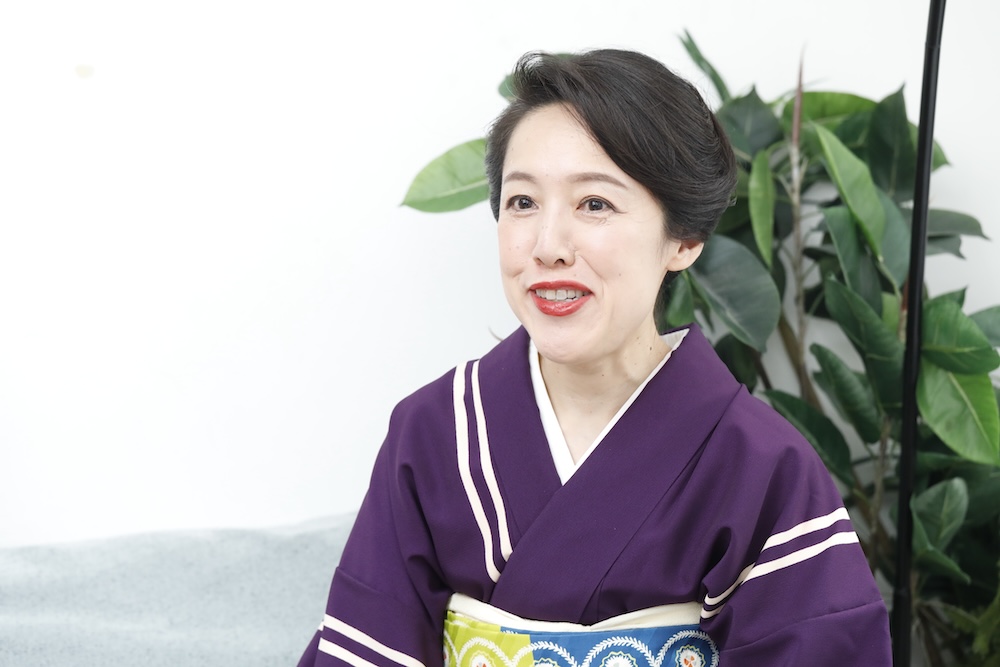
Kiyota: I also have the feeling that there is potential for change.
I have recently been holding regular meetings for men to get together to chat, and we have been working on everyone listening closely to what the person who is speaking wants to tell us. A significant number of the men who take part have given me the feedback that it was the first time that other people listened to what they had to say like that. I think this is probably because there are few people with whom they have built up the kinds of relationships in which their feelings — such as their insecurities, concerns, or envy — are accepted, due to the influence of it being so normal for them to communicate in a way that shows no weakness.
There are many men who may normally put on a show of strength but are in fact wishing that someone would listen to them. I think that the more places there are where men are able to safely open up about such “non-masculine” parts of themselves, the more men will be able to discover the circumstances they have got themselves stuck in.
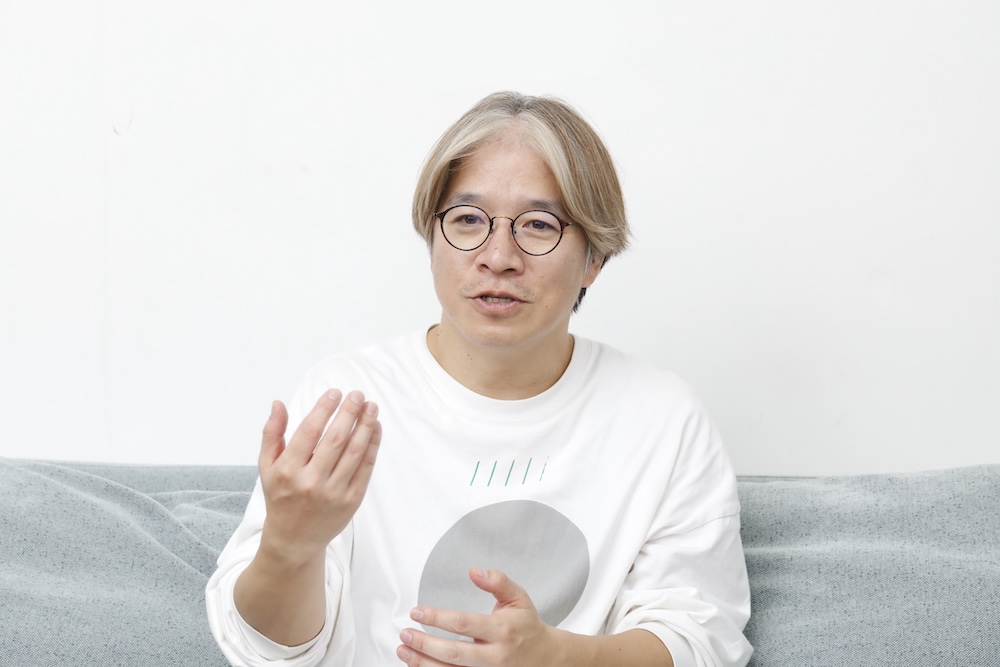
Journal: What kind of approaches do you think are effective for encouraging men to change?
Shibuya: First, we need to present objective data to those men who deny discrimination against women, proving that it does indeed exist. At the same time, some men may deny the existence of such a thing, even presented with data, because they fear being denounced as a perpetrator of discrimination. I think that perhaps relieving them of such fear is another method of prompting change among men.
More specifically, this means developing a common awareness that unintentionally being discriminatory is a mistake that anyone can make. I think that we need to spread the idea that anyone can make a mistake, and if we make a mistake, we admit it frankly, and ensure that we don’t make the same mistake again.
Kiyota: It is indeed true that only when men have a place where they believe that it will be safe for them to reveal their weaknesses, are they able to look at the impact of the masculinity inside themselves. At our meetings, the conversation generally starts with someone complaining about something like a comment their wife made to them. When the other men empathize that they really understand what he is saying, the conversation develops from there.
It probably feels somehow like indulging men to say whatever they like without being contradicted. But I think that through this process of allowing men to feel secure and lay bare a kind of way in which they are a victim, the wounds they have been struggling with will be addressed, which will generate the leeway for them to finally look at their own mistakes and their own role as a perpetrator and reflectively question how they communicate and the kinds of relationships they develop.
Each and every one of us is a person in their own right, regardless of gender
Journal: Do you have any advice for men who want to free themselves from the mindset that values being masculine, in terms of what action they can take?
Shibuya: I would suggest that once you recognize that you are caught up in the need to be masculine, it is good to try monitoring your own behavior. You should be able to notice masculine behavior such as conducting yourself in a certain way in the ranking among men, or something that made you want to hide your weakness. If you gradually change such masculine behavior a little at a time, you will eventually become free of masculinity.
I would also advise them to consciously try behaving in a way that is not typically masculine. Politely engaging with the person serving you in a restaurant, as opposed to being brisk, or focusing solely on listening rather than monopolizing the conversation when out drinking with colleagues. You might find that the positive reaction from those around you will make you think that it is fun to discard being masculine.
Kiyota: I would like to recommend finding people or places where they can safely express their own feelings. New members are always welcome at our meetings to chat, and I think that it is also important to make friends and companions you can trust and engage with such people.
I also think that reading books about masculinity may provide hints as to how to put their experiences into words. I think that the accumulation of such experiences will become a catalyst for developing a deeper understanding of ourselves.
Journal: What can be done — not only by men, but by each member of society?
Shibuya: There is still a trend in society to impose the stereotype that men will silently soldier on with what they are told to do, without expressing any weakness. When we encounter such values, we need to skeptically question the idea that we should obey gender norms.
Leadership and proactivity are often listed as distinctive features of masculinity, but these are essentially positive characteristics of humans, and there is no need to especially connect them with masculinity.
I think that it is important to adopt the perspective that every one of us is a person in their own right, rather than being constrained by a preconceived notion of gender.
Kiyota: That really is true. If, instead of debating which gender is receiving special treatment, we think about the work that needs to be done to create a society in which each and every member can enjoy living comfortably, in due course we should develop a society in which one can live true to oneself, regardless of gender. And I also think that it is important to start from what you can do, and pursue realistic action at one’s own level.
For example, collecting signatures for a petition seeking to rectify men’s long working hours, or voting for a party or candidate that promotes gender equality. These small actions that each one of us takes will eventually accumulate and lead to significant change.
Editor’s Note
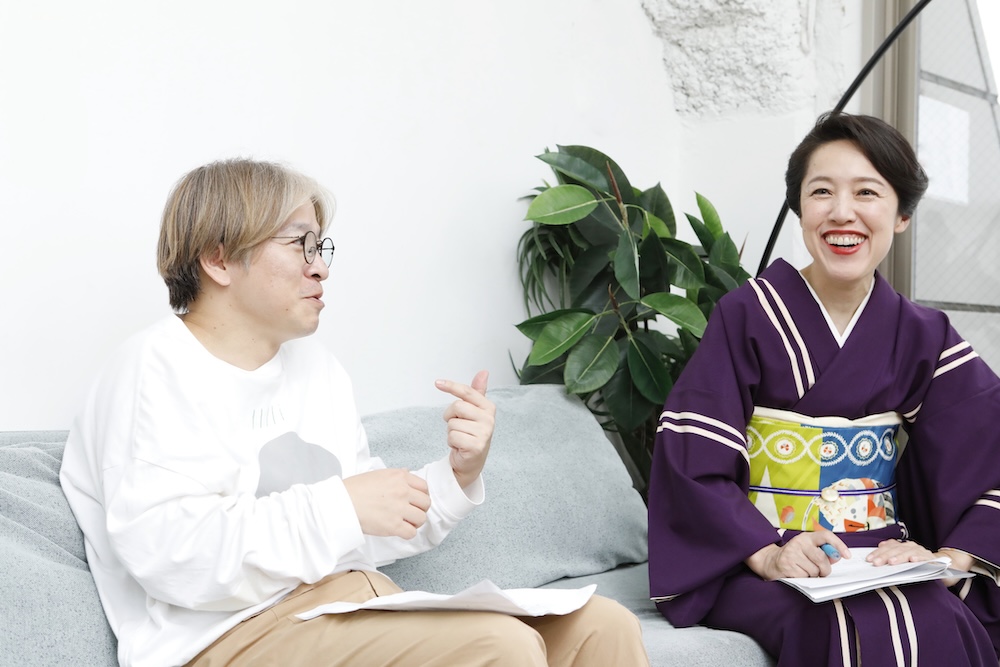
We spoke with Ms. Shibuya and Mr. Kiyota to explore what it is that makes some males respond critically to national government or business initiatives aimed at supporting women.
The fierce debate between those who argue that gender inequality is still an issue in Japan, and those who respond that the problem is now reverse discrimination because only women receive preferential treatment, has developed into a form of template that has been drawn on significantly on social media. In some cases, the dialogue trails off when a personal response comes into play, arguing for instance that although men are said to enjoy favoritism, their position in the home as a husband is the weakest, and they are often scolded by the women of the family.
There is also even a tendency for some to see such comments on social media and avoid the topic without addressing the true nature of the issue, because they simply feel that anything involving gender or feminism is unnecessarily complicated.
Refusing to turn a blind eye to gender issues and everyone grasping those issues as something that also relates to them personally will allow us in turn to share diverse values.
We sense that, as Ms. Shibuya suggests, it is important to appreciate that every one of us is a person in their own right, rather than being constrained by a preconceived notion of gender.
Mr. Kiyota’s suggestion also resonated strongly with us. That is, instead of debating which gender is receiving special treatment, we think about the work that needs to be done to create a society in which each and every member can enjoy living comfortably, in due course we should develop a society in which one can live true to oneself, regardless of gender.
Text: The Nippon Foundation Journal Editing Department
Photo: Emi Enishi
Profile
Tomomi Shibuya
Tomomi Shibuya is a professor at the Tokyo Keizai University Center for General Education. She has a doctorate from the Graduate School of Education at the University of Tokyo, where she specialized in the sociology of education. Her research investigates the history of gender and male sexuality. Her published works include: Nihon no dōtei (“The history of male virgins in Japan”; published by Kawade Shobo Shinsha under the Kawade bunko label), Heisei otoko juku: nayameru danshi no tame no zen roku shō (Prep school for men of the Heisei era: Six chapters for troubled men”) and Nihon no hōkei: Otoko no karada no 200-nenshi (“The foreskin in Japan: 200 year-history of men’s bodies”; both published by Chikuma Shobo, and Risshin shusse to kahanshin: Danshi gakusei no seiteki shintai no kanri no rekishi (“The history of male students’ sexuality in Japan: Self-made man and his body”; Rakuhoku-Shuppan). She worked with Takayuki Kiyota, her fellow contributor in this dialogue, on the publication “Do shite otoko ha so nandaro ka kaigi: Iroiro katariatte miete kita korekara no otoko no koto” (“Meeting to address why men are how they are: A future vision for men that evolved from discussing various themes,” published by Chikuma Shobo).
Takayuki Kiyota
Writer Takayuki Kiyota heads up Momoyama Shoji, a group that labels itself “Sex and the City: the men’s edition” and gathers, shares and provides advice on love life stories and woes through various forums and media formats He graduated from the School of Literature I at Waseda University and writes for a number of different platforms on topics including gender, love, human relationships, and culture. He is a member of the panel that provides life advice in a column for The Asahi Shimbun’s weekend supplement be, Nayami no rutsubo (“Melting pot of personal problems”). His publications include Yokare to omotte yatta no ni: Otoko tachi no shippai-gaku nyumon (“I thought you wanted me to do that: An introduction to failure for men”; published by Futabasha Publishers under the Futaba bunko label), Sayonara, ore-tachi (“Farewell to guys like us,” published by Stand! Books), Jimanbanashi demo buyūden demo nai ippan dansei no hanashi kara mieta ikizurasa to otokorashisa no koto (“Neither bragging nor a heroic tale: Masculinity and the struggles of living as revealed by stories from ordinary men,” Fusosha Publishing), Oshaberi kara hajimeru watashitachi no jenda nyūmon (“Our first steps into exploring gender by starting with a chat,” Asahi Press), and the 2024 publication Modorenai kedo, ikiru no da: Otokorashisa no yukue (“We can’t go back, but we can live: The future of masculinity”; Ohta Publishing).