Economic Independence for People With DisabilitiesA ‘post-welfare’ employment facility building workplaces where everyone can thrive
Key Points
- For workers with disabilities at Type B Continuous Employment Support[1] facilities, the national average monthly wage[2] is just over 20,000 yen, a far cry from economic independence.
- Social Farm Osaki, a plant factory operating as a post-welfare employment facility, has achieved average monthly salaries of around 90,000 yen.
- The purpose of employment support for people with disabilities is to advance their independence and participation in society; having a place to make a contribution is what creates a sense of purpose.
- 1. Support facilities that provide work opportunities to people with disabilities or chronic illnesses for whom employment at a conventional company is difficult, along with training that builds work-related knowledge and skills. There are two types: Type B, used at one’s own pace without an employment contract, and Type A, used under an employment contract signed with the operator↩︎
- 2. The money paid at Type B Continuous Employment Support facilities for labor such as production and processing work↩︎
Monthly amount: 23,053 yen. That is the national average monthly wage for workers at Type B Continuous Employment Support facilities in FY2023. Owing to revisions in service compensation rates and a change in how the average wage is calculated, the figure is more than 6,000 yen higher than the previous year, but the reality is that it remains a long way from a self-sufficient livelihood.
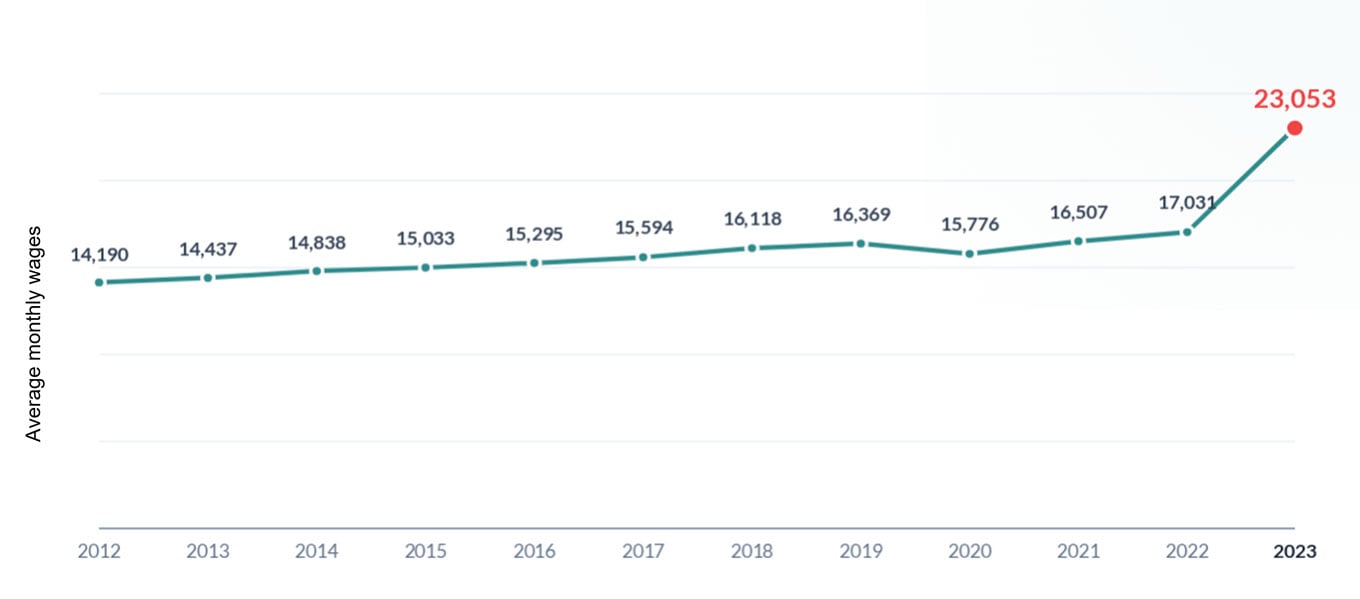
- Type B Continuous Employment Support facilities whose compensation structure is tied to the average monthly wage had, through fiscal 2022, calculated wages using the previous year’s number of wage recipients as the denominator. The fiscal 2024 revision of compensation for disability welfare services introduced a new calculation method that takes into account facilities that can be used by people who attend fewer days due to the nature of their disability or other factors. The new method uses the previous year’s daily average number of users as the denominator (from fiscal 2023 onward, the average monthly wage reflects this new method).
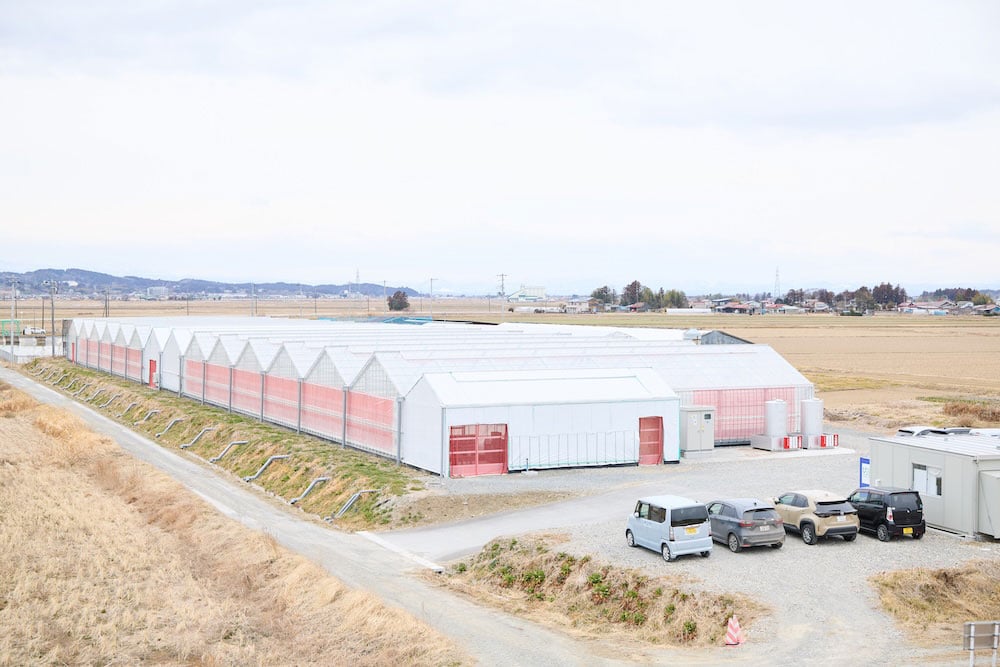
Against that backdrop, in March 2024, Challenged Life (external link, in Japanese) used a grant from The Nippon Foundation to close one of its Type B Continuous Employment Support facilities and open Social Farm Osaki, a regular business in Misato Town, Miyagi Prefecture, that pays salaries from its sales revenue.
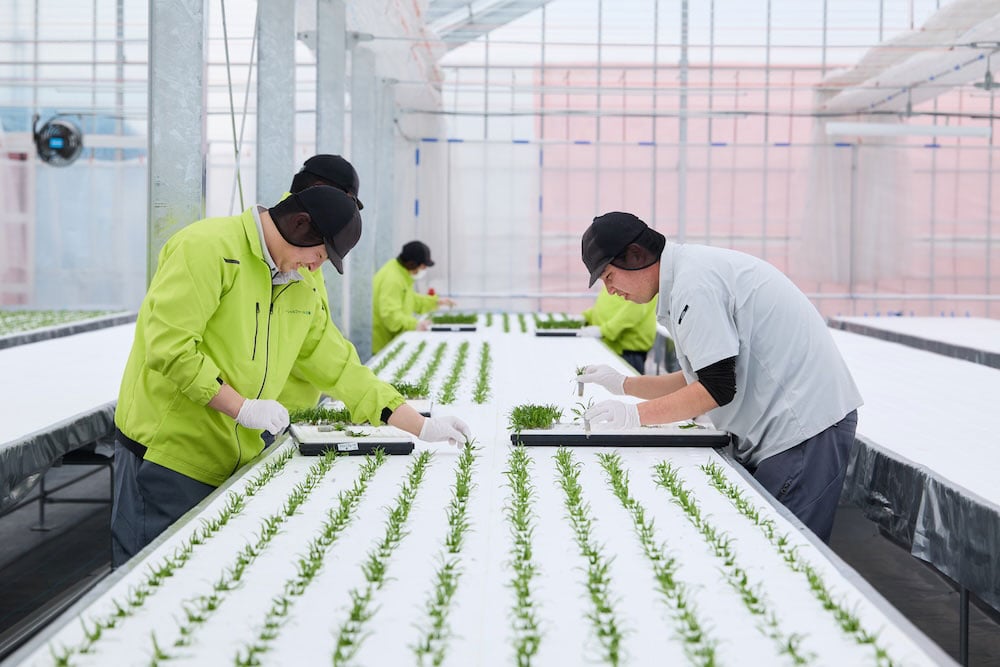
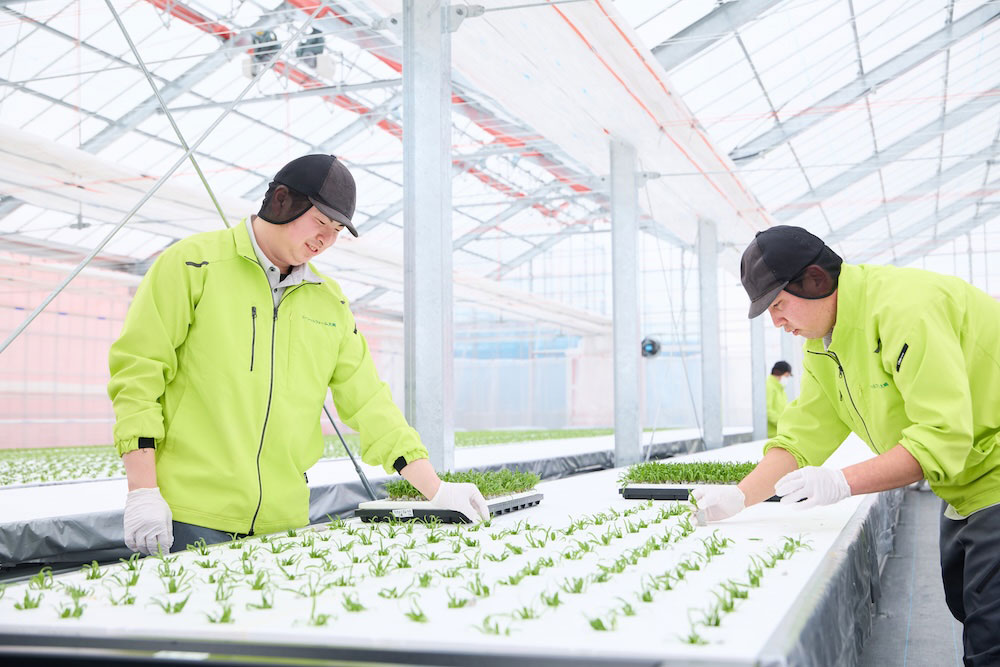
The plant factory grows spinach hydroponically, with people who had previously used the facility now hired as regular employees. As a post-welfare employment facility able to pay salaries without relying on public welfare funding, it is the first of its kind in Japan.
Monthly wages, which had previously averaged around 10,000 yen, have climbed to about 90,000 yen, a marked improvement in conditions for the people with disabilities who work there.
About a year on from the factory’s opening, what changes have surfaced in the people working there? And what challenges does it now face in continuing to operate? We spoke with Keitaro Shiraishi, Executive Director of Challenged Life, to find out.
From using a service to being an employee: a change in mindset for the workers
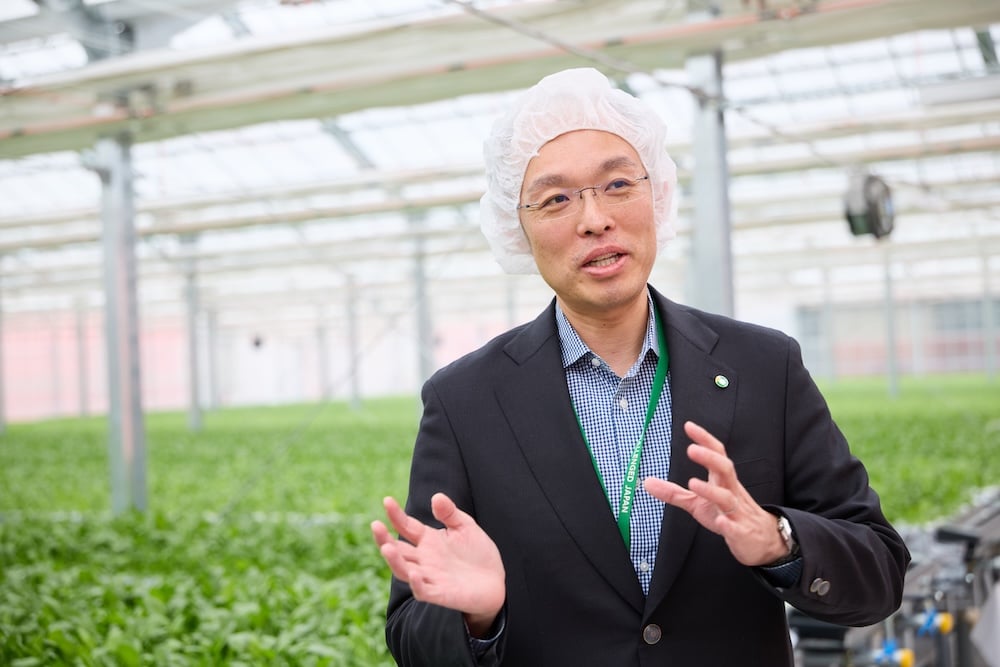
The Nippon Foundation Journal Editing Department: When the decision was made to open Social Farm Osaki, what was your honest reaction?
Keitaro Shiraishi: I have spent my career in employment support for people with disabilities, and for years I had wondered why the people with disabilities who were perfectly able to work were not being given the chance. Many of them are genuinely capable of mainstream employment, yet most are offered no real option beyond working at a welfare facility.
So I felt that opening Social Farm Osaki could prove that people with disabilities can work and make a real contribution.
Journal: The term “post-welfare” employment is a striking one.
Shiraishi: Strictly speaking, it should be “post-public-funding.” The people working at Social Farm Osaki still need certain kinds of support and accommodations, so welfare itself is very much present. What is no longer there is the public funding.*
- Continuous Employment Support is part of the disability welfare services run by national and local governments. While usage fees apply, in principle the national and local governments cover 90% as public funds, with the person using the service covering the remaining 10%.
Journal: Were there particular challenges in getting the facility off the ground?
Shiraishi: The employees working here had originally used the Type B facility that Challenged Life had been running, so we had no concerns about welcoming them in. We already knew how to support them.
The hydroponic spinach side of things did give us trouble, though. None of us, myself included, had done it before, and we had never even farmed. So we felt our way through it with help from local farmers.
Journal: Have you noticed changes in your employees with disabilities now that they are working in that role?
Shiraishi: At the start, many of them did not know what to do and were waiting for instructions. But as they got used to the work and the environment, they started acting on their own initiative more and more. And not just at work; some have even gotten their driver’s licenses, which would have been unimaginable back in their Type B facility days.
I think the shift from being someone using a service at a Type B facility to an employee at Social Farm Osaki has brought a change in mindset. The sense that I am employed, that I am doing my job and earning a salary, has a powerful effect.
Working as employees and finding dreams of their own
The simple fact of being hired as an employee leads naturally to the awareness of being a working member of society. That awareness, in turn, leads to each person’s independence. The environment at Social Farm Osaki appears to be having a positive effect on the employees with disabilities working there.
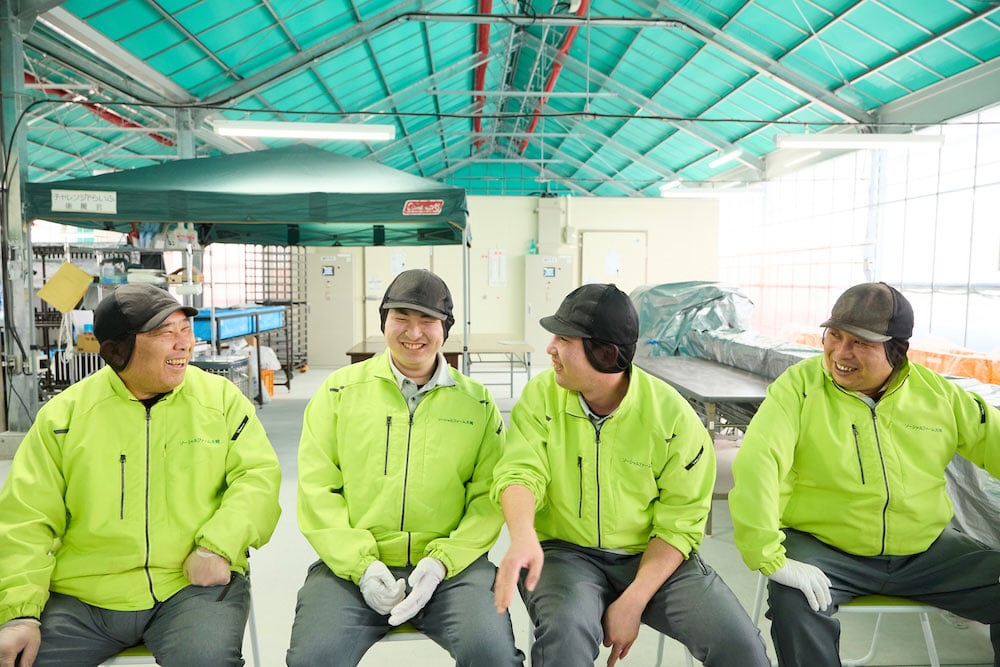
We also sat down with four people who actually work at the farm: Kazuhiko Ichijo, Ryo Sugawara, Yoshiki Abe, and Mitsuharu Kumagai.
Journal: When you each learned you would be working at Social Farm Osaki, how did you feel?
Mitsuharu Kumagai: At first, I thought it looked hard. I was nervous about whether I could learn the whole job, and to be honest, I hesitated. But now I am glad I tried it.
Yoshiki Abe: Like Mr. Kumagai, I was anxious about whether I could do this work. But by asking the support staff about anything I did not understand, and learning piece by piece, I am working happily now.
Ryo Sugawara: The work is different from what we did at the previous facility, so I was anxious too.
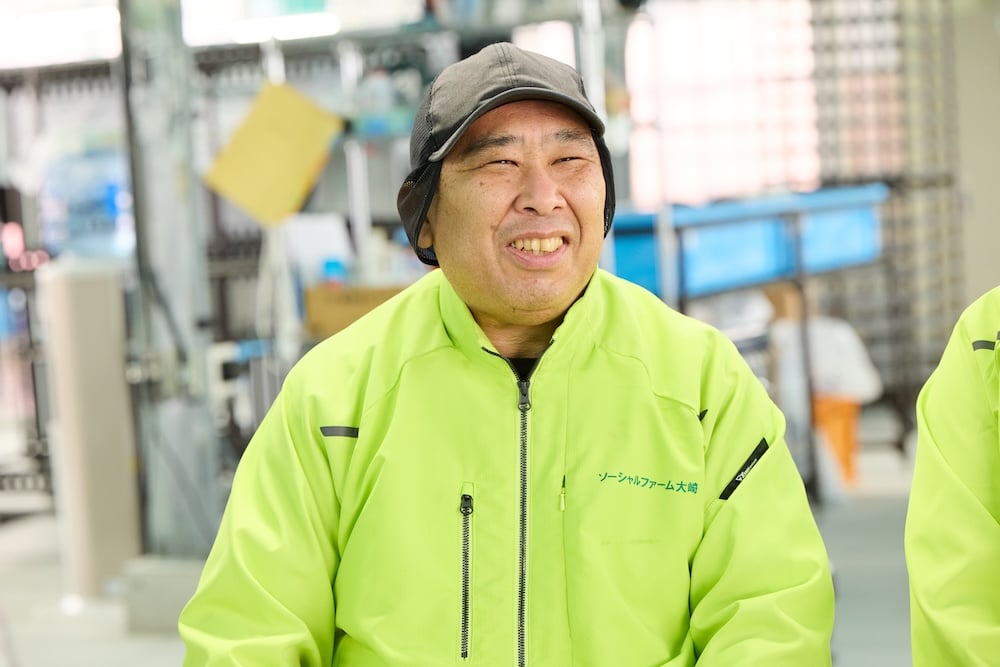
Kazuhiko Ichijo: I had been at a Type A facility before, but I couldn’t quite fit in there, so I moved to a Type B facility. With the work at this factory, then, I worried it might go the same way as my time at the Type A, and I felt nervous.
Journal: What kind of work do you actually do here?
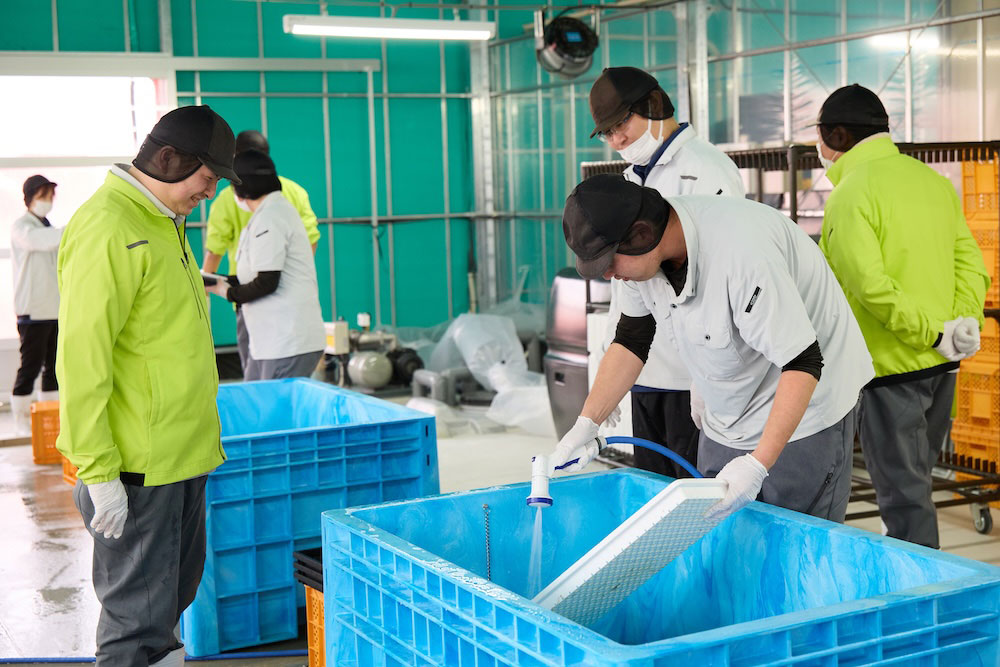
Kumagai: I do a bit of everything: harvesting spinach, planting seedlings, and cleaning.
Abe: We do sowing and rinse the panels, too. We work on it all together.
Journal: Is there anything about the work that you find difficult?
Sugawara: When we sow, we have to weigh the seeds carefully in grams, and that part is a little tricky. But planting the spinach seedlings is a lot of fun.
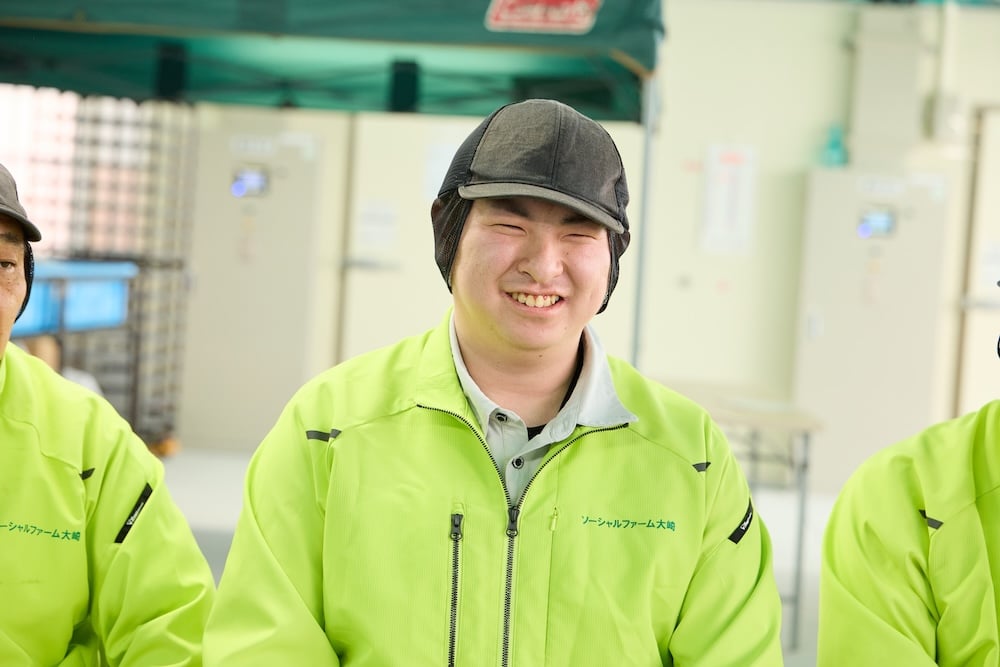
Ichijo: There are a lot of younger workers here, and seeing them handle the work with such ease can get me flustered. But many of the tasks are simple, so if I stay calm, I am fine.
Kumagai: Once you have learned the basics, there is nothing too difficult, but I still feel I have much more to learn. The more I learn, the fewer mistakes I make, and harvesting the spinach after that is a great feeling.
Journal: Could you tell us about your hopes and goals for the future?
Abe: I live with my family right now, but eventually I want to move into a group home and become independent from my parents. I will have to save up to do that, so I am working hard here. And after I have lived in a group home, I would like to try living on my own.
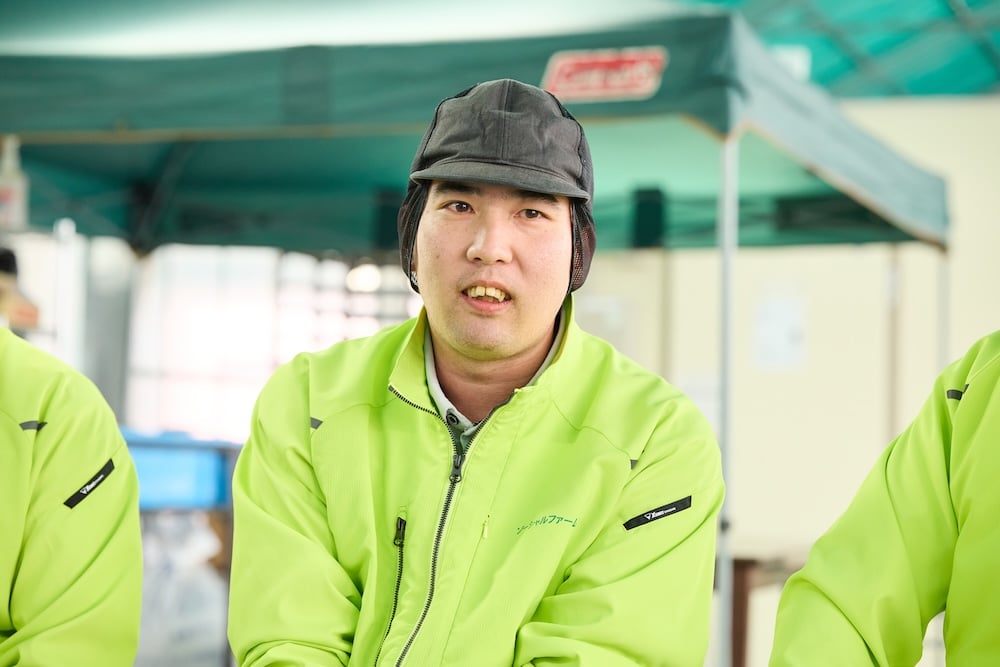
Sugawara: There is nothing in particular I want to do right now, but I want to start saving so I am ready whenever I do find a dream.
Ichijo: I want to save up money for my hobby, plastic models.
Kumagai: I used to have no goals. But since I started working here, I have been able to set them. My biggest one is to become a fully capable adult. It would be great if I could do everything, work and daily life, perfectly, but it does not come easily … I want to get to a point where I can manage all of it.
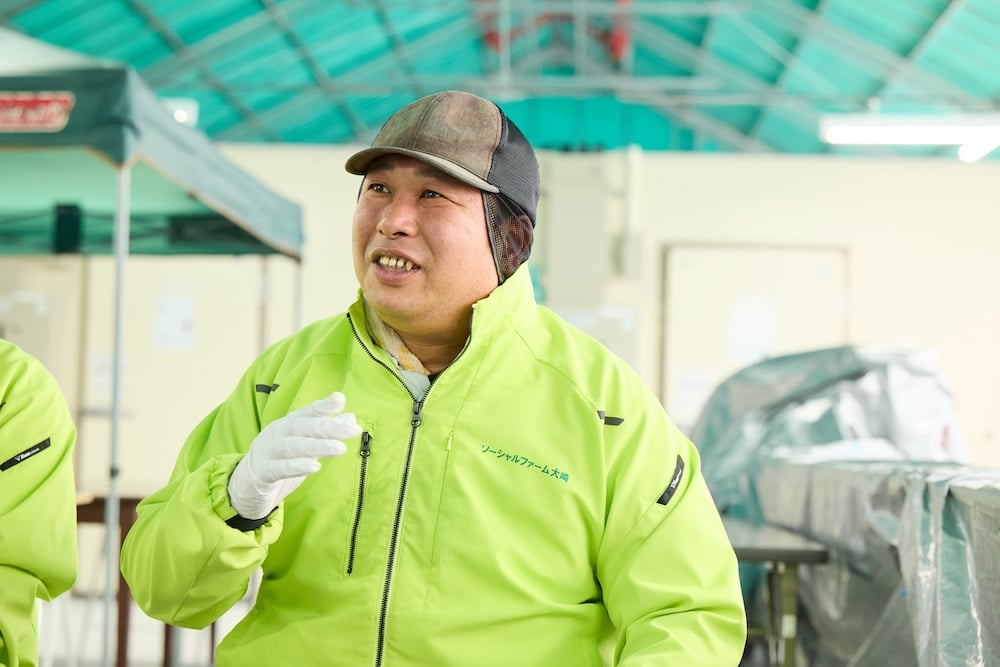
Enabling people with disabilities to take on work that is genuinely needed
The work at Social Farm Osaki appears to be substantially shifting how the employees with disabilities think about their work and their lives.
In light of all that, how does Mr. Shiraishi, as Executive Director, see the future of employment for people with disabilities?
Journal: Watching the people working here, you must feel an enormous sense of possibility.
Shiraishi: Absolutely. Even people who had used Type B facilities can become indispensable team members, given clear processes and good guidance. Of course it does not apply to everyone; some still find it difficult.
Still, among the people who have been written off as not capable of mainstream employment, there are plenty with real potential. I think Social Farm Osaki is the proof.

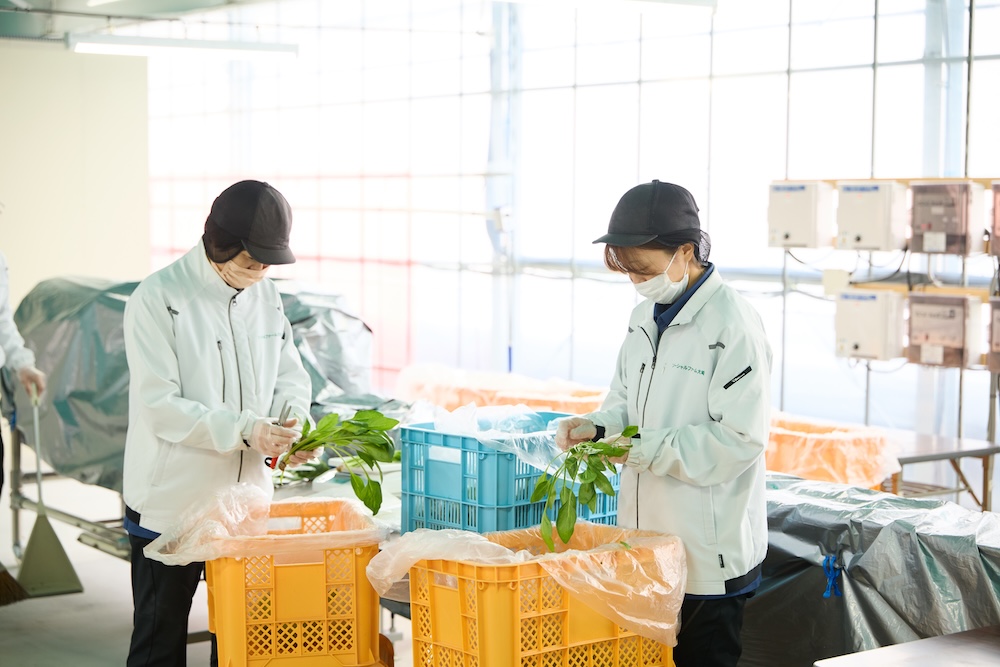
Journal: Looking at the bigger picture, what do you see as the central challenges in employment for people with disabilities today?
Shiraishi: People with disabilities tend to be assigned work that is respectable, but not really needed. Much of what gets made at Type B facilities is not designed to sell. The priority has been simply having a place where people with disabilities can work.
That cannot continue indefinitely. People with disabilities should also be brought in to do work that is genuinely needed, in the places where there are not enough hands.
Deciding to only give them the clean, easy work and not push them too hard ends up stripping people with disabilities of their dignity. Anyone, given work that is truly needed, finds more meaning in their work and in their life.
If you watch the employees at Social Farm Osaki, you can see they are all working hard to earn their pay. Knowing that the effort they put in is reflected in their salary changes the way they approach the work.
To begin with, every person has things they are good at and things they are not, and the only real difference for a person with a disability is whether the things they struggle with come with a disability certificate. Overseas, someone would ask, “Well, is there anything I can do?” and step in to cover what another person cannot.
As that kind of perspective and way of thinking takes root, I believe the issues around employment for people with disabilities will gradually improve.
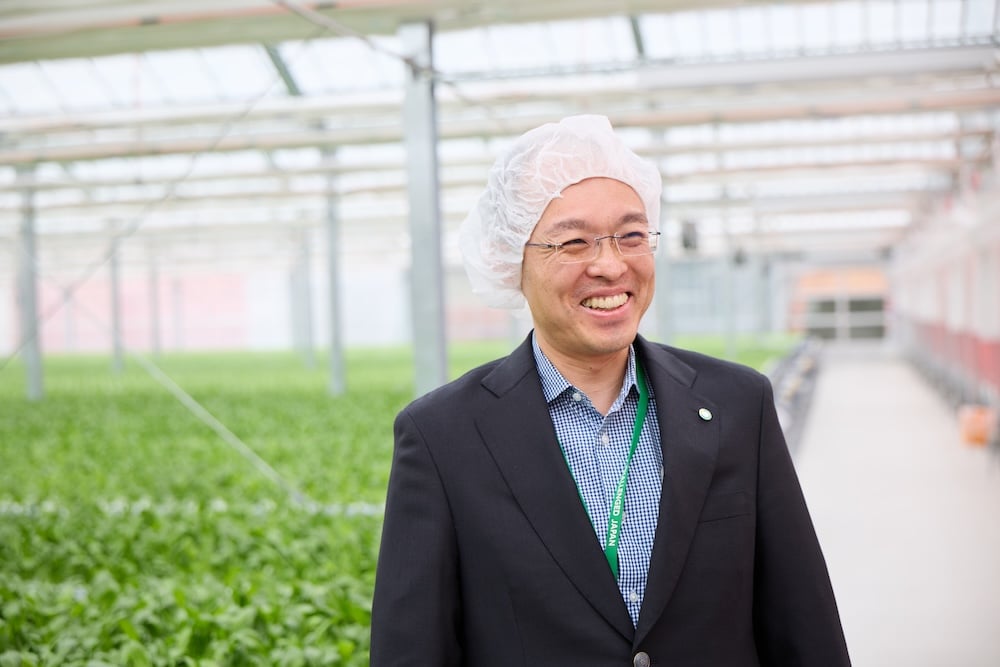
Editor’s Note
Social Farm Osaki drew attention as Japan’s first post-welfare employment business model. Hoping to gather insights about what employment for people with disabilities should look like going forward, we asked for an interview.
What struck us most was that the sense of being needed by their company, and of contributing to society, gives the employees with disabilities a powerful sense of purpose in both their work and their lives.
The people we spoke with were genuinely lit up as they went about their work. One told us, beaming, that he had finally found a dream of his own.
We came away with the strong sense that the Social Farm Osaki case holds real promise to break new ground in employment support and hiring for people with disabilities in the years ahead.
Text: The Nippon Foundation Journal Editing Department
Photo: Eizaburo Sogo
Profile
Keitaro Shiraishi
Born in Sendai, Miyagi Prefecture, in 1983. After graduating from the Faculty of Economics at Tohoku University in 2006, he joined The Bank of Tokyo-Mitsubishi UFJ Ltd. (now MUFG Bank Ltd.). In 2008, he founded Challenged Japan Corporation and became its CEO. In 2015, he completed a master’s program at Tohoku University’s Graduate School of Economics and Management. He currently serves as Executive Director of Social Welfare Corporation Challenged Life, as Managing Director of the Japan Association of Employers of Persons with Disabilities, and as Vice Chairperson of the Miyagi Prefectural Association on Intellectual Disability.