What Does Learning Sign Language Mean for Deaf and Hard of Hearing Children and Their Families?
Key Points
- Communication between parent and child has a major impact on a child’s personality development and psychological growth.
- The NGO Comekko is conducting research to scientifically demonstrate the importance of sign language acquisition for children with hearing loss.
- By expanding access to sign language nationwide, Comekko aims to build a society where hearing and deaf people live and mingle together.
When parents learn after childbirth that their child is deaf or hard of hearing, many don’t immediately turn to sign language. Instead, they struggle to find a way to make their child hear. As a result, children can face a range of difficulties as they grow, including delays in language development and challenges communicating with others. Tackling these issues head-on, and supporting deaf and hard of hearing children and their families as they learn sign language, is the mission of Comekko (external link, in Japanese). Comekko provides a place where deaf and hard of hearing children from birth to preschool age* can come together and build their sign language skills through play.
- “Deaf” refers to children who are born with a hearing disability and can barely hear, if at all. “Hard of hearing” refers to children whose level of hearing varies but who may be able to hear with the use of hearing aids.
In 2020, with support from a grant from The Nippon Foundation, Comekko launched the Research Project on the Capabilities of Children Acquiring and Learning Sign Language. The project aims to scientifically clarify how acquiring and learning sign language in infancy and early childhood affects personality development and mental well-being. In this article, we speak with Comekko members Yoshiko Kawasaki (Comekko’s supervisor and a professor at Kobe University), President Akiko Monoi, and Executive Director Yutaka Kubosawa about the challenges faced by deaf and hard of hearing children and their families, and how learning sign language influences children’s development.
A communication breakdown at home affects children’s psychological development
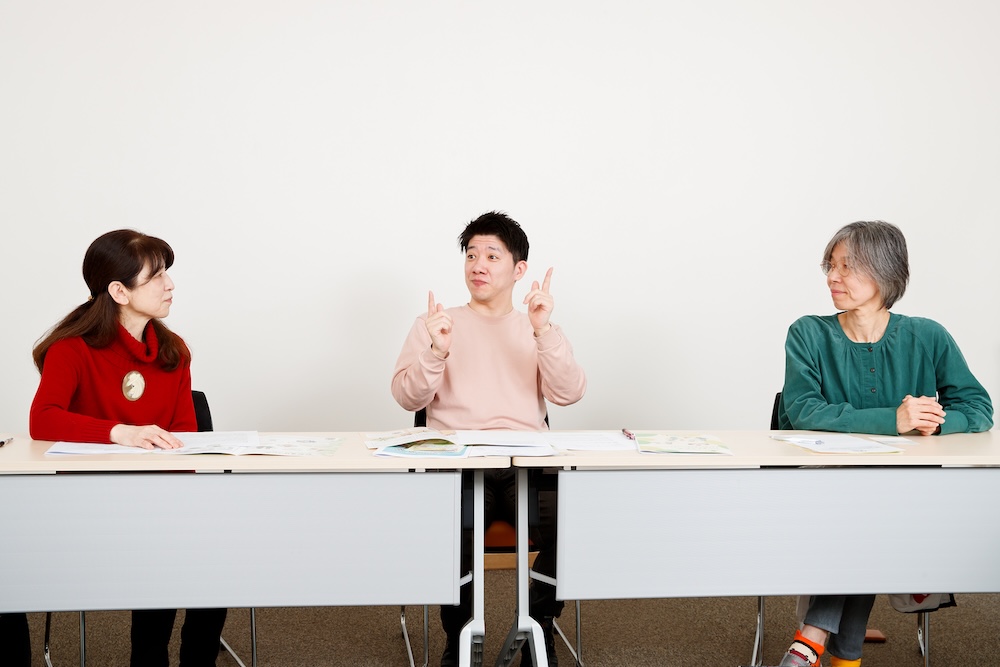
The Nippon Foundation Journal Editing Department: First, a question for Ms. Monoi and Mr. Kubosawa, both of whom are deaf themselves. What kinds of challenges do deaf and hard of hearing children face?
Akiko Monoi: When parents can hear, there’s no sign language at home, and communication relies only on speech, problems inevitably arise. No matter how slowly or clearly hearing parents move their mouths, it still doesn’t fully reach deaf children. I’ve heard adults who grew up in those homes say that they wished they could have talked more with their parents, that they wanted deeper conversations. In my case, my parents were deaf, so sign language was naturally part of our home. Using sign language to communicate was simply normal. As I got older and saw deaf people who had struggled to communicate with their parents, I felt grateful that sign language was present in my house.
Yutaka Kubosawa: From a deaf child’s perspective, it’s reassuring when your parents speak to you in sign language. In a society that prioritizes spoken language, deaf people have to stay constantly on alert just to access information. That’s a heavy burden. That’s why having sign language at home can feel like a relief. You don’t have to keep your guard up. That sense of security makes a big difference. That was true for me as well.
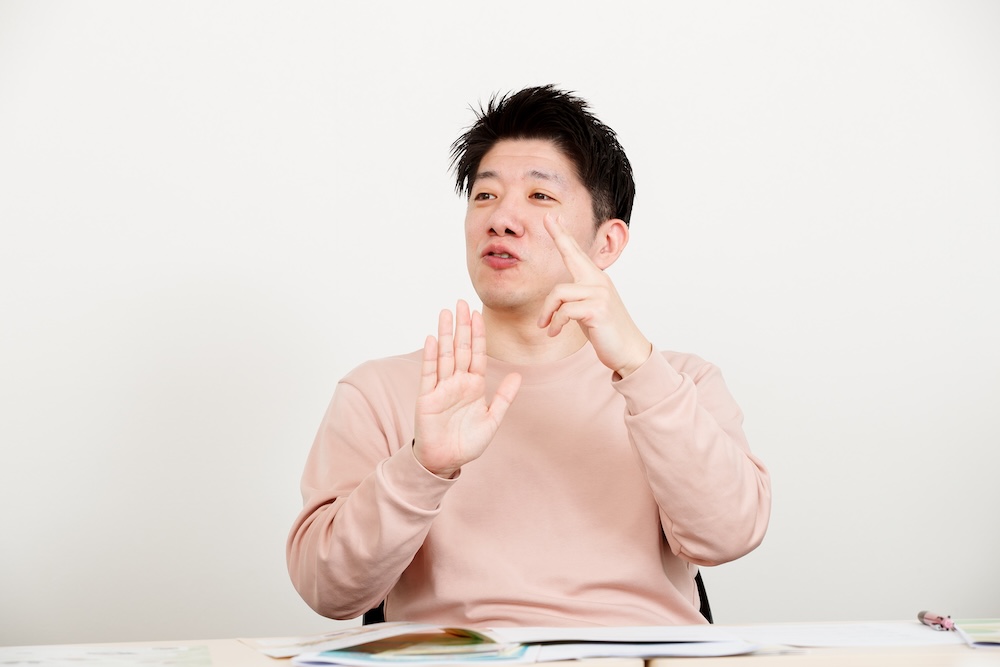
Monoi: But when hearing parents have a child and then learn that their child can’t hear, it’s a huge shock, and understandably so. Your child is someone you love dearly. Yet some people, once they learn there is a disability, find they can’t even feel that their child is adorable. That’s something we have to eliminate. That’s why we believe support is important not only for deaf and hard of hearing children, but for their parents as well.
Journal: I’ve also heard that learning sign language from an early age affects the personality development and mental well-being of hard of hearing children, not just parent-child miscommunication and disconnection.
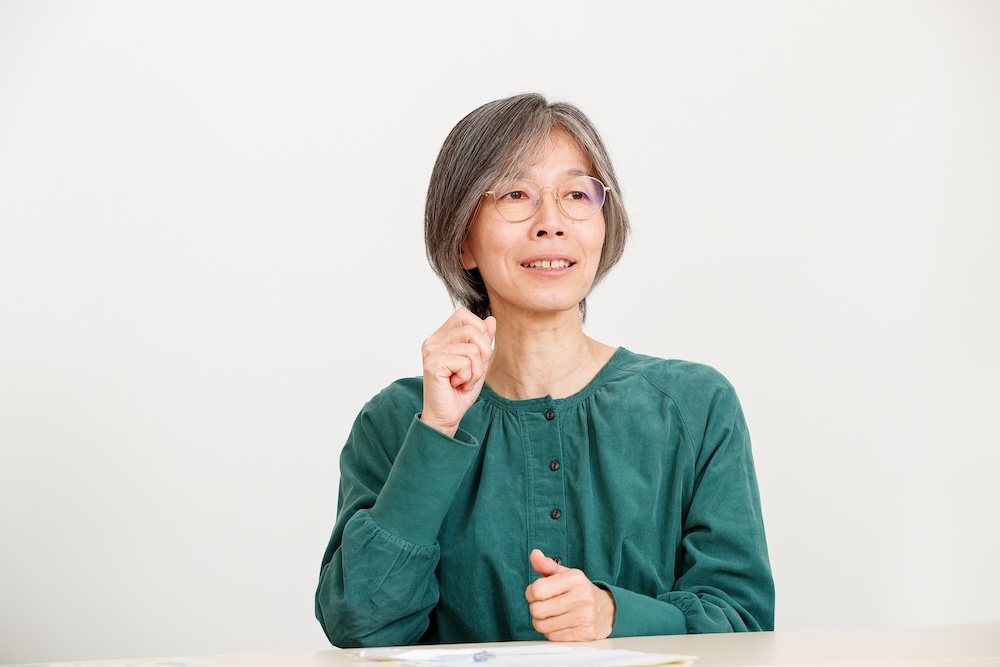
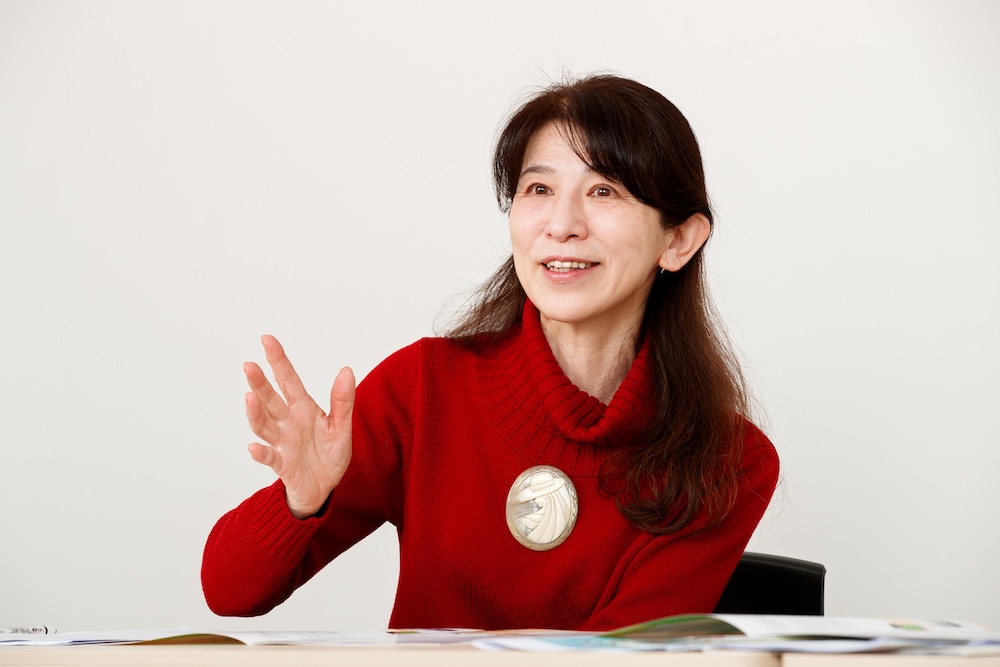
Yoshiko Kawasaki: My field is clinical psychology, and I’ve mainly researched communication between mothers and infants. Babies naturally acquire language through interactions with their parents. Parents notice and respond with smiles, telling them how cute and amazing they are. Through repeated exchanges like this, children develop self-esteem and grow up with a sense that they are okay just as they are. For deaf and hard of hearing children, though, that kind of interaction is often difficult. That’s exactly why sign language is necessary, and why we should ensure a nurturing environment like that through sign language. What’s more, it’s said that the period from birth to age three can be pivotal for development. Children at that age really do think deeply, notice things, and try hard to understand. We must not miss the window for sign language acquisition during this time. That conviction is also at the heart of Comekko’s work.
Proving the importance of sign language for deaf and hard of hearing children, and changing society
Journal: Comekko is also moving forward with the Research Project on the Capabilities of Children Acquiring and Learning Sign Language.
Kawasaki: This research project follows children who attend Comekko from infancy, tracking the process of learning sign language and growing across four fields: neuroscience, psychological development, language acquisition (sign language and Japanese), and learning ability (comprehension and thinking). The goal is to accurately assess the true language abilities of children with hearing loss.
With the cooperation of professors Kuniyoshi Sakai (The University of Tokyo) in the field of neurolinguistics and Wataru Takei (Kanazawa University) in language acquisition, we hope to demonstrate, by studying children across different ages, how vital sign language is to the development of personality and learning ability.
Kawasaki: From the perspective of neurolinguistics, it’s clear that sign language is a language. We know that the same regions of the brain that activate when we understand English or Japanese also activate when we use sign language.
To be more specific about our research, we will clarify how children who can communicate in sign language go on to acquire Japanese. Up to now, Japanese acquisition has tended to come first, with sign language pushed aside.
But we believe that for deaf and hard of hearing children, sign language is their mother tongue, or their first language, so we design education with that order in mind. First, acquire sign language; then, learn Japanese. We hope to demonstrate that this process is the most beneficial.
We also focus on how comprehension and thinking skills develop through sign language. We create signed monologues that tell a story, then ask children questions in sign language and have them answer in sign language. We develop tests to examine abilities such as grasping rules and relationships and inferring temporal and spatial changes, in order to clarify the thinking skills of children raised with sign language.
In the process, we also look at personality development. As children who have been exposed to sign language since birth grow, we track how their personalities form through developmental, intelligence, and personality assessments.
If we can produce results through these efforts, we’ll be able to show just how essential sign language is for deaf and hard of hearing children, and we expect that could lead to major societal change.
Our goal is to have educational guidelines incorporate instruction that recognizes sign language as a language. To that end, we hope to use the project’s findings as evidence and, in the future, make policy recommendations to the national government.
I couldn’t believe my child couldn’t hear
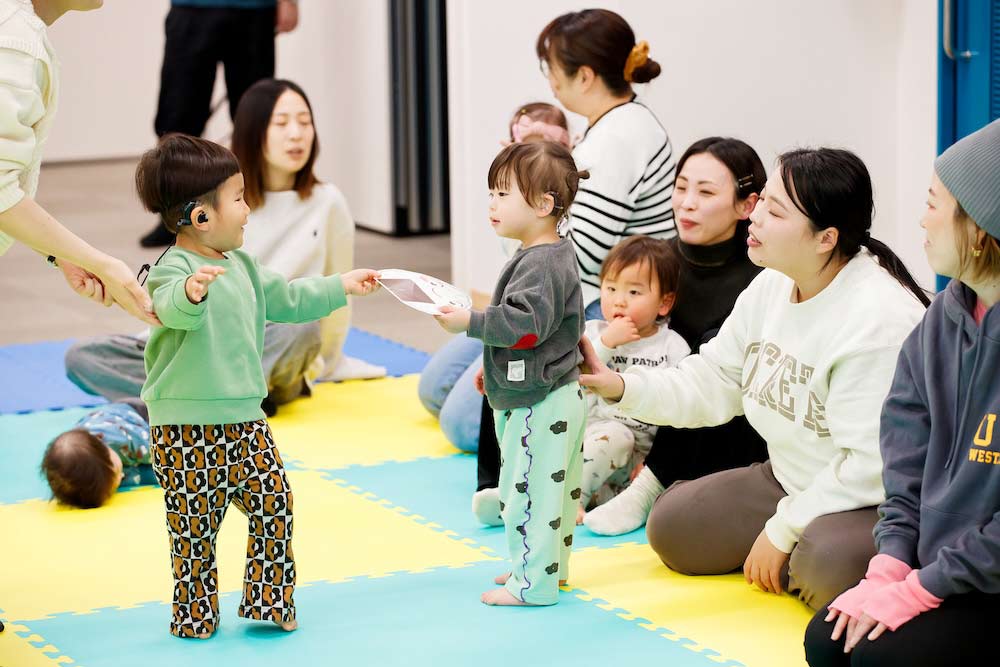
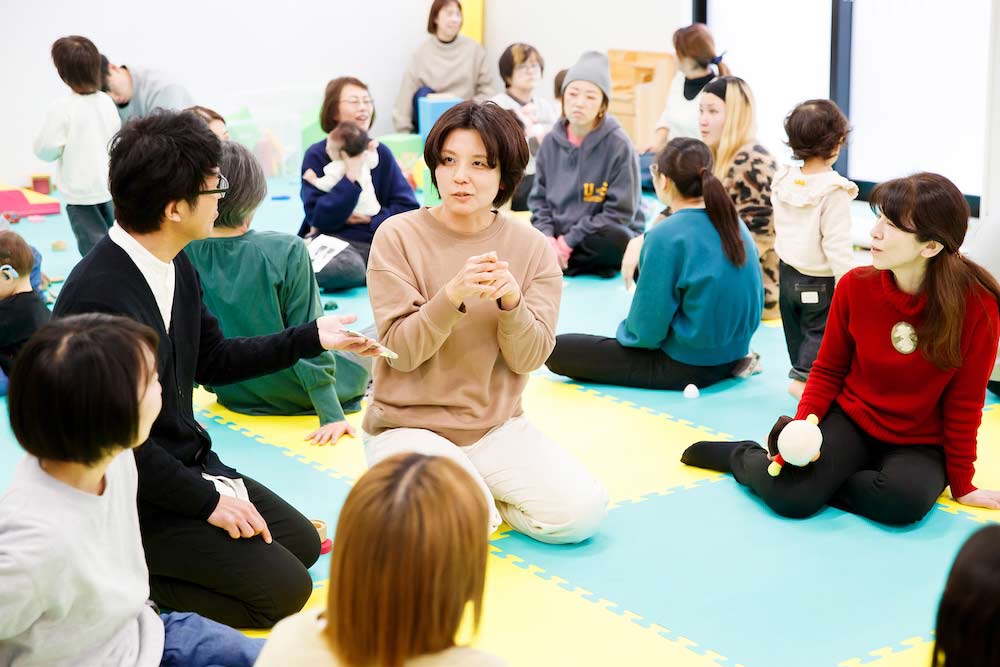
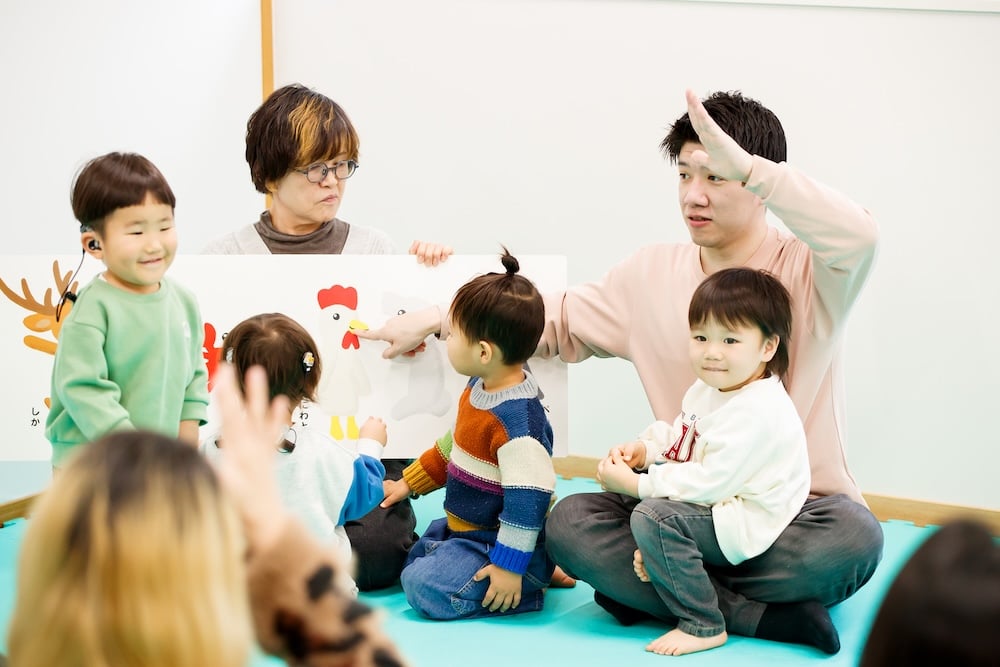
On the day of our visit, Baby Comekko was held for children ages 0 to 3 and their families. Comekko’s deaf staff read picture books and led expressive play activities. All of this was done in sign language, of course, with some children even signing along.
After the parent-child activities ended, a sign language program for parents began. Participants split into several groups to learn sign language they can use in daily childcare.
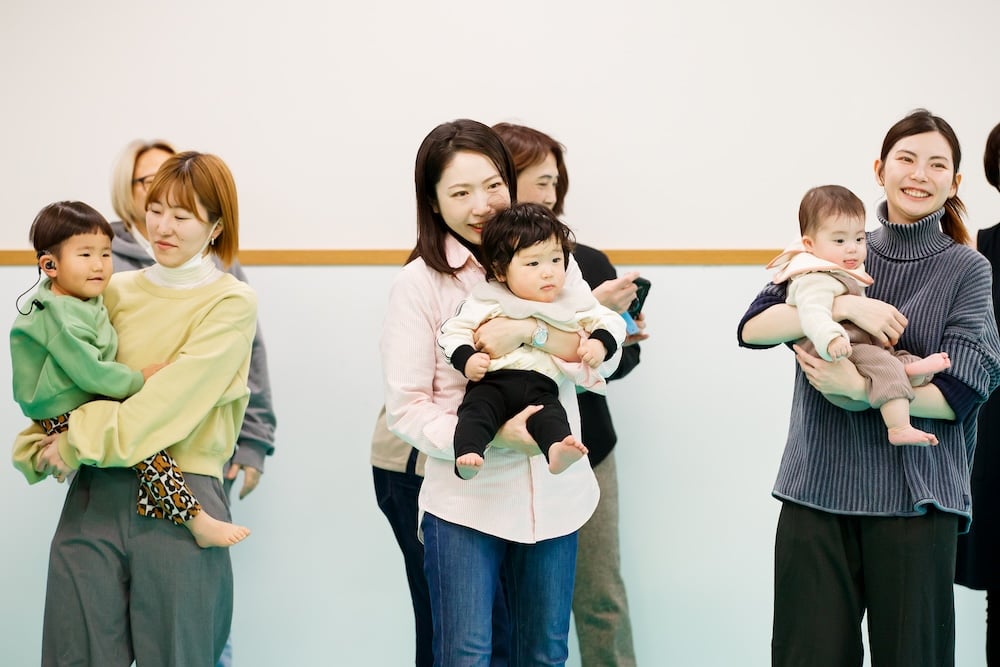
The children run around freely, communicating in sign language with the deaf staff. Watching the lively scene, many parents look visibly relieved, their smiles standing out.
But we also heard that getting to those smiles involved plenty of conflict and anxiety. We spoke with several mothers.
Journal: How did you feel when you learned your child couldn’t hear?
Ms. A: At first, I couldn’t believe it. I didn’t even understand what it really meant for my child not to be able to hear, and my mind went blank. That period, when I couldn’t think about anything, lasted for a few months. I kept telling myself that no, he must be able to hear, and I tried talking right next to his ear, or making sounds. I repeated those things over and over until I could finally accept it.
Ms. B: We found out when my child was 1 year and 8 months old, so I was overwhelmed with guilt. I kept thinking, if we’d known when she was an infant, we could have found better ways to communicate.
Journal: What changes did you notice after you started coming to Comekko?
Ms. A: Watching my child learn sign language little by little, I was honestly amazed that my child could understand sign language. From there their signing took off, and once we could truly communicate, I felt a shift in myself too: I wanted to support my child in living their life through sign language.
Ms. B: I’d been mixing up hearing loss with other disabilities, and I’d convinced myself that my child would never be able to live independently, that I might need to stay by their side forever, even into adulthood. But when I saw Comekko’s staff, I realized I was wrong. I came to believe that even if you can’t hear, you can still live independently.
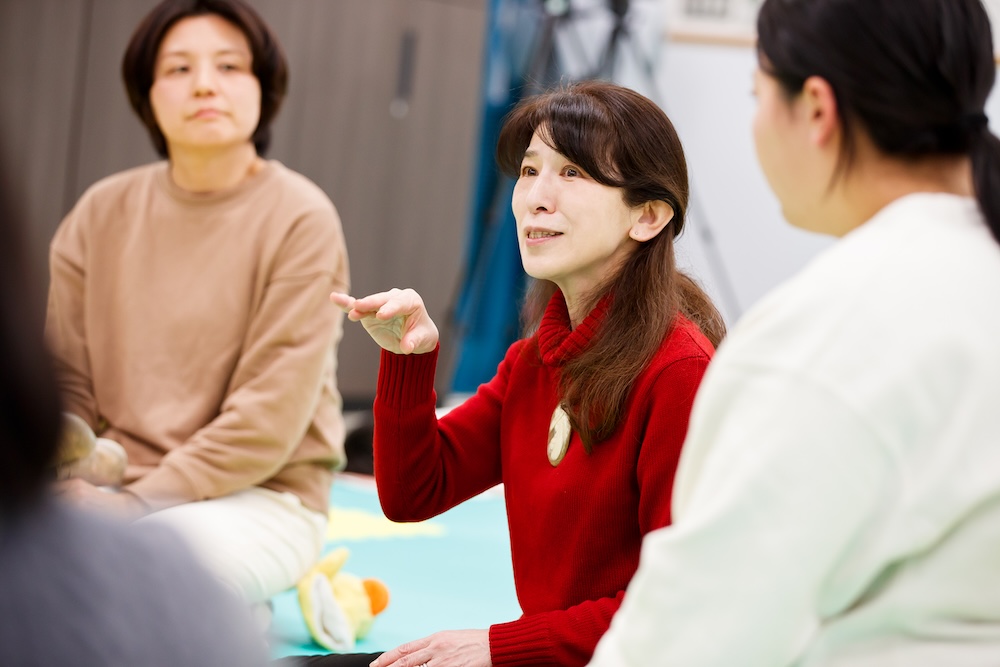
Ms. A: It’s reassuring to have deaf role models close by. And it’s not just that; there are children in the same situation, and other mothers too. Having a community naturally makes it easier to breathe.
Ms. B: There are things I can’t talk about with friends, but I can talk about them with the other moms at Comekko. When I feel anxious or unsure, I think: I’ll talk to the people at Comekko. Compared with before, I don’t carry my worries alone anymore, and honestly, I worry a lot less in the first place.
Aiming for a society where hearing and deaf people live together, side by side
As the parents’ stories show, Comekko has become an important place not only for deaf and hard of hearing children, but for parents as well. So what kind of future do the three people who run Comekko envision?
Journal: Please tell us about Comekko’s plans going forward.
Kubosawa: First and foremost, it’s to achieve the goals of the Research Project on the Capabilities of Children Acquiring and Learning Sign Language. I’m working on the language acquisition component under Professor Takei, and through that work, I want as many people as possible to understand that sign language is an essential language.
Monoi: I’ve worked as a teacher at a school for the Deaf, and I’ve also studied to become a psychologist. Through those experiences, I’ve truly come to realize how crucial the period from birth to age three is. So I want to support as many deaf and hard of hearing children and their parents as possible. When moms and dads are happy, children can be happy too. Believing that, we’ll continue providing support that helps everyone thrive.
Kawasaki: To make that happen, we want to bring what people can experience at Comekko to communities across Japan. Deaf and hard of hearing children and their parents live all over the country, and many are unable to encounter sign language, carrying anxiety and worries. Ultimately, I’d like to create a daycare center that can welcome deaf and hard of hearing children anytime. Children raised there will naturally develop a sense of inclusion, and as those children grow up, I believe an inclusive society will take shape.
Editor’s Note
Sign language, and deaf and hard of hearing people, are being portrayed more often in TV dramas and films. Even so, relatively few people can accurately understand what challenges they actually face. That’s why we requested an interview with Comekko, which supports deaf and hard of hearing children from birth. What we learned is just how vital sign language, a visual language, truly is, not only for communication between parent and child, but also for a child’s learning and overall development. What we can do is understand and respect sign language as a language. Rather than forcing Japanese language onto deaf and hard of hearing people, we can expand access to sign language and live together as a society. That mindset may be what we need to build a society that leaves no one behind.
Text: The Nippon Foundation Journal Editing Department
Photo: Yoshikazu Nishiki