Learning Is Fun!Printing technique devised to create spaces for children with developmental and learning disabilities try out reading and writing materials
Key Points
- Developmental and learning disabilities cannot be understood from what is seen on the surface, which tends to lead to these students finding they face difficulty in various aspects of school life.
- In many cases, a student’s difficulties in learning can be solved using educational materials that are individually suited to them.
- It is important for those around them to develop greater understanding. We need to recognize that it is only natural for no two people to be alike and that we each have our own strengths and weaknesses.
The challenges faced by children with developmental and learning disabilities may differ widely. For instance, they may have trouble reading aloud or writing because they are unable to correctly comprehend letters, or they may have problems with activities requiring careful use of their fingers, such as writing or cutting with scissors, due to difficulties with their fine motor skills.
However, because developmental and learning disabilities cannot be understood from what is seen on the surface, in many cases children with such disabilities find that they face difficulty in various aspects of school life, due to a lack of understanding from those around them that leaves them isolated or unable to keep up with their studies.
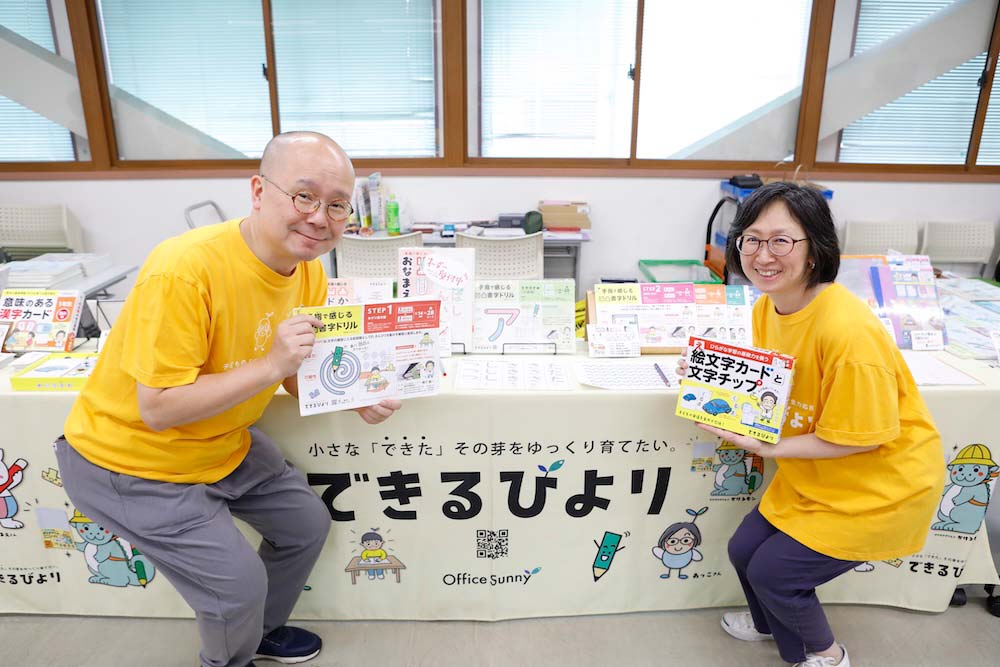
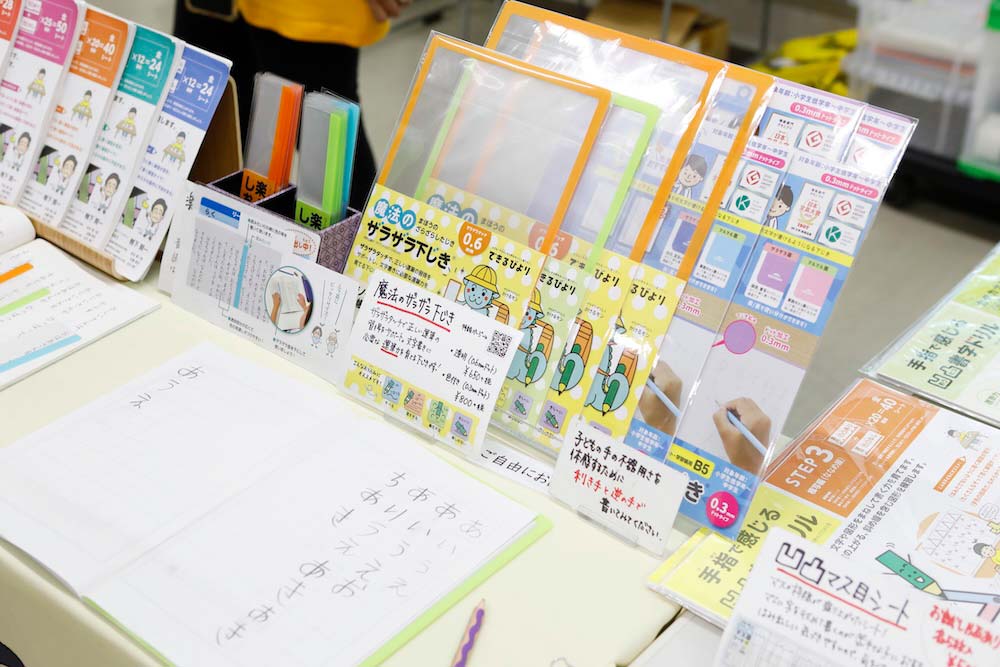
Printing company Office Sunny, based in Arakawa Ward, Tokyo, strives to enable such children to enjoy the feeling of achievement in learning — that “I did it!” moment — as much as possible, by devising and developing “Dekiru Biyori,” a series of educational materials created with the guidance of experts to support the development of reading and writing skills (the name Dekiru Biyori, literally “the perfect day for being able to do it,” represents the idea of the magic of day-to-day life where children enjoy that sense of achievement, external link, in Japanese).
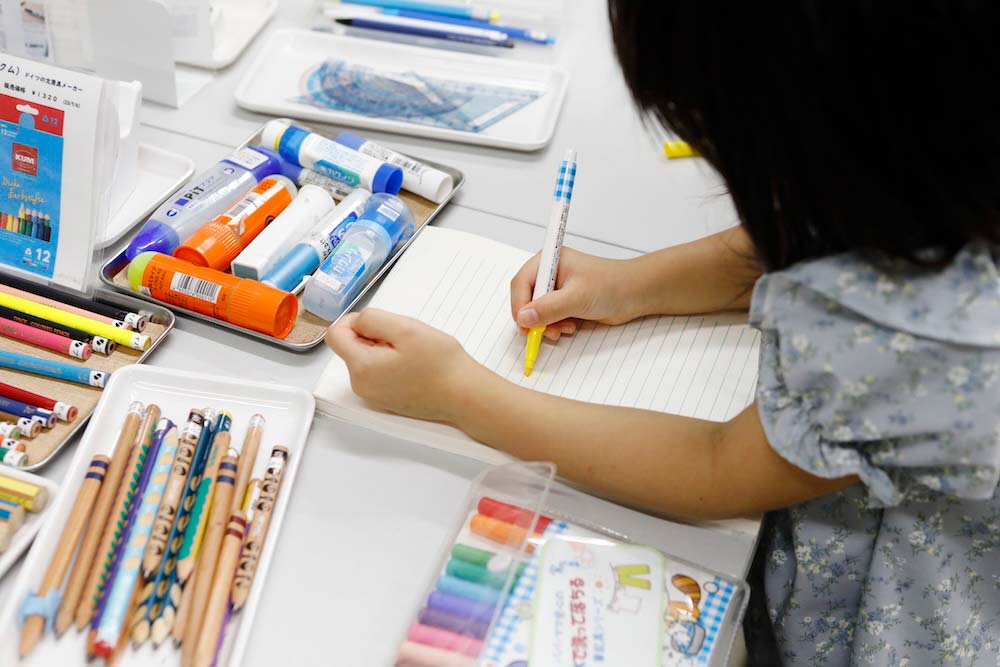
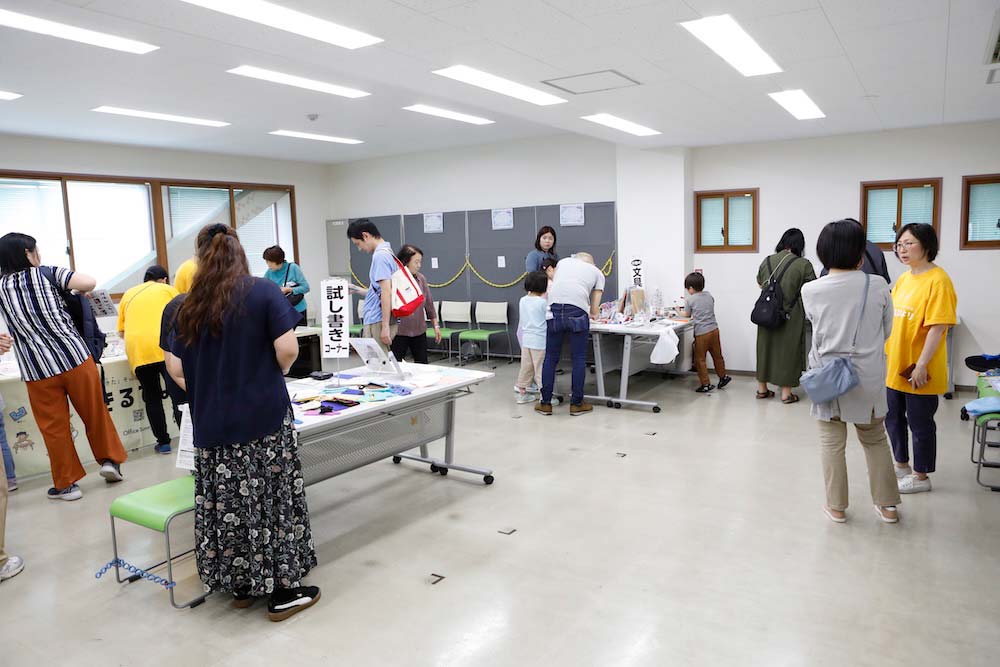
Working on the concept that actually using the educational materials is the only way for children to know which are suited to them, Office Sunny also organizes events for children to try out such learning support materials — not only those that they produce, but also materials and products from a range of Japanese and overseas manufacturers.
We visited one of Office Sunny’s events and spoke with CEO Junichi Takahashi and Akiko Takahashi about their aspirations behind the development of these materials and what can be done to ensure that as few children as possible struggle with learning.
Starting out with little knowledge of developmental and learning disabilities
The Nippon Foundation Journal Editing Department: Which particular areas pose challenges for children who require learning support?
Akiko Takahashi: One of the difficulties that many children who need learning support face is problems with fine motor skills, which means that they are unable to use a pencil, eraser, scissors, or other such tools very well. In some cases, they end up hating writing itself or become prone to fits of temper. While we may use “developmental disabilities” and “learning disabilities” as blanket terms, the areas in which such children struggle really are quite varied, from being unable to read letters, to not comprehending text, or having difficulty expanding their vocabulary.
Journal: You explained that Office Sunny originally specialized in printing. Where did the idea for Dekiru Biyori develop from?
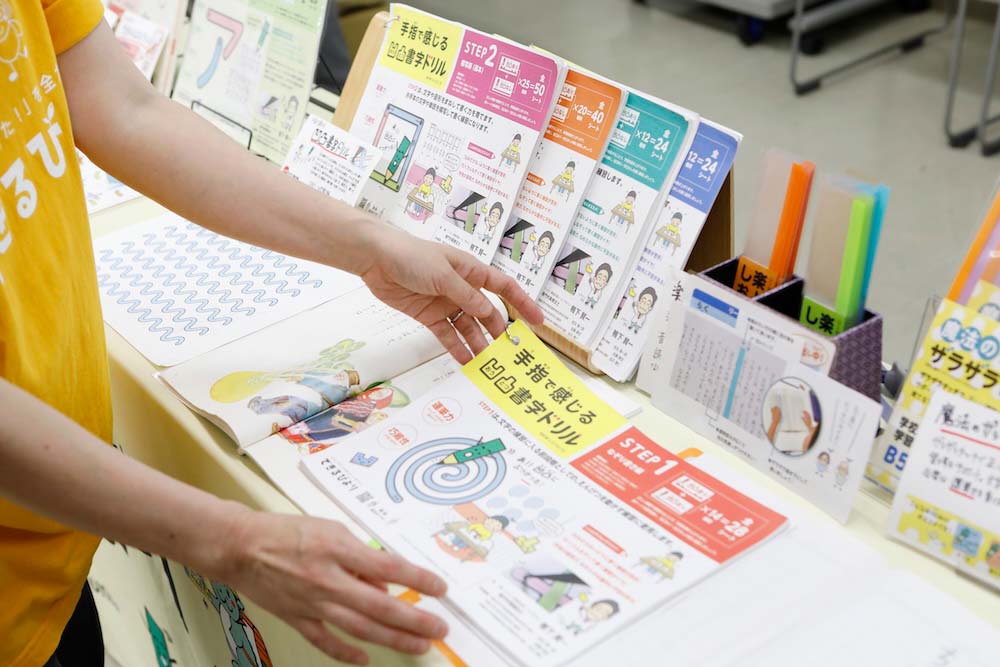
Junichi Takahashi: Office Sunny was established in 1966 under the name Sani Shashoku (“Sunny Phototypesetting”*). The company shifted its focus to printing to adapt to the changing times, but once online printing services became increasingly popular, pricing became severely competitive. As we were tackling such a shift in the market, we came across a printing technique known as Virkotype or thermographic printing, where the ink is raised from the paper. At some point, I suddenly hit upon the idea that we might be able to use the Virkotype technique to create materials that would help students to learn by allowing them to trace the outline of letters.
Yet although we created a prototype, we were completely new to the field of educational materials, so we had no idea whether what we had created was really something that the children would find helpful. So, we sought advice from the business support services at the local government offices in Arakawa Ward, which is also our hometown, and they suggested collaborating with experts from academia and government and in turn introduced us to a professor from Tokyo Denki University.
However, in-depth research revealed that a major manufacturer was already selling similar educational materials. Just as the project was about to hit a wall, our advisor from Tokyo Denki University introduced us to Kenichi Kamoshita, an occupational therapist who was affiliated with Shizuoka Children’s Hospital at the time.
Mr. Kamoshita is involved in creating educational materials and assistive devices for supporting children’s development. We had barely introduced ourselves and exchanged business cards before he was already brainstorming lots of ideas about the kinds of materials we might be able to create. This encounter with Mr. Kamoshita became a significant impetus that encouraged us to develop educational materials.
- Shashoku is the abbreviation of shashin shokuji, the Japanese term for phototypesetting, which is the technique of printing letters onto film like a photograph in order to create the artwork for printing.
Journal: Incidentally, did you have any knowledge at that time about children who need learning support?
Junichi Takahashi: Nothing at all. To start with, I didn’t even know that Mr. Kamoshita is the leading occupational therapist in the field of supporting children’s development. So, the cards that enable students to learn by tracing the letters were initially purely something that came to me as a flash of inspiration.
Akiko Takahashi: We have three children, but as our children grew up without needing support, we didn’t really come into contact with such disabilities. Once we got to know Mr. Kamoshita, we learned that there are children facing all kinds of different challenges, and we became keen to learn more about them.
Junichi Takahashi: We aspire to support children’s development by creating things. Meanwhile, Mr. Kamoshita wanted to host seminars for guardians and schoolteachers as well as workshops for training the next generation. So, prior to the COVID-19 pandemic, we would host seminars with Mr. Kamoshita all over Japan, allowing us in the process to learn more and to find out about what troubles the children and what concerns their guardians and teachers. We just didn’t have the name Dekiru Biyori at that point and our role was more to assist Mr. Kamoshita with the organization of the events.
Journal: So, Dekiru Biyori was created relatively recently.
Junichi Takahashi: During the COVID-19 pandemic there was a period in which we were no longer able to host seminars and were forced to bring our activities to a halt. We established Dekiru Biyori around that time because we felt that it would help to have a brand name that would give people an idea of what it was that we were creating. We established the brand by setting up an accessible homepage and requesting a designer we knew to draw illustrations.
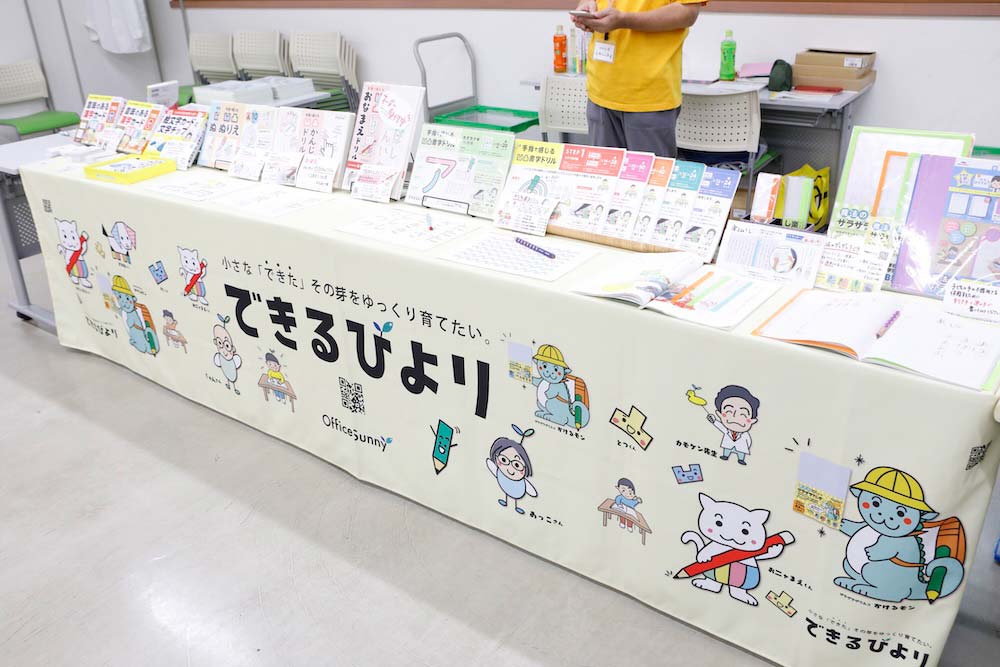
Akiko Takahashi: The brand name Dekiru Biyori captures the magic of day-to-day life when children have ever more chances to enjoy the feeling of “I did it!” (“dekita!”). In many cases, parents and guardians with children who have such developmental disabilities and are bearing the strain alone may feel as if they are at their limit and may struggle to keep themselves emotionally together. We sought to create a vibrant and cheerful design that encapsulates the sense of calling on such parents and guardians to be as bright and positive as possible and believe that children will be able to enjoy more moments where they can say “I did it!”
Journal: What aspects have particular importance to you as you continue developing such materials?
Junichi Takahashi: Staying true to who we are, I think [laughs]. I like children. I want to make things that children will like, and to do away with any struggles as much as possible so that children can enjoy that feeling of “I did it!” That is what is most important to us.
Akiko Takahashi: There are also children with developmental disabilities who are unable to say, “I can’t do it” or “I’m struggling.” In some cases, as long as they are quiet, they are less likely to receive the teacher’s attention. Our goal is for children who are facing such difficulties to also experience that feeling of “I did it!” and we would like to do anything we can to ensure that.
Finding the educational materials that suit them helps children to have more chances to enjoy the feeling of “I did it!”
Journal: What prompted you to launch the events for trying out learning support materials and products?
Junichi Takahashi: It is difficult to grasp the benefits of educational materials like Dekiru Biyori unless you actually try them out. This is why we launched the events, to ensure that when children buy a product, they do so because they realized that it might be a good fit for them. When we met Emiko Saito, who assisted with the event in Arakawa Ward, we came upon the idea of also showcasing products from other manufacturers. Ms. Saito brought along and introduced her own collection of educational materials and products to the event and said that she would like to work on the events together.
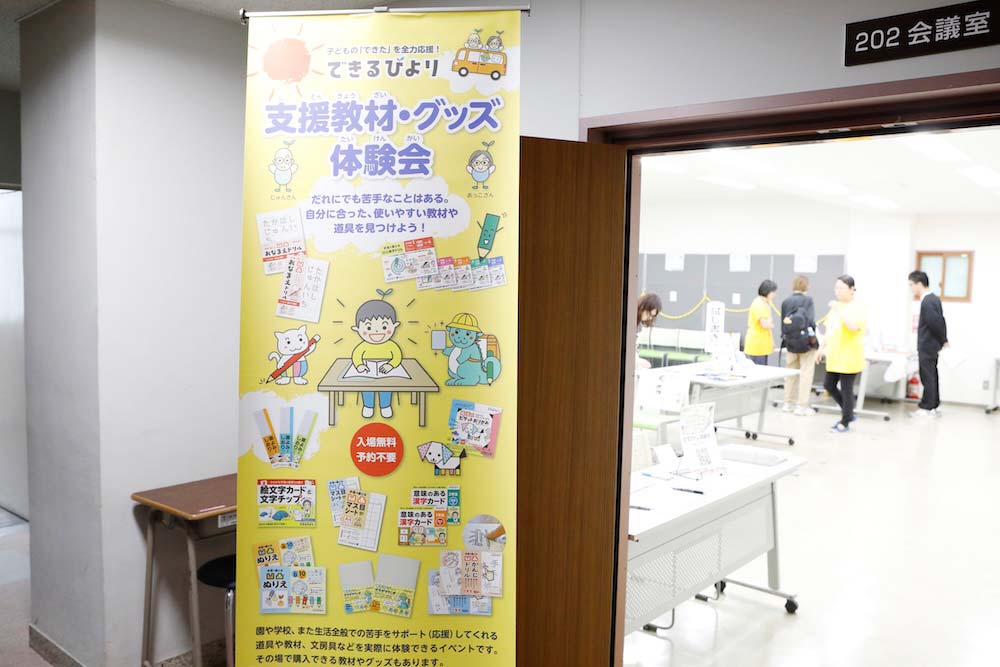
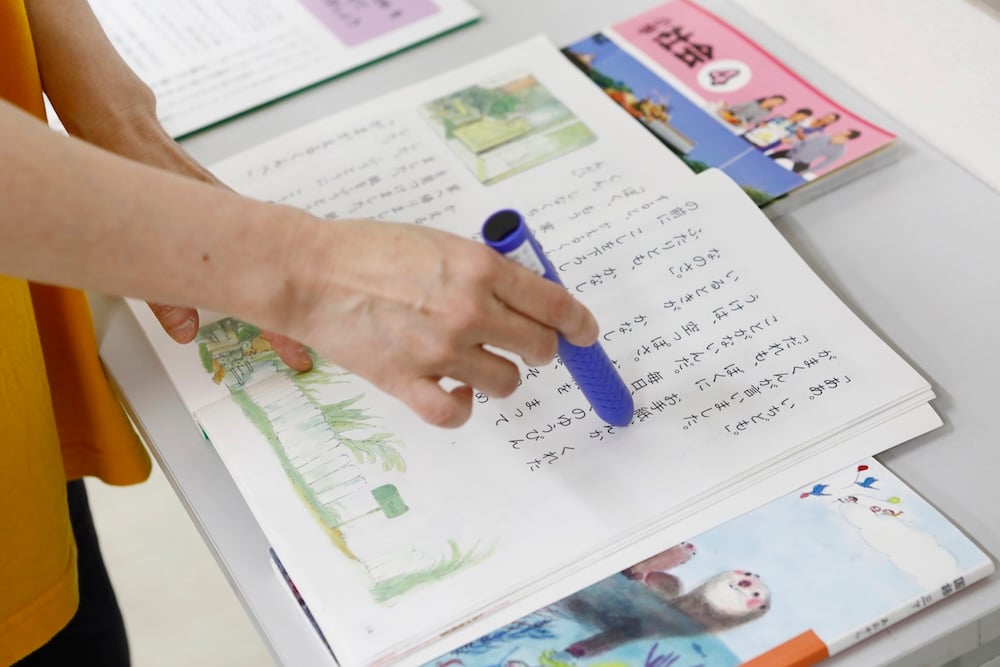
Akiko Takahashi: I wasn’t aware at that point either, but even a mere pencil or eraser may completely differ from one manufacturer to another in terms of how easy it is to write or erase with, or how comfortable it is to hold. Unless you actually try it out, you won’t know which one is easy for you to use.
Journal: By the way, is there generally such a high demand for learning support materials and products?
Akiko Takahashi: Nowadays, even a 100-yen store (Japanese equivalent of a dollar store or discount store) sells and offers a substantial range of products for training fine motor skills. The products sold by major manufacturers also include a growing number of products that children requiring support find easy to use.
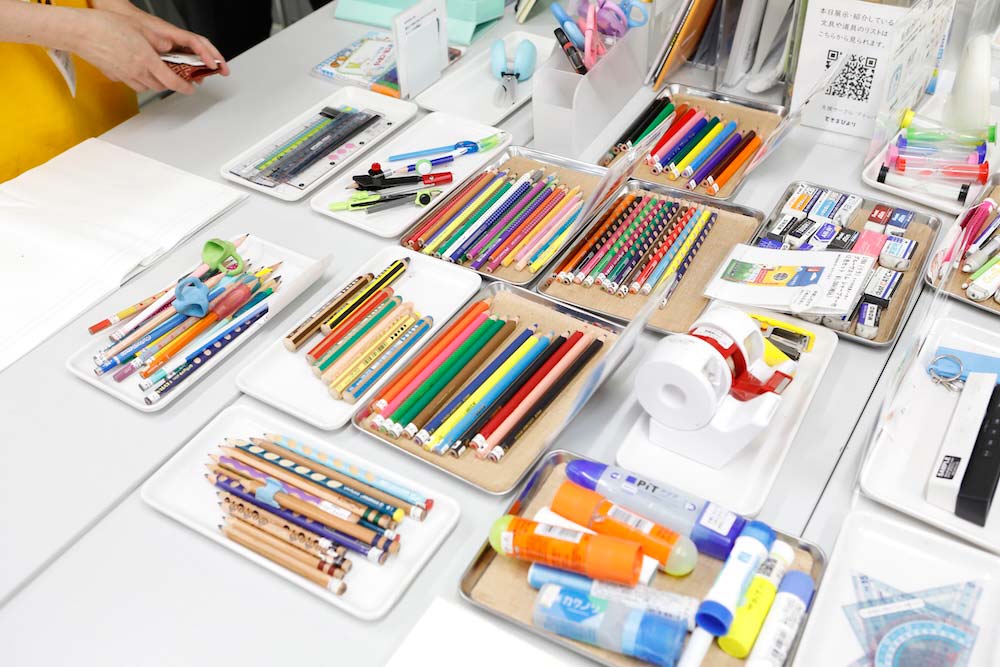
Akiko Takahashi: Take pencils, for example. When I was a child, pencils typically had six sides, but a three-sided pencil is said to enable easier positioning of the thumb, index, and middle finger and is comparatively comfortable to use for children who struggle with fine movements with their fingers.
Various manufacturers also produce pencils with small dips on the body of the pencil for the fingers to rest in, or pencil grips that support the child in holding the pencil correctly. Visitors at the events tend to be surprised at the kinds of products that are available.
Junichi Takahashi: Skipping ropes are another example for which there are all kinds of products available — there are those with grips that are easier to grasp, or with ropes made out of beads. I have seen many children who had not been able to jump with a skipping rope learn to do it at the events.
The presence of parent mentors who closely support families of children with developmental and learning disabilities
Journal: We also spoke with Emiko Saito, who assists with the events. You mentioned that you are registered for the Tokyo Metropolitan government’s Parent Mentor program.* What kinds of things do you normally do for the program?
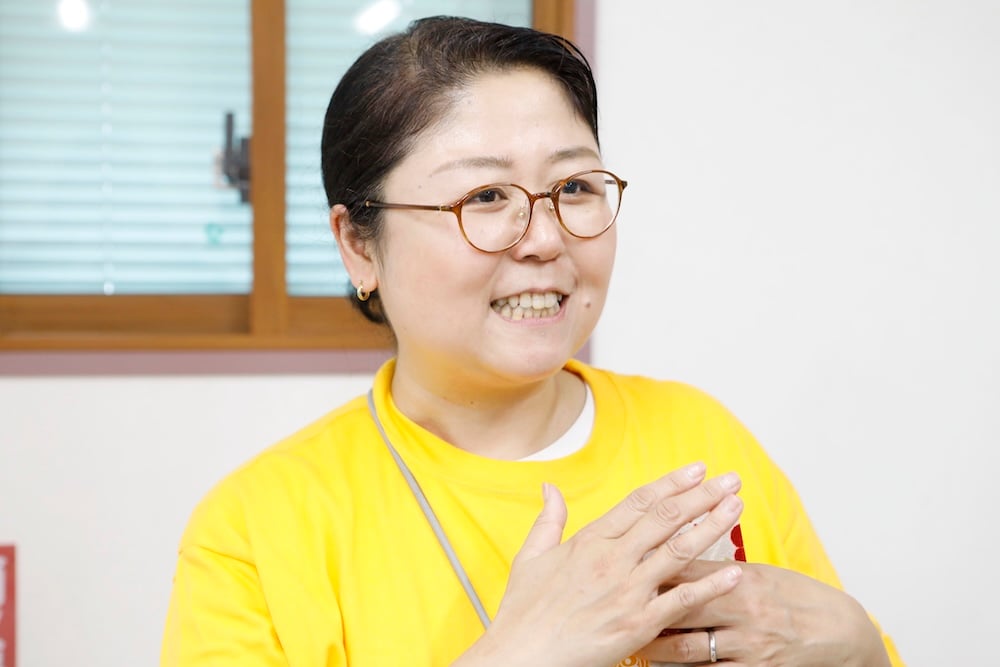
Emiko Saito: I run a support group for families of children with developmental disabilities called “Petit Pas” (a French phrase meaning “small steps”). My main role as a parent mentor is to draw on my experience as a parent of a child with learning disabilities to listen to and empathize with parents who are in a similar position.
- Parent mentors are parents who have experience of raising a child with learning disabilities and have received certain training on providing guidance and support.
Journal: The term “developmental disability” is becoming more widely recognized from year to year, but are the environments that these children face also changing?
Saito: It was 15 years ago that I found out that my oldest son has a developmental disability. It was around that time that special support classes began to be established in all elementary and junior high schools in the Tokyo Metropolitan area. I really get the sense that understanding about such disabilities has developed considerably.
I also have the feeling that, while in the past many parents or guardians tried to cover up their child’s disabilities or were unable to admit that their child was different, the greater understanding from the people around them has prompted a shift toward positive values, so that people are open about the possibility of their child having a disability and also open to receiving help if needs be.
On the other hand, there are many parents or guardians that hear the term “developmental disability” but simply cannot accept the term “disability.” As the children grow, the sources of concern change too. That is why I feel like I am walking the same path with such families and can empathize with what they are facing.
Journal: We have heard that you have personally collected teaching materials and items from various different manufacturers.
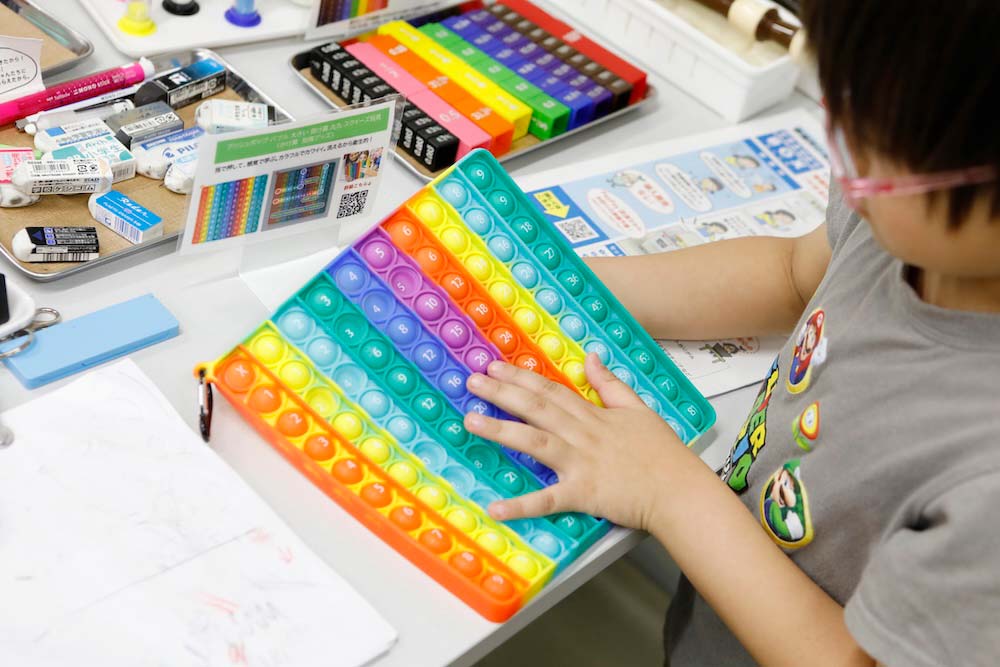
Saito: At first, I was collecting the items that my own son was using or those that friends from the support group said had been good for their children, but little by little participants to the events would bring new items to introduce to me, and this steadily increased. The collection steadily grew.
Journal: What kind of reaction have the children who come to the events shown?
Saito: Everyone is struggling with all kinds of issues. And yet, there are times at an event when a child may learn to do something that they had always been unable to and that child may happily cry out “Mummy look, I did it!” or sometimes even shed tears of joy. Every time I see this it makes me truly happy and glad that I have been involved in such initiatives.
Aspiring to bring Dekiru Biyori directly to school classrooms
Journal: Turning again to the Takahashis: what kind of plans do you have for Dekiru Biyori in the future?
Junichi Takahashi: We are planning to organize events for schoolteachers, which would involve a combination of an event for testing learning support materials and products as well as a workshop on supporting development.
In the process of hosting seminars and events in different areas across Japan, we became acutely aware of the limited number of teachers with specialist knowledge of special support as well as the limited number of opportunities for schoolteachers to learn about the distinctive characteristics of a child’s development.
We believe that if teachers have the chance to develop greater understanding of children’s development and to learn about the specific types of assistance and ways of putting the learning support materials to use, this will help to develop a shortcut for children to discover which educational materials they find easy to use.
Junichi Takahashi: The events also serve as opportunities to exchange information and seek advice, so we would also like to invite psychologists and other such experts in order to provide a forum for parents and guardians to receive guidance individually.
Journal: What can be done to ensure that children with developmental and learning disabilities receive the education that is suited to them?
Akiko Takahashi: I think that what we need to do is be aware that it is natural for there to be all kinds of children. An expert taught me that just as the forms of our faces and our appearances differ from one person to another, the makeup of the brain also differs. So, it is natural to be different, and I believe that if everyone understands this, our world will become fairer.
The other thing that we want to do is ensure that parents and guardians do not become isolated. While understanding is growing across society as a whole, it is still difficult to secure understanding, particularly from older generations. We have seen many parents and guardians who have become shut off because their families back home or parents-in-law lacked understanding and told them to conceal such a child from others.
We hope that such parents will use the events as an opportunity to relate with fellow parents who have the same concerns or find the listening ear of a parent mentor, and in turn begin to relieve the emotional strain a little. I would like to communicate to the parents and guardians who are currently weighed down with concerns that they are not alone and that it is fine if their child has lots of things that they are unable to do at the moment.
What local people and people around children with a developmental or learning disability can do to create an environment in which such children can enjoy learning
- It is only natural for no two people to be alike. We need to understand the importance of developing environments for learning that are suited to each individual.
- If you discover learning support materials or items, share information with those around you and make it easy for the information to reach the parents and children who may need them.
- Parents in such situations tend to keep their worries to themselves. It is important to support them in a way that prevents them from being isolated.
As soon as the doors of the event opened, a large number of parents and children entered the venue. It was impressive to see the children happily picking up and trying out the materials and products. From the interview, it was particularly moving to hear Mr. Takahashi talk about how he loves children and prioritizes what is best for them, and Ms. Takahashi’s commitment to doing anything she can to ensure that more children enjoy the feeling of “I did it!” This simple and earnest wish to bring a smile to the faces of the children right in front of them will surely serve as a major catalyst for deepening each person’s understanding and ensuring that more children are able to enjoy saying “I did it!”
Text: The Nippon Foundation Journal Editing Department
Photo: Emi Enishi