Impact Investing Pursues Both Resolution of Social Issues and ProfitHow to get more people involved
Key Points
- SIIF carries out impact investing aimed directly at solving social issues.
- Tackling social issues calls for more than short-term aid, it requires changing the underlying structures and systems.
- In environments where you can naturally come into contact with social issues, it’s important to remain aware of anything that catches your attention or sticks with you.
Impact investing refers to investments made with the intention to generate positive, measurable social and environmental impact alongside a financial return. Historically, solving social issues has been primarily the work of nonprofit organizations, but with the active involvement of companies through impact investing, more sustainable approaches can take hold.
One of the organizations driving impact investing forward is SIIF (Japan Social Innovation and Investment Foundation) (external link). SIIF aims to use the power of the economy to drive systems change, meaning solutions that address social issues at the root. Beyond making impact investments directly, the foundation also conducts research and develops policy proposals.
For this article, we sat down with the foundation’s Executive Managing Director, Mitsuaki Aoyagi, to talk about why it matters for companies and financial institutions to engage in impact investing, and what it will take to grow the ranks of those working on social issues.
Tackling increasingly complex social issues at the root
The Nippon Foundation Journal Editing Department: What was SIIF set up to do?
Mitsuaki Aoyagi: SIIF originated from The Nippon Foundation, with a mission to use the power of the economy to address social issues. The Nippon Foundation primarily supports those working on social issues by providing grants. At SIIF, by contrast, we invest in those same players, and when those ventures succeed, we receive a financial return. That is impact investing.
Journal: Where does SIIF’s funding come from?
Aoyagi: Mainly from The Nippon Foundation. In addition, from 2019 to 2024, we received grants from JANPIA (Japan Network for Public Interest Activities) (external link), which puts dormant deposits* to work on social issues.
- A program based on the Act on Utilization of Funds Related to Dormant Deposits to Promote Public Interest Activities by the Private Sector (commonly known as the Dormant Deposit Utilization Act), which channels deposits with no transactions for 10 years or more (dormant deposits) into solving social issues and supporting public-interest activities by the private sector.
Journal: When it comes to investing aimed at solving social issues, the term ESG investing is one we have been hearing a lot lately. How is it different from impact investing?
Aoyagi: In the sense that both are investments, they are indeed the same, but their purposes are different. ESG is an acronym formed from “environment,” “social,” and “governance,” and ESG investing refers to investing that takes these factors into account.
Impact investing makes investments with the explicit aim of solving social issues, whereas ESG investing makes investments designed to avoid harm to society or the environment, in service of a company’s long-term sustainability.
In short, impact investing is for the sake of society, while ESG investing is for the sake of the company. Their purposes are fundamentally different.
Journal: SIIF’s website highlights “systems change” as one of your areas of focus. What is systems change?
Aoyagi: Approaches to solving social issues have, until now, centered on symptomatic responses, the kind that simply give bread to the hungry. Of course it matters to feed someone directly, but unless we tackle the underlying question of why people go hungry in the first place, we cannot solve the problem in any real sense.
Behind every social issue is a tangle of structural problems and intricately interwoven factors. The work is to analyze them and bring each one into the light. The whole of those factors is what we call a system, and rebuilding that system from the ground up is what we call systems change.
Journal: Could you tell us about the specific work you do?
Aoyagi: We are currently working on systems change in three areas: healthcare, community revitalization, and the opportunity gap.
SIIF is broadly organized into two arms: the business unit, and the Impact Economy Lab, which handles research and policy proposals. The business unit invests both directly and indirectly, and also works alongside our portfolio companies on business development.
The Impact Economy Lab analyzes a wide range of information that the business unit gathers in the field, including knowledge, data, and even failures. Where lessons are broadly applicable, the lab shares them with other companies pursuing impact investing and works to feed them into policy.
The gender gap, local communities, child abuse — the issues are wide-ranging
Journal: Could you tell us about some of the companies you have invested in?
Aoyagi: We have invested in Hatakuri. (external link, in Japanese), a company based in Ueda City, Nagano Prefecture. There is a saying that regions not chosen by women go into decline. In rural areas, there is a gender pay gap, and women have a hard time advancing their careers. One often-cited factor is the persistence of male-dominated norms that cast women as supporting players or as keepers of the home.
Aoyagi: Against that backdrop, Hatakuri. operates under the concept of building careers for women in rural areas. The company actively hires women, supports their career advancement, promotes them into management, and works to create an environment where women can thrive at work.
Of course not every company can do exactly the same thing, but through this investment we hope member companies of the Ueda Chamber of Commerce and Industry will learn from Hatakuri.’s management approach and its initiatives, and start where each of them can, by building rules and working environments that are equitable. In time, we hope, the gender pay gap across the region will disappear and unconscious bias will fade along with it.
Journal: If that takes hold and spreads across society, more women might choose to work in the place where they grew up.
Aoyagi: Exactly. In the area of community revitalization, we have invested in A Zero Group Inc. (external link, in Japanese) in Okayama Prefecture. The company has built up a wide portfolio of businesses, from products made with local timber to support for local start-ups to operating mixed-use facilities, and through that work it has drawn newcomers from the cities. By the measure of community revitalization, it is one of the success stories.
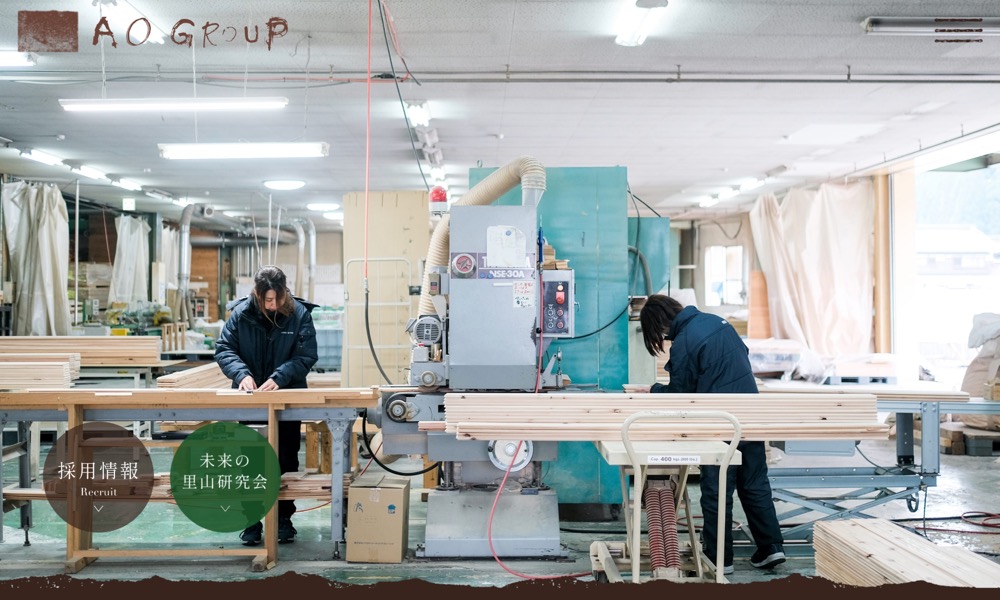
Aoyagi: That said, between the longtime residents’ community and the newcomer community, even when both sides quietly want to work together, a kind of wall ends up forming. SIIF aims to rebuild a unified economic sphere and community where there is no us-and-them divide, and we hope to develop a model that can keep villages of fewer than 2,000 residents alive.
Journal: Are there other companies you have invested in?
Aoyagi: One is AiCAN Inc. (external link, in Japanese), which provides digital transformation (DX) support to Child Guidance Offices. The term refers to using digital technology to make people’s lives better.
Aoyagi: The factors behind child abuse, such as a parent’s own history of being abused, financial hardship, and social isolation, make it a very difficult issue to solve at the root.
Even before systems change, the frontline priority is to put in place the capacity to act quickly when an abuse report comes in. But the number of abuse-related consultations is rising every year, and in many municipalities, a single Child Guidance Office caseworker is now handling multiple cases at once.
That is where AiCAN comes in. Its dedicated app automates and streamlines tasks like registering each child’s basic information and case history, along with various administrative work, easing the load on Child Guidance Office caseworkers so they can spend more time with each family and intervene more deeply. The aim is to reduce abuse, even by a single case, and to prevent it before it happens.
From an efficiency-first society to one where we look out for and care about each other
Journal: Many companies probably see solving social issues as something that does not generate profit. What will it take to grow the number of companies and organizations engaging in impact investing?
Aoyagi: To be candid, I do not think there is a silver bullet for getting more companies to adopt the corporate mindset of using investment to help solve social issues.
In capitalist societies, there is a tendency to prioritize efficiency. Or rather, that has been taken as a given up to now. The result has been negative externalities:* People with disabilities denied opportunities to work, manufacturing lines that cause environmental pollution kept in operation, and so on.
How far companies can go in correcting and internalizing those negative externalities is precisely where leaders must bring their ingenuity to bear.
- In a company’s production activities, this refers to actions that have a negative effect on the environment but are not reflected in costs because no proactive countermeasures are taken. Reflecting such environmental costs in market prices is called internalizing them. The phenomenon is also referred to as an external diseconomy. Reference: “External Diseconomy,” Japan Center for Climate Change Actions (JCCCA), (external link, in Japanese)
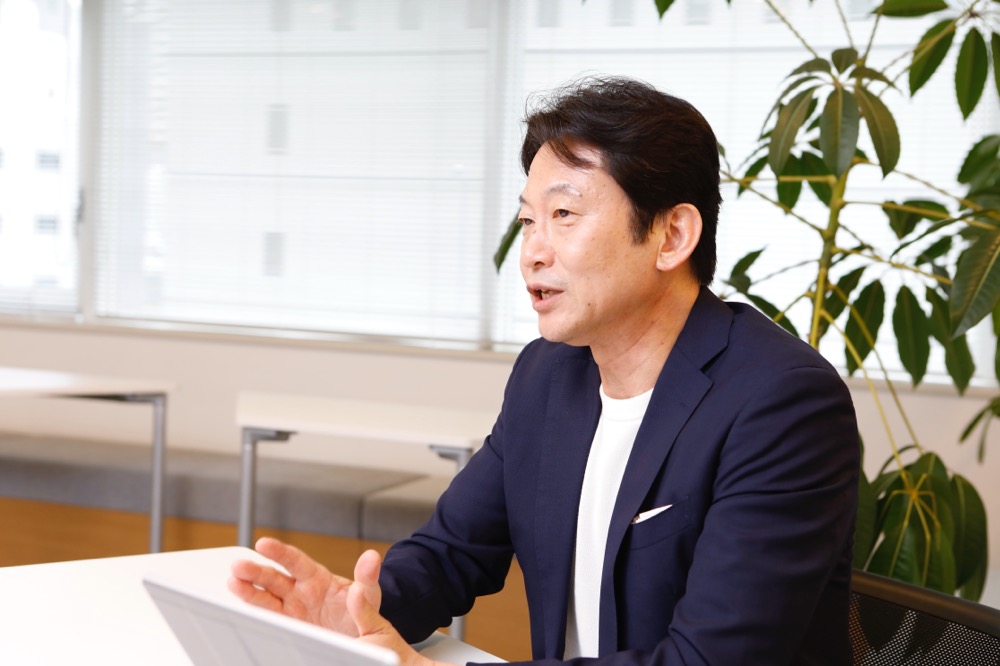
Aoyagi: That said, terms like ethical consumption* and the United Nations’ SDGs have become widely familiar in recent years, and I think younger generations are increasingly tuned in to social issues. I believe this kind of learning during one’s school years, this early instilling of values, is enormously important, and I expect we will see many new entrepreneurs and business leaders take an interest in impact investing in the years ahead.
For that to happen, it is important to build out model cases that show that ventures tackling social issues at the root can deliver real results, sustain themselves as businesses, and provide returns to their investors.
- Consumer behavior that takes people, society, communities, and the environment into account, including local revitalization and employment.
Journal: Looking to the future, what can each of us do to become a player in solving social issues?
Aoyagi: First, pay attention. School curricula now touch on social issues, and there are plenty of natural opportunities to learn. If even one thing catches your attention or sticks with you, I would urge you to look into the causes and context of that issue on your own.
And take an interest in others. There may be someone close to you, at school for instance, who is quietly carrying a problem. None of us can live our lives entirely alone. Taking an interest in others is what makes us aware of the social issues around us.
Holding on to that awareness of what catches your attention or sticks with you will start to change your own choices and actions. When choosing a job, you will start paying attention to how a company engages with social issues. When planning at work, you will begin weighing the perspective of the people most directly affected.
So I would urge you to value those moments when something catches your attention or sticks with you.
What we can all do to become players in solving social issues
- If even one thing catches your attention or sticks with you, look into its causes and context yourself, dig deeper, and keep that interest going.
- Always remember that someone close to you may be quietly carrying a problem.
- Translate the knowledge you gain and the interest you take in others into concrete action: in purchasing choices, in joining local activities, in sharing what you have learned.
Curious about how to keep funding flowing toward solutions to social issues, we requested this interview with SIIF.
There may be no silver bullet, but as the younger generation grows more interested, that flow seems to be taking shape, little by little. That was our takeaway from this conversation.
What stayed with us most was a line from Mr. Aoyagi: “Value those moments when something catches your attention or sticks with you.” Keeping an eye out for whatever catches your attention or sticks with you, we felt, is exactly where solving social issues begins.
From an efficiency-first society to one where we look out for and care about each other. We may well be standing right at that turning point.
Text: The Nippon Foundation Journal Editing Department
Photo: Emi Enishi
Related Themes
Related Links
- Scholarships and Fellowships
- Minerva University Opens Rotation in Japan
- Comprehensive Tie-Up Concluded with Minerva University