Performance Kids TokyoHelping children learn about diversity through art
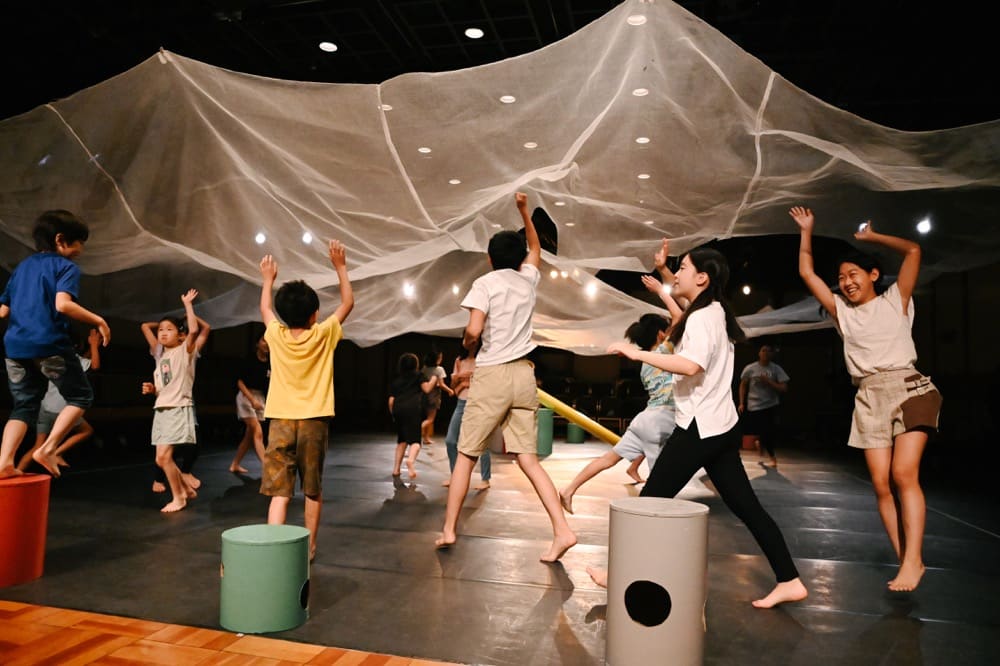
Key Points
- Performance Kids Tokyo sends artists to schools and other institutions to have them conduct creative activities with children.
- Creating artistic works elicits children’s creativity and nurtures diversity.
- To provide spaces in which children can learn in diverse ways, you need to create an environment in which participants accept and take interest in things they don’t understand.
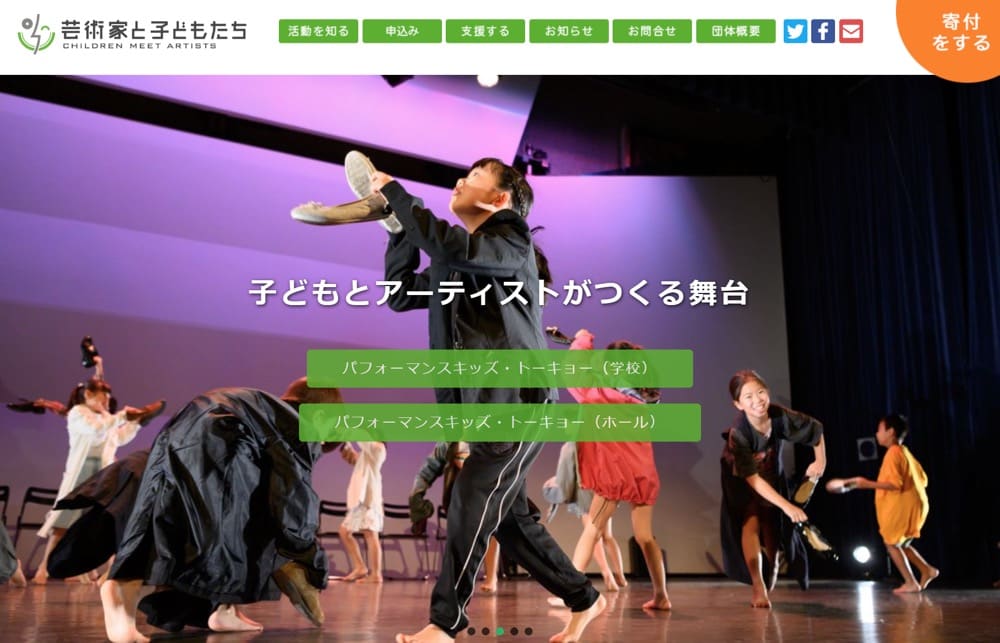
Performance Kids Tokyo (“PKT”) organizes artistic productions of dance, drama, and music through workshops in which professional artists collaborate with children to develop original pieces, and then perform them. It has been co-sponsored since fiscal 2008 by the Arts Council Tokyo (external link) and the nonprofit organization Artists and Children (external link).
PKT not only sparks the children’s creativity; it also helps them notice new aspects of others, become aware of different ways of thinking, and present competing ideas, while also helping them accept and take interest in things they cannot understand and differences between people, leading them to mutually acknowledge their diversity.
PKT activities can be said to have been initiated in response to a number of social conditions, including an increase in the number of children who do not have many opportunities to experience the arts due to widening economic disparities between families in Japan, as well as the fact that school teachers are often so busy that they find it difficult to arrange for opportunities for children to freely express themselves or talk about their ideas openly or even engage in dialog at school.
But what kind of influence does interaction with artists have on children?
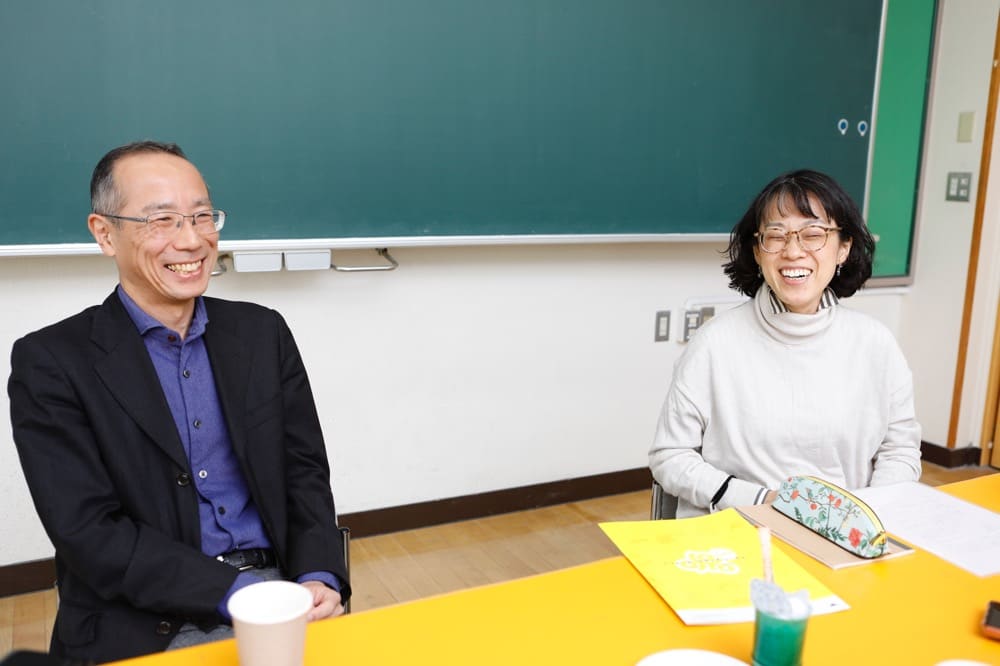
For this article, we talked with Yasuhiko Tsutsumi, the chairman of Artists and Children, which organizes PKT activities, and Mayu Nakanishi, the organization’s executive secretary, who coordinates communication between schools and artists in the program.
Giving children the experience of conceiving and creating art by themselves
The Nippon Foundation Journal Editing Department: Could you please explain PKT’s activities for us?
Yasuhiko Tsutsumi: We arrange for artists to go to various sites including schools, halls, orphanages, and so on, and have them stay at the site for around 10 days, during which they conduct workshops. They do not offer programs with set scripts or movements; instead, the children, their teachers, and the artists create works of art like dances and dramas together, starting from scratch and bringing them to fruition in a recital or performance.
Journal: How did this program get started?
Tsutsumi: My desire to offer children a chance to encounter the arts sprung from a feeling that all children, even those whose family circumstances mean they have few opportunities to go to see plays or visit museums, need to experience the arts.
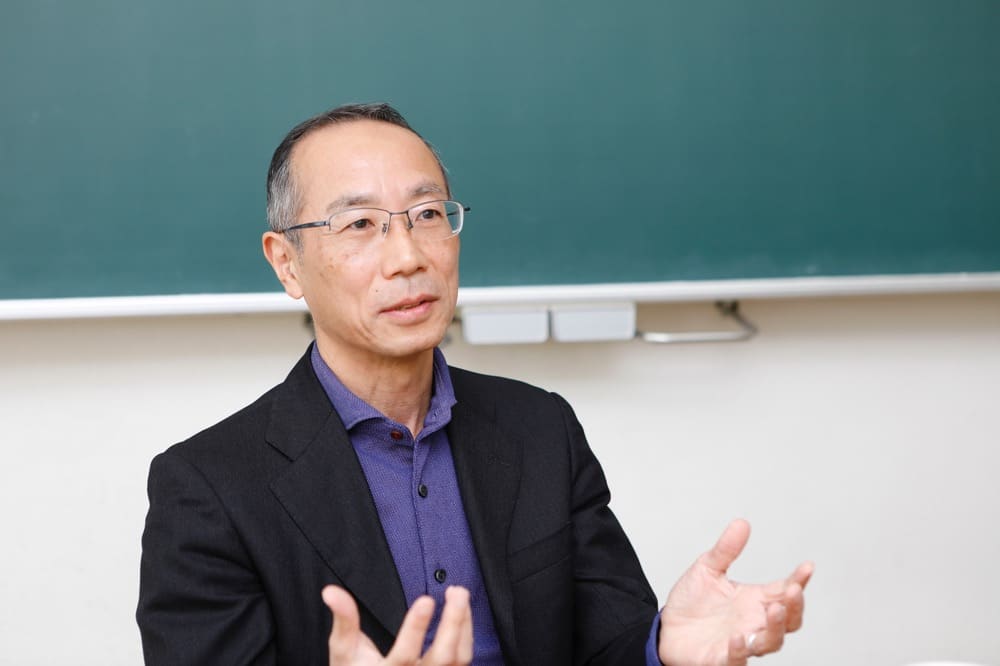
Tsutsumi: I think of artists as professionals in the fields of creativity and communication. They make us reconsider a wide range of relationships, including those between people and those between people and things.
The experience of interacting with such artists, talking with them as they generate something new, helps elicit children’s creativity and serves as a space that encourages communication with others. I also believe it enhances self-esteem, even in children who don’t normally have much self-confidence.
In this era when disparities in economic and educational opportunities are widening, I believe that it’s more important than ever to bring art to children through their schools.
Journal: So, outside groups actually go into school classrooms and conduct classes. And for 10 days — that seems like a rather long time.
Tsutsumi: At first, I negotiated through teacher acquaintances of mine to arrange for workshop-type classes to be held at individual schools for two class periods a day for around one to five days and with no final performance. Then in 2008, I started PKT with the Tokyo Metropolitan Government and the Tokyo Metropolitan Foundation for History and Culture (currently the Arts Council Tokyo) serving as co-sponsors.
PKT now solicits participation from all elementary and junior high schools as well as schools for children with disabilities in the entire metropolitan area, offering approximately 20 hours of workshops at each school. The reasoning behind the longer periods is that workshops of just a day or two end up being simple “events,” and we aim to provide something greater than that. We want to collaborate quite closely with the teachers, thinking alongside them to plan the classes together.
Unlike one-off events, PKT fully mobilizes artists and their dance or drama expertise for the 10-day period. During the creative process, feelings are aroused among the children, teachers, and artists, but also, friction may arise. I suspect that this kind of experience exerts a different kind of impact than ordinary classrooms.
Tsutsumi: Japan’s education system is undergoing change, and the era in which it was enough to simply convey information presented in textbooks is long gone. The Ministry of Education, Culture, Sports, Science and Technology (MEXT) stipulates that classes should involve “proactive, interactive, and authentic learning,”* and teachers are struggling to find ways to do this through trial and error.
- This wording is included in the 2020 MEXT curriculum guidelines and teachers are expected to promote this kind of learning to nurture children’s vitality.
Journal: So, it seems like the PKT perspective is the kind of thing educational institutions are being asked to provide. Earlier, Mr. Tsutsumi mentioned that he feels “all children … need to experience the arts.” Does that mean that you feel that there are not enough opportunities for children to experience the arts in today’s education system?
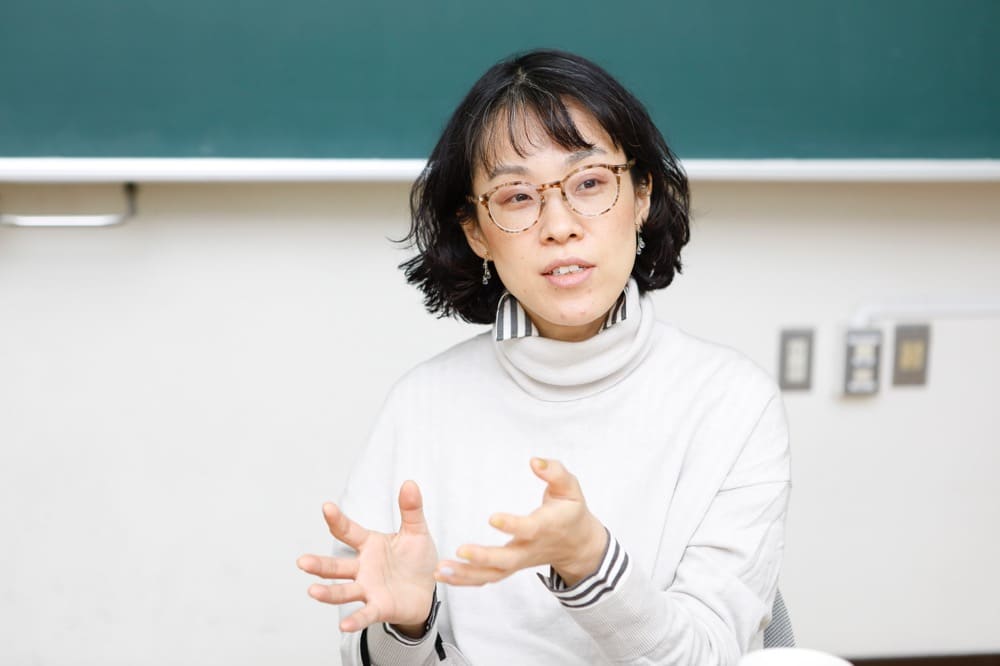
Mayu Nakanishi: There may be opportunities to listen to music or see dramas, but I think that children today have few chances to create performances from scratch. On their part, teachers want to give children many experiences and work hard to do so, but their daily duties keep them so busy that schools alone can’t do that much. In such cases, we hope they will apply for a PKT workshop.
Tsutsumi: PKT’s main focus is on physical expression and physical communication. Schools today tend to be biased toward language activities, and although dance is included as one aspect of physical education, I feel that spaces in which children can use their bodies to express what they’re feeling are extremely limited. Of course, linguistic expression is very important, but we’d like to convey to children that there are methods of expression other than language.
Illuminating powers that children inherently possess
Journal: How do classes in which PKT is involved differ from ordinary classes?
Tsutsumi: I think we offer spaces in schools where new relationships are formed. For example, even when they hear the same sound, different people react differently. Children might see another child who they thought was very quiet suddenly come alive when they hear sounds. That leads to communication and new relationships.
Seeing differences between oneself and others and accepting them serves as a springboard to communication, and that, in turn, leads to acceptance of diversity. Many such changes occur during PKT activities.
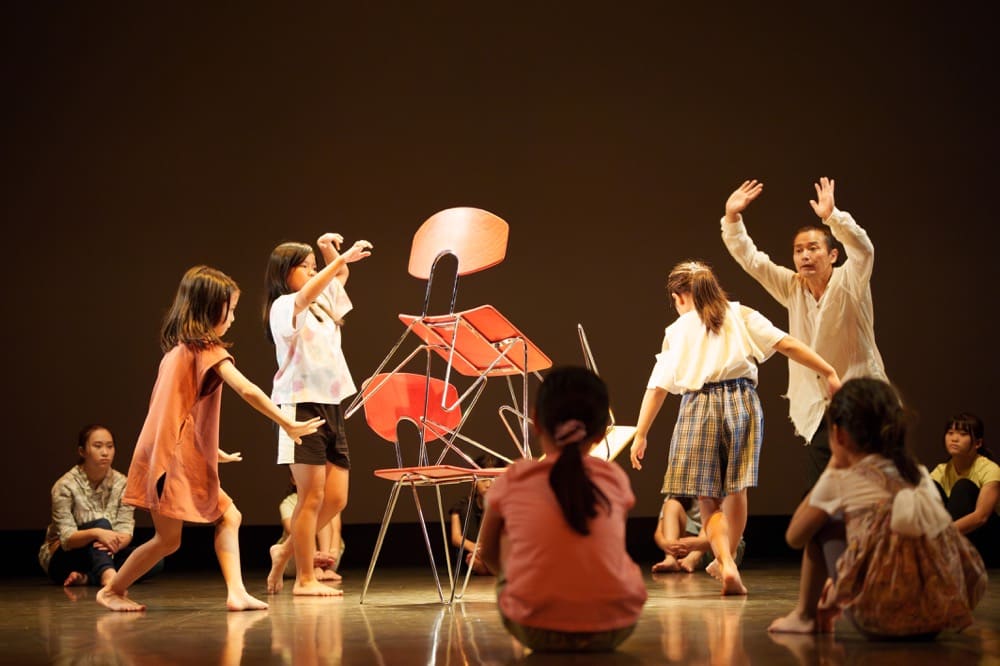
Tsutsumi: Also, during our workshops, even when the artist asks the children to try doing a certain movement, they don’t always follow the artist’s instructions; instead, they might start doing something different. In such cases, the artist does not tell the children that what they are doing is wrong; the artist welcomes their actions as something interesting, allowing them to expand their means of expression. This can stimulate other children, spreading out into a wider range of more individualistic expressions.
Journal: So, the artists are bringing out the children’s inner powers of expression.
Nakanishi: That’s right. But when groups of children acting on their own begin to create their own works, teachers, parents, and other adults often get nervous, wondering whether things will really come together if they go on like that [laughs].
I used to be a teacher, so I completely understand that feeling. Schools have set times for each teaching module, so it’s hard to conduct activities without an image of the end result in mind. If you spent time dwelling on questions like “Why the answer to 1 + 1 is 2,” you wouldn’t be able to get through the required curriculum for that unit.
But during PKT activities, the time seems to pass a little slower, so it seems like there is time to go back to the beginning and start again if you make mistakes.
Journal: You said that PKT emphasizes physical expression. Are there other things that you stress in your activities?
Tsutsumi: Improvisation. And this is true not only for music and dance. We don’t ask the children to move or perform in set ways; we want them to improvise and create expressions on the spot. We feel it is important for them to physically express what they’re feeling at that time, thinking, “If the other person is dancing toward me like that, I’m going to respond like this.”
Nakanishi: And that is also true during the actual performances. Sometimes right before show time, the artist will suddenly change what they had practiced, saying something like, “That really isn’t very interesting, so let’s do this.” This might make the adults around them quite nervous, but the kids can handle it.
Tsutsumi: There were even times when, right before a performance, children on the wings of the stage would ask if they could change the moves and lines in a certain way. You can see that up to the last minute, they’re trying to tweak things, thinking about ways to make their performance better.
PKT’s goal is not to polish performances; we believe that trying things out and failing can also be valuable experiences.
The kind of social tolerance that allows people to take interest in things they do not understand will change the field of education
Journal: How does participation in PKT activities change children?
Nakanishi: Relationships between children change, and so does the class atmosphere, but I don’t think the children themselves actually change. I feel that the artists draw forth powers that the children always had but that no one had ever seen, making them visible.
I’ve heard children say that this was the first time they had been able to do something that they thought of themselves. This makes me feel how important it is to have the experience of being allowed to think and express things for oneself.
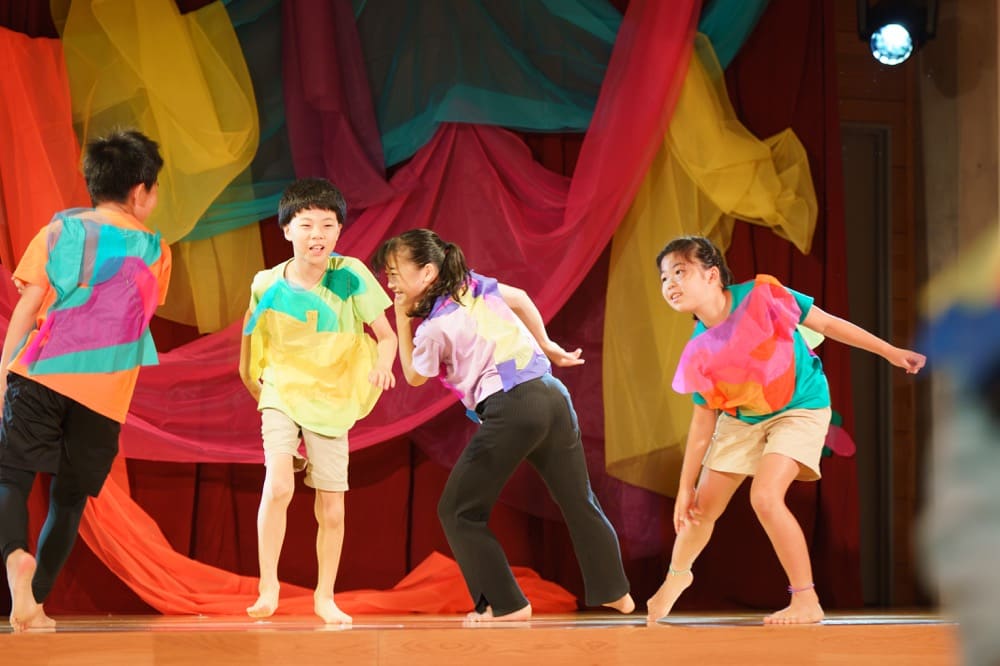
Journal: What kinds of reactions do you get from the participants’ parents?
Nakanishi: We get both good and bad reviews. Sometimes parents say they wanted to see well-rehearsed performances in which the movements are precisely coordinated, while others understand that their children are radiant as they undertake a new challenge, so they’re quite moved.
I think that’s the way art is. It is natural that not everyone finds something interesting, and it is fine to have works that make the audience think about and notice various things.
Journal: What do you think each of our readers can do to help society offer diverse ways of learning?
Nakanishi: People tend to seek some kind of results, but I’d like to see society become more easygoing as a whole, so that it’s all right not to make any particular changes. I think teachers and children feel pressure — that they have to make some kind of change.
I believe that time spent meeting people — including struggling or laughing together when things don’t go well — is time well spent. There may be times when you feel that, in the end, you just didn’t understand each other. But as you gradually learn about each other, rather than denying that you didn’t reach mutual understanding, you can accept the diversity of values and ways of thinking itself as interesting. If we can create that kind of atmosphere, I think society will change.
Tsutsumi: I think it’s important for schools, theaters, and museums to move beyond thinking only about their own concerns and begin considering their local community and its future and then take action accordingly.
Education should not be focused on raising grades; it should nurture human growth. I’d like to see wider understanding in society of the fact that culture and the arts are essential for this process.
Editor’s Note
Art takes various forms depending upon the creator and the audience. This interview made us appreciate what a big impact art has on society. We hope that as a step in the direction of encouraging people to accept diversity, this experiment in the use of art will spread out around all of Japan.
We also got a glimpse into the excessive work load faced by teachers who, even if they want to give their students all sorts of experiences, are too busy to get around to doing so. We hope that improvements will be made, starting with the organization of the school workplace.
Profiles
Yasuhiko Tsutsumi
Born in Tokyo in 1965, Yasuhiko Tsutsumi graduated from the Faculty of Economics of Keio University and began working at a private enterprise, where he dedicated himself to producing a series of dance and music performances as well as art exhibits at new halls and galleries. After retiring, he worked at a large Osaka Prefectural children’s center and other institutions before going independent in 1999. In 2008, he started Performance Kids Tokyo, which conducts workshops at schools, halls, and other institutions to allow children to create theatrical performances in which they play the main roles. He coauthored “Nurturing Children’s Creativity: The Philosophy and Practice of Art Education,” edited by Manabu Sato and Yasuo Imai (in Japanese) and “Nurturing Children’s Communication Skills,” edited by Kiyomi Akita.
Mayu Nakanishi
Born in 1980, Mayu Nakanishi graduated from the Photography Course of Seian University of Art and Design. She worked as a teacher in an elementary school in the city of Osaka from 2006 to 2008, then went on to study overseas at Kingston University in the United Kingdom for about a year and a half starting in 2009, earning an MA degree in Curating Contemporary Design. After returning to Japan, she took up work in the office of Artists and Children starting in March 2011. As the nonprofit organization’s workshop coordinator, she is in charge of activities at elementary, junior high, and schools and classes for children with functional needs, as well as at orphanages and other institutions.
Text: The Nippon Foundation Journal Editing Department
Photo: Emi Enishi