Preserving Fire: Documenting Bizen Pottery Through Archaeology, Craft Knowledge, and Science
In archaeology, pottery frequently endures when most other materials have vanished. Fragments of ceramic vessels can provide evidence of trade, subsistence, ritual, technological practices, and daily activities. However, one of the most critical aspects of pottery production, the moment of firing, remains particularly challenging to reconstruct.
Although a ceramic object may persist for centuries, the decisions underlying its creation, such as clay selection, kiln placement, wood stoking schedules, ash movement, and firing atmosphere, are typically lost to time. My research investigates how these decisions can be better understood by examining a living ceramic tradition: Bizen-yaki, one of Japan’s most historically significant wood-fired ceramic practices.
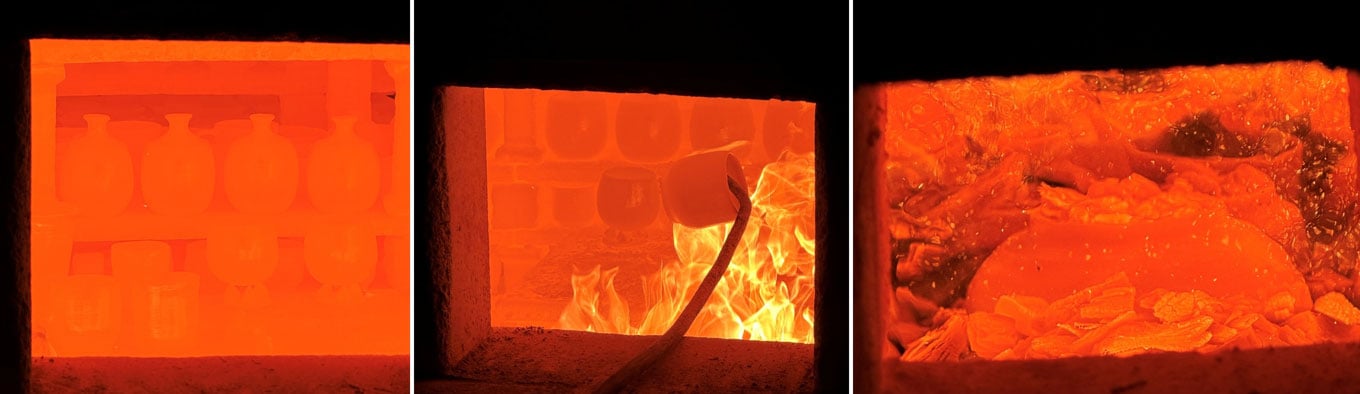
Bizen, in Okayama Prefecture, is recognised as one of Japan’s Six Ancient Kilns. Its pottery is known for surfaces created not by applied glaze but by the interaction of clay, flame, ash, embers, and the kiln atmosphere. The colours and textures of Bizen ceramics emerge through long wood firings, where small changes in placement, airflow, fuel, and timing can transform the final surface of a vessel.
For archaeologists, Bizen provides a particularly valuable case study. It offers a unique opportunity to examine how ceramic surfaces are shaped through practical experience, observation, and embodied skill. While scientific analysis can reveal mineralogical and microstructural changes in fired ceramics, establishing direct links between these changes and the specific human decisions made during firing remains challenging. My project seeks to address this gap.
I am currently undertaking fieldwork in Bizen as part of my doctoral research in Archaeology at the University of Oxford. The project is conducted in collaboration with Okayama University of Science, where I am hosted as a research collaborator under the supervision of Professor Yoshihiro Kusano. This partnership enables the integration of ethnographic fieldwork, experimental ceramics, and scientific analysis.
The research involves direct participation in pottery production and wood firing. I am documenting active firings, interviewing potters and pottery teachers, recording kiln zones, mapping clay sources, and placing my own experimental ceramic pieces inside different kilns. These pieces are designed to help test how variations in clay, position, atmosphere, and firing conditions affect ceramic surfaces. At Okayama University of Science, the fired samples can then be studied using analytical techniques such as X-ray diffraction and microscopy.
The integration of fieldwork and laboratory analysis is fundamental to this project. Instead of viewing a finished pot solely as an aesthetic object, I consider it the outcome of a series of material decisions. A Bizen surface is not merely “natural” or accidental; it is shaped by accumulated experience, including vessel placement, kiln packing, wood addition timing, flame movement, and the potter’s responses to kiln behaviour over time. Much of this knowledge is intuitive and embodied. Potters often learn through watching, repeating, adjusting, and sensing rather than through written instruction alone. They read the fire, the colour of the kiln, the weight of the wood, the sound of combustion, and the condition of the pots inside. These forms of knowledge are difficult to capture in conventional archaeological records, yet essential for understanding how ceramics are actually made.
Accordingly, the project encompasses both heritage and archaeological dimensions. Bizen pottery represents a living tradition whose transmission relies on individuals, communities, workshops, and evolving apprenticeship models. By documenting potters’ perspectives, local terminology, firing strategies, clay-sourcing practices, and instructional methods, my research helps preserve knowledge that might otherwise remain undocumented or at risk.
This is particularly significant because craft knowledge encompasses not only technical aspects but also cultural, social, and environmental dimensions. It links potters to local clays, seasonal cycles, kiln structures, inherited practices, and evolving learning communities. In contemporary Bizen, this includes both established lineages and new forms of participation, such as international learners who come to study the tradition.
My research does not seek to reduce Bizen pottery to scientific data alone. Instead, it explores how scientific analysis and craft knowledge can inform one another. Archaeometry reveals the transformations of clay and minerals under varying firing conditions, while ethnography elucidates how potters make decisions, navigate uncertainty, and transmit expertise. Together, these approaches enable us to interpret ceramic objects as both finished artefacts but as records of practice. By studying Bizen wood-firing in this way, I hope to contribute to archaeological interpretation, materials research, and heritage preservation. The project shows how living traditions can help archaeologists ask better questions about the past. It also shows why documenting craft practice matters in the present. In the movement of flame through a kiln, we can see not only a technical process, but a form of knowledge carried through hands, materials, memory, and place.
About the researcher
Ekta Bagri is a DPhil researcher in Archaeology at the University of Oxford, Wolfson College, supervised by Professor A. Hein, Professor S. Chirikure, and Professor R. Wilson. Her research focuses on Bizen-yaki wood-firing, ceramic technology, embodied craft knowledge, and heritage transmission. She is currently conducting fieldwork in Bizen, Japan, with support from the Great Britain Sasakawa Foundation, the Meyerstein Research Grant, and the Wolfson College Travel Grant. Her research is conducted in affiliation with Okayama University of Science, where she is hosted as a research collaborator under the supervision of Professor Yoshihiro Kusano.
Readers interested in contacting the author are encouraged to reach out to The Nippon Foundation at tnfsa@ps.nippon-foundation.or.jp
Related Themes
Related Links
- The Nippon Foundation Scholars Association (TNFSA)
- Worldwide Scholarships and Fellowships
- The Sasakawa Japanese Studies Postgraduate Studentship Programme (external link)
Related Articles
Preserving Fire: Documenting Bizen Pottery Through Archaeology, Craft Knowledge, and Science
Deep-Dive