Using IT to Support Kindergartners’ Development in Sarawak, MalaysiaResults of pilot program
The Nippon Foundation has implemented a pilot program using information technology (IT) tools to support the development of kindergarten children in Malaysia’s Sarawak State. The program, for children with mild to moderate development support needs, aims to build a new model for receiving appropriate support at local kindergartens without relying on specialist institutions.
The pilot program verified the effectiveness of this new implementation model that shifts the support from therapy centers to local kindergartens, combined with the use of IT tools to support teachers. The results also confirmed that when children received support at kindergarten, their development improved, and that parents and guardians were highly satisfied with the educational venues.
Background: Gaps in early detection and early intervention
Ages 0 through 6 are the most important time for children to receive developmental support. However, many Southeast Asian countries, including Malaysia, do not have sufficient frameworks in place to carry out developmental screening, and specialist human resources are lacking. There are an estimated roughly 100,000 children aged 3 to 5 living in Sarawak State, of whom approximately 10%-15% (10,000 to 15,000 children) have been identified as potentially having developmental delays. At the same time, fewer than 500 children receive developmental support from One Stop Early Intervention Centres (OSEICs) directly operated by the Sarawak government, meaning that long waiting times are required before receiving specialist care.
Ideally, children with mild to moderate developmental delays would be able to receive support from an appropriate structure at their kindergarten. Because kindergartens do not have adequate specialists and support structures in place, however, therapy centers are the only option. At the same time, there are many families that cannot afford specialist care and many children need to wait a long time to receive care.
Initiatives: Building a new kindergarten-based model
The pilot program was carried out with the cooperation of IT tool developer Toy Eight, the state’s OSEICs, the Association of Kindergarten Operators (AKO) Sarawak, and the National Early Childhood Intervention Council (NECIC). Specific initiatives can be broadly grouped into two categories.
- Supporting the transition from therapy centers to kindergartens
By providing developmental screening tools that use IT, children who were able to receive support at a kindergarten were identified and were moved there during the trial period.
The kindergartens were provided with a transition manual that laid out standards for accepting children and main points for observation, and a framework was provided that required no preparation on the part of teachers. Specialists provided ongoing advice remotely. - Empowerment of teachers using IT
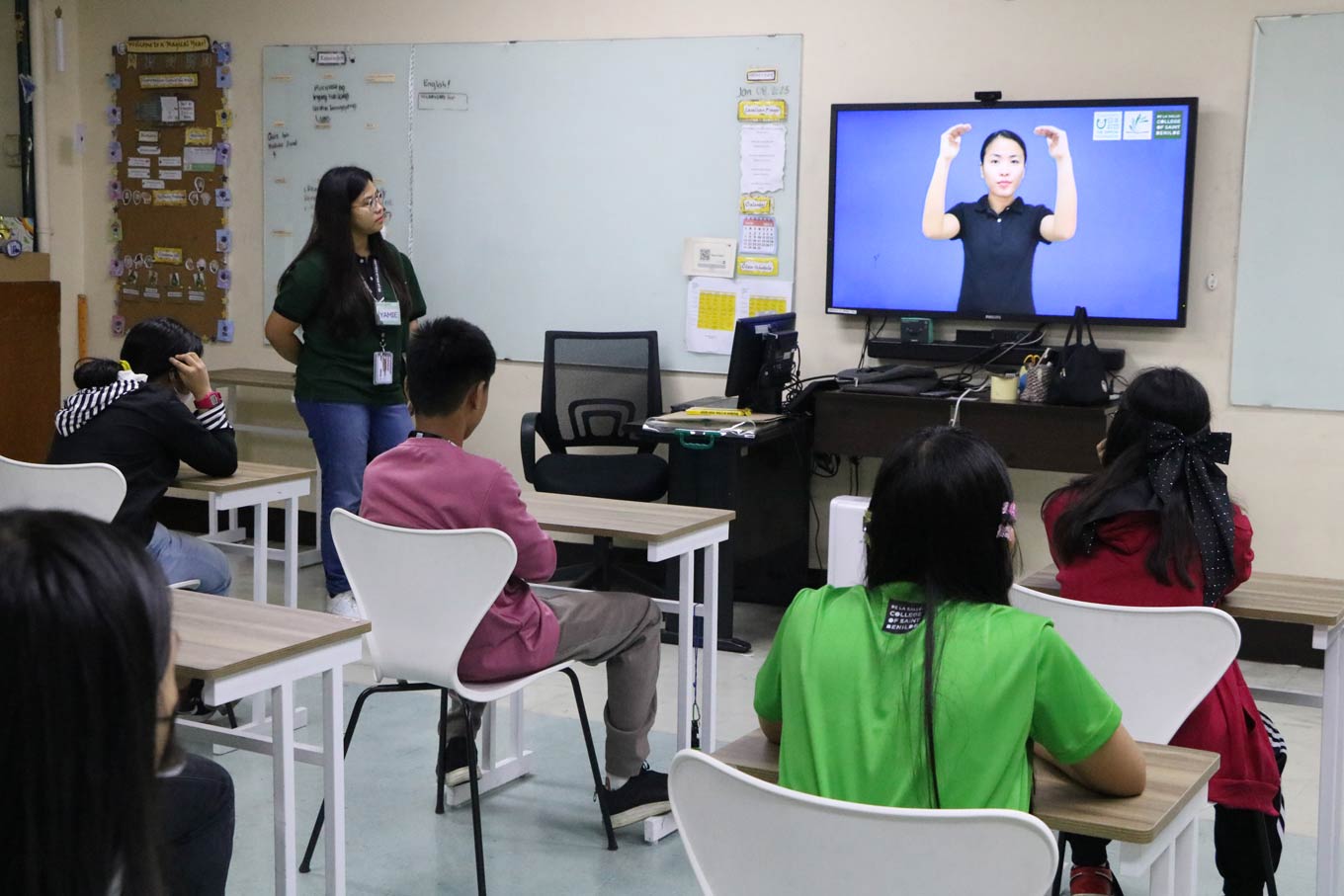
Intervention tools using IT were installed at kindergartens so that specialists could provide support without being present on a regular basis. Teachers were trained and used manuals to provide support in the course of their daily childcare activities. A framework was implemented to objectively confirm the degree of improvement by quantitatively assessing children’s developmental situation and collecting and analyzing daily data.
After a small-scale trial over seven months combining the two components outlined above, the following results emerged.
- Three children were transferred to kindergartens full time
Three children, with conditions including Down syndrome, autism, and expressive language disorder, were transferred from support at OSEICs to attending kindergarten full time. Daily data confirmed that they improved in stages in multiple areas including behavioral stability, ability to concentrate, and problem-solving. - Parent/guardian satisfaction: 4.9/5 on average
A survey (scale of 1-5) of parents and guardians gave the program an extremely high evaluation, with an average score of 4.9. In particular:- All respondents gave a score of 5 with regard to the program being helpful for the children and their families
- Children’s unease about going to kindergarten decreased
- Families had greater economic stability
- Parents and guardians were able to work without interruption
- Kindergartens’ desire to continue: All three want to continue going forward
All participating teachers expressed a desire to continue the transitioned support.
One teacher commented, “The necessary preparations were already in place, allowing us to accept the child with almost half the usual effort. The transition process itself was very smooth, and with the tools and regular support provided, we were able to work as a team while learning, and effectively manage children with diverse needs within the classroom.”
Toward a society where all children are able to demonstrate potential
This program represents a new social implementation model that reduces disparities in access to developmental support and overcomes the structural issue of a lack of specialists. By combining the latest IT tools and human resource training, the program aims to allow all children to learn in their local community with the kindergarten as the base, and to create a society in which they are able to grow.
The Nippon Foundation will continue to work toward a sustainable and inclusive society going forward by building frameworks based on evidence and cooperating in policymaking.
- Inclusive Development Support Program for Preschool Children Utilizing IT tools in Sarawak, Malaysia