2% of Every Electricity Bill Helps Build Renewable Power Plants and Support NGOsHummingbird Power’s renewable electricity that supports the environment
Key Points
- Renewable energy accounts for about 24% of Japan’s electricity generation, far less than the world’s top eco-friendly countries.
- Hummingbird Power supplies 100% renewable electricity and invests in building new renewable energy facilities. The accumulation of 1% at a time will change society. The everyday actions of individuals will protect the Earth’s future.
Since Japan liberalized its electricity market in 2016, consumers have been free to choose their electricity provider. However, relatively few people choose renewable electricity providers.[1] The adoption rate of renewable power in Japan is about 24%.[2] This is still far lower than other countries.
- 1. “Renewable energy” refers to energy generated from natural sources such as solar, wind, and water that can be used almost permanently without being depleted and do not produce carbon dioxide (CO2) when generating electricity.↩︎
- 2. Reference: “Percentage and Adoption of Renewable Power in FY2022 in Japan (Flash Report),” Institute for Sustainable Energy Policies (ISEP) (external link)↩︎
With electricity bills increasing year after year, people tend to focus on cost, but global warming will continue to intensify if we continue using fossil fuels that emit large amounts of CO2 (carbon dioxide). This will likely further damage the environment and have serious consequences on our lives. So perhaps we should consider the environmental impact of our choice when choosing a power company.
Hummingbird Power (external link) supplies electric power generated from 100% renewable energy sources that do not emit CO2 when generating electricity. The electricity provider uses 1% of its electricity charges to establish more renewable energy power plants and works to solve global warming. It also donates another 1% to an NGO of the user’s choice, so a total of 2% of the electricity bill is used for social development. Hummingbird Power is in the spotlight now as a groundbreaking social business. We talked with Shota Ikeda, who serves as its head, about how it came about.
The more electricity you use, the more you contribute to society and the more renewable energy power plants are built
The Nippon Foundation Journal Editing Department: Tell us again how Hummingbird Power works.
Shota Ikeda: Hummingbird Power is a renewable energy provider founded by Borderless Japan Corporation (external link), a company that strives to solve social problems through business. It was launched in February 2020 to combat global warming by selling power generated from 100% CO2-emission-free renewable energy sources.
Most of the CO2 emissions in Japan come from electricity generation. Around 70% of that electricity comes from thermal power, which uses fossil fuels such as coal, oil, and natural gas to generate electricity. In contrast, only about 24% of Japan’s electricity comes from renewable energy sources, which is a relatively low share. We believe that encouraging households to switch to renewable electricity can make a significant contribution to addressing climate change.
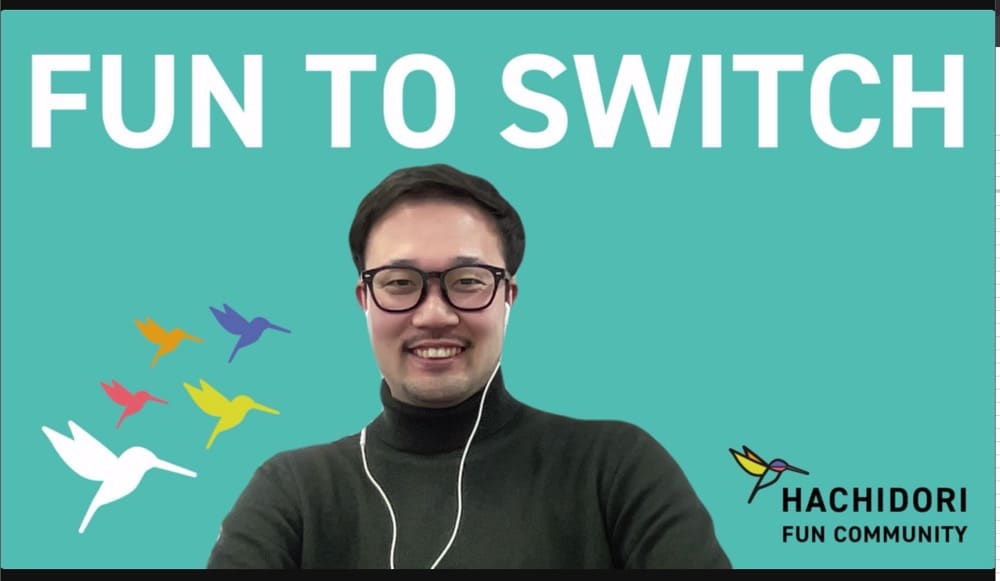
Hummingbird Solar (external link) for an initial cost of zero yen, and then became head of Hummingbird Power
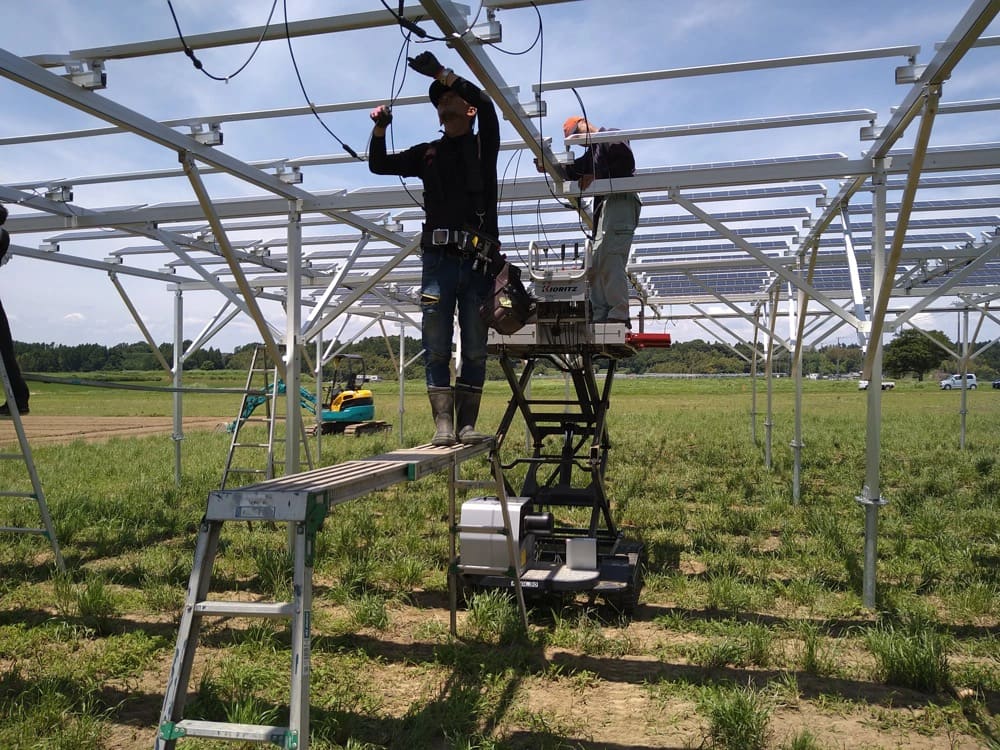
Ikeda: To reduce CO2, it is crucial that we not only switch to renewable energy but also build more renewable energy power plants. Hummingbird Power allocates 1% of its electricity bill to a fund to establish more renewable energy power plants. We do not build mega solar[1] and large-scale hydropower plants with the fund; we build only power plants with a small environmental impact such as solar sharing[2] systems.
- 1. “Mega solar” refers to large-scale solar power facilities. Their disadvantages include having to clear mountains to build.↩︎
- 2. “Solar sharing” refers to utilizing land for both agriculture and solar power generation. It promotes plant growth and uses the excess solar power to generate electricity.↩︎
Ikeda: Another important feature of Hummingbird Power is that customers can donate 1% of their electricity bill to charities and NGOs, representing a new way to contribute to society by simply using electricity as they normally would. You might think that 1% isn’t much, but over time this adds up and can be used for meaningful social change .
If we do not reduce CO2 emissions, rising sea levels will submerge low-lying islands
Journal: What got you interested in global warming and renewable energy?
Ikeda: When I was a university student, I was involved in activities to solve the trash problem and create jobs in the Federated States of Micronesia through The Nippon Foundation’s Gakuvo program (now called The Nippon Foundation Volunteer Center), which supports student volunteer activities. During my time there I learned that Micronesia is impacted by environmental problems more than any other region in the world and the country of Tuvalu will likely disappear due to rising sea levels caused by global warming.
Seventy percent of the world’s CO2 emissions come from 15 developed countries, which include Japan. I was shocked to learn that the first to suffer the consequences will be the small island countries that emit almost no CO2. Because of us, these people may no longer have a place to live. When I realized that, I knew I needed to take responsibility and started thinking about global warming.
Journal: I hear that Japan has a lower renewable energy adoption rate than other countries.
Ikeda: It is increasing year by year, but it is still low. Sweden, one of the top eco-friendly countries in the world, achieved zero electricity generation from fossil fuels in 2022 and over 80% of the power it uses is from renewable energy sources.
Journal: That’s a pretty big difference. Why isn’t renewable energy spreading in Japan?
Ikeda: I think it is because it is less cost-effective than generating electricity from fossil fuels. But the energy source of fossil fuels will eventually be depleted, so we must build a sustainable energy system.
Today Japan uses large-scale centralized generation, in which a large power plant is built, power lines are laid, and electricity is transmitted along the lines from the plant. With this method, electricity is often generated far from where it is consumed, resulting in transmission loss. Around 3.5% of electricity is lost per year in transmission, equivalent to seven thermal power plants.
Journal: So, while the current fossil fuel-based large-scale centralized generation method supplies stable power, it is limited, wasteful, and bad for the environment.
Ikeda: Right. That’s why it is essential for the environment to shift from the current large-scale centralized generation to a distributed energy system in which small power plants are established in many different locations. It is like a self-sufficient system that generates local power locally.
Journal: Does the national government have to take action for the situation to change?
Ikeda: No, if the people take action, the government will follow. That’s why I think it is important for us to do what we can one step at a time. To achieve this, we must establish more renewable energy power plants and also create conditions where people will want more plants.
I want to create a society where we enjoy choosing renewable energy
Journal: Are there any other initiatives unique to Hummingbird Power?
Ikeda: I think our monthly detailed statements are unique. They are designed to give a sense of accomplishment by providing information such as the amount of money donated per household and the level of contribution to the environment.
Journal: I usually just throw away my statement without even looking at it, but I’m sure I would want to look at that! It increases the sense that you are participating in environmental activities.
Ikeda: That’s right. We get a lot of comments like, “I look forward to seeing the monthly detailed statement,” and “I’m glad I made the switch.”
Journal: Hummingbird Power’s activities are very interesting, such as using 1% of the fee to establish power plants and donating another 1%. Do you think other companies can emulate what you are doing?
Ikeda: Ordinary companies prioritize pursuing profits, but Hummingbird Power is a social business that prioritizes solving social problems. Our question is how to make a profit to ensure we can continue this system; pursuing profit itself is secondary. It may be difficult for other companies to emulate us because we are different at our core.
Journal: I guess it would be difficult for ordinary companies to get involved in activities like yours unless we had a culture where we evaluated companies based on their CSR, in other words what they are doing to benefit society.
Ikeda: Right. Customers that choose Hummingbird Power do so because they support us, including the context that lies behind. If more people place importance on CSR, there will be more companies like us.
Switching to renewable energy only takes a minute
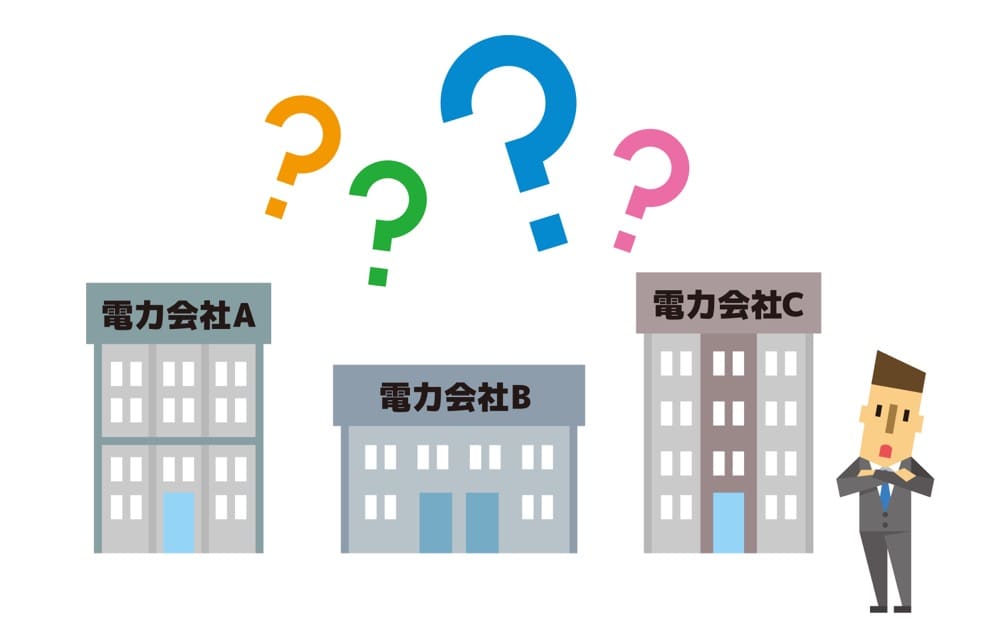
Journal: I think one of the reasons Japan lags behind in renewable energy adoption is that many people see switching power companies as difficult. How difficult is it in practice?
Ikeda: Switching power companies is actually very easy. All you need to do is fill out the required information online such as your address and Supply Point ID Number. It only takes a minute. You don’t have to do anything to cancel your contract with your current power company.
Journal: For some reason I thought that it would be a lot of work, but it’s not much different than changing your SIM card on your smartphone, is it?
Ikeda: That’s right. We have to let more people know that switching is much simpler than they think. I once spoke with a customer who was considering switching power companies, and they asked, “But don’t I have to replace the power lines?” [laughs] More than a few people give up on switching because they assume it’s a lot of work.
Journal: What is the vision for society that Hummingbird Power is striving for?
Ikeda: It’s said that for most activities that contribute to society, if 3.5% of the population participated, it would change society. In accordance with this principle, our first goal is to deliver renewable energy to 1.9 million households by 2030.
Unfortunately, it is difficult to create a sense of urgency about the state of the planet among people who have little interest in environmental issues. Instead of getting people to take action out of a sense of obligation that they must do something to stop global warming, I want to create an environment where everyone can easily choose renewable energy and encourage people to take action because they want to leave a better environment for future generations or make even a small contribution to the environment by switching power companies.
Journal: What is your next step?
Ikeda: I want to create an app and a system that allows Hummingbird Power users to connect with each other through features such as earning points at stores that use Hummingbird Power. So far, we have held a variety of events such as Hummingbird Academy (external link), which provides opportunities for Hummingbird Power users to learn, and Hummingbird Meet (external link), where we invite NGOs and other groups that people can support through Hummingbird Power to give talks. Recently we held a panel discussion commemorating the decision to purchase power from a dairy farmer who carries out solar sharing.
Journal: This system that allows users concerned about the environment to get together is interesting.
Ikeda: We view Hummingbird Power members as team members who share our commitment. In everyday life, it is difficult to imagine where and how electricity is made. So when we connect a farmer who carries out solar sharing with our members, for example, those members see the face of the one generating the electricity, and if that motivates members to purchase the farmer’s vegetables, it supports the farmer as well. The electricity generation equipment for solar sharing is really cool and the crops you eat after seeing it have a special taste. Even though electricity itself is intangible, I hope we can share hands-on experiences with people. Hummingbird Power also plans to establish a second power plant with our renewable energy fund in the near future.
Journal: I look forward to it. Is there anything our readers can do to protect the environment?
Ikeda: Have fun making small changes. For example, unplug appliances when they’re not in use and ride a bicycle instead of driving. These may seem like small things, but doing a little is better than doing nothing. Small actions taken by many people can make a big difference. I would also be grateful if people added switching power companies to that list.
Editor’s Note
Mr. Ikeda’s words, “doing a little is better than doing nothing,” really stuck with us. Faced with global challenges, it may seem that 1% alone won’t make a difference. However, considering that Hummingbird Power built a renewable energy power plant through its Hummingbird Fund just two years after it was founded, we were reminded that there are things each of us can do. Besides switching power companies, what else can we do for the future of our planet? Let’s take small actions together every day.
Profile
Shota Ikeda
Shota Ikeda was born in 1998. He dedicated himself to playing baseball every day from elementary school to high school with the dream of becoming a professional baseball player. At university, Mr. Ikeda became interested in international cooperation and took part in environmental activities in the Federated States of Micronesia. Soon after graduating, he joined Borderless Japan. He then established Hummingbird Solar Co. Ltd. with the mission of “creating a future where renewable energy is the main power source.” Since December 2023, Mr. Ikeda has served as head of Hummingbird Power. The business serves two functions: to purchase and supply electricity and to establish more power plants.
Text: The Nippon Foundation Journal Editing Department
Related Themes
Related Link
Related Articles
From Streets to the Sea: How The Nippon Foundation Turns Cleanup into a National Movement
Field Notes