Lack of Oxygen Also a Reason for Declining Fish PopulationsWhat is a hypoxic water mass?
Key Points
- “Hypoxic water masses” are areas of the sea where oxygen in the water is depleted, having an adverse impact on habitats for fish and shellfish and also affecting fishery industries
- Although climate change and human activity make hypoxic water masses more likely to occur, they are also a natural phenomenon
- Reducing wastewater and food loss decreases the amount of excessive nutrients that flow into the ocean, making these first steps toward protecting the ocean environment
Have you noticed changes like fish in the supermarket becoming more expensive, or the usual fish not being available? One reason for this is oxygen-depletion in a section of the ocean known as a hypoxic water mass. This is caused by stratification when the water temperature at the surface rises and increases the temperature differential with the water deeper in the sea, causing oxygen levels near the sea floor to become significantly depleted.
When a hypoxic water mass forms, the habitats for fish and shellfish are harmed, which can cause large numbers of marine creatures to die and the productivity of fishing grounds to decline, which can lead to decreased catch volumes and seriously affect aquaculture. It is also said to be linked to the phenomena of “red tides,” in which phytoplankton proliferate in large numbers, and “blue tides,” where hypoxic water masses from the seafloor rise to the surface. These changes occurring in the ocean affect our food supply by causing the price of fish to rise and supplies to become unstable.
For this article, we spoke with Shigeho Kakehi, who has been studying marine environments for many years at the Japan Fisheries Research and Education Agency, about what causes hypoxic water masses and their effects on fishery industries and aquaculture, as well as what needs to be done to achieve sustainable marine environments.

Why the ocean becomes oxygen-depleted – mechanism that creates hypoxic water masses
The Nippon Foundation Journal Editing Department: What is a hypoxic water mass?
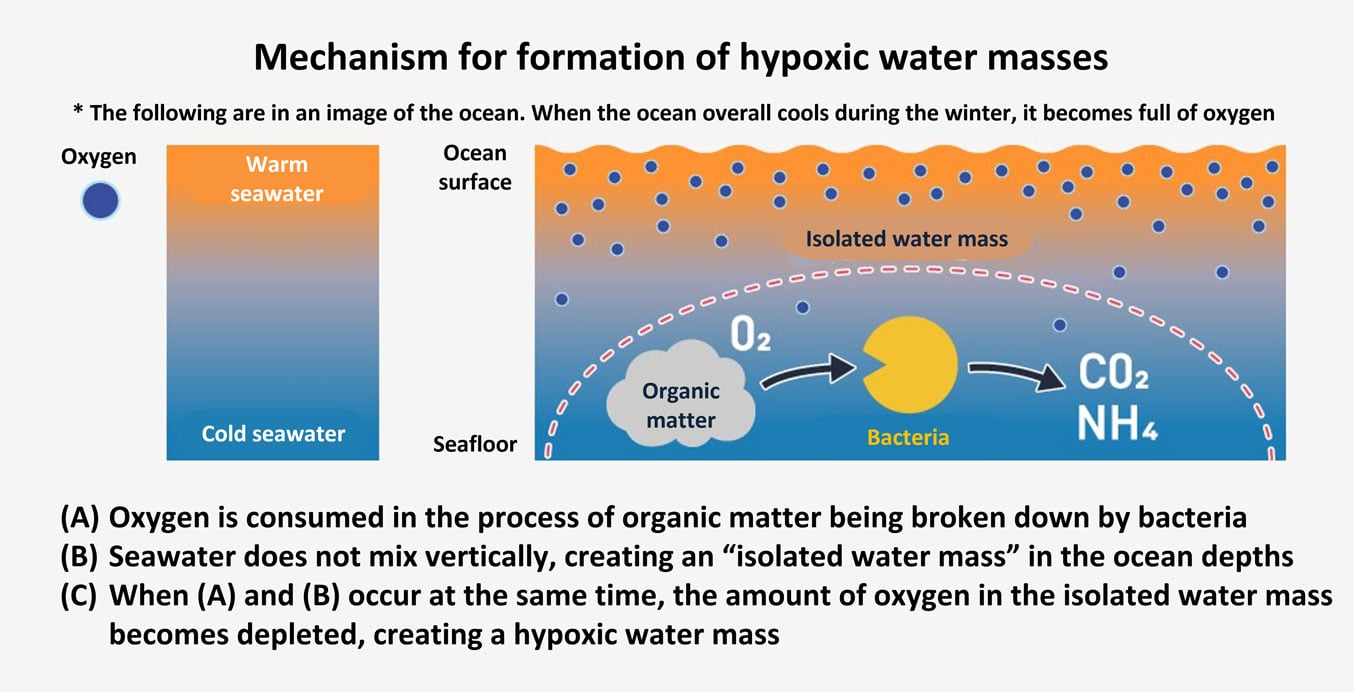
Shigeho Kakehi: Just as people breathe oxygen in the air, marine life uses oxygen dissolved in the ocean to breathe. In technical terms, this oxygen is called “dissolved oxygen.” When the concentration of this “dissolved oxygen” becomes low, the condition is called “hypoxia.” There is a limit to the amount of oxygen that can dissolve in seawater; in seawater at a temperature of 20 degrees Celsius, it is about 5 milliliters per liter. While this may seem like a small amount, this is essential oxygen for marine life. A large body of water with a low concentration of dissolved oxygen is called a “hypoxic water mass.”
Journal: Why does oxygen in the ocean become depleted?
Kakehi: As water temperatures rise, oxygen becomes less soluble in seawater. In addition, oxygen in the ocean is consumed through the respiration of many organisms, especially bacteria, plankton, and other microorganisms. On the other hand, the ocean also plays a role in replenishing oxygen. This occurs through the dissolution of atmospheric oxygen at the ocean’s surface and through the production of oxygen by phytoplankton and seaweed via photosynthesis. Oxygen cannot be produced through photosynthesis, however, in water columns far from the surface where light does not reach. Furthermore, in areas with weak water currents, water exchange with the surrounding water becomes difficult, and oxygen continues to be consumed. This condition, in which water remains isolated and does not mix with its surroundings, is called “water isolation.” Just as oxygen gradually decreases in a sealed space, the same process occurs in the ocean, eventually leading to the spread of oxygen-depleted water.
Conditions conducive to the formation of hypoxic water masses – stratification, topography, and human activity
Journal: What conditions tend to lead to the formation of hypoxic water masses?
Kakehi: In areas where water flow tends to stagnate, oxygen supply is limited, making hypoxia more likely to occur. Examples include depressions on the seafloor, areas where shipping channels have been dredged, and harbors enclosed by breakwaters. Another phenomenon related to the formation of hypoxic water masses is “stratification.” In summer, the sea surface is warmed by the sun’s rays, but because heat has difficulty reaching deeper layers, a layered structure forms where the upper layers are warm and the lower layers are cold.
If you’ve ever gone diving, you may have experienced the surface feeling warm, only to suddenly feel a sharp drop in temperature as you descend even just a little. That temperature difference is precisely what indicates the presence of “stratification” in the ocean. The cold water in the lower layers does not mix easily with the upper layers and tends to become isolated. As a result, oxygen is consumed within this isolated water, leading to hypoxia. In large bays, stratification intensifies during the summer, making it easier for hypoxic water masses to form near the seafloor.
Journal: Does human activity also affect the formation of hypoxic water masses?
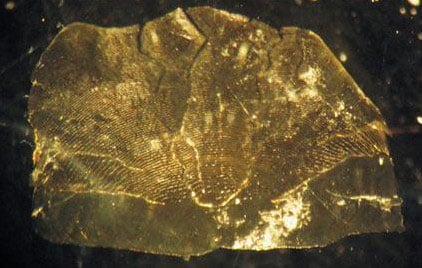
Kakehi: Human activities like the eutrophication* of seawater caused by the inflow of agricultural runoff and sewage via rivers, as well as rising water temperatures associated with global warming are believed to play a role. Hypoxic water masses are not necessarily caused solely by human activities, however. They can also form depending on the structure of the stratification and topographical conditions, and hypoxia is believed to have existed since ancient times. For example, traces indicating that hypoxic conditions once persisted have been found in Beppu Bay in Oita Prefecture. Sardine scales, which normally decompose easily, were found remaining on the seafloor, and this is considered one piece of evidence suggesting that the decomposition of organic matter was hindered because the seafloor was an oxygen-deficient environment.
- Eutrophication: A condition in which an excess of nutrients including nitrogen and phosphorus flows into oceans, lakes, and rivers, causing an overabundance of plankton and other organisms. Although the term originally referred to natural changes, in recent years it has been used primarily to describe the phenomenon of increased nutrient levels caused by human activities like domestic and agricultural wastewater.
Journal: Is the formation of hypoxic water masses affected by weather conditions?
Kakehi: Yes. For example, when strong sunlight warms the sea surface or heavy rain causes low-salinity water to flow in from rivers, the surface water becomes lighter and tends to remain at the top. This intensifies stratification and leads to hypoxia. On the other hand, when the ocean is vigorously churned by typhoons or strong winds, stratification tends to break down. When the upper and lower layers of water mix, oxygen is distributed throughout the water column, which can reverse the hypoxia. For this reason, in years with many days of rough seas, hypoxia tends to occur less frequently, and if it does occur, it tends to dissipate more easily.
Effect of topography and climate change on hypoxic water masses that frequently occur in enclosed bodies of water
Journal: What is the current situation regarding the occurrence of hypoxic water masses
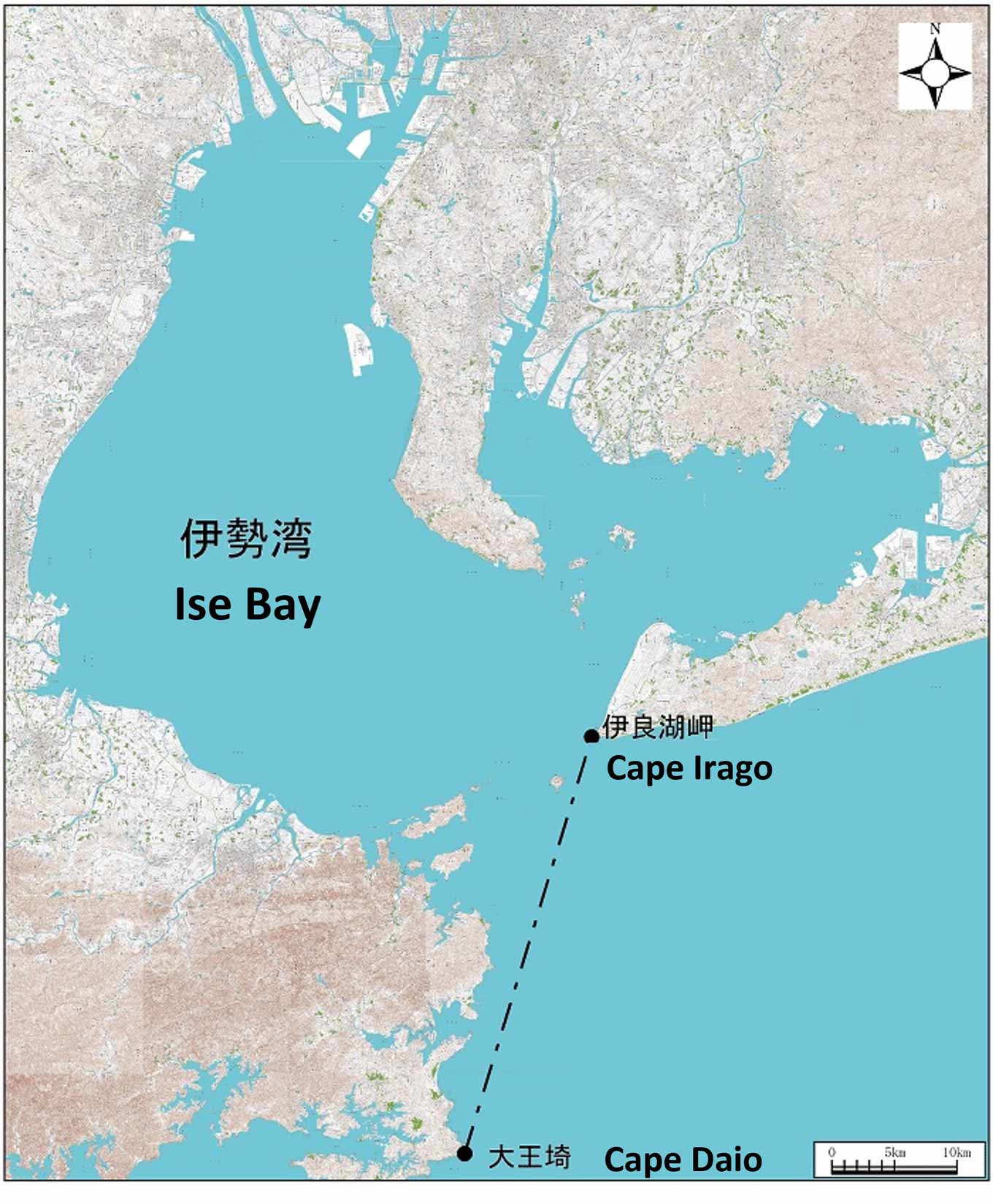
Kakehi: Although there are some areas where conditions have improved, they are occurring throughout the country. They are particularly likely to occur in highly enclosed bays known as “inner bays.” This is because water exchange with the open ocean is limited, making stratification more likely to intensify. Typical examples include Tokyo Bay, Ise Bay, Osaka Bay, and the Seto Inland Sea. All of these have relatively narrow entrances and topography that causes water to stagnate easily. In addition, hypoxia tends to occur just as easily in smaller bays where the entrance is narrow and water flow is weak.
Journal: Does this mean that Japan’s topography is conducive to the formation of hypoxic water masses?
Kakehi: I would say it is a relatively conducive environment. Japan has many enclosed bays, and the topography in many areas limits the inflow and outflow of water with the outside ocean. For example, Ise Bay has a narrow entrance that makes water stagnate easily, and there is a deep depression on the seafloor in the center of the bay. With this topography, the water that accumulates in the deep areas is less likely to be replaced by water from outside. During the summer, stratification also comes into play, making it easier for hypoxic water masses to form.
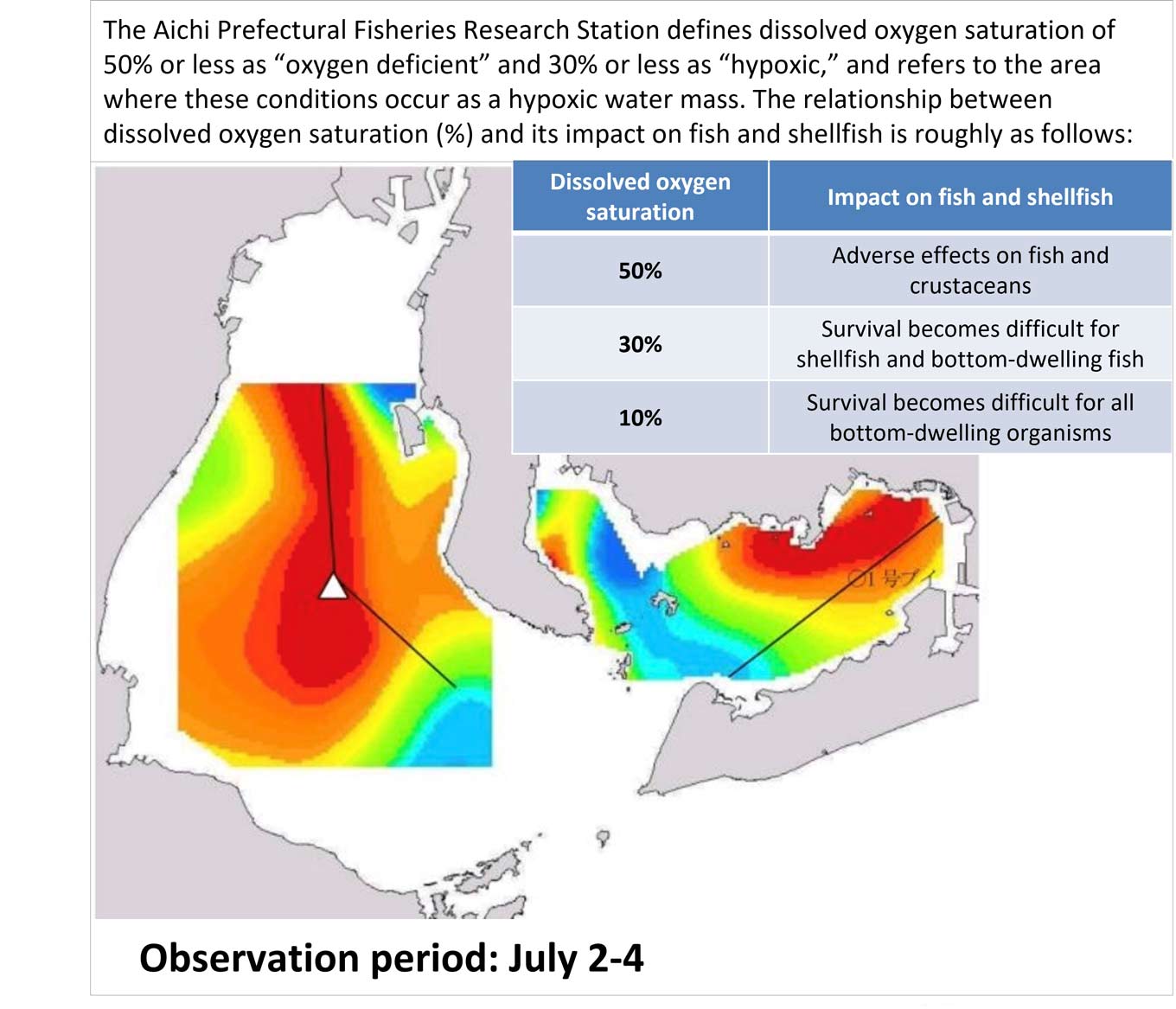
- An indicator showing the ratio of the actual amount of dissolved oxygen in the water to the maximum amount that can be dissolved at the prevailing temperature and atmospheric pressure (saturation dissolved oxygen level)
Journal: Is climate change also a factor in the formation of hypoxic water masses?
Kakehi: It is said to be a major factor. In recent years, localized torrential rains and floods have been increasing in various regions. When heavy rain falls, sediment, inorganic nutrients,* organic matter, and other substances flow from rivers into the ocean. The organic matter that flows into the ocean is broken down by bacteria, and oxygen is consumed during this process. The more organic matter there is, the greater the oxygen consumption, creating conditions conducive to the formation of hypoxic water masses.
- Inorganic nutrients: Key elements, primarily nitrogen and phosphorus, that organisms need for their life processes. They are found in industrial and residential wastewater, as well as runoff from farmland, and when discharged in excess into aquatic environments, they can cause serious environmental damage including red tides and blue tides.
Journal: Does the rise in temperature due to global warming also have an impact?
Kakehi: Yes. Normally, as the sea surface cools in winter, the water becomes heavier, causing vertical mixing that replenishes oxygen near the seafloor. You can think of it as a natural “reset.” If winter cooling weakens as a result of climate change, however, this mixing may not occur sufficiently. As a result, oxygen concentrations near the seafloor remain somewhat low as spring arrives, and stratification begins again in the summer. As this process repeats year after year, the problem of oxygen depletion could become even more severe.
Red tides are a sign of worsening oxygen depletion, blue tides signal no oxygen
Journal: What are “red tides,” and what is their relation to hypoxic water masses?
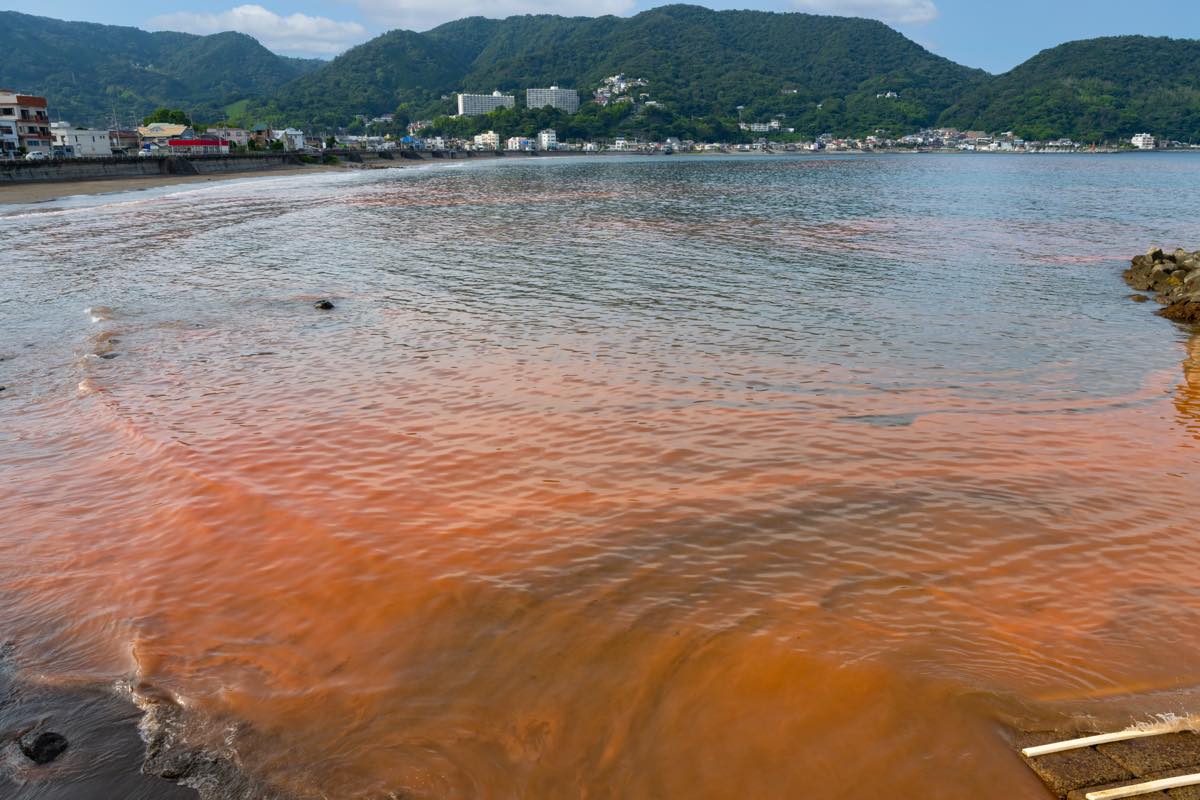
Kakehi: Basically, a red tide occurs when phytoplankton proliferate in large numbers, causing the seawater to appear red or brown. A red tide itself does not directly create hypoxic water masses. However, phytoplankton are living organisms. When they proliferate in large numbers, they perform photosynthesis during the day but consume large amounts of oxygen at night, which can cause oxygen concentrations to drop locally. What happens after the red tide ends is even more important. When the large number of phytoplankton die, they sink to the seafloor as organic matter, and oxygen is consumed as bacteria break them down. As a result, hypoxia progresses near the seafloor. In other words, red tides can indirectly contribute to the intensification of hypoxia.
Journal: Next, what are “blue tides,” and what is their relation to hypoxic water masses?
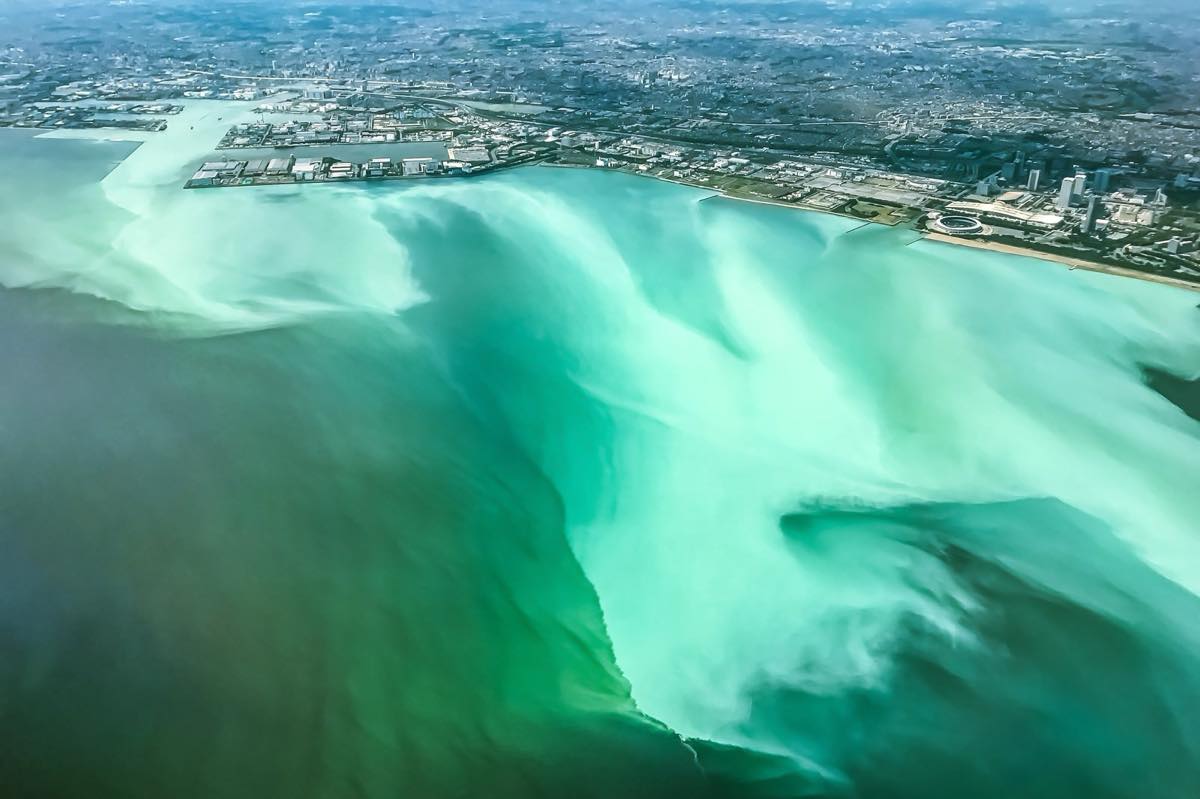
Kakehi: Blue tides are associated with “anoxic water masses,” which is when oxygen is further depleted to the point of there being almost zero oxygen. When the ocean becomes anoxic, “anaerobic bacteria,”* which do not use oxygen, become active and produce sulfides in the process. When this anoxic water containing sulfides is brought near the sea surface by wind, it reacts with the oxygen near the surface. This creates fine sulfur particles, which appear bluish-white, creating what is known as a blue tide.
- Anaerobic bacteria: Bacteria that cannot grow, or have difficulty growing, in environments where oxygen is present. They inhabit oxygen-poor environments including soil, the seafloor, and the bodies of animals, and use “anaerobic respiration” and other processes that do not use oxygen to obtain energy.
Impact of hypoxia on fishery industries and aspects as a natural phenomenon
Journal: What is the effect on aquaculture and marine products industries when oxygen in the ocean becomes depleted?
Kakehi: We’re already seeing the effects in various regions. Especially during the summer, we hear from fishermen who say, “Even when we haul in our nets, there’s hardly anything in them.” Organisms living near the seafloor are in a serious situation. Crustaceans like shrimp and crabs are prone to weakening when oxygen levels drop, and species like tiger prawn, which live near the seafloor, are particularly hard hit.
On the other hand, fish can swim and move to some extent, so when oxygen becomes scarce, they can escape to areas with better conditions. However, clams and other shellfish can barely move. Because they have nowhere to escape to, prolonged low-oxygen conditions can adversely affect their growth or lead to mass mortality.
Journal: Has the occurrence of hypoxic water masses changed over time?
Kakehi: During the period of rapid economic growth in the 1970s, water pollution was severe. That was an era when river water containing high levels of inorganic nutrients and organic matter flowed directly into the sea. Seawater eutrophication progressed, causing problems including red tides and foul odors, and hypoxia occurred more frequently than it does today. Since then, with the implementation of wastewater discharge regulations and improvements in sewage treatment infrastructure, water quality has improved significantly. Compared with the 1970s, measures to reduce hypoxic water masses have advanced and their occurrence has been considerably curbed.
It is impossible to completely eliminate hypoxic water masses, however. The ocean is not a space isolated from the outside like an aquarium; it is connected to rivers and the open sea. When nutrients flow in from outside, plankton populations increase. As this increased plankton sinks and decomposes, oxygen is consumed. This is also part of the natural cycle. In other words, while human-caused pollution has decreased, hypoxic water masses themselves are a phenomenon that can occur as part of natural processes.
Hypoxia is not necessarily bad – the important thing is to restore the ocean’s balance
Journal: What measures are being taken to reduce hypoxic water masses?
Kakehi: First, we need to reduce the amount of organic matter flowing into the ocean. Efforts are underway to improve wastewater treatment and reduce the amount of pollution entering the ocean from rivers. In addition, there are initiatives to remove organic matter already settled on the seafloor, as well as a method called “sand capping” or “sediment capping,” in which seafloor areas where sludge has accumulated are covered with clean sand. This is expected to help curb oxygen consumption by reducing direct contact between the seafloor sediment and seawater.
These measures require significant costs and effort, however, and their effects may not be long-lasting, meaning that ongoing efforts are necessary. For example, local governments along the Seto Inland Sea coast are taking the lead in implementing these measures. There are also regions where fishers are cooperating and engaged in ongoing on-site efforts.
Journal: What effect will there be if hypoxic water masses become a long-term phenomenon going forward?
Kakehi: It’s difficult to generalize, but it is not necessarily all bad. Of course, if they become too large or persist for a long time, they will have a serious impact on fisheries and ecosystems. However, if they occur only during a limited period in the summer and have little impact on fisheries or aquaculture during that time, they may not pose a major problem. During the hypoxia process, organic matter in the ocean decomposes and is converted into nutrients including nitrogen and phosphorus. In other words, while oxygen is consumed, there is also an aspect where nutrients are replenished within the ocean. In recent years, measures to reduce the amount of organic matter flowing into the ocean have progressed, which has, conversely, led to a shortage of nutrients in the ocean in some respects.
Journal: Is it possible to predict the occurrence of “hypoxic water masses” in advance?
Kakehi: Thanks to advances in research, we now have a fairly good understanding of the conditions under which hypoxia is likely to occur. Installing sensors in the water to measure water temperature and dissolved oxygen levels in real time is also becoming more widespread. This makes it possible to mitigate damage by relocating aquaculture cages before oxygen levels drop. I believe the key is not to view hypoxic water masses as uniformly harmful, but to address them appropriately depending on the situation.
Journal: What is your vision for the realization of a sustainable Japanese ocean in the future?
Kakehi: In the 1970s, the problem was the massive influx of inorganic nutrients and organic matter into the ocean. Today, however, a shortage of nutrients like nitrogen and phosphorus is actually causing issues including the discoloration of nori seaweed and a decline in small fish like sand eels. When the populations of small fish decline, the fish that feed on them also become fewer, leading to a drop in catch volumes.
Efforts have therefore been underway in recent years to manage the marine environment to ensure that nutrients reach the areas where they are needed, while being vigilant against red tide outbreaks. There is a Chinese proverb that says, “Water that is too clear has few fish,” and it is not necessarily appropriate to pursue the purification of seawater as an end in itself. Rather than a simple choice between reducing or increasing organic matter in seawater, I believe that achieving balance by considering the ocean as a whole is the path to a sustainable ocean.
What we can do as individuals to protect the ocean and our food supply for the future
Mr. Kakehi shared three pieces of advice on what society as a whole and each of us individually can do to protect the ocean and our food supply for the future.
1. Experience nature and cultivate a desire to protect it
It’s important to visit not only the ocean but also rivers and mountains to experience their vastness, beauty, and sometimes even their awe-inspiring power, and to truly feel nature. Through these firsthand experiences, the feeling that “I want this scenery to continue into the future” leads to a greater awareness of the need to protect nature.
2. Reduce marine debris by reconsidering your daily habits
“Don’t litter” goes without saying, but also try to reduce your use of plastic as much as possible. The problem of microplastics, in particular, is becoming increasingly serious, so start by learning about marine debris and microplastics, and then make an effort to reduce them in your daily life.
3. Be Mindful That the Accumulation of Everyday Actions “Protects the Environment of the Future”
More than going out of your way to do something large-scale, it’s important to be aware that the carbon dioxide you emit in your daily life might be affecting the climate. Small daily habits like walking or bicycling instead of driving a car for “just a quick trip” add up to protect the environment of the future.
This interview grew from our discovery of the phenomenon of oxygen depletion in the ocean. After further research, we became determined to gain a better understanding of hypoxic water masses, which are said to affect fisheries and our food supply. We learned that oxygen concentrations in the ocean fluctuate depending on the season and climatic conditions, and that nutrient depletion is a problem in certain areas. Even though Japan is surrounded by the ocean, we realized there is still much that we don’t know.
Even for those of us who don’t have opportunities to visit the ocean, there are opportunities to experience its richness by seeing various marine creatures at aquariums or by enjoying delicious sushi. At those times, please take a moment to think about the ocean, for the sake of ensuring that fish continue to thrive and that we can continue to enjoy delicious fish in the future.
Related Themes
Related Link
Related Articles
From Streets to the Sea: How The Nippon Foundation Turns Cleanup into a National Movement
Field Notes