From Streets to the Sea: How The Nippon Foundation Turns Cleanup into a National MovementAddressing ocean debris through upstream civic engagement and regional scientific collaboration
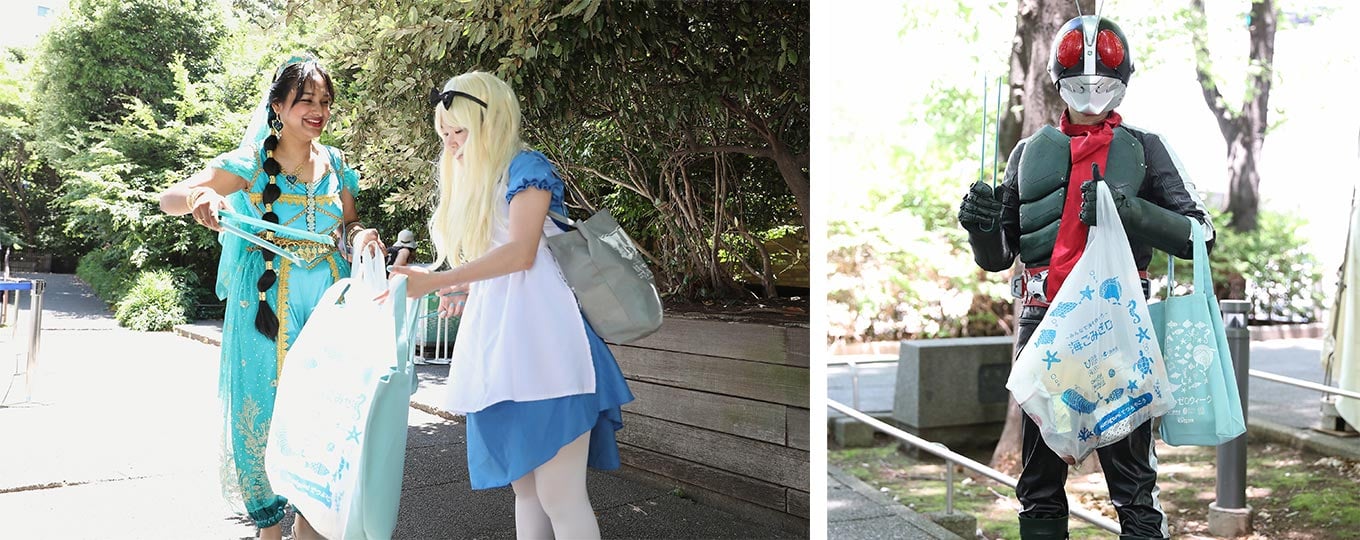
On a warm Saturday morning in Tokyo’s Ikebukuro district, superheroes, anime characters, and fantasy warriors gather. Many wear wigs and elaborate costumes, or carry oversized props. But instead of posing for photographs for enthralled onlookers who have gathered to see the spectacle, they reach for litter pickers and rubbish bags.
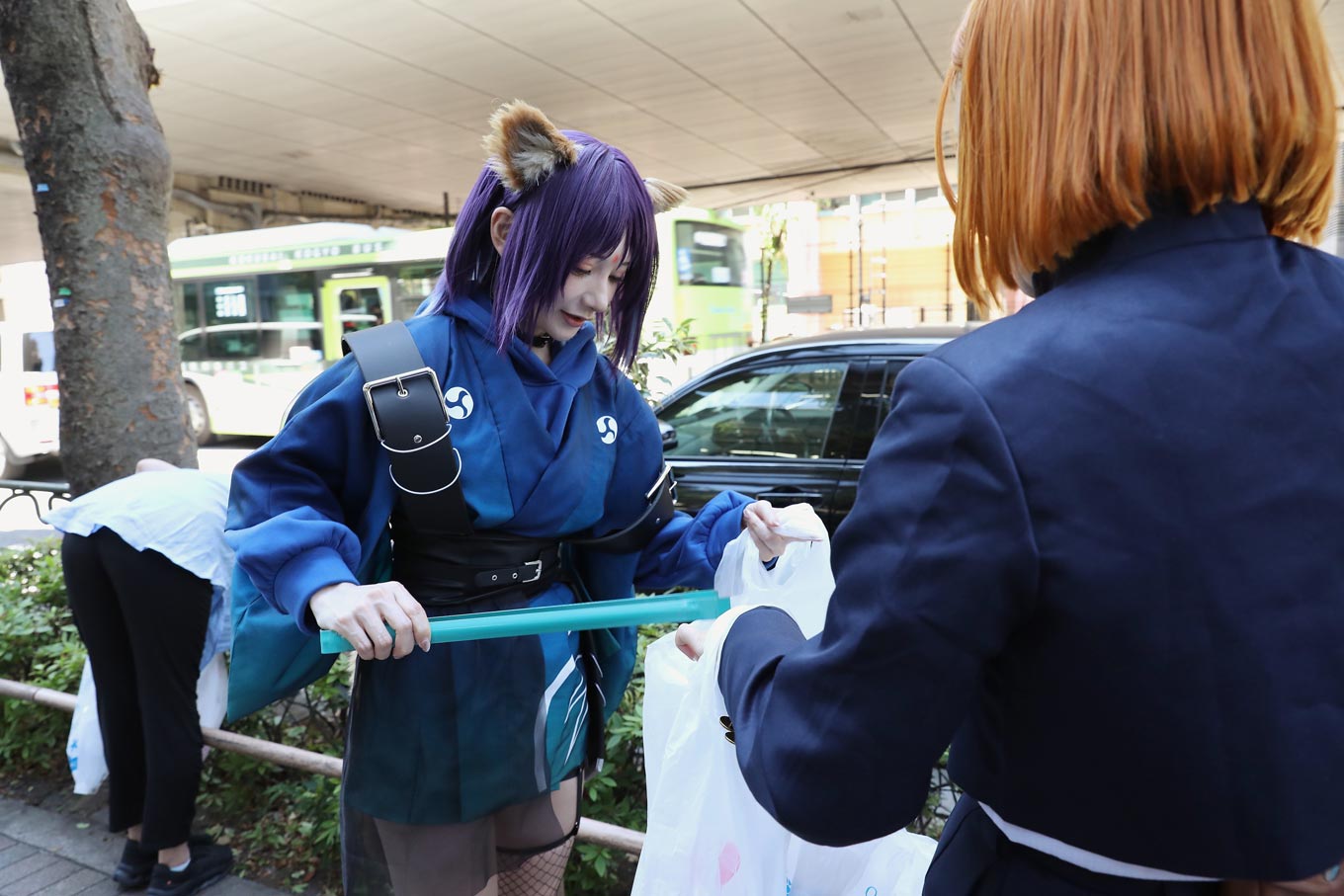
For the next hour, the cosplayers fill the surrounding streets, collecting cigarette butts from pavements, plastic wrappers, and discarded drink bottles hidden in bushes before returning to the event venue for speeches, photographs, and the official launch of the annual UMIGOMI Zero Week (umi is the Japanese word for ocean, gomi is litter or debris).
At first glance, Tokyo’s cosplay community seems an unlikely ally in the fight against ocean pollution. But, year after year, they have helped turn this community cleanup into a colorful public event. The Nippon Foundation deliberately taps into communities with a strong social media presence and a culture of participation to reach audiences that traditional environmental campaigns may miss.
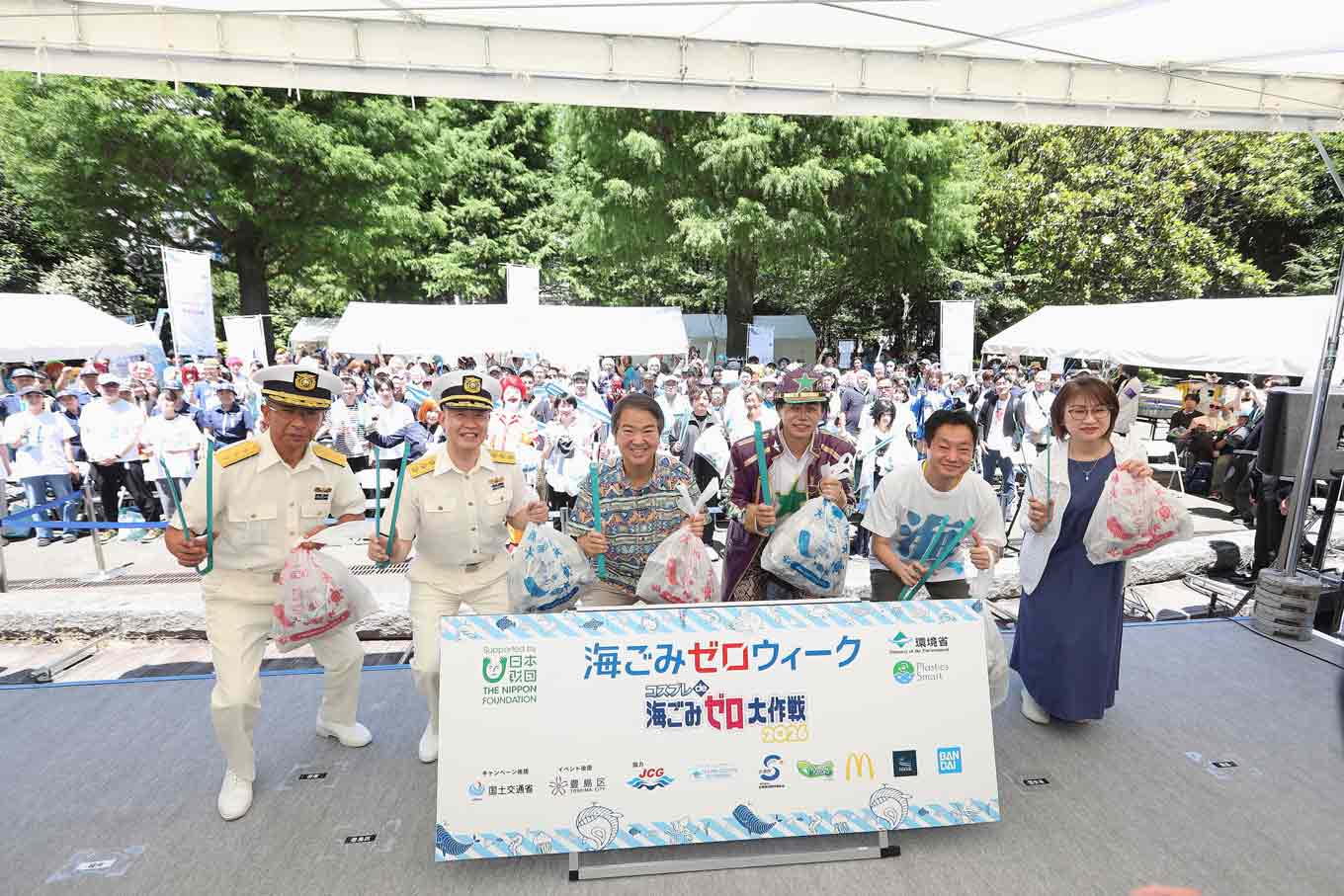
Holding an ocean debris campaign in the middle of one of Tokyo’s busiest shopping and entertainment districts is intentional, too. According to the Foundation, around 80% of these materials originate on land, not at sea. A bottle discarded on a city street may be carried by rain into roadside drains, swept into rivers and eventually deposited on a distant coastline. The message is that protecting the ocean begins far from the shoreline.
That philosophy underpins The Nippon Foundation’s two-pronged approach to tackling ocean waste. Alongside nationwide public engagement campaigns like UMIGOMI Zero Week, it is leading Setouchi Oceans X. This regional initiative brings together four prefectures to tackle ocean debris through scientific research, technology, and policy development. Together, the projects demonstrate that solving marine pollution requires both changing human behavior and redesigning the systems through which waste moves.
Looking upstream
Plastic ocean debris has become one of the defining environmental challenges of the 21st century. Some projections suggest that if current trends continue, by 2050 there could be more plastic than fish in the world’s oceans by weight. But once debris reaches the sea, recovering it becomes far more difficult and expensive than tackling it on land. The Nippon Foundation therefore believes the focus needs to shift upstream.
Rather than viewing ocean debris as purely an ocean issue, Setouchi Oceans X, a project launched jointly by The Nippon Foundation and four prefectures bordering the Seto Inland Sea, prioritizes tackling the sources of waste that reach the sea in the first place. In addition to deliberate littering, ocean debris is also generated when waste unintentionally leaks from collection, storage, or transport systems, allowing it to enter the natural environment.
Between 2020 and 2021, the Foundation conducted one of Japan’s largest river debris surveys across the prefectures of Okayama, Hiroshima, Kagawa, and Ehime. Covering more than 1,188 kilometers of rivers and waterways, the survey identified 1,711 litter hotspots and estimated that around 200 tons of plastic flow into the Seto Inland Sea every year.
To communicate that journey to the public, the Foundation reimagined the traditional Japanese folktale Momotaro. Instead of a peach floating downstream, its modern version of the story depicts everyday litter travelling through rivers before reaching the sea, illustrating how seemingly insignificant waste can contribute to a much larger environmental problem.
A regional solution
The geography of the Seto Inland Sea provides an opportunity to rethink how ocean debris is managed. As a semi-enclosed body of water with relatively little waste entering from the open ocean, most of its ocean debris is generated from within its surrounding communities. The sea’s shallow waters also make it possible to study debris from inland rivers to the seabed, creating an ideal testing ground for new approaches.
However, Masaya Komino of The Nippon Foundation’s Ocean Affairs Division explains that ocean debris ignores administrative boundaries. Waste carried by tides can drift from one prefecture to another within days, making isolated local efforts far less effective. The solution was Setouchi Oceans X, a collaboration among Okayama, Hiroshima, Kagawa, and Ehime that combines scientific research, regional partnerships, public awareness, and policy development.
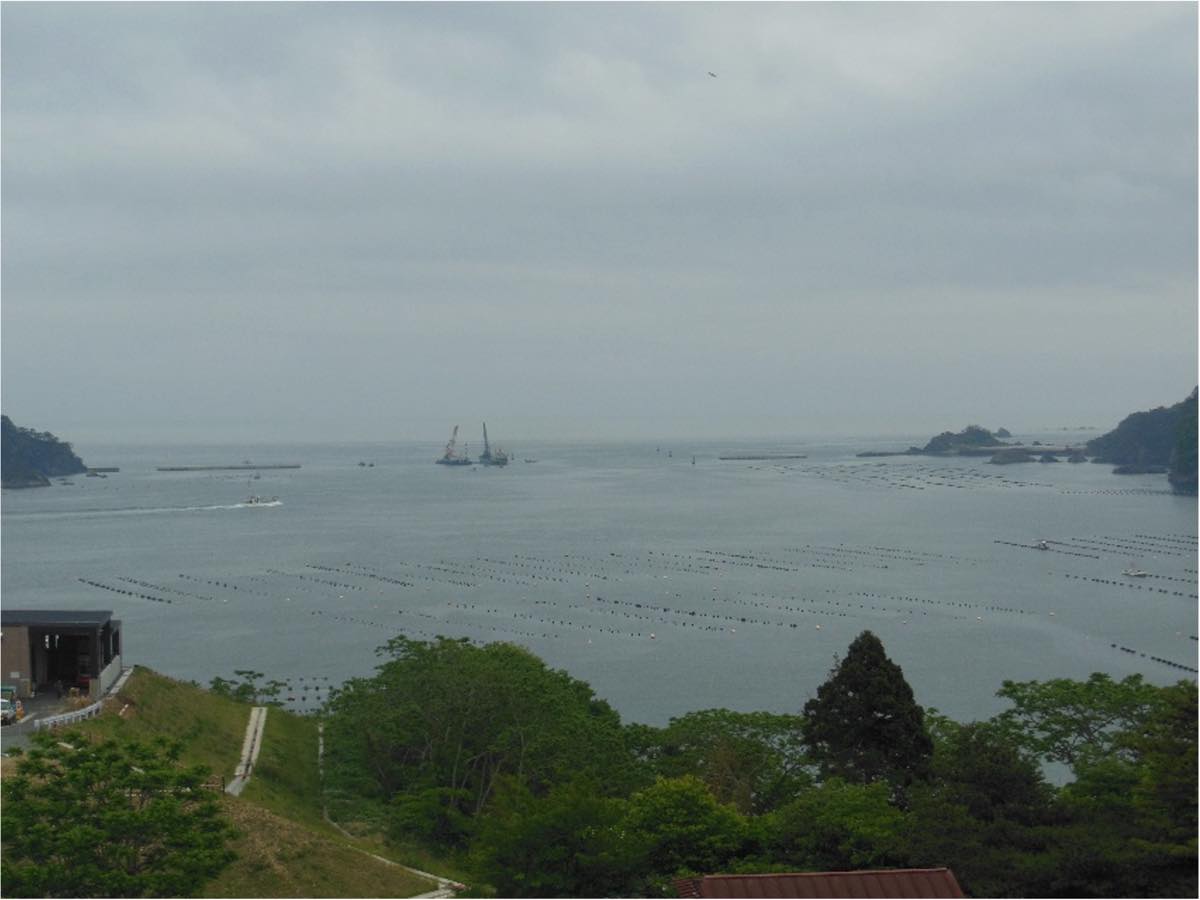
The initiative has revealed that while the prefectures share a coastline, they face very different challenges. Hiroshima contends with plastic waste generated by its oyster farming industry. Kagawa must clean debris accumulating on the shores of its many remote islands. Ehime faces the coastlines, where years of plastic waste have become buried beneath layers of sediment, while Okayama focuses heavily on river systems and urban waterways. The Nippon Foundation works with each prefecture to address its specific circumstances while encouraging collaboration across the region.
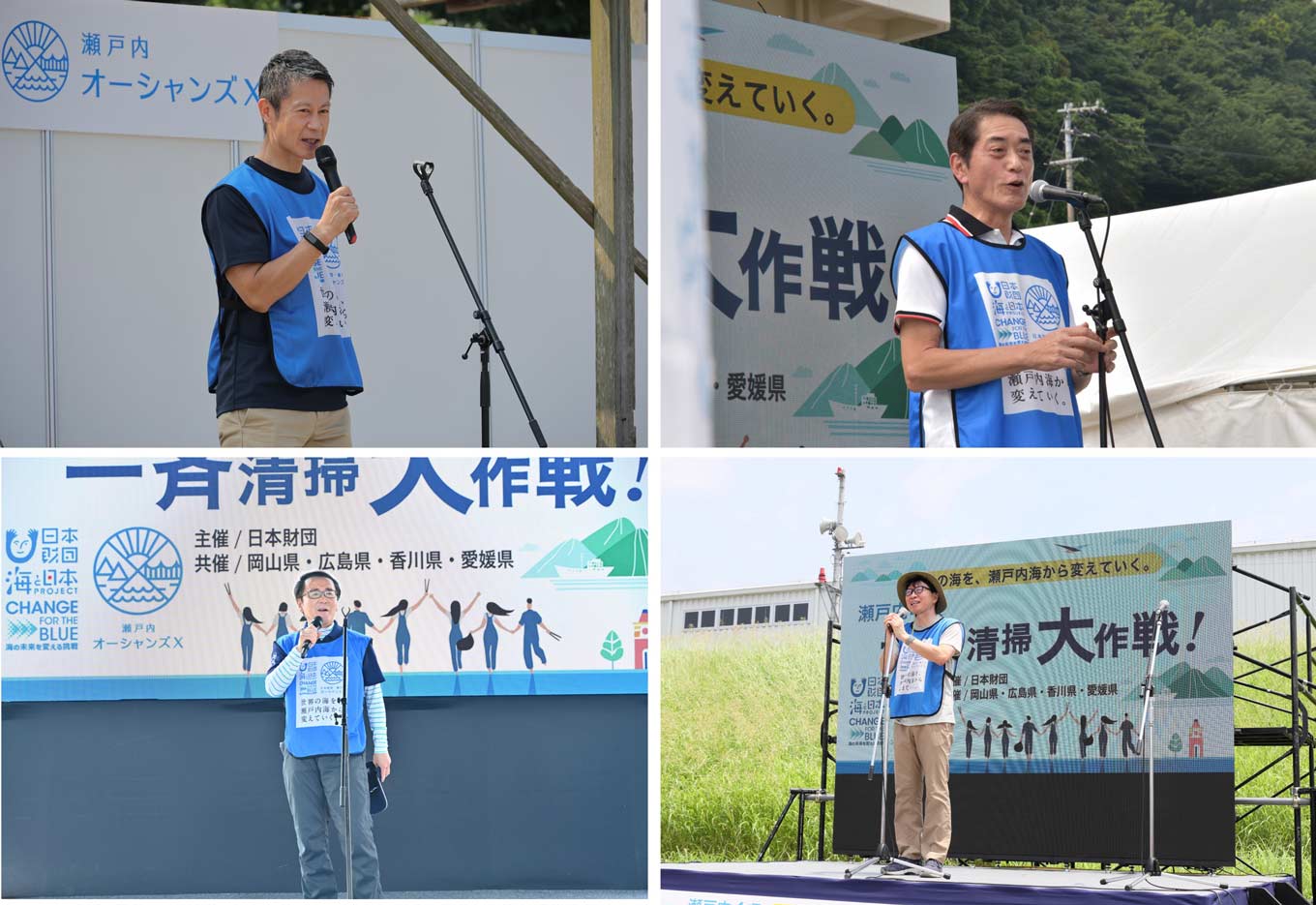
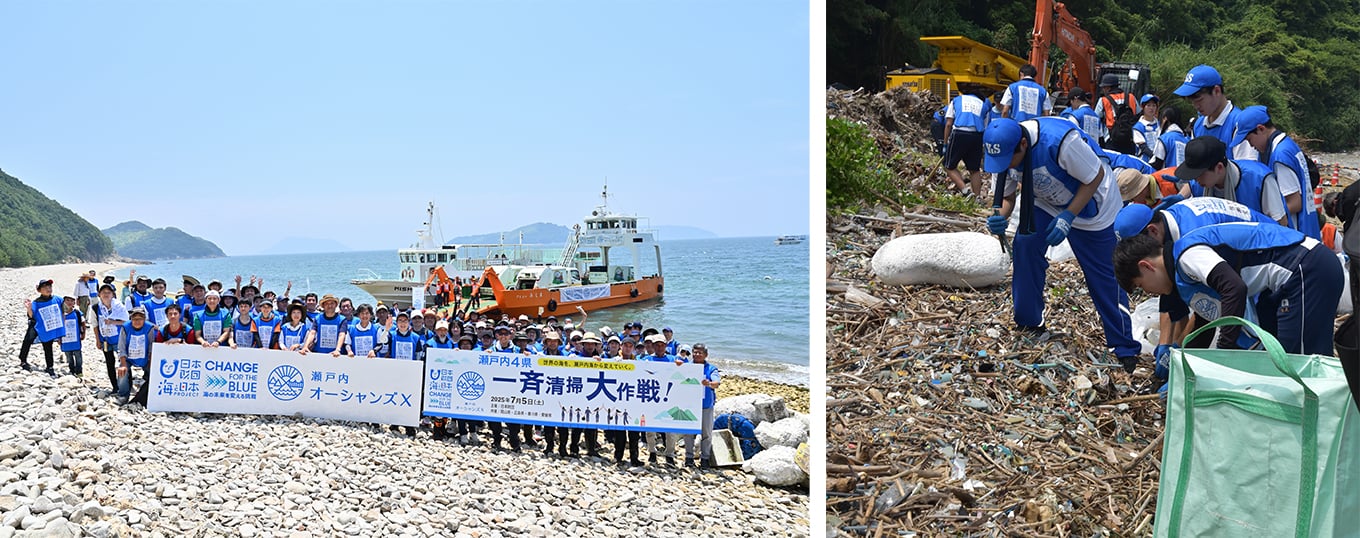
That cooperation was demonstrated in July 2025, when all four prefectural governors joined simultaneous cleanup operations involving nearly 1,000 participants, with livestreams linking the four locations into a single coordinated event. Together they collected approximately 26 tons of debris in a single day.
Beyond the amount of debris collected, Sakura Ono of The Nippon Foundation’s Ocean Affairs Division said the event demonstrated the value of regional cooperation, with participants seeing the power of community as all four prefectures tackled the issue in unison.
When volunteers aren’t enough
However, not all ocean debris can be collected with gloves and rubbish bags. Many of the Seto Inland Sea’s islands and peninsulas have coastlines that are inaccessible by road, where plastic has accumulated for years. Removing it requires a more sophisticated approach.
Instead of developing bespoke equipment, the Foundation adapted existing technology. Landing craft originally designed to transport emergency supplies after natural disasters now ferry personnel, excavators, and industrial screening machines directly onto beaches unreachable by conventional vessels. Screening machines normally used to separate industrial waste have been repurposed to sift plastic from sand, soil, and organic debris, while excavators remove deeply embedded debris that would be impossible to clear by hand.
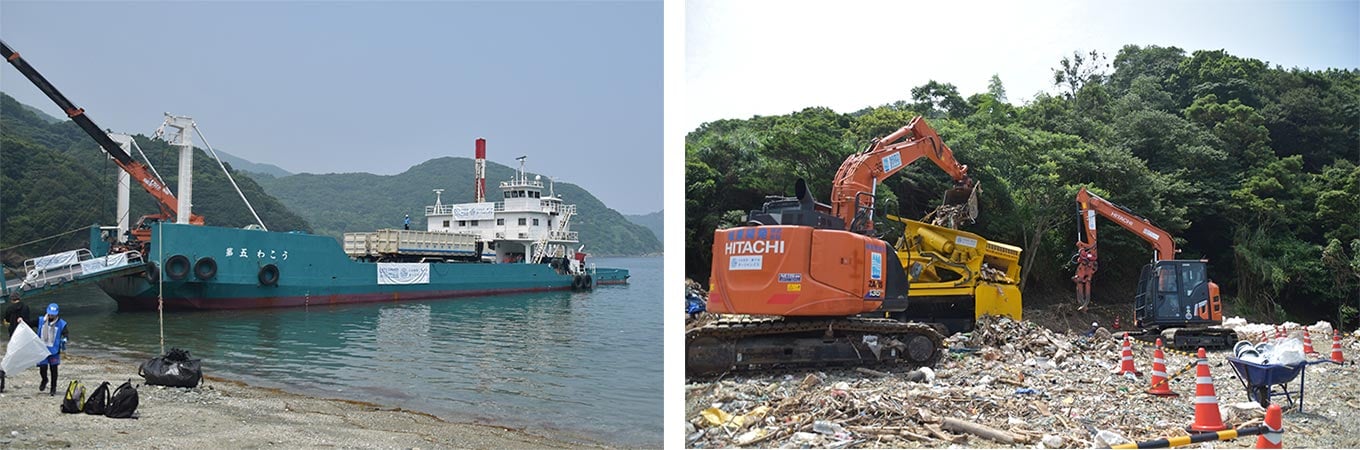
Studies of the region have informed the use of this equipment, with computer simulations of tidal currents having identified areas where ocean debris naturally accumulates. This allows cleanup operations to target the locations that will have the greatest impact.
Turning cleanup into culture
While Setouchi Oceans X represents the project’s “hard” approach of engineering and policy, UMIGOMI Zero Week represents its “soft”, social one. The event, held annually across Japan, encourages citizens to participate in cleanup activities before waste reaches rivers and coastlines. Last year alone, more than 260,000 people took part across approximately 1,000 locations.
The flagship Ikebukuro cosplay event demonstrates how environmental action can be embedded within existing communities rather than asking people to join entirely new ones. By combining litter picking with cosplay gatherings and social media sharing, the campaign reaches younger audiences who may not otherwise engage with environmental initiatives. One participant, dressed as Princess Jasmine, said the event had changed her understanding of marine pollution. “I never really thought about how rubbish on a city street could end up in the ocean. It’s all connected.”
Participants also recognised the visibility that cosplay brings to the campaign. A cosplayer dressed as Masked Rider explained: “Because cosplayers stand out in the street, people notice us picking up litter. It’s a good way to encourage awareness.” The cleanup itself also challenged assumptions about urban waste. “Most of the rubbish we found wasn’t out in the open,” he added. “It was hidden in bushes.”
The path forward
Despite its achievements, The Nippon Foundation acknowledges that cleanup alone cannot solve the ocean debris crisis. Machinery can remove existing waste, while scientific research identifies where interventions will be most effective. But neither is enough without sustained public participation. Likewise, awareness campaigns have limited impact unless governments, businesses, and communities also invest in systems that prevent waste entering rivers in the first place.
Perhaps the project’s greatest challenge lies beyond 2028, when the current phase of Setouchi Oceans X is scheduled to conclude. The Foundation’s ambition is not only to meet its target of recovering 86 tons of waste annually, but to leave behind a model that local governments and communities can continue independently. “Everything we do is to raise awareness,” Ms. Ono observed. “That’s what will keep this going.”
The ultimate goal is broader than reducing litter in a single sea. By combining scientific evidence, regional cooperation, practical technology and citizen participation, The Nippon Foundation hopes the model developed in the Seto Inland Sea can inform ocean debris strategies elsewhere. With most ocean pollution originating on land, the path to cleaner oceans may start not on a beach but on an ordinary city street, where someone decides to pick up a discarded plastic bottle before it reaches the nearest drain.
Related Links
- Cosplay de UMIGOMI Zero Challenge! (June 19, 2026)
- The Nippon Foundation’s Setouchi Oceans X Project Wins 2025 NIKKEI Blue Ocean Award (December 19, 2025)
- 4 Neighboring Prefectural Governors Join 1,000-Person Seto Inland Sea Cleanup Event (July 7, 2025)
- The Future of Our Ocean
- Setouchi Oceans X project website (in Japanese)
Related Themes
Related Articles
From Streets to the Sea: How The Nippon Foundation Turns Cleanup into a National Movement
Field Notes