‘Instant House’ Transforms Life in Evacuation SheltersFast, affordable structure proves effectiveness during Noto Peninsula earthquake
Key Points
- Life in evacuation shelters is harsh. Disaster-related deaths* due to injuries or deteriorating health during evacuation remain an ongoing problem.
- “Instant houses,” simple housing units designed to improve living conditions during disasters, have been developed as one solution to this challenge, proving effective in the Noto Peninsula earthquake.
- Preparing for disasters and building ties with our local communities during everyday life helps foster smooth cooperation even in the challenging environment of an evacuation shelter.
- Disaster-related deaths refer to fatalities caused by injuries from disasters or worsening health conditions during evacuation life.
Japan is one of the world’s most disaster-prone countries. When disasters strike, causing houses to collapse and lifelines to be cut, people typically take shelter in evacuation centers. However, the living conditions in evacuation shelters are often far from adequate. Severe cold in winter, extreme heat in summer, and crowded sleeping conditions are common. Other problems include poor sanitary conditions and a lack of personal privacy.
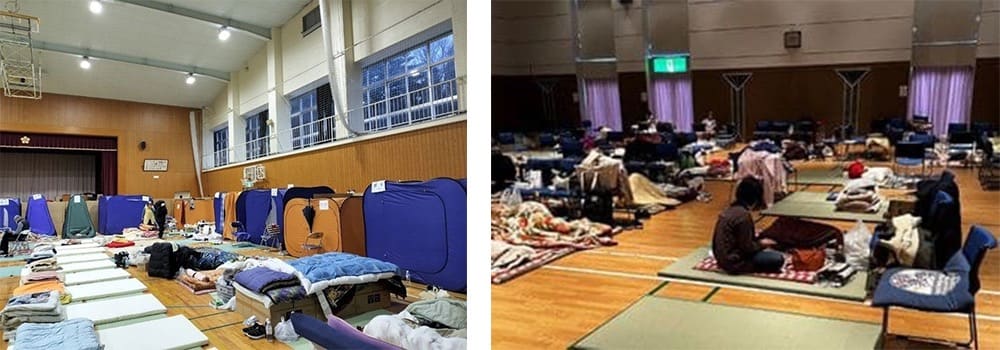
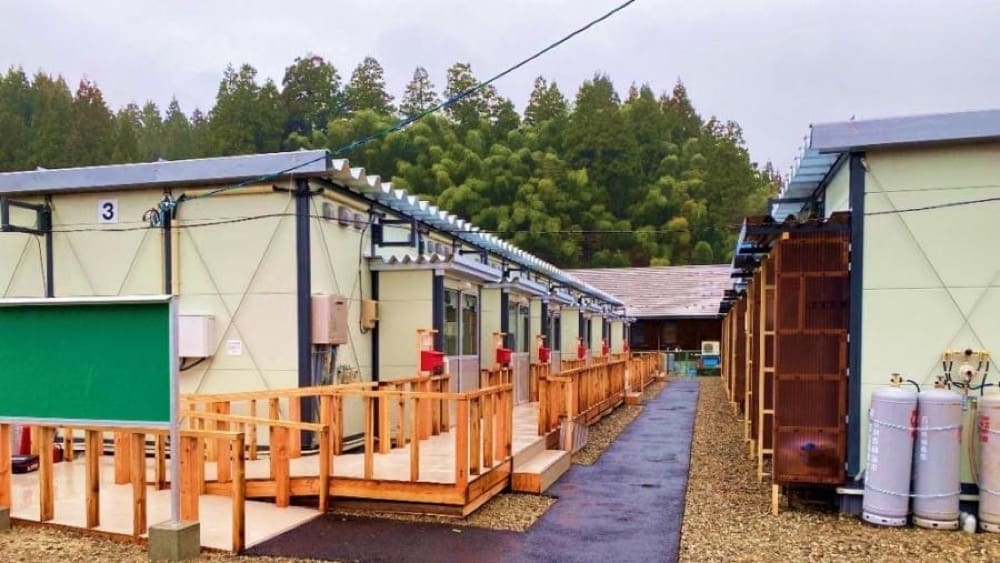
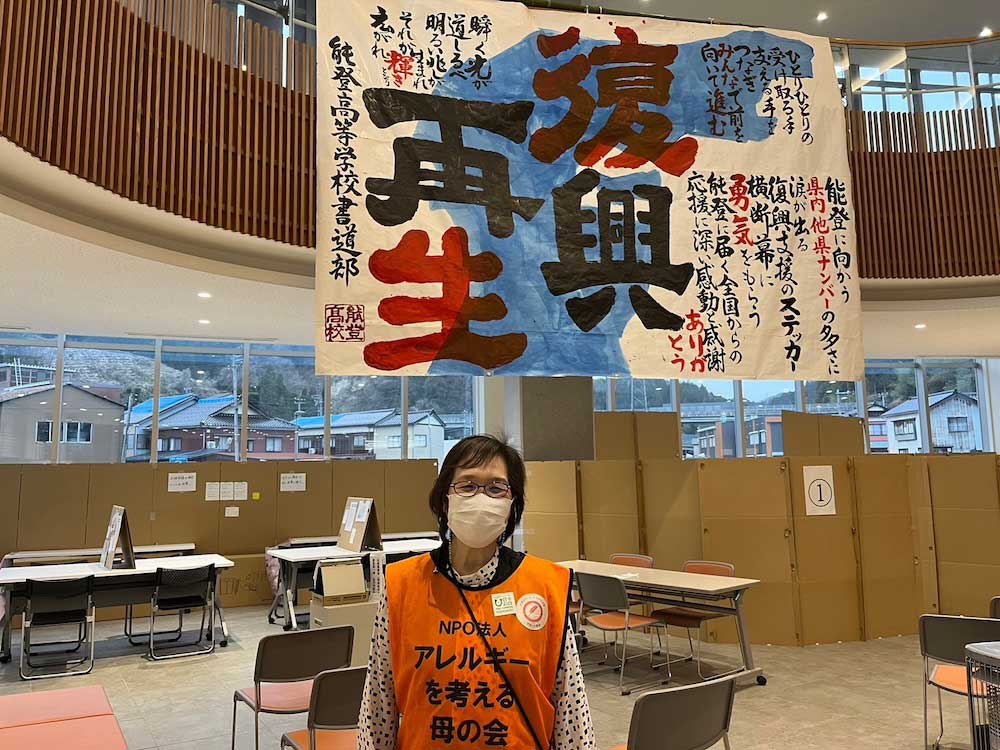
In fact, 112 of the 341 deaths from the Noto Peninsula earthquake, which occurred in January 2024, were classified as “disaster-related” (as of August 9, 2024). Even nearly six months after the earthquake, more than 2,000 people are still living in evacuation shelters, exposed to these risks.
However, new solutions have been developed to address these harsh conditions and enhance the quality of life for people taking refuge in evacuation shelters. One innovation is the “instant house,” created by professor Keisuke Kitagawa of the Nagoya Institute of Technology.
Instant houses can be built quickly and at low cost. As air layers are incorporated into their design, they offer excellent insulation, helping create comfortable living conditions for evacuees. They also provide privacy and a sense of security, and are increasingly being used as alternatives to temporary housing.
We spoke with Professor Kitagawa about the design features of these instant houses, the story behind their development, and the challenges faced at evacuation shelters in Japan.

Spurred by a child’s comment: “If you’re a professor, why can’t you build it by next week?”
The Nippon Foundation Journal Editing Department: Could you start by explaining the features of instant houses?
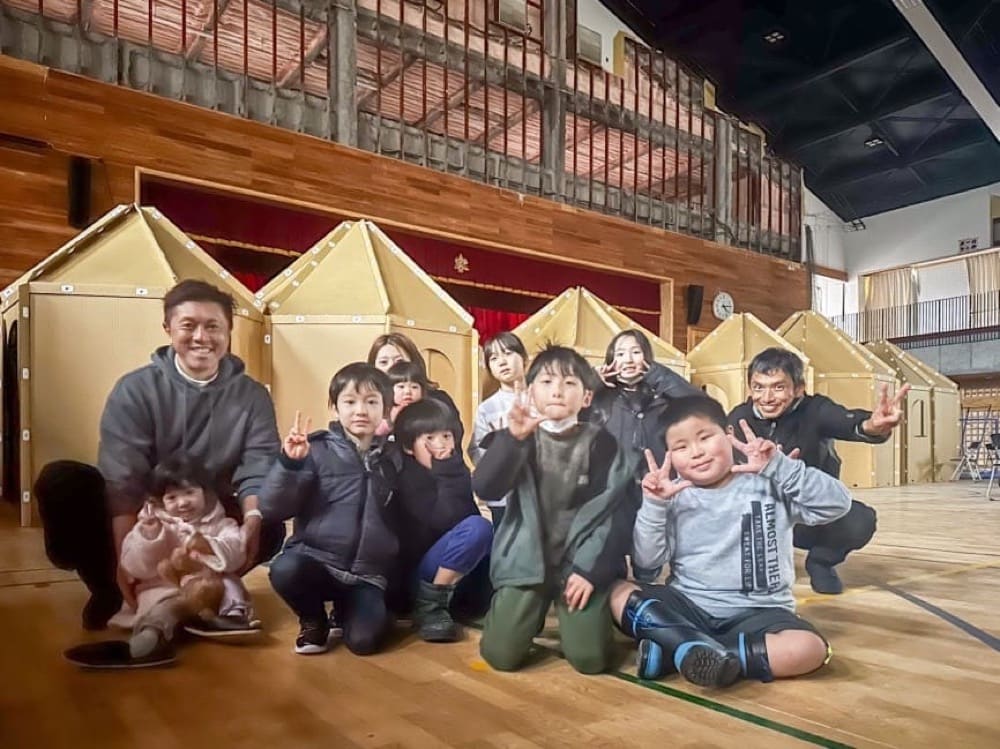
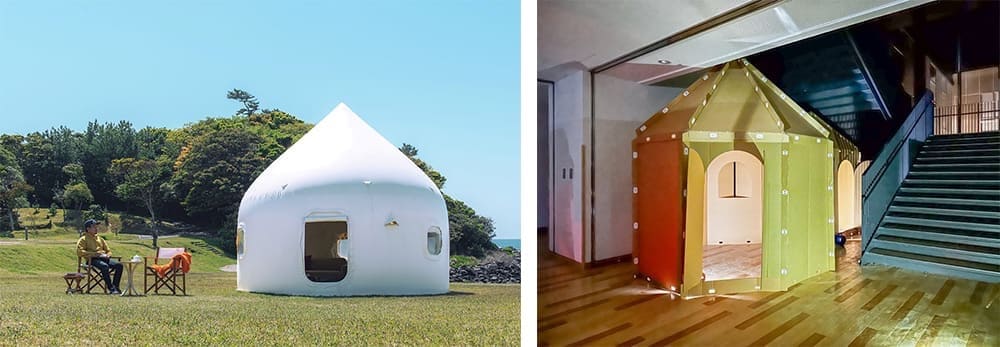
Keisuke Kitagawa: Instant houses are a type of simple housing that can be built quickly and inexpensively. There are two types: an outdoor version covered with sheet membrane materials used in warehouse tents* and other applications, and an indoor version made of cardboard. Both designs incorporate air pockets, giving them excellent insulation and making them less susceptible to outside temperatures. This provides evacuees with a more comfortable living environment.
- Warehouse tents refer to a structure made by assembling lightweight steel frames and covering them with membrane sheets.
Journal: How is each type assembled, and what are the associated costs?
Kitagawa: The outdoor type is inflated by pumping air into the membrane material using a blower, then insulation material is sprayed on to the exterior to complete the structure. Construction can be completed in about one to two hours by a single worker. The cost of producing one unit is approximately 200,000 yen.
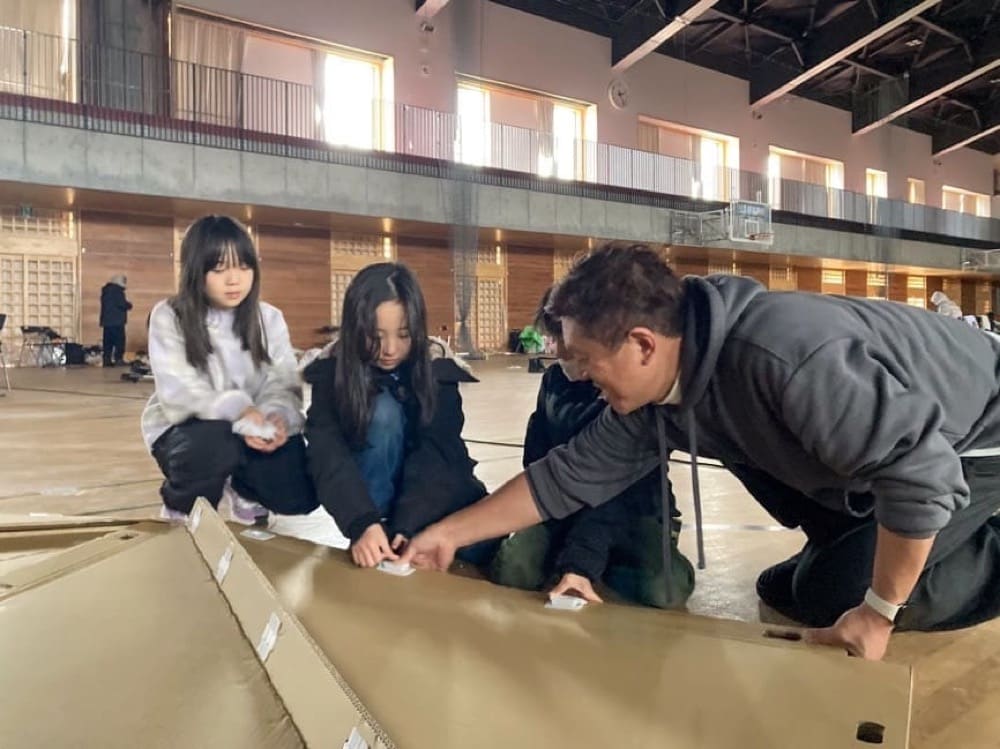
The indoor version of the instant house is constructed from cardboard, and consists of wall and roof sections that are assembled and secured using dedicated fixtures. Each unit costs around 10,000 yen to produce, and the design is simple enough that once accustomed to the process, even a child can assemble one in around 15 minutes.
Journal: What inspired you to develop instant houses?
Kitagawa: After the Great East Japan Earthquake that struck northeastern Japan in March 2011, I visited evacuation shelters in Ishinomaki City and Sendai City in Miyagi Prefecture as an architectural expert. It was something a young boy said to me at that moment that sparked me to begin working on the project.
It was the evening of my first day in the area. After spending about an hour observing Ishinomaki Junior High School, which was serving as an evacuation shelter, a group of boys who must have been around third or fourth grade age came up to me as I was about to leave, and one asked, “Why does it take three to six months to build temporary housing? If you’re a professor, why can’t you build it by next week?”
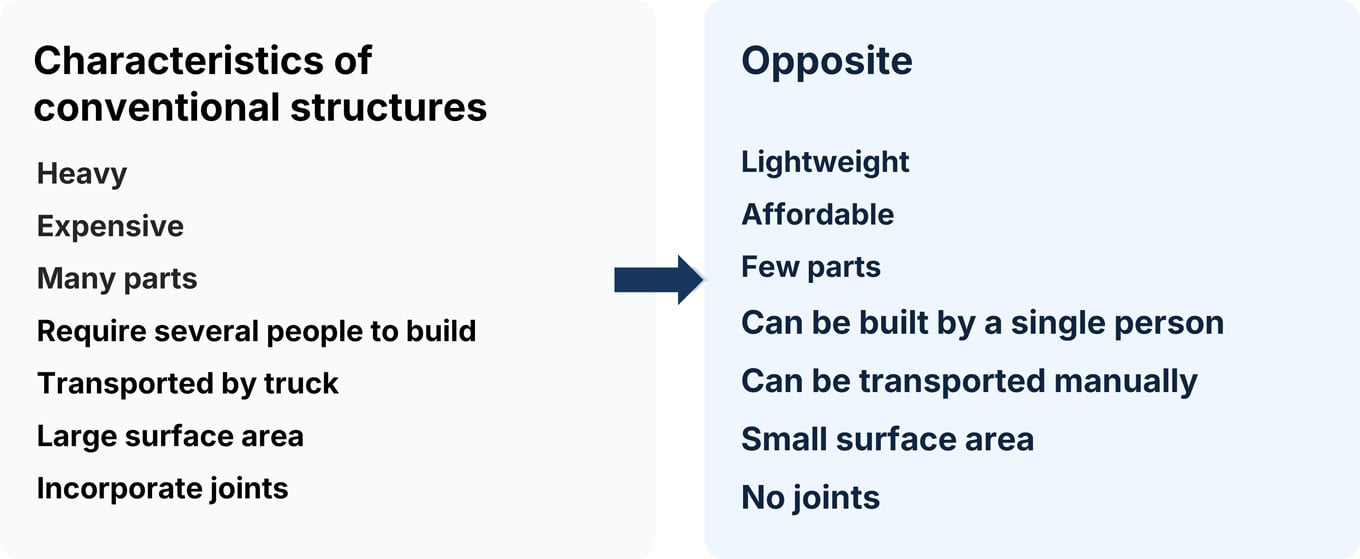
I didn’t know what to tell them. I was sad, and frustrated. As architecture was my field of specialty, I felt compelled to do something. With those feelings in mind, after five years of trial and error, I completed the design for these instant housing units.
Newspaper coverage led to 61 million yen in donations; instant houses already in use in disaster-affected area
Journal: You deployed instant houses to evacuation shelters during the Noto Peninsula earthquake. How did this come about?
Kitagawa: On the day of the earthquake, I felt strong tremors at my home in Nagoya (approximately 300 km from the Noto Peninsula). My immediate thought was, “This is going to be serious.” I packed about 10 cardboard instant houses and traveled to the disaster zone the next day.
I didn’t have any connections in the local area, so I visited evacuation shelters in Wajima City and Anamizu Town in Ishikawa Prefecture, exchanging information with people from the local community. Eventually, a city official asked me to install them at Wajima Junior High School.
All of the windows of the school gymnasium had been shattered, making the interior freezing cold, so we erected instant houses at the back of the gymnasium and on staircase landings in the main school building.
Journal: How did people respond?
Kitagawa: The houses were immediately put to use as nursing rooms, changing rooms, and diaper-changing spaces. One memory that remained with me was a 3-year-old girl who had been standing close by watching us build an instant house. When it was finished she shouted, “Our house is ready!” Her own home had collapsed, so seeing her joy in that situation was incredibly moving.
Journal: That’s both heartwarming, and at the same time heartbreaking.
Kitagawa: Yes. A newspaper reporter at the scene wrote an article about the situation, which led to an unexpected turn of events after it was published. People who read the article began donating, saying, “Please use this money to build more instant houses in the disaster zone.” People who knew me personally gave donations directly, and the Nagoya Institute of Technology also received numerous inquiries asking how they could donate.
As of June 2024, 61 million yen has been raised, and donations are still coming in. Using these funds, we shipped instant houses to disaster-affected areas, delivering approximately 1,000 indoor units and 173 outdoor units by early April.
Journal: Is there still a shortage of housing despite this?
Kitagawa: Yes. Although temporary housing is gradually being built in Ishikawa Prefecture, there is still a lack of roofed evacuation shelters. Some evacuation centers have suffered damage themselves, and people are sheltering in gymnasiums that could collapse (as of time of interview in June 2024).
Instant houses can also be used to isolate people with infectious diseases, and we have seen that they are effective in preventing the spread of infection. We hope to continue delivering more units to improve the quality of life in the affected area.
Evacuation shelters in Japan are based on the premise of “enduring hardship” — do the needs of the vulnerable need more consideration?
Journal: The harsh conditions in evacuation shelters often come into focus following disasters in Japan. What are the main problems?
Kitagawa: Generally speaking, evacuees gather in places not normally designed for living, at a time of chaos and confusion. Without clear rules in place, space at the shelter is taken arbitrarily and there is often no way to secure personal privacy, creating a situation devoid of social structure.
There are also severe shortages of food, water, and bedding. Although there is a stock of emergency supplies, this typically only lasts about three days, and if a large number of evacuees gather at the shelter some people may miss out.
Journal: So the shelters are not envisioned for long-term evacuation?
Kitagawa: That’s right. In Japan, life in evacuation shelters is based on the premise that evacuees are expected to endure hardship. The inventory of supplies is set at a bare minimum, resulting in living standards far below normal life. People ration food supplies like hardtack biscuits to make them last longer, and may even restrict their water intake.
In contrast, other developed countries often provide living conditions that exceed normal standards. In Italy, which has an advanced level of disaster-preparedness and like Japan, is prone to earthquakes, it is stipulated that chefs are to be dispatched to the disaster site within three days to provide three hot meals a day to evacuees.
Taiwan also provides extensive support. When a major offshore earthquake struck near eastern Taiwan in April 2024, aromatherapy* and massage spaces were set up in evacuation shelters the very next day. The international “standard” approach is that since evacuees have suffered loss and trauma, such as losing their homes or loved ones, evacuation centers should aim to at least provide emotional comfort.
- A form of therapy in which scents from essential oils extracted from plants are used to treat illness and injuries, prevent disease, promote physical and mental health and relaxation, and relieve stress.
Journal: Why is enduring hardship in evacuation shelters accepted as “normal” in Japan?
Kitagawa: I’m still researching the background that led Italy and Taiwan to design their approaches in this way.
However, there are a few things we can say about Japan. In general, there is a relative lack of appetite for providing generous support to vulnerable members of society using public funds. And leaving aside the issue of the vulnerable, there is a strong emphasis on fairness and equality for all citizens. I believe this mindset is reflected in how evacuation shelters are managed. This approach has both pros and cons.
Know your neighbors: building community ties makes evacuation life smoother
Journal: I feel it’s important to have easily-constructible and affordable temporary housing, like instant houses, available throughout Japan. How should local governments prepare to ensure that such housing is available?
Kitagawa: Since we began supplying instant houses to Noto, we’ve received around 200 inquiries from municipalities wanting to build up stock for use in emergencies. However, I don’t believe it’s necessary to store hundreds of units.
There are cardboard manufacturers and processing plants across Japan, and we have dies to punch the necessary parts from cardboard. We can die-cut the components for 10 units in two hours, meaning that mass production of instant houses is possible within a day or two after a disaster.
So rather than stockpiling large numbers of units for an emergency, it’s more efficient to use a few units regularly during normal times and then produce and deliver them in large numbers when needed. Using the houses in non-emergency situations also allows for a seamless transition to using them in emergencies. That would be a more ideal and efficient way to prepare.
Kitagawa: I also recommend familiarizing yourself with assembling instant houses. For example, neighborhood associations could keep a few units and the members assemble them for use during festivals. This practice would ensure they could be assembled smoothly when needed.
Journal: What can we as individuals do to ensure a smooth transition to life in an evacuation shelter after a disaster?
Kitagawa: It’s important to be aware of and prepared for a disaster scenario as part of everyday life. In addition to knowing which evacuation shelter to head for in the event of a disaster, it’s helpful to be aware of who else will be there — in other words, to know your community.
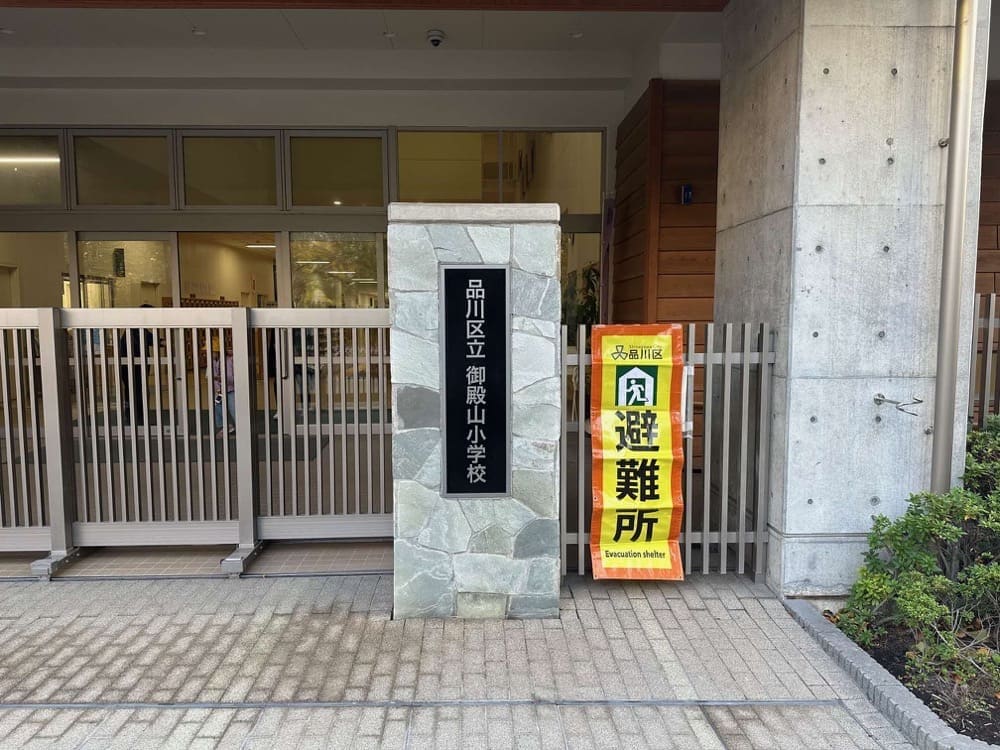
Kitagawa: When I toured evacuation shelters after the Great East Japan Earthquake, I visited Ishinomaki Community Center, where around 40 people were sheltering in a meeting room. I noticed that they were actively helping each other and everything was running smoothly. The community members had agreed in advance to evacuate there in the event of an earthquake, and knew each other through regular disaster drills run by the neighborhood association.
At night, they laid out futons together in a rather cramped space of just 60 square meters, but spent their time together in a surprisingly positive atmosphere.
This illustrated that they had built trust through their regular community activities beforehand. These close relationships naturally create a supportive environment, even in an evacuation shelter following a disaster.
Editor’s Note
Professor Kitagawa shared a positive case study from Ishinomaki Community Center, and also noted that after the Noto Peninsula earthquake, the people affected by the disaster demonstrated strong community spirit, selflessly supporting one another and ensuring a calm and smooth response. This likely reflects the strong relationships they had built through their regular interactions prior to the disaster.
On the other hand, imagining a major disaster striking each of our communities, where many people do not know their neighbors, gave us serious concerns about what life in an evacuation shelter would be like in such a situation, and spurred each of us to participate in local disaster drills with our families.
This interview also highlighted the ongoing challenges facing Ishikawa Prefecture as the community works to recover from the earthquake. Donations to support the installation of instant houses can be made from just 1,000 yen, offering a tangible way to support the disaster-affected areas.
Text: The Nippon Foundation Journal Editing Department
Profile
Keisuke Kitagawa
Born in 1974. Currently a professor at the Graduate School of Engineering, Nagoya Institute of Technology (NIT), he began his career in 1999 working in an architectural design firm in New York. He subsequently completed a doctoral program in social development engineering at NIT Graduate School of Engineering in 2001, earning a Ph.D. in Engineering. After serving as assistant, lecturer, and associate professor at NIT, he assumed his current position in 2018. A specialist in architectural structures and the inventor of instant house technology, his awards include the MEXT (Ministry of Education, Culture, Sports, Science and Technology) Minister Award in Science and Technology.
- Keisuke KITAGAWA Laboratory Official Website (external link, in Japanese)
- Nagoya Institute of Technology Fund Official Website: Fund to Support Installation of Temporary Housing (Instant Houses) in Areas Affected by the 2024 Noto Peninsula Earthquake (external link, in Japanese)