Community Protectors on the DeclineThe role and significance of volunteer fire corps and how they differ from professional firefighters
Key Points
- Volunteer fire corps that engage in firefighting and rescue activities in the event of fires and natural disasters are declining in scale, due to membership decreasing year by year.
- Volunteer fire corps are essential for keeping communities safe, because they fulfill the demands for manpower that arise in the event of a major disaster or other such emergency.
- Encouraging people to recognize the well-being of their community as an issue that directly affects them will develop strong local communities and generate a society in which people support each other.
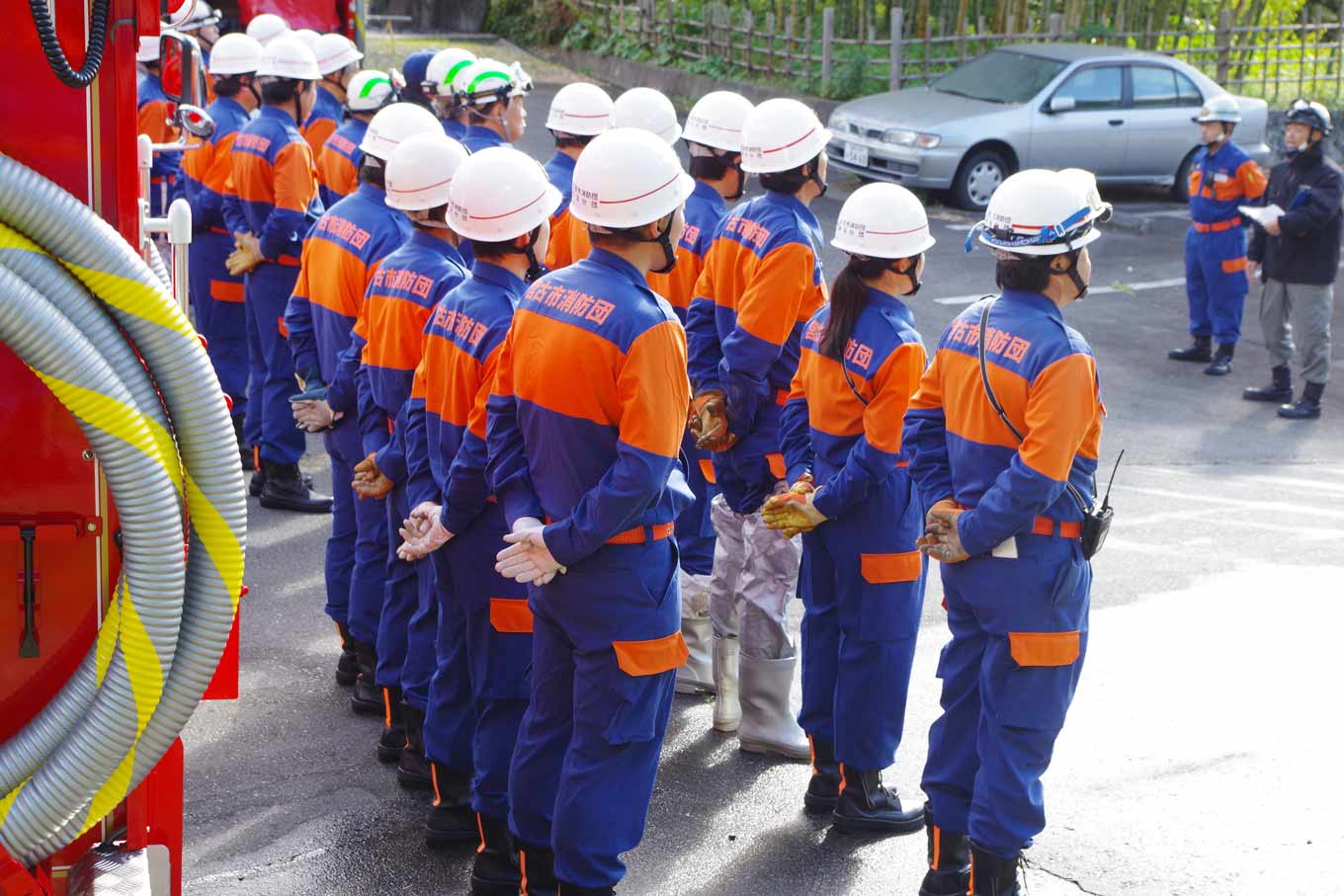
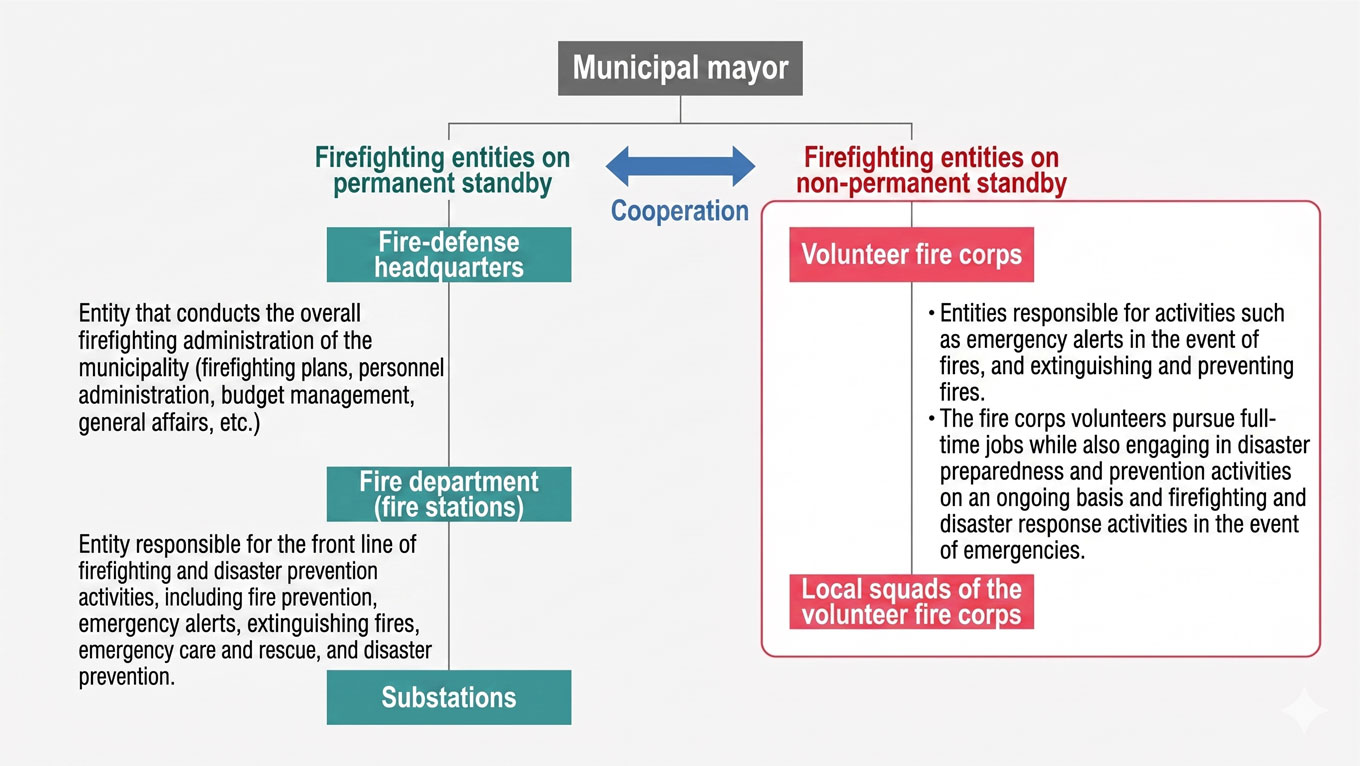
Have you heard of volunteer fire corps? Volunteer fire corps — or shobodan as they are known in Japanese — differ from professional firefighters (shoboshi), in that their members are people with full-time jobs, such as office workers, business owners, and homemakers, who pursue their work at the volunteer fire corps as local government employees on a part-time basis. They play a very important role, not only in fighting fires, but also in ensuring the safety and peace of mind of local residents in the event of an earthquake, flood, or other such disaster.
The membership of these volunteer fire corps is decreasing year by year, placing the safety of regional communities at risk.
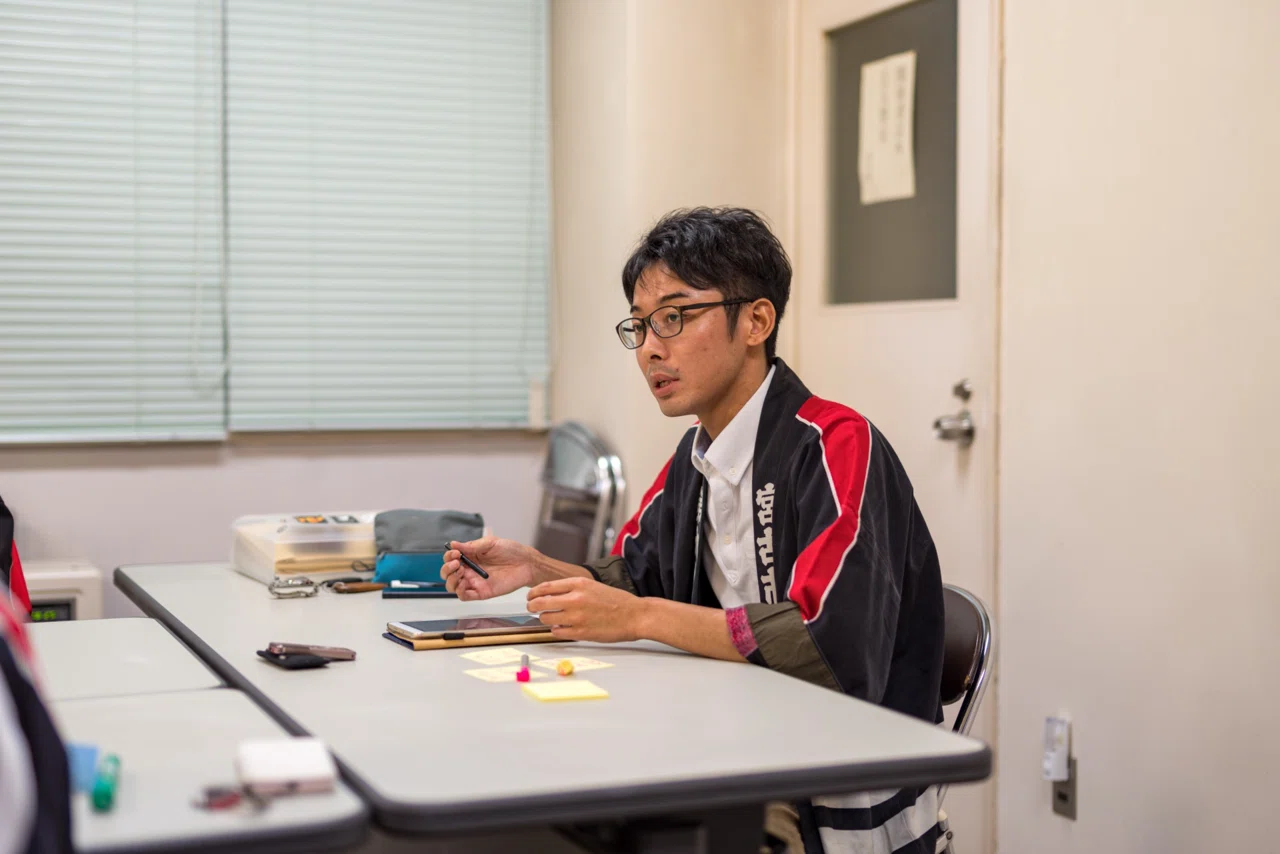
We spoke to Shoma Nakazawa from the nonprofit organization Miyakko Base (external link, in Japanese), who researched Japan’s volunteer fire corps as a university and graduate school student and has been a member of the volunteer fire corps of Miyako City in Iwate Prefecture since his 20s. He answered our questions, explaining the origins and nature of the volunteer fire corps and shedding light on why they are so necessary and why membership is on the decline.
Volunteer fire corps cooperate with fire departments to bring fires in check and protect communities
The Nippon Foundation Journal Editing Department: First, what does the work of the volunteer fire corps entail?
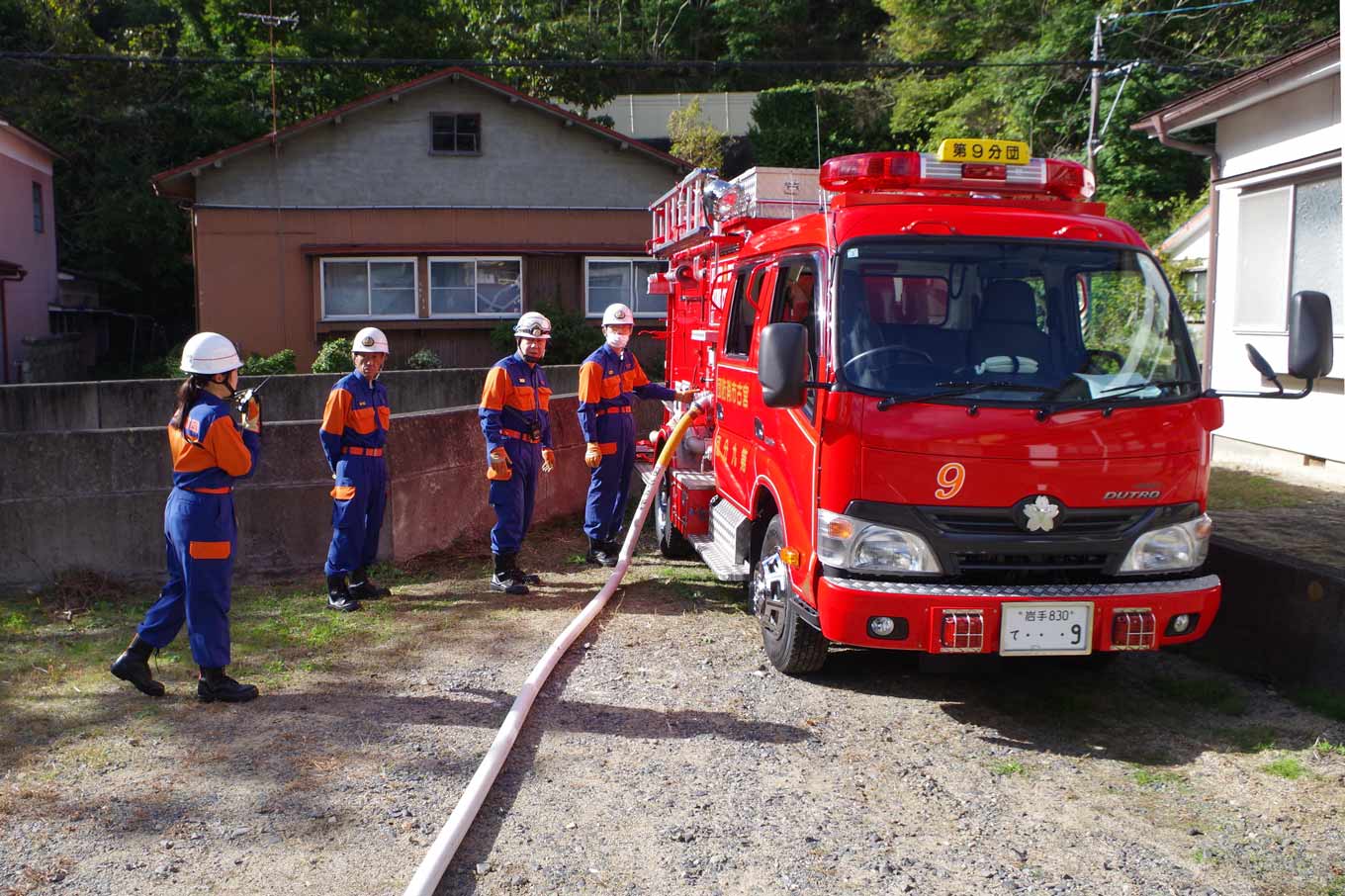
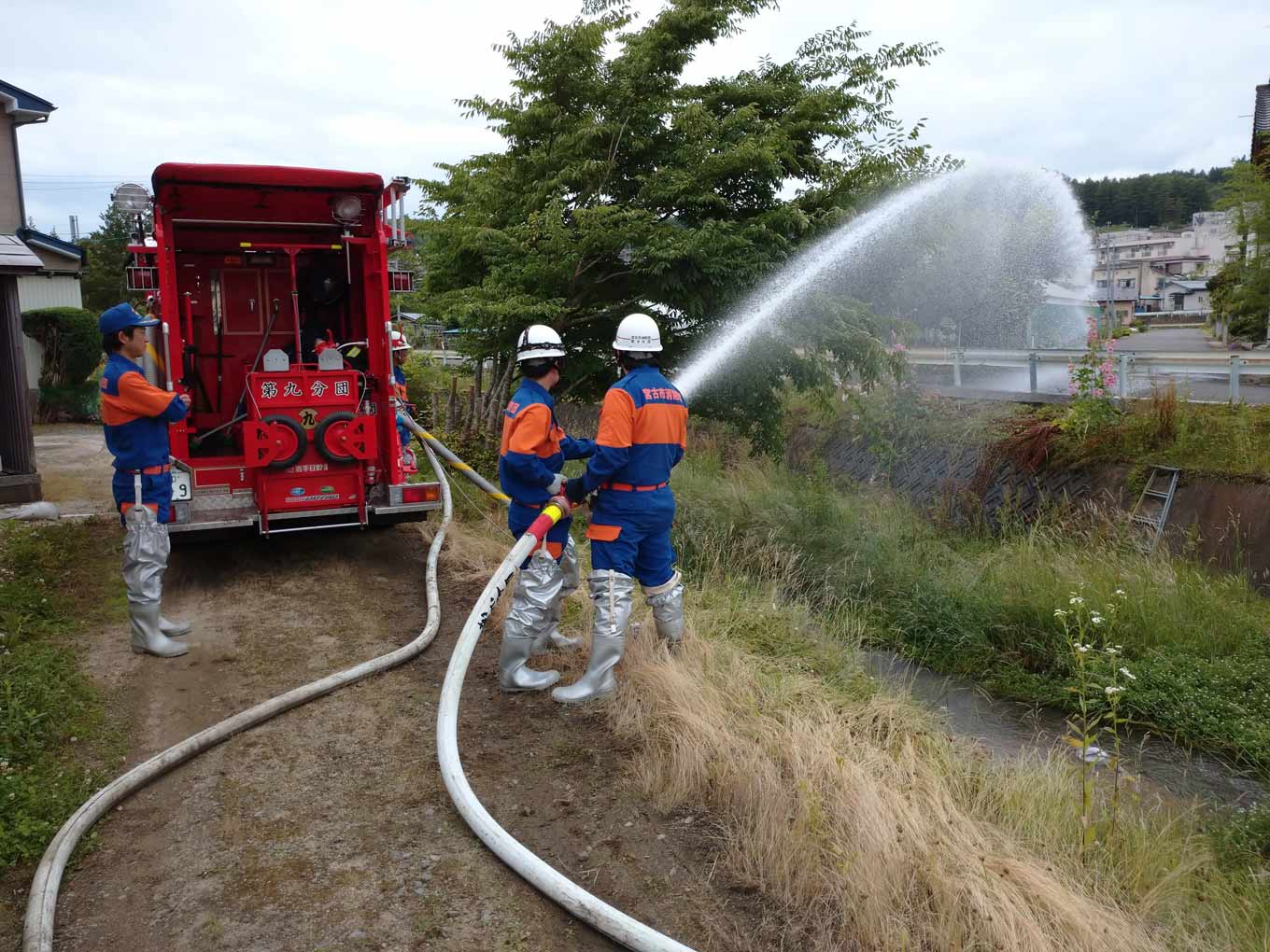
Shoma Nakazawa: As their name suggests, the most important role of volunteer fire corps is fighting fires (in the original Japanese term shobodan, shobo means to “fight fire”). Upon receiving notification of a fire outbreak from the authorities by email or through the emergency radio system, they set out from their homes and workplaces and head to the location of the fire, where they engage in firefighting activities in cooperation with the fire department. Their responsibilities also include increasing fire safety awareness among community residents and directing evacuations in the event of a disaster. Their principal role is to protect the safety of residents.
Japan’s volunteer fire corps (shobodan) are said to have two main origins. The first is the hikeshi, the firefighting organizations established in the Edo period (1603-1867) to protect the city of Edo (present-day Tokyo) from fire, and the second is the municipal organizations that were set up in each rural village to provide fire protection to the local community. These have lived on across Japan in the form of the volunteer fire corps, which remain active even today.
Journal: This may be a silly question, but why do we need volunteer fire corps, if we already have the fire department and professional firefighters?
Nakazawa: I could list a number of reasons, but the greatest reason is that in the event of a fire or other disaster, we simply need the manpower.
For instance, when a major forest fire broke out in Miyako City in May 2024, it took as long as a week to bring it under control. Personnel are of course dispatched to the fire from the fire department, but as the fire department must remain prepared in the event of a fire in another location, not all personnel could be dispatched at once. Fighting a fire across a wide mountain area, also unavoidably requires a large number of personnel. Given that the situation may be similar in the event of other kinds of fires other than forest fires, realistically thinking, it would be impossible for professional firefighters to extinguish all fires.
The firefighting activities that can be carried out before the fire engines arrive are also an important task of the volunteer fire corps. When a building fire broke out in Miyako City the other day, the road conditions meant that it took as long as 50 minutes for the fire engines to arrive.
In such situations the volunteer fire corps begin tackling the fire on the scene and then participate in the firefighting in cooperation with the professional firefighting unit once they have arrived.
Journal: Aside from responding to fires or other such emergencies, what kinds of activities do the volunteer fire corps engage in?
Nakazawa: I think the kinds of activities differ from one volunteer fire corps to another, but my corps conducts a monthly inspection of the radio communications on the firefighting vehicles, as well as carrying out what we call “night watch.” This involves driving around the area broadcasting an announcement calling for fire safety, which we do in the period from December to March. The night watch means making the rounds every other day, but because we do it in teams, each one of us is only up about two or three times a month.
Our regular disaster prevention training is also essential. When we participate in major training, which is a practical firefighting exercise held in May or June each year, we have the opportunity to meet regularly for training for about one month before the exercise.
Some local squads also help out with the festivals at their local shrines.
Journal: What kind of responses do you receive from local people when you pursue your activities with the volunteer fire corps?
Nakazawa: When we assist in fighting a fire, we might have victims of the fire telling us how relieved they are that the fire has been put out in time to prevent more serious damage. I think that it is responses like this that make our work with the volunteer fire corps feel really rewarding.
I have been to the site of a fire a number of times, but I do not go into the fire because we are not equipped like professional firefighters. We are told to be careful not to overdo it, because we are not professional firefighters, but we still man the hose and stand at the front line close enough to be showered with the sparks.
Why do they work so hard for their community?: The Great East Japan Earthquake as the catalyst for research of the volunteer fire corps
Journal: Please tell us about what prompted you to begin researching volunteer fire corps while you were an undergraduate?
Nakazawa: The catalyst was the major earthquake and tsunami that struck northeastern Japan in 2011. I was not in Miyako at the time because I was at university in Aomori, but once the situation had settled a little, I returned home and witnessed my own father and many other members of the volunteer fire corps actively engaged in the disaster response.
They were wearing uniforms — a happi (traditional cotton jacket) emblazoned with the name “volunteer fire corps” — and were actively engaged in the disaster response, despite the fact that they were victims themselves. Seeing this prompted me to wonder: “Why do they work so hard for their community?” This inspired me to choose the volunteer fire corps as the topic of my undergraduate thesis.
Journal: Was there a discovery you made in the course of your research that left a particularly strong impression?
Nakazawa: I learned that the longer you are a member of the volunteer fire corps, the stronger your feelings toward your community become. In Miyako, many people join the corps at the invitation of older members from their home area, without really knowing what it is about. At the same time, many explained that once they had been active in the corps for a while, they began to identify strongly with the idea that the residents need to protect their own community.
The volunteer fire corps call for “justice and bravery” and “protecting our hometown” as their guiding principles, and these are important keywords that reflect the activities of the volunteer fire corps. As if in line with these principles, the fire corps volunteers develop deeper sentiment for the region through their activities.
Journal: You actively participate in community activities due to the influence of your father as a fire corps volunteer. But there must be people who have a fire corps volunteer among their family and friends but choose not to participate. What do you think causes this difference?
Nakazawa: That’s true. In my case, I think that joining the volunteer fire corps felt rather natural to me because I had seen up close how motivated my father was as a member, but of course there are also people who have a fire corps volunteer among their close friends or family and still chose not to join.
In terms of why such a difference arises, I think that as my father and I both work in farming and live directly with the land, we have a strong sense of the need to protect the land with our own hands. And talking to those who have chosen not to join the volunteer fire corps, there are also many who still have a strong negative impression of it as a hierarchical organization that is largely about gathering for drinking parties. Recently improvements have been gradually occurring, so anyone who is interested should definitely give it a try.
Journal: What is a common motivation for joining the volunteer fire corps among the members of your corps?
Nakazawa: An overwhelmingly large number were introduced to the corps by older members or those around them, so I think that having a member of the volunteer fire corps among your close family or friends makes a significant difference. I think that affinity for the region can also be a motivating factor for joining the volunteer fire corps. On the other hand, as we touched on, there are also many cases of people who joined the corps just because they were invited, whose love for their home area grows once they are a member.
One member who recently joined our corps moved to Miyako from elsewhere and has no ties to the area, but decided to join because they became determined to actively contribute to the community after having a child.
The decline of volunteer fire corps across Japan and the importance of ensuring that people see community as something that directly affects them
Journal: We have heard that volunteer fire corps across Japan are declining in membership.
Nakazawa: Yes, there is definitely such a trend. The volunteer fire corps of which I am a member had 28 members at its peak, but now has 15 members. It has decreased to about half its former size.
A factor that is commonly given as a reason for this is the rise in the numbers of salaried workers (employees). Statistics from a 2022 survey by the Japanese Ministry of Internal Affairs and Communications (external link, in Japanese / PDF) indicate that salaried workers (employees) accounted for around 90% of the working population, and generally many people live some distance from their place of work.
When choosing which volunteer fire corps to join, the choice is between the area where one lives and the area where one’s workplace is located. I think that a person who commutes from Saitama Prefecture to their workplace in the Marunouchi business district in Tokyo, for instance, would probably not join a corps based in Marunouchi, and those who spend a long time at work will find it difficult to volunteer in Saitama. I believe that the more the number of company employees rises, the more the activities of the volunteer fire corps will continue to decline.

Journal: So, does this suggest that volunteer fire corps struggle to pursue their activities in urban areas?
Nakazawa: I do think it is rather difficult. But as I said at the beginning of this interview, it is difficult for the fire department to cover all firefighting activities alone, so volunteer fire corps are an essential part of protecting the safety of the community. In the event not only of fires but also major incidents, manpower is absolutely essential, so it is necessary to be prepared for disasters such as a major earthquake directly under the Tokyo Metropolitan Area, which is predicted to occur in the near future.
- Note: For further information, see: Seventy Percent Probability of a Massive Earthquake Within the Next 30 Years: A Kyoto University Emeritus Professor’s Insights on Essential Preparations (open in a new tab, in Japanese)
Journal: What do you envisage as the direction that needs to be taken to ensure that volunteer firefighting corps can be sustained?
Nakazawa: My corps is constantly addressing the topic of how best to gather people, to combat the fact that the number of members is declining. There are some aspects that may be difficult to address, but with improvements in financial compensation and safety measures, the situation may change.
In Miyako City (external link, in Japanese / PDF), each member of the volunteer fire corps receives annual financial compensation of 36,500 yen as well compensation for each time they are actively engaged in firefighting, disaster prevention activities, or training, which is capped at 8,000 yen per day. Raising this financial compensation for fire corps volunteers is a topic that has seen active debate in the last few years, and I think that if the compensation is increased this may encourage more people to join the volunteer fire corps.
There is also the fact that over 250 fire corps volunteers passed away in the Great East Japan Earthquake. If volunteer fire corps are going to increase their membership, it is essential that they be adequately equipped to ensure the safety of their members, who are prepared to work night and day to protect the safety of their communities.
Journal: Do you have any advice for readers, in terms of ways in which they can each contribute to strengthening their local community and being disaster prepared?
Nakazawa: I think it is all about recognizing that what affects your community directly affects you personally, which is a principle that often comes up not only among fire corps volunteers but also in the context of social action and community service. I think that it is important for us to think about how we can protect the community we live in and our lives and make that an issue that directly affects us.
“Self-help, mutual help, and public help” (jijo, kyojo, kojo) is a common slogan in Japan describing the order in which steps should be taken for disaster preparedness. The first step is for individuals to make disaster preparations to protect themselves and their families. If they are unable to do it all alone, the next step is for them to support each other within their communities, and if there are still areas in which they fall short, that is where assistance from the government comes in.
Local communities are essential in order to ensure that the “mutual help” component functions successfully. It would be great if more people would recognize the importance of our local communities and hopefully also start to take some form of action to protect their community.
Editor’s Note
We had always thought that it was only professional fire fighters from the fire department who fought fires, but this interview showed us that the work of volunteer fire corps plays a significant role in controlling fires. Local communities everywhere are on the decline, but this reaffirmed the necessity of preserving such activities for the sake of Japan as a natural disaster-prone nation.
Mr. Nakazawa told us that for him, being a member of the volunteer fire corps is about “creating connections with companions who are on the same wavelength.” He said that being active in volunteer fire corps may also at times provide opportunities to learn about society — our connections with other people and the ways in which we conduct ourselves. For anyone who is interested in taking an active role in their community, joining the volunteer fire corps is a good option to consider.
- Miyakko Base Official Website (external link, in Japanese)
- Fire and Disaster Management Agency’s Offical Website on the volunteer fire corps (external link, in Japanese)
Text: The Nippon Foundation Journal Editing Department
Related Themes
Related Links
- Interim Report on 2024 Noto Peninsula Earthquake and Flood Damage Relief
- Disaster Recovery
- In the Cause of Life