The Odor Problem, an Overlooked Stress of Shelter Life:An industry-academia effort toward better evacuation shelters
Key Points
- People living in evacuation shelters are forced to endure odor and various other hardships.
- Working with the Kyoto Institute of Technology and Panasonic, UCI Lab. has developed products that tackle the odor problem.
- Solving the odor problem is a first step toward better shelter life, one that can lead to shelters where people stay healthy in body and mind.
In recent years, large-scale natural disasters like earthquakes, torrential rains, and wildfires have struck all over Japan, causing enormous damage. The evacuation shelters where people stay temporarily when they cannot return home bring many challenges, from food to privacy to hygiene, but one that has drawn little attention until now is the problem of odor.
Because it is not a matter of life and death, disaster victims themselves tend to feel they just have to put up with it and find it hard to speak up, so few real solutions have ever been put in place.
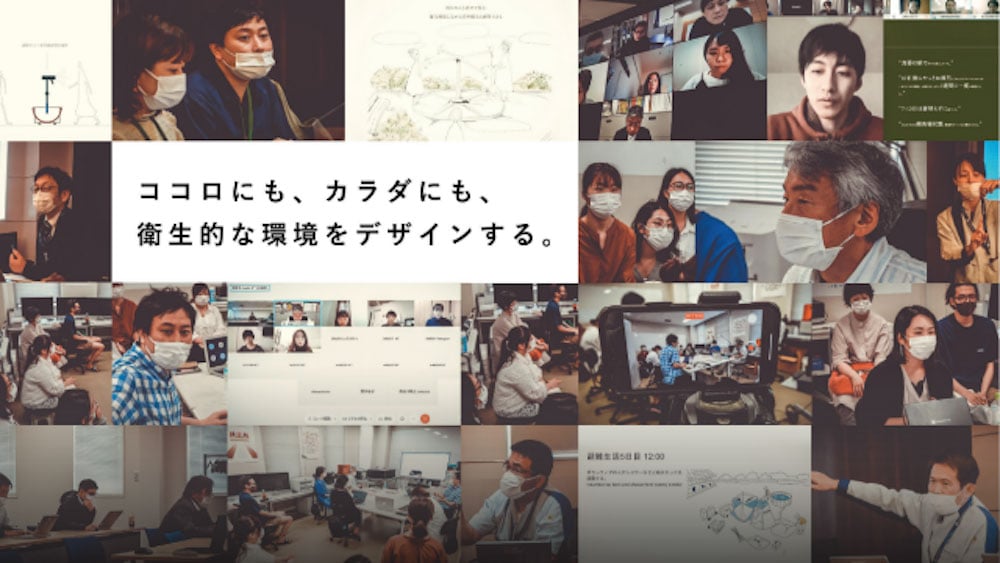
The organization that set out to solve this problem of odor in evacuation shelters is UCI Lab. (external link, in Japanese), a company that supports the planning and development of new products through dialogue that connects businesses with the consumers who use their products.
In 2021, together with a team led by Professor Emeritus Katsuhiko Kushi at the Kyoto Institute of Technology, the company launched the Shelter Hygiene Stress Solution Project (external link, in Japanese). Then, with full technical cooperation from Panasonic’s Living Appliances and Solutions Company (external link) and a field trial in Hirokawa Town, Yame County, Fukuoka Prefecture, which had been hit by torrential rain in 2023, they developed the Anything Bag and the Shoes Box to solve the problem of odor in shelter life.
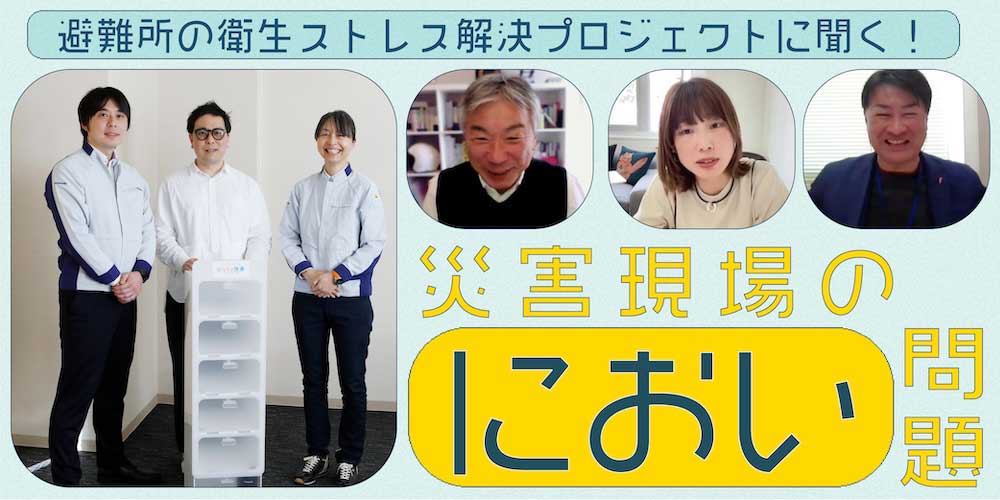
For this article, we spoke with Takashi Watanabe, the head of UCI Lab., along with others involved in the project, about the realities of shelter odor, the hopes they poured into the products they developed, and what evacuation shelters should look like going forward.
The Anything Bag and Shoes Box, built around off-the-shelf nanoe™ generators
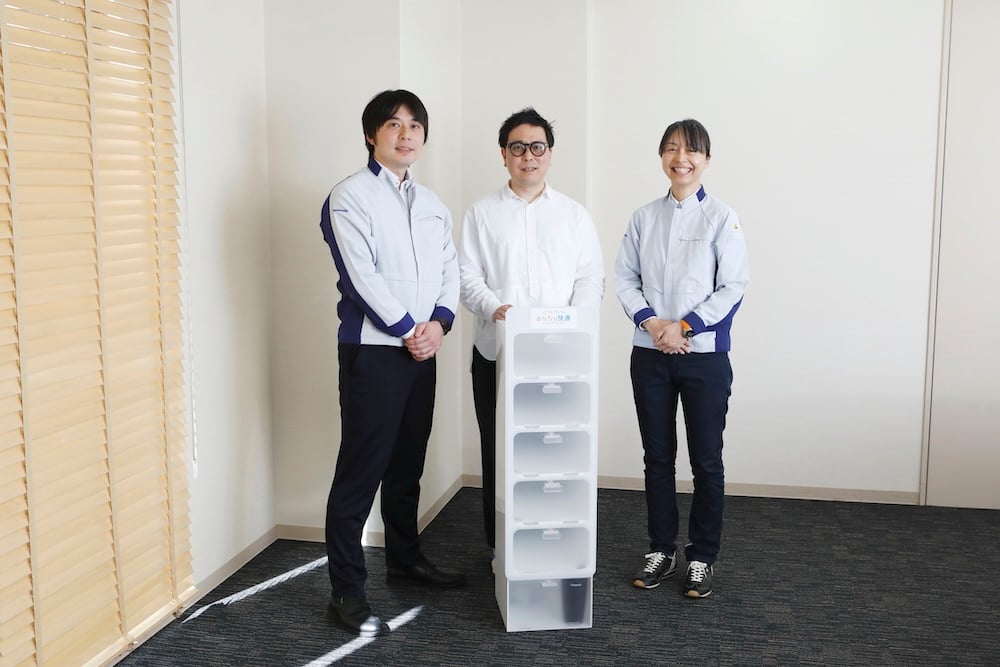
To start, we asked about the products that address the problem of shelter odor, something readers are no doubt curious about, speaking with Mr. Watanabe of UCI Lab. and with Jumpei Oe and Sawako Nakagawa of Panasonic’s Living Appliances and Solutions Company.
The Nippon Foundation Journal Editing Department: Could you tell us about the products that solve the problem of odor in evacuation shelters, and especially the technology worth paying attention to?
Sawako Nakagawa: The products we developed for this project make use of nanoe,™ a technology unique to Panasonic that is created by applying a high voltage to moisture collected from the air, producing tiny, water-wrapped, nano-sized ions. The technology suppresses odor and viruses, as well as substances that trigger allergic reactions, like dust mite carcasses and droppings and house dust.
The Anything Bag is a vinyl storage case fitted with shelves, into which you set a car-use nanoe™ generator, a device originally developed to clean the air inside vehicles.
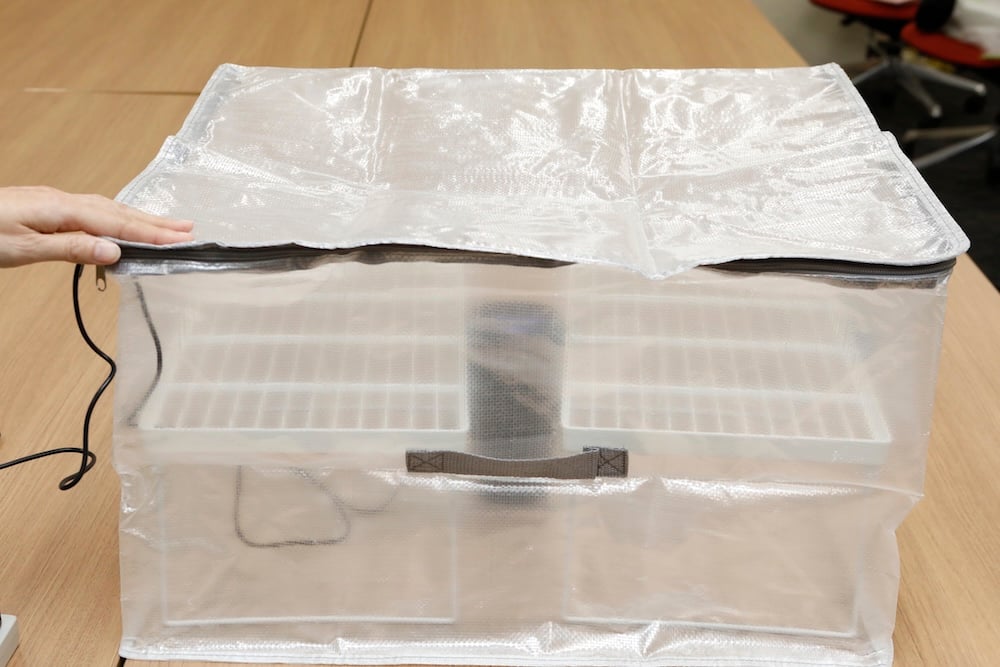
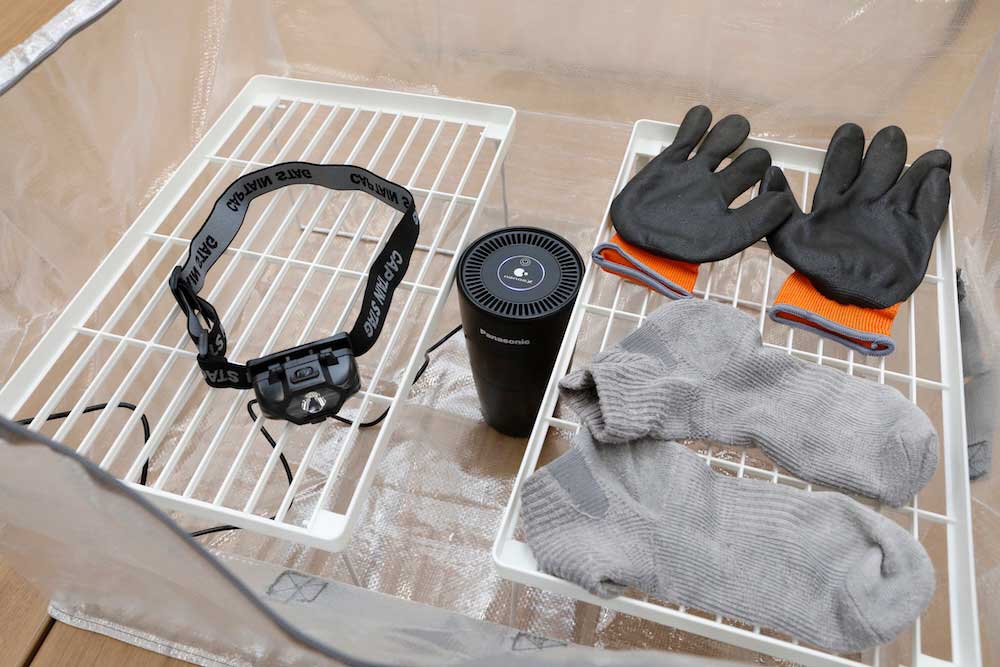
Nakagawa: To use it, you simply place the items you are worried about on the shelves, switch on the nanoe™ generator, zip it up, and leave it. Putting a generator designed for a car into a smaller space doubles its deodorizing efficiency.
Takashi Watanabe: The Shoes Box, on the other hand, has a design that blends into daily life so that it is easy for elderly people to use, too.
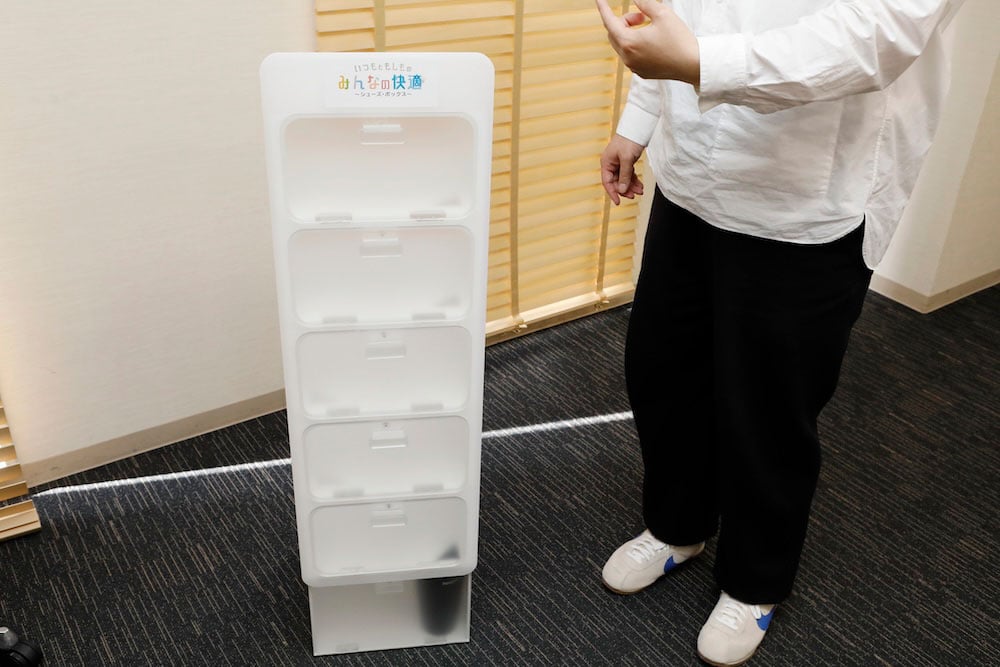
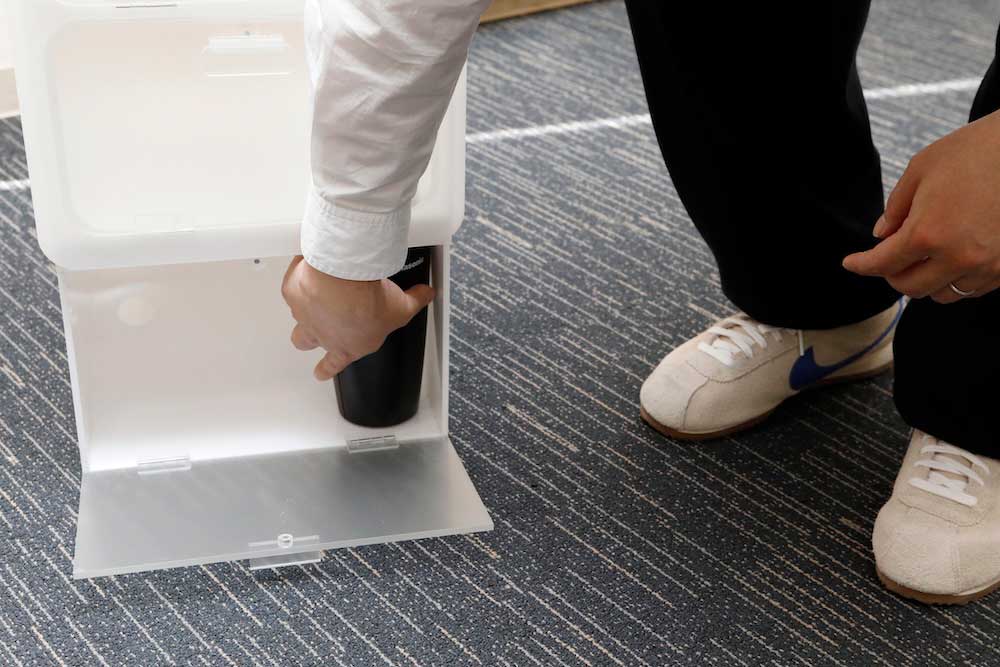
Jumpei Oe: You set the nanoe™ generator on the bottom shelf, and the nanoe™ travels up through holes in every shelf board to fill the inside of the Shoes Box, removing odor from the shoes. The shelf boards are also removable, so you can deodorize items used in disasters like helmets or rubber boots.
Journal: Nanoe is already built into all sorts of products, like air conditioners and air purifiers. Did you ever imagine it being used in disaster-preparedness goods?
Nakagawa: I had a vague sense that it could be put to use, but I had been struggling with exactly how. The generators are easy to carry, and some can run on an ordinary portable battery, so I am hopeful they will prove useful in many shelters.
The project began in response to damage caused by torrential rains during the COVID-19 pandemic
From here, in addition to Mr. Watanabe of UCI Lab., we were joined online by Mr. Kushi and assistant professor Kanako Kuroyanagi from the Kyoto Institute of Technology, and Shinya Eguchi of the Hirokawa Town Council of Social Welfare (external link, in Japanese) in Hirokawa Town, Yame County, Fukuoka Prefecture, which cooperated with the product field trials, to hear about the Shelter Hygiene Stress Solution Project.
Journal: To begin with, what drew you to the problem of odor in evacuation shelters?
Watanabe: It started with the heavy rains that struck the Kyushu region in the summer of 2020 (the Heavy Rain Event of July 2020). Because of the pandemic, the area could not take in volunteers from other prefectures, and I heard it was unable to provide enough hot meals or care for evacuees.
In that tense situation, as I was wondering whether there was anything I could do, the nanoe™ technology from Panasonic, a company I work with, came to mind. I thought we might be able to use it to improve the hygiene of evacuation shelters.
I also reached out to Mr. Kushi and Ms. Kuroyanagi at the Kyoto Institute of Technology, whom I had known for some time, and we began designing products around the theme of solving hygiene stress in evacuation shelters.
Journal: What did you learn from the fieldwork you did toward developing the products?
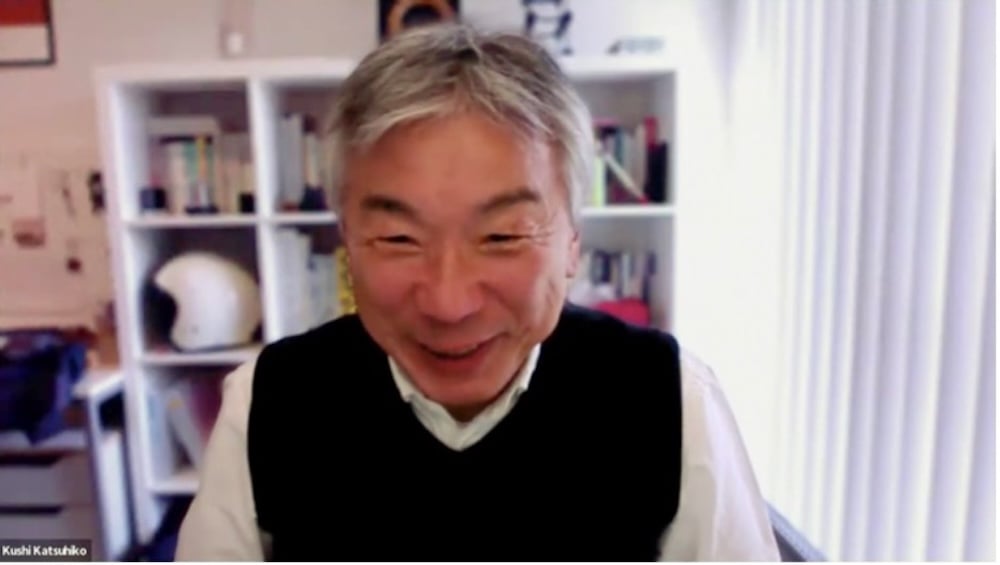
Katsuhiko Kushi: The problem of odor in evacuation shelters had never really come to the surface, but from many people who had lived through shelter life, we heard that the smell had been hard to bear. It was not that there was no problem — I think people had simply come to feel that, since everyone else was enduring it, there was nothing to be done.
Watanabe: Beyond odor, people who had been evacuees during the Great East Japan Earthquake, which struck northeastern Japan in March 2011, told us things like how a child infected with norovirus had vomited and, because the mess could not be properly disinfected, a mass infection broke out among people who later arrived at the shelter, or how it took two weeks after shelter life began before they could finally take a shower or brush their teeth. We came to see just how many hygiene problems there were.
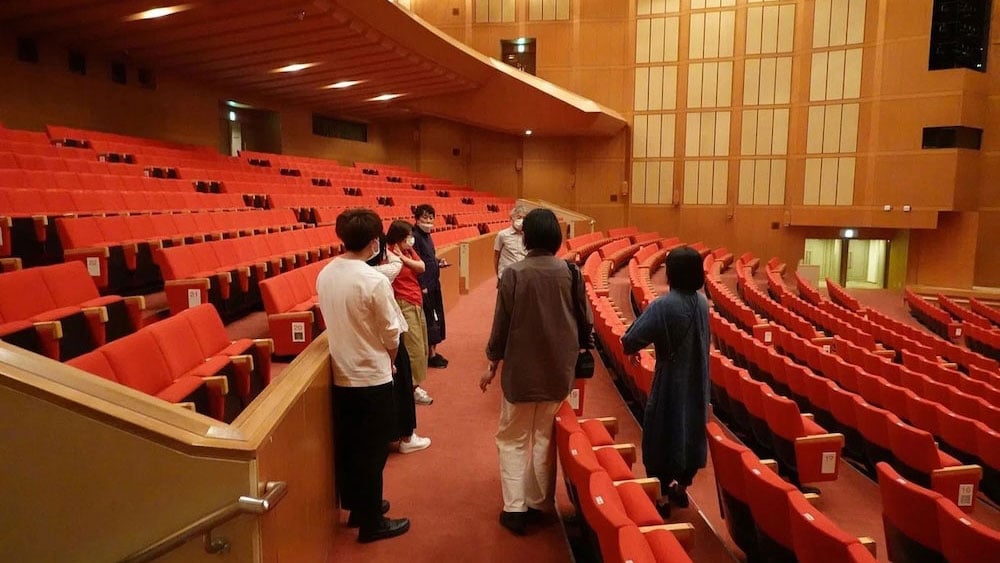
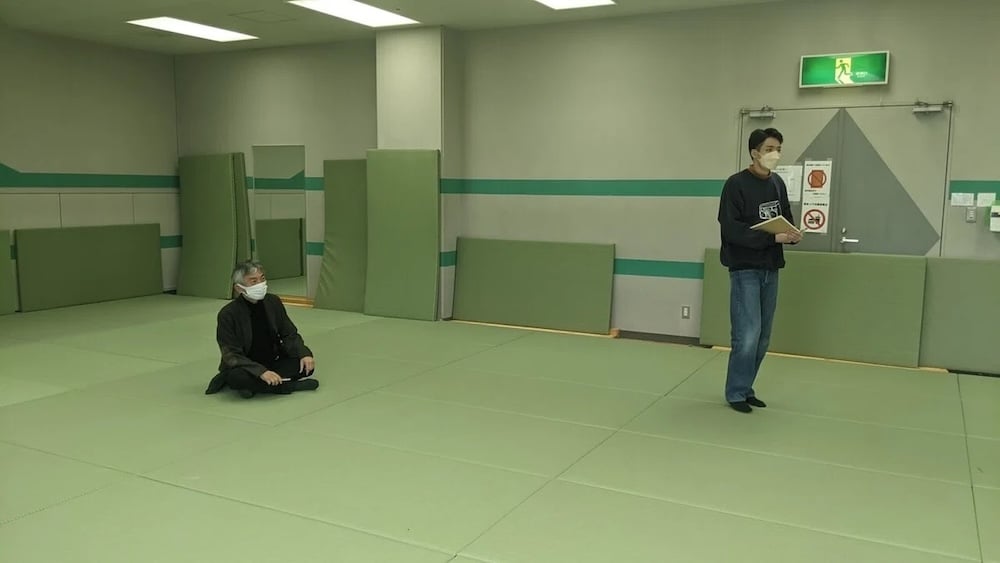
Watanabe: Another episode that stuck with me involved portable toilets. They are essential to shelter life, but they can stop working if used incorrectly, so at one shelter the leader apparently explained how to use them through a comedy skit. Hearing this, I felt that being able to improve a shelter problem through their own ingenuity gave people a positive, forward-looking strength, a sense that they could keep going.
Kushi: When it came to odor, though, we never heard a success story of evacuees solving it through their own ingenuity. The causes of odor are wide-ranging, from body odor and clothing to human waste and pets. But I realized that people had decided odor was simply something to endure, leaving it as a problem that kept being put off, and I hoped we might be able to solve it ourselves.
Journal: We understand that Hirokawa Town, in Yame County, Fukuoka Prefecture, was badly hit by the heavy rains in northern Kyushu in July 2023. Shinya Eguchi of the Hirokawa Town Council of Social Welfare, could you tell us what things were like at the time?
Shinya Eguchi: It was the worst inundation damage since the town was founded, with 62 homes flooded above floor level and 250 below, forcing many people to evacuate.
When you are running a shelter in the middle of torrential rain, the reality is that you cannot get around to dealing with the smell of evacuees’ wet shoes and clothing. The same is true at the disaster volunteer center we run. Much of the equipment, like the headlamps and helmets the volunteers wear, is shared among many people and hard to wash, so of course everyone notices the smell, but they just put up with it as they use it.

Eguchi: Northern Kyushu is repeatedly hit by heavy rains, and while shelter operations improve each time, I think the reality is that the environment still takes endurance for granted. Yet the longer shelter life drags on, the more deeply exhausted everyone becomes.
I came to think about how important it is to live while keeping body and mind as healthy as possible, even in a place of refuge, and I felt strongly how much it matters to create an environment where people can live well, even when disaster strikes.
Watanabe: Odor is a problem outside shelters, too. In a house flooded below floor level, for example, sewage flows in and mold grows beneath the floor, causing a foul smell. Yet even though such a house is uninhabitable until it has been properly cleared of mud and dried out, many people apparently move back, figuring it will be fine once the water recedes. And when disaster volunteer center staff visit those homes, the residents often wave them off, saying they are fine.
Behind this lie feelings like wanting to go home because it is more comfortable than a shelter, and a tendency to put oneself last in a disaster, thinking others have it worse. But continuing to endure can, in some cases, lead to illness of the body and mind.
Changing a reality in which shelter life rests on someone’s sacrifice
Journal: Could you share your vision for evacuation shelters of the future?
Kushi: A disaster-stricken area suddenly becomes a place for solving problems, some of which are a matter of life and death. Every time I hear stories of people who have come through such situations, I am reminded that it is precisely these so-called extraordinary settings that bring out people’s active creativity.
When I look at a solution like these products, it makes me realize that this was something I had valued in my own daily life all along. Every disaster site differs, but I hope we can keep thinking about shelter design that makes the most of the voices and creativity of those who have been through a disaster.
Kanako Kuroyanagi: What we should be aiming for, I think, is shelters where people can spend their time as an extension of ordinary life. When we visited sites, we heard things like how serving fresh vegetables was hugely appreciated, or how, after evacuees themselves thoroughly cleaned the gymnasium where they had been sleeping packed together on the floor and laid down donated tatami mats, almost no one was coughing through the night anymore.
They may seem like small things at first glance, but I believe these kinds of efforts matter enormously on an emotional level, and that they help protect people’s hearts and minds.

Kuroyanagi: There is also the phrase “self-help, mutual aid, and public assistance,” but what I came to understand from seeing the sites firsthand is that they run almost entirely on self-help and mutual aid.
More than that, the mutual aid largely depends on individuals who happen to have supplies, food, skills, or time, and in most cases it rests on someone’s sacrifice. That is exactly why our goal is to use public assistance to share the resources needed for shelters that feel like an extension of everyday life.
Eguchi: When I talk with people in the community, many see welfare as a handout, and I sometimes hear them say they have to get by relying on welfare as little as they possibly can.
But even in an emergency like a disaster, I believe we need to build an environment where people do not hesitate to accept welfare to live happy lives. A shelter should not be a place of endurance. Continuing to strive to make it somewhere each person can stay safely and with peace of mind is, I think, what will lead to a better vision for shelters.
And even as natural disasters keep coming, there are surely still many people who see them as something happening somewhere far away. Through our own experience, we want to keep getting the message out so that people come to see natural disasters as something that concerns them personally.
Journal: What can each of us do to improve living conditions in evacuation shelters?
Watanabe: In emergency situations like a disaster site, stressors you would never face in everyday life arise, and the odor problem is one of them. At the same time, in such a tense situation, your emotional capacity narrows. Things that would not normally bother you start to bother you, and things that already bother you bother you even more. But because everyone is putting up with it, no one can say so.
That is exactly why I think it is important to picture such conditions in advance and to keep on hand the things that can ease those stressors.
Watanabe: That said, it is hard to suddenly start using whatever is in the disaster-supply storeroom once a disaster hits, or to build cooperative relationships on the spot. So I believe disaster preparedness should sit on the continuum of everyday life.
Nurturing ties with people in the community day to day matters, too. On top of that, when local governments anticipate the problems that can arise during shelter life and prepare for them, that surely strengthens disaster readiness for the whole community.
Going forward, we plan to install Shoes Boxes permanently in places where local people gather, like welfare centers and children’s cafeterias, so that they grow used to them in everyday life. I want shelters to be places where, precisely because it is an emergency, people can reclaim even a little of their daily lives, and I hope they will evolve into spaces that value quality of life (QOL) during evacuation.
What we can do to ease stress in evacuation shelters
- Draw on the voices of those who have been through disasters when designing shelters.
- See natural disasters not as something happening far away, but as our own concern.
- Picture emergencies like a disaster site, and keep on hand the things that ease those stressors.
The causes of odor in evacuation shelters are wide-ranging: mud and sweat from recovery work, body odor that builds up when people cannot wash their clothes or bathe, the smell of mold, and more. The odor problem had rarely come to light before, but when we learned that the people behind the Shelter Hygiene Stress Solution Project were working to solve it, we wanted to report on their efforts.
The stress that builds up in the course of shelter life eventually affects our physical and mental health, and a natural disaster could strike anytime, anywhere. We believe that precisely because these are emergencies, we need measures that provide reassurance and shelters that can provide at least some peace of mind.
Photo: Emi Enishi
Text: The Nippon Foundation Journal Editing Department