What Does It Take for Children To Truly Enjoy Sports?Naomi Masuko, Executive Director of the “No-Scolding Tournament,” shares her vision
Key Points
- Consultations regarding violence and harassment by sports coaches have been increasing year by year.
- Heavy-handed instruction that emphasizes grit and toughness can hinder the development of children’s independence and confidence.
- Creating an environment where children can act on their own initiative is essential for their healthy development.
- Bukatsu refers to school-sanctioned after-school club activities in Japan. Many junior high and high school students participate in bukatsu including sports, arts, or music clubs, practicing after school or on weekends. A feature of these club activities is that they are typically long-term, working toward goals such as winning competitions. It is also common for schools to assign coaches from the school teachers or hire expert coaches to lead and manage these clubs.
Many people have likely witnessed scenes of children being yelled at by their coaches during bukatsu or club practice sessions.
In recent years, such heavy-handed coaching methods have come under scrutiny, with growing voices questioning whether such treatment constitutes harassment and whether such a strict approach is really necessary. Violence and harassment in sports are finally being brought to the fore as serious issues.
The Japan Sport Association (JSPO), which works to create an environment that supports active participation in sports — whether playing, watching, or supporting — reported that it had received 373 consultations regarding sports-related harassment in fiscal 2022 and 485 in fiscal 2023, marking record highs in consecutive years.
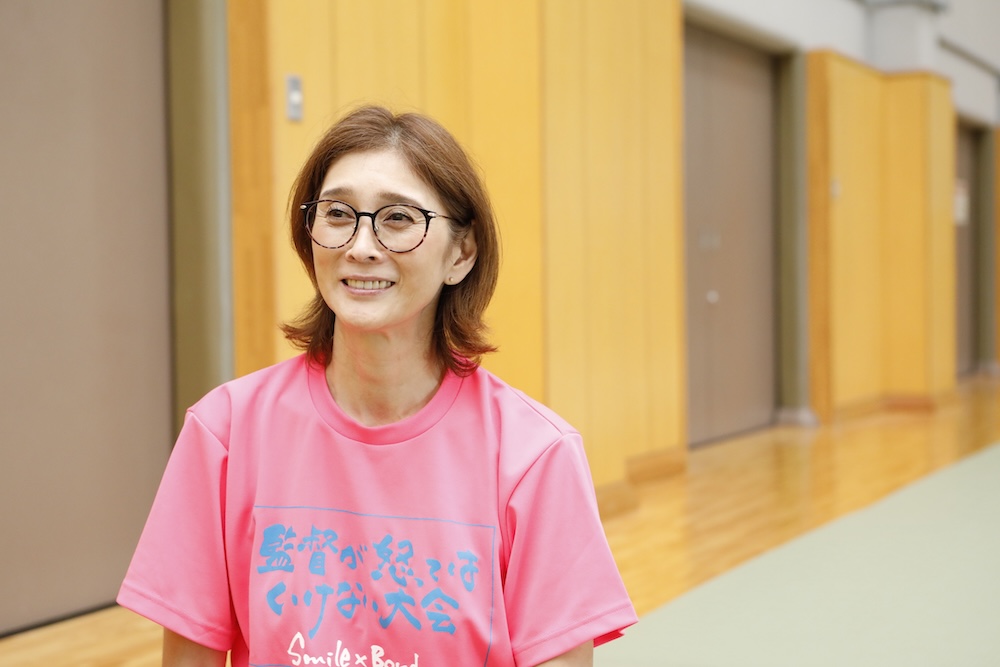
Stepping up with a vision to change this culture is former Japan women’s national volleyball team member Naomi Masuko.
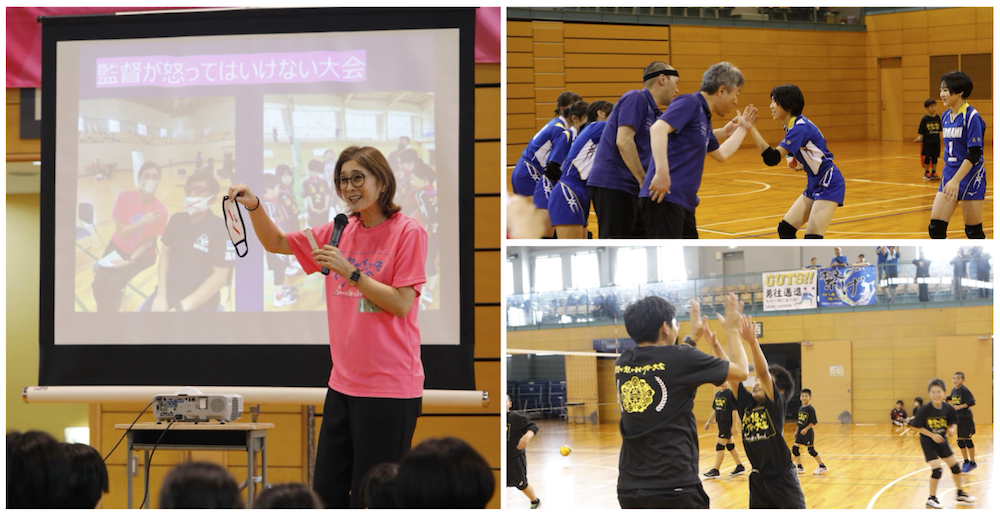
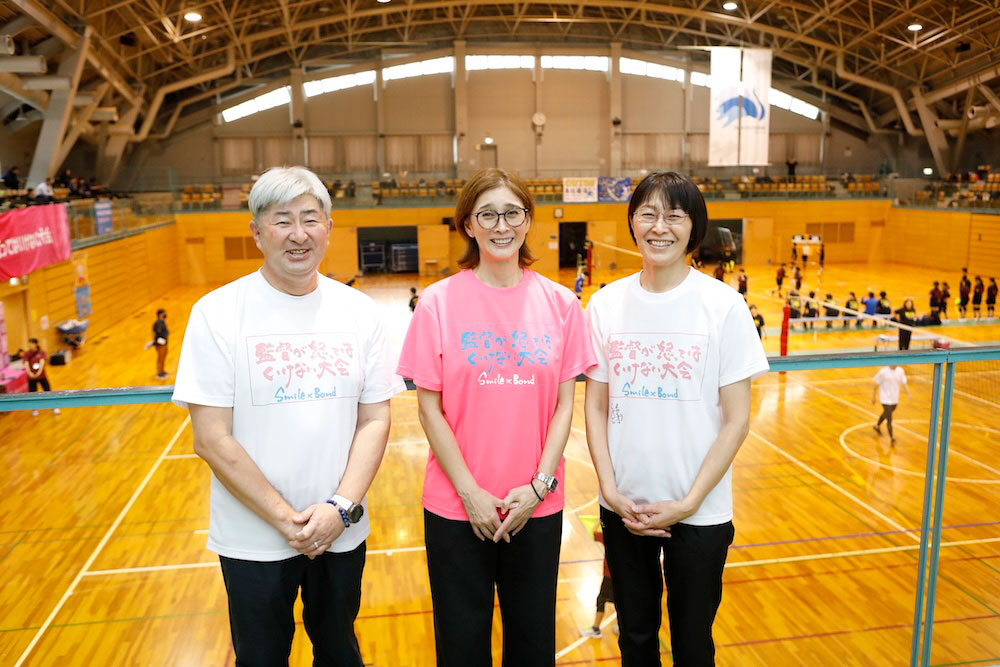
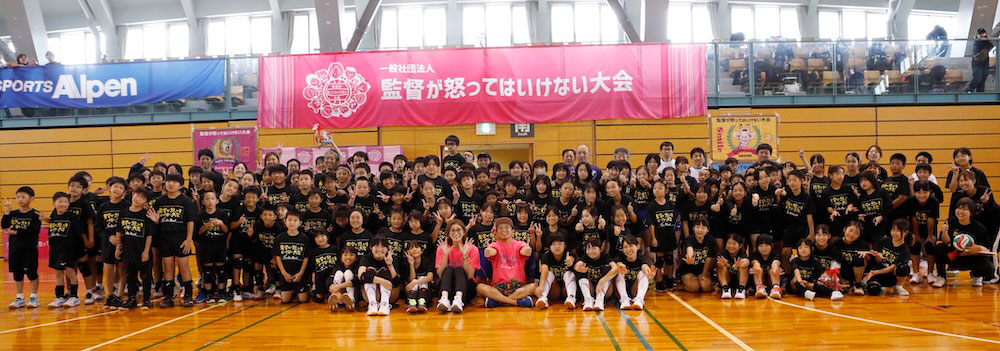
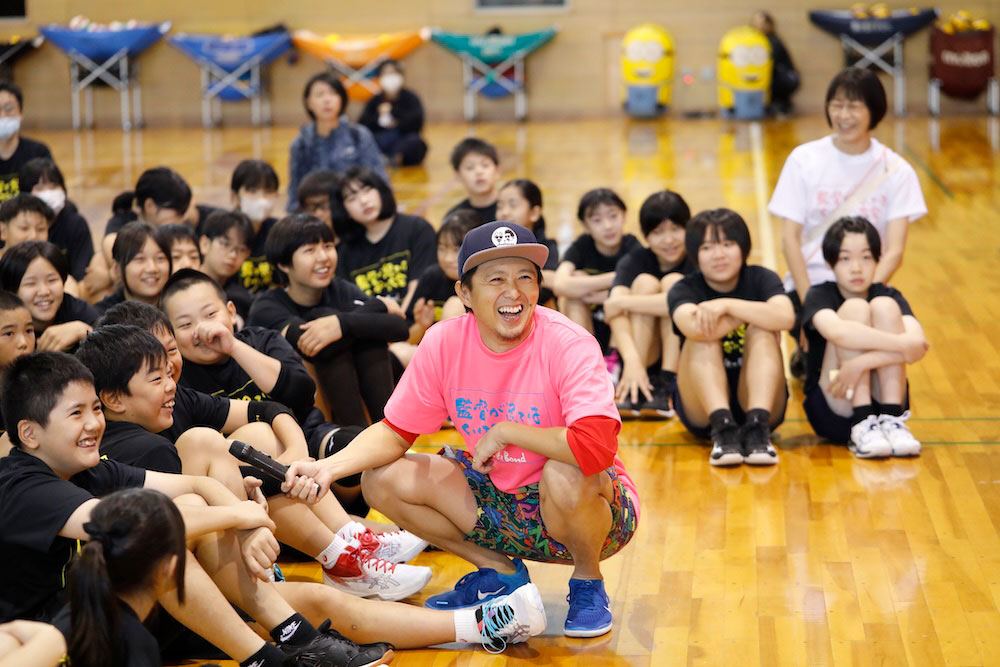
In 2015, she launched the No-Scolding Tournament (open in a new tab) initiative together with Shinji and Miyoko Kitagawa, a married couple who serve as directors. Held across Japan, these volleyball tournaments are based on one simple rule: coaches must not scold their players, allowing children to play freely and confidently.
In 2021, the initiative became a general incorporated association, and in 2022, it received the Athlete Award at the HEROs AWARD (external link, in Japanese), an event organized by The Nippon Foundation honoring athletes, companies, and organizations engaged in social contribution activities.
Some children are driven to suicide by excessively high-pressure coaching
The Nippon Foundation Journal Editing Department: Was there a turning point when violence and harassment in sports began to gain widespread recognition as serious issues?
Naomi Masuko: The 2012 incident involving the Sakuranomiya High School basketball team* was a major impetus. The team captain took his own life after suffering corporal punishment from his coach. I feel that from that moment, the sports world began to change significantly. Despite this, however, similar incidents have continued to occur.
Every time I see this kind of news, I realize just how close I came to a breaking point during my own career. During my playing days, I was pushed to my absolute limits in training. Although I somehow survived and made it as a professional athlete, many others dropped out of volleyball along the way.
I often wonder — if I had taken action back then, maybe I could have helped them. That thought still weighs on me.
- In December 23, 2012, a second-year student at Osaka Municipal Sakuranomiya High School (now Osaka Prefectural Sakuranomiya High School), who captained the basketball team, committed suicide after enduring corporal punishment by the team’s coach
Journal: Is that what led you to found the No-Scolding Tournament?
Masuko: That’s right. I’ve always wanted to support people who feel marginalized by society. Before I started the No-Scolding Tournament, I organized volleyball tournaments for the gay community.
At the time, the term “LGBT” wasn’t widely known. It was a gay friend telling me, “We don’t have a tournament to aim for,” that inspired me to start one. Even though coming out was difficult back then, everyone who participated truly enjoyed it.
After this tournament had been running for 10 years, Mr. Kitagawa suggested organizing a tournament for elementary school children next, which is how the No-Scolding Tournament began.
Shinji Kitagawa: My wife (Miyoko) had been a volleyball player for a corporate team, and I often heard about the harassment and corporal punishment she experienced as a student. The verbal and physical abuse she suffered was so severe she even said that at one stage her only goal was to be able to quit volleyball.
Having heard these episodes, I became involved with a junior volleyball team in Fukuoka, where I live. That was exactly 17 years ago. When I visited their practice, I was shocked to see that the harsh, militaristic coaching style persisted, and that some of the children were even in tears.
Not a single thing had changed since the Showa era (1926-89). Just as I was wondering how I could do something to address this problem, I met Ms. Masuko and suggested to her: “Why don’t we work together to change the culture in sports?”
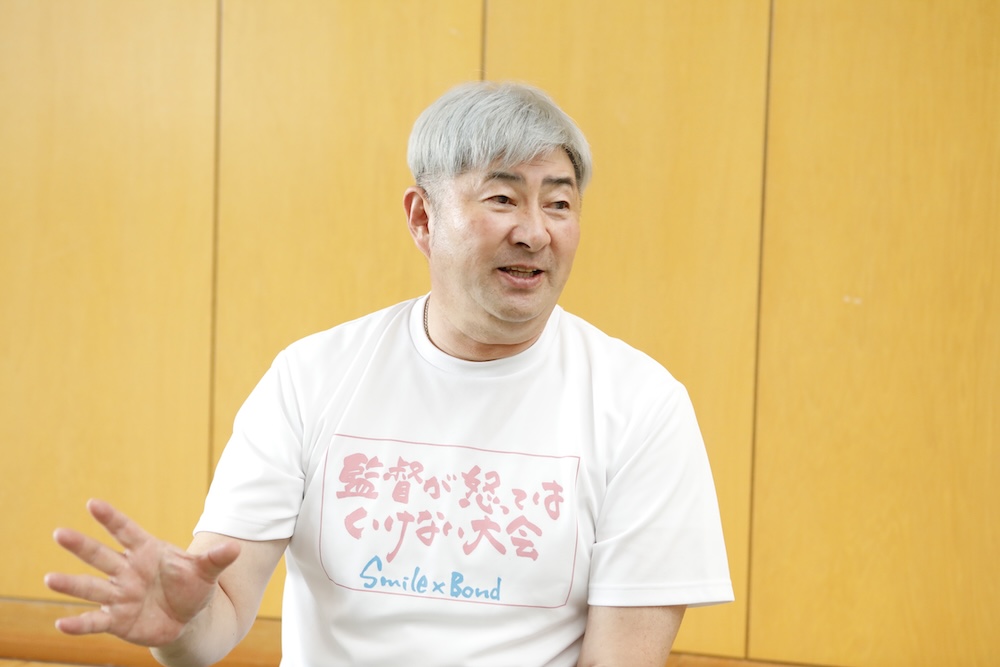
Masuko: However, we initially faced an intense backlash, for example: “That style of coaching is what helped you grow as an athlete,” “You’re going to turn on the coaches who helped develop you,” or “That sort of half-hearted approach will weaken Japanese sports.”
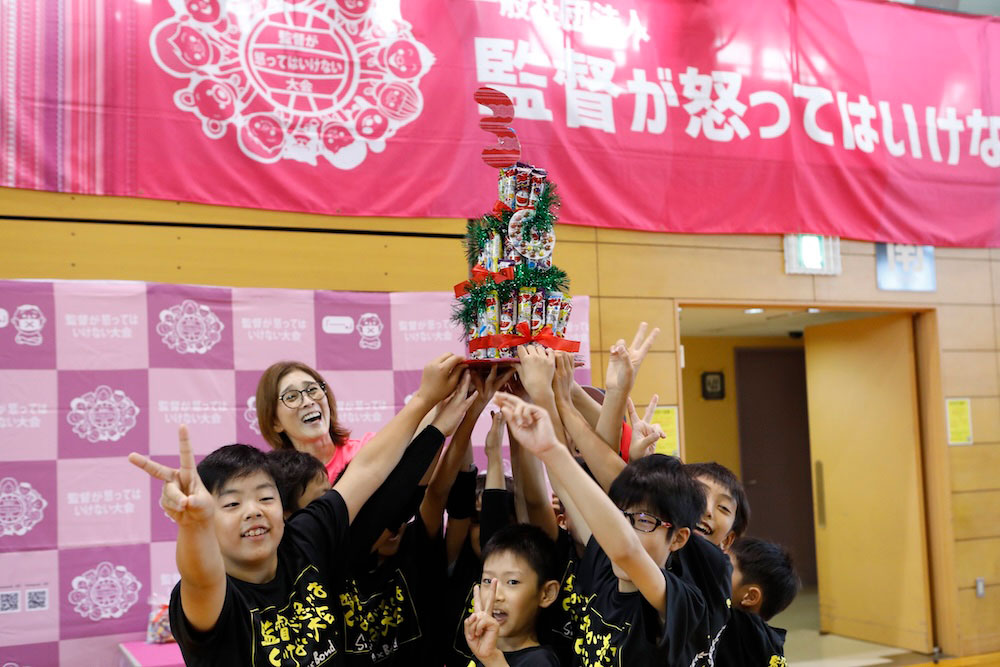
Journal: Why does support for so-called “Spartan-style coaching” and “grit-based philosophy” persist even though times have changed?
Kitagawa: Even though this style still persists in some cases, I do believe the situation has gradually changed for the better compared with 10 years ago. However, as we were one of the first to take action to change the status quo, we may have faced a particularly strong backlash.
Masuko: That’s right. In the beginning, we weren’t able to proactively promote the No-Scolding Tournament for fear of attracting criticism. But now, I feel that the sports culture has finally shifted to the point where we can openly speak out about the issue in interviews like this.
Harassment hinders the development of children’s independence
Journal: What impact does harassment in sports have on children?
Masuko: Speaking solely from my own experience, I feel that it makes it difficult for children to develop independence. High-pressure coaching methods create a state where children can only do exactly what they are told to do, and feel unable to make decisions for themselves or act on their own initiative.
It also saps their confidence. Even after being selected as a member of the Japan national team and treated as the star player of the team, I still lacked confidence. I was constantly afraid during both practice and matches. I even found myself thinking, “I hope the setter doesn’t toss the ball to me … I hope the ball doesn’t come my way …”
It’s meaningless to get angry at a player for making a mistake and scold them, “You’re not trying hard enough!” If a mistake occurs, there must be technical reasons, such as incorrect form or a mistimed jump.
But if you don’t point out the technical reasons and instead blame everything on a lack of effort or grit, the child will never learn to correct the cause of the mistake. As a result, they end up repeating the same errors and start to believe the reason they fail is because they are mentally weak. This cycle pushes them further and further toward their mental limit.
Kitagawa: My wife also said that when she retired from volleyball and started working a normal job, she didn’t know how to act. Because she had always followed instructions, she found it difficult to suddenly think and act independently when that structure was removed.
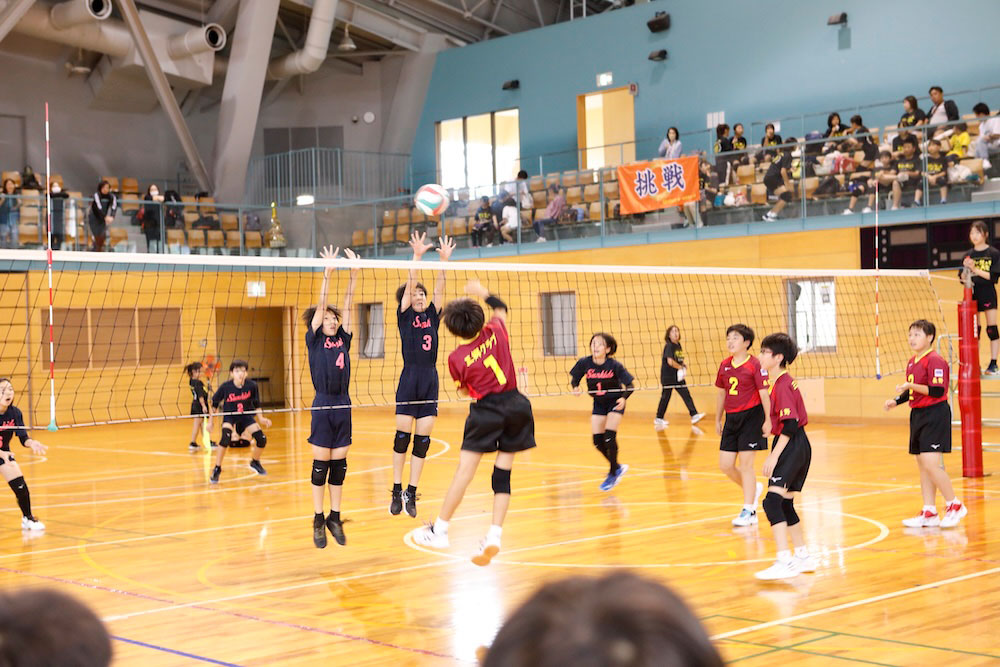
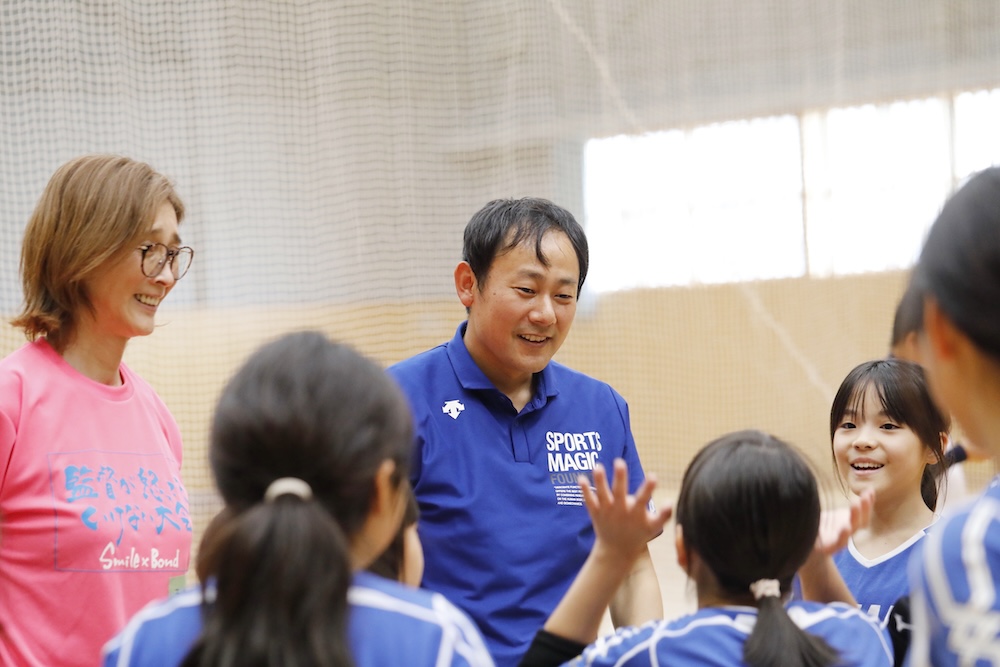
Journal: So the impact extends even into life after their career as an athlete is over. Given the extent of the damage it causes, why does harassment and corporal punishment in sports persist?
Masuko: I think it’s because many coaches simply don’t know any other way to coach. In particular, coaches who grew up in the Showa era often struggle to keep up with changes in society.
Although the coaches themselves grow older, the parents of the children joining each year are younger and younger, which leads to gaps in communication. Eventually, the coach feels isolated and grows stubborn. As a result, there are quite a few coaches who are struggling because they don’t know what to do.
Journal: The No-Scolding Tournament also offers anger management* workshops for such coaches, doesn’t it?
Masuko: That’s right. Some coaches who have taken the course have subsequently changed their approach. They even become advocates, speaking up to other coaches who yell at the children under their supervision, saying things like, “You shouldn’t put the blame on them like that,” or “Think about the reason you’re getting angry.”
Rather than me simply telling coaches, “You shouldn’t get angry,” it is more effective if fellow coaches point out this behavior to one another. This is the ideal state we are aiming for.
Kitagawa: At the same time, I believe we also need to change the mindset of parents. Some parents will tell the coach things like, “This year we have a good team of players, so we have a shot at the title — please train them hard.”
That can lead to coaches applying excessive pressure on the children. During childhood, rather than focusing solely on winning, we should first work to develop healthy bodies and minds. This means moving away from coaching styles that suppress children’s individuality and instead adopting an approach that respects their independence and initiative. I believe that doing so will help them blossom when they reach junior high and high school.
- A form of psychoeducation and psychological skills training that helps people handle anger effectively. This approach originated in the United States in the 1970s.
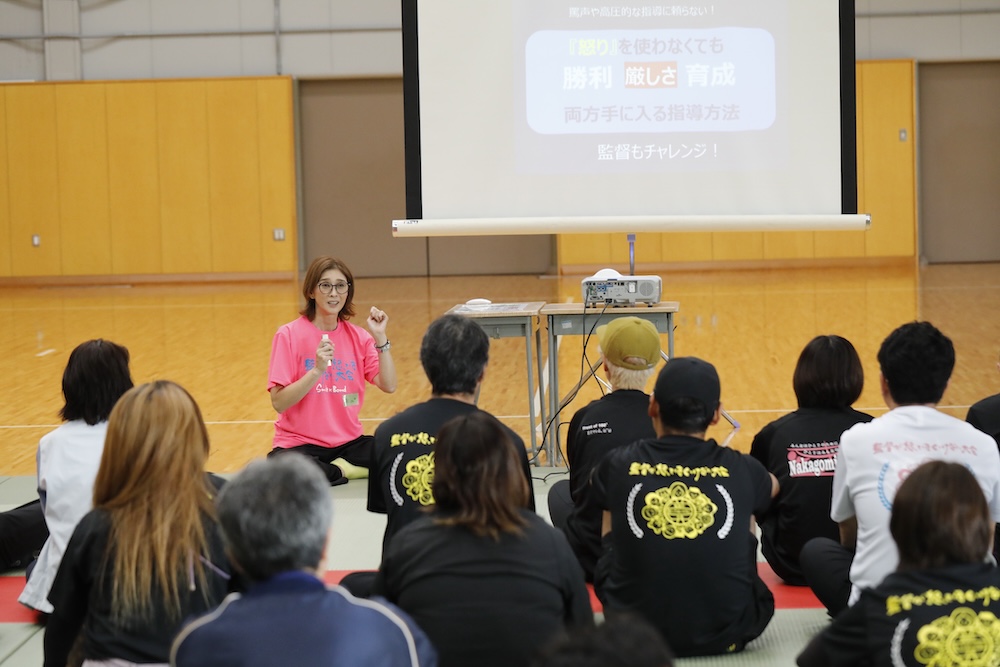
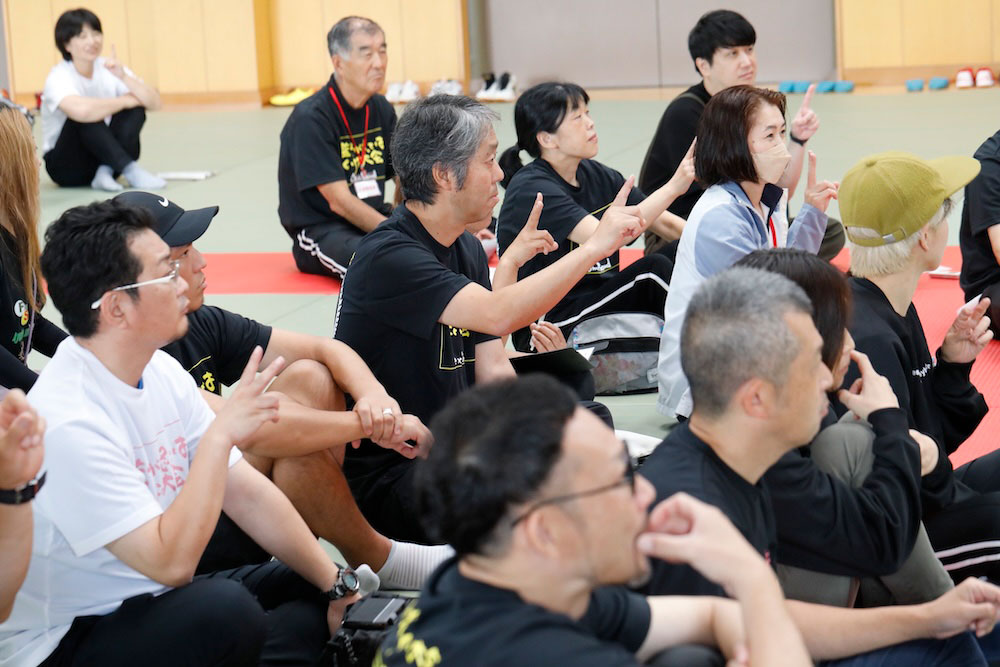
Expanding the movement together with the current generation of athletes
Journal: Have there been any particularly rewarding moments during your efforts?
Kitagawa: It’s truly rewarding to see children who participated in the tournament in elementary school continue playing and enjoying volleyball through to high school and university.
Some children tell us that the No-Scolding Tournament was a happy memory, and they say it encouraged them to continue with volleyball. If sports don’t become a negative experience for children, then we’ve achieved our goal.
Masuko: Sports are not something that should be forced on children. They should take up sports because they want to, and have fun while playing. They shouldn’t need to live according to the expectations of their coaches or parents. I want to see children enjoying sports in their own way.
Journal: What are your future goals for the No-Scolding Tournament?
Masuko: Our goal is to reach the point where our efforts are no longer needed. In other words, a world where harassment has been completely eliminated from sports. When we started our efforts 10 years ago, I thought, “In 10 years, the sports world will have changed.” But we’re still not there yet.
Still, receiving the HEROs AWARD two years ago renewed my motivation to continue working toward this goal. It is also encouraging to see that as a result of our efforts, people in other sports are now organizing their own No-Scolding Tournaments. I hope more people will step up to help eliminate harassment in sports.
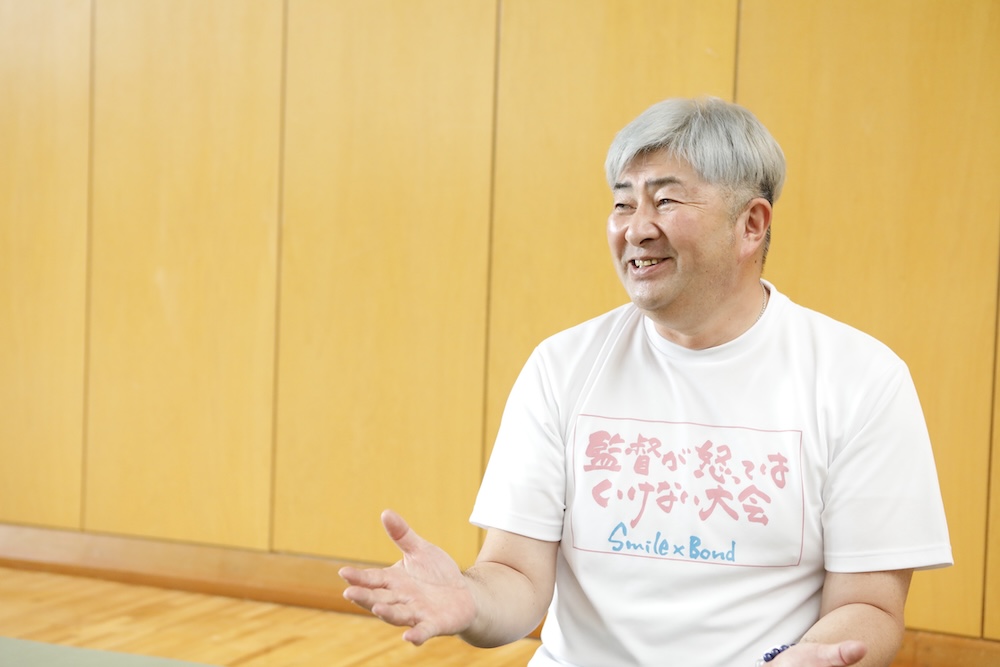
Kitagawa: Ultimately, we want to develop successors who can continue the efforts we have started. The name “No-Scolding” might sound negative, but we want people to understand that our tournaments are a place where children can have fun and coaches can learn new approaches.
So far, it has just been the three of us organizing the events — Ms. Masuko, my wife, and myself. But we’d like more people to join us. That’s our immediate goal.
Masuko: It would be great if people from the current generation of athletes joined in this initiative. Devoting yourself entirely to sports is very tough. But if athletes could approach participation as a form of societal contribution, joining this initiative could also provide them with a form of psychological support alongside their careers as professional sportspeople.
Editor’s Note
We spoke with Ms. Masuko and Mr. Kitagawa, organizers of the No-Scolding Tournament, to understand the underlying causes of the persistent problem of violence and harassment by coaches in sports, and the impact this has on children and young people.
We learned that some coaches themselves also struggle to adapt to changing societal expectations. However, this does not justify causing harm to children and young people.
Sports play a vital role in children’s development — not only in their health and physical fitness but also in fostering respect and empathy for others. This interview reinforced our belief that a coach’s most important role is not simply winning, but the way in which they guide their children toward that goal.
Text: The Nippon Foundation Journal Editing Department
Photo: Emi Enishi
Profile
Naomi Masuko
After taking up volleyball in junior high school, she rose to prominence as the star of the prestigious Kyoei Gakuen High School team. In the autumn of her third year at high school, she was selected as a member of the Japan women’s national team. In 1985, she represented Japan at the Junior World Championships and received the Rookie of the Year award. She later joined the newly formed Ito-Yokado team, excelling as its ace hitter. In 1989, she represented Japan at the World Cup and was named in the Japan League “Best Six,” the most outstanding players at each position. In 1990, she led Ito-Yokado to a national championship victory over the ever-victorious Hitachi team. She served as captain of Ito-Yokado in 1991 and retired from professional volleyball in March 1992.
She is currently active as a sports commentator across television, radio, and magazines. In 2015, she launched the No-Scolding Tournament, which became a general incorporated association in 2021.
Shinji Kitagawa
A junior volleyball team coach in his hometown of Fukutsu City, Fukuoka Prefecture, and a director of the General Incorporated Association No-Scolding Tournament. He met Ms. Masuko in 2015, co-founding the initiative together.