Naomi Masuko’s ‘No-Scolding Tournament’What kind of coaching do children really need to grow?
Key Points
- The No-Scolding Tournament is a sports event designed to help children enjoy themselves to the fullest.
- Coaches must not scold at mistakes during play. For children, mistakes are part of taking on a challenge.
- When a rule or etiquette is broken and a coach needs to correct it, it is important to clearly explain the reason.
There is still a deep-rooted belief in sports that strict coaching makes children tougher and helps them grow. But it is also true that heavy-handed instruction has sometimes crushed young athletes with potential. In the past, there have even been heartbreaking cases in which athletes took their own lives after suffering verbal abuse, corporal punishment, or harassment by a coach.
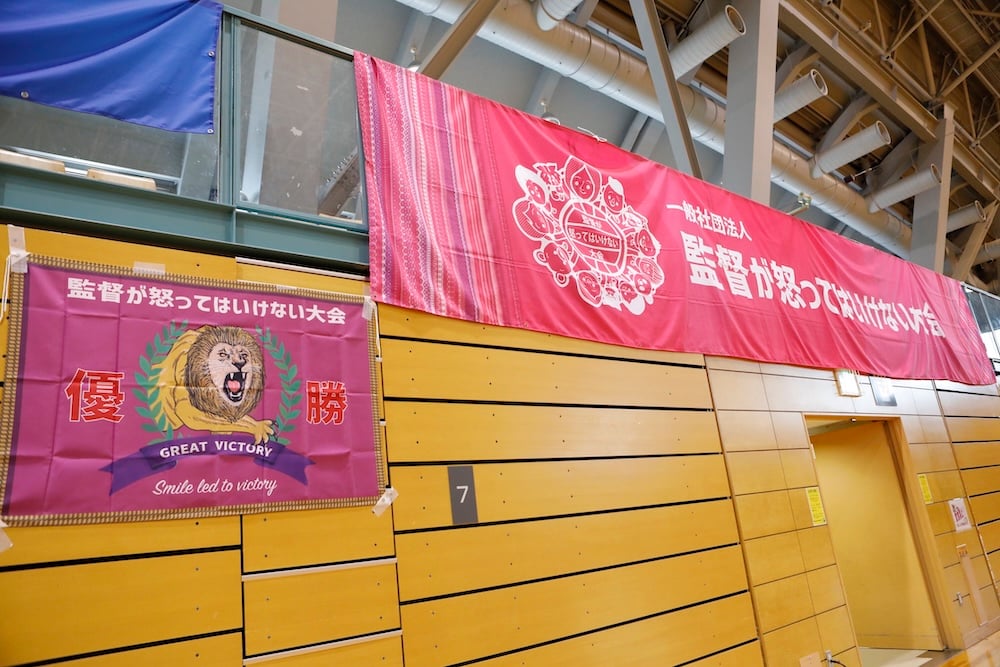
Working to change that culture is former Japan women’s national volleyball team member Naomi Masuko. In 2015, together with Shinji and Miyoko Kitagawa, a married couple who serve as directors, she launched the No-Scolding Tournament (open in a new tab, in Japanese)
initiative and has since held volleyball tournaments nationwide where children can play freely and confidently.
Those efforts bore fruit in 2022, when the initiative received the Athlete Award at the HEROs AWARD (external link, in Japanese), an event organized by The Nippon Foundation honoring athletes, companies, and organizations engaged in social contribution activities.
What, exactly, is the No-Scolding Tournament? We visited a volleyball tournament for elementary school teams from Nagano Prefecture, held on October 5, 2024, in Okaya City, Nagano Prefecture.
A sportsman is someone who values their teammates and is trusted by others
The venue was Okaya Civic Gymnasium, located not far from Lake Suwa. From early morning, large numbers of children in athletic wear gathered, clearly excited and eager for the tournament to begin.
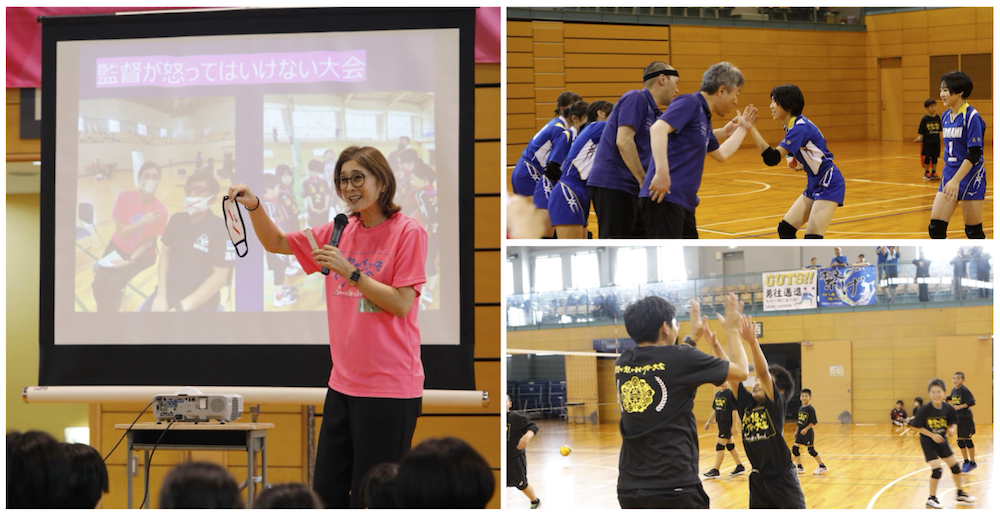
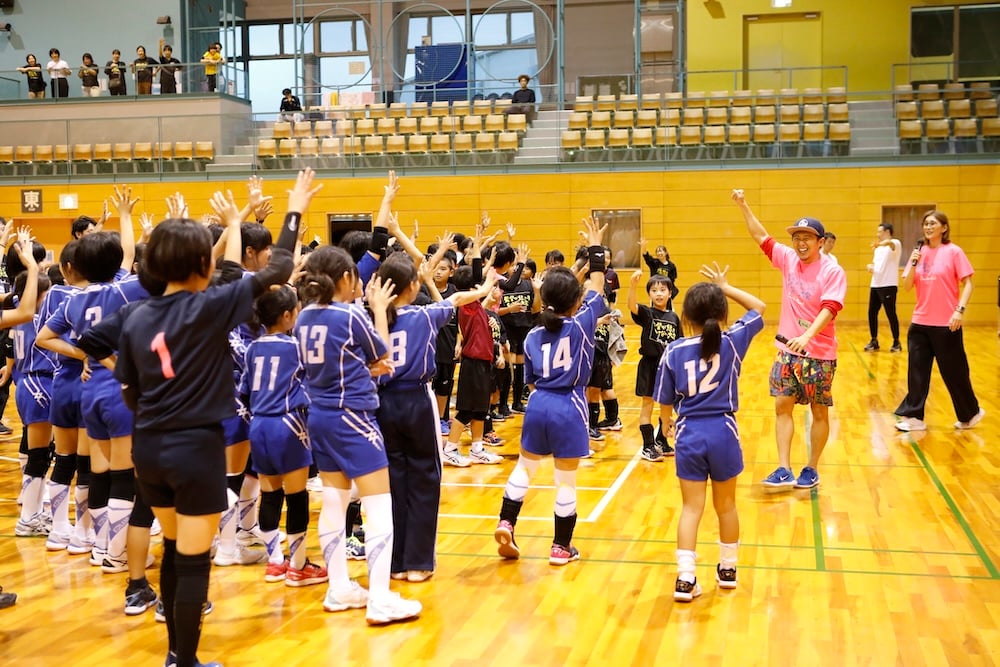
When it was time for the opening, the children called out loudly, “Masuko-san!” Ms. Masuko appeared in a T-shirt, moving briskly onto the floor, and the venue filled with applause.
After the opening remarks, an athlete supporting the tournament was introduced. It was Daiki Kubo, a current competitor who also serves as an athletes committee member of the Japanese Para-Swimming Federation. The crowd grew even more energized at the appearance of an active athlete performing at the highest level.
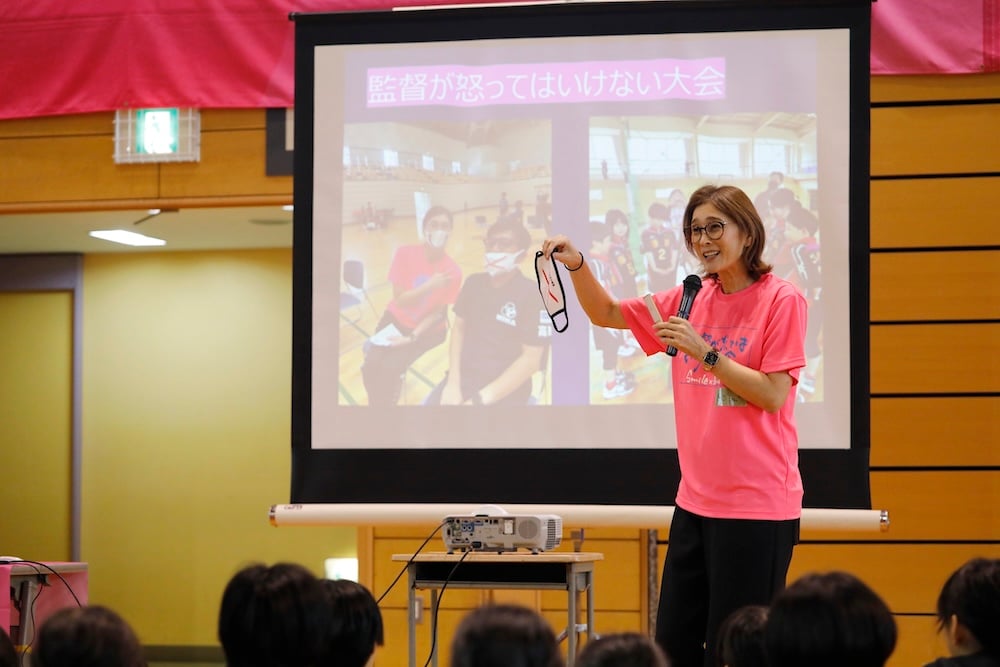
The day began with a sportsmanship seminar. Ms. Masuko asked the children, “Who thinks of themselves as a sportsman?” but almost no one raised a hand.
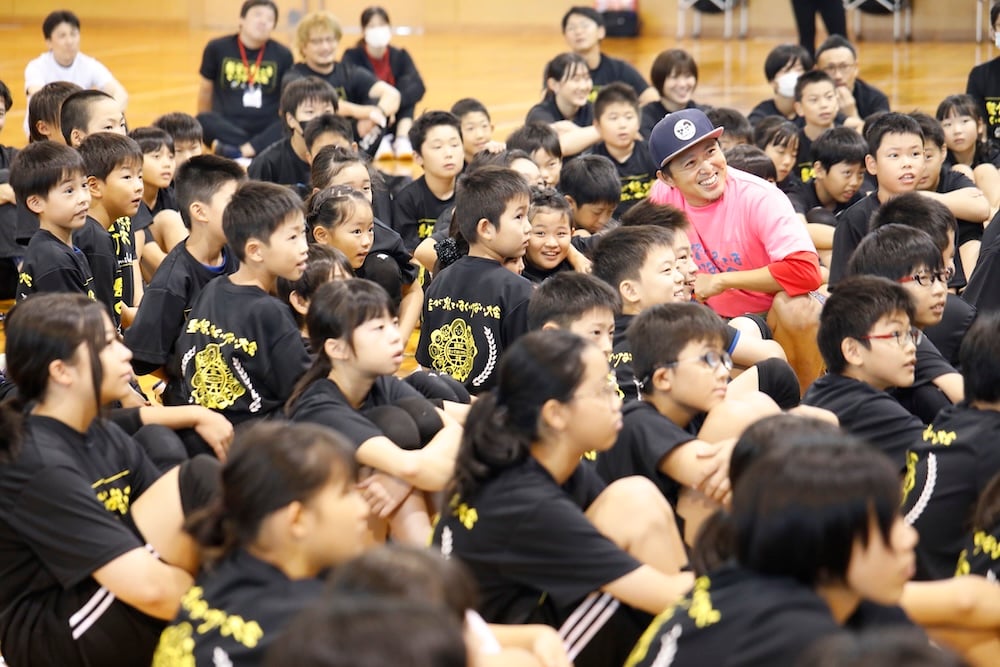
When Ms. Masuko asked why, the children said things like, “I didn’t raise my hand because I don’t know what ‘sportsman’ means,” and “I’m not good at sports, so I can’t call myself a sportsman.”
So what does “sportsman” actually mean? Even the coaches and parents could not answer.
In response, Ms. Masuko began to speak.
“Sports in Japan is too focused on winning. That’s why people expect a sportsman to be strong and to win. But we don’t use that Japanese definition in this tournament. Here, we use the British definition, from the country where modern sport began: a sportsman is someone who values teammates and is trusted by others, someone people think is admirable.”
She continued, “In sports, an admirable person is someone who can respect others. Even if you lose, you don’t get irritated or insult your opponent. And it doesn’t apply to someone who ignores manners, either. What matters is not only athletic ability, but also personal maturity.”
After hearing this, the children responded with their own pledges such as, “I’ll be kind to younger teammates and keep calling out during play,” and “I want to praise the other team’s good plays and help both teams improve together.”
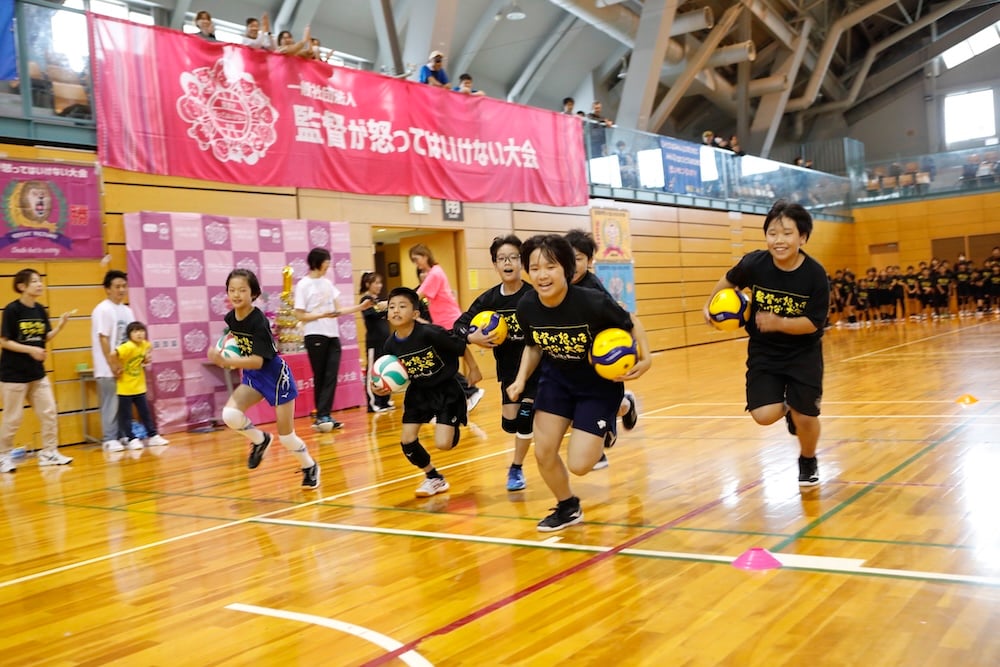
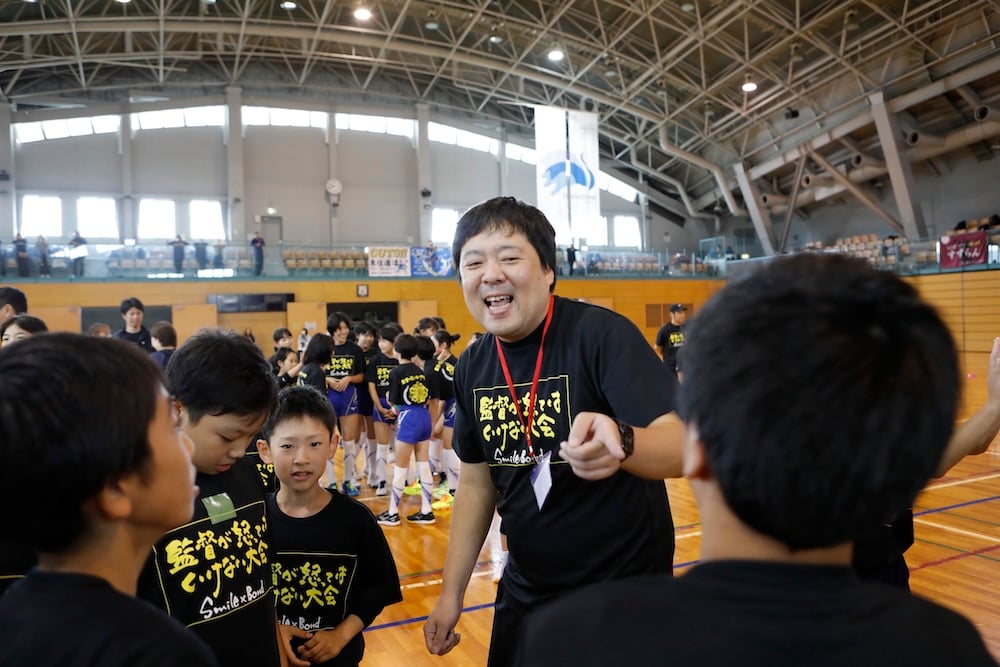
To help the children and coaches relax before the matches, the organizers held recreational activities, including a team relay race and a target-throw game using volleyballs for coaches and other leaders.
Mistakes during play are challenges for children to overcome
While the children were intensely engaged in the recreational activities, a separate program was held in another area: an anger management seminar for coaches.
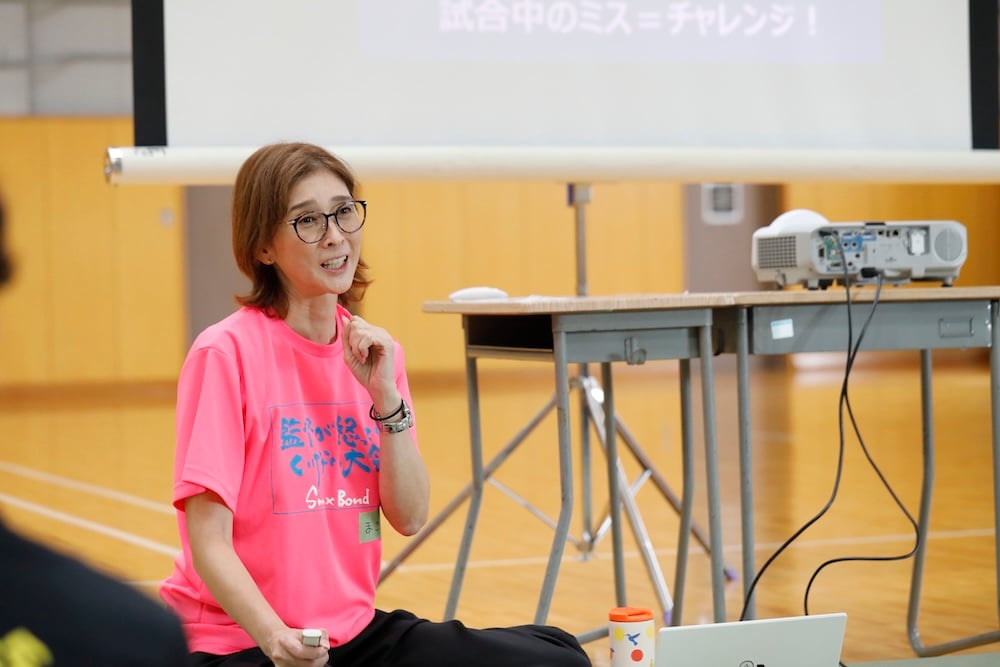
Anger management is a form of psychoeducation and psychological skills training, said to have originated in the United States in the 1970s, that helps people handle anger effectively. Addressing the coaches, Ms. Masuko reflected on her playing days.
“I was so afraid of being yelled at by my coach that I never truly enjoyed volleyball. I want you, as coaches, not to make players tense and afraid. When children make a good play, I hope you will give them a high-five, step onto the court to praise them, and encourage them more and more.”
Of course, there are times when a coach needs to correct a player.
“For example, if someone breaks rules or etiquette, or shows a poor attitude toward practice or the game, you need to correct it,” Ms. Masuko said. “But even then, it is important to explain the reason clearly. And you must not scold for mistakes during a match. Those mistakes are challenges for children, so instead of scolding, I want you to give advice.”
What matters is drawing a clear line between when to correct behavior and when not to. Still, it is not something that can be put into practice overnight. How can coaches calm unnecessary anger and face children with a steady mindset?
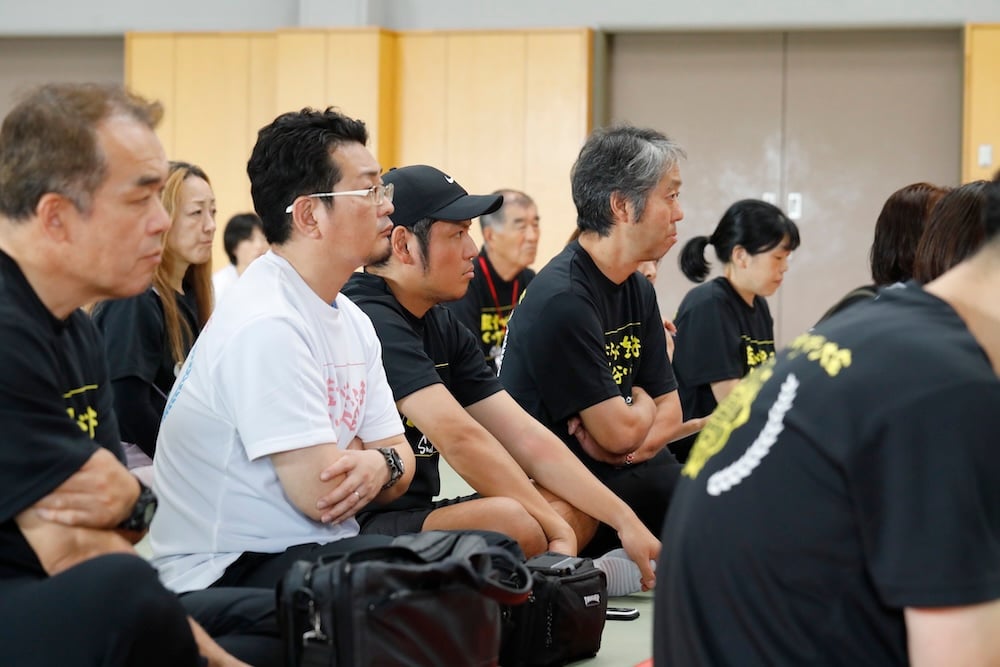
Ms. Masuko explained practical techniques, including how to control anger and how to use pep talk* to reframe negative phrases into positive ones, such as changing “Don’t make mistakes” to “Go for it,” or “Why can’t you do it?” to “Let’s give it a try.” Coaches and others nodded as they listened, while also seeming to reflect on their own coaching methods to date.
After a break for lunch, the friendly matches finally got underway.
- Pep talk refers to positive, encouraging words that coaches in the United States traditionally use before games to motivate players and help them focus. “Pep” means energy, vitality, or spirit.
The impact of the tournament on children and coaches
A total of 12 teams participated. The rule was exactly as the tournament name says: No-Scolding. With the goals of maximizing children’s enjoyment and encouraging both children and coaches to take on challenges, the teams played friendly matches.
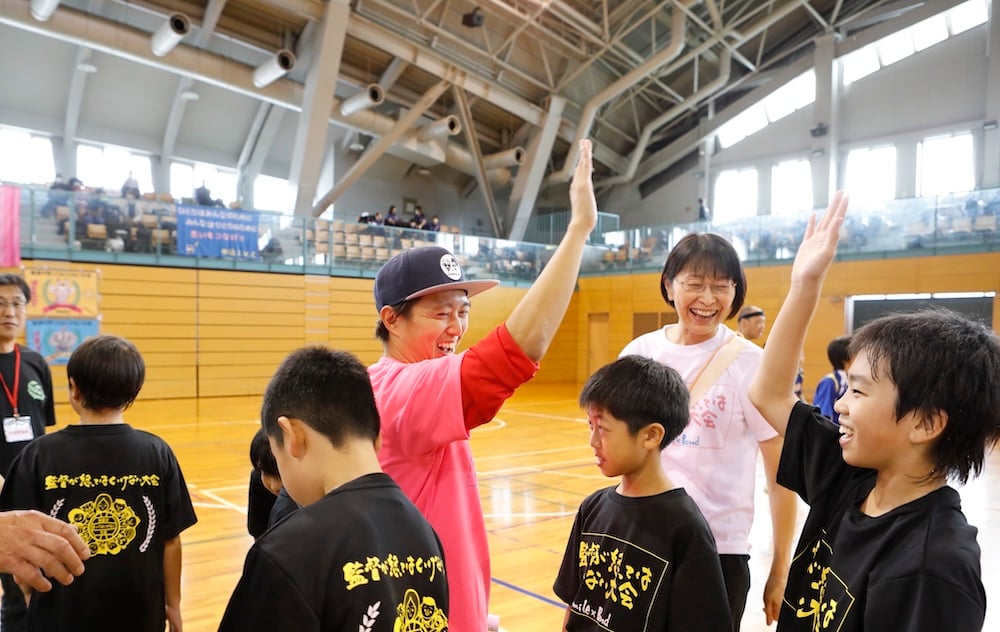
Ms. Masuko was impressed, even remarking that the coaches at this tournament were excellent. Whenever a serve or spike landed, coaches stood up to celebrate and high-five the children. Even when a mistake led to a lost point, there were no scenes of anger. Instead, coaches offered clear, timely advice. Warm, encouraging moments like these could be seen throughout the venue.
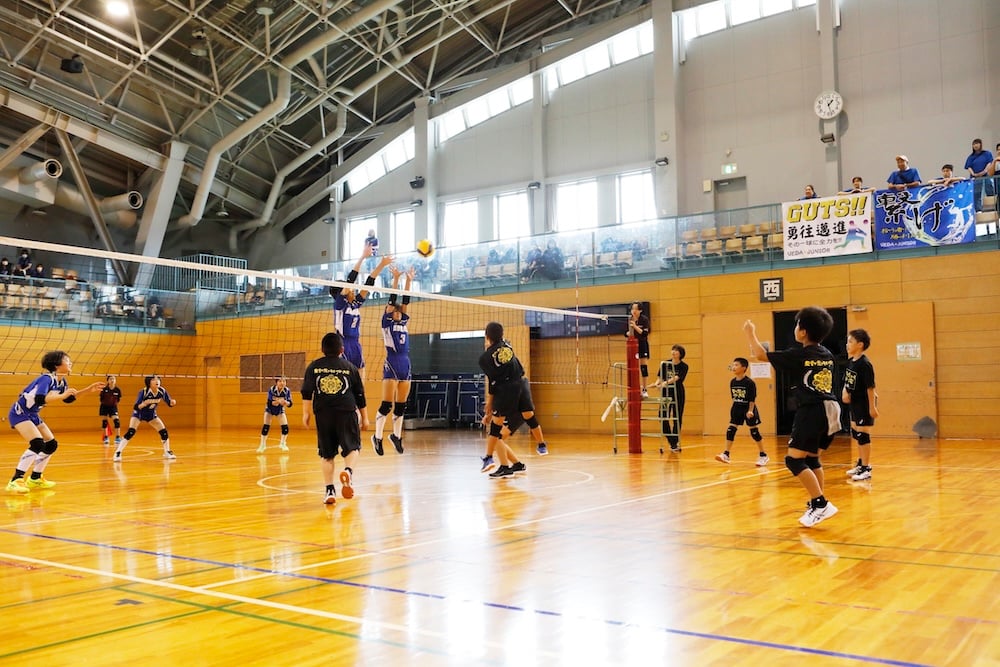
One team that stood out for the strong sense of unity between coach and players was Ueda Junior. Their opponent was Konami Volleyball Club, one of Nagano Prefecture’s top powerhouses, but the Ueda Junior players put up a strong fight.
They were under pressure for much of the match, but kept scoring with persistence. They erupted in high-fives with every point, and you could feel Ueda Junior’s energy building higher and higher. Konami Volleyball Club took the first set, but after a close battle, Ueda Junior won the second set.
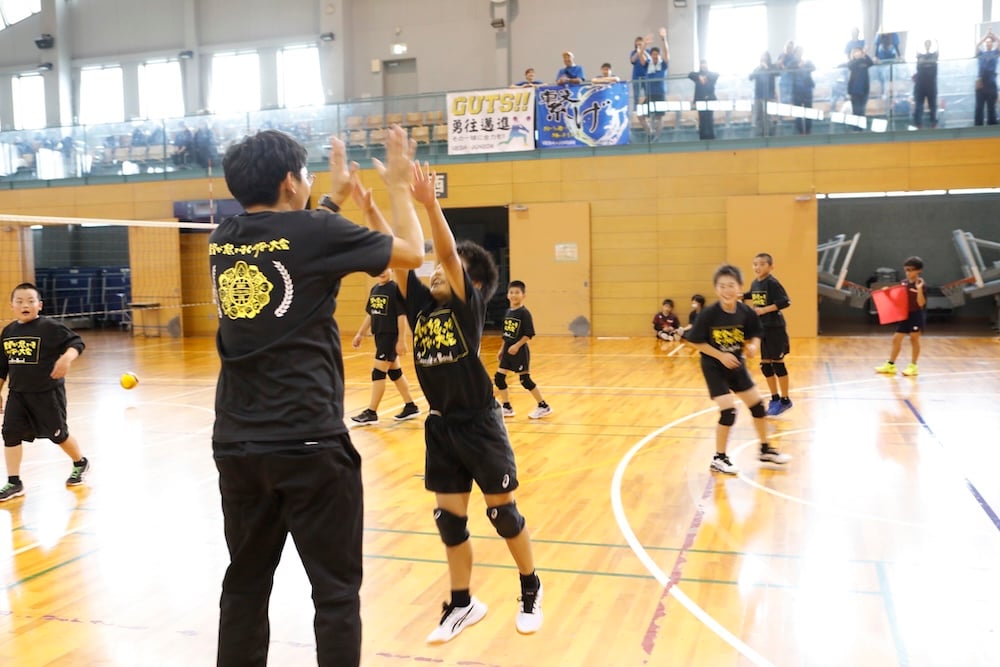
It seemed to be a result that left both the players and their coaches thoroughly satisfied.
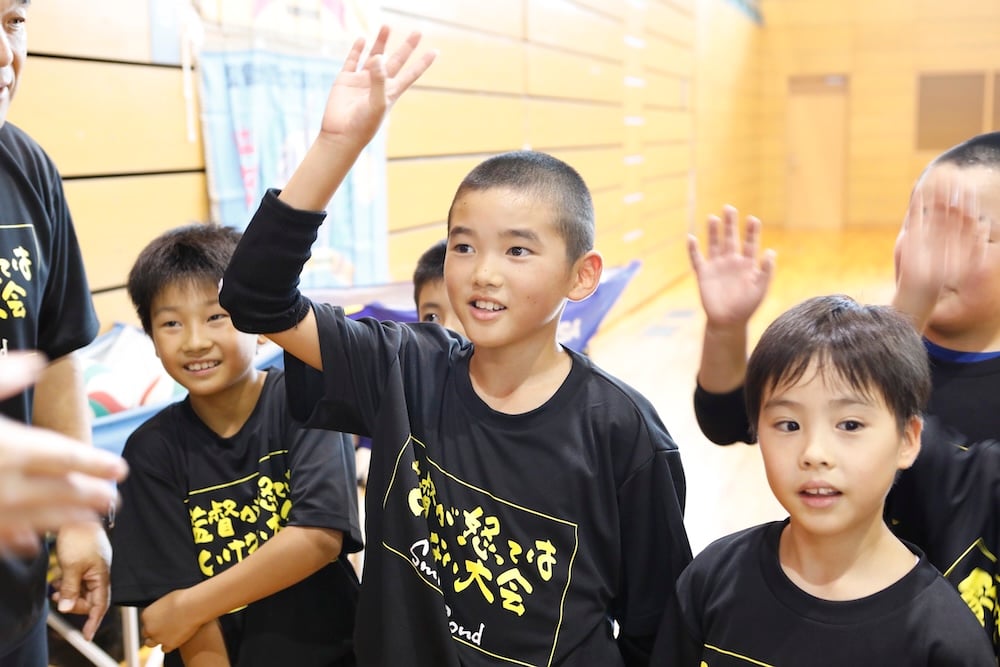
After the match, the children said, smiling, “When I scored, the head coach and the other coaches high-fived me, and that made me really happy,” and “I usually get yelled at, but today there was none of that, so I could enjoy playing.”
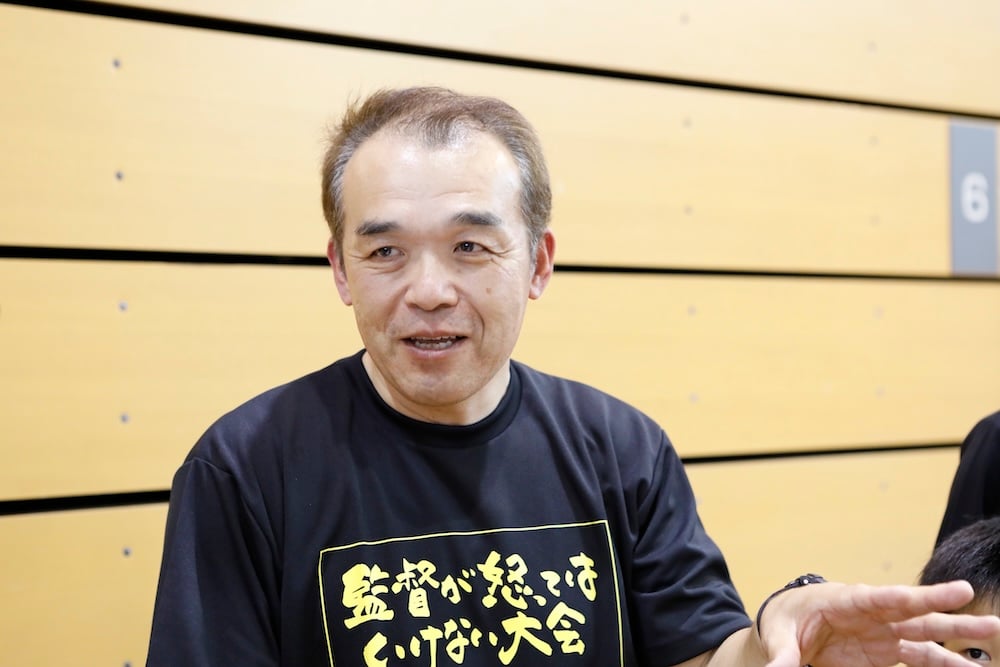
We also spoke with the head coach, Daisuke Sekiguchi.
The Nippon Foundation Journal Editing Department: It was striking to see you trying to enjoy the match as well, standing up to celebrate and giving high-fives every time your team scored.
Daisuke Sekiguchi: Today, I tried high-fiving because I wanted the kids to be happy. And once I did, I found myself getting more excited, too. I started thinking, let’s enjoy the match more and more. As a result, the kids’ energy went up, and we managed to take a set off a powerhouse team. Even we are absolutely amazed!
Journal: Do you think this experience will be useful in your coaching going forward?
Sekiguchi: After the anger management seminar, I decided I’m going to stop scolding right away. I want to find what is good about each child, praise them, and help them grow.
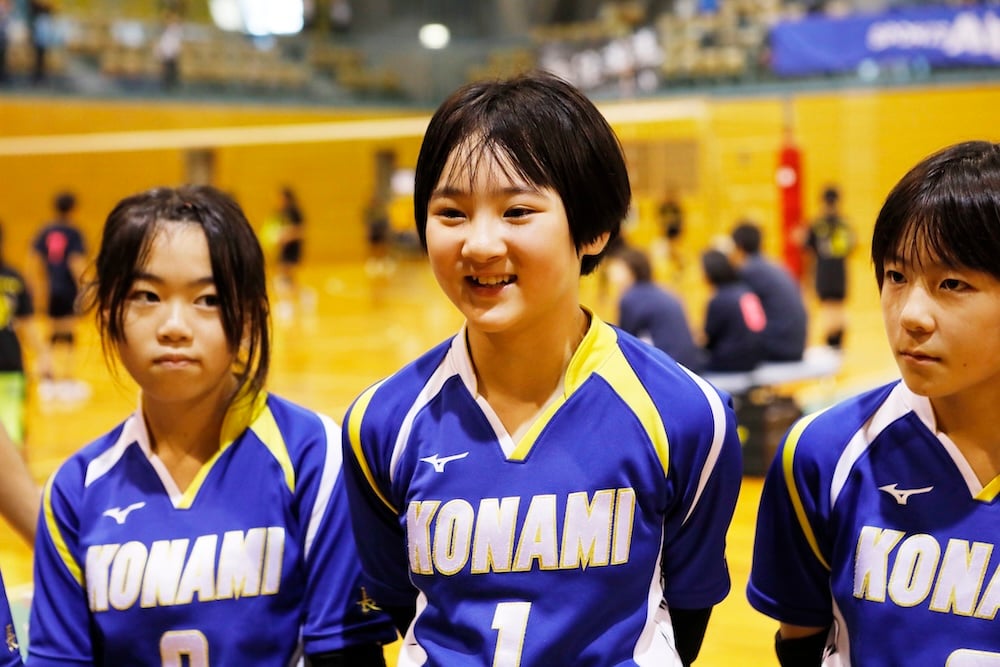
Meanwhile, Konami Volleyball Club, their opponent, is a team stacked with strong players, and they gave the impression of staying calm and always keeping their eyes on winning.
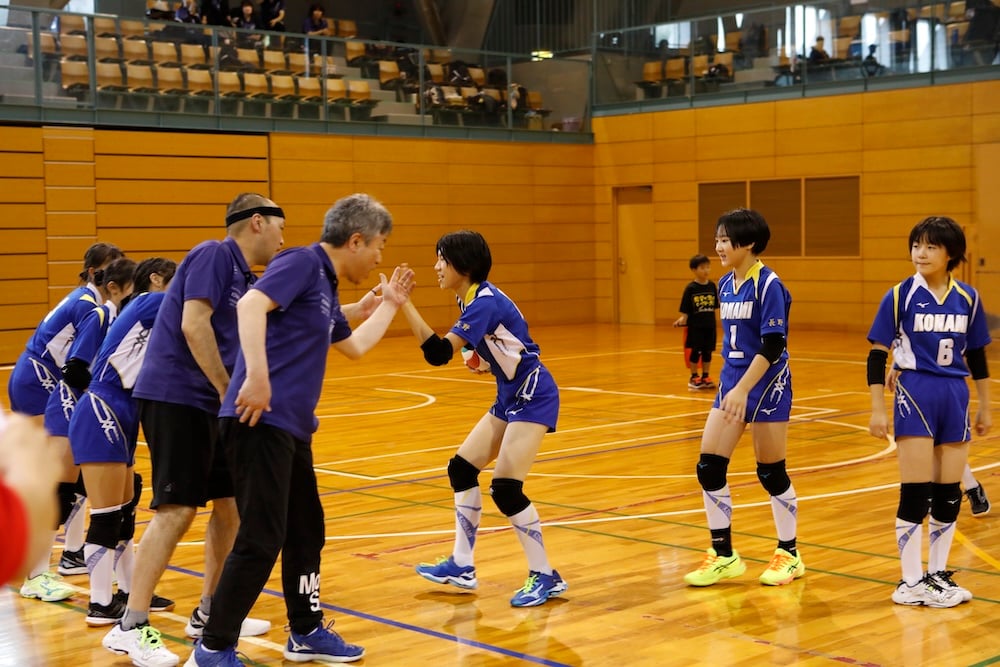
But after the match, the players said with smiles, “Because our coach didn’t get angry, we could play more freely than usual,” and “There were moments where both teams got excited together, and it was fun.”
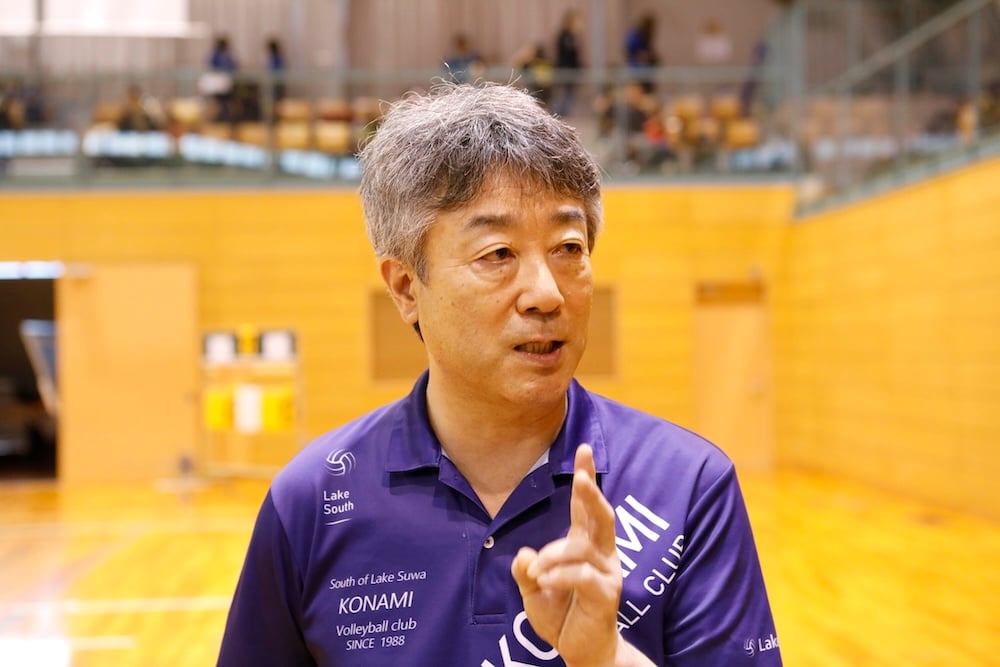
In fact, the team also participated in last year’s Nagano tournament in 2023. Their head coach, Satoru Uematsu, who leads the team, says that experience made him realize the importance of not scolding.
Journal: This is your second consecutive year participating in the No-Scolding Tournament.
Satoru Uematsu: When the first tournament was decided, someone involved reached out and said, Konami is a good team, so we really want you to take part. They thought that if we joined, other teams would be more motivated to participate as well. In the end, I learned a great deal by participating.
Journal: Did that make you feel how important it is to coach without scolding?
Uematsu: Of course, there are times when you need to correct behavior, such as manners, or attitude in games and practice. But now, even in those situations, I make sure to explain why I’m correcting them. I also try to be intentional about balance when it comes to enjoying play. Enjoying yourself and fooling around are not the same, so I want them to keep an appropriate level of focus and discover the fun of playing in their own way. At the same time, I’m careful not to use negative words. Some kids who have already graduated from the team even say, “You’ve become an incredibly kind coach now [laughs].
What active athletes see as the value of the No-Scolding Tournament
After the friendly matches, it was time for the closing ceremony. Ms. Masuko presented awards to teams and individuals, including an Outstanding Cheering Award, a Smile Award, and a Nice Challenge Award, and concluded by presenting certificates to every participating team.
Perhaps because Ms. Masuko’s message reached them, the children’s faces after the closing ceremony were filled with a sense of accomplishment and fulfillment.
Not scolding in sports does not simply mean praising children or treating them gently. What matters is following the British ideal of sportsmanship, fostering children’s initiative, and nurturing their motivation to take part in sports with genuine enjoyment.
At this Nagano tournament, which conveyed that important message, one behind-the-scenes key figure was Daiki Kubo, who joined as a supporting athlete. He actively engaged with the children and cheered louder than anyone during matches. That spirit likely moved many children in a lasting way.
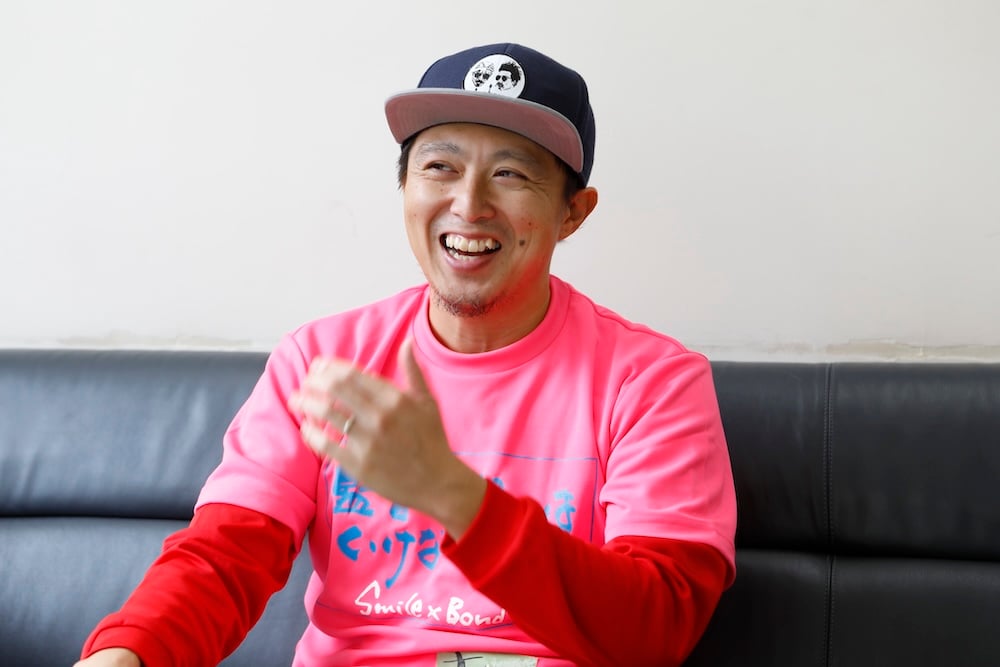
Journal: What made you decide to participate in this tournament?
Daiki Kubo: It actually started with not being able to compete at the Tokyo 2020 Paralympic Games. I was left with mild paralysis from the aftereffects of an illness, and that’s what led me to become a para-athlete. But just before Tokyo 2020, my grade of disability certificate changed, and I had no choice but to give up on competing. That experience made me think about a win-at-all-costs mindset, and I started to feel that there must be things more important than winning and losing. Around that time, I came across the No-Scolding Tournament, and that’s why I joined this time.
Journal: Have you also seen harassment in sports settings?
Kubo: I’ve seen a lot. At the swimming school I went to as a child, corporal punishment happened, and children who were physically weak were sometimes made to quit. The coaches were focused only on winning. Growing up in that environment, I ended up internalizing that win-at-all-costs mindset without realizing it. When I saw athletes who couldn’t win, I would think, it’s because they aren’t working hard enough, right? Looking back, it’s a negative cycle. When athletes with that mindset become coaches, they end up repeating the same harsh approach. We have to break that cycle somewhere.
Journal: In that sense, this tournament seems to have real significance.
Kubo: I agree. I hope more coaches will learn what not scolding means and free themselves from a win-at-all-costs mindset.
Journal: Do you have personal goals going forward?
Kubo: In para swimming, parents often serve as coaches. That can lead parents to become overly strict, and in the end, children suffer. Eventually, they can come to dislike swimming itself. That would be heartbreaking, so I want to focus on outreach to parents. I want to increase, even a little, the number of children who continue to like swimming. And beyond that, my ultimate goal is an inclusive society. These days, we hear words like inclusive society and diversity all the time. But ideally, we wouldn’t even need those terms. We could simply live together, naturally, with all kinds of people. As an athlete, I want to work toward that kind of society through swimming.
Editor’s Note
The No-Scolding Tournament aims to eliminate harassment and corporal punishment in sports. To learn what the initiative does in practice, we attended a tournament in person.
What we saw was children playing sports with smiles. It made us realize that this is how it should be.
At the same time, the anger management seminar underscored how important it is to take a practical, evidence-based approach with coaches. Rather than simply telling people not to scold, the tournament carefully explains why it matters and shares examples and methods. It left us feeling that this kind of approach could help change the culture in sports.
Text: The Nippon Foundation Journal Editing Department
Photo: Emi Enishi