Could Climate Change Mean the End of Skiing and Snowboarding?What we can do to protect winter and snow
Key Points
- Climate change is already having an impact, with ski resorts unable to open and glaciers being carved up just to create competition courses.
- Ski resorts are increasingly switching to renewable energy to reduce CO2 emissions. Several resorts have already begun implementing small-scale hydropower generation.
- Even if individuals cannot solve these problems alone, it is important to speak up and work to change the systems in place. This is what leads to solutions for environmental issues.
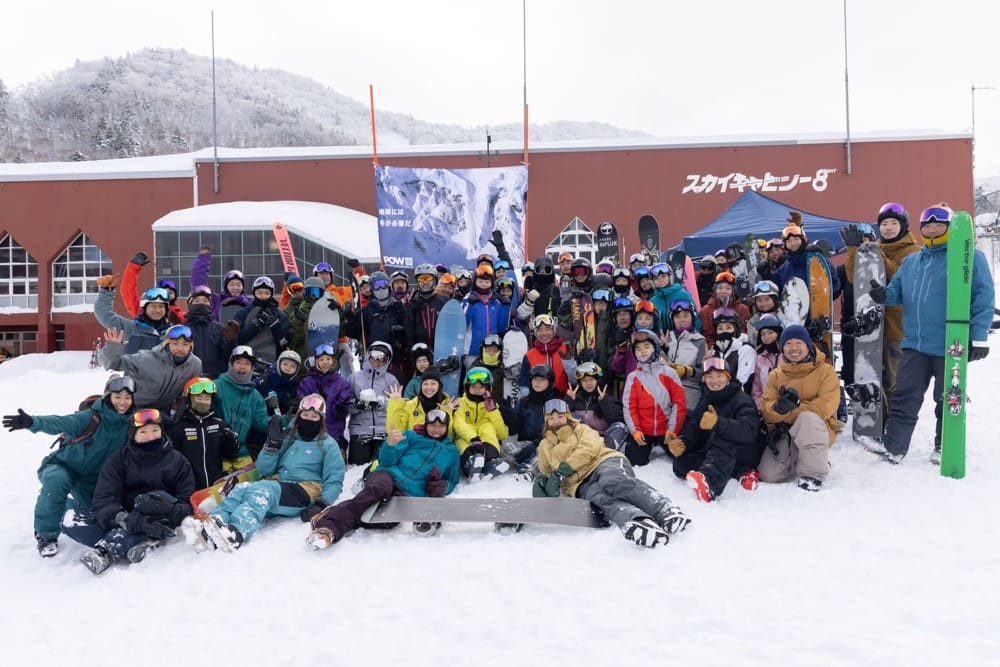
As climate change drives rising temperatures, Japan’s snow-covered mountains are beginning to feel the effects, with declining snowfall and ski resorts unable to open. Some people may associate snow with negative images such as traffic jams and accidents. However, snow also has cultural significance as an essential element of winter sports and events unique to snowy regions, as well as practical value for farmers who rely on snowmelt for irrigation. The loss of snow would affect a wide range of sectors, from ski resorts and professional sporting events to snow festivals, outdoor brands, and lodging facilities. Driven by the urgent sense that snow could disappear entirely from Japan’s winter mountains, a group of skiers and snowboarders came together to establish Protect Our Winters Japan (external link, in Japanese), hereafter referred to as POW JAPAN. From the perspective of the snow sports community, POW JAPAN is actively working to build a society capable of addressing climate change and to make policy recommendations on national climate and energy issues. For this article, we spoke with Shotaro Takada, Secretary-General of POW JAPAN, about the organization’s activities, the current state of the sports world, and initiatives being undertaken by ski resorts.
Ski resorts that can’t open, glaciers carved up just to hold competitions: the reality of snow shortages
The Nippon Foundation Journal Editing Department: What kind of organization is POW JAPAN? Please tell us about the background and circumstances that led to your work on climate change.
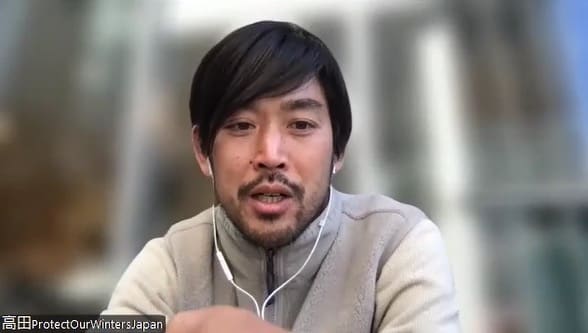
Shotaro Takada: POW JAPAN is an organization that launched in 2019. Made up primarily of skiers and snowboarders, we work toward addressing climate change from the perspective of winter sports and the outdoors. POW itself was founded in the United States in 2007. Professional snowboarder Jeremy Jones, while riding mountains around the world, witnessed firsthand that snow volumes were clearly declining and winter seasons were growing shorter. Driven by this sense of urgency, he launched POW to take action on the climate change driving these problems. Since then, the movement has expanded beyond skiing and snowboarding to encompass other outdoor sports, and chapters have been established around the world. Japan is the 15th country, and we operate from the Hakuba area in Nagano Prefecture.
Journal: What kind of activities do you carry out?
Takada: In Japan today, there is not yet a widespread understanding of where the climate change problem is heading or what countermeasures are needed. So we conduct educational outreach through workshops, events, and media communications while growing the number of people committed to tackling this issue. The other pillar of our work is advancing climate action starting from ski resorts and surrounding communities, which are our primary fields of activity. This includes supporting decarbonization efforts and engaging with local government initiatives. We also monitor Japan’s energy policy and, when necessary, make policy recommendations to political parties and members of the Japanese Diet.
Journal: What impact does declining snowfall have on Japanese society and culture?
Takada: The impact on skiing and snowboarding culture is enormous. While there are plenty of ski resorts overseas, in most cases the mountains are far from urban areas. In Japan, ski resorts are found all across the country, and you can reach them from major cities like Tokyo and Osaka in just two to three hours. This is an incredibly privileged location by global standards. City dwellers who commute to ski resorts every weekend have built meaningful connections with these communities. On top of that, other effects are beginning to emerge, such as warm winter temperatures making it impossible to maintain snow for snow festivals and melting snowfields forcing the closure of mountain trails.
Journal: What specific impacts are ski resorts experiencing?
Takada: The degree of climate change impact varies by region, but the common thread is that seasons are getting shorter. In the past, resorts in Hokkaido and Nagano routinely stayed open through the Golden Week holidays in early May. But now, in the Hakuba area of Nagano for example, the situation has reached a point where snow has to be gathered and piled onto the highest course just to barely keep operations going. At lower-elevation ski resorts, operating at all has become extremely difficult.
Journal: That must affect winter sports as well.
Takada: Yes. At the Winter Olympics, events are being held using artificial snow because natural snow is no longer sufficient. Artificial snow is harder than natural snow, which increases the physical toll on athletes and raises the risk of falls and injuries. In 2023, the International Ski Federation carved away part of a glacier to create a course for an Alpine Skiing World Cup race, which drew protests from skiers around the world.
Journal: So the global snow shortage has reached the point where glaciers have to be carved up just to hold competitions.
Takada: That’s right. Research has shown that if warming continues at the current pace, by the end of this century, Sapporo, Japan, could be the only city among past Winter Olympic host cities still able to provide conditions safe enough for athletes to compete.
The need to generate our own electricity from natural energy sources
Journal: With competitive sports already being affected, what initiatives is POW JAPAN pursuing?
Takada: In October 2024, we ran a newspaper advertisement with the powerful tagline: “If the snow disappears, we all lose.” The aim was to get people to consider just how much depends on snow as a resource, while at the same time raising awareness that snow is, in fact, diminishing year by year. That said, climate change is not a problem that can be solved through individual action alone. That is why we also take action to deliver policy proposals to Diet members, not just from those of us who love winter, but from the entire outdoor community.
This proposal received endorsements from prominent athletes such as ski jumper Sara Takanashi and Nordic combined competitor Akito Watabe, as well as approximately 40 ski resorts and local governments including Hakuba Village and Yamanouchi Town.
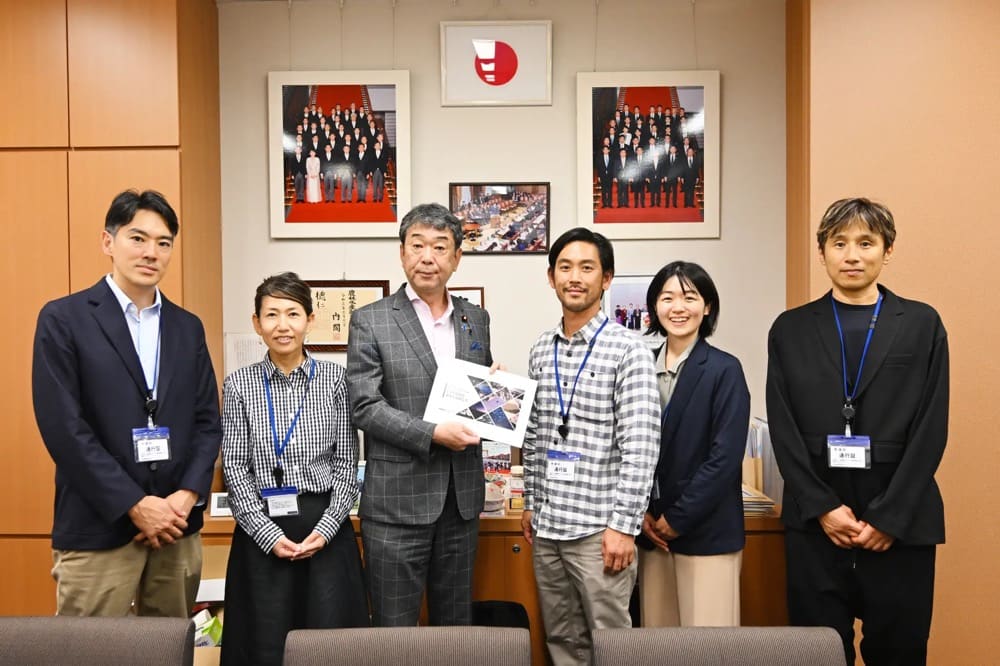
Journal: We understand you are also working to encourage ski resorts to switch to renewable energy.
Takada: Yes. In Hakuba, where we are based, there is a ski area called Hakuba Valley (external link). We collected 15,000 signatures in support of running all 10 ski resorts in Hakuba Valley on renewable energy, and submitted them to Hakuba Valley. As a result, they established a medium-term goal of having all ski resorts begin adopting renewable energy by 2025. Some resorts are already powering their night-skiing lights, snowmaking machines, and lifts with renewable energy. However, challenges remain. Switching to renewable energy still tends to be somewhat more expensive. Since ski resort businesses are not necessarily on the most stable financial footing, many hesitate to make the initial investment. Up to now, our efforts have focused on switching electricity contracts, but going forward, I believe we need to step things up by harnessing natural resources within the ski resorts themselves to generate electricity. In fact, several ski resorts have already begun implementing small-scale hydropower generation. Ski resorts have abundant snow and slopes, making it possible to generate power using water flowing along mountain streams. At Gransnow Okuibuki (external link), a ski resort in Shiga Prefecture, small-scale hydropower generation is producing more electricity than the resort needs to operate. In April 2025, Nozawa Onsen Village (external link) in Nagano Prefecture is also planning to install a small-scale hydropower facility within its ski resort to supply electricity to the building that serves as the base station for the gondola.
Journal: So rather than conventional large-scale power plants, this is small-scale hydropower generation that respects the natural environment. What about other forms of renewable energy besides hydropower?
Takada: The most familiar example would be solar power. However, solar panels cannot generate electricity when covered in snow, and the weight of snow can damage them, which is why solar panel adoption rates are low in snowy regions. That said, new technologies are emerging, such as installing solar panels on building walls to make effective use of available surfaces. Data has also shown that solar panels can generate electricity from light reflected off snow surfaces, and that in terms of hourly output, early spring when snow is still on the ground actually yields the highest generation levels. Over the past two to three years, energy prices for electricity and gas have been surging. Both for reducing CO2 emissions and for stabilizing ski resort operations, I believe it will become essential to produce and supply our own energy.
- Note: For further information, see this article: “Two Percent of Your Electricity Bill Goes to Power Plants and Nonprofit Organizations: The Hachidori Denryoku” (open in a new tab, in Japanese)
When ski resorts tackle environmental issues, the impact spreads to surrounding communities
Journal: What kind of awareness do professional athletes have regarding the issue of climate change?
Takada: There is no question that winter sports athletes have a strong sense of urgency about climate change. At the same time, however, I feel that many athletes hesitate to make outspoken statements on social issues or to engage with anything political. This is because when athletes speak out, they inevitably face negative criticism and comments on social media. At POW JAPAN, rather than leaving athletes to stand alone, we want to create a framework where we move forward together as a community.
Journal: Is this sense of urgency spreading beyond winter sports?
Takada: Yes, it is. We communicate with people involved in other sports such as mountaineering and surfing, and they share the same sense of crisis. It is steadily spreading, particularly within the outdoor sports community, where activities take place in nature. The J. League Climate Action initiative (external link, in Japanese) is also very impressive. The J. League has club teams in communities all across the country, with strong ties to their local areas. As a result, environmental initiatives naturally spread into those communities as well. I feel they play a significant role in creating examples of change. The same is true of ski resorts. Ski resorts often serve as core industries in their regions, so when a resort commits to working toward a decarbonized society, that attitude inevitably spreads to nearby lodging facilities and restaurants as well.
Journal: It seems like the sense of urgency around climate change has not yet been fully shared within Japanese society. What do you think the reasons are?
Takada: Organizations like ours have a story we can tell from personal experience: if the snow disappears, our entire lifestyle changes. But for most people, climate change is seen as just one of many environmental issues, making it hard to relate to on a personal level. Another reason, I think, is that very few people in Japan have had the successful experience of seeing something change as a result of their own engagement with a social issue. At POW JAPAN, we want to spread positive success stories like the small-scale hydropower generation I mentioned earlier. We carry on our work with the hope that, little by little, these examples can change the broader situation.
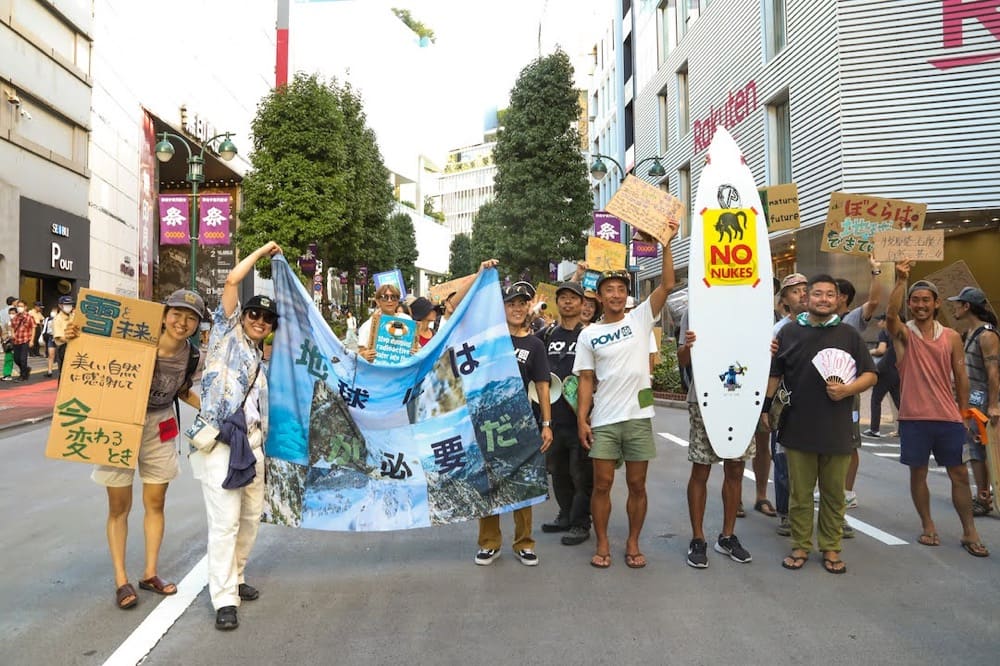
Journal: Is there anything each of us as individuals can do or should think about when it comes to climate change?
Takada: We live in an era when changes to the natural environment are strikingly apparent, and we know the causes. We need to face those realities squarely and shift our lifestyles toward ones that are kinder to the environment. That said, environmental problems cannot be solved by individuals alone. Beyond changes in awareness, it is also critical to change the systems that are causing the problem. Lobbying Diet members might sound like a daunting task, but it is a right that every citizen of this country has. If there is an issue you care about, reaching out to your local representative might be a good place to start. Rather than being satisfied with eco-friendly actions and lifestyles alone, I think it is important to actually voice your concerns about climate change, to not keep them to yourself, and to speak out to society. Don’t give up, don’t leave it to others, and start with whatever is close at hand.
Editor’s Note
While researching how the sports world is addressing climate issues, we learned about POW JAPAN’s work and reached out to request an interview. Through this interview, we learned for the first time just how serious the effects of snow shortages have become. When people hear about climate change, they tend to feel resigned, thinking it is a problem beyond any individual’s control. However, according to the United Nations Information Centre, actions, such as walking or cycling instead of driving, and choosing environmentally friendly products, can also contribute to mitigating climate change. This inspired us to start taking action in our own small ways.
Profile
Shotaro Takada
Born in Sapporo, Hokkaido, and currently residing in Omachi City, Nagano Prefecture. Mr. Takada began working at Patagonia International Inc., Japan Branch as a university student, and went on to spend his 20s fully immersed in the outdoors both personally and professionally. In his 30s, he traveled to New Zealand and Tasmania, Australia in search of inspiration for sustainable living. After returning to Japan, a fortuitous connection led him to become involved in launching POW JAPAN as its Secretary-General.
Text: The Nippon Foundation Journal Editing Department
Related Themes
Related Links
Related Articles
From Streets to the Sea: How The Nippon Foundation Turns Cleanup into a National Movement
Field Notes