Kotonone Magazine: Sharing the Working Lives of Persons With Disabilities and Envisaging a Comfortable Society for Everyone
Key Points
- Persons with disabilities who work at businesses that offer Type B support for continuous employment* earn an average monthly wage of 23,053 yen. The current reality is that they struggle to support themselves independently.
- Quarterly magazine Kotonone was launched in 2012 with the aim of sharing information on how persons with disabilities work and live their lives.
- If we mutually reinforce one another instead of dividing the world into those with and those without disability, we can create a society in which everyone can successfully play a role.
- Businesses that offer Type B support for continuous employment assist by providing work opportunities for persons with disabilities or serious illnesses for whom it is difficult to work at a typical company, as well as conducting training to develop work-related knowledge and skills.
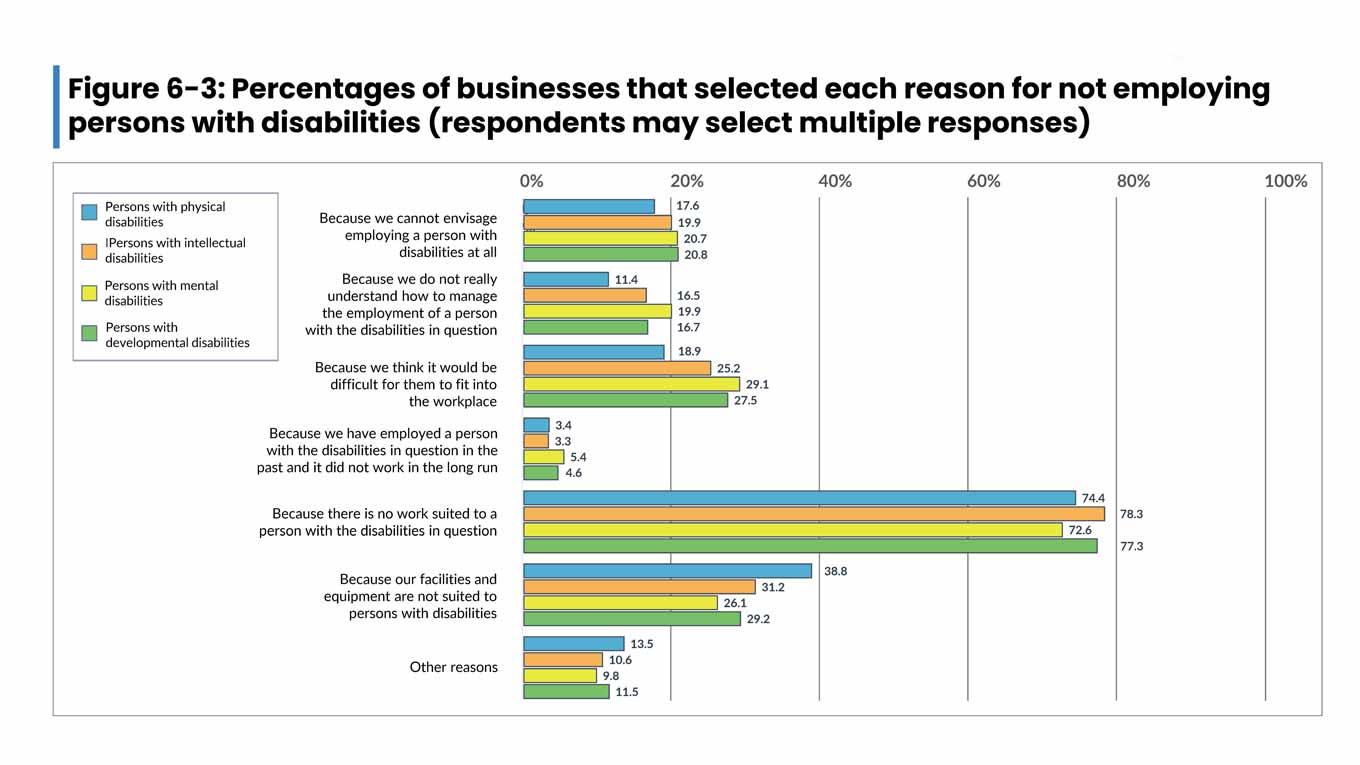
The employment of persons with disabilities is an area in which a great many challenges remain to be addressed. Survey results from Japan’s Ministry of Health, Labor and Welfare (external link, in Japanese) show that of the total 11.65 million persons with disabilities in Japan, 18 to 64-year-olds who live at home and are not in employment account for a significant number of people — that is, around 4.87 million people. Given that the systems for welcoming such people at would-be employers are also lacking, it is fair to say that it is difficult for such persons with disabilities to work.
- For further information, see this article: Why Hasn’t Employment of Persons with Disabilities Made Progress in Japan? (open in a new tab)
Even when a person with a disability does succeed in finding employment, the wages that they receive are low. According to a 2025 survey by the Ministry of Health, Labour and Welfare (external link, in Japanese / PDF) the national average wage for people working at a business providing Type B support for continuous employment in FY2023 was 23,053 yen. It goes without saying that it is difficult to support oneself independently on such a wage alone.
- For further information, see this article: Economic Independence for People With Disabilities A Post-Welfare Employment Facility Building Workplaces (open in a new tab)
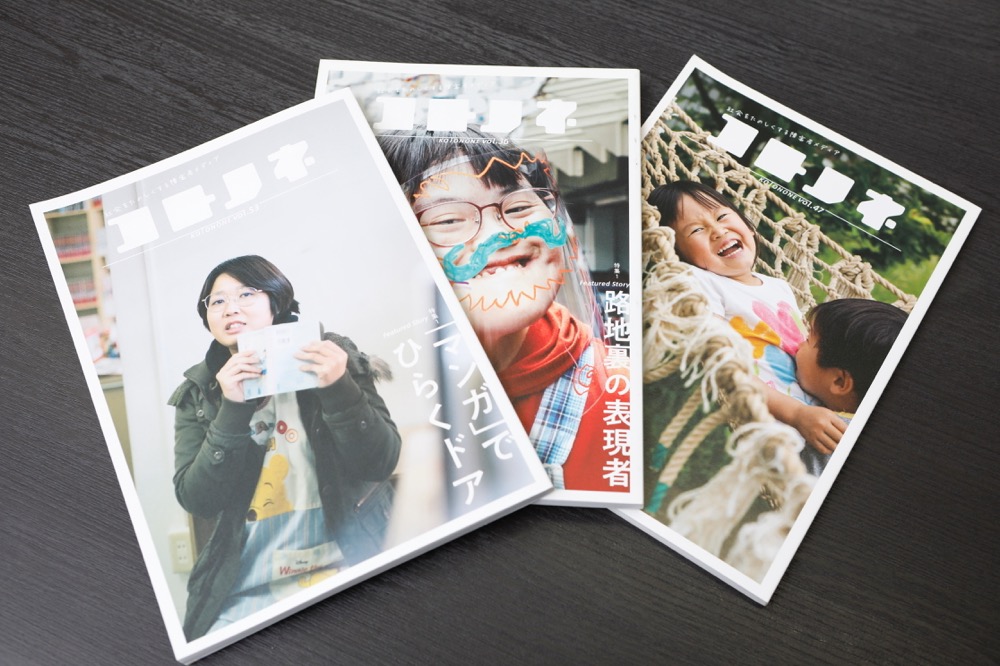
Amid such challenges involved in the employment of persons with disabilities, the quarterly magazine Kotonone (external link, in Japanese) was launched in 2012 with the aim of improving the environment for persons with disabilities pursuing employment. Over the 13 years since its launch, the magazine has shared how persons with disabilities work and also other aspects of their lives.
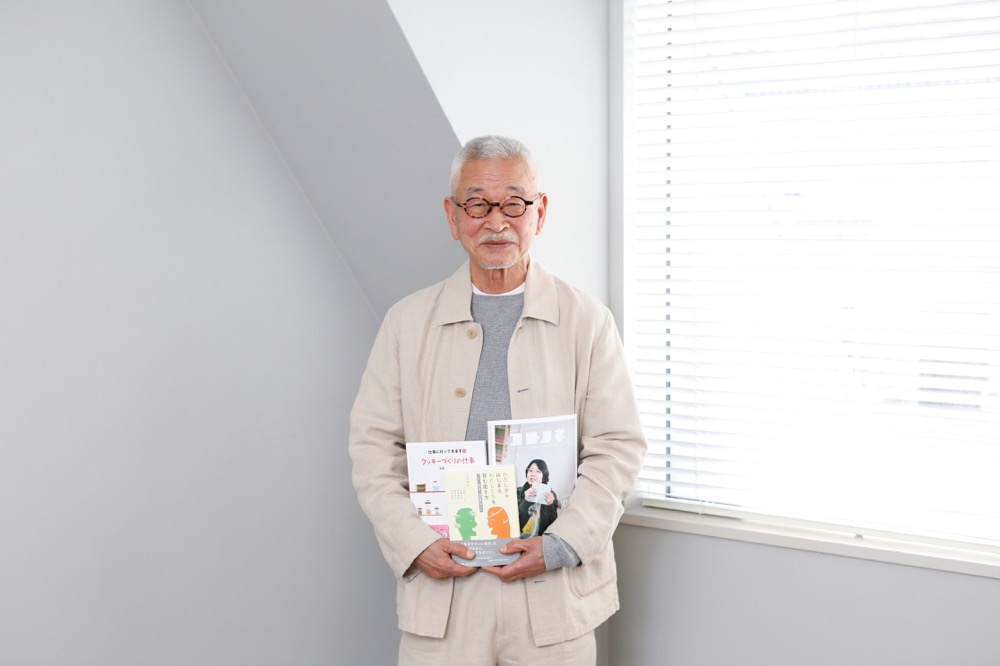
Design firm chairman Kikuo Satomi is editor in chief of Kotonone magazine. Despite having started out as someone who felt that the issues of persons with disabilities were completely irrelevant to him, Mr. Satomi has accumulated significant experience directly engaging with persons with disabilities since he launched Kotonone after being inspired by the events of the major earthquake and tsunami that struck northeastern Japan in March 2011.
We talked to Mr. Satomi about what he has learned in the process of publishing the magazine.
The Great East Japan Earthquake prompted self-reflection and a resolve to publish Kotonone as a means of actively contributing to society
The Nippon Foundation Journal Editing Department: Please tell us about what inspired the launch of Kotonone.
Kikuo Satomi: The catalyst was the devastating earthquake and tsunami that struck the Tohoku region of Japan in March 2011. The day after the earthquake, I was stunned to hear the news of the damage sustained by the nuclear power plant in Fukushima. I had thought that there was good potential for recovery from the earthquake alone, but when I saw the news of the accident at the nuclear power plant, I feared that the future was now completely unclear.
I wanted to at least do what I could, so I donated as much as I could to the affected region. I thought that this would bring me some peace of mind, but, quite the contrary, something just did not feel right.
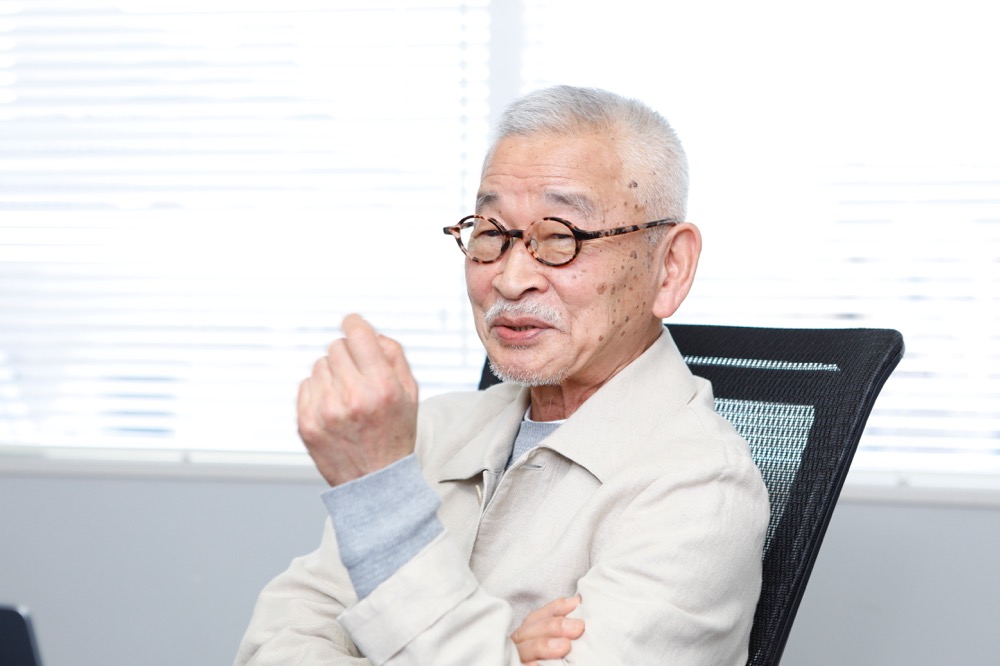
Journal: Why did you feel so unsettled?
Satomi: It was because I could hear a voice inside questioning if simply making a donation was really enough. Another reason why I felt so agitated was a direct sense that the explosion at the nuclear power plant meant that the recovery would require the creation of a new society, as opposed to returning to how things had been. I had a sudden urge to actively contribute to that new society.
I manage a company that plans products and develops their designs, and looking back on my life until that point, I felt that what I had been doing up until then was essentially nothing more than generating money. I have a child, but even there I had been leaving almost all of the work of raising my child to my wife. I deeply reflected on how I was and decided to now actively contribute to society.
Journal: You became determined to actively contribute to society, and this meant creating the magazine Kotonone?
Satomi: Yes. It was a long process to get there. The idea of creating a magazine for persons with disabilities was something that presented itself to me when the professional football team FC Machida Zelvia, for which I was a board member at the time, delivered picture books to the affected areas and people from a facility for persons with disabilities came to help us. One of those people asked me to create a magazine that would showcase items that had been made by persons with disabilities. The idea was for it to encourage more people to buy their products and ultimately raise the wages of those persons with disabilities.
But at the time I didn’t know anything about persons with disabilities, and — to be blatantly honest — I felt like the topic was irrelevant to me.
They told me that even when a person with disabilities works as hard as they can, they earn only around 13,000 yen each month, and asked me if this was shocking to me, too. I was genuinely taken aback, but to be honest, I was more surprised by the idea of persons with disabilities working, as opposed to how low the wages were. That was how ignorant I was.
I had declared that I was going to actively contribute to society, and I believed that investing in something that did not directly result in profit would extend my horizons. So, I launched Kotonone without much thought, on the basis that I would give it a try for about three years.
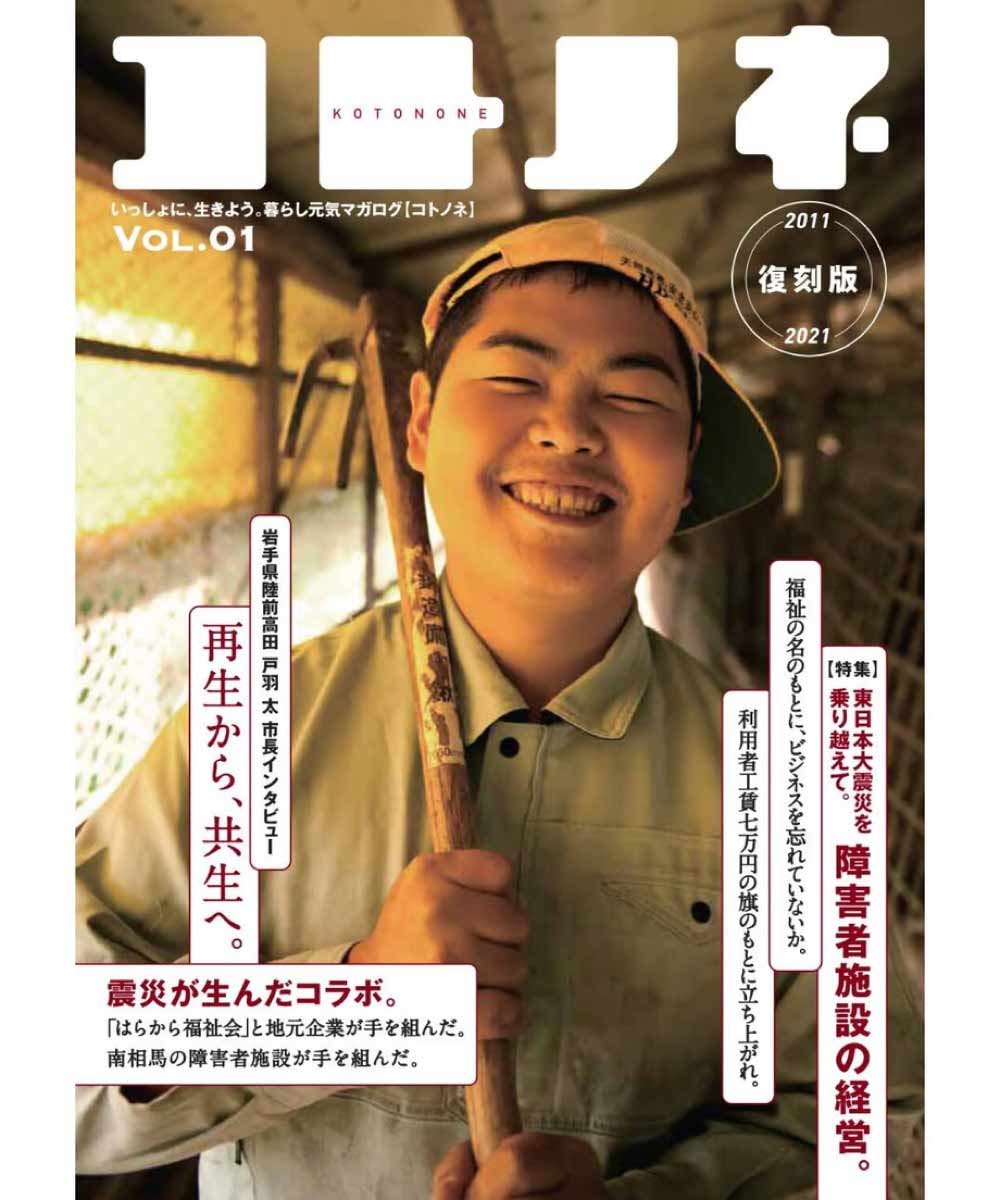
Journal: What kind of thoughts did you experience once you had actually launched the magazine?
Satomi: When we gave it a try and published the first issue, I made various discoveries. What particularly left an impression on me was the market research that we conducted when publishing the magazine. It was research to see how the public responds to products created by persons with disabilities.
The survey revealed that around 10% of all people surveyed actively “want to buy” such products, while those who conversely “did not want to buy” such products also accounted for around 10% of all those surveyed. It also showed that the remaining approximately 80% of the people did not have a particularly strong preference either way and tended to follow social trends or the lead of those around them.
That is, we realized that we needed to reach out to those people within the 80% who were leaning toward the group who “want to buy” such products. This is because we believed that if the people who actually buy the products are happy with their purchases, that positivity would automatically spread to those around them, and in turn lead to more purchases.
Journal: So, the market research prompted you to make some realizations.
Satomi: Yes, that’s right. The survey also prompted me to notice one more key factor. It was the fact that it was necessary for the forms of advertising being used to avoid calling for people to buy products because a person with disabilities had worked hard to make them. Instead, I decided to respect the importance of introducing truly wonderful products.
I did this because when we asked the people who had responded that they would actively buy something from a person with disabilities whether they would give the product to a good friend as a gift, many responded that they would.
When we asked the reasons, the most commonly selected was “because I think that the product itself is delicious or good quality.” I think this was a natural feeling. There were also those who said that they would “tell their friends that persons with disabilities make the product.”
In other words, if high quality products are delivered, the background story is naturally conveyed and becomes more widely known. That was a moment when I really felt the potential for such development.
Understanding of persons with disabilities allows us to rethink our view of society and the world, in turn expanding our horizons
Journal: You mentioned that you were initially planning to give Kotonone a try for three years, and you have now been running the magazine for over 10 years since its launch.
Satomi: Yes, the first time I went out to interview people for the magazine, something happened that made me realize how essential it is to learn more carefully about disabilities.
When I first went to visit a facility for persons with disabilities to conduct interviews, I noticed that I had a subconscious prejudice or felt distant from them. I was somehow unsure about how to interact with the people there, and the facility manager softly mentioned to me that the people there had keen intuition. I guess that my expression and attitude were giving away how nervous I felt.
When I had finished the interviews, I sunk into deep thought, wondering what it was I was really trying to achieve. I had the feeling that if carried on as I was going, it would be a disservice to those involved. And so for that very reason I decided I wanted to properly address and learn about what disability is and how persons with disabilities live their lives and their perspectives.
I will also never forget what Hidehiro Inagaki, who has a doctorate in agriculture and specializes in weed ecology, told us about what he called “disabilities in the natural world” when we interviewed him for Kotonone.
The rice that we eat apparently originates from a rice plant that does not shed its grains, which was the result of a sudden mutation. Although plants typically create offspring by shedding grains, around 10,000 years ago we happened upon a rice plant that does not shed grains. As a plant, it was a lifeform that went against the natural order, but for humans it was easy to harvest and eventually came to be carefully nurtured, leading to the widespread culture of eating rice.
On the other hand, the rice plants that have the originally intended trait of shedding seeds are still referred to today as “weed rice” and may even be seen as a troublemaker when cultivating plants.

Satomi: When I heard that, I realized that what is normal or abnormal is very much a matter of taste and cannot be defined.
Although, to be honest, somewhere inside I feel hesitant and nervous about drawing such a comparison from my position as someone who has no disability. It will probably be seen as empty words or something that I can say because it doesn’t directly affect me, and I get the feeling that I understand that criticism.
And yet, as I spent time interacting with people with disabilities, I was confronted with just how narrow my internal perception of what is normal and what is a given was.
The world does not come to be on the basis of one set of values alone. It made me realize that society only begins to make progress once we come together, rather than ignoring and eliminating those who are not the same as us. Addressing the topic of disability is ultimately, in extension, reconsidering the state of society as a whole. I now have that actual feeling.
Rather than being caught up with who does and who does not have a disability, it is important to create a society that is comfortable for everyone
Journal: What are your goals for the future?
Satomi: Last year, I launched a new initiative with people from businesses and facilities for persons with disabilities. It explores the theme of what is known in Japanese as “remaking” (rimeiku). This commonly entails the practice of taking clothes that are no longer worn and using them to make new clothes or something completely different, rather than throwing them away. We would like to go beyond clothing and create a more broadly defined world of remaking.
In the years to come, the concept of utilizing rather than throwing away will become increasingly important, given the environmental implications as well. Such a movement is in fact already widely known under the name “upcycling.”
This is exactly why I would like to facilitate the spread of remaking in Japan, too, not only in fashion but a range of fields. And I would like to develop opportunities for persons with disabilities to actively take part in that process and also take a role in making things.
Striving for a future where nothing is thrown away is, in extension, creating a society that does not eliminate people. I believe that this is what we can aim for and will carefully convey the significance behind our activities.
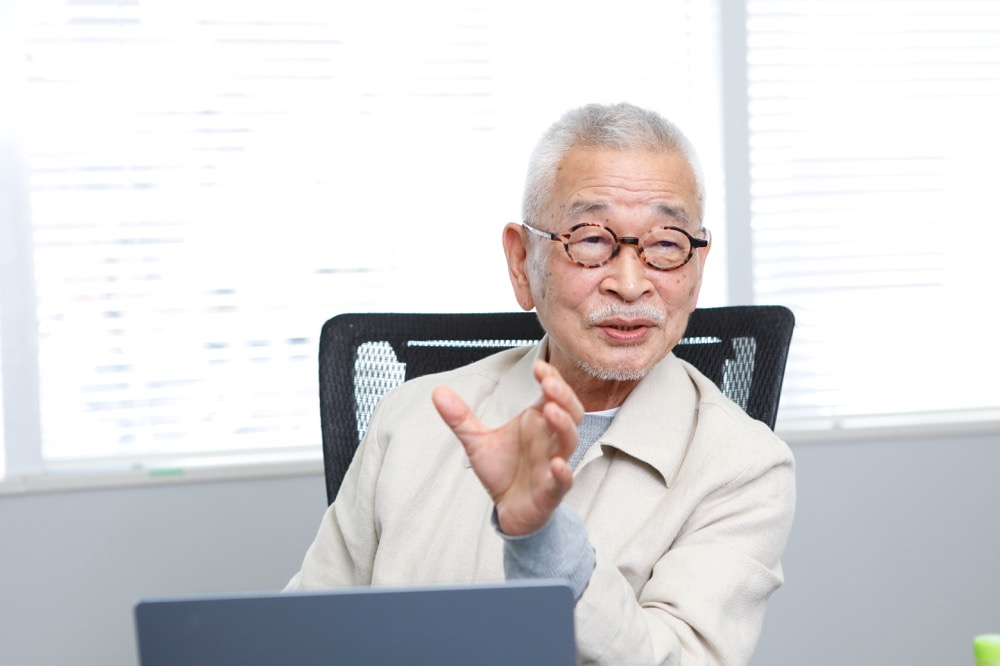
Journal: Please tell us about what each one of us can do to create a society that is comfortable for everyone.
Satomi: I think that it is important to grasp society from a wider perspective, rather than becoming fixated with whether or not a person has a disability. I personally feel that my world really has expanded since I became directly involved with disability welfare.
If I am honest, part of the old me used to be convinced that the world that persons with disabilities were living in was just one very small part of society. But when I actually interacted with that world, I found that it does in fact encompass diverse values and approaches to life and it is full of deep insights for readdressing society itself.
In today’s society, there are many people who find themselves in difficult circumstances, regardless of whether they have a disability or not. In addressing such difficulties, I feel that there is truly a lot that we can learn from the rights and social movements that people with disabilities have secured over history.
I think that it will become increasingly important in the future to ensure that rather than dividing the world into those with and those without disability, both are able to interact with each other and influence one another to create a society in which everyone can successfully play a role.
What each one of us can do to support persons with disabilities pursuing working lives
- Focus on the diversity of society rather than becoming preoccupied with whether or not someone has a disability or blinded by prejudice.
- Take interest in and support the products and services created by persons with disabilities.
- Take interest in developing a society that is comfortable for everyone to live in while also respecting each other’s differences.
This interview was organized after we happened to pick up a copy of Kotonone at the book shop and liked the trendy design and concept.
Even if we know we need to, learning about social issues may leave us struggling under the weight of our own inability to act. Instead of making the reader feel weighed down like that, Kotonone has something that makes the reader want to learn more about that world. I think that this is reflected in Mr. Satomi’s observation that the world of persons with disabilities is a great world of hidden possibilities.
Packed with thought-provoking insights, Kotonone magazine is available for purchase across Japan at bookstores nationwide and other establishments with compact Kotonone pop-up stores (external link, in Japanese).
Text: The Nippon Foundation Journal Editing Department
Photo: Emi Enishi
Profile
Kikuo Satomi
Born in Osaka Prefecture in 1948, Kikuo Satomi is a company director of Kotonone Seikatsu and chairman of S3 Branding Co. Ltd. He is publisher and editor-in-chief of quarterly magazine Kotonone, which was launched in 2012. He also played a role in the establishment of Shizensaibai Party, a collective of welfare groups aimed at providing work opportunities for persons with disabilities in natural farming, and the National Committee for Type-A Businesses Providing Support for Continuous Employment.