Educational Opportunities for Every ChildInside the introductory Japanese-language classrooms that support children with foreign roots
Key Points
- The number of children with foreign roots* who need Japanese-language instruction now stands at roughly 70,000, about double the figure of a decade ago.
- Nishio City, Aichi Prefecture, has established an introductory Japanese-language classroom to support these children’s education.
- Delivering the education children need, regardless of background, broadens the possibilities for Japan’s future.
- The term “children with foreign roots” refers to children with one or both parents from outside Japan. It includes children of foreign nationality, children with Japanese nationality (including dual nationality), and children living with a parent from abroad. The umbrella term “children and students with culturally and linguistically diverse backgrounds” is also used to capture this wide range of circumstances.
As Japan continues to welcome more foreign workers and international students, the number of their family members living here has also risen. With this comes an increase in students who need Japanese-language instruction:* students who cannot adequately carry on everyday conversation in Japanese, or whose limited Japanese is a barrier to participating in classroom learning.
- The term “students who need Japanese-language instruction” refers to children and students who have returned to Japan from abroad, foreign-national children and students, and children and students who, for reasons such as dual nationality or having a foreign-national parent, use a language other than Japanese at home; specifically, children and students who cannot adequately carry on everyday conversation in Japanese, as well as those who can manage everyday conversation but lack the academic language skills required at their grade level, hindering their classroom learning. Source: “Children and Students Eligible for Japanese-Language Instruction,” Ministry of Education, Culture, Sports, Science and Technology (external link, in Japanese)
According to a survey by the Ministry of Education, Culture, Sports, Science and Technology (MEXT), in 2023 there were 69,123 students in public schools who needed Japanese-language instruction, attending some 13,000 schools nationwide.
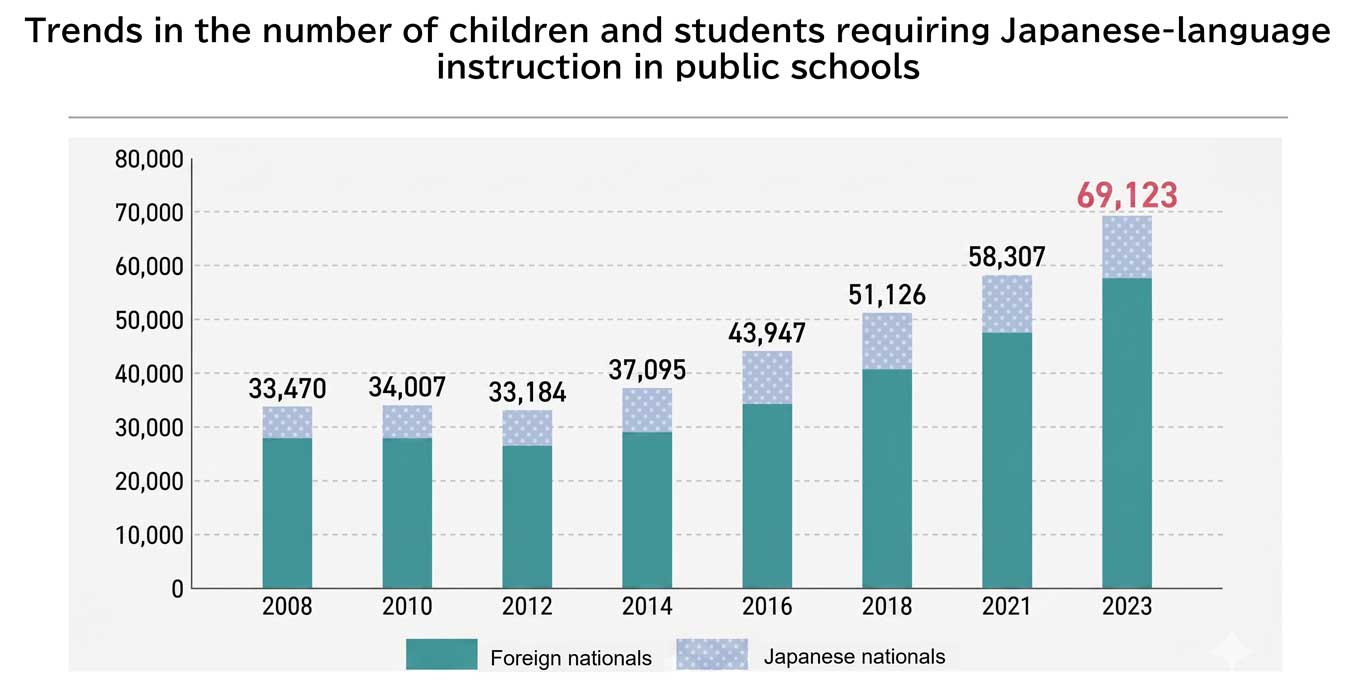
(Source: “Results of the FY2023 Survey on the Acceptance Status of Children and Students Requiring Japanese-Language Instruction,” Ministry of Education, Culture, Sports, Science and Technology (external link, in Japanese))
When children begin school without sufficient command of the Japanese language, they encounter all sorts of difficulties: trouble keeping up in class, or being left isolated when they can’t communicate. At the same time, MEXT’s May 2023 “Survey on the School Attendance Status of Foreign Children” (external link, in Japanese) also revealed that 8,601 children of foreign nationality may not be attending school at all.
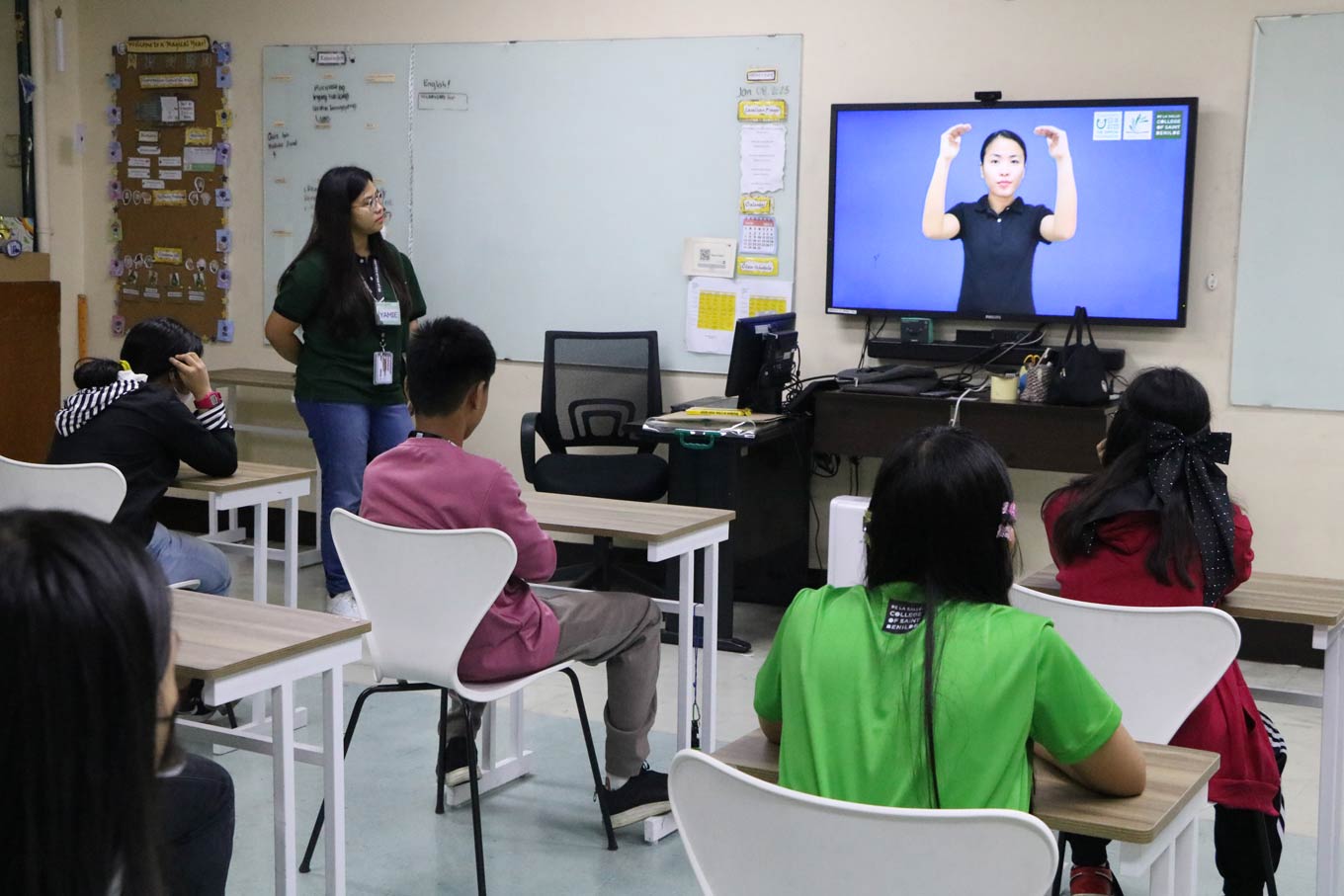
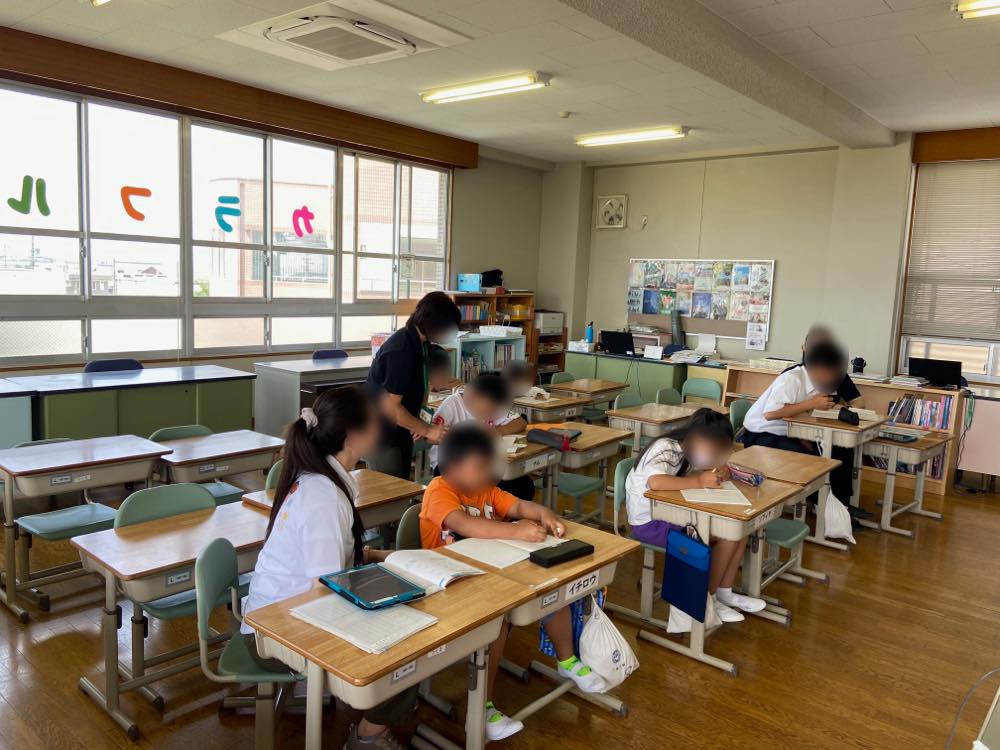
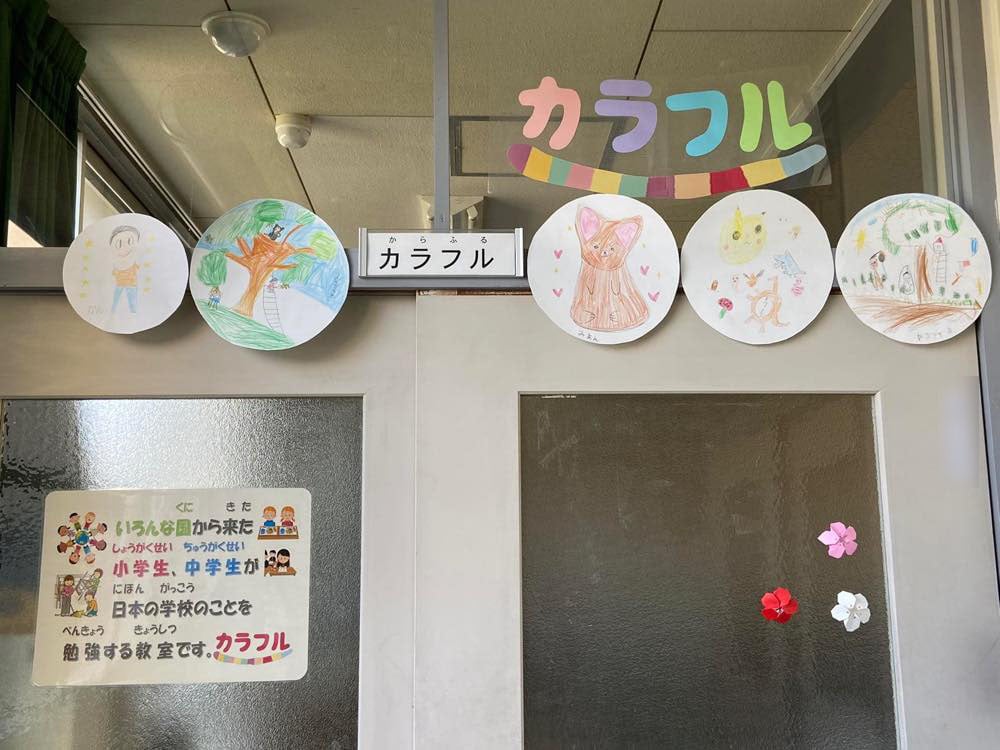
Aiming to do what they could to improve the situation, the Nishio City Board of Education in Aichi Prefecture set up a pre-class* in 2009 and, in 2020, restructured it into the Introductory Japanese-Language Classroom Colorful (external link, in Japanese). Children who have moved from abroad and transferred into elementary or junior high schools in Nishio City can opt to attend the class for around three months, where they learn the basic everyday routines of Japanese school life, receive Japanese-language instruction, and start being introduced to academic subjects.
- A pre-class is a class that newly enrolled or transferred children attend about four times a week while continuing to attend their home school about once a week
Because students continue going to their home school while practicing Japanese and learning Japanese school customs, they are expected to settle into school life smoothly once they finish the program.
In the first half of this article, we speak with Hiroko Kikuchi of the Nishio City Board of Education’s School Education Division, who is in charge of the Introductory Japanese-Language Classroom Colorful. In the second half, we speak with Keiichi Kamiya of The Nippon Foundation, who oversees Japanese-language acquisition support for evacuees from Ukraine and children with foreign roots. We hear from both about the specific support they offer and why educational support matters so much for these children.
Preventing problems at school and creating an environment where children can thrive
The Nippon Foundation Journal Editing Department: To start, could you tell us what kind of place the Introductory Japanese-Language Classroom Colorful (hereafter, Colorful) is?
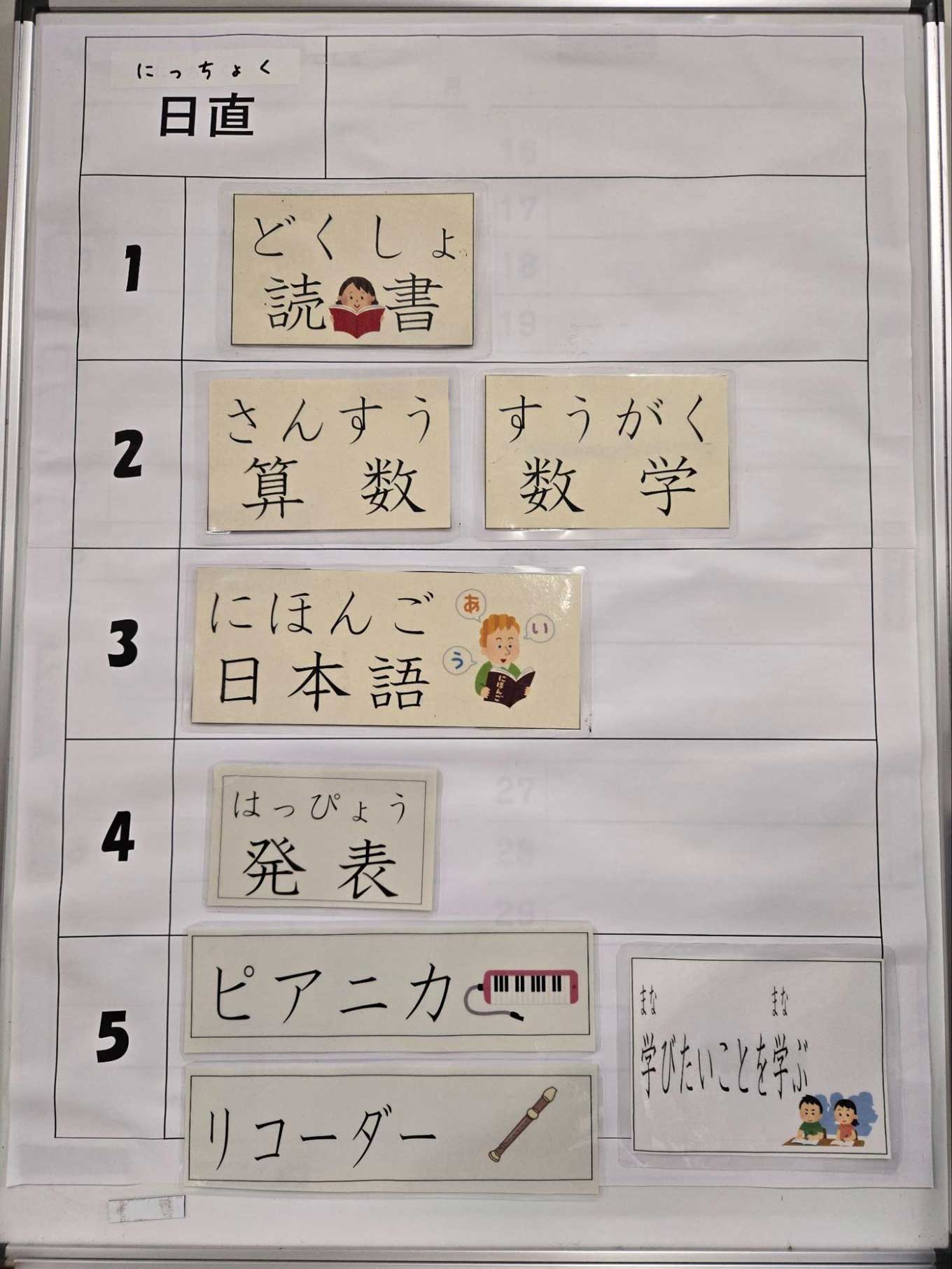
Hiroko Kikuchi: It is a class that children enrolled in elementary or junior high schools in Nishio City can opt to attend for about three months, geared toward those who have just arrived in Japan or are still adjusting to Japanese school culture. Beyond Japanese-language instruction, we also provide guidance on the basic everyday routines of Japanese school life.
For example: changing into indoor shoes at the entryway shoe rack upon arriving at school, putting the textbooks from their randoseru or school bag into their desk or locker after entering the classroom, turning in homework. Going to the restroom and getting water during breaks. The way students take turns serving school lunches and cleaning the classroom themselves. We patiently walk children through each of these customs and rules of Japanese schools, one by one. That groundwork is what allows them to navigate school life smoothly.
Journal: Does the instruction wrap up after three months?
Kikuchi: Once children finish their time at Colorful, they begin attending their home elementary or junior high school full-time. But our Colorful support staff rotate through the city’s schools and work closely with the homeroom teachers, so that the support continues without interruption.
Journal: I imagine the children at Colorful arrive with very little Japanese. How do you go about teaching them?
Kikuchi: Colorful currently has about 20 support staff whose first languages are not Japanese but who have learned the language, allowing us to provide instruction in seven languages: Portuguese, Spanish, Vietnamese, Filipino, Chinese, Indonesian, and English. Not all of the staff are on duty every day, however, so when needed we also turn to translation apps and gestures to get our points across.
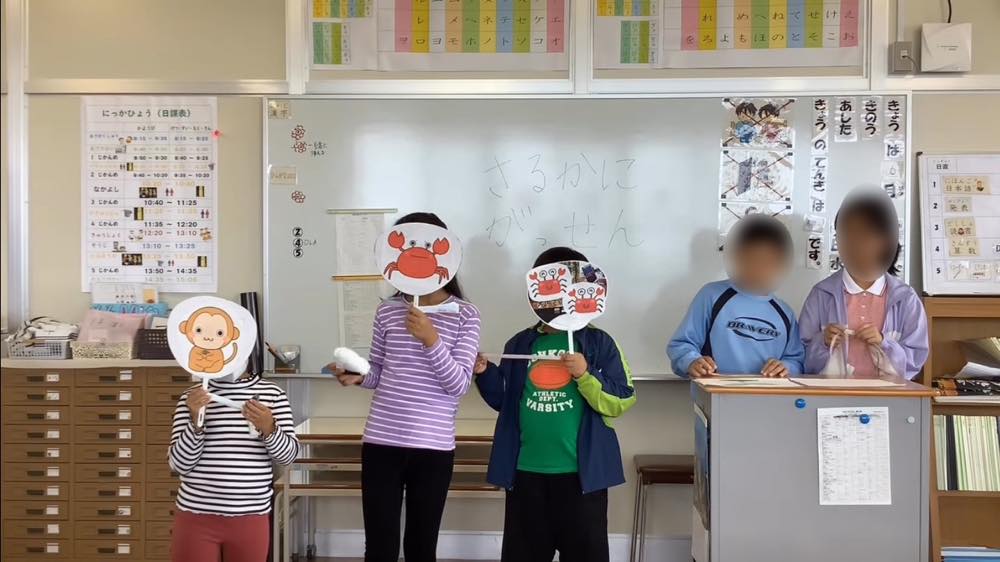
- Plain Japanese refers to Japanese that has been simplified for clarity by adjusting grammar, vocabulary level, and sentence length. Reference: “Plain Japanese,” Tokyo Intercultural Portal Site (external link)
Journal: Could you tell us about the background that led to setting up Colorful?
Kikuchi: The single biggest factor is that the foreign-national resident population has grown significantly. As of May 1, 2025, Nishio City’s total population is around 170,000, of which roughly 12,000 are foreign nationals.* Ten years ago that figure was just under 6,000, so the foreign-national population has roughly doubled.
As the foreign-national population has grown, foreign-national children attending school have run into more and more difficulties, and the Board of Education has repeatedly discussed the need for Japanese-language acquisition support. That led us to set up the predecessor program, the pre-class, in 2009, and in fiscal 2020 we restructured the program into what is now Colorful.
Journal: Could you give some specific examples of the difficulties that arise?
Kikuchi: For starters, they cannot follow lessons, they cannot communicate, and they cannot make friends.
And because schools in their home countries do not have systems like rotating cleaning duty or lunch service duty, students often don’t realize when it’s their turn and get a talking-to from their classmates. Then, because they cannot understand exactly what they are being told off for, they feel personally rejected, and we have seen cases where this escalates into actual fights.
Beyond that, the language barrier can take a serious toll on children’s mental well-being. A common pattern is a child who was a top student in their home country but cannot keep up with classes after arriving in Japan, sees their grades drop, and becomes deeply discouraged. In some cases, that becomes the trigger for the child to withdraw from social life altogether.
For children who plan to live in Japan long-term, finding work here will eventually become a consideration. But once a child withdraws, they not only fall behind academically but also miss out on the experience of being part of a group, which ends up narrowing their future options.
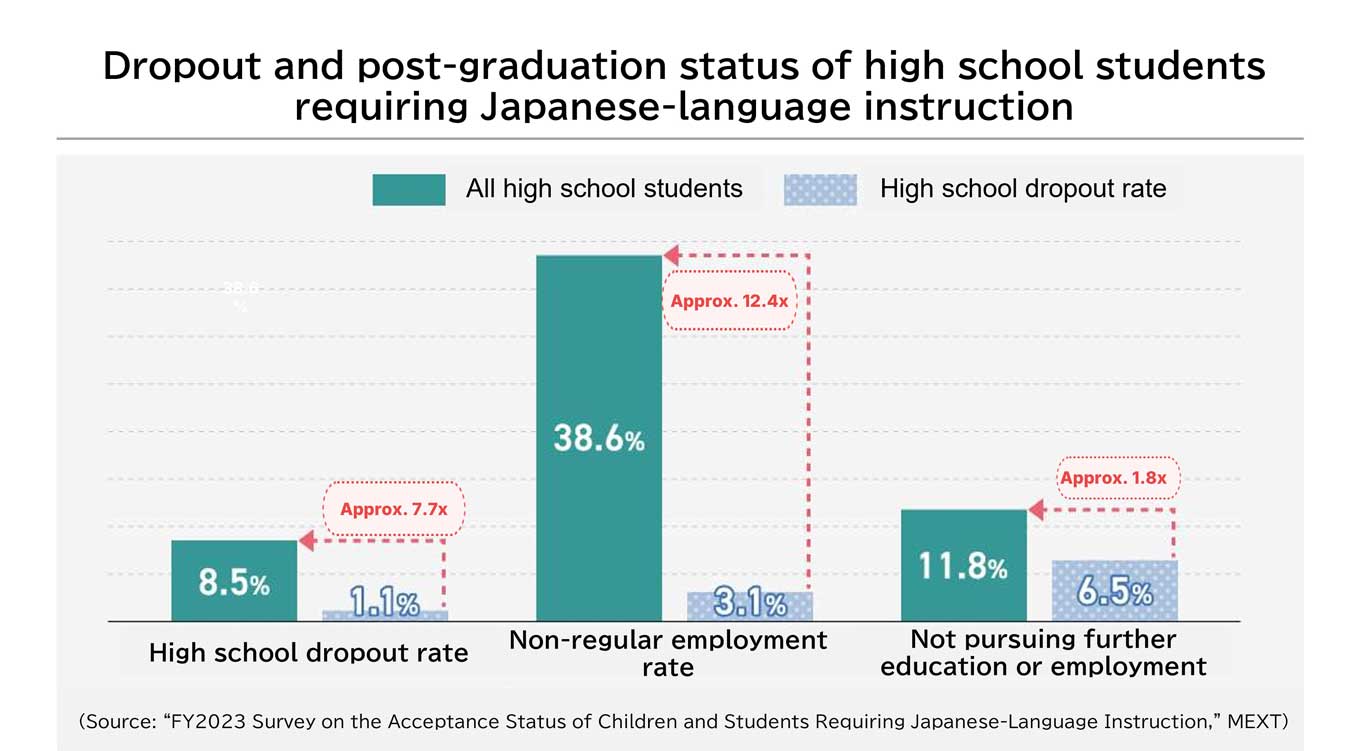
(Source: “Results of the FY2023 Survey on the Acceptance Status of Children and Students Requiring Japanese-Language Instruction,” Ministry of Education, Culture, Sports, Science and Technology)
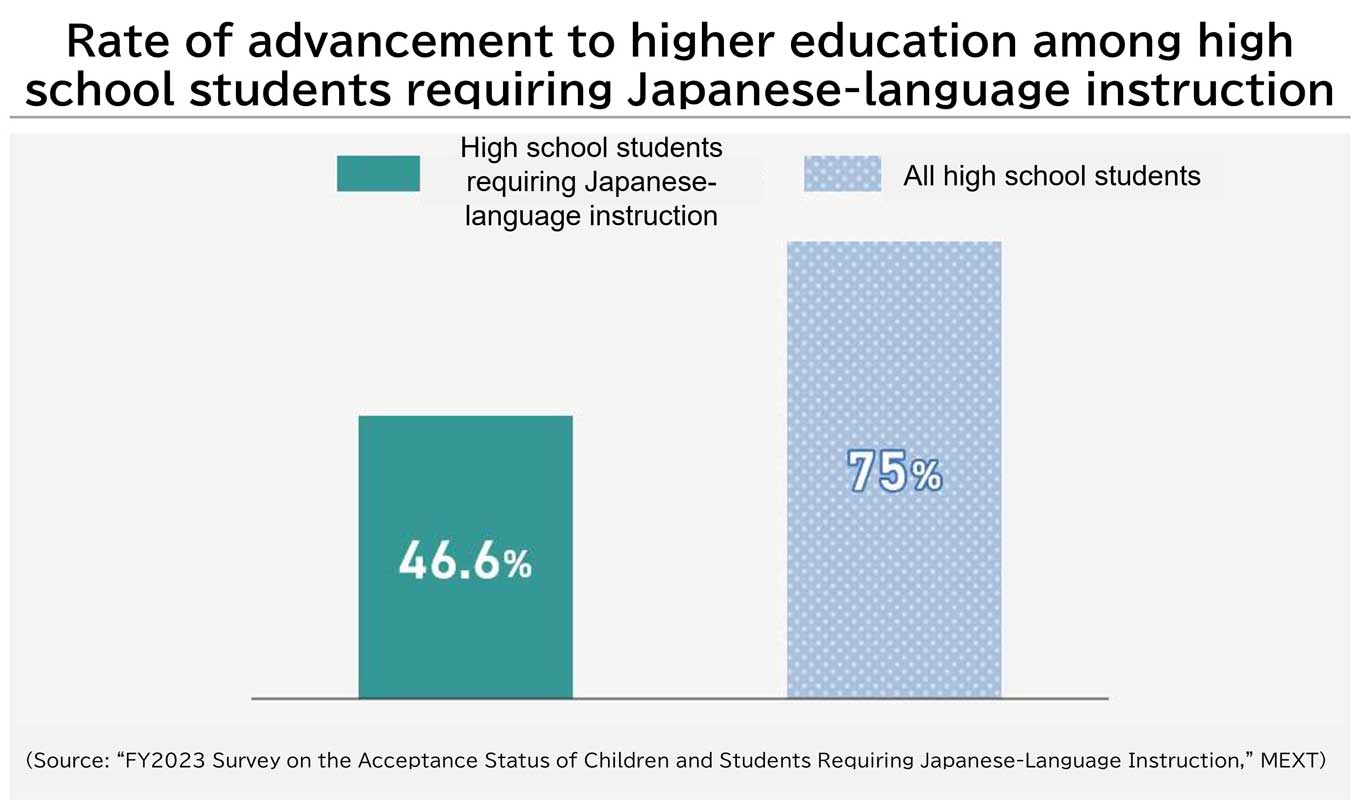
(Source: “Results of the FY2023 Survey on the Acceptance Status of Children and Students Requiring Japanese-Language Instruction,” Ministry of Education, Culture, Sports, Science and Technology)
Journal: We understand that you support not only the students but also parents and teachers. What does that look like in practice?
Kikuchi: With parents, too, we walk through Japanese school culture and how to support their child at home, point by point. We cover everything from explaining which school supplies parents need to prepare at home, down to small details like washing the white smock after their child takes a turn serving school lunch.
Many teachers also struggle with how to teach children who don’t yet have full command of Japanese, so when our staff visit the schools, we make time for consultations and share information on teaching approaches.
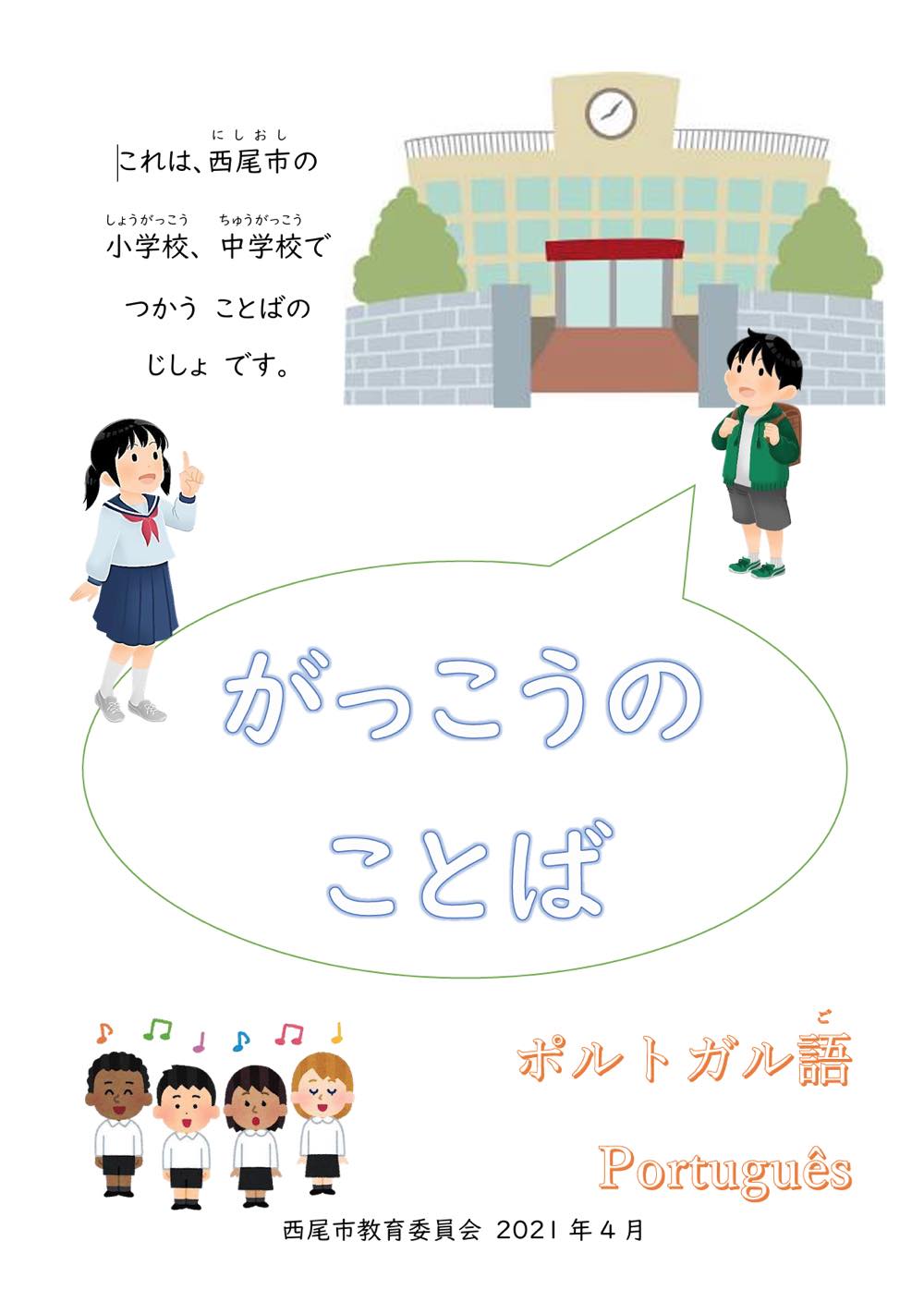
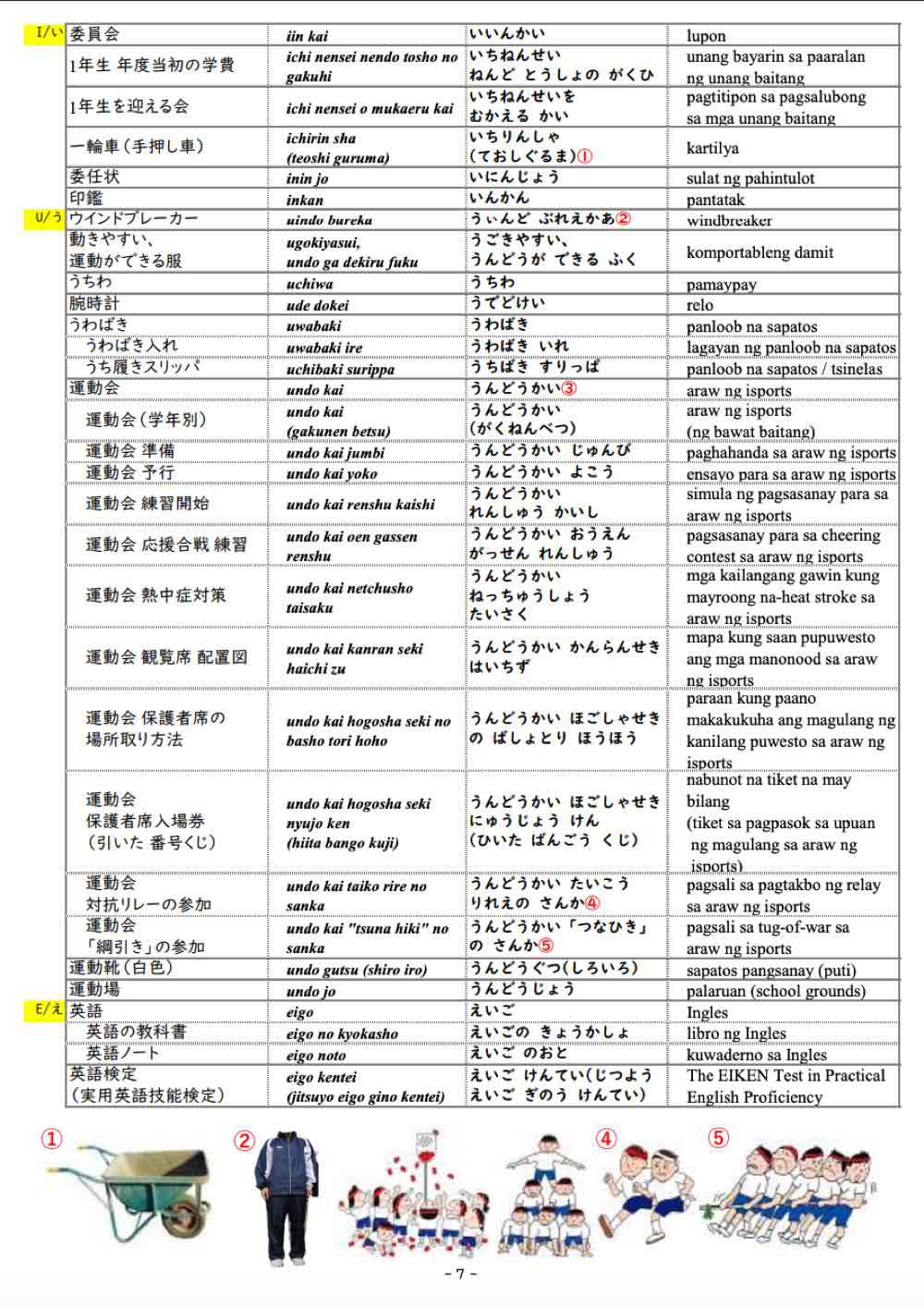
Journal: What kinds of changes have you seen in children after they have spent time at Colorful?
Kikuchi: Beyond hearing that their Japanese has improved, we also hear comments like, “The child’s real personality is finally coming through,” and “Their expressions have brightened.” Some children even want to keep coming after their time at Colorful is over, and some say they want to be a teacher at Colorful when they grow up. When we hear things like that, we know they have come to love this classroom, and that is deeply rewarding.
I myself have been working in Japanese-language acquisition support since before Colorful was launched in Nishio City. Some of the children I have supported have since started careers, married, and built families of their own. I have seen firsthand how giving children the support they need keeps opening up new possibilities for their future.
I want to keep providing that support, in any small way I can, so each child can live a life that is true to who they are.
Journal: Is there anything each of us can do to deepen our understanding of children with foreign roots and help close educational gaps?
Kikuchi: If a family with foreign roots is living nearby, I would suggest reaching out to talk with them and inviting them to school or local community events. Many of them have a strong desire to make Japanese friends, so once they feel welcomed, I think they will engage with the community more positively and confidently.
Volunteering at the Japanese-language classes run by your local municipality is another good option. If you are interested, do reach out to ask. And simply sharing information about these classes with friends and family can eventually reach someone who needs them, which in turn helps close educational gaps.
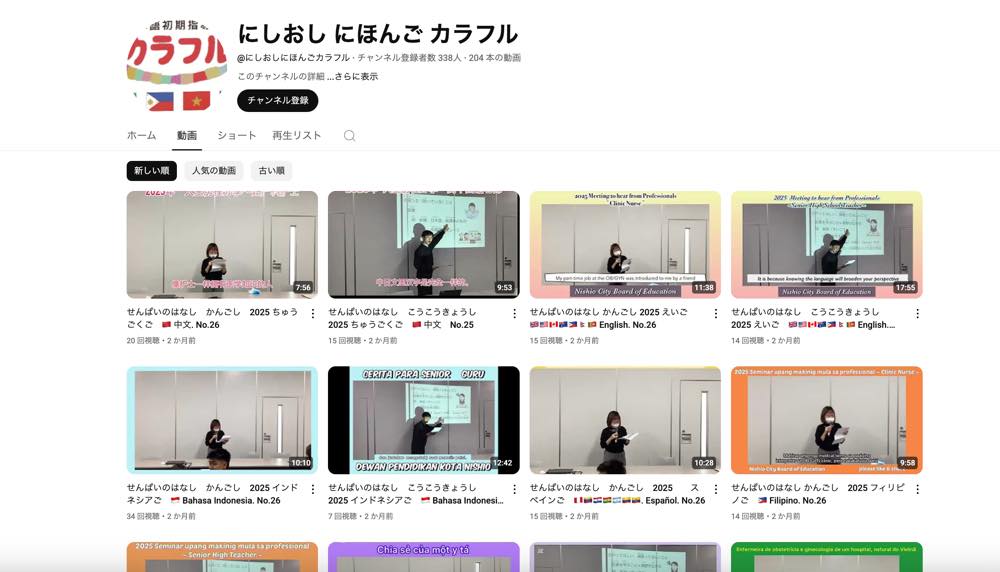
At Colorful, as part of career education, we hold an annual spring session where children hear from working adults with foreign roots who came before them. The talks are released as “Senpai No Hanashi” (Stories from Senior Mentors) on our official YouTube channel (external link, in Japanese), with translated versions in up to seven languages produced and distributed for each talk. For children with foreign roots, the chance to hear from someone who has walked a similar path is invaluable. Spreading the word about resources like these is one more thing each of us can do.
Partnering with municipalities to create teaching materials for fun, structured Japanese-language learning
The number of municipalities and organizations stepping up to help people with foreign roots learn Japanese, like Colorful, is steadily growing, and The Nippon Foundation is one of them. Since 2023 we have been providing Japanese-language school scholarships for displaced persons from Ukraine (open in a new tab, in Japanese), and our current focus is developing teaching materials so that children with foreign roots can learn Japanese.
Journal: Could you tell us about The Nippon Foundation’s current efforts to help children with foreign roots acquire Japanese?
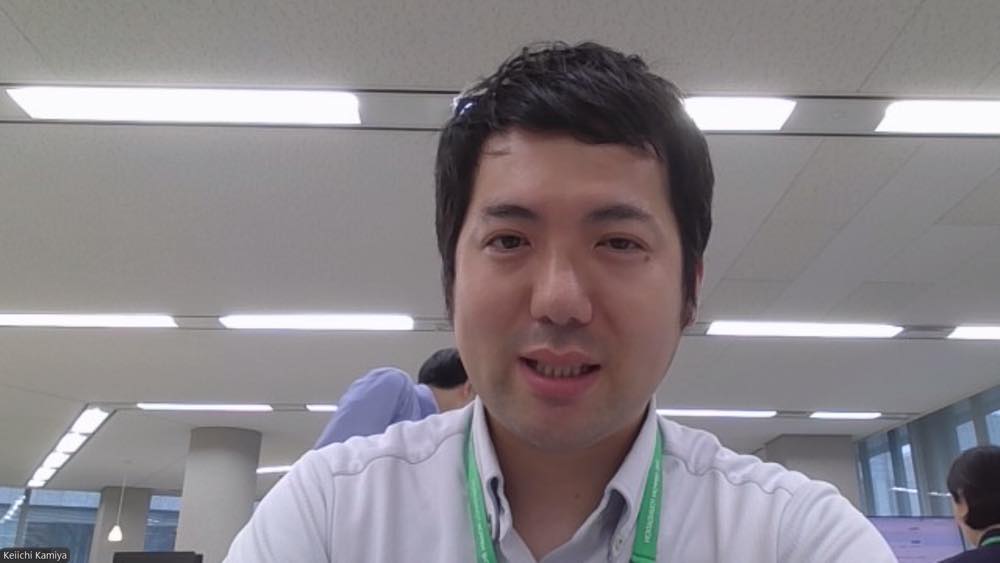
Keiichi Kamiya: We are developing Japanese-language teaching materials that can be used both in schools and in community Japanese-language classrooms. In education today, there is growing demand to support the school enrollment of foreign children and to strengthen the support systems for students who need Japanese-language instruction.
To address that, The Nippon Foundation has set out to create materials based on a structured curriculum to help children who need Japanese-language support learn the language in an engaging way and integrate into school as quickly as possible.
Journal: What are some of the distinctive features of these materials?
Kamiya: They are still in development, but the materials take a manga-like format, with a storyline children can enjoy as they learn. We are also designing them so they can be used both online and in print.
For the online materials, we are aiming to support practice not only in reading and writing but also in listening and speaking. We expect them to be useful not only for children already living in Japan, but for children overseas who want to learn Japanese before coming here.
Another distinctive feature is that we are developing the materials together with Fukuoka City and the Fukuoka City Board of Education, both of which have deep expertise in supporting children with foreign roots. The three parties have signed a cooperation agreement, and we are drawing on the insights of classroom teachers as we work. The materials are scheduled to be completed in fiscal 2026, and we plan to actively promote their use in schools and community Japanese-language classes.
Journal: What is your view on the importance of supporting children’s Japanese-language acquisition?
Kamiya: The difficulties that arise when children enter school without a command of Japanese-language are exactly as Ms. Kikuchi of Colorful described: students often cannot follow lessons and have a hard time making friends.
If that situation continues, children become more prone to isolation and may also struggle with their mental well-being. As more and more children require Japanese-language instruction, the difficulties they face have also become more visible. Looking ahead, the number of children with foreign roots is only going to keep growing, which we believe will have an enormous impact not only on these children’s futures but on Japanese society as a whole.
Japan today faces major challenges in the form of a falling birth rate and a shrinking working-age population. Providing appropriate Japanese-language support to children with foreign roots, and broadening their future possibilities, ultimately broadens the possibilities for Japan’s future as well.
Journal: Is there anything each of us can do to better understand or support children with foreign roots?
Kamiya: First and foremost, I think it is important to set aside any preconceptions about children with foreign roots and simply take an interest in them. This is something I felt while supporting evacuees from Ukraine, too: the word “evacuee” tends to evoke an image of someone who is vulnerable and beset by problems.
But when you actually meet them, my impression is that many are strong-willed and bring a wide range of skills and abilities. If people show that same kind of interest in children with foreign roots, I think it can lead to a more accurate understanding of who they really are.
Consciously using plain Japanese, or adding furigana phonetic guides above kanji characters, is another way to support children with foreign roots. For instance, a word like Tsugaku (commuting to school) may be hard to grasp, but rephrasing it as Gakko Ni Iku (going to school) makes it accessible to many more people.
Few of us are directly involved in the education of children with foreign roots, but if each of us is mindful in our day-to-day communication, the information we share becomes easier for everyone to understand, which in turn helps children with foreign roots as well.
What we can do to close educational gaps for children with foreign roots
- Set aside preconceptions about children and adults with foreign roots, and take an interest in them.
- If someone with foreign roots is part of your everyday life, take the initiative to talk with them and get to know them.
- Volunteer at a local Japanese-language class, then share what you experience and help spread the word about the class.
Aware that the number of children needing Japanese-language instruction in Japan is rising, and wanting to learn more about the challenges schools face and the kinds of support being offered, we sat down with Colorful and The Nippon Foundation.
For children with foreign roots, the barriers of language and culture are formidable. We came away feeling strongly that no child should be denied a full education, with their future narrowed, simply because their community lacks adequate support.
Community Japanese-language classes exist in many places, and there are even volunteer opportunities that do not require any foreign-language ability. If this resonates with you, why not see whether there is a place near you where you can get involved?
Text: The Nippon Foundation Journal Editing Department