Sight World Exhibition for Persons With Visual ImpairmentsWe asked organizers whether people’s lives have changed
Key Points
- Sight World is a comprehensive event featuring exhibits of devices for persons with visual impairments, lectures, and more.
- While life is becoming more convenient for persons with visual impairments, the information gap is widening, and income can make it hard to buy the devices they want.
- Small moments of empathy can help build a society that transcends the boundaries of disability.
Advances in technology have made life more convenient for persons with visual impairments.
The progress is remarkable, with innovations such as Ashirase (external link, in Japanese), a walking navigation system that attaches to shoes and works with a smartphone to provide guidance, and OrCam MyEye (external link), a device that attaches to glasses and can recognize both text and faces.
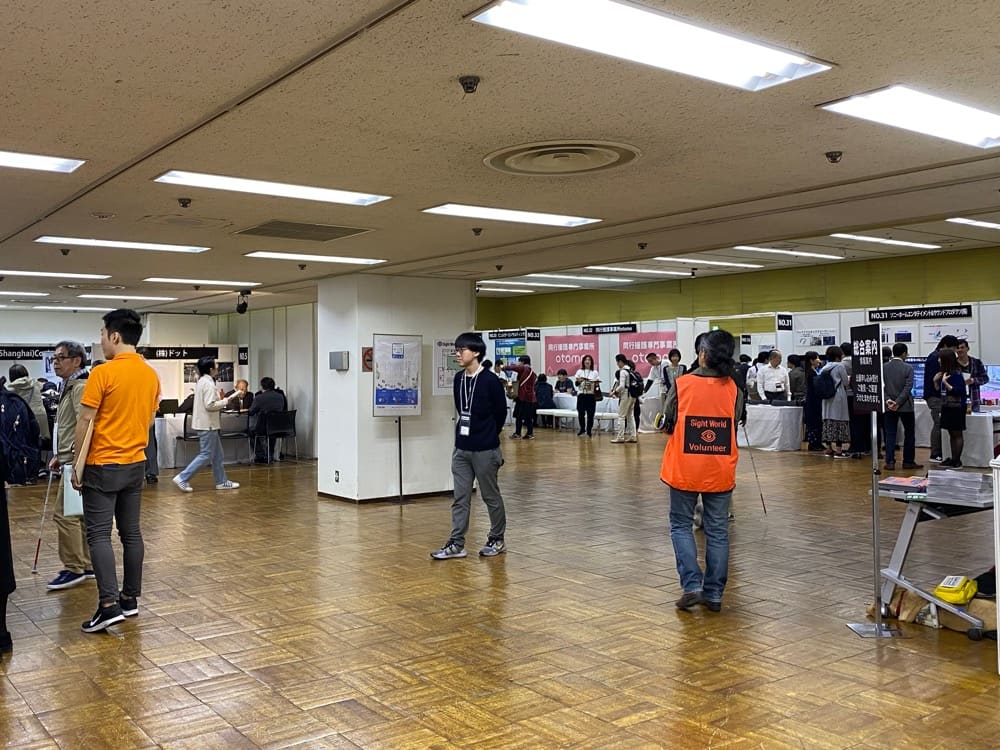
One such event where the latest devices and technologies for persons with visual impairments come together is Sight World (external link, in Japanese). Held every November since 2006, the most recent event saw 3,560 participants over three days, attracting many persons with visual impairments and their supporters.
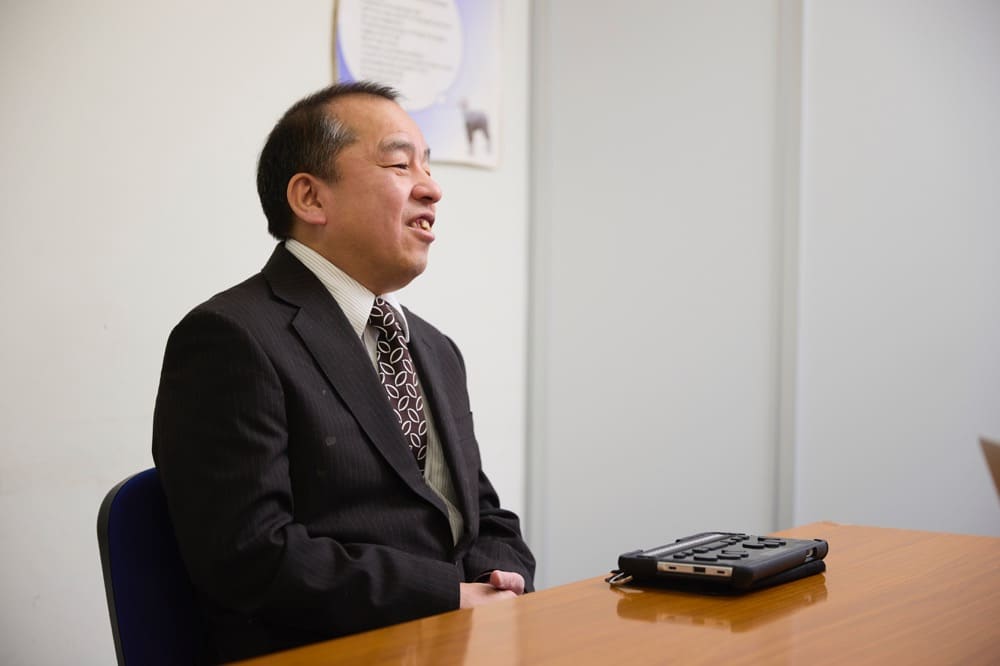
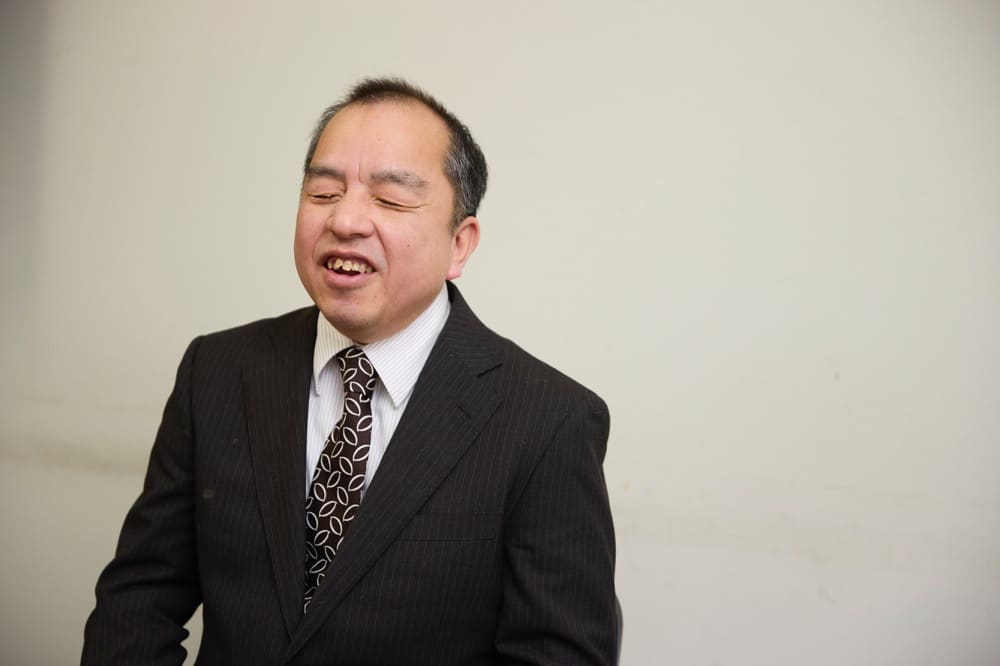
How has life for persons with visual impairments changed as technology has advanced? We spoke with Executive Committee Chair Akihiro Arakawa, who is also visually impaired.
A comprehensive event for persons with visual impairments, thoughtfully designed with a wide range of accommodations
The Nippon Foundation Journal Editing Department: What inspired you to start Sight World?
Akihiro Arakawa: What set everything in motion was a comment from Mr. Kurematsu, who was president at the time of a welfare-device developer, KGS Corporation (external link, in Japanese): “There are events for persons with visual impairments overseas, but not in Japan. Let’s do it here, too.”
I’ve been involved since the very first event as part of the operations team, and since 2016 I’ve served as Executive Committee Chair, taking over from Mr. Kurematsu.
What sets Sight World apart is that it’s not only an exhibition, but a comprehensive event that also features lectures, symposiums, and more.
Journal: In terms of exhibitions targeting people with disabilities, the International Home Care and Rehabilitation Exhibition (external link) has been held since 1974. What prompted the need for an event specifically for persons with visual impairments?
Arakawa: The International Home Care and Rehabilitation Exhibition is simply too large a venue, which creates a high barrier for persons with visual impairments. Also, many of the exhibits are geared toward older adults and persons with physical disabilities, and devices for persons with visual impairments make up only a small portion. Sight World was launched to address those issues.
We were especially particular about choosing the venue. Our nonnegotiables were that it be easy for persons with visual impairments to access, easy to navigate inside, and large enough to host the event.
Since 2006, we’ve held it at Sunrise Hall in the Sumida Industrial Hall, on the eighth floor of the Marui building near Kinshicho station (Sumida City, Tokyo). I truly feel we were lucky to find that venue.
Journal: I attended in person and I noticed so many thoughtful measures, from staff members stationed to assist along the route from the station to the building, to tactile paving installed on the floor.
Arakawa: Yes. One of our core principles is that a person with a visual impairment should be able to attend on their own. That means we need enough staff, and at the 2023 event we had about 150 people participate as volunteers.
Journal: What are some of the ways you’ve adapted the event to make it work?
Arakawa: We prepare braille signage, and we also create a DAISY* guidebook for those who don’t read braille, so that even with a visual impairment, visitors can grasp the venue as a whole.
- A data format developed to support reading for persons with visual impairments. Short for Digital Accessible Information System. Content can be played back using compatible devices and apps.
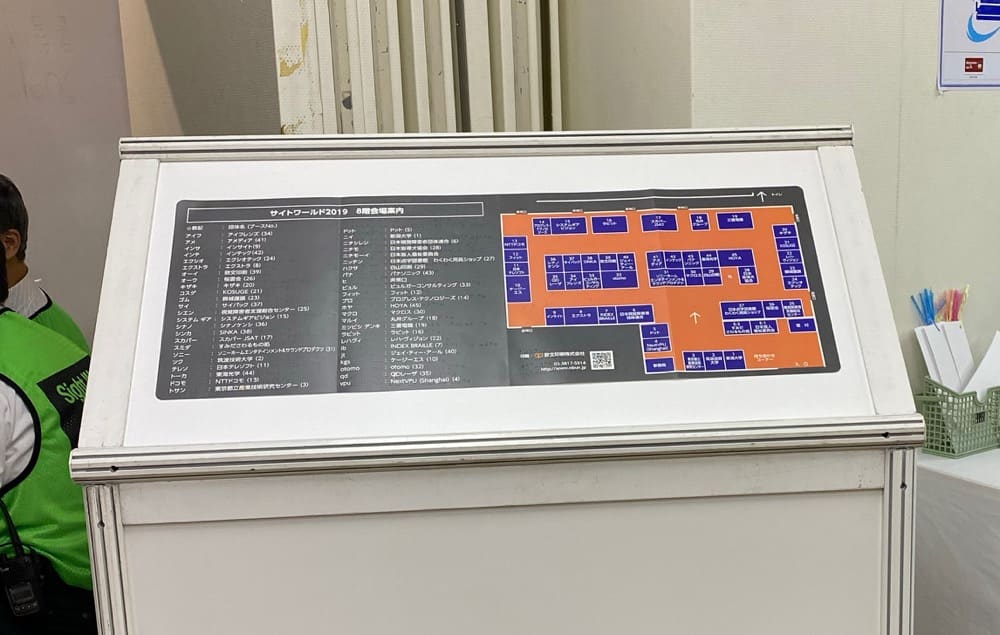
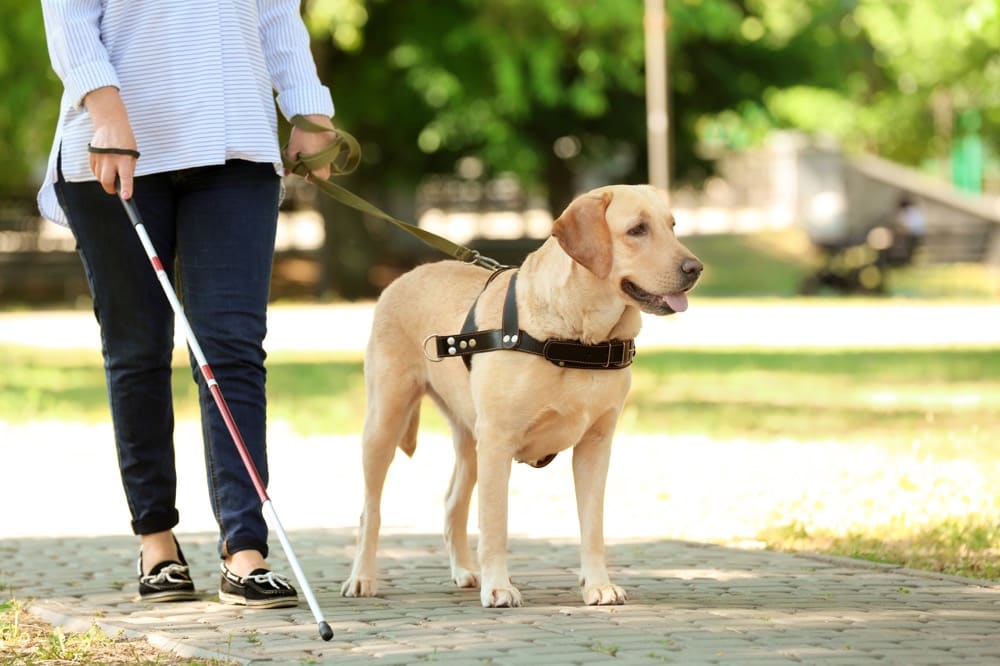
Arakawa: Also, since many people attend with guide dogs, we set up a designated toilet area for guide dogs.
Generally, guide dogs are trained to use a plastic bag and relieve themselves at a designated spot, but the challenge is knowing where to give that instruction.
The venue building has an outdoor rest area, so we set up a guide-dog toilet area beside it.
Arakawa: We also ask exhibitors to check with visitors after a demonstration, find out what they want to see next, and guide them to the next booth. That way, persons with visual impairments can move through the exhibits without getting lost.
Life gets more convenient, but the information gap widens
Journal: Were there any comments from attendees that particularly stayed with you?
Arakawa: I was struck by first-time attendees saying they had no idea such convenient things existed, or that they didn’t realize there were so many other people with visual impairments.
When people are struggling, their perspective can narrow, and they may start to feel like they’re the only ones going through it. But I think Sight World has become a place to connect, helping people realize they’re not alone.
Journal: Of all the devices that have been exhibited over the years, is there one that left the biggest impression?
Arakawa: It was exhibited again in 2023, but one that stands out is a device called OrCam MyEye. It attaches to the side of a pair of glasses and has a built-in camera, so it can read text aloud, recognize faces, identify products, and more.
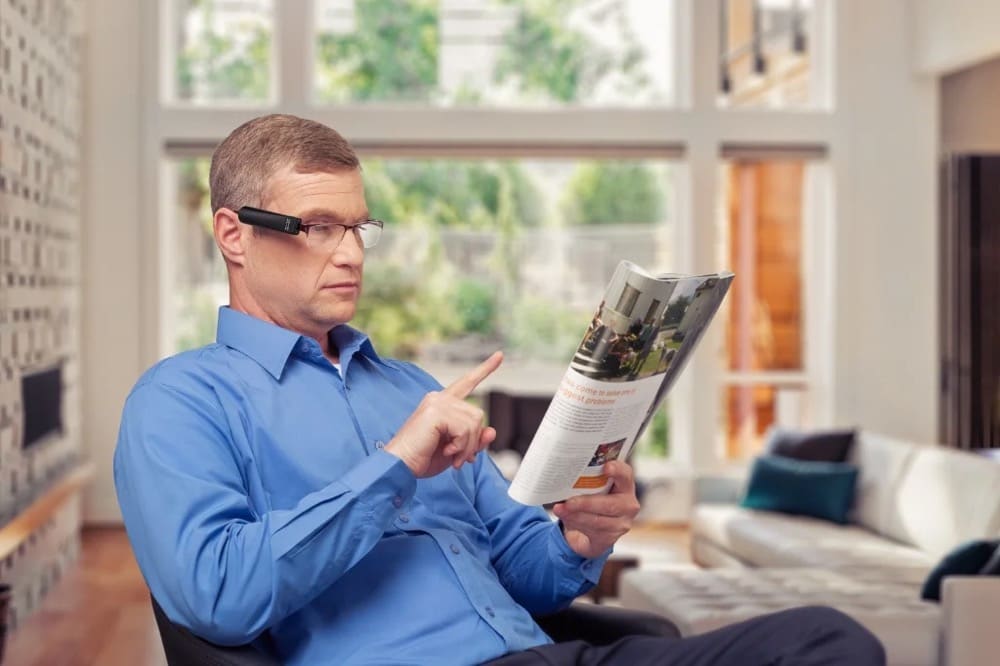
Arakawa: For example, if I were working at an event venue and needed to ask a staff member something on short notice, I wouldn’t know who is nearby, so I can’t call out to them. But if I register staff faces in OrCam MyEye, then when someone walks by, OrCam MyEye will read the staff member’s name aloud.
I bought one and use it myself, and I was genuinely amazed.
Journal: That really is convenient. Is it widely used?
Arakawa: I don’t think it’s become that widespread. OrCam MyEye has a list price of about 300,000 yen, and depending on the local government, you may be eligible to use a subsidy program. In my case, my out-of-pocket cost was around 100,000 yen. I think many people would consider that expensive.
Journal: If subsidy programs became more robust, it seems like more people could purchase it.
Arakawa: Yes. But I think the real issue isn’t the subsidy program. It’s the fact that, given current income levels, many persons with visual impairments find it difficult to come up with even 100,000 yen.
I worked for four years at a private-sector company under the employment quota system for persons with disabilities, and it was very difficult to increase my income. There is also a mountain of other issues, such as a lack of job opportunities and many people quitting after finding employment because of communication difficulties.
I hope workplaces will be better equipped so that persons with disabilities can thrive, and that society will become one where people can earn enough to buy what they like on their own.
Journal: With smartphones becoming widespread and more helpful apps available, hasn’t life become much more convenient for persons with visual impairments?
Arakawa: It has. For example, before smartphones became common, if a person with a visual impairment dropped money in their room, finding it was extremely difficult. Now they can make a video call to a sighted person and have them search on their behalf through the screen.
Including devices like OrCam MyEye that I mentioned earlier, I think life has truly become more convenient.
At the same time, some people can’t fully use these devices, so I think the information gap is growing even among persons with visual impairments. At Sight World, we also run hands-on sessions to help people learn how to use the devices, so I hope they’ll give them a try without feeling intimidated.
Small acts of empathy can drive societal change
Journal: Beyond technology, have you noticed any other changes in day-to-day life for persons with visual impairments?
Arakawa: This is a somewhat unfortunate change, but I think the companion support system* has reduced opportunities for persons with visual impairments and those without disabilities to interact.
When going out, we are increasingly told by shops that we need to have a supporter with us. As a result, it’s become harder for persons with visual impairments to go out alone or to receive help from someone nearby when needed, which I feel may be getting in the way of genuine independence.
- Note: Established in 2011 as a mobility support service for persons with visual impairments following revisions to the Services and Supports for Persons with Disabilities Act. When persons with visual impairments and others with severe difficulty moving go out, a support worker (guide helper) accompanies them, provides information needed for travel, and offers assistance such as mobility support. Support workers are required to complete designated training.
Arakawa: You don’t need a system or qualifications to guide a person with a visual impairment. I think it’s enough if we can help each other when someone is in need. And once you try guiding someone even once, I think you’ll see it’s not that difficult.
It’s unfortunate that having a formal system in place can end up taking away opportunities like that.
Journal: How do you feel society’s attitudes toward persons with visual impairments have changed?
Arakawa: I feel that over the past 20 years or so, society has become kinder to persons with visual impairments. I’ve traveled all over on my own for a long time, so I can really tell.
In the past, when I needed help on the street, I’d have to call out five or 10 times before someone finally stopped. Now, people stop after one or two calls. And there are many people who, even if they walk past at first, come back and ask, “Oh, was that me you were calling to?”
Journal: Why do you think things have changed in that way?
Arakawa: This is only my own guess, but I think it may be because the Paralympics began to be broadcast and featured on television, increasing opportunities for people to feel closer to persons with disabilities.
While I view these changes positively, I also believe the labor market remains significantly unfavorable for persons with visual impairments. This is a serious issue, and I hope it will change.
For example, I’d like managers from private-sector companies to come to Sight World and see for themselves that if tools like these exist, they might be able to entrust certain work to someone with a visual impairment.
Journal: What can each of us do to better understand persons with disabilities and help create a better society?
Arakawa: This is a bit difficult to put into words, but first, I want people to understand that just because someone cannot see doesn’t mean they are unhappy or deserving of pity. With more convenient tools available, there are many things you can do in everyday life, even if you can’t see.
And it’s not difficult to understand that. It’s enough to simply try and imagine what it’s like. For example, turn off the lights at home and try eating a meal blindfolded. It will probably be quite difficult, but you may discover that with some ingenuity, you can find ways to do it.
I believe that small moments of empathy, like realizing what it’s actually like for someone who can’t see, can be a first step toward changing society.
Editor’s Note
Although Sight World is an event for persons with visual impairments, Mr. Arakawa expressed a strong hope that members of the general public would attend as well. In 2024, it is expected to be held over three days, from November 1 (Japan Braille Day) to November 3.
By meeting the people at the venue and experiencing the latest technology, visitors should have a chance to imagine what life is like for persons with visual impairments and to feel it more personally. That experience can foster small moments of empathy, which in turn may help remove barriers in society.
Text: The Nippon Foundation Journal Editing Department
Photo: Eizaburo Sogo
Profile
Akihiro Arakawa
Born in 1966. He lost his sight at age nine. After completing the Nippon Lighthouse Information Processing Course, he joined a private-sector company as an IT engineer. He worked in development and sales of software for persons with visual impairments. In 1999, he founded Rabbit Co., Ltd. He also serves as Executive Committee Chair of Sight World, Executive Director of the National Council of the Agencies of the Welfare for the Blind, and a council member of the General Support Center for the Visually Handicapped.