Confronting Social Problems That Have No SolutionsExplorations that thoroughly engross students
Key Points
- Tokyo Metropolitan Oizumi High School and Junior High School offers a program of exploration activities that continues throughout students’ six years of junior and senior high school.
- Such exploration activities are hard to evaluate in numerical terms such as Japan’s commonly used standard deviation values, so they are not well understood by people working in the field of education.
- By engaging with social problems themselves, students come to understand the complexity and difficulties of these issues, while teachers act as their supporters.
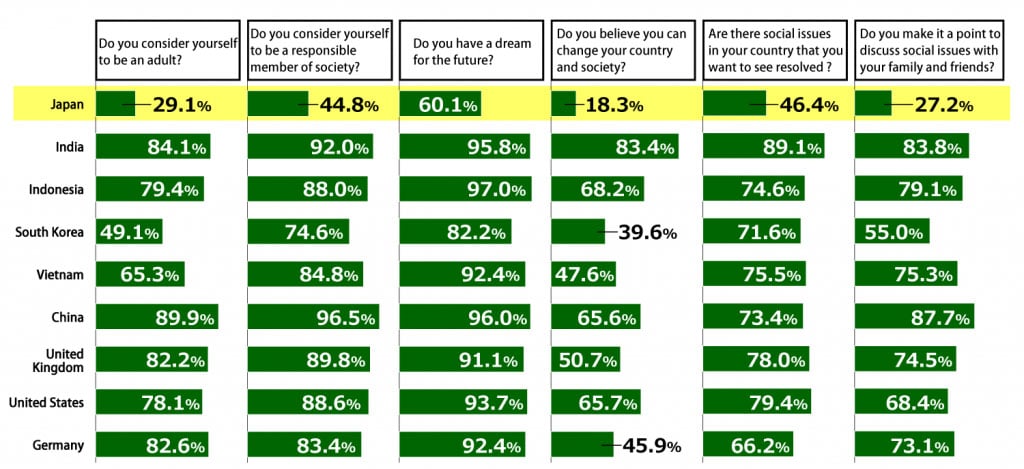
In 2019, The Nippon Foundation conducted an international survey of teenagers, “Awareness Survey of 18-Year-Olds: Survey 20. Nine-country survey on ‘Society and Country’” (open in a new tab), to compare Japanese youth with those in other nations in terms of their awareness of issues facing their nation and its society. The survey involved 1,000 youth aged 17–19 in each of the following countries: India, Indonesia, South Korea, Vietnam, China, the United Kingdom, the United States, Germany, and Japan.
The surprising results were widely covered by the mass media. While the proportion of young people who responded that they had a dream for the future was over 80% in the other countries in the survey, it was substantially lower for Japanese youth, at only 60.1%.
In response to the question “Do you believe you can change your country and society?,” only 18.3% of the Japanese respondents answered “Yes,” while a mere 9.6% said they felt their country would become better in the future, making it clear how low the expectations of Japanese youth for their country and society were.
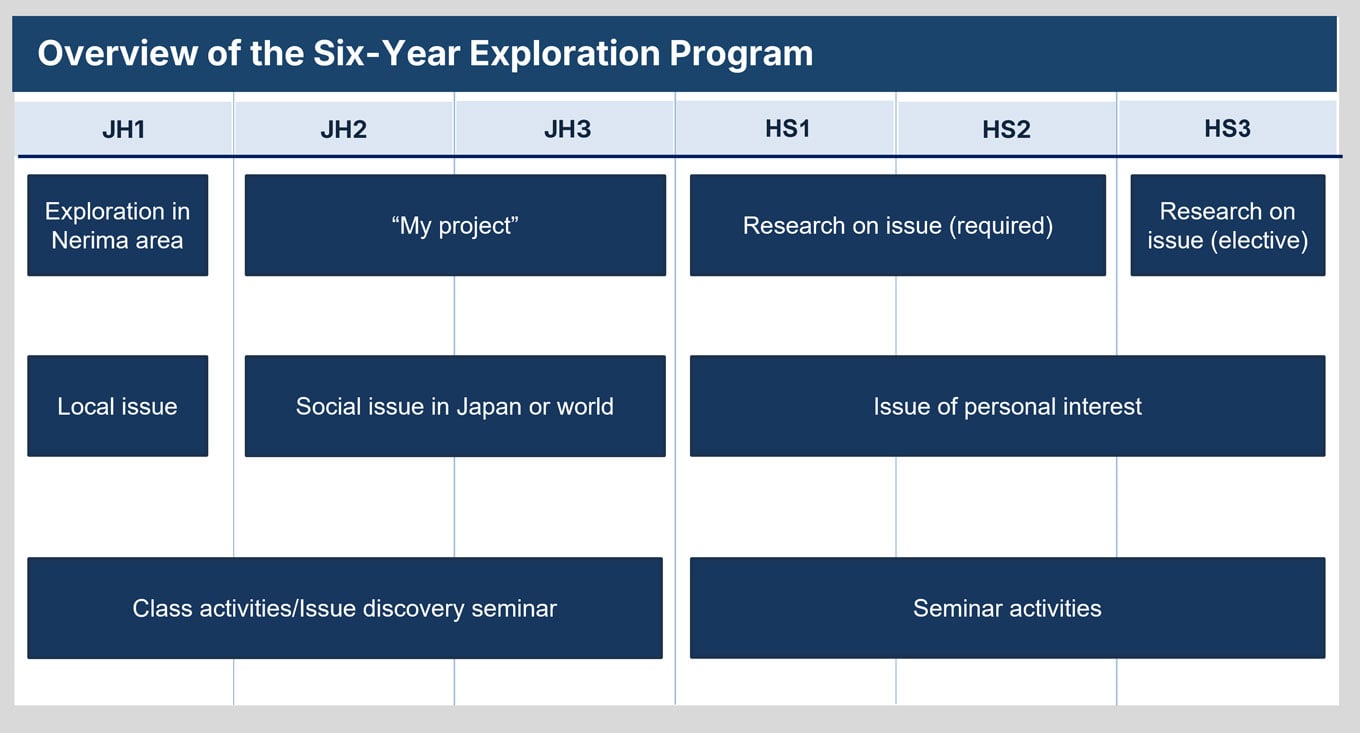
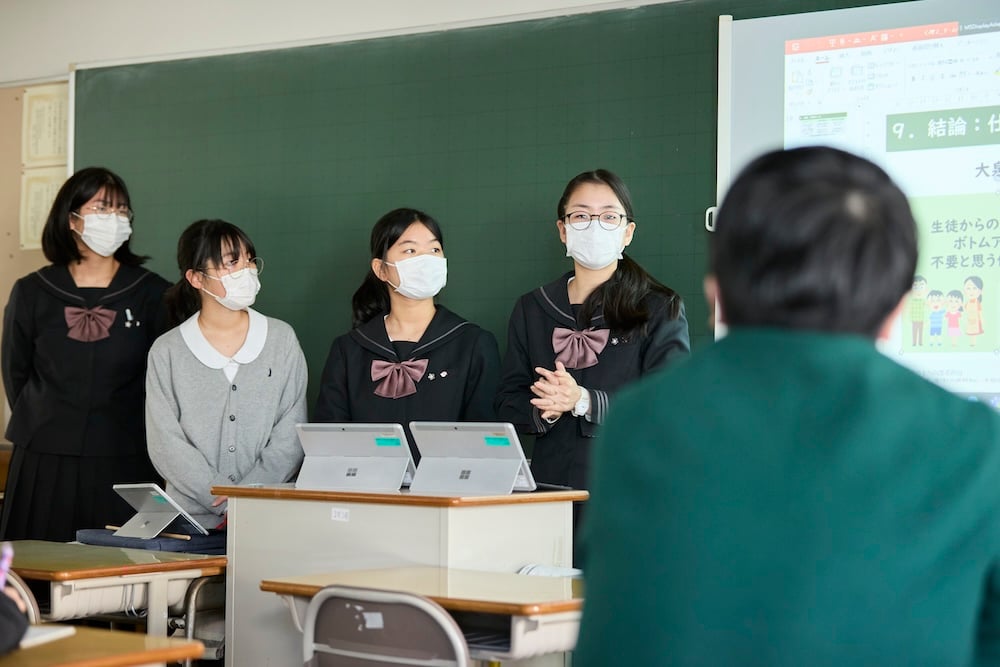
Feeling that these results were problematic, Tokyo Metropolitan Oizumi High School and Junior High School (external link, in Japanese) established its exploration program in 2020. In this program, which will run for the students’ six years of junior and senior high school, students determine the topic they want to explore, go to actual sites to conduct their investigation, and carry out practical activities to develop their intellectual capacity to solve social problems as well as their ability to get things done.
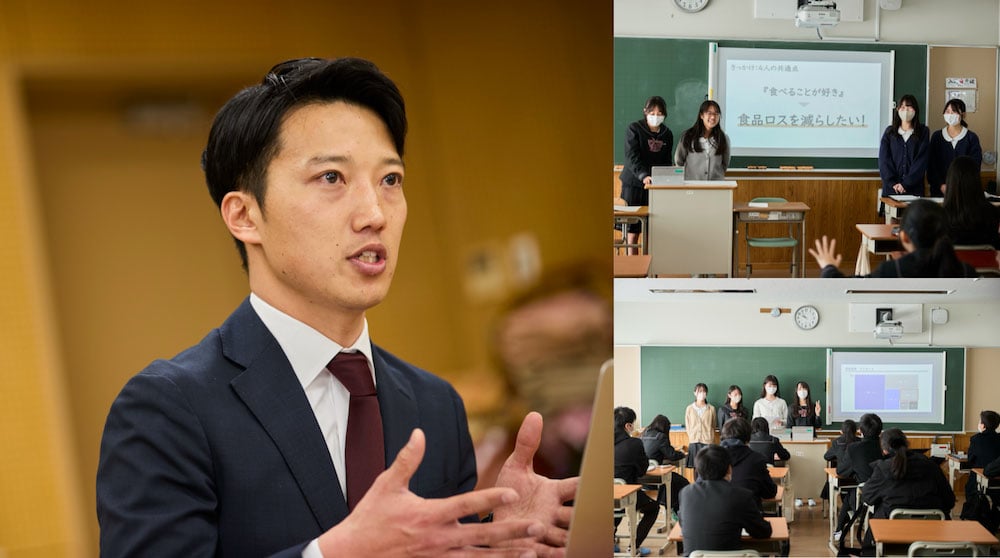
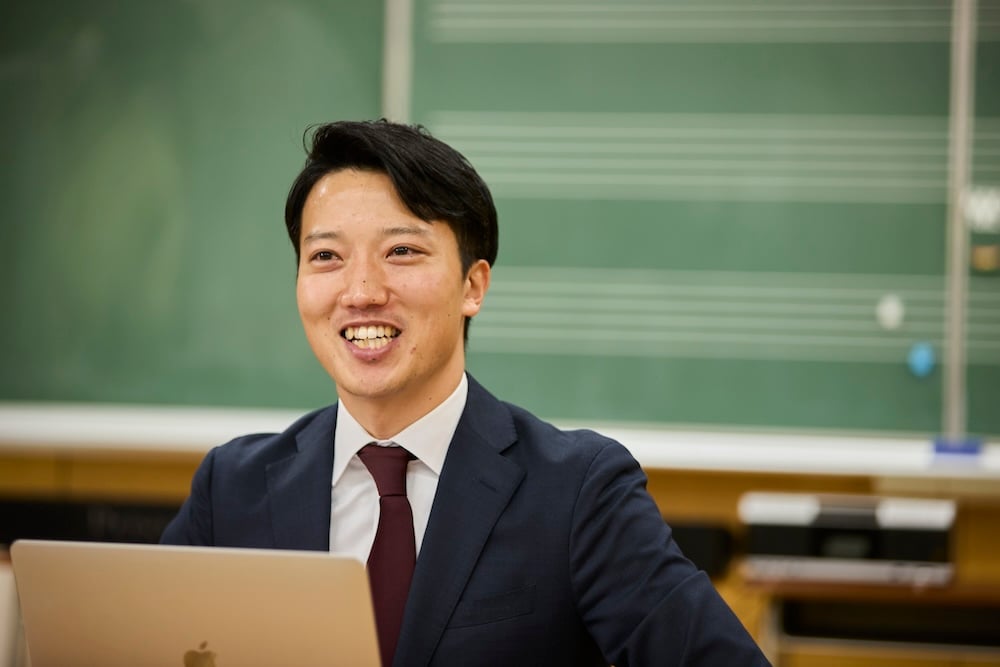
For this article, we interviewed Kensuke Miyoshi, the head teacher in Oizumi High School and Junior High School who leads the exploration program, to learn how students are transformed through this initiative and what he feels are the current issues in Japanese education.
Exploration activities expanded perspectives on society
The Nippon Foundation Journal Editing Department: We heard that when you read the results of the “Awareness Survey of 18-Year-Olds” that was conducted by The Nippon Foundation, you felt a sense of crisis.
Kensuke Miyoshi: Yes, I did. Compared with young people in other countries, Japanese 18-year-olds’ awareness of their own country and society is quite low. I thought that while there must be many social problems that they want to solve, they must not have noticed or discovered them.
Moreover, even though there must be ways to solve them, Japanese youth probably assume that they themselves are unable to make the necessary changes.
It must be Japan’s education system and social influences that make young people feel that way. This is precisely why our school is trying to get students interested in social issues and why we are trying to offer classes that will encourage them to believe that they themselves might be able to change society.
That belief is what got us to start the six-year exploration program for junior and senior high school students.
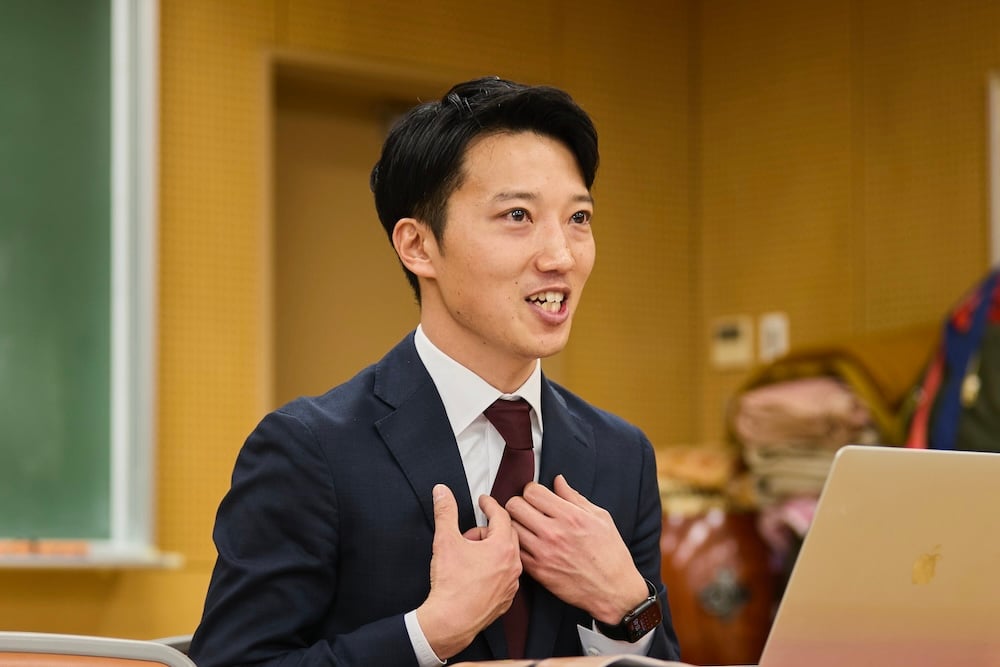
Journal: So, you wanted the exploration program to get your students to direct their attention to society?
Miyoshi: That’s right. In fact, the timing was also right. Shortly before we began this program, we were reconsidering the school’s mission.
The junior and senior high schools had been integrated, the number of our graduates who were able to go on to elite universities had increased, and our overall record for sending graduates on to college had improved. Yet when we turned to the question of whether we were achieving the school’s stated mission of “nurturing leaders of international society,” we realized there was probably room for improvement.
I don’t think those were the only reasons. Many of the students in our school have been going to cram schools and outside-school lessons from the time they were in elementary school, so they are relatively privileged in terms of their opportunities in life, yet when I looked at the high school students I was teaching at the time, I felt concerned that they, as well as the incoming junior high school students, showed little reaction to or interest in social issues.
Yet from another perspective, I thought that the students could be minorities themselves, or might face such problems themselves in the future, or perhaps some of their friends were suffering from some of these problems. I don’t want them to think in dichotomous terms of “the supporters” and “the supported.”
This is why we began the exploration program that runs from junior high and continues on through the high school years. We first get the junior high students to consider social issues, and then in high school, we have them explore topics that are of personal interest to themselves.
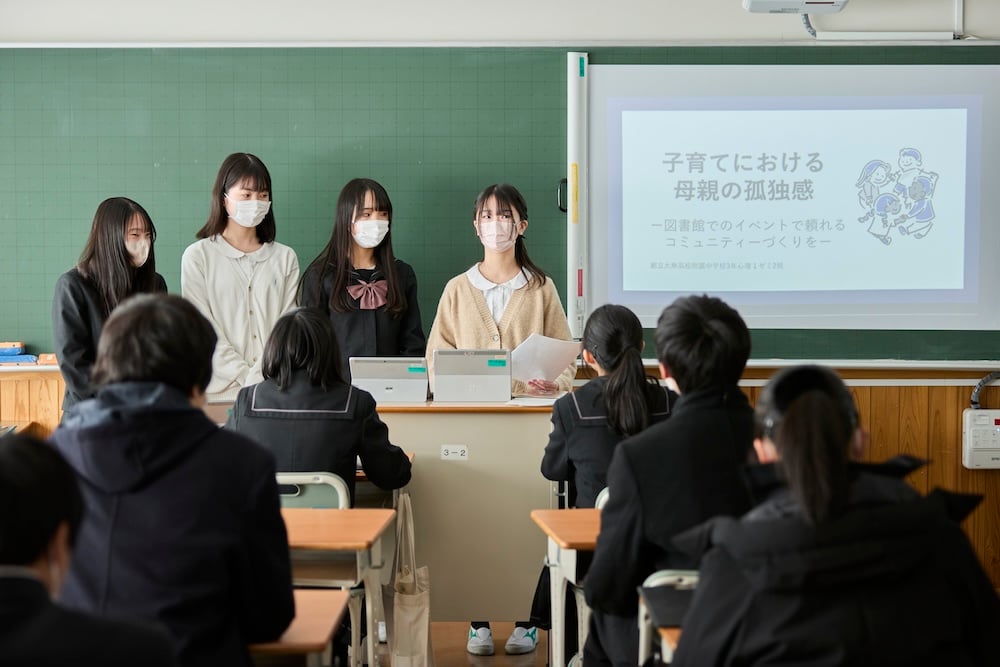
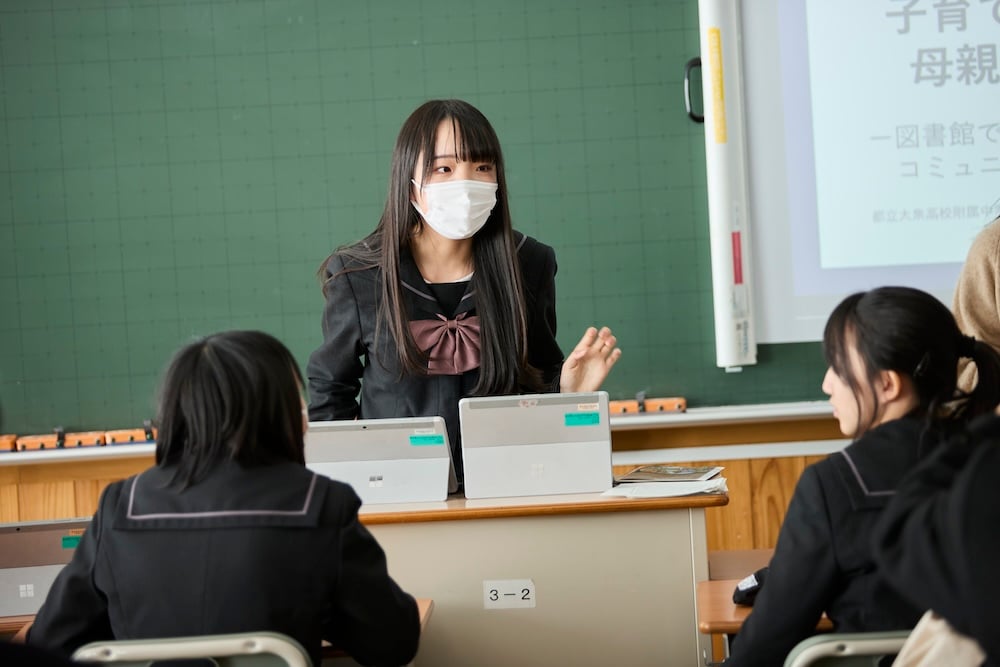
Anyone should be able to engage with social issues
Miyoshi: I’ve learned to respect my students more. I don’t think I am personally spending all that much time dealing with social issues after work hours or when I’m on vacation. But the students are making time on weekdays and holidays, in between their club activities and studies and meeting up with their friends and taking action on social problems. That’s something that adults find hard to do. When I look at the students, I feel that kind of strength in them.
Also, there are problems that we adults may write off as things that can’t be helped, but students may point to their teachers and say, “Isn’t that strange?” or “This is a problem, isn’t it?” I think that’s also amazing.
On the other hand, I do have some concerns. In the survey we take at the end of the three-year junior high school exploration program, we are getting an increasing number of responses such as “It’s hard to solve social problems” — an indicator that more students have come to realize the difficulty of finding solutions.
I wonder if it really is meaningful to make kids feel that. It is possible that experiencing for themselves how difficult it can be to solve social problems could end up weakening their resolve to change society…
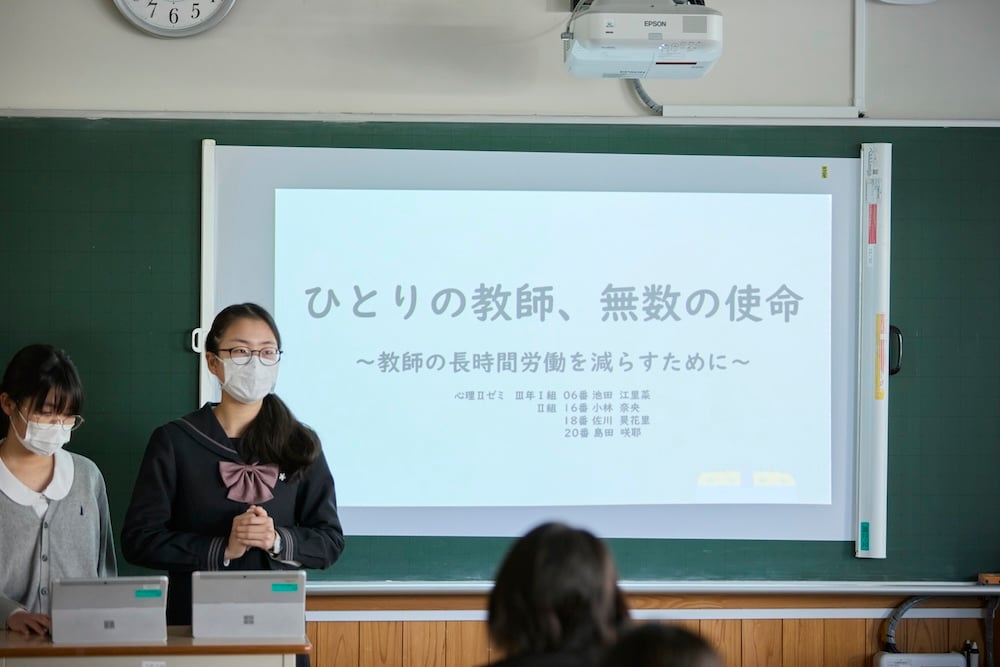
Journal: Certainly, feeling powerless to change society may make people feel dispirited …
Miyoshi: Right. But on the other hand, I feel that the import of our exploration activities is learning how to view things from many sides and angles.
We can see an example of this in the case of a student who had investigated child abuse. Afterward, the student said, “I had thought that parents who abuse their children were despicable, but then I realized that maybe the parents were suffering, too.”
In analyzing social problems, there is a tendency to make someone out to be the villain, but our aim is not to have our students look for bad guys; we want them to look at the problem from all angles. That kind of perspective is vital in trying to solve social problems.
We want our students to learn that social issues are complicated, but also, we want them to never give up and instead, become able to take action to solve them.
Journal: Have you discovered some challenges in sustaining the exploration activities?
Miyoshi: Explorations are hard to evaluate in numerical terms such as standard deviation values, so some educators from other institutions have doubts about them, wondering if, despite all the effort we are pouring into this program, our students will be able to get into the universities they want to go to.
In Japan’s educational sphere, schools are evaluated by the student body’s average standard deviation score and the proportion of graduates who go on to college. But I really wonder if it is all right for our education system to emphasize standard deviation scores alone.
That’s another reason why we have to show the kind of impact exploration activities have on students in concrete terms. By doing that, I think that we will enable our students to engage in these activities with more confidence. They’ll feel that what they are doing has meaning and value.
I also think that as they work hard on their explorations, students can sometimes find a pathway toward their future. If they encounter a problem that they would like to spend their lives solving, it will influence their choice of what they want to do after graduation.
Through the explorations they engage in during junior and senior high school, students may learn about a certain social issue and they may choose the university and department they go on to study at and the place they go on to work at in order to find a solution to that problem. I think it would be wonderful if this happens; I hope that explorations become starting points in the lives of our students.
Actually, among this year’s third-year high school students, there are some who, through their exploration activities, have discovered a topic they would like to do research on in college and have decided to go on to Tokyo University and the Institute of Science Tokyo using the recommendation entrance system (a system that emphasizes a student’s high school record over standardized tests).
Journal: To close out this interview, can you leave us with a message for young people who have their lives ahead of them as well as for the adults around them?
Miyoshi: When you hear that our students are working on social issues by themselves, you may think that these are kids who have a high level of awareness. But that’s not at all the case. Our students are just normal junior high and high school students.
In other words, anyone should be able to engage with social issues. Our students are perfect models of this.
That’s why I would like to see other schools try this kind of program for themselves so that we can pursue this path together. I would be delighted if we could collaborate to mutually impact and stimulate young people.
In addition, I hope adults will warmly watch over the kids taking on social issues. As a matter of fact, our school exploration program has been blessed with the support of businesses and universities, research institutes, NGOs and local residents — people who agree to be interviewed and offer places for real-life activities. I am truly grateful for all this help.
It would be smoother for the students if we teachers would ask people to agree to be interviewed by our students, but we don’t do that. Instead, we start by having the students themselves make appointments, since we feel that there is a lot they can learn by struggling to do this kind of work.
Of course, before the students are asked to do this, the school gives lectures on how to make appointments, and if something goes wrong, it is up to the teachers to bow our head and apologize. And based on the feedback we receive, we revise the program for the following year.
So, we would like to ask adults who happen to meet kids trying to take some kind of social action to take time out of their busy schedules and, as far as possible, listen to what the young ones have to say and engage in dialog with them. Moreover, if you feel that what they are trying to do is worthwhile, we hope that you will gladly cooperate with them.
Of course, if they are mistaken or overly optimistic, we would appreciate that you point that out and give them advice. That would truly empower the students.
Editor’s Note
As Mr. Miyoshi points out, it seems that more and more people, upon reaching adulthood, make compromises and give up, feeling that there is nothing that can be done about problems.
But is it really acceptable to maintain such a posture when you see social problems right in front of you? There are people who are really suffering while we give up easily, thinking there is nothing that can be done. It is quite cruel to overlook this fact.
Certainly, it can be difficult to try to solve social problems. And if you are struggling alone, you may see no way out. But when individuals join forces, their power can surge and the possibility of changing society will grow.
To do that, we first need to be interested. Then, take action, even if it is just something little. This is what we learned from our conversation with Mr. Miyoshi, the teacher who witnessed the changes exploration activities brought about in his students.
Text: The Nippon Foundation Journal Editing Department
Photo: Eizaburo Sogo
Related Themes
Related Links
- Awareness Survey of 18-Year-Olds : Results of 19th and 20th installments announced
- Awareness Survey of 18-Year-Olds
- The Nippon Foundation Kids Support Project