Rising Marine Debris, Falling Fish CatchesOcean education that truly hits home
Key Points
- Interest in ocean education is growing as problems affecting the ocean, such as the increase in marine debris and rising sea temperatures, become more severe.
- In Miura City, Kanagawa Prefecture, children are deepening their understanding by experiencing the ocean firsthand and learning on-site.
- Imagining the connection between our daily lives and the ocean encourages actions to protect it.
The ocean is the foundation of the water cycle, a pillar of the global environment, and essential to human life. In recent years, however, the various problems surrounding the ocean have become more severe, including an increase in marine debris, rising sea temperatures due to global warming, and a consequent decline in fish catches.
Furthermore, as seen in the extensive damage caused by the tsunami triggered by the 2011 Great East Japan Earthquake that struck northeastern Japan in 2011, the ocean not only sustains us but can also be a threat.
Against this backdrop, ocean education, which aims to deepen understanding of and interest in the ocean, is beginning to attract attention. In 2016, the Japanese government declared its goal of implementing ocean education nationwide by 2025, and as part of this effort, revised Courses of Study were introduced in 2017 to enrich the content of ocean education.
- Note: For further information, see this article: “Passing On a Bountiful Ocean to the Next Generation Through Ocean Education” (open in a new tab, in Japanese)
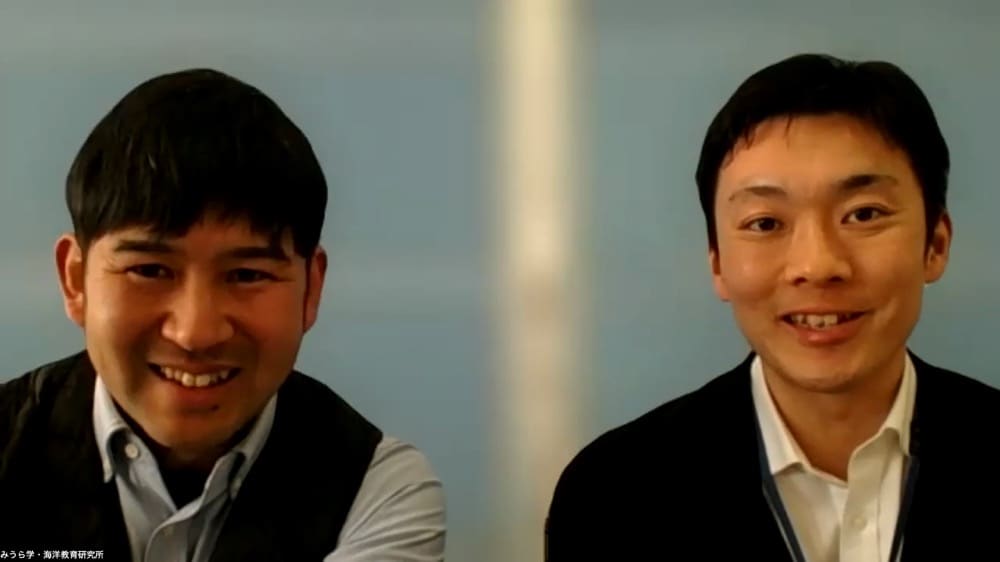
Against this backdrop, Miura City is one municipality that began to focus on ocean education for children ahead of the rest of the country. Located on the southern tip of the Miura Peninsula in Kanagawa Prefecture and surrounded by the sea on three sides, Miura has been a pioneer in this field. We spoke with Ryota Nakamura and Narutomo Iwase from the Miura-Gaku Ocean Education Research Institute (external link, in Japanese), which has supported the city’s ocean education initiatives, about the kinds of educational programs they are implementing, the demand for them, and the changes they have observed in children.
An ocean in flux: Understanding the reality and making ocean issues personal
The Nippon Foundation Journal Editing Department: First, could you tell us about the initiatives of the Miura-Gaku Ocean Education Research Institute?
Ryota Nakamura: Our main role is to support the 11 elementary and junior high schools in Miura City with their ocean education programs, primarily by providing assistance and disseminating information.
Specifically, we introduce external organizations that can cooperate with the programs and act as coordinators between them and the schools. In some cases, schools contact external organizations directly to conduct ocean education. To ensure that other schools can learn about these activities, we create and distribute a newsletter called the Ocean Education Network News (external link, in Japanese) to all schools.
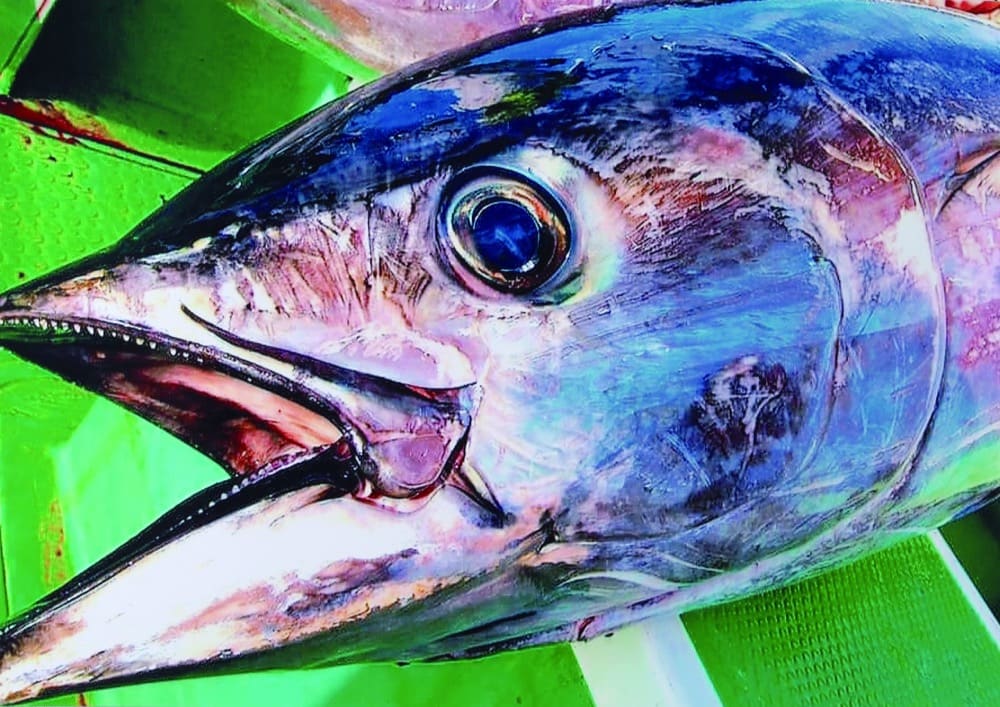
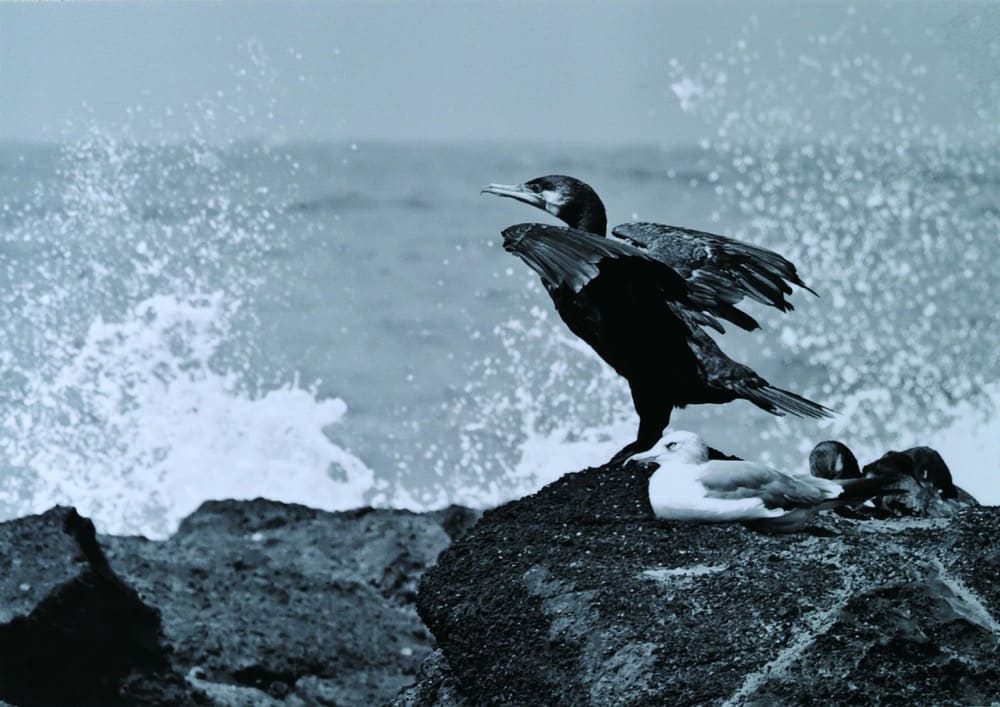
Nakamura: We also co-host an Ocean Education Photo Contest (external link, in Japanese) with the University of Tokyo’s Misaki Marine Biological Station, which collaborates with Miura City on education. The contest invites elementary and junior high school students in Miura to submit photos on the theme “The Sea in Miura Through Children’s Eyes,” and we award prizes for outstanding entries.
Journal: Could you tell us how the Miura-Gaku Ocean Education Research Institute came to be established?
Nakamura: Education using the sea facing Miura as a classroom had been taking place in Miura City for some time, and in 2012, the University of Tokyo’s Misaki Marine Biological Station and Miura City signed a partnership agreement. The goal was to foster talent and contribute to regional development by sharing cutting-edge research findings, which also meant that the station’s valuable intellectual property could be utilized in school education.
Our organization was then established in 2016 out of a growing movement to further promote and improve ocean education.
Journal: You mentioned that fostering talent is a goal. What kind of people are you hoping to nurture?
Narutomo Iwase: First, we want children to learn about the current state of the sea in Miura and to feel that its problems are relevant to them, so they can see these issues as their own.
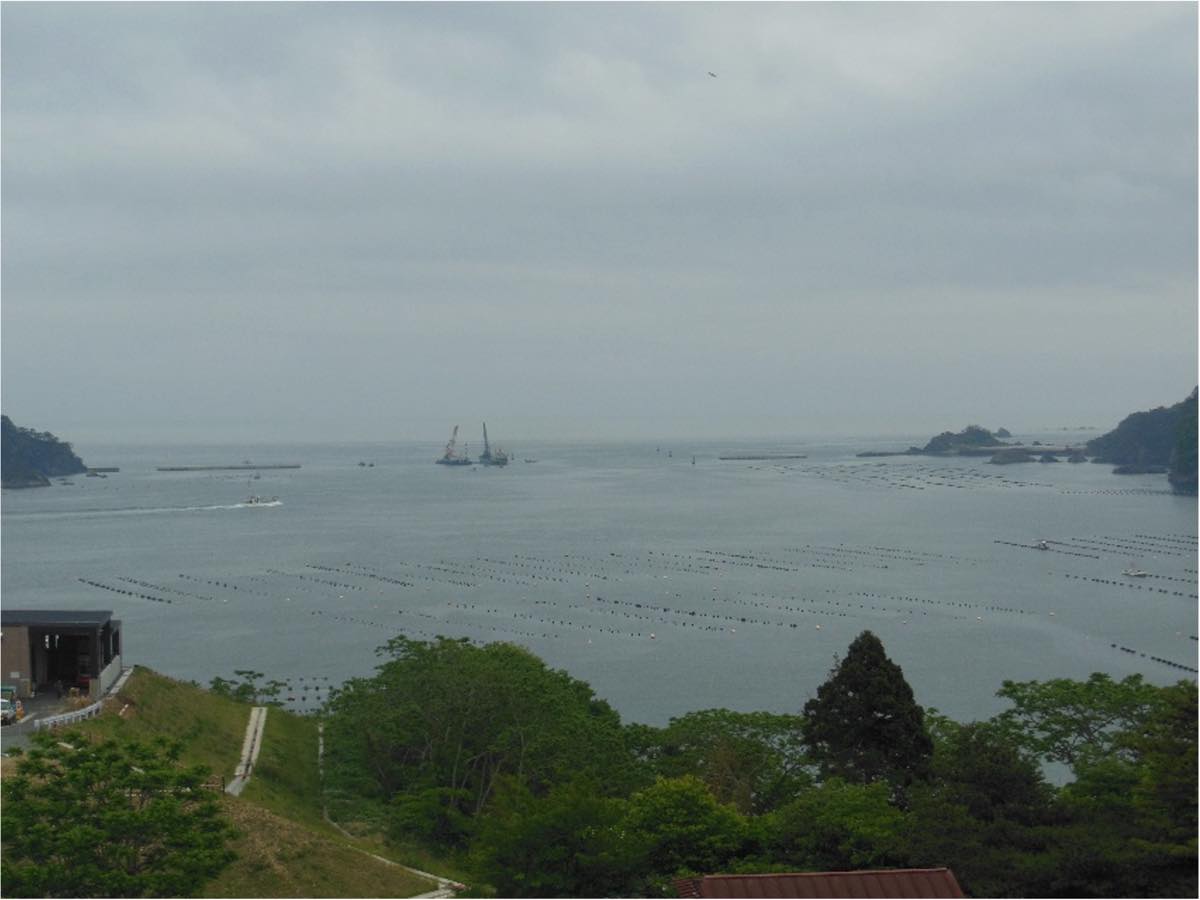
For example, wakame seaweed farming is a major industry in Miura City. The seaweed won’t sprout unless the water temperature drops below a certain point. Also, fish that are supposed to become inactive when the water temperature falls are now active year-round, and they are eating more and more of the wakame, making farming increasingly difficult.
There is also the issue of seaweed beds disappearing due to isoyake,* or rocky-shore denudation. We have recently seen signs of recovery, so it’s hard to say things are 100 percent worse. Even taking that into account, it’s clear that the condition of the ocean is changing.
By conveying these realities, we hope children will come to see the ocean’s problems as their own.
- A phenomenon in which large seaweeds such as kombu (kelp) and kajime (paddle weed) die off along a rocky coast. It is believed to be caused by rising sea temperatures, water pollution, and overgrazing by animals like sea urchins.
Nurturing a desire to protect the ocean through firsthand experience
Journal: Could you tell us about the content of the ocean education programs actually being implemented in Miura City?
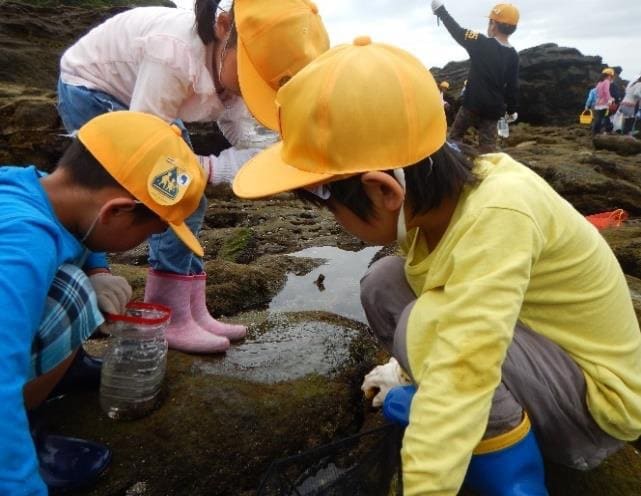
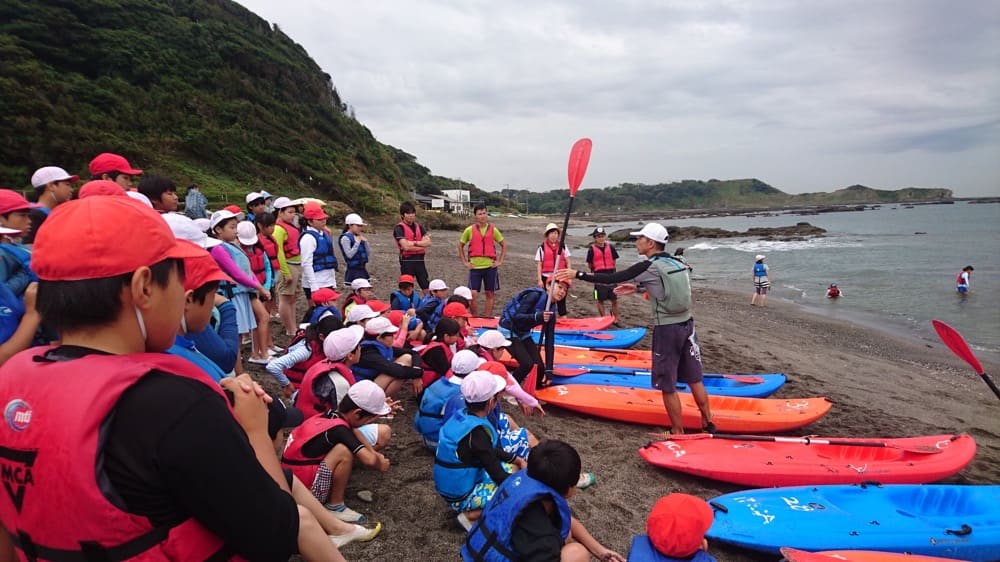
Nakamura: We have set general themes for each school and grade level. For the lower grades, many programs are designed primarily to help children discover the fun of the ocean and feel a sense of closeness to it.
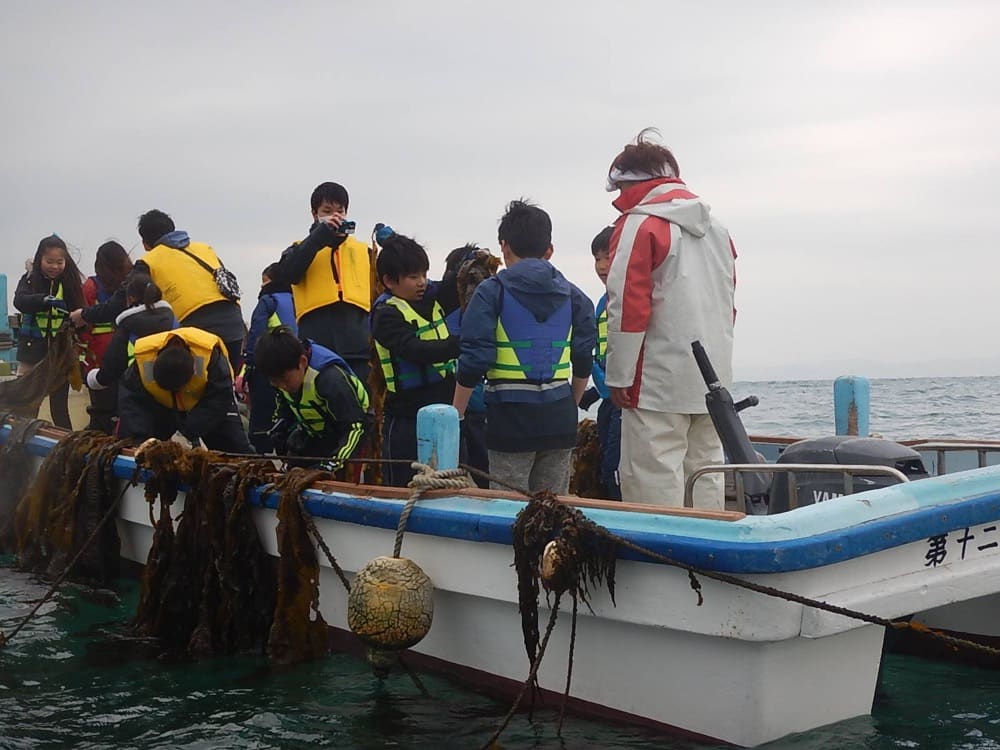
For example, we start by having them search for creatures in tidal flats or try marine leisure activities like sailing, allowing them to learn about ocean safety while having fun. From there, we deepen their learning.
Journal: What do students learn in the middle and upper elementary grades, or in junior high school?
Iwase: We continue with some hands-on learning from the lower grades, but we also incorporate inquiry-based learning where children conduct their own research, rather than just receiving knowledge from others.
For example, in fiscal 2023, we held a class on farmed wakame. First, the students visited a fisherman to see how the wakame is grown. In addition to that, they have classes at school where they research changes in the ocean and what problems are occurring.
They sometimes use the internet for their research, but if the children say, “We’d like to hear from someone like this,” we’ve also arranged for them to speak with experts.
Through these activities, the children learn step by step about the impact of global warming on the ocean and the decline in fish catches, deepening their understanding. We also value the process of having them summarize what they’ve learned, present it, and share it with everyone.
Journal: Have you heard any particularly memorable comments from children who have participated in ocean education?
Nakamura: From the younger children, we hear things like, “I want to learn more about the ocean,” while older students say things like, “I want to protect marine life.” For the older children, in addition to their experience of interacting with marine creatures, they are also learning about the problems facing the ocean. I think this naturally fosters a sense of mission in them, a feeling that they must protect these creatures.
I think many children in Japan are aware that the ocean is facing serious problems, but by getting to know the situation on the ground, the children of Miura are able to see these issues in a much more personal way.
Journal: So it’s important to show them the real situation firsthand.
Nakamura: That’s right. If there isn’t an ocean nearby, another method could be to show them a photo of a turtle entangled in marine debris.
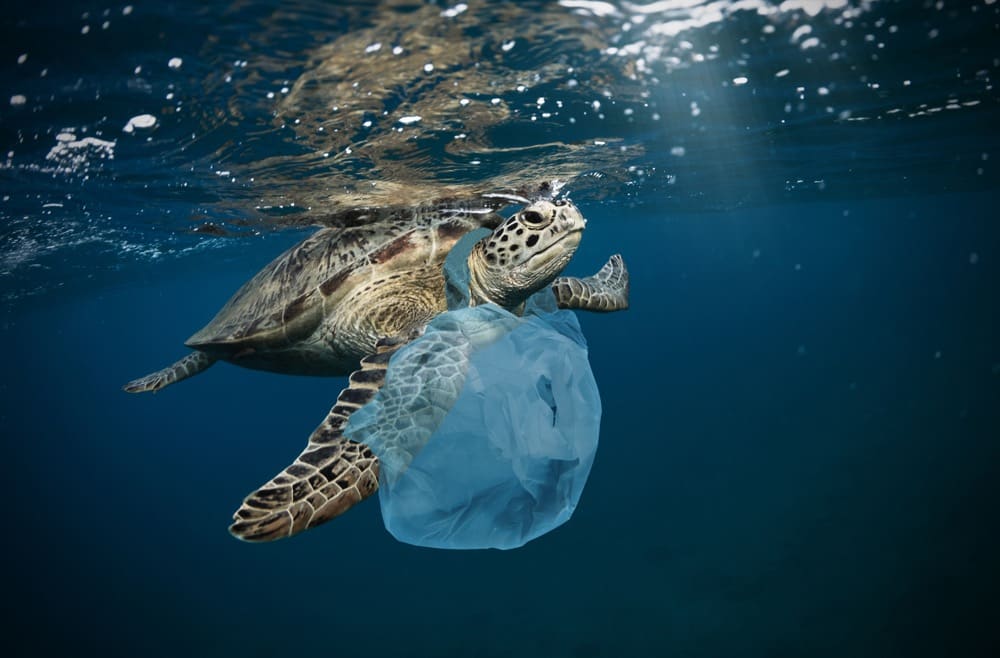
Nakamura: I was actually once in the position of implementing ocean education as an elementary school teacher, and I think that rather than just conveying data like facts and figures or sharing your own thoughts, showing children photos like that has a much greater impact.
The children feel sympathy for the creatures and, I believe, start to think spontaneously about what they can do to protect them.
Journal: Have you seen any actual changes in the children who have gone through this ocean education?
Nakamura: I think ocean education has become a part of their daily lives, and the sea of Miura itself, as well as the people whose work is related to the ocean, have become more familiar to them.
Also, and this isn’t solely due to ocean education, we conduct an annual survey asking children in Miura if they like their city, and about 90 percent of them say they do.
About half of the children living in Miura City also enter the Ocean Education Photo Contest, so there’s no doubt that the ocean has become a familiar presence in their lives.
Journal: Has the spread of ocean education brought about any changes in the city itself?
Iwase: The children have a desire to share what they’ve learned, so I think awareness of the issues is spreading to parents and the local community through their presentations. This chain reaction is happening because the teachers are encouraging the children not only to learn, but also to share what they have learned… I really feel the teachers’ enthusiasm.
Nakamura: While it’s slightly different from a change in the city, the city’s approach to ocean education has also evolved. There has been a new movement since fiscal 2023 to incorporate the concept of umigyo, which Miura City has been advocating since 1985, into ocean education.
Umigyo is a term that refers to initiatives that seek to utilize the value and appeal of marine and fishing village resources. It involves creating complex, multifaceted industries by linking various fields such as commerce, manufacturing, and tourism, with the fishing industry at its core.
In our ocean education, we cover not only fishing but also leisure and tourism. We hope that this will develop further and that in the future, more young people will pursue careers in research or other jobs related to the ocean.
Protecting the ocean starts with imagining its connection to our daily lives
Journal: To make the problems happening in the ocean a personal matter, what can each of us do in our daily lives?
Iwase: I’d like everyone to imagine how their own lives are connected to the ocean. You may know that mountains and rivers are connected to the sea, but it doesn’t stop there. The water we use every day flows through drains and out to the ocean, affecting the fish and shellfish that you eat, which then end up on your dinner table.
Just by imagining it, I think you can see that the ocean is actually very close to you, and that your own life is connected to it.
Iwase: I’ve been talking about the hands-on ocean education we can provide in Miura City, but even if you don’t live near the ocean, if you can truly feel that your life is supported by and connected to the sea, I believe you will develop a desire to cherish it.
Editor’s Note
As we go about our daily lives, it’s easy to overlook the connection between the ocean and our existence. We were struck, however, by the realization that it is precisely this small lack of knowledge and a degree of indifference that has such a huge impact on the marine environment.
Why not start by simply trying to imagine it? If even one more person can feel a closer connection to the ocean, it will surely help to protect its future.
Text: The Nippon Foundation Journal Editing Department
Related Themes
Related Link
Related Articles
From Streets to the Sea: How The Nippon Foundation Turns Cleanup into a National Movement
Field Notes