What Prompted the Slang Term ‘Komochi-sama’ (Entitled Parent)? An urgent need for a society where everyone can work comfortably

Key Points
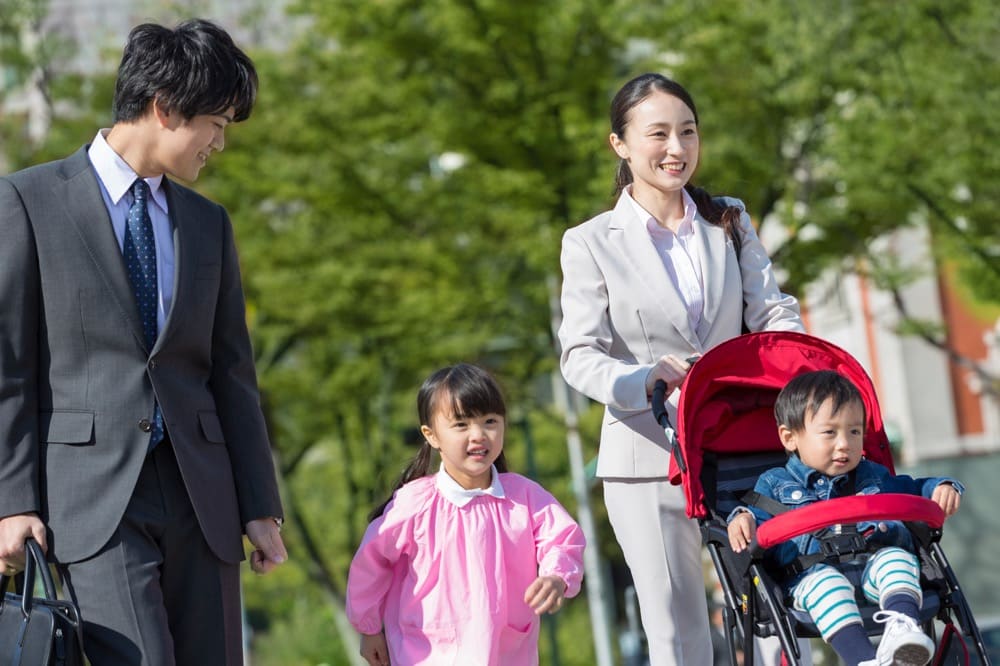
- An increasing number of people are aiming to balance child-rearing and a job, but more needs to be done to make it easier to work.
- In many cases, there is little assistance for those who provide support to colleagues who are raising children. As a result, some express their resentment of what they see as having to pick up the slack through the slang term komochi-sama, implying a parent who feels entitled to special consideration.
- In order to solve the labor shortage, it is urgent that we break the stereotype that “childcare = women” and create an environment where everyone can work comfortably.
Do you know the word komochi-sama? In recent years, it has become an ironic term used when someone sounds off on social media, etc., about their feelings that their own workload has increased due to the circumstances of a colleague with children.
On social media, it is used in such contexts as, “A colleague decided to take childcare leave, but no personnel were added to replace them, so my workload increased,” or “When a colleague’s child was sick, they suddenly had to take time off and I had to deal with their work.”
In Japan, where the birthrate and population are declining and labor shortages are becoming more serious, how can we realize a society where everyone can work comfortably, regardless of whether they have children or not?
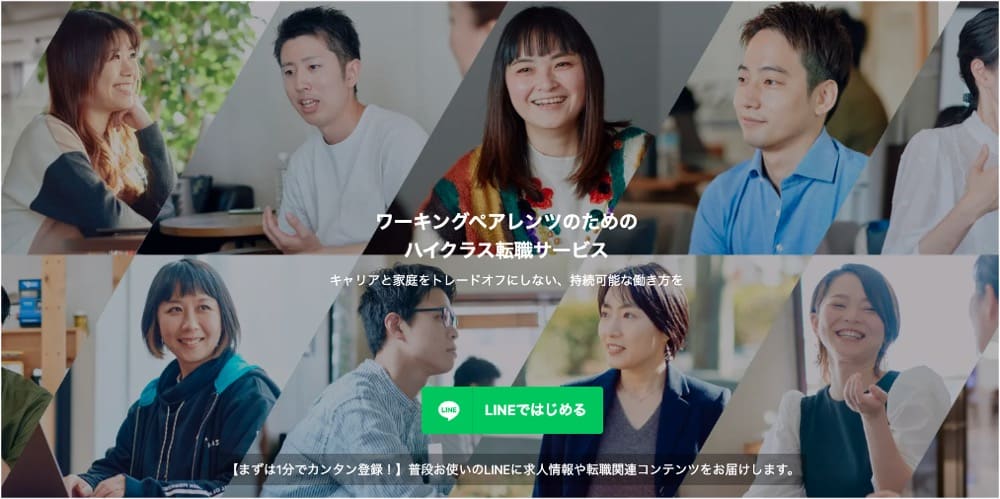
Tatsuya Uehara is the CEO of XTalent Co. Ltd. (external link; in Japanese), which provides a high-level recruitment service, withwork (external link; in Japanese), specializing in child-rearing households. Mr. Uehara points out that the cause of this growing resentment of colleagues with children is that “there is a spreading movement to consider ways to make it easier to work, but only for child-rearing households, and especially women, and that has created divisions.”

Is there a trade-off between a career and parenting? The workplace difficulties facing households with children
The Nippon Foundation Journal Editing Department: I understand that your own struggle in balancing child-rearing and career was the impetus for launching withwork.
Tatsuya Uehara: Yes. My child was born while I was working at my previous company, and when I thought again about my career, I always had the feeling that parenting and career were a trade-off (I had to sacrifice one or the other). I started this business based on the idea that we should increase the number of people who can commit to both parenting and work.
Journal: You mentioned that you personally experienced this at your former company, but what difficulties do you feel that people with children experience in their workplace?
Uehara: I often hear people say that they “have to save their careers” or that “the expectations of the company are decreasing.” There is a term “child penalty” that refers to being in a socially disadvantageous situation because of giving birth or raising a child, and many people are in exactly this situation. And I think this is a problem that is especially likely to occur for women.
On the other hand, men are often expected by the company to advance in their careers, but the higher they go, the more difficult it is to balance family and career, and they often say they feel that they have to focus on work. There are still very few people who can serve as role models in terms of balancing the two sides, so I feel that people who are highly conscious of both their family and career thinking are hitting a wall.
I think this problem is occurring in a number of countries around the world, but in Japan, it is particularly serious.
Journal: Why does that happen?
Uehara: I think there are several factors, but the first is that, on the part of the companies, they’ve set up a working style that doesn’t assume employees will balance child-rearing and work. In general, working at a company is full-time, and there are industries where overtime is commonplace. There are also companies where you have dinner with clients in the evening and play golf with them on Saturdays and Sundays.
Journal: I see. Are there factors outside of the company as well?
Uehara: I think one issue is that between a husband and wife, the responsibility for care work, such as child care, tends to fall on the woman. Social trends have a big influence on this, and I think there are still many people who believe that it is normal for women to be the ones to raise children.
Journal: That trend certainly is deep-seated.
Uehara: Yes. Another challenge is the lack of social resources to take care of child-rearing-specific problems. For example, there are cases where a person wants to work but there are no vacancies at the nursery schools, so there is nowhere to take care of their child. And even if you are able to enroll them in a nursery school, young children tend to suddenly get sick, and of course they cannot be entrusted to a nursery school if they aren’t well. There is still a shortage of facilities that provide childcare for sick children (byōji hoiku facilities),[1] so when a child becomes ill, parents have to stay home to take care of them and inevitably have to miss work.
- Note 1: This refers to facilities, such as at a medical institution or a separate room attached to a nursery school, that temporarily take care of children attending nursery schools or kindergartens when they become ill and parents are unable to take time off from work.↩︎

In order to avoid the divisions implied by the word komochi-sama, an environment is needed where everyone can work comfortably
Journal: I have been seeing the slang term komochi-sama more and more on the internet and social media. I think there are a lot of cases where dissatisfaction erupts among the people who have to provide support to employees with children, but how do you view the background behind the creation of that type of word?
Uehara: Although they are not sufficient, there are some systems and initiatives now to help working people with kids. However, those target only people with children, and currently those only apply to women with children, so I think this has created division.
Also, if a company assumes its employees will work long hours, and there are no measures to improve efficiency or productivity in the workflow, then someone else will have to cover the work of employees who have to go home early or who often take time off because they have children. That means those other employees who support working parents end up working longer hours and have an even harder time taking a break.
Journal: How can that situation be improved?
Uehara: You can never completely eliminate the impact and restrictions on work caused by child-rearing. It is important to ensure that the burden of child-rearing does not fall on just one parent or the other, but that’s difficult for parents to solve by themselves. I think it is necessary for the four parties — including the parents and their respective companies — to work together and change their consciousness of the issue.
For example, I think that it is generally women who use the child care leave system. In that case, the company where the mother works has to assign her work to someone else, hire more staff, etc.
More and more companies are recommending child care leave for men as well, but there are places where the atmosphere does not let men actively make use of it. Because of that, there is less interruption for the man’s workplace and it is less likely to be impacted.
This situation has instilled the impression that “people with children, and especially women, are difficult for companies to handle.”
I feel that companies need to be considerate of employees who are raising children and those who provide support for them. I’d like there to be initiatives that dispel the stereotype that women are the ones who use the childcare system and that it is women who are responsible for raising children.
Journal: If the couple can share the burden to some extent when it comes to sudden responses, such as when a child is sick, that could reduce the burden.
Uehara: Yes. However, if one of the parents is an essential worker,[2] for example, and is not able to suddenly take off, or has to be on-site, then I think it can be quite difficult to divide the burden. There may be situations where the person who has a job with a higher degree of freedom has no choice but to bear the burden.
- Note 2: This refers to workers who are essential for maintaining the minimum social infrastructure, such as medical personnel, educators, and those involved in the manufacture and sale of food and daily necessities↩︎
Journal: What types of steps can companies take?
Uehara: I think that making it easier for people to take time off in any circumstances, regardless of whether they are raising children or not, will make it less likely for divisions to emerge between employees.
For example, by improving work efficiency, digitalizing work, raising productivity, and introducing flexible work styles, work can keep going even if someone temporarily takes time off, so I think it is important to create an environment where it is easy for everyone to take time off.

Journal: In terms of those who are in a position where they support their colleagues with children, is there anything that companies should make an effort to do or should consider?
Uehara: I think what they can do depends on the kind of workplace and the work that is being evaluated, but as I mentioned, if you can improve the efficiency of the work and achieve a flexible work style, I think that can reduce the burden on other colleagues to some extent.
Also, in the case of jobs that require someone to be there in person, such as essential workers, I think we need to incentivize and positively evaluate those who provide support to their colleagues and create a situation where there is a proper reward for doing so.
For example, Mitsui Sumitomo Insurance Company has a system called the child care leave workplace support allowance (congratulatory payment) that provides up to 100,000 yen to the colleagues of a person who takes child care leave.
Journal: I see. However, when I hear that type of story, it makes me feel that, although it is great that large companies can implement such a generous system, it is difficult for small and medium-sized organizations with a small number of management staff …
Uehara: That’s true. However, in the end, if it is not easy to work, people are undoubtedly going to quit, so I think every company needs to make the right investment in workers.
There was a time when long working hours were possible without paying overtime, but now that is absolutely impossible. I think that the proportion of workers who can work full-time and also be available for overtime will definitely decrease from now on. In the first place, as the population is declining and the economy is not growing, people’s individual circumstances will become increasingly diverse — not just needing time for child-rearing, but also for providing care to family members, undergoing fertility treatments, and so on.
If we don’t change the premise of working to be more flexible, then undoubtedly the labor market itself will disappear. I think the word komochi-sama is one reflection of the problems we are facing during that transitional period.
Getting rid of the stereotype that “child-rearing is done by women”
Journal: Is there anything you would like the national or local governments to do to prevent the division between households that are raising children and those that are not?
Uehara: I guess it would be to have them work on changing the way that management thinks. The way we think about home and work is changing rapidly. After a time when there was a complete separation between home and work, and women and men were divided into those roles, we then went through a period when everyone could work regardless of gender, but the division of roles continued, and now I think we are in an era where the division of roles is becoming fairer.
Even though individual awareness is gradually changing, and more and more men are thinking about raising children, I think that if companies continue to say, “We will provide support to women because child-rearing is difficult, but men will continue to be treated the way they always have been,” I think the division will only widen.
There needs to be a change in the awareness of corporate decision-makers, such as managers, so I hope that the national and local governments will proactively communicate that message.
Journal: Are there things that each one of us can do to realize a society that makes it easier to raise children?
Uehara: We should start with the assumption that we all have to work together to tackle the various issues related to child-rearing and work, and I think it is important for women who are currently raising children to have the awareness that this structure must be changed.
Rather than thinking, “I should just put up with things as they are and take care of child care and work,” I want the next generation to take a step forward and have ideas about what they want to change.
Also, I think that the people around them should get rid of the stereotype that “it’s women who should raise children” and take action, such as consulting with the company’s boss about the system. If we keep doing these types of things, I think society will change.
Editor’s Note
I realized that the komochi-sama problem has arisen because we are in an era where the thinking around child-rearing and work is changing. We are facing the issue of a declining birthrate and aging population, so the fact that despite that, having children can create a socially disadvantageous situation for people seems like we have our priorities wrong.
“Aim to balance career and child-rearing”
“Have the awareness that raising children is something to be done by both husband and wife”
“Make it easier for employees to work”
I sincerely hope that through the actions and efforts of each of us, this kind of awareness and way of thinking will spread throughout society.
Text: The Nippon Foundation Journal Editing Department
Profile
Tatsuya Uehara
President of XTalent Co. Ltd. After graduating from the Faculty of Education at Kyoto University, he joined Speee Co. Ltd. and started his career as an SEO analyst, then moved to the human resources department before working in the president’s office. In 2017, he joined JapanTaxi Co. Ltd. (now GO Co. Ltd.), a ride-hailing app, and was in charge of conducting demonstration experiments with the Ministry of Land, Infrastructure, Transport and Tourism, launching new B-to-B services, and so on.
In July 2019, he founded and became the president of XTalent. With the mission of “creating a fair labor market,” he runs withwork, an employment service for working parents. Through recruitment, they approach social issues such as bridging the gender gap. He himself is raising two children while he and his wife both work.