KIFUBAR, a Meetup Where You Can Casually Donate While You Drink
Key Points
- Many Japanese people are interested in giving back to society, but those who actually do are still quite rare.
- At KIFUBAR, you can casually donate to participating nonprofit organizations, etc. by casting a vote for each drink you have.
- Creating a place and atmosphere that makes people feel more comfortable about giving will foster a culture of donation.
Many of us have vague hopes of becoming useful members of society or helping those in need, but some have probably never made a donation, volunteered, or otherwise taken any concrete action.
This disconnect appears to stem from problems such as the lack of awareness of individuals/organizations that tackle social issues and the high psychological barriers to giving.
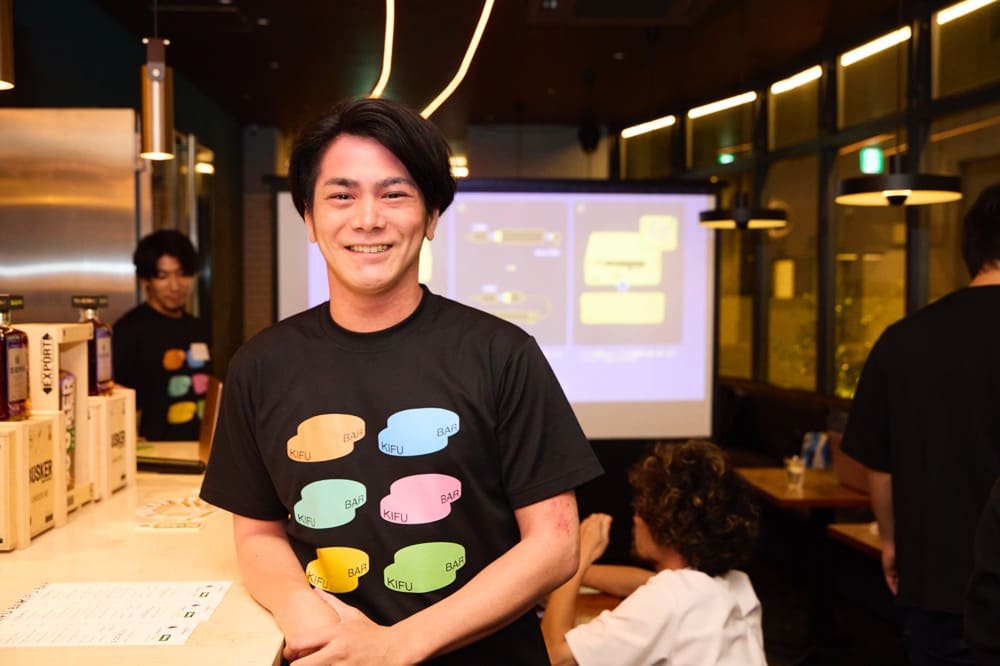
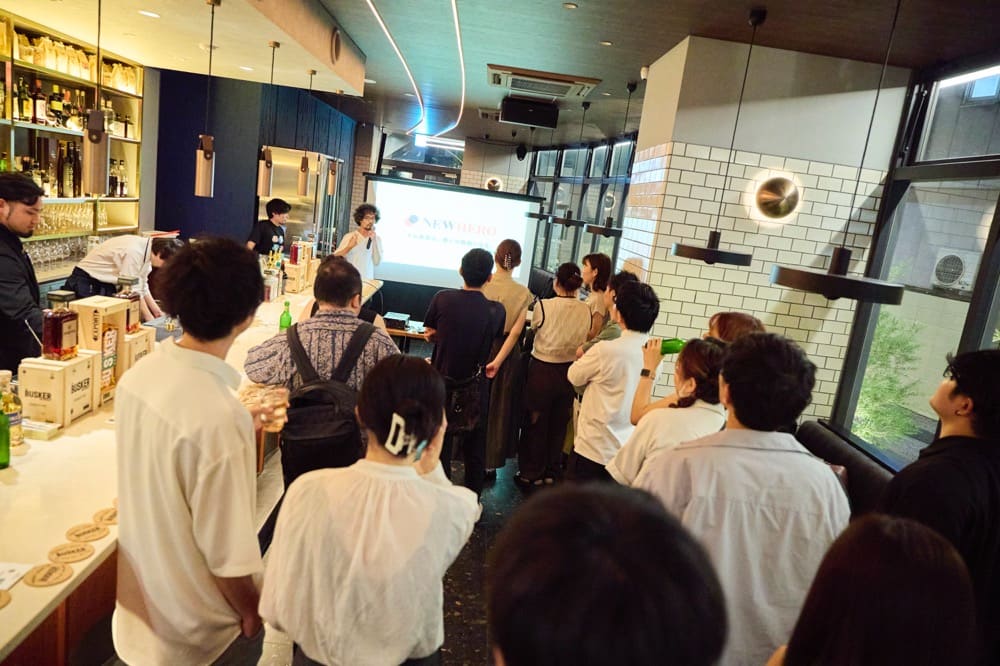
KIFUBAR (external link, in Japanese) is a bar event that was started for such people. At every KIFUBAR, various people and organizations involved in social action, such as staff and volunteers from nonprofit organizations, appear on the stage and give a simple five-minute presentation.
Attendees receive a voting coin for each drink they have, and when they hand this coin over to an organization that piques their interest, that organization receives 40% of the drink’s price.
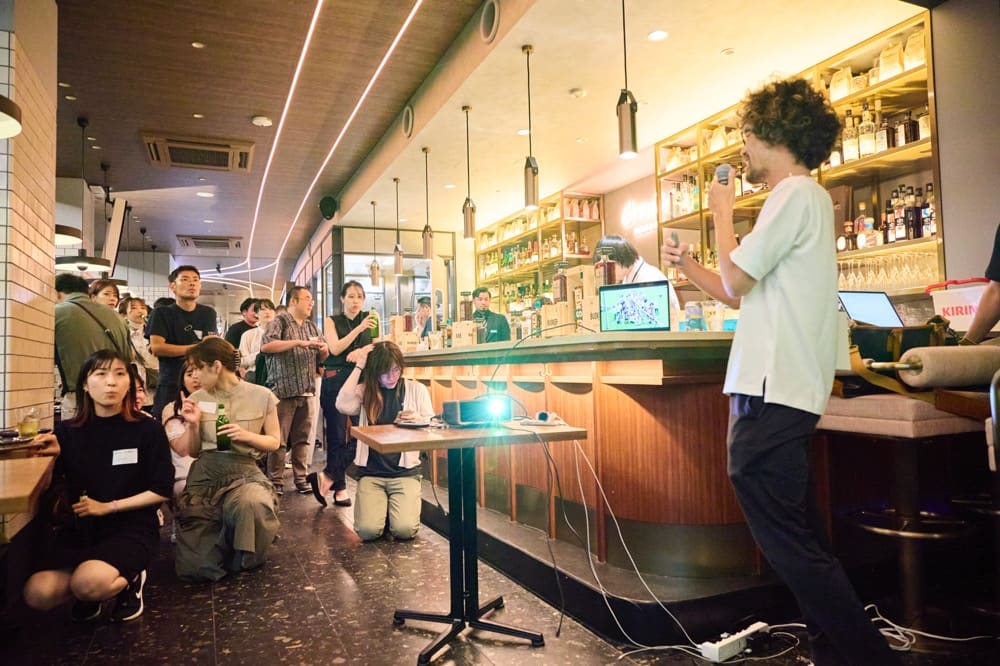
Starting in November 2017, the event has been held more than 96 times in total, with more than 2,100 attendees emptying more than 4,600 glasses and the total amount of donations raised exceeding 240 million yen.
Attendees who have never before made a donation, as well as attendees who hear about the event by chance and join on a whim, often quickly embrace the idea and actively participate in giving.
We heard from Shuichiro Tanida, who started KIFUBAR, on what prompted him to launch KIFUBAR, what he has noticed running the events, and what can be done to create a society where social action and giving are considered a norm.
I wanted to create an informal setting to meet and hear from those who work for NGOs
The Nippon Foundation Journal Editing Department: What prompted you to start KIFUBAR?
Shuichiro Tanida: In my previous work, I used to support nonprofit organizations with their advertising operations and digital marketing, but I gradually lost interest in soliciting donations online. That’s when I started to think that I want to be there in person, at the very moment a donation is made for real.
Additionally, while participating in briefing sessions provided by various nonprofit organizations, I had many opportunities to listen to lengthy presentations that would go on for, like, 90 minutes in places like town halls. Those kinds of sessions are meaningful and interesting for people interested in the relevant nonprofit organization, but I felt that it would be hard to invite a friend who may or may not share the same interest.
I thought that if we had a venue where you could casually listen to short presentations while having a drink — rather than the stuffy setting of a formal briefing session — perhaps it would be easier to invite friends.
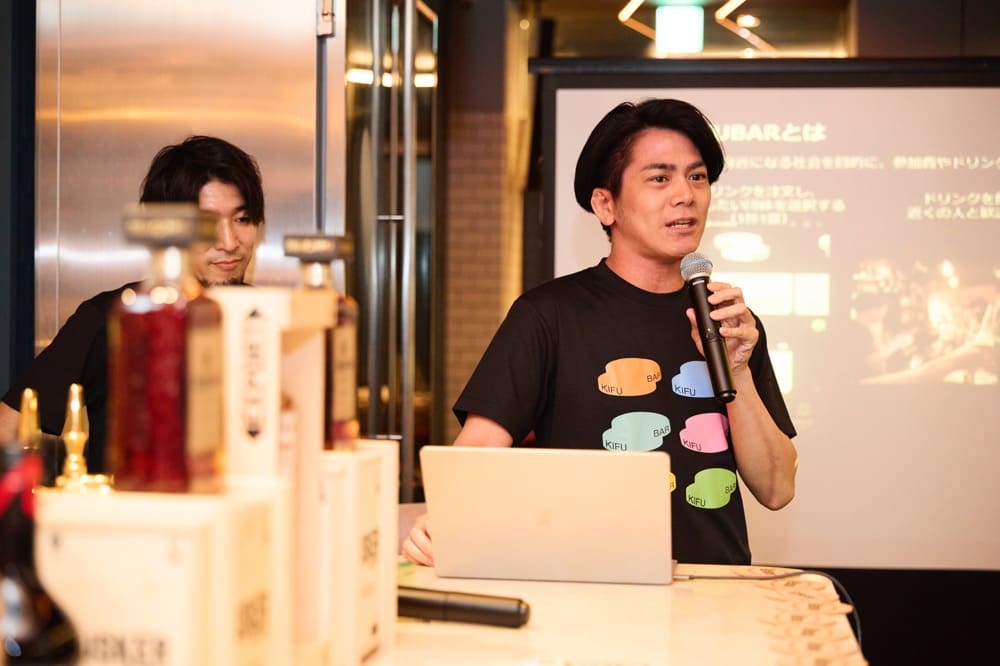
Journal: We hear that KIFUBAR will soon be convening for the 100th time. How have you managed to keep it going for so long?
Tanida: In the beginning, I was doing it as part of my work, but I subsequently changed my job. Nowadays, I’m simply enjoying my drinks [laughs]. I’m drinking with someone every night anyway, so maybe one in five of those drinks can be KIFUBAR, I thought.
People who gather at KIFUBAR rarely complain or say things that might hurt people, and they have diverse interests, so having drinks with them feels good.
Journal: How do you choose the venue or who takes the stage?
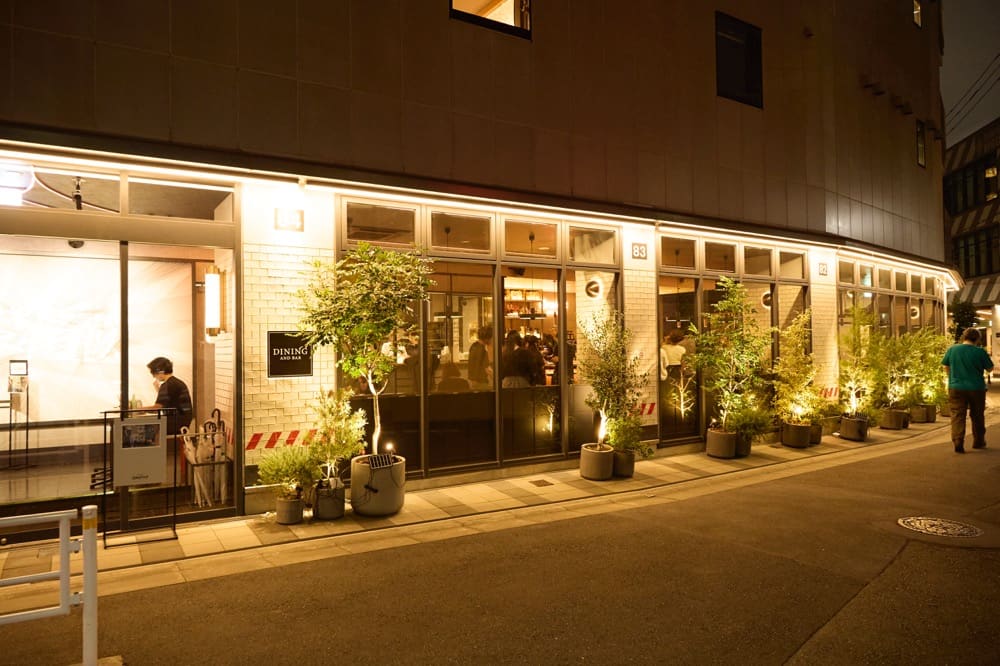
Tanida: Sometimes we will use an actual bar by renting it out for the night; sometimes we will borrow the office of a business that supports us.
There are different ways to decide who goes on stage, but we don’t have any specific selection criteria. We basically welcome anyone who wants to take to the stage.
When I’m the one hosting, I will select the venue and date at the outset and then put out a call on social media, like “KIFUBAR will be held on such and such a date, and we are now looking for an organization to feature!”
Additionally, we will sometimes choose a theme and then look for an organization that fits it. When we collaborate with other organizations, we will sometimes make the decision jointly.
A relationship between people who happen to be present rather than a relationship between a nonprofit organization and donors
Journal: What sticks out in your memories of KIFUBAR events held so far?
Tanida: Things haven’t always gone smoothly. There was a time when two animal rights organizations that weren’t on good terms took the stage, and things took an unexpected turn.
I had naively thought that since both organizations are working on the same theme, it would make for a lively event, but they had very different interpretations of what happiness for animals meant. Things didn’t quite work out the way we anticipated.
Nonprofit organizations really care about their ideology precisely because they are not for profit. It was a lesson that, while people can resonate with each other because of a shared interest in the same theme, the opposite is also possible.
Another memorable KIFUBAR is the one we held exclusively with parents who were dealing with their children’s school avoidance.
I heard from the attendees that, when they normally go for a drink with their friends and colleagues, they cannot talk about what troubles them at home and they also feel guilty about their children — but on that occasion, everyone could openly share their experience, like, “It’s the same at our home!”
It was a different kind of atmosphere compared with the usual KIFUBAR, and I felt that there were many people who were looking for a place like what we offer.
Journal: What kind of attendees do you mostly see?
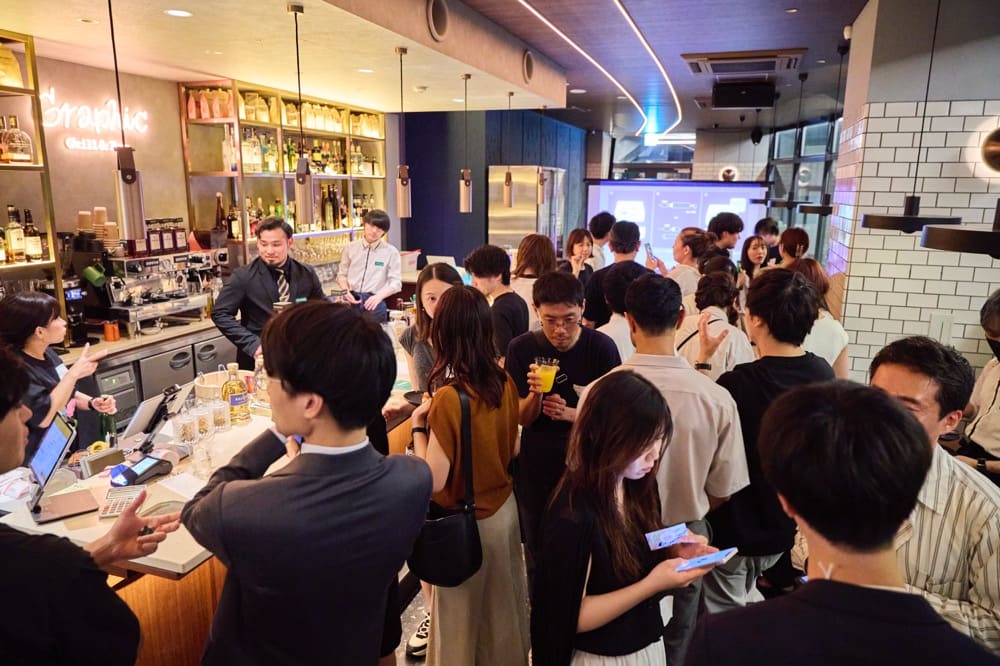
Tanida: The interesting thing is, those who are connected to nonprofit organizations or interested in social action only make up 20% to 30%; half of the attendees join only after seeing a notice on social media by chance, or they haven’t had any interest in nonprofit organizations or made a single donation. The age of attendees is also quite mixed, with a wide spread from people in their 20s to people in their 50s.
Journal: When people who have had no interest in social action attend KIFUBAR, do they change in any way?
Tanida: For business folks who normally concentrate on how to improve their numbers, nonprofit activity probably seems refreshing. I think they have questions and find what they learn interesting. You are in close proximity with the presenters — and you are drinking, too — so question-and-answer sessions are lively. It’s clear that each side generates interest and excitement in the other.
Journal: Perhaps all sorts of things catch their interest and they ask questions without thinking about taboos precisely because they are learning about it for the first time. What are the reactions of the nonprofit organizations that take the stage?
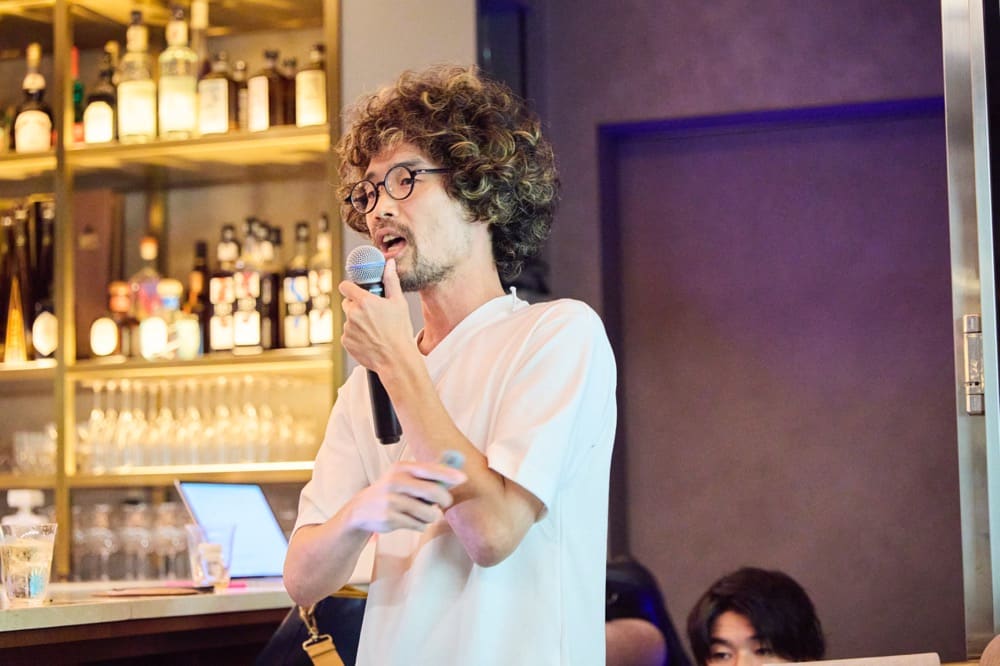
Tanida: Many say that it’s their first experience talking about their activities in an intimate setting like a bar, and that it’s easier to talk than what they’re used to.
However, whether or not that experience yields a tangible outcome depends on the presenter. If the presenter follows the pattern of coming prepared with a meticulously produced report and talking about “we” by putting the emphasis on the viewpoint of the organization as a whole, it might be difficult to win the hearts of the audience.
On the other hand, if the presenter talks about “why am I with this organization,” and focuses on the presenter’s own personal experience, the presentation tends to be more captivating.
After all, KIFUBAR is a drinks event. Your ability to entertain the crowd will be tested as well.
Creating a venue that lowers the barrier to giving will foster a culture of donation
Journal: What kinds of insights have you gained through KIFUBAR?
Tanida: Let me see. I’m sure all nonprofit organizations looking to raise donations have serious discussions about ways to ascertain the needs of their supporters and prompt effective actions. But I feel that there are other effective ways of going about it.
If a nonprofit organization was to survey its donors and ask, “Why did you decide to donate to us?” I think most of them would respond, “I was interested in your organization’s activities.” However, I also think surely that’s not the real reason.
Journal: What do you mean?
Tanida: For example, let’s say I bought a computer, and someone asked me why I picked that particular computer. I would probably say, “It’s light-weight, and it’s got good specs.” I’d probably focus on functionality and the like.
However, in reality, the reason could well be that it just happened to catch my eye in the electronics store, I thought it looked cool, and the store clerk deftly recommended it, so I ended up buying it. Functionality and so on comes after the fact; the reality might be that I thought it was cool, and it was recommended to me at that time, so I went with that and bought it. But no one would give that kind of response in a survey.
Therefore, I think the same can be said about donations. What prompts people to make a donation could well be “I happened to come across it on the internet” or “A friend of a friend works for that organization” or “A friend was making a donation.”
Journal: True. If you are responding to a survey, you do tend to give a safe response.
Tanida: Right? KIFUBAR is the kind of place where you just happen to stop by for a drink but you run into these people who are passionately talking about their activity, so you start donating on a “whim” or “vibes.”
I think donating should be something you can do more casually. My senses tell me that it’s important to increase the number of people who participate on a whim or vibes.
Journal: What are the goals for KIFUBAR?
Tanida: I am enjoying it at a personal level, so I intend to remain active in KIFUBAR going forward. I do have this dream to raise a total of 100 million yen in donations, but it’ll be tricky to pull that off on my own [laughs].
I share the format of KIFUBAR, such as the methodology, a bit like franchising. I would be really happy if KIFUBAR spread to all corners of Japan and all sorts of people held their own KIFUBAR events based on their own concepts.
The other day, at a KIFUBAR in Hiroshima, the presenter was talking about the wartime experience of a family member and the atomic bomb issue, and it then hit me. Each locality has its own unique activity or issue that everyone is very much interested in.
It would be great if KIFUBAR could help to bring more people together and broaden their connections to each other.
Journal: Japanese people still face a rather high psychological barrier toward giving. What can we do to lower it?
Tanida: This is just my personal view, but I think we should stop taking it too seriously. Of course, it’s important to think properly about it; that’s a good thing. You absolutely cannot be nonchalant about it [laughs].
But if you think too much about where and how the money you donate will be used, you could ultimately end up not donating at all. Recipients of donations could also be left with no choice but to say and do things that cater to “serious donors.” That will turn the culture of donation into something only people who take giving seriously can participate in, and that group will only keep on shrinking.
We often hear about artists overseas holding a charity concert and raising billions of yen in donations. But among the people who donated, I think many aren’t all that bothered about how the money will be used. “That was a great gig! Put the money I donated to some good use” is the vibe, I imagine.
This, I think, is the slack that’s necessary to allow fund raising to expand. It would be good if a culture that lowers the barrier to giving was to take root so that “I was out drinking, so I donated in passing” or “I don’t normally use cash, so I put some loose change in the collection box” become the norm.
Editor’s Note
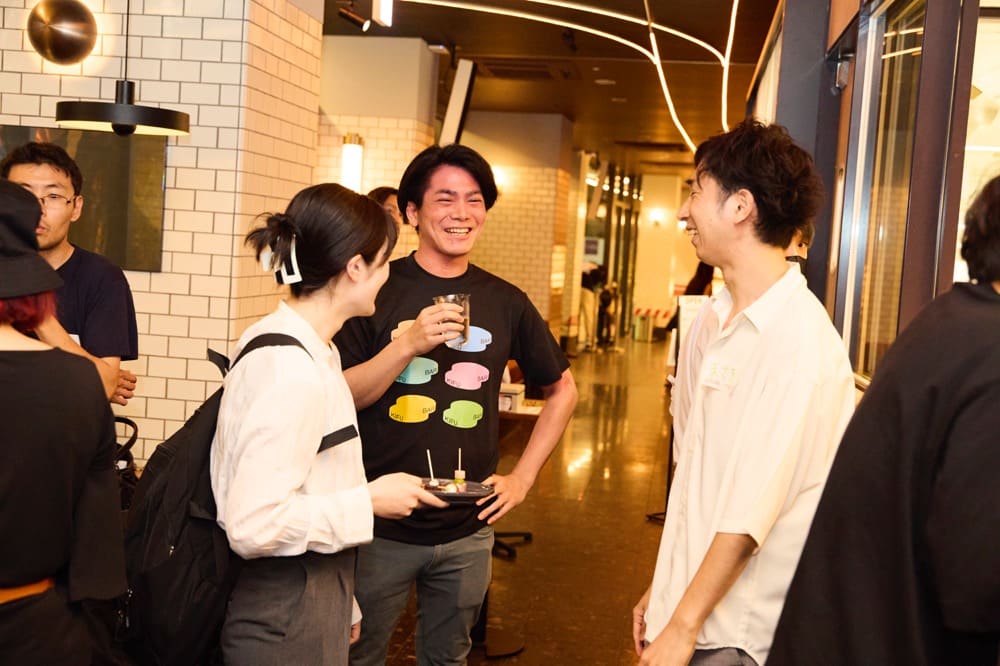
As Mr. Tanida said, we felt that there are many who want to give back to society but get too caught up in their own thoughts and struggle to take any step forward.
It’s important to carefully reflect on what we can do to make society better, of course, but in order to spread the culture of donation, perhaps what we need is a place that makes you feel “I met so-and-so on this day in this place, so I might as well give my support.”
If this article speaks to you, why not give KIFUBAR a try?
Text: The Nippon Foundation Journal Editing Department
Photo: Eizaburo Sogo
Profile
Shuichiro Tanida
Born in 1986. After graduating from university and having held a variety of roles, joined Japan’s largest social action platform as a planner. Has also served as a director of a well-established nongovernmental organization. Currently handles marketing at a major recruitment business. Commenced the activities of KIFUBAR from 2017.
Text: The Nippon Foundation Journal Editing Department