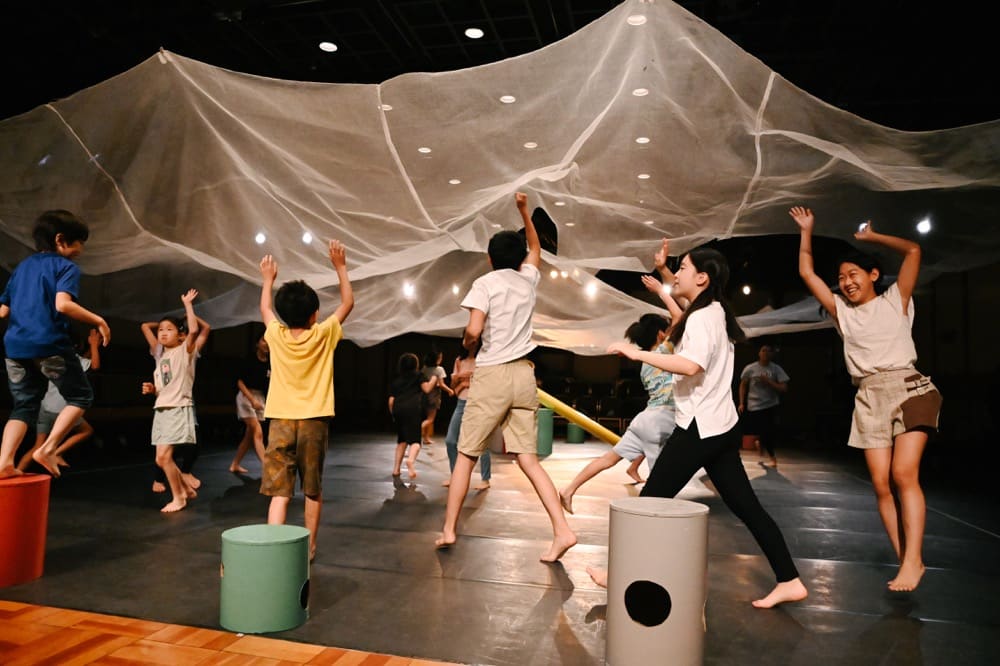
Voting Every Month To Decide Which Organization Receives DonationsA new way of making donations devised by new gift theory
Key Points
- New Gift Theory is a community that holds discussions among its members once a month and votes to decide on the organization that receives its donations.
- The entirety of the membership fees is donated to the organization that wins the vote. Many of its members find learning about the nonprofit world refreshing.
- Fostering a culture of donation requires a framework that smartly connects gratitude with donations.
Established in 2019, New Gift Theory (external link; in Japanese) is a community that charges a monthly membership fee, studies donations and bestowal, and puts its learning into practice. The organization engages in a unique practice: its members discuss which organization should receive a donation and what form of donation makes the most sense, after which it donates its membership fees to a single organization, corporation, or individual that it determines through a monthly vote.
Donation is typically perceived as a difficult activity to get into. Some might think, “I’m not sure who I should donate to” or “I’d rather use the money for myself.”
We spoke with Daisuke Katsura, representative director of the NGO New Gift Theory, about the organization’s activities, why its members make donations, and what can be done to spread the culture of donation.
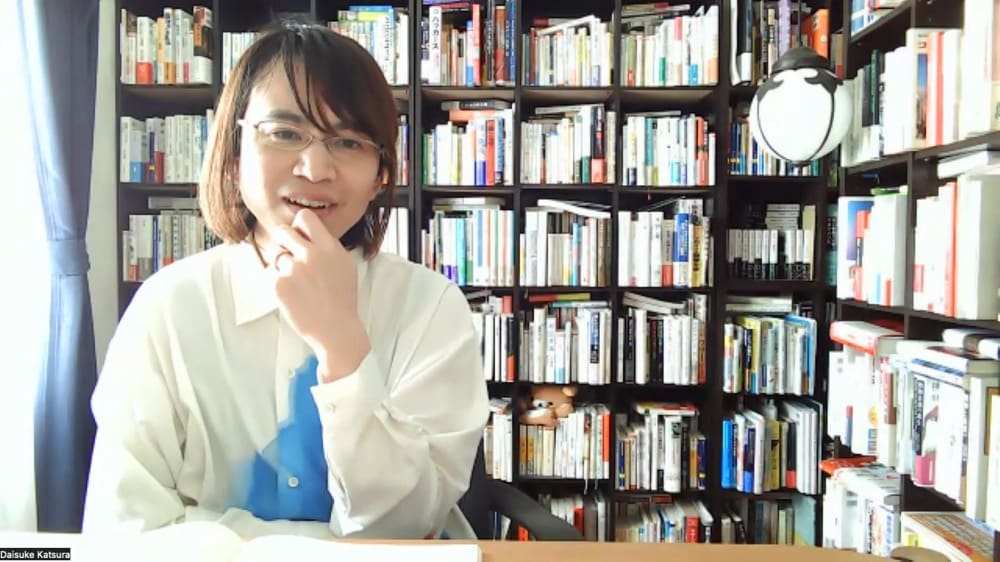
Souvenirs and presents are a form of bestowal—and relatives of donation
The Nippon Foundation Journal Editing Department: When did you become interested in donation?
Daisuke Katsura: Around the time I was a university student. It started when I joined an NGO that tackles environmental issues as part of my extracurricular activities. My uncle used to work for the Japanese Red Cross Society, so that might have influenced me as well.
However, the donations I made during my time as a university student were modest, and I also temporarily left the nonprofit world when I launched Livesense Inc.[1]
I started my activities in earnest after Livesense became a listed company. The entrepreneurs around me were all keen to invest in startups, but I for one thought that there was a limit to money-centered economies and felt that my role was to make capital flow elsewhere.
That’s when I started to make donations properly. Knowing that there was only so much I could do on my own to identify the recipients of donations, I established New Gift Theory as a platform to facilitate continuous giving.
- Note 1: An online media business that operates sites such as Machbaito.jp and Jobtalk.jp.↩︎
Journal: Please tell us about the activities of New Gift Theory.
Katsura: It’s a community that charges a monthly membership fee, studies donations and bestowal, and puts its learning into practice. As of August 2024, we had around 90 members, and our main activity is to meet once a month to discuss and choose donation recipients by vote and then make the donation.
We also do online chats, put together study group sessions, and organize meet-ups.
Journal: Why did you choose the name “New Gift Theory” rather than “New Donation Theory”?
Katsura: Our only public-facing activity is donation, but when we chat or hold study groups among ourselves, we often talk about gifts,[2] which involve bestowing your assets to someone free of charge.
It might sound a bit stuffy to talk about gifts in the form of bestowal, but in my view, souvenirs, presents, goshugi (a monetary celebratory gift), and volunteering are all a form of gifts. I consider donation to be a sort of relative of giving.
Furthermore, there is an academic theory called “gift theory.” It’s a relatively new theory that traces its roots to Europe in the 1920s. In Japan, it’s only discussed by those in academia, so I think it would be fun if we were to connect them with NPOs and fundraisers.[3]
- Note 2: Donation refers to the act of “gifting money or goods to public enterprises, shrines, temples, etc.” Gifting in the form of bestowal refers to the act of “gifting money or goods to another person” and involves “a contract that will be formed by one party indicating his intention to bestow his assets free of charge to the other party, and the other party accepting it.” Reference: Kotobank.jp (external link; in Japanese)↩︎
- Note 3: Professionals who work for NPOs and other organizations in the nonprofit sector and specialize in raising donations.↩︎
Journal: It is often said that, unlike in the West, the culture of donation has not taken root in Japan. What do you think are the reasons for this?
Katsura: To start with, there is the fact that the concept of a nonprofit organization is something that started in the West, and Japan is simply a late starter.
There is also the fact that the culture of charity itself, which involves giving to strangers, and poor folks in particular, was born out of Christianity, I think. Buddhism also espoused giving, but never to the same significant extent as Christianity espoused charity.
What has been nurtured in Japan since the olden times is the practice of mutual aid, and there hasn’t been much culture of charity, which involves helping strangers.
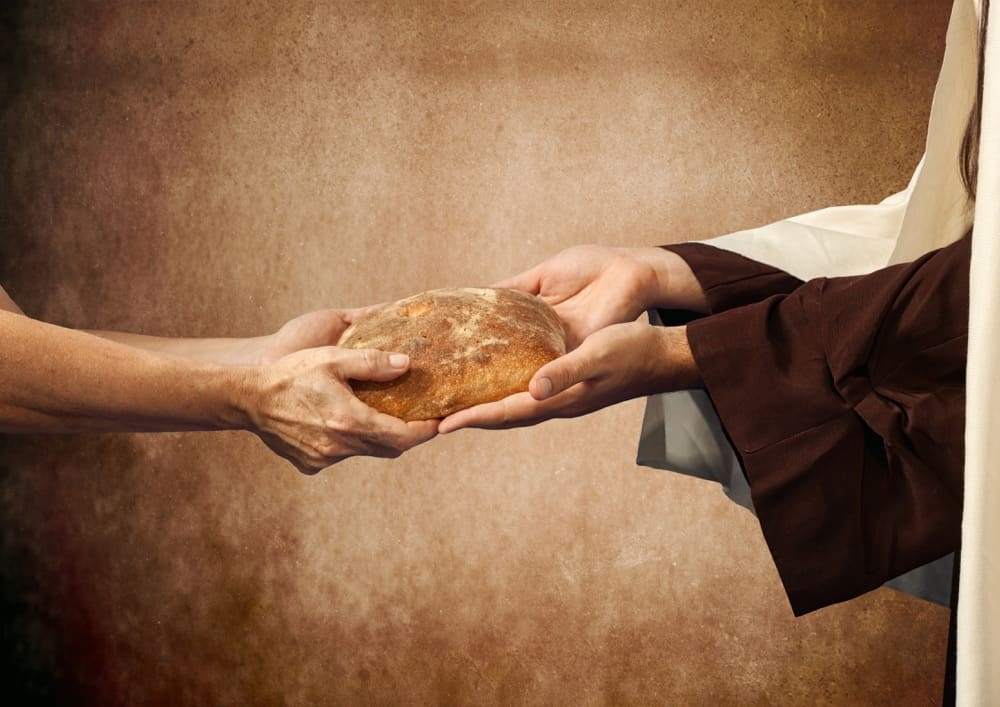
Journal: Are you saying that there was a culture of neighbors helping each other, but there wasn’t much culture of helping strangers?
Katsura: Yes. In Japan, the basic starting point is for family members to help each other. Even when it comes to social security, there is a deep-seated view that “the claimant’s family ought to look after the claimant.”
Such an ingrained mindset, that family and friends help each other, was precisely why I think it has been difficult for the mindset of helping strangers to take root. I also feel that there are many people who find it difficult to ask others for help.
It’s refreshing to think about donation. Some say that doing so helps them to switch their mindset
Journal: What kind of people does New Gift Theory attract?
Katsura: An overwhelming majority are office workers, and there are donation beginners and donation experts.
Beginners are those who had a vague interest in giving but didn’t know where to start and felt that maybe they could get into giving here.
Experts are professors who research NGOs or are famous in NGO circles. These people know a lot of the major NGOs; they seem to participate in New Gift Theory because we discuss organizations they have never heard of before, which they find interesting.
People who have already made up their mind about which organization they want to support are making their own donations, so I don’t think they participate in New Gift Theory.
Journal: How do you decide the organizations that receive the donations?
Katsura: We come up with a theme every month. We deliberately choose keywords like “grass,” “memory,” “island,” or “evil,” which appear to be unrelated to giving.
We then pair up three sets of “promoters.” We ask each promoter pair to discuss the theme, research and identify an organization or individual to recommend, and then write a recommendation of around 1,000 Japanese characters.
Once we have three written recommendations, we publish them and everyone votes—that’s the rule.
We don’t split the donation just because the vote was divided. We donate the full amount to the organization that came out on top in the vote.
Journal: How do the members feel about the donation going to an organization they didn’t vote for?
Katsura: I think they embrace it and enjoy the whole experience.
They are all adults, and they are used to applying economic rationale in their daily lives. They seem to find it refreshing to debate in a setting removed from their daily duties and learn and think about organizations that are pursuing diverse activities.
There was one member who said that “Thinking about donation once a month allows me to switch my mindset.”
Journal: How do the organizations that receive the donations react?
Katsura: They receive the donation together with our members’ comments, and they really appreciate it. Here at New Gift Theory, we sometimes make donations to small NGOs or individuals, and we sometimes receive feedback like “We thought that our activity was a deed consigned to the shadows, so we felt that we were rewarded; thank you for giving us courage.”
We want to widen the reach of a scheme that smartly connects gratitude with donation
Journal: What do you think is needed to spread the culture of donation in Japan?
Katsura: One thing I have in mind is bridging the gap between Japan’s culture of mutual aid and charities—specifically, a regional fund like a community foundation.[4]
During the COVID-19 pandemic, the Tokyo Metropolitan Government and the Osaka Prefectural Government raised considerable donations. Even today, local municipalities receive significant donations. From time to time, we see stories in the news about an elderly person from somewhere donating 100 million yen to the local municipality. In that sense, you could say that local municipalities are playing the role of a quasi-community foundation.
I think that people generally have a strong wish to repay the kindness they received from their local community, so it would be nice if there was a scheme that smartly connects that to donations or charities.
- Note 4: A public institution that exists to make social contributions and operates under an executive committee comprising citizens who know the local community and are chosen to represent the community’s public interests. It manages the numerous individual funds donated or bequeathed by individuals, corporations, organizations, and others. Reference: “What Is a Community Foundation? (Definition, etc.)”, Community Foundations Japan (external link; in Japanese)↩︎
Journal: What can each of us do to foster a culture of donation?
Katsura: Even if you have never made a donation, you have definitely given a gift: a Valentine Day’s gift, otoshidama (New Year’s gift money), a holiday souvenir, or sweets you bring when visiting friends at their home.
A donation is the same in the sense that you are gifting something to someone other than yourself, and if you think about it that way, it isn’t all that difficult to get into; it’s something you can do in just the same way you would give a souvenir to someone, I think.
Journal: So, you’re saying that a donation is no different from when you give a souvenir to your colleague and you aren’t really expecting a return favor?
Katsura: Indeed. That’s why I think “birthday donation” is a perfect fit for Japanese culture.
With a birthday donation, the person celebrating the birthday asks for donations to be made to organizations they support instead of receiving presents. It’s a bit like saying, “You don’t need to give me any present. Just donate the money to such and such organization.”

Katsura: It’s a kind of bridge that connects charity with gifting as a form of a mutual aid, and I think that fits Japanese people well.
If there were a way to convey your well-wishes and also make a donation to an organization, I think that would vitalize the culture of donation in Japan.
Editor’s Note
When you join New Gift Theory, you proactively research organizations that are soliciting donations and, as a result, end up learning a lot about the social issues that are out there in the world.
In that process, you get to discover what you care about and what you don’t care about—and in turn, you get to tap into your inner self.
Text: The Nippon Foundation Journal Editing Department
Profile
Daisuke Katsura
Born in 1985 in Kyoto. In 2006, while studying at Waseda University, launched the IT business Livesense Inc. together with Taichi Murakami, whom he met at the university. In October 2012, became the then youngest person in history to achieve the feat of listing in the first section of the Tokyo Stock Exchange. In 2019, established the general incorporated association that is New Gift Theory and became its representative director. Through his philanthropic activities, including New Gift Theory, he is currently working to overhaul the ways in which bestowal and donations are made.