A Chance To Connect with Society Before Passing OnChoosing a legacy gift as a final social contribution

Key Points
- As birthrates decline and the society ages in Japan, “elderly-to-elderly inheritance,” where an elderly person inherits the estate of an even older person, is on the rise.
- Legacy giving, which involves gifting one’s estate to nonprofit organizations, can assist in solving this issue.
- Giving while continuing to value one’s family and daily life and making a declaration to that effect to those in one’s circle will stimulate the economy and lead to the development of a culture of donation.
Did you know that elderly-to-elderly inheritance is an issue today?
In Japan, where birthrates are falling and the population is aging fast, cases where the deceased (decedent) and the heir are elderly (aged 65 or older, according to the WHO’s definition) are on the rise. Elderly-to-elderly inheritance causes an issue where assets remain among the elderly without being passed down to the younger generation and tend not to be utilized for economic activities.
It is hoped that legacy giving can assist in solving this issue. This is a mechanism that allows the decedent to contribute to society by making a bequest to a party other than a person in the line of succession to receive the intestate shares[1] of an estate, mainly to organizations that pursue activities for the public benefit.
- Note 1: Intestate shares are the portions of inheritance and order of precedence prescribed for heirs by the Civil Code. Intestate succession is the distribution of an estate in accordance with the intestate shares.↩︎
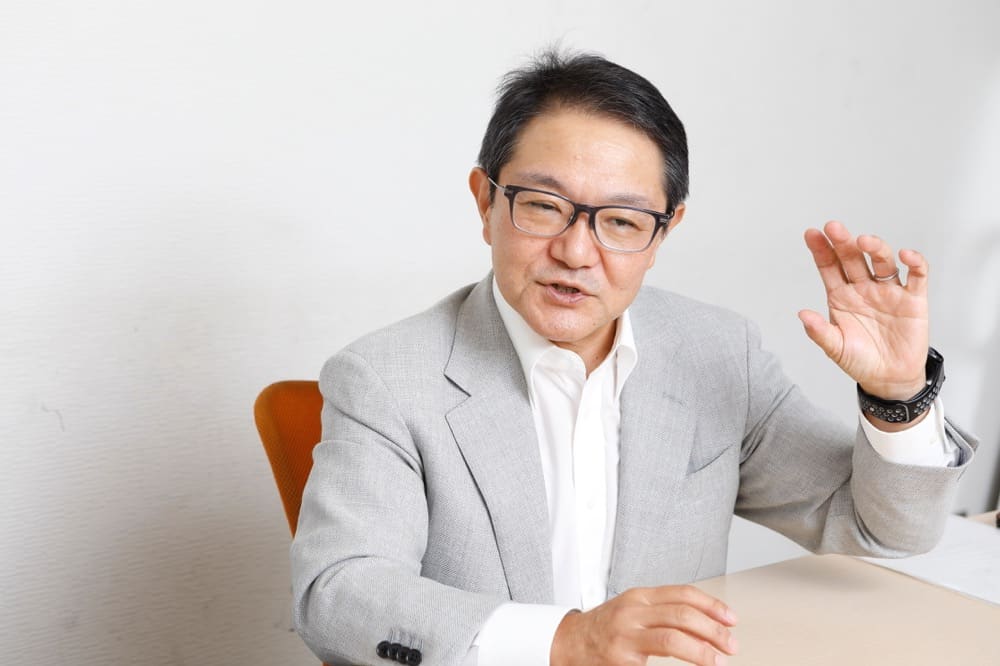
You might have reservations about the idea of making a bequest to someone other than your own family, but according to Hiromichi Saito, representative director of Legacy Gift Promotion Organization (external link, in Japanese), “If you have a family, it’s possible to prioritize your family and only allocate a portion of your estate to gifting. Legacy giving is a mechanism that allows you to connect to society without reducing the amount of money you hold.”
We learned more from Mr. Saito about the current state and significance of legacy gifts.
Giving away your assets using a will or trust: The mechanism of legacy giving
The Nippon Foundation Journal Editing Department: First of all, could you please explain how legacy gifts work?
Hiromichi Saito: The Japan Legacy Gift Association defines it as the act of giving away the decedent’s estate to a nonprofit organization, in whole or part, in one of the following ways: donation through a will; donation made by contractual means such as a trust,[2] or donation of inherited estate.
Japan’s intestate succession rules generally pass a person’s estate to their legal heirs, but it is possible to make a donation to organizations and other non-heirs through a will or a trust or by communicating that person’s last wishes to the legal heirs.
- Note 2: Trust involves entrusting the assets one owns to and having those assets managed/invested by a trustee, such as a trust bank. Donation by trust involves the settlor (the client) making a donation to a designated beneficiary (the recipient) through a trustee (such as a financial institution) by entering into a trust agreement with a trust bank, for instance.↩︎
Journal: Do we know how often legacy giving takes place right now?
Saito: The amount fluctuates from year to year, but according to the donation whitepaper issued by the Japan Fundraising Association, the amount of funds raised through legacy gifts in Japan is roughly in the region of 30 billion yen per year.
The National Tax Agency’s data shows that in 2021, there were 973 cases of legacy gifts, which amounted to 27.8 billion yen.
Having said that, the National Tax Agency is only aware of cases where the person who made the legacy gift incurred an obligation to pay inheritance tax. Basically, no declaration is required if the total value of the estate is 36 million yen or less, so the overall amount actually raised is likely to be slightly higher.
Journal: Is this smaller compared with other countries?
Saito: It is overwhelmingly smaller when compared with countries that have a more advanced culture of donation. This is going to be another quote from the donation whitepaper, but in the U.K., the annual amount of legacy giving is, in yen terms, around 400 billion to 500 billion yen; in the U.S., it’s 4 trillion to 5 trillion yen. You can see that the scope of legacy giving is quite small in Japan.
Journal: What is the reason for this gap?
Saito: In Japan, inheritance typically takes the form of intestate succession, which follows rigid intestacy rules. Outside Japan, though, this approach to inheritance is only seen in South Korea, China, and Taiwan, and it’s quite unusual globally. If you live in a country that has rigid intestacy rules, you are less likely to think about reflecting your intentions in the handling of your estate.
If we were in the U.S., for example, the heirs to an estate cannot discuss and determine the distribution of the estate among themselves. When an individual dies, that individual’s estate will be placed under the custody of the court, and if there are debts, the estate will be distributed to the creditors first.
The remainder of the estate will then be divided among the heirs, but the proportion of distribution is not predetermined. You thus need to clarify how you want your estate to be distributed before you die.
This is probably part of why legacy giving is recognized as one of the choices you can make.
In addition, the U.S. has a well-developed framework for trusts. If you set up a trust for making a legacy gift, you could reduce your current income tax liability depending on how much you entrust. In the U.K., nonprofit organizations openly campaign to encourage you to make a legacy gift, and those kinds of factors also seem to contribute to the large amounts raised through legacy gifts.
Legacy giving fosters connections with society
Journal: What prompted you to become involved in legacy giving?
Saito: I used to work in testamentary trust service[3] at a trust bank. Due to the nature of the job, I often received inquiries from clients who would say, “I want to create not just a will for the ordinary distribution of my estate but a will to make a donation.” That was the start.
Back then, I didn’t know how legacy gifts worked, so I attended a symposium where I met legal and accounting colleagues who were interested in promoting legacy gifts; we eventually started to jointly host a study group on the topic.
- Note 3: A service provided by a trust bank, etc. to support the creation of a will by a client and act as the executor of the will to oversee the administration of the client’s estate following his or her death.↩︎
Saito: Subsequently, I found it problematic that, at the trust bank I worked for at the time, a living trust[4] —a trust product—could not be used to make donations. That’s why I established Legacy Gift Promotion Organization Inc. and developed a product jointly with a different trust bank to make donating through a living trust possible.
- Note 4: A form of trust that allows your assets to be entrusted to and managed or invested by a trust bank, etc. during your lifetime and facilitates the inheritance of those assets by your spouse, children, etc. after your death.↩︎
Journal: You must have felt the need for legacy giving.
Saito: Not quite; rather, at the beginning, I felt something close to an indignation that there were people who wanted to make a legacy gift but I was unable to make that happen.
At the risk of sounding grandiose, the Japanese word for “economy” contains the meaning “to govern the state and aid its people.” A bank must never get in the way of doing that, I thought.
Journal: So it’s that conviction that is at the root of your activities. In your view, what is the significance of legacy giving?
Saito: If you choose to make a legacy gift, you create a touchpoint with society during your lifetime. The number of people who are single or childless has been increasing in recent years, and I feel that men, in particular, don’t belong to any community outside their workplace. Legacy giving is a good recommendation to those types of people, especially.
Journal: A legacy gift only takes effect after you die. How does it create a connection during your lifetime?
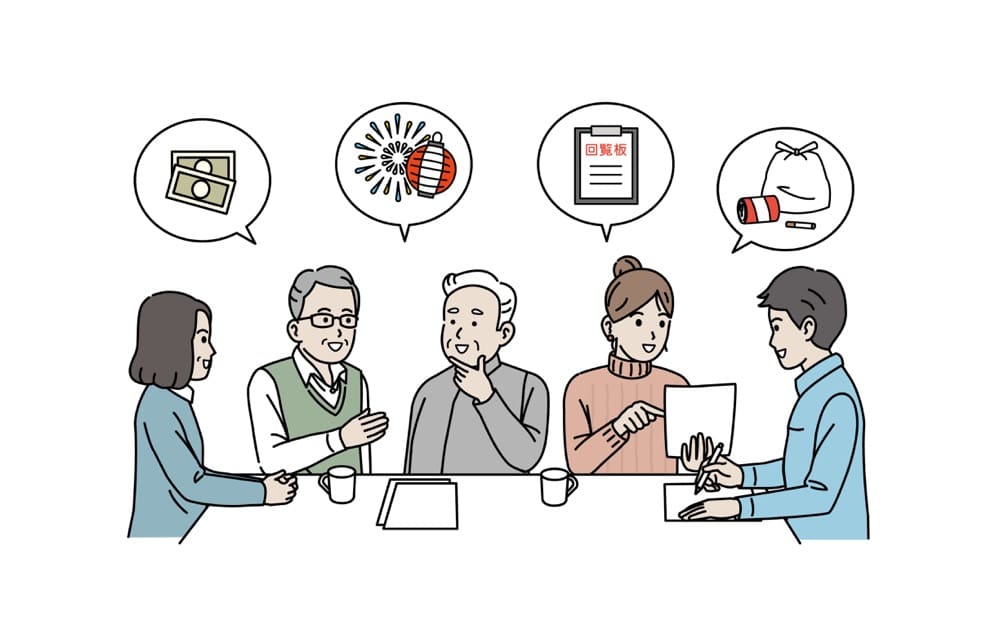
Saito: The form of legacy gift I recommend involves not just preparing a will and a trust but also communicating your intention to the organization you designate as the recipient of your donation. Once you do so, the organization will react: “Would you like to come to our event?” or “We are publishing a report, and we will forward you a copy.” That becomes your connection to society.
From the organization’s point of view, a legacy gift represents the donor’s last wishes, so they greatly appreciate the support they receive and value their donors.
Journal: Have you heard anything memorable from those who actually chose to do a legacy gift?
Saito: There are many, but I can give an example of a gentleman who lost his wife to cancer. He joined a seminar on legacy giving that we held jointly with a cancer patient support organization, just around one year after his wife’s death.
When I first met him, he seemed really despondent.
Yet, he sympathized with the fact that the support organization was working to reduce the number of people who suffer from cancer, and he decided to make a legacy gift to that organization.
After he wrote his will, he said “I have something good to report to my wife” with a rather contented expression. That’s something I’ll remember.
Journal: Do you think he felt relieved?
Saito: I think so. When it comes to legacy gifts, it’s rare to see a bequest being made to a recipient who is not linked in any way whatsoever to the donor’s life, and I wouldn’t recommend doing so.
In my view, you can make a donation that you yourself find satisfying by looking back on your life and choosing to donate to an organization that is working for a cause that you find interesting or sympathize with.
When our organization is asked to advise on the choice of recipient, we try to make a decision by working with the requestor to take stock of their life.
Journal: Are there any pitfalls to watch out for when making a legacy gift?
Saito: Some organizations refuse to accept legacy gifts, so it’s important to check in advance that the form of donation you have in mind will be accepted.
Many cases that result in refusal involve real estate. If it’s just your own residence, that’s not too bad, but mountains, forests, and farmland are often problematic because they are difficult to sell. For that reason, many organizations refuse to accept any donation of real estate.
Additionally, there are two different ways of making a bequest. One is “universal legacy,” where the testator does not specify the assets to be bequeathed, and the other is “particular legacy,” where the testator specifies the assets to be bequeathed. If the decedent chooses bequest by way of universal legacy and happens to have any debt, the beneficiary ends up inheriting the debt as well, so most organizations don’t accept bequests by way of universal legacy.
To address those issues, I think it would be best to consult an expert such as a trust bank that knows the ins and outs of legacy gifts.
Culture of donation used to be common in the Japan of old
Journal: Is there anything our readers can do to help a culture of donation take root?
Saito: I think Japan used to have a proper culture of donation back in the Edo era and the Meiji period, but it became diluted more recently. That’s what we see in practice.
It is often said that most of the bridges in Osaka were built with donations,[5] but that is presumably because there was a culture back in those days where rich folks were expected to make donations as a matter of course, and doing so was considered cool.
- Note 5: For further information, see “Bridges in Osaka,” Osaka City Government (external link, in Japanese)↩︎
Saito: We hear stories about some athletes making donations, but if those who made donations were more open about doing so like that, we might see a return of that culture.
Another thing I think is important is the normalization of the idea that donation is something that should be done by those who can afford to do it.
If you hear reports about a huge donation being made, you might be inclined to think that “That has nothing to do with me.” However, like the notion of “noblesse oblige” (a moral concept that obligations accompany a privileged position) seen in the West, I think it’s fine to treat donating as an act that anyone with money should naturally be doing.
On the other hand, even if it’s just a few tens of thousands of yen, that’s still a proper donation, so even if you are an ordinary person who is not particularly rich, you should still consider making a donation to the extent you can afford to do so.
If that becomes the norm, then the economy might pick up momentum and lead to more social issues being resolved.
Editor’s Note
We used to think of legacy giving as something that matters only after you die, but hearing that it also allows you to create connections with society during your lifetime was eye-opening.
Even if you are worried about funding your retirement, a legacy gift allows you to contribute to society without immediately letting go of your money. We felt that legacy giving would be an effective choice if you have an interest in a social cause but can’t dedicate much time to the cause or afford to make a donation right now.
The Legacy Gift Promotion Organization can introduce you to experts on legacy gifts and organizations that accept them. If you are interested, take this opportunity to get in touch with them.
Here at The Nippon Foundation, we are also working on initiatives to promote legacy gifts. The Nippon Foundation Legacy Gift Support Center (open in a new tab, in Japanese) has also published past examples of legacy gifts. Please take a look.
Text: The Nippon Foundation Journal Editing Department
Photo: Emi Enishi
Profile
Hiromichi Saito
Representative director of Legacy Gift Promotion Organization Inc. and director of Japan Legacy Gift Association. Engaged in testamentary trust service at the headquarters of Mizuho Trust & Banking Co., Ltd. and handled special matters and issues referred by frontline branches. Launched a study group (which subsequently became Japan Legacy Gift Association), together with lawyers and tax accountants, to tackle the problem of individuals hoping to make a legacy gift not being able to do so. After launching a testamentary trust service at The Nomura Trust and Banking Co., Ltd. in 2014, established Legacy Gift Promotion Organization Inc. in 2018. Pioneered many innovations such as donation through living trusts, real estate valuation intermediation service for nonprofit organizations, etc., in Japan.