Spreading Donation Culture Through Cycle of Goodwill From Shared ExperiencesMercari Donation pursues public-private partnership
Key Points
- Mercari Donation, which allows donations to be made from proceeds of sales on Mercari, was launched in 2020 with the aim of fostering a culture of donation.
- Mercari Donation has raised approximately 240 million yen so far. In the wake of the Noto Peninsula Earthquake, approximately 50 million yen was raised in two days.
- Public-private partnership and individual donors sharing their experience of donating can lead to the fostering of a donation culture and formation of a prosperous society.
Mercari (external link) is an app that allows individuals to trade goods among themselves. With a monthly user count reaching approximately 23 million, it is Japan’s biggest flea market app.
Did you know that Mercari has a donation feature?
It offers you an easy way to donate your Mercari sales proceeds by selecting a recipient, and it was launched in September 2020. Awareness of this feature is spreading steadily, and the aggregate total of donations actually raised so far is approximately 240 million yen. At the time of the Noto Peninsula Earthquake, which occurred on January 1, 2024, a staggering 50 million yen was donated to The Nippon Foundation in just two days.
Ryohei Takahashi, Public Policy Advisor from the Management Strategy Office of Mercari Inc. was involved in the launch of Mercari Donation. Mr. Takahashi’s strong desire to “revive the spirit of mutual aid that existed in Japan since ancient times, by making it easier for people to donate,” was one of the driving factors behind the launch.
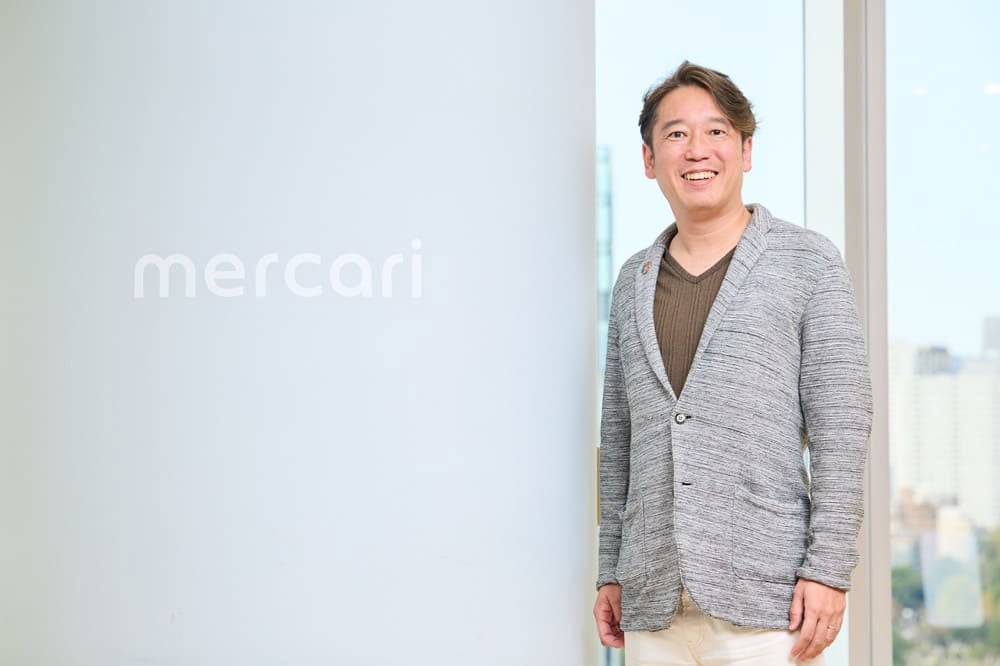
However, one also wonders why Mercari, a for-profit corporation, proactively promotes donations. We have asked Mr. Takahashi why Mercari Donation was started.
Enabling easy donations from Mercari sales proceeds
The Nippon Foundation Journal Editing Department: Please tell us how Mercari Donation works.
Ryohei Takahashi: Mercari is a so-called flea market app that allows individuals to trade goods among themselves, and Mercari Donation is a way of making donations using the proceeds of sales from such trades.
There are two ways to donate, and Mercari Donation is one way. When an item you put up for sale on Mercari is sold, the proceeds from that sale less the sales commission gets credited to you in the form of a balance you hold in Merpay, a smartphone payment service.
You could use the sales proceeds to make payments on Mercari or at shops that participate in the Merpay network, or convert them into cash by transferring them to your bank account, and Mercari Donation can basically be seen as an alternative to doing so.
Once you have chosen the recipient and made your donation from your Merpay balance, Mercari will transfer the accumulated donations every month to the account specified by the recipient.
Journal: What is the other way of donating?
Takahashi: It’s Mercari Donation: Easy Donation Setting. This setting allows you to set what percentage of your sales proceeds should be donated to which organization before you put an item up for sale.
Unlike Mercari Donation, you get to skip the hassle of having to specify the recipient or amount of a donation each time you receive sales proceeds, so it makes donating easier. This setting was introduced in December 2023, based on our desire to make donating even easier.
Journal: What kind of organizations receive donations?
Takahashi: Currently, 110 organizations in total are recipients of Mercari Donation, comprising 32 municipalities, 14 charities, four universities, 57 circular economy[1] organizations, and three media organizations. Six organizations receive donations through the Easy Donation Setting.
- Note 1: A socio-economic system which seeks to maximize added value through the efficient and circular use of resources.↩︎
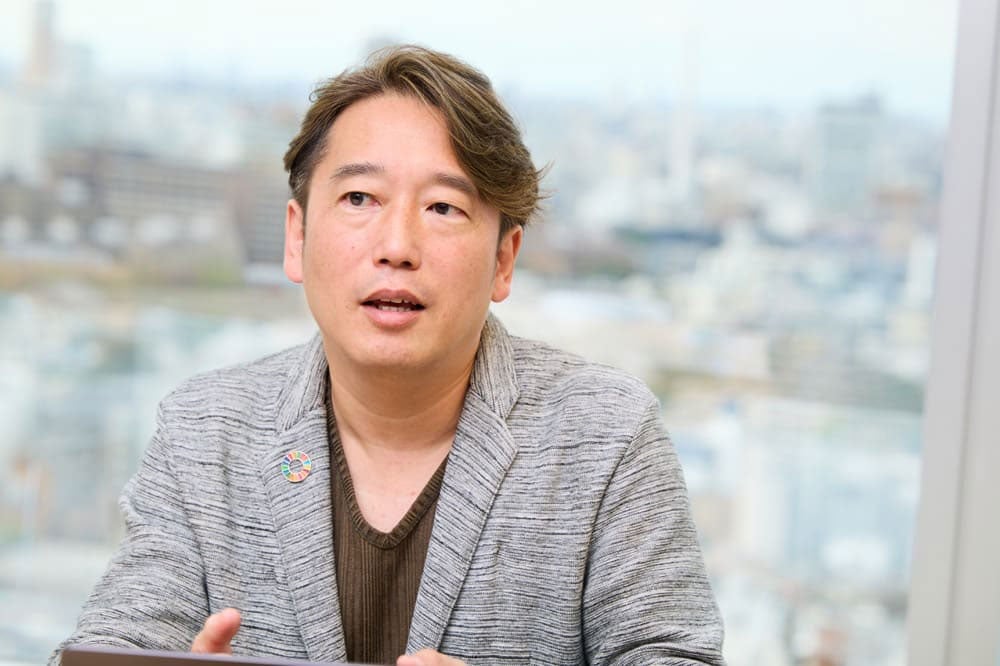
Journal: We understand that at the time of the Noto Peninsula Earthquake, approximately 50 million yen was donated in two days. Why was it possible to raise so much in donations?
Takahashi: We were able to start accepting donations on the day after the earthquake struck, and we were able to approach a lot of people quite quickly because we sent a notice that we started accepting donations for the Noto Peninsula Earthquake to our customers on Mercari, which has approximately 23 million users — I think those two factors were instrumental.
We have a collaboration agreement in place with The Nippon Foundation, which is the recipient of the donations, so the fact that we were going to coordinate our responses in the event of a disaster and how we were going to do so had been determined in advance.
Takahashi: The earthquake happened in the evening of January 1, 2024, but in just 30 minutes, we were able to get hold of our contact at The Nippon Foundation and they immediately agreed to accept donations. Thanks to that, we were able to start accepting donations by January 2. Such agility is very important in my view.
We wish to revive the spirit of mutual aid that existed in Japan since ancient times, through an easily accessible donation scheme.
Journal: Why have you developed the Mercari Donation feature?
Takahashi: When earthquakes and other disasters strike, you often hear about donations made by corporations in the news, and from time to time, we also heard voices within Mercari that queried if there was something Mercari could do to contribute to the society in the event of a disaster. In light of this, we were looking for a way not just to donate money, but to do so in a way only Mercari can do.
That’s when we struck on the idea of Mercari Donation feature. We thought that the creation of a feature that allows you to donate, even if you don’t have any cash at hand, by donating the proceeds of sales you receive by selling unused goods, could lower the barrier to donating even for those who are reluctant to donate cash or who have never donated before.
We continue to operate Mercari Donation because we as a company, and I personally as well, hope to foster an enduring and greater culture of donation within Japan through this ease of access to donating.
Journal: Let’s not kid ourselves, Mercari is a for-profit corporation. Why would you aim to foster a culture of donation?
Takahashi: First of all, among the ideas Mercari values as a company, there is the idea of Empowerment of Individuals and Society. The Mercari platform, which allows an individual to sell goods to everyone in Japan, was built as a physical manifestation of this idea.
By providing a means to make donating even easier, Mercari Donation enables individuals who haven’t donated before to play their part in the transformation of the society, and we thought that is true empowerment. And it just so happens that this vision matched the world view we as a company are pursuing.
Journal: What is your personal reason for wanting a culture of donation to take root?
Takahashi: When it comes to my own personal background, there are two formative experiences. For one, there is the fact that I used to work as an employee of a municipality. Back then, I used to feel that it was no longer possible to solve the ever-increasing social issues solely through public schemes or systems, or taxation.
Then there is the formative experience of having spent my childhood in Germany, where I experienced donations as something that are made on a daily basis. Paying tax to let public agencies solve issues, and donating to nonprofit organizations or charities to let them solve issues, doing both of these things for the betterment of the society was the accepted norm in Europe.
These experiences led me to think that, in order to solve social issues in Japan, it is vital for a culture of donation to take root, and to expand the modality of public-private partnership between municipalities, etc., and private sector companies.
Journal: Why do you think a donation culture has not taken root in Japan?
Takahashi: I don’t think that Japanese people are cold-hearted or have no desire to make society better. There is the old cultural tradition of contributing money in the form of goshugi (gift money) when someone gets married, and there is also the system known as yui whereby farmers help each other when tending to their fields.
- For further information, see this article: “Ranked Second Worst in the World Giving Index. Why Doesn’t a Donation Culture Spread in Japan?” (open in a new tab, in Japanese)
Takahashi: In other words, while mutual aid is part of Japanese culture, amid the transformation of the society, people are losing interest in things of a public nature, and the segment of the population that is willing to help charities is shrinking, and that’s a challenge.
If there are a lot of people who have no experience of donating, or no experience of participating in a charitable cause, then I think it’s also important to revive the spirit of mutual aid by lowering the barrier to participation for such people.
Public-private partnership and sharing experiences of donating are the first steps toward a prosperous society
Journal: What needs to happen for social action including donating to become more widespread?
Takahashi: This will overlap with what I said earlier, but I think it’s very important to create new possibilities through public-private partnership. I joined Mercari because I want to see public-private partnership being promoted from the private sector’s side as well.
The trend to pursue public-private partnership is steadily spreading, but public authorities and private sector companies have different views, and I liken this to the two sides using different languages. The two sides are talking about the same thing but they are using different languages, and that makes things rather tricky.
Going forward, I believe that talented people who have experience in the public as well as the private sector, and can translate/intermediate between the two sides, will become even more crucial.
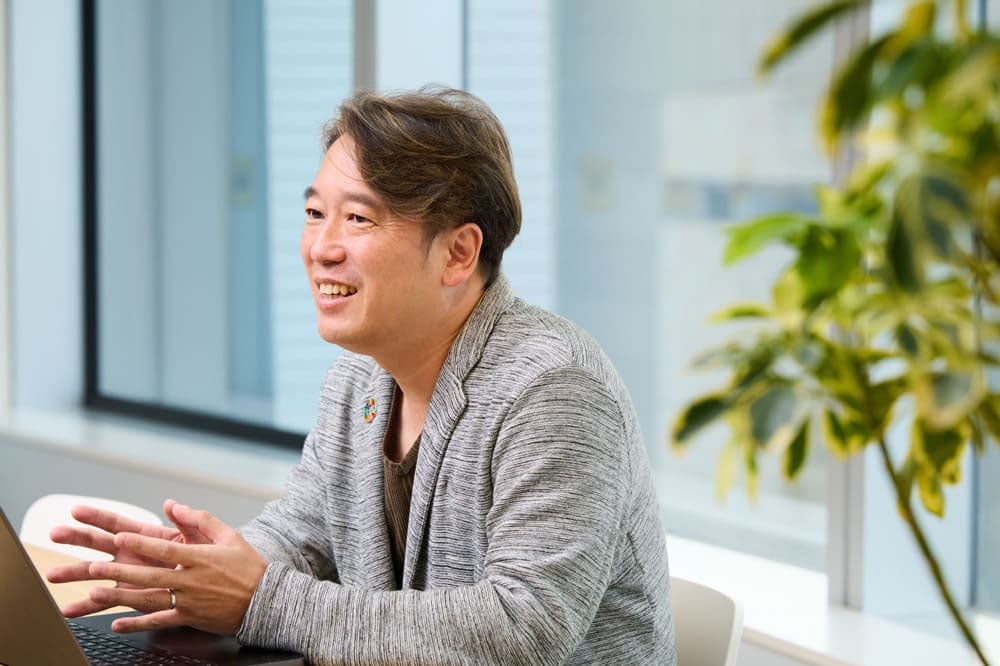
Takahashi: I think another point one needs to bear in mind is the understanding on the part of companies. Social action might appear as if it doesn’t generate any profit, but it does increase corporate value and will eventually lead to profit.
In my view, it’s important for not just management executives but also employees to understand the importance of assigning certain amounts of resources or allocating budget to social action.
On the other hand, social action will be difficult to continue if it becomes a burden for companies, so if we are going to develop a program of social action, I think it’s important that we only develop a program that’s sustainable. Mercari Donation also has a simple design, which merely combines the Mercari app with the Merpay system. After all, it will be meaningless if it doesn’t last despite the resource and cost incurred.
Journal: What can each of us as individuals do to change society so that donating becomes easier?
Takahashi: I think it would be good if we can visualize how donations are put to good use by the recipients.
This organization has received this much in donations and was able to achieve this much; if we could visualize like that, then I think that will lead to a sense of achievement. And in my view, we at Mercari, or the recipients of donations, need to be sharing such information.
However, if we leave it at that, the individuals who made donations will never be anything more than passive observers, so there is also value in the individual donors sharing their own experience of donating, for example by sharing their stories of why they have donated and how they felt after donating.
In the case of Mercari, because a large proportion of donations comes from sales proceeds, the donations include small amounts like 1 yen or 10 yen. We would like everyone to share their experience of donating, without ever feeling embarrassed about the small amount.
In my view, if doing so becomes the norm in society, then the barrier to donating will naturally come down, those who donate will in turn be encouraged to do so, and once donating becomes much easier and routine, we can expect society to become very prosperous. I would like to strive for a society where a culture of donation is fostered through a cycle of goodwill.
Editor’s Note
We saw Mr. Takahashi’s interview in another media, where he said he wanted to “foster a culture of donation at Mercari,” which piqued our interest — why would a for-profit corporation do such a thing — so we requested an interview with Mr. Takahashi.
During the interview, we were struck by his idea that sharing the experience of donating will lead to the fostering of a donation culture. One cannot help but feel that in Japan, even if you do something good, it’s considered a virtue not to talk about it. However, perhaps now is precisely the time for this ethos to be modernized.
This interview was a reminder that each of us as individuals also has a part to play in fostering a culture of donation.
Text: The Nippon Foundation Journal Editing Department
Photo: Eizaburo Sogo
Profile
Ryohei Takahashi
Public Policy Advisor, Mercari Management Strategy Office. Former specially appointed associate professor at Chuo University. Chairperson of the Supporting Association for Student Council Activity Japan. After holding positions such as a department head for Matsudo City, DX promotion advisor for the prefecture of Kanagawa, advisor to the city of Chiba, researcher at the Tokyo Foundation, researcher at Public Policy Planning & Consulting Co., visiting researcher at Meiji University, Ichikawa City council member, and chairperson of the Meeting of Young Council Members of Japan, he has held his current role at Mercari since June 2018. Campaigned tirelessly to make voting right for 18-year-old a reality. Authored many books such as “What Is an Intergenerational Gap?” (PHP Shinsho), “A Textbook for 20-Year-Olds” (Nikkei Premium Shinsho), and “An 18-Year-Old Out to Change Politics!” (GendaiJinbun-Sha).