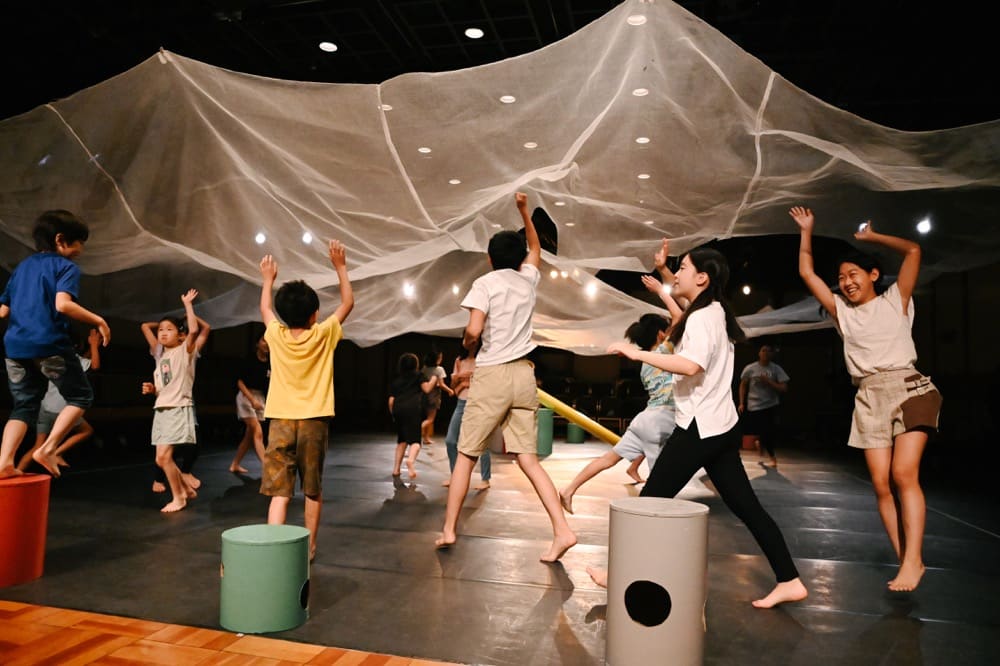
Creating a Space for Youth With No Place of Their OwnAiming for something between “Toyoko” and a government-run facility
Key Points
- The number of cases in which youth without a place to belong get involved in criminal activities through social media sites and on downtown streets is increasing.
- Isolated youth need local communities and places where they can freely and safely get together.
- It is vital for adults from outside the family to develop bonds with and look out for youth with no place of their own, with the entire society and local community involved.
Have you heard about “youth with no place of their own”? It refers to young people who feel that they do not belong at home, in school, or anywhere else. According to a white paper released by the Cabinet Office in 2022, as many as 5.4% of all children and youth feel this way (2022 White Paper on Children and Youth (external link, in Japanese / PDF ).
Such young people tend to gather in lively areas of big cities, such as the so-called “Toyoko” — the neighborhood surrounding the Toho Building near Shinjuku Station in Tokyo — and “Glishita,” the area under the Glico sign in Osaka’s Dotonbori district.
Not a few of the young people who are drawn to these areas end up getting into trouble or being enticed to commit crimes for big rewards as illegal part-time work.
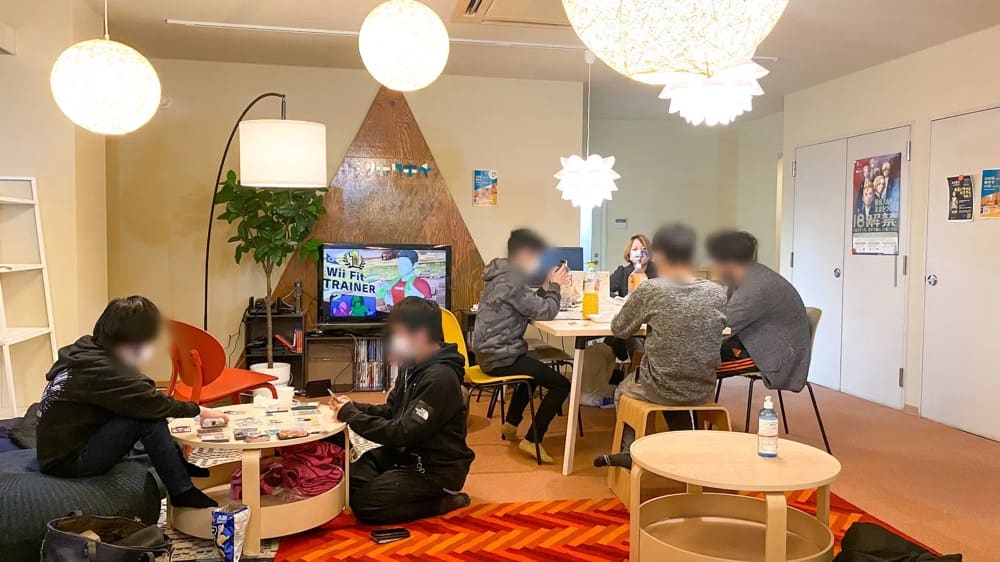
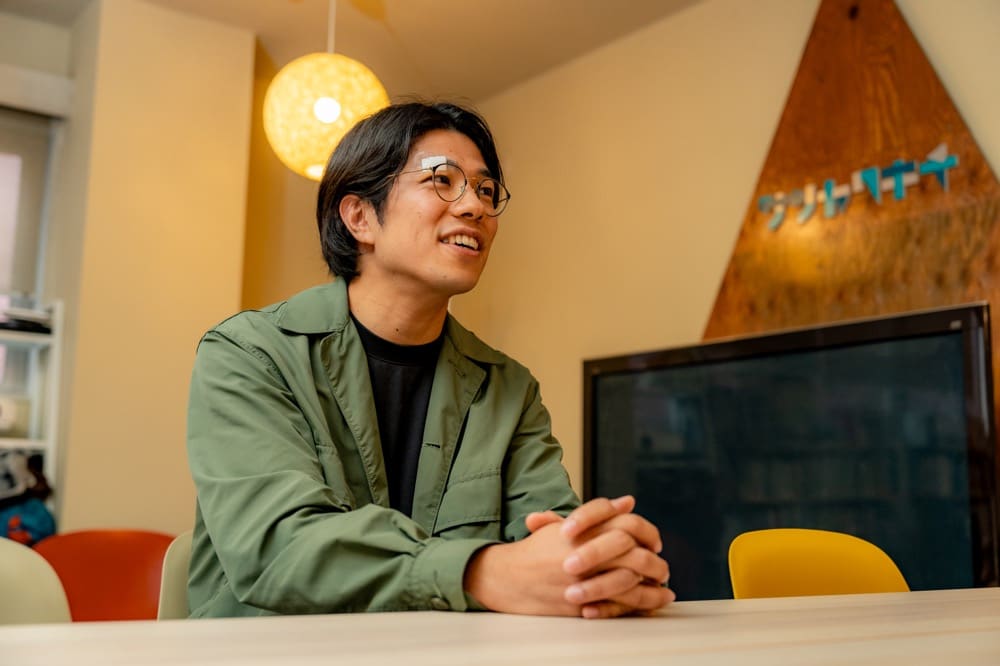
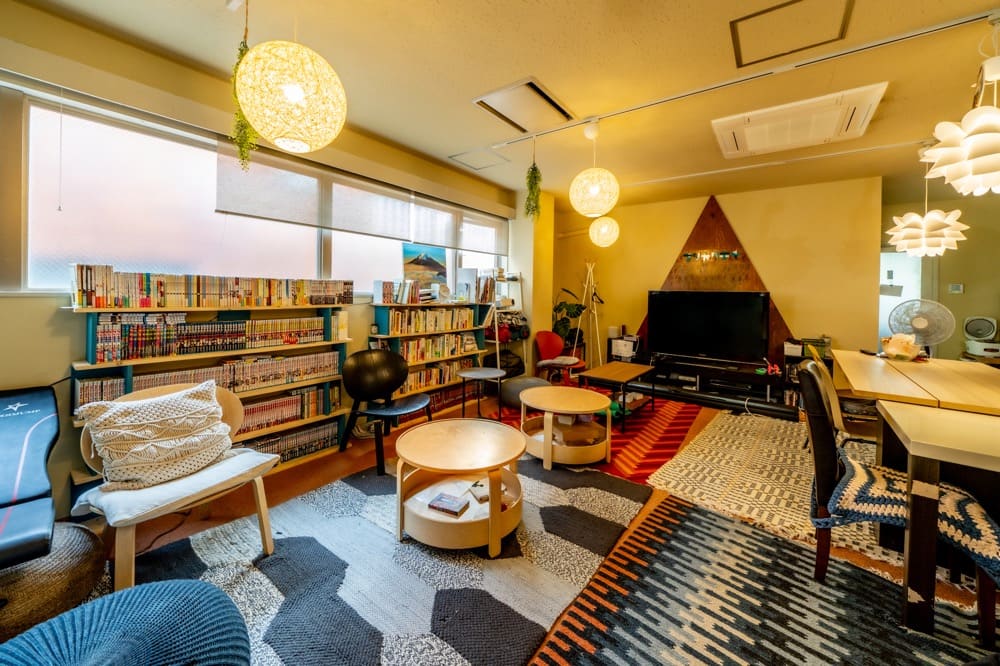
“Yoru Kichi” (literally “night base”) is one of the few places in Japan that offers such youth a place to be at night. Situated in Tokyo’s Toshima Ward, Yoru Kichi is run by Non-Profit Organization Sankakusha; external link, in Japanese) . It was founded by Yusuke Arai, its Representative Director, after years of social action such as supporting the homeless and offering educational support to children.
When asked what he felt was most important in his work providing a space for young people, he said it should “not be too wholesome and adults should not be overly supportive.” We asked him what that really meant.
Offering a space for youth who cannot rely on their parents — not only during the day, but also at night
The Nippon Foundation Journal Editing Department: Let me start by asking you to tell us about Sankakusha’s activities.
Yusuke Arai: Sankakusha offers three types of support to young people who don’t have a place to go because they are cut off from their parents due to abuse or other reasons: a place to be, a residence, and a job.
Specifically, Sankaku Kichi (“kichi” meaning “base”) supports such young people by offering places to live in one of three shared residences or seven individual rooms as well as programs such as “Sankaku Quest” that help youth gain experience working for local people who offer them jobs.
Journal: So, Yoru Kichi is a program through which Sankaku Kichi offers youth a place to be at night.
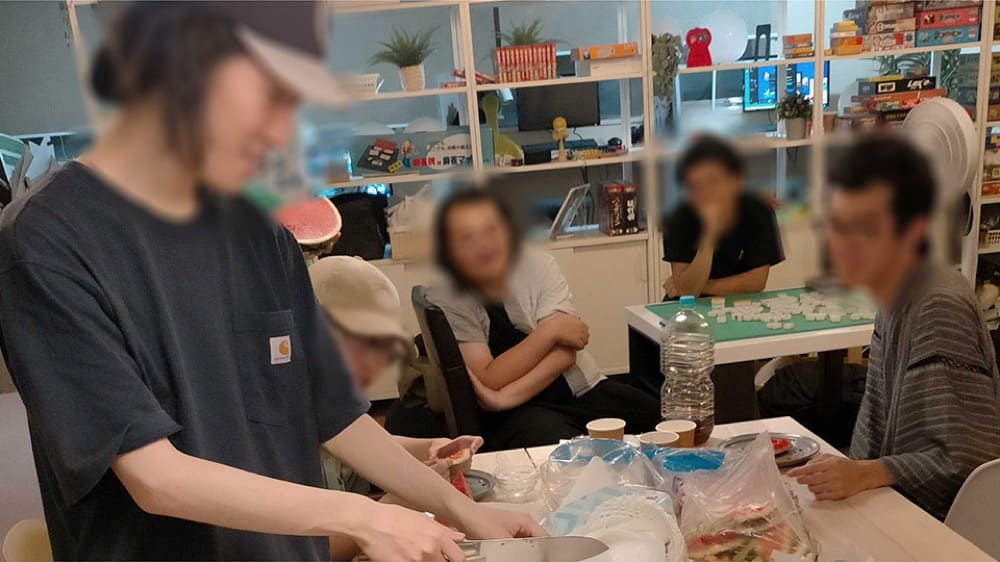
Arai: That’s right. It is a space that is open to youth who have no place of their own on the second and fourth Friday of each month from 9:00 p.m. to 5:00 a.m. the following morning. They can eat dinner, play games, talk, and spend the night together for free.
Journal: What inspired you to start Yoru Kichi?
Arai: Before I officially started Yoru Kichi, there were many times when the young people who came to the Sankaku Kichi daytime space would tell me that they got lonely at night or didn’t want to go home, and would end up playing games and talking there until morning. That was what made me decide to establish Yoru Kichi.
Journal: These days we often hear about young people who feel they have nowhere to belong, but can you please explain what kinds of backgrounds they come from and what kinds of problems they have?
Arai: The largest portion are youth who have been abused by their parents or who don’t get along with them well. Many do not have ties to people other than their family, so after they stop relying on their parents, they have nowhere else to turn.
In addition, there is currently not enough government support for young people between the ages of 15 (the end of compulsory education) and around 25, so many of them feel alone in society.
Arai: In the past, I think Japan had a kind of culture in which the owners of local businesses like sheet metal working shops and construction companies would take such young people under their wing and look out for them, but that kind of local community has disappeared.
Moreover, today’s youth are immersed in the world of social media and rely on people they meet online. As a result, they often come into contact with bad people and end up sexually abused or involved in illegal part-time work.
Journal: Have some of the kids here actually done illegal part-time work?
Arai: Yes, some of them have. The most important thing is accepting them instead of expressing disapproval and offering them a place where they can be looked after by an adult they can rely on. If they have a place to be themselves, they will stop going downtown and the chance of them getting involved in crime will decrease.
Some youth who were offered the support of a space like this have been able to stop doing illegal part-time work, but in reality, many are unable to free themselves from this trap. A single illegal part-time job allows them to make a lot of money easily, so their thinking about money becomes distorted and it becomes quite hard for them to get out of that lifestyle. Once they have tasted an easier lifestyle, it is hard for young people to be satisfied with life here and they end up going back to their old ways.
Journal: I can see how it could be hard for them to return to an ordinary lifestyle. By the way, I hear that many young people with no place to be converge on the Toyoko area in Tokyo and the Glishita area in Osaka. Can you please explain why they gather in such places?
Arai: Actually, the situation changed after the mass media began using the term “Toyoko.” Before then, that area in Kabuki-cho in Tokyo was a bustling neighborhood that was well-lit at night and always full of people, so young people with no place to be spontaneously came together there.
Starting around 2020, however, when the phrase Toyoko first came into use, the area was transformed into a tourist destination. Social media gave the impression that it offered something like a community, so the number of kids attracted to the idea of getting together in Toyoko soared.
However, now as in the past, there have always been many instances of young people gathering in downtown areas — not just Toyoko or Glishita — and getting into trouble, so I believe that places that can connect young people are really needed.

Our ideal is to offer a place that is not be too wholesome — aiming to fulfill a role somewhere between Toyoko and a government-run program
Journal: What kind of support is offered to young people who are introduced to Sankakusha?
Arai: In general, we offer each individual support for about three years, helping them to gradually become independent. First and foremost, we allow young people who have families but don’t get along with them to use the Sankaku Kichi and Yoru Kichi.
Recently, there has been a big increase in the number of youth who consult with us because they don’t have a home or a place to sleep. In such instances, we first arrange for them to stay at a hotel on an emergency basis, and then, if there is room in one of our shared residences, we have them move in the following day.
However, our shared residences are usually full, so we often have to ask one of the residents to share their room so that we can make space for the newcomer. There is great demand for such living spaces and we could save many more young people if only we could increase the number of residential spaces we could offer. However, we are constantly struggling for funds.
Journal: Given the large number of empty homes in Tokyo, why is it so hard to put them to use?
Arai: We have rented empty properties in the past, but discovered that it was expensive to renovate them. On top of that, hotel prices have soared recently, so it’s hard to have youth stay in them even temporarily.
Journal: Is it difficult for young people who are a bit more “tough” or rebellious to feel comfortable in this kind of program?
Arai: This is why we try to not make our space too wholesome.
Toyoko is extremely harmful; a government-run program would be the opposite extreme. The more official a space is, the more young people tend to stay away. To keep a place running well, you need lots of rules, and once you have them, only people who obey rules can use them. Recently, we have taken on more staff at Sankakusha, so it is becoming more wholesome; that bothers me.
Journal: I see. As an organization grows, it needs to become more orderly, but if it gets too rigid, young people will move away? That is a dilemma.
Arai: Exactly! The staff should not just do their jobs in a business-like way; I feel they need to show their true selves and let the youth see their weaknesses. I want to make this a space that succeeds even though we do that.
In fact, I’ve recently been thinking that it might be good for young people to create and run their own space rather than relying on adults to do it for them.
Journal: Is there anything you try to keep in mind when you interact with young people?
Arai: I feel that it is important to just be with them and watch over them, rather than trying to provide support. But that is actually quite hard to do, even if you understand it in your head.
There is always some kind of trouble. Some kids hurt themselves or try to jump off a ledge or roof. When the staff tries hard to deal with such cases, the harder they try, the worse things get. I have seen this happen many times. I imagine that this has happened to everyone who has tried to provide young people with a place to be.
Once I asked a kid who had used Sankaku Kichi what we should do in such cases. His answer was fascinating. He told me, “You don’t need to do anything. I just wanted to get attention. The staff did too much [laughs].” I began to think that not getting upset was an important way of dealing with problems.
Journal: It must be really hard to just watch over kids at times like that.
Arai: Yeah, it’s really hard [laughs]. But when troubles continue, people tend to want to make hard-and-fast rules, and that may end up chasing out the trouble-makers. I feel that we must never do that. I want this to always be a group that accepts kids who have problems.
What these kids need is not adults to support them, but adults who they can just be with
Journal: What can we all do to help young people find a place of their own?
Arai: It is wonderful that people want to help, but in reality, the actual situation is quite difficult, so probably the best thing people can do is donate money to this kind of support group.
To encourage people to offer support through Sankakusha, I’d like to recommend that they first subscribe to our email newsletter so that they can learn about the actual situation these young people face. There are facets of their problems that are not readily apparent, and at first glance, many may not appear to be in such dire circumstances, so I’d like people to learn more about them through our email newsletter.
Moreover, rather than girding yourself to support these young people, it would be better for you to just move with them, eat with them, play games with them: in short, just meet them and make more points of contact with them. At Sankakusha, we would like to make more opportunities for people to make contact in these ways.
Editor’s Note
I have heard the phrase “youth without a place of their own” and started to wonder what such young people used to do in the past, so I decided to interview the Representative Director of Sankakusha. Listening to Mr. Arai, I started to think that in days gone by, local fire brigades and festivals naturally created bonds between young people and local adults.
However, such spaces are disappearing today, so there are not many opportunities for youth and adults to develop ties in a natural way. This interview made me think about how ties can be developed at the local level.
Text: The Nippon Foundation Journal Editing Department
Photo: Ushio Sato
Profile
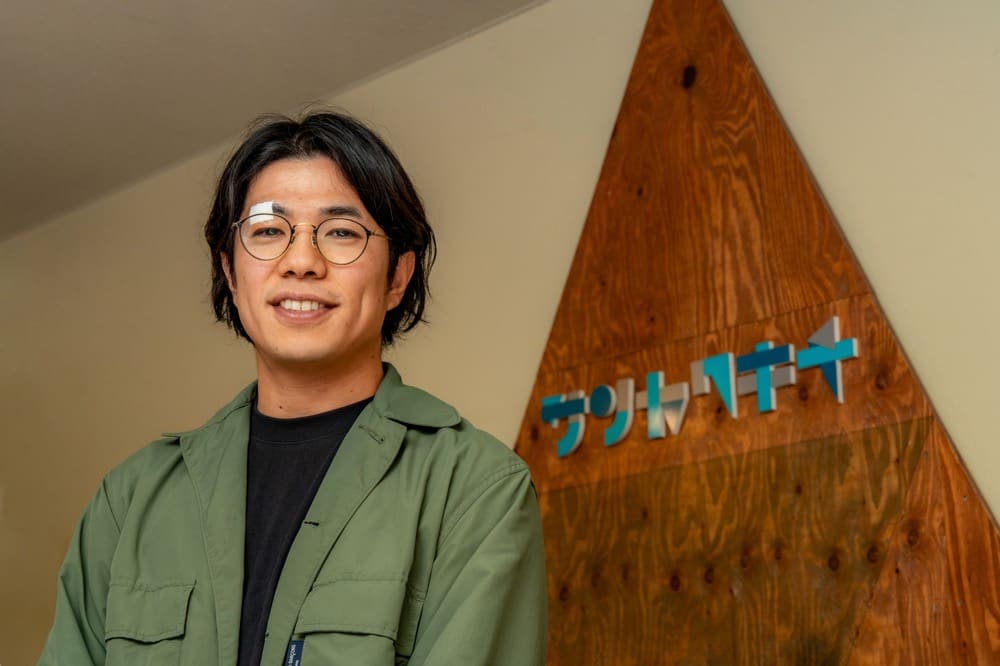
Yusuke Arai
Representative Director of NPO Sankakusha. Began working on social problems like homelessness and child poverty in 2008. Spent many years helping third-year junior high school students from families on welfare with their schoolwork, but seeing that after they went on to high school, many dropped out, got pregnant, or had trouble finding jobs, he decided to found the NPO Sankakusha in 2019 (NPO Sankakusha Official Website; external link, in Japanese).