Talking About Death Leads to Thinking About LivingWhat is ‘Death-Katsu,’ a casual space to discuss death?
Key Points
- “Death-Katsu” is a workshop where people speak openly about death. Through Death-Katsu, the pain of grief can be alleviated.
- Though death is a deeply serious matter, sharing a space where tears can be shed creates a psychological environment where people can speak honestly.
- Discussing death casually might raise awareness about social issues such as kodokushi (lonely death) and suicide.
In everyday life, we don’t have many opportunities to talk about death. However, many of us unexpectedly face death when a family member or someone close is diagnosed with an illness or suddenly passes away.
Shouldn’t there be a place where we can talk about death more casually? This was the thinking of Hidefumi Yoshida, a certified psychologist who also conducts Rui-Katsu (tear-seeking activities) seminars where people shed tears to relieve stress.
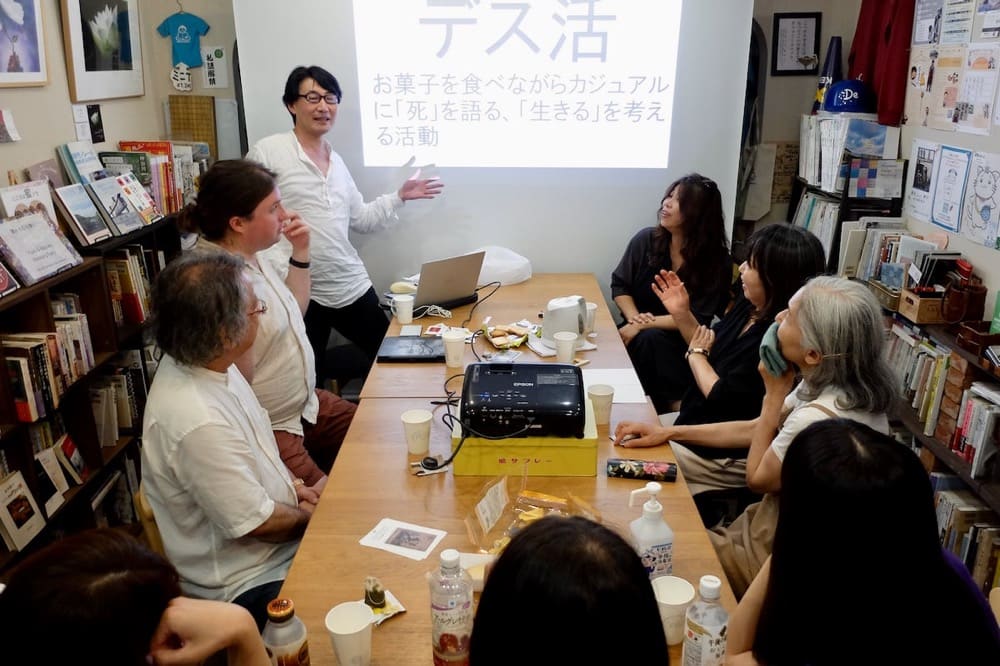
Mr. Yoshida organizes workshops called Death-Katsu (death-discussing activities), where people can talk casually about death. Similar initiatives have emerged globally, known as Death Cafes in other countries.
What benefits come from having a place to talk about death? We asked Mr. Yoshida about the specifics of Death-Katsu, participant feedback, the psychological effects of discussing death openly, and the social benefits of such conversations.
Many people want to talk about death
The Nippon Foundation Journal Editing Department: First, could you explain the concept of Death-Katsu?
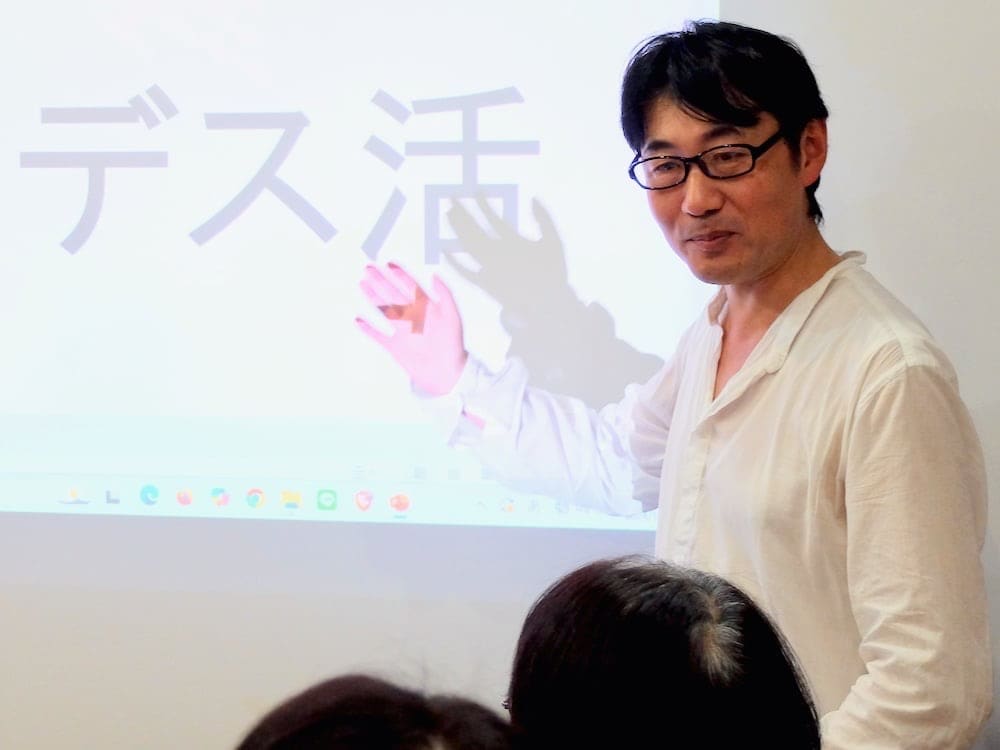
Hidefumi Yoshida: Death-Katsu is an activity where people casually talk about death while drinking tea or coffee and eating snacks.
Death can come suddenly through traffic accidents or illness. Or you might find yourself close to death when a doctor diagnoses you with cancer and tells you that you have “X years to live.” These experiences are difficult for anyone.
However, since death is generally considered taboo in society, it’s difficult to talk about casually, and there aren’t many places where you can do so.
If there were a place where we could casually talk about death, we would become more conscious of it. As a result, we might reflect on how we live and our lifestyle choices, which is one of the main points of Death-Katsu.
Journal: How did Death-Katsu begin?
Yoshida: I’ve been running an activity called Rui-Katsu since 2013. When we cry, the parasympathetic nervous system activates, which is said to put the brain in a relaxed state. In other words, it relieves stress.
In Rui-Katsu seminars, participants watch emotional videos or listen to moving stories to experience stress relief. Afterward, they form a circle and share insights and impressions from the experience such as why they cried, what specific points made them emotional, and so on.
During these seminars, many people talk about death. Emotional videos and stories often deal with themes of death, right? Watching these can remind people of losing loved ones or pets.
Death is an extremely heavy subject, but when people share a space where tears flow, they tend to create a psychological environment where even strangers can speak honestly.
Seeing how refreshed everyone looked after talking about death-related experiences, I realized people actually want to talk about death.
Journal: And that led to Death-Katsu, correct?
Yoshida: Yes. While we started using the name Death-Katsu in 2024, I had actually been conducting similar workshops called Death Cafe since 2018.
Death Cafe is an activity that originated in Switzerland, where people similarly gather to talk about death. I was holding Death Cafes once a month, but temporarily suspended them during the COVID-19 pandemic.
However, I continued Rui-Katsu and once again recognized that people want to talk about death. So I restarted the workshop with the name Death-Katsu to emphasize the casual nature of the gatherings.
Journal: What disadvantages arise when people can’t talk freely about death?
Yoshida: People end up suffering alone with their thoughts about death. Today we’re living in a “high-mortality society” with an aging population and accelerating population decline. I believe there are increasing numbers of people grieving for lost family members and encountering death in their immediate surroundings.
This can lead to suffering as they suppress their grief, which may even affect their physical health. I feel it’s necessary to incorporate more opportunities to talk about death into our daily lives.
Death-Katsu helps alleviate the pain of grief
Journal: How is Death-Katsu conducted? Could you explain the specific format?
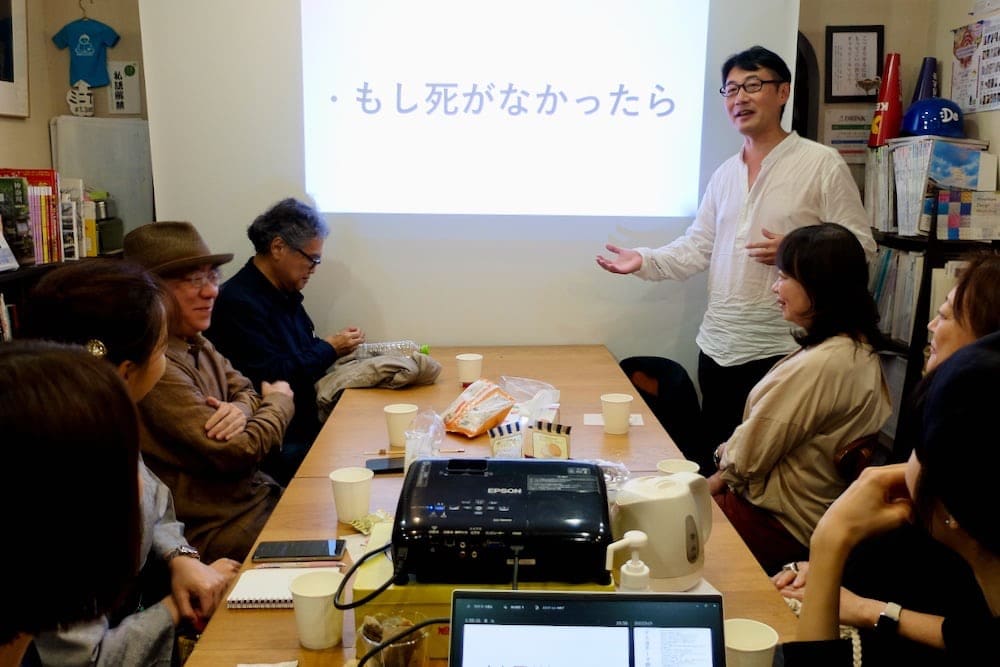
Yoshida: We begin by presenting a theme. For example, “What if there were no death?” and ask participants to share their thoughts. But that is only an entry point, and it is fine to go off topic. Starting with “What do you think about death?” would be too heavy, so we begin with slightly tangential topics.
Recently, our theme was “What would you want to eat as your last meal before dying?” But as people talk, the conversation naturally shifts to their personal experiences with death.
Journal: I can see how jumping straight into discussing death might be challenging. When you used the theme “What if there were no death,” what kind of discussions emerged?
Yoshida: People brought up topics like genetics and lifespan. For example, “With medical advances, lifespans might extend to 150 or 200 years.”
Everyone agreed that death should exist. They said things like “Humans find meaning in life precisely because we die” and “Without death, we might just live aimlessly. Would that be good?” Eventually, these conversations lead people to reflect on their current way of living.
Also, in Death-Katsu, we communicate “three rules” to all participants.
Journal: What are these “three rules”?
Yoshida: The first is allowing everyone to freely express their thoughts, meaning we don’t invalidate others’ opinions.
The second is not trying to reach a specific conclusion. Each person shares their thoughts, all of which are valid, so we don’t aim for a single conclusion.
The third is not imposing faith or beliefs on others, even though thinking about death often involves religious or philosophical perspectives. Since this topic inevitably touches on ideology and religion, we emphasize respecting each other’s perspectives.
We also tell participants that if they start feeling unwell during the workshop, they are free to step outside for some fresh air.
Since we touch on sensitive topics, some people might become uncomfortable. So far, no one has needed to leave, but I think telling them it’s okay to step out if needed helps everyone relax and speak more freely.
Journal: Is there a trend in the age or gender of participants? What motivates people to attend?
Yoshida: Ages and genders are quite varied. We have participants from their 20s to their 70s, including office workers, retirees, homemakers, and many others.
As for motivation, many people join after recently losing someone close to them. They’ll say things like “My mother passed away a month ago” or “My uncle died.” Others simply come out of curiosity.
Journal: What kind of feedback do you hear from participants?
Yoshida: I often hear comments like “I felt better after listening to people who had even more difficult experiences than mine” or “I was able to talk about things I couldn’t tell anyone before, and it made me feel lighter.” When people with similar experiences gather, it helps ease the burden of grief.
There was a case where a woman who was somewhat depressed became much more positive and cheerful after participating in Death-Katsu. Because we have a rule not to invalidate others’ thoughts, everyone listens sincerely. Many people express that they were able to view negative situations more positively or that the experience became a catalyst for living more positively.
Journal: Are there any participant stories that particularly left an impression on you?
Yoshida: One woman talked about losing her grandfather. He had gone to the mountains to pick bamboo shoots and died in a fall. She had said “Do your best!” to him that morning as usual, but he never came home …
She shared that it happened so suddenly that for about half a year afterward, the world seemed gray to her.

Yoshida: This woman said it was the first time she had shared this story with others. What’s interesting is that she started talking about it quite late in the workshop. Hearing other people’s experiences triggered memories and emotions that had been suppressed. I think that’s one of the benefits of Death-Katsu.
Of course, participants probably come with some idea of what they want to discuss. But they often end up sharing more than they originally planned. It’s like they suddenly remember, “Oh, that happened too …”
When talking with close friends, people often think, “I shouldn’t burden them with such heavy topics, so I’ll keep it to myself.” Ironically, it might be easier to open up to complete strangers.
If Death-Katsu spreads, it might increase awareness of issues like kodokushi and suicide
Journal: Currently, where and how often is Death-Katsu being held?
Yoshida: We hold Death-Katsu once a month in Kamakura. Kamakura is my hometown, and with its many shrines and temples, it has a long tradition of Buddhist death-related talks, making it particularly suitable for discussions about death.
We’re also receiving more requests to conduct Death-Katsu in various places. For example, “We have a gathering of shopping district merchants, could you come and talk?” or requests from temples.
While I’m happy to visit different places, I’d be delighted if people would appoint a facilitator and conduct their own workshops.
I hope places where people can casually talk about death will spread throughout Japan.
Journal: What impact do you think the spread of initiatives like Death-Katsu would have on society?
Yoshida: Recently, I’ve heard about increasing cases of elderly people living alone in housing complexes dying in solitude. We also occasionally see reports about young people’s suicides and lonely deaths.
I believe this is partly because talking about death is taboo, and death itself is hidden from everyday conversation.
By discussing death more casually, we might become more aware of issues like kodokushi and suicide that often go unnoticed in daily life.
Editor’s Note
While researching aging society, an article about Mr. Yoshida’s Death-Katsu was recommended to me.
In our daily lives, we rarely have opportunities to talk or think about death. However, after hearing from Mr. Yoshida, I realized that there are surprisingly many people carrying grief after losing loved ones.
If Death-Katsu helps people reflect on their way of living and become more positive, I believe it’s truly meaningful.
Text: The Nippon Foundation Journal Editing Department
Profile
Hidefumi Yoshida
Born in 1975. Studied psychology and education at Waseda University, and researched human resource management at the same graduate school. After working at elderly care facilities and schools, he moved to his current position. He started Rui-Katsu in 2013. Together with Dr. Hideho Arita, a physician, brain physiologist, and professor emeritus at Toho University Faculty of Medicine, he established the certified qualification of Tears Therapist. As a Tears Therapist, he conducts lectures and workshops at educational institutions, medical facilities, welfare institutions, companies, and municipalities.
Related Themes
Related Links
- The Nippon Foundation Suicide Prevention Project
- Toward Human Security : The Nippon Foundation Suicide Awareness Survey