Why Is ADR (Alternative Dispute Resolution) Effective in Divorce Cases?Cooperative Spousal Relationship Protects the Future of Children and Parents

Key Points
- Many divorced couples never have a proper forum for discussion, often because they do not want to deal with the other person or cannot afford court costs.
- ADR (Alternative Dispute Resolution) is a process for resolving civil disputes such as divorce and inheritance without going to court. A neutral third party mediates between the parties to reach a resolution through discussion.
- A divorce reached with mutual understanding leads to a happier future not only for you, but also for your children.
Family disputes are different from civil or criminal cases in that they are not something you win by fighting to the bitter end. Even if a couple divorces, they remain a child’s father and mother.
Even if siblings fight over an inheritance, in the end they are the ones who may need to support one another. However, the longer resolution drags on, the more complex the situation becomes, and in some cases family relationships can break down beyond repair. Ideally, family disputes should be resolved as calmly and rationally as possible, without unnecessary conflict.
Taking on such family issues by working toward early resolution through a new, out-of-court approach to discussion known as ADR (Alternative Dispute Resolution) is the ADR for Family Promotion Association (external link, in Japanese). In this article, we spoke with the association’s representative director, Michiko Koizumi, about the features of ADR and the association’s approach to dispute resolution.
Despite changing times, divorce still carries a heavy stigma in Japan
The Nippon Foundation Journal Editing Department: Based on the types of consultations you receive, what trends are you seeing in family issues today?
Michiko Koizumi: I feel that the strong social hold of Japan’s family register system has not changed, past or present. In principle, both marriage and divorce are legal contracts, and if things unfortunately do not work out, there should be an option to end the contract.
For example, if you start playing tennis because it seems fun and then realize it is not for you, the option to quit probably comes to mind right away. But when it comes to marriage, the social constraints are strong, and in Japan today, “ending it” is not an option people find easy to choose.
Beyond that, many people hesitate because there is simply too much they stand to lose by divorcing, such as having custody taken away by their former partner or seeing their income decline, so they stay in unhappy marriages.
Many of the people who come to me have spent 15 or 20 years struggling with the decision before finally taking steps toward divorce.
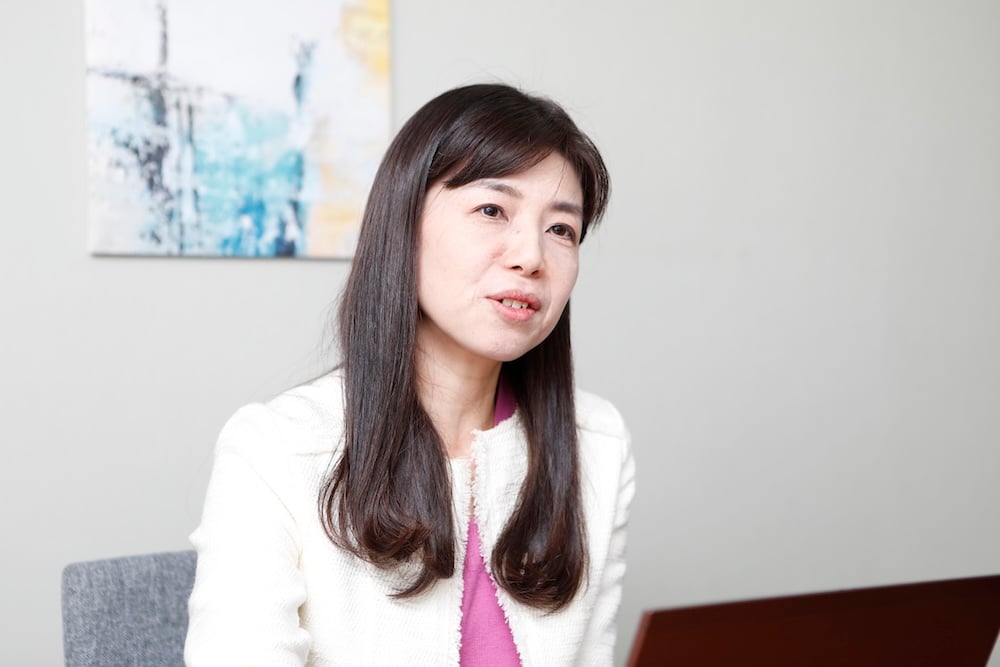
Koizumi: At the same time, there have been amendments to parts of the Civil Code, and the rules related to child-rearing after divorce[1] are set to be revised and take effect by May 2026.
Fathers who used to assume they would not be able to see their children after divorce have started to speak up, and as more mothers work, the idea that even if the marital relationship ends, we should maintain our relationship as parents raising our child has been gradually spreading. I think this legal revision may accelerate that shift.
Also, divorces among couples without children may be becoming less difficult than before.
As an aside, another recent trend is the rise in divorce consultations from couples who married through dating apps or matchmaking agencies.
- Note 1: In May 2024, the Act Partially Amending the Civil Code (Amendment of the Rules related to Child-Rearing after Divorce) was enacted. For the purpose of ensuring the interests of children after the divorce of the parents, the Act partially amending the Civil Code clarifies the responsibilities of parents in raising their children and revises the rules related to parental responsibility, child support, parent-child visitation, etc. Reference: “Amendment of the Rules related to Child-Rearing after Divorce,” Civil Affairs Bureau, Ministry of Justice (external link/ PDF)↩︎
Journal: You have been involved in a wide range of family issues as a family court investigating officer.[2] Could you tell us what led you to establish the ADR for Family Promotion Association?
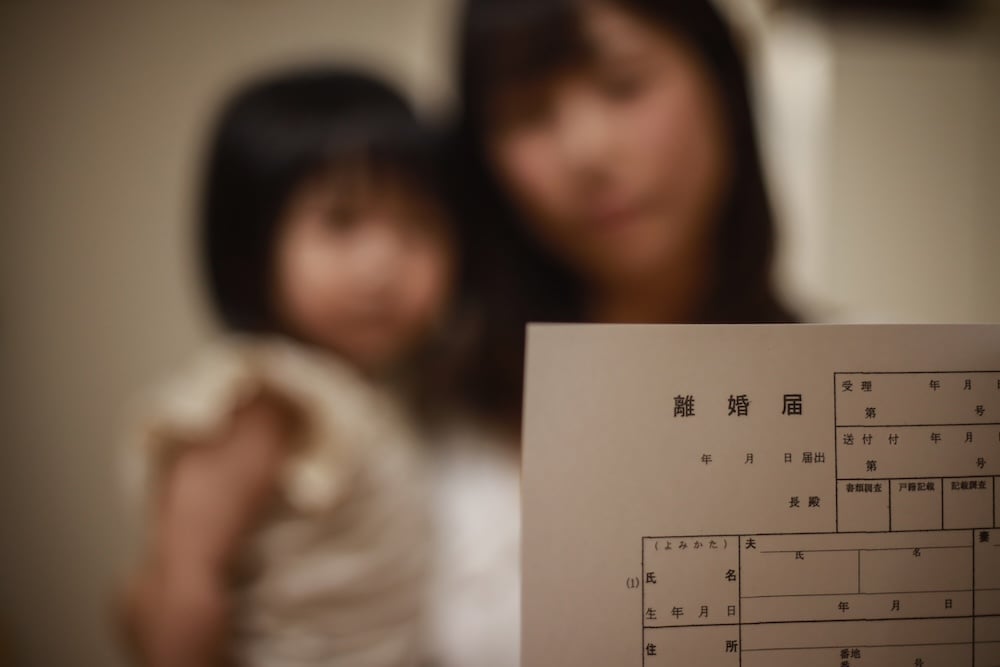
Koizumi: In Japan, about 90% of divorces are by mutual agreement, and around 9% of couples file for conciliation at the family court.[3] Couples who initiate conciliation often have deep emotional conflict, and the situation becomes contentious very quickly.
It is strange, but the more people fight, the more they come to hate the other person, and gradually, even setting their own happiness aside, they begin to wish for the other person’s unhappiness. When it gets to that point, the children caught in the middle are placed in a truly heartbreaking situation.
As family court investigating officers, we listen to children’s unfiltered voices and convey them to both parents. But because the conflict between the couple is so intense, the parents often find it difficult to hear what their children are saying without filtering it through their own biases.
I also saw painful scenes up close such as a young girl tense as she tried to protect her little brother, or a mother handing her child a note saying, “If they ask you anything, say exactly what is written here.” Seeing children doing their best while being pulled around by adults was heartbreaking.
I found the work itself meaningful, but the desire to do something for the 90% of people who choose divorce by mutual agreement as the formal route ultimately led to the establishment of the ADR for Family Promotion Association.
- Note 2: Family court investigating officers primarily conduct investigations into domestic relations cases handled by family courts (divorce, child support, inheritance, adult guardianship, and other family-related matters) as well as juvenile cases.↩︎
- Note 3: There are four types of divorce. Kyogi rikon (divorce by agreement) is established when a couple reaches agreement through discussion and files a divorce registration with their municipal office. Chotei rikon (divorce by conciliation) is a divorce reached through family court conciliation (conciliation regarding the adjustment of marital relationship). Family court conciliation commissioners hear from both spouses and help coordinate agreement on the divorce and its terms, such as property division. Shinpan rikon (divorce by adjudication) is a divorce established when the family court issues an adjudication. It may be used when conciliation does not succeed or when it is determined that divorce would be in both parties’ best interests. Saiban rikon (divorce by judgment of a district court) is a divorce in which a court decides whether to grant a divorce when the couple cannot reach agreement. The court ultimately issues a judgment and decides whether the divorce is granted and, if so, the conditions of divorce. The share of divorces by adjudication and by judgment is less than 1%.↩︎
ADR offers greater convenience than family court
Journal: What exactly is ADR? Could you also explain how it differs from family court?
Koizumi: Put simply, courts are forums for discussion operated by the government, whereas ADR is a forum for discussion operated by the private sector. Although ADR providers are private organizations, they are supervised by the Ministry of Justice under the ADR Act (Act on Promotion of Use of Alternative Dispute Resolution[4]).
In addition, only organizations certified by the minister of justice can serve as certified providers handling disputes in designated fields.
- Note 4: Reference: “For Resolving Legal Disputes, Consider ADR (Alternative Dispute Resolution),” Public Relations Office, Government of Japan (external link; in Japanese) ↩︎
Koizumi: One of ADR’s key strengths is convenience. ADR is not free, but the average time to resolution is about three months, and 98% of mediations are conducted online. Of course, email can also be used, and unlike family court, mediations can be held on weekday evenings or weekends.
By contrast, when someone files a petition for divorce conciliation in court, conciliation sessions are generally held only about once every one to two months, and it tends to take six months to a year to reach resolution.
Also, family courts still do not allow the use of email, so if parties want to communicate something, they must use phone calls or letters. Depending on the court, staff may be unavailable from noon to 1 p.m. for lunch, and phone reception may end at 5 p.m.
That makes it difficult for people who are working to call. If you hire a lawyer, online communication may be possible, but the costs add up.
Journal: I think many people choose divorce by agreement because other types of divorce such as conciliation take time and money. How does the ADR for Family Center, operated by your association, support clients?
Koizumi: In addition to facilitating divorce discussions, we offer webinars on divorce where participants learn about typical divorce terms and children’s mental health care, and we also provide counseling for people who are struggling with whether they want a divorce.
When people struggle with divorce, many go to a lawyer for legal advice. But today, it is easy to find websites that explain divorce law in a clear, accessible way with a quick search.
Instead, what people often want to know when they are considering divorce are the many small, practical questions tied to everyday life, such as “Should I really get a divorce?” “How will divorce affect my child?” “How should I explain it to my child?” or “Should we separate before divorcing?”
In Japan, divorce still carries a significant stigma, and people also need time to sort through their feelings. In one-on-one discussions, we first help clients clarify their own feelings and then work through their questions one by one.
Journal: What kinds of concerns do people who come to you tend to have?
Koizumi: The most common concern is, “I want a divorce or separation, but my partner will not agree.” Most people would prefer a peaceful resolution, but because the other person has said no, they do not know how to move forward.
Journal: I understand the desire to keep things amicable, precisely because it was someone you once loved. Still, I think many people avoid seeking help because they see family problems as “embarrassing,” or they simply do not know who to talk to. When is the right time to consult ADR?
Koizumi: Ideally, as early as possible. For example, I think the best time is the moment the word “divorce” first crosses your mind. In some cases, you need time to prepare before divorcing, such as dealing with a mortgage, work, or your child’s schooling environment.
That said, it is hard to feel ready to start preparing for divorce in advance.
Married life has ups and downs, and I think it often cycles between “I cannot do this anymore” and “Maybe I can keep trying a little longer.” When it hits the point of “I really cannot take any more,” I hope people will reach out while they have that momentum.
The goal of ADR is a resolution you can accept, both legally and emotionally
Journal: Could you share an example of a case you have resolved or an episode that left a strong impression?
Koizumi: Cases vary tremendously from one family to the next. For instance, I mentioned that we resolve cases in an average of about three months, but that does not mean we believe faster is always better.
For example, when both parents are actively involved in parenting and both have relatively stable incomes, we may first set a period of separation. During that time, they develop a post-divorce parenting arrangement and a parent-child contact plan, and then try living according to the plan to see whether it is workable and how life would change after divorce.
If uncertainty remains after that, we may pause the process so they can talk it through again.
Journal: You tailor plans to each individual. What do you value most in your work?
Koizumi: Aiming for a resolution that both parties can accept, both legally and emotionally.
Of course, because there is another person involved, things will not go exactly as you want 100% of the time, and there will be moments of dissatisfaction. Even so, being able to accept it, to say “That cannot be helped,” or “Let’s settle it here,” and then to make the decision yourself is what helps people move forward.
So how do we guide people toward acceptance? I believe the only way is to stay closely attuned to both the person seeking divorce and the other party. If, during discussions, I hear even a hint of “I don’t like that” or “I can’t accept that,” I do not let it pass! We keep talking, as many times as it takes, until both sides can accept the outcome.
I tell them, “Don’t you want to avoid ending things feeling like it was forced on you by your former partner? Let’s talk it through, reach a point you can accept, and end it as a decision you made for yourself.” Put another way, if you cannot accept it, you do not have to agree.
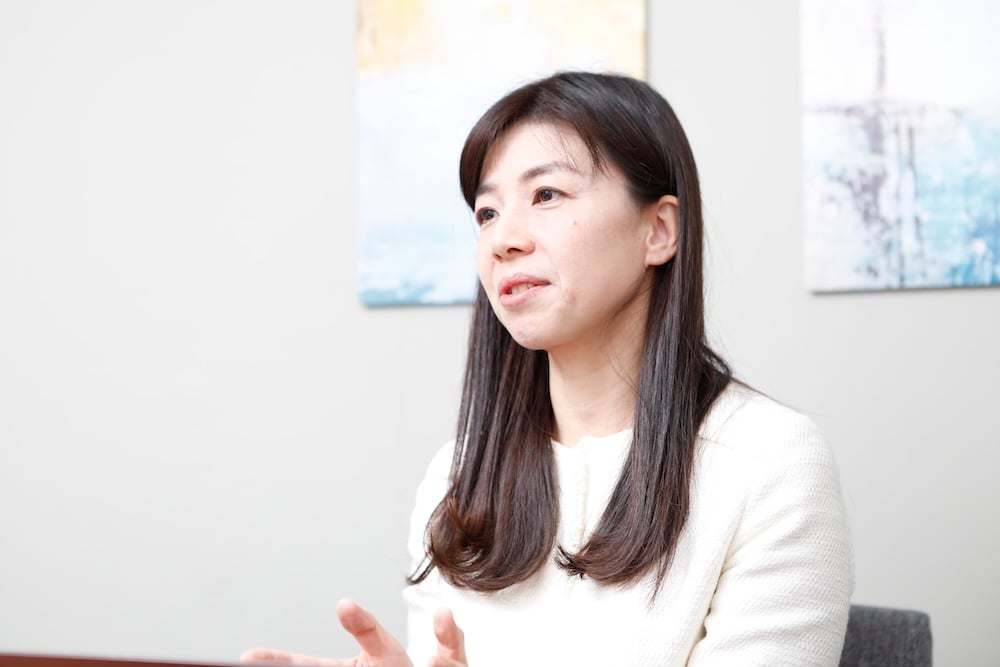
Journal: What kind of feedback have you received from families who resolved their issues through ADR?
Koizumi: We surveyed people who used our services over the past three years, and most responses were along the lines of “My life has changed,” or “My ex-husband still has a good relationship with our child.” However, some people on the other side expressed dissatisfaction with bringing a third party into a private family matter.
Behind that is not only “I never wanted a divorce in the first place,” but also the feeling that “If it were one-on-one, I could have made things go my way, but once a third party got involved, I couldn’t.”
Hearing that made me realize we still have a long way to go in helping the other parties reach a place of acceptance.
Journal: With family issues growing more complex, what efforts does society as a whole need to make?
Koizumi: One is for more people to recognize that even if parents divorce, the parent-child relationship does not change.
I often hear from people raising children on their own: “I don’t want my child to see my ex,” or “If I receive child support, I’ll have to allow visits. If that’s the case, I’d rather not take the money.” But for the child, that is a double blow: they cannot see the parent they love, and they do not receive financial support for daily living.
Professionals such as divorce counselors[5] and lawyers, who provide consultations, of course need to support parents. But even more than that, I want them to pay attention to what children themselves are feeling, as well as children’s rights and future.
- Note 5: A professional who provides psychological support and advice to people struggling with marital conflict or divorce.↩︎
Koizumi: Another is that we need efforts to help people build equality in marriage, whether or not they have children.
This is a broader point, but I believe many solutions to social issues lie in education. Unless society as a whole, including schools, promotes awareness of things like the importance of having a job, the idea that marriage is a contract for becoming happy and that either party can end it, that marriage is not the finish line, and that marriage is an equal relationship that requires effort from both people to make it work, I do not think Japan’s views on marriage will change.
Journal: Finally, if more people make use of ADR, what changes might we see in society?
Koizumi: According to the Ministry of Health, Labour and Welfare’s “FY2021 Nationwide Survey on Single Parent Household” (external link; in Japanese), parents who divorce by agreement have a lower rate of child support arrangements than those who divorce through other means, such as conciliation or judgment. The most common reason for not making an arrangement is “I don’t want to have anything to do with the other person,” followed by “I thought the other person had no intention of paying,” and “I thought the other person was unable to pay.”
Koizumi: This result shows that many couples who divorce by agreement know child support exists, yet for one reason or another give up on seeking it.
It is said that 30% to 40% of single-parent households simply resign themselves to the situation. If ADR becomes widely known, more couples may be able to divorce on terms both sides can accept, which I believe can lead to a happier future for themselves and their children.
Editor’s Note
As social values diversify, issues within households and families are also becoming more complex. Against this backdrop, ADR is drawing attention as a non-adversarial means of resolution. To explore why it is effective in divorce cases, we spoke with Ms. Koizumi for this article.
Divorce is often described as a problem between spouses, but for children, their parents’ divorce is a major life-changing event. Of course, I do not think anyone gets married expecting they might divorce someday, but it could happen to any of us.
Keeping in mind that ADR exists as a place to seek advice on divorce may help you, or someone close to you, if you ever face a divorce, and may support you in building a happier life afterward.
Photo: Emi Enishi
Text: The Nippon Foundation Journal Editing Department
Profile
Michiko Koizumi
After working for 15 years at family courts across Japan as a family court probation officer, she was engaged in resolving family matters such as divorce and inheritance. She later became independent and, in 2017, established the ADR for Family Promotion Association. Among family- and relative-related issues, she focuses in particular on divorce cases involving couples with children. She works toward a society in which, even after parents divorce, both parents and children can live in a way that is true to themselves. Her main activities include consultations and ADR, and she has also served many times as an instructor for divorce courses offered by local governments. She also shares a wide range of information about divorce on the YouTube channel Family ADR Center: Divorce Terrace.