Listening Empathetically To Children and Accepting Their FeelingsThe role parents can play in preventing child suicide
Key Points
- In 2024, the number of suicides among elementary, junior high, and high school students reached 527, the highest figure on record.
- To recognize the signs that a child may be at risk of suicide, it is important for parents to observe their children’s behavior closely and build trust relationships through day-to-day interactions.
- Adults valuing and accepting themselves can help create a society in which children can live with peace of mind.
The number of suicides among children and young people is rising.
According to figures released by the Ministry of Health, Labour and Welfare on March 28, 2025, the total number of suicides across all age groups in 2024 was 20,320, a decrease of 1,517 from the previous year and the second-lowest figure since statistics were first compiled in 1978. However, the number of suicides among elementary, junior high, and high school students rose to 527, the highest level since records began in 1980.
Reference: “Current Situation of Suicide in 2024,” Office of the Promotion of Suicide Countermeasures, Ministry of Health, Labour and Welfare
In Japan, child suicides are known to increase notably in April and September, when the new school term begins. Every parent wishes for their child to live a safe and happy life, but what can we, as parents, do to prevent suicide?
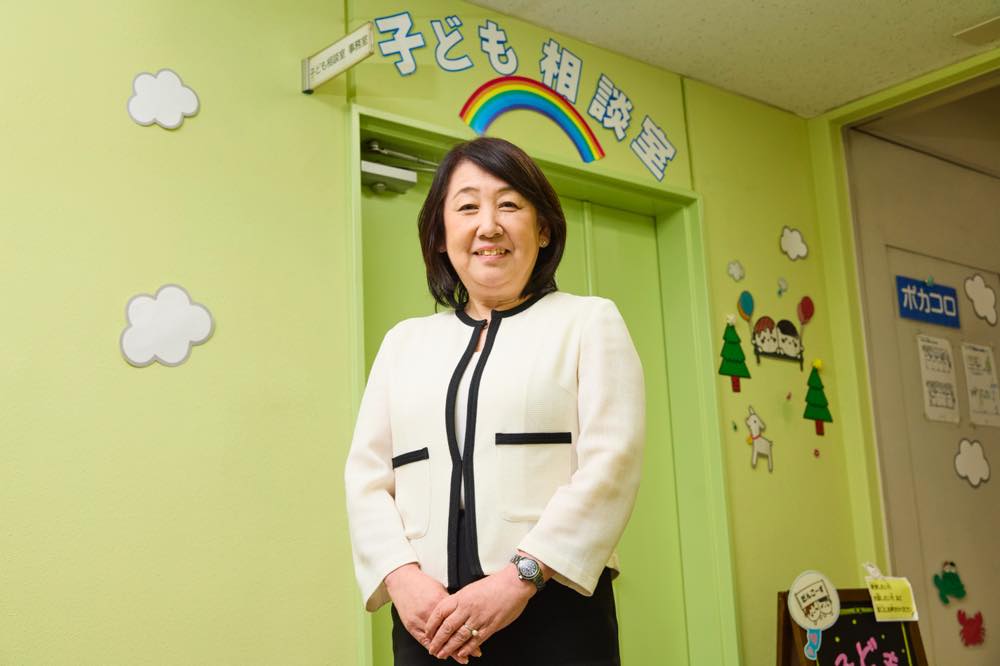
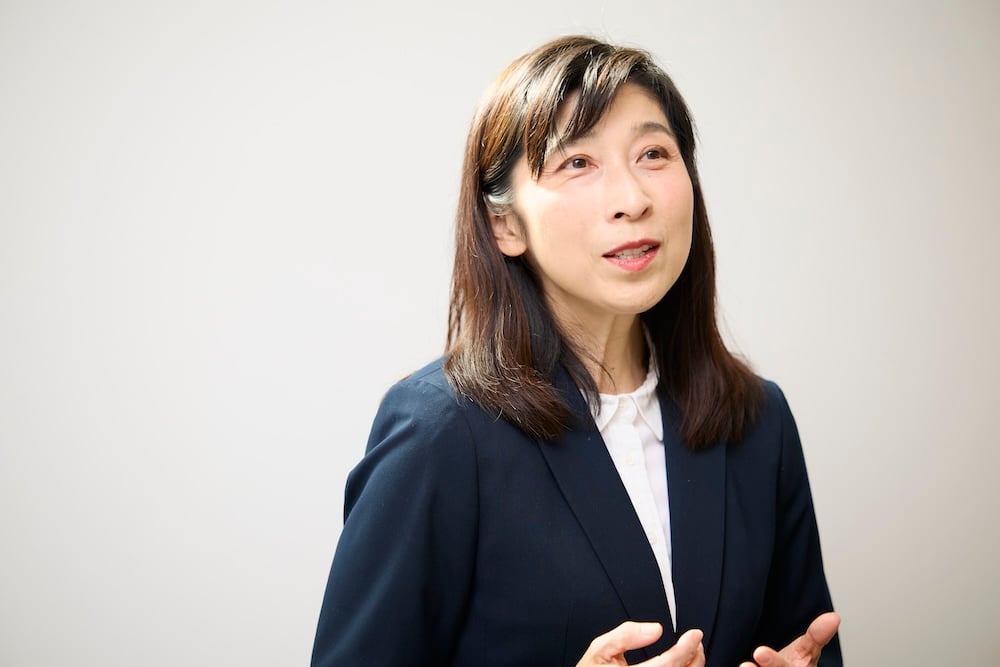
We spoke with Hifumi Kakizawa, director of the Family Counseling Institute (external link, in Japanese), an organization that provides counseling and support regarding a wide range of parent and child-related concerns. Ms. Kakizawa, a mother to four children, was herself close to losing a child to suicide around 10 years ago.
We discussed how to recognize the subtle “SOS” signals that children unconsciously emit and how to respond appropriately after noticing these signs.

More and more young people are struggling with their self-worth
The Nippon Foundation Journal Editing Department: Suicides among young people are increasing. What do you believe is behind this trend?
Hifumi Kakizawa: I feel that many young people struggle and feel suffocated in today’s status-driven society. I see this not only in the children who come to me for counseling, but also sense it in the day-to-day interactions I have with teenagers and young adults as part of my current studies to become a Buddhist priest at Komazawa University’s Faculty of Buddhism and Tokyo Bukkyo Gakuin.
Many young people speak of being told by their parents that they must achieve top grades or get into a good company, or feeling unable to break free from the “ideal” mold expected of them by their families. I get the feeling that this pressure places a heavy burden and worry on their shoulders.
Journal: Perhaps parents place excessive expectations on their children because they themselves lack confidence and do not want their children to turn out like them.
Kakizawa: Yes, many parents tell me that they were hardly ever acknowledged or praised themselves. To compensate for this lack of confidence, they end up placing excessive demands and expectations on their children. During counseling sessions, it is not uncommon to find that the root cause of a child’s problem actually lies with the parent who came seeking help.
Journal: Suicides among elementary, junior high, and high school students are said to increase around April and September. Why do you believe this is?
Kakizawa: Children who are thinking about suicide don’t act on it straight away. They go about their day-to-day lives alternating between thinking, “I want to die” and “But I’ll keep living.” Then, something triggers them to act.
For most children, school is not a place that is purely enjoyable. It can also be a place of stress. They might feel exhausted by the intricacies of friendships or the pressure to mold their behavior to teachers’ expectations. As the day they have to return to this environment draws nearer, this pressure can serve as a trigger, leading some children to choose to take their lives.
Journal: Does this mean that the cause of suicide is often school-related?
Kakizawa: It is difficult to analyze every case, but I don’t think this is necessarily true. In many instances, the cause is not any one, single factor. Several issues can pile up on top of one another, such as relationships at school, academic pressure, and relationships with parents.
Ideally, if a child is experiencing stress at home, school should be a place they can escape to, and if they are facing stress at school, home should be that refuge. However, some children have nowhere to escape to. When stress builds up like water filling a cup, a single trigger can cause it to overflow, pushing the child to the point where they feel they have no option but to end their life.
Journal: What signs might a child considering suicide show?
Kakizawa: Broadly speaking, there is usually some kind of change — the sense that “something feels different from usual.”
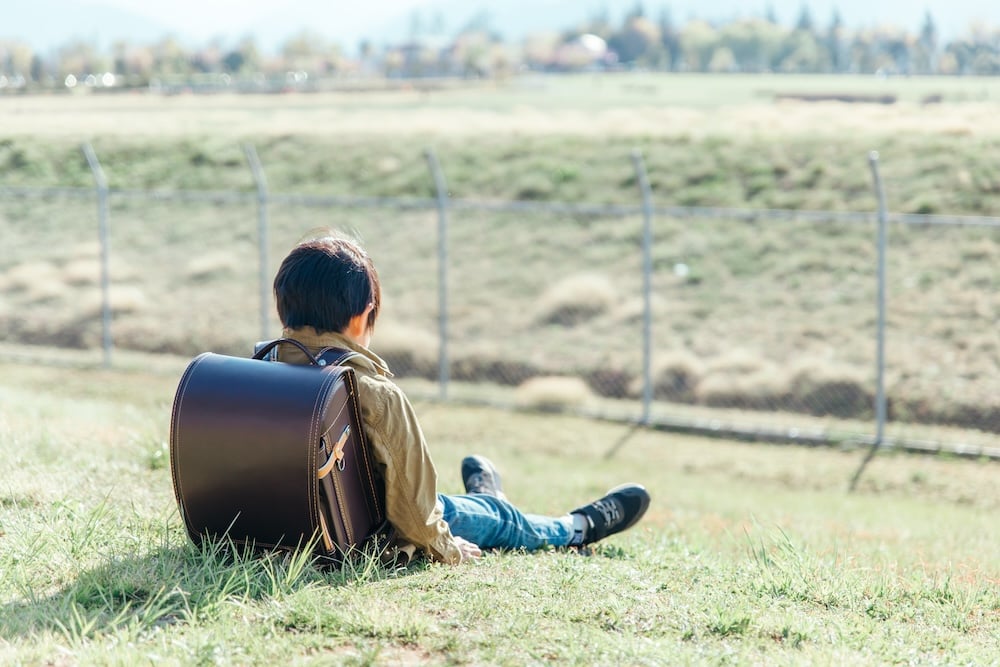
For example, common signs among children suffering from bullying include finding that the inside of their school bag or backpack is dirty, or that their textbooks have been defaced with graffiti. They might stop playing with friends they used to be close to, or stop talking about those friends. In some cases, a child who used to look their parents in the eye when speaking might stop making eye contact, or say they don’t want to talk and retreat to their room immediately.
In terms of day-to-day life, some children might start eating less, while others may overeat. Some children become unable to tidy their rooms. It is said that the tidiness of our living space and our mental state are closely linked — when our minds are cluttered, it becomes difficult to organize our physical spaces.
Journal: So, there are many different types of changes that might appear.
Kakizawa: Yes. However, there is no single, clear warning sign of suicide. The key is noticing when something is “different from usual.” This is why it is so important for parents to pay close attention to their children on a day-to-day basis. Even if parents miss the signs, what matters most is that there is a trust relationship where children feel able to talk to their parents about their worries or struggles.
Journal: How can parents build this type of trust?
Kakizawa: I think it is important to listen to children with empathy during day-to-day conversations. Even though they mean well, parents often jump in with their own opinions or advice, saying things like, “Why don’t you try doing this?” We need to resist this urge to interrupt. Instead, responding by empathizing “That must have been tough for you,” or simply “I see,” can make a big difference.
Another key is not to rush to solve the problem. If a child says, “My teacher said such-and-such,” parents might immediately respond, “I’ll talk to the school about it,” and spring into action. But in many cases, children are not looking for solutions. They simply want to vent their frustration or struggles. A trust relationship is not built overnight, so I encourage parents to be mindful, on a day-to-day basis, to practice empathetic listening and to not rush to find solutions.
Journal: I thought a parent’s job was to find a solution, but is that not the case?
Kakizawa: Of course, there are situations where a parent needs to find a solution. However, I believe the underlying principle is to prioritize caring for the child’s emotional well-being first, and to treat problem-solving and emotional care as separate issues.
Parents should start by acknowledging the pain their child is feeling, without passing judgement, and focus on providing emotional support. Once you understand how your child wishes to proceed, respect their decision. Parents making unilateral decisions risks damaging the trust relationship.
Putting yourself in your child’s position can make it easier to understand. Imagine complaining about your boss to a colleague, only to find out that the colleague has gone and told your boss everything. You wouldn’t be happy or trust them again, would you?
Journal: That makes sense.
Kakizawa: Children will only turn to their parents during a crisis if they feel they can trust them. Without building this kind of relationship, children may keep their worries hidden from their parents and try to solve everything on their own. And when they feel unable to resolve their problems themselves, this can potentially lead them to choose suicide.
After recognizing signs of distress, support their emotional recovery from an appropriate distance
Journal: I imagine that even if you understand this principle in theory, it must be difficult to act the right way when a child comes to you for support.
Kakizawa: You are right, it is difficult. In fact, I myself made a serious mistake about 10 years ago, even though I was aware of the principle. At the time, my youngest daughter was in her first year of junior high school. It was the night of August 31 when she suddenly told me, “I don’t want to go to school tomorrow.”
Looking back on her behavior during the summer vacation, she had less energy than usual and spent a lot of time sitting around doing nothing. Since she didn’t seem to be making any progress on her summer homework, I impulsively shot back, “It’s because you haven’t done your homework, right?” I failed to notice that my daughter was really struggling.
The next day, she did go to school, but when the evening came and she still had not returned home, I realized I had made a terrible mistake. I rushed to the station she used for commuting and found her standing frozen on the stairs. When I asked what she was doing, she told me through tears that she had been thinking of jumping in front of the next train. It was such a close call.
When I sat down and listened to her properly, I learned that she had been struggling with friendships at school since the first term.
Journal: As a parent, that must have been devastating.
Kakizawa: My daughter told me that when she was about to jump, my face flashed into her mind. Even though I had failed her badly, I think the fact that she thought of me at that moment meant that she still trusted me a bit.
Journal: How did your daughter recover after that?
Kakizawa: For about six months, she stayed home and didn’t go to school. I just let her do whatever she felt like. When my work schedule allowed, I would go to karaoke with her, watch movies together and so on. After she gradually regained her energy, she eventually made her own decision to go back to school, although she transferred schools. Today, she has grown into a fully independent working adult.
She still tells me, “Even if you had tried to forced me to go back to school then, I wouldn’t have gone. Letting me do whatever I liked gave me space to get better.”
Journal: When parents see their children simply enjoying themselves, they might worry and tell them to do something productive.
Kakizawa: Staying canned up at home together all the time can be tough on both parents and children. Depending on the child’s age, rather than having parents hovering over them all the time, I think it is really important to give children some space — not too close, not too far — so they can just zone out and enjoy their free time, play video games, read manga, or whatever. Having that kind of unstructured time is crucial for helping them recharge.
Some parents quit their jobs to focus on a child struggling with mental health issues or refusing to attend school, but I don’t recommend this approach. In fact, I sometimes encourage parents who aren’t working to take up a job.
It is best to aim for a healthy balance where both parents and children have time for themselves.
Journal: If a child tells a parent directly, “I want to die,” how should they respond?
Kakizawa: A parent faced with this statement might panic or feel like exclaiming, “You mustn’t do that!” But as the child may be turning to them as their last hope of refuge, it is important to remain calm.
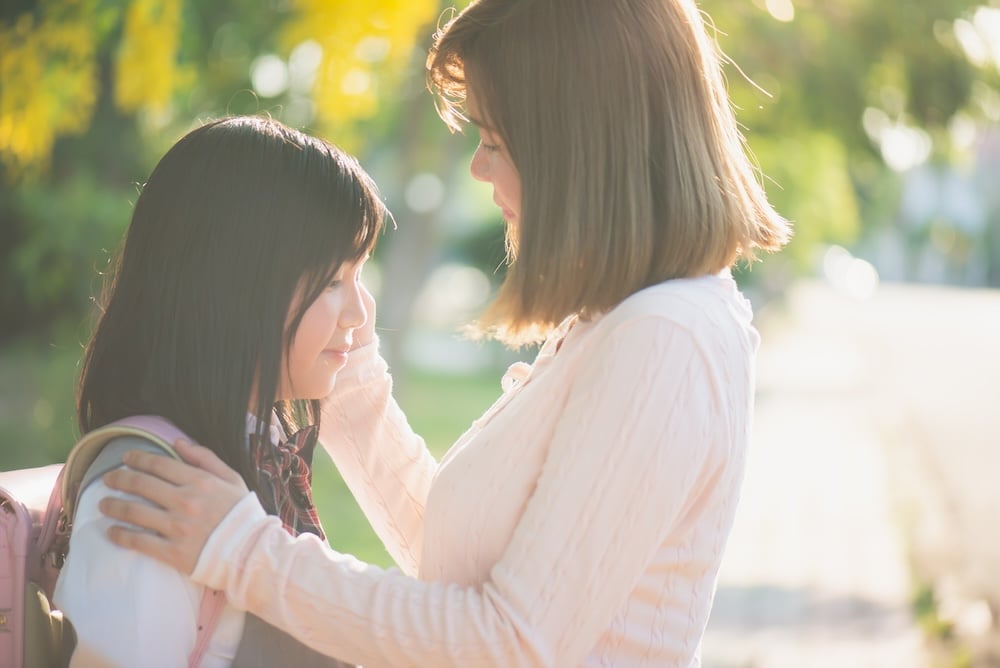
The first thing you should do is thank them for choosing to share these feelings rather than keeping them to themselves, and that they chose you as the person to open up to. Then it is important to shift into listening mode. Do not push your own opinions or emotions. Simply listen, or hold them close to you. Peering into the painful world your child is experiencing and accepting their reality is tough for parents, too. But by continuing to accept their pain, their suffering gradually eases, and hope for living begins to emerge. Parents should convey the message: “I’m not going to run away from your pain. I’m here with you.”
In suicide prevention, there is a recommended approach known as the “TALK principle,” which you can remember to guide your response:
- Tell: Express in words that you are concerned and care about them.
- Ask: Ask directly about their feelings of wanting to die.
- Listen: Listen attentively to the pain they are feeling.
- Keep safe: Ensure their safety.
Journal: Knowing this in advance would help parents respond in a crisis.
Kakizawa: Yes. However, what makes suicide prevention particularly difficult is that the final sign is not necessarily the words “I want to die.”
I lost my father to suicide. He was a violent man, and both my mother and I suffered his abuse for many years. He ran a company, but after Japan’s economic bubble collapsed, the business deteriorated, and he lived with persistent suicidal feelings.
In the last phone call I received from him, right before he died, he was harsh and critical as usual. But I think, in reality, he wanted someone to notice his pain and help him. In stark contrast to his harsh words over the phone, his suicide note, written in fragile handwriting, read, “I’m sorry I was such a weak father.” Although I was unable to notice these signs, it might be helpful to keep in mind that such signals can exist.
Adults should set the tone by accepting and caring for themselves
Journal: What can we do on a personal level to prevent suicides among young people?
Kakizawa: Throughout my career, I’ve always focused on “family,” so I often approach things from the household perspective. Ultimately, I believe it comes down to creating a home environment conducive to healthy communication.
This equips children with the ability to build healthy relationships with others when they enter society. If their home life is filled with constant conflict, it is only natural they will struggle to navigate relationships in the wider world.
Journal: Are there steps that can be taken outside the home?
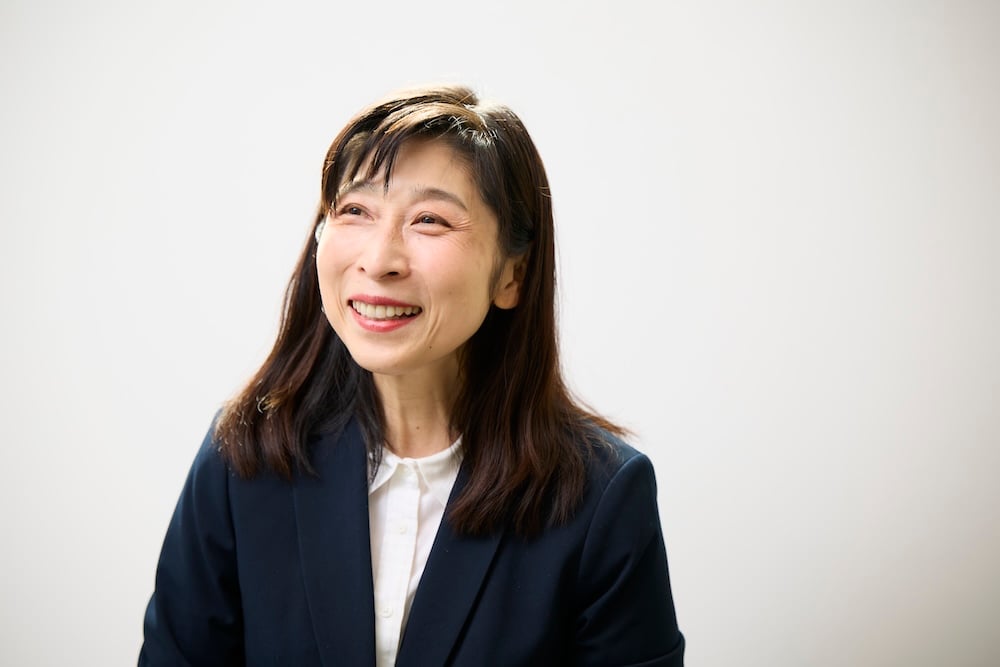
Kakizawa: It is crucial for children to learn to value themselves, and for this to happen, adults must lead by example.
Ask yourself: Am I being kind to myself?
Of course, there are times when you have to just forge on regardless, but it is perfectly natural to have moments when you just can’t find the strength, when you don’t feel worthy of praise, or when you feel inadequate. I believe that showing this vulnerable side helps children learn to love themselves for who they are, no matter what.
Editor’s Note
Preventing child suicide requires an ongoing effort to build a trust relationship where children feel able to talk openly about what is on their mind. We learned that listening empathetically to children and being open to the fact that we as adults also struggle is essential in helping children feel at ease with living. This interview brought home the realization that in order to create a society free from suicide, both children and adults must take time to stop and ask themselves, “Am I being kind to myself?”
Text: The Nippon Foundation Journal Editing Department
Photo: Eizaburo Sogo
Profile
Hifumi Kakizawa
Director, Family Counseling Institute. Motivated by years of personal experience struggling with parent-child relationships, she trained as a counselor and has since provided counseling and support to over 1,000 individuals ranging from teens to adults in their 70s, addressing a wide range of concerns related to parenting, parent-child dynamics and marital relationships. A mother to two sons and two daughters, she combines her experience raising four children with her expertise in family psychology to share unique insights through lectures and other platforms. Her qualifications include Family Counselor, certified counselor with the Japan Mental Health Association and Common Sense Parenting trainer. She is currently training to become a Buddhist priest as a student at Komazawa University’s Faculty of Buddhism and Tokyo Bukkyo Gakuin.
Related Themes
Related Links
- The Nippon Foundation Suicide Prevention Project
- Toward Human Security : The Nippon Foundation Suicide Awareness Survey