New Form of Employment SupportTargeting 6 million jobless who are ‘willing but unable to work’
Key Points
- Currently, there are around 6 million people who struggle to find work. Many of them have a good chance of finding employment as long as appropriate support is given.
- WORK! DIVERSITY Project in Gifu supports residents of Gifu prefecture who struggle to find work, in cooperation with the national/local government, medical institutions, nonprofit organizations, etc.
- The key to finding employment is to face yourself. Being aware of your own strengths can lead you to better employment.
According to research by The Nippon Foundation,[1] Japan is estimated to have around 6 million individuals — such as shut-ins, NEETs (young adults not in education, employment, or training), individuals with criminal records, or individuals with serious debilitating illness or various addictions — who struggle to find work. On the other hand, labor shortages due to declining birthrates and an aging population are expected to accelerate, and the working population shortfall is expected to reach 7.61 million in 2035.[2]
- Note 1: Reference: “Research on Individuals who struggle to find employment,” 2018, The Nippon Foundation (external link, Japanese only / PDF)↩︎
- Note 2: Reference: “Labor Market Future Forecasts 2035,” Persol Research and Consulting Co., Ltd. (external link, Japanese only)↩︎
Many individuals struggle to find work, yet labor shortages are becoming acute. The Nippon Foundation’s WORK! DIVERSITY Project was launched in 2018 to counter this trend.
To ensure that all individuals who struggle to find work can receive attentive employment support, the project leverages existing employment support facility for persons with disabilities[3] and provides tailored training and support matched to individual needs, thereby securing employment for many different individuals who struggle to find work. To validate its effectiveness, the project is currently (as of March 2025) conducting proof-of-concept trials in six regions, namely Gifu City, Chiba Prefecture, Fukuoka Prefecture, Toyota City, Nagoya City, and Miyagi Prefecture.
- Note 3: A facility which, pursuant to the Act on Providing Comprehensive Support for the Daily Life and Life in Society of Persons with Disabilities, provides employment opportunities for persons with disabilities and helps them to acquire improved knowledge and skill. These facilities offer three main types of services. “Employment transition support” is a service which provides training based on the premise that the service recipient would find work at a conventional company. “Continuous support for employment services” provides opportunities for employment to persons with disabilities who struggle to find work at a conventional company, and there are two different versions this of support: “Type B,” which allows the service recipients to work at their own pace without concluding an employment contract; and “Type A,” which results in the service recipients concluding an employment contract with the employer.↩︎
In this article, from these different proof-of-concept trials, we introduce the endeavors of WORK! DIVERSITY Project in Gifu (external link, Japanese only). Sustainable Support, a general incorporated association which manages the project, has been helping many different individuals who struggle to find work (including persons with disabilities) to become employed, and has been doing so primarily in the Gifu Prefecture.
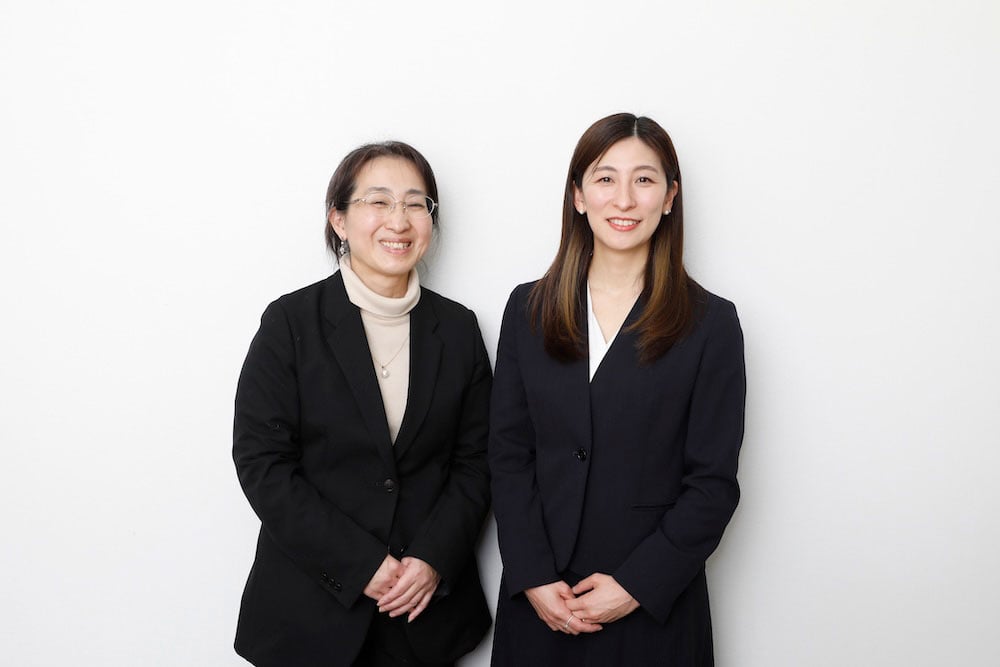
What kind of support do individuals who struggle to find work require in order to thrive in society? Moreover, when such individuals thrive, what positive impact do they bring? We have interviewed Chie Goto, who serves as Sustainable Support’s Representative Director, and Miyabi Abe from Sustainable Support’s Diversity Promotion Division.

Those in the gray zone who do not hold disability certificates but struggle to find work
The Nippon Foundation Journal Editing Department: How exactly should we describe “individuals who struggle to find work”?
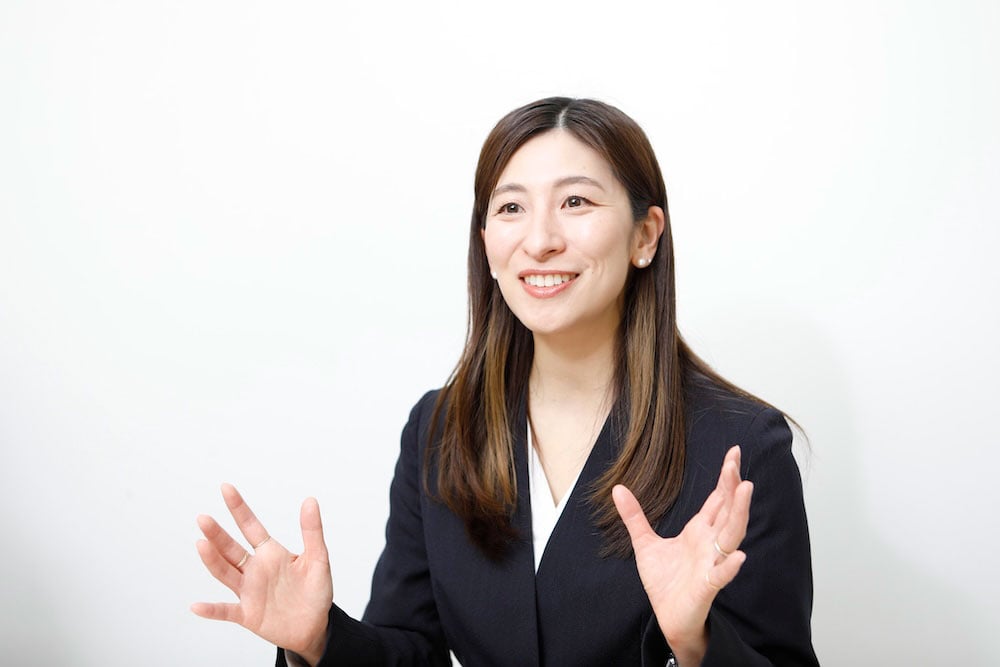
Chie Goto: If we were to define them, perhaps we could define them as individuals who face challenges in looking for a job on their own. For example, those who have some form of disability, or those who cannot make time for themselves because they are caring for a family member, would be an example.
There are even those who fall into what is called developmental disorder gray zone, and cannot receive formal medical diagnosis. You lead your campus life just fine, and you have no problem earning credits for your university courses, yet you cannot find employment. We have been supporting all individuals, including those who are stranded in such ambiguity.
Journal: Tell us what prompted the launch of Sustainable Support.
Goto: It started with a welfare service to help individuals with development disorders find employment. When I ask the service users to tell me how they got to where they are, they would shed tears in front of me and say, “I managed to graduate from university but I just cannot find work,” “I have been able to find work, but it didn’t work out and I quickly ended up leaving,” “People around me tell me to get a proper job, but I just don’t know what to do and I end up shutting in.” Some even cried while saying “I want to die.”
Meeting such people made me realize the importance of providing support before matters become complicated.
If we can meet and support them before they become cornered into suicidal thoughts, wouldn’t that help to alleviate the burden of struggles they face in their lives? It was this realization that led me to start Career Support Program for University Students (external link, in Japanese). The aim was to provide preventive support to those who manage to attend university, but tend to be isolated or struggle in their job search.
I met The Nippon Foundation while working on this program, and that in turn led to the launch of WORK! DIVERSITY Project in Gifu.
Journal: Tell us what the project involves.
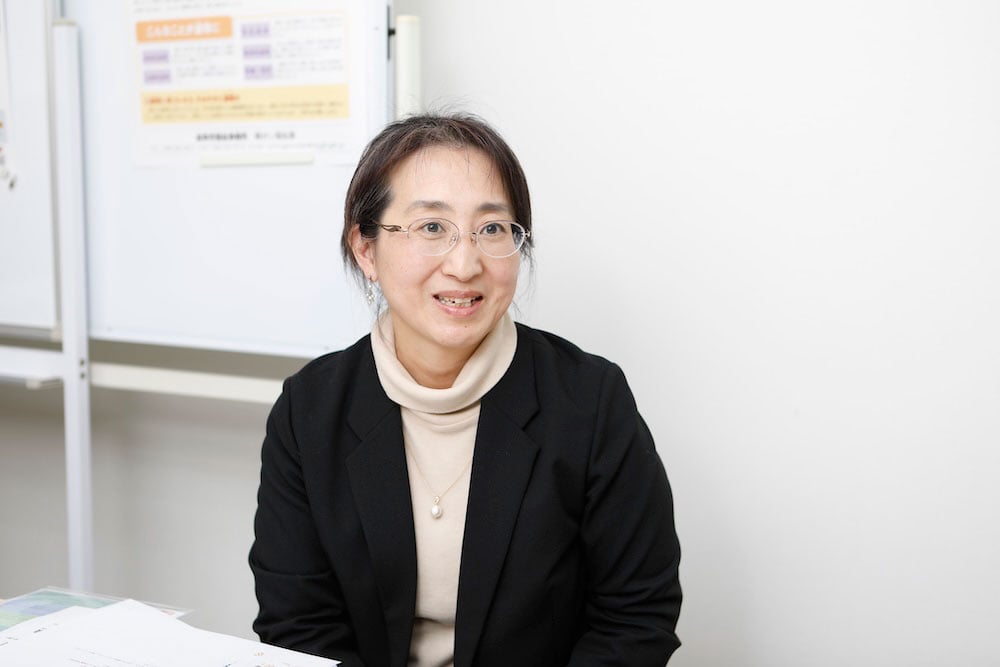
Miyabi Abe: There are said to be around 6 million people in Japan who struggle to find work due to various reasons. On the other hand, there are more than 15,000 employment support facilities in Japan. However, under the existing framework,[4] only those with disabilities can use these facilities.
Therefore, those who, for example, don’t have a job even if they want to work, can’t work because they have to care for their family, or have developed social anxiety, cannot use these facilities. Following repeated research and studies, WORK! DIVERSITY Project was started in 2018 as a proof-of-concept project to explore ways to allow such people to use these facilities.
- Note 4: A framework based on the Act on Providing Comprehensive Support for the Daily Life and Life in Society of Persons with Disabilities. The Act aims to support the daily/social life of persons/children with disabilities, enhance welfare provisions, and foster the creation of local communities that offer peace of mind to all persons regardless of whether they have disabilities or not.↩︎
Abe: By opening up employment support facilities to all persons who struggle to find work, regardless of whether they have disabilities or not, we are looking to attain a society that allows a greater number of people to thrive. Gifu City is one of the municipalities where this proof-of-concept is being implemented.
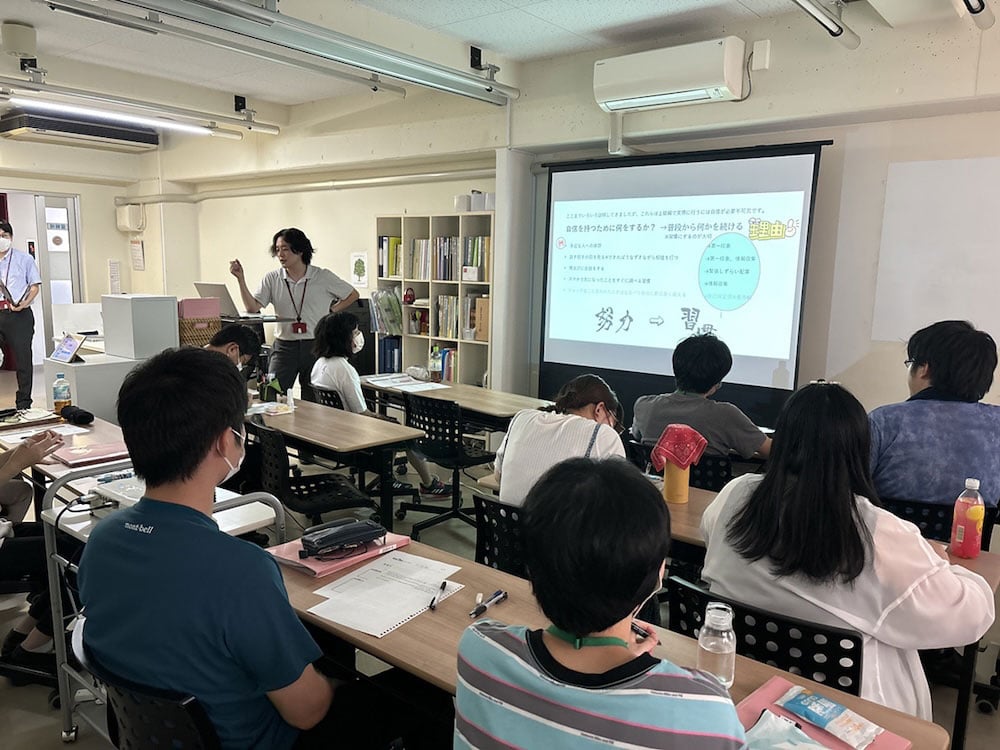
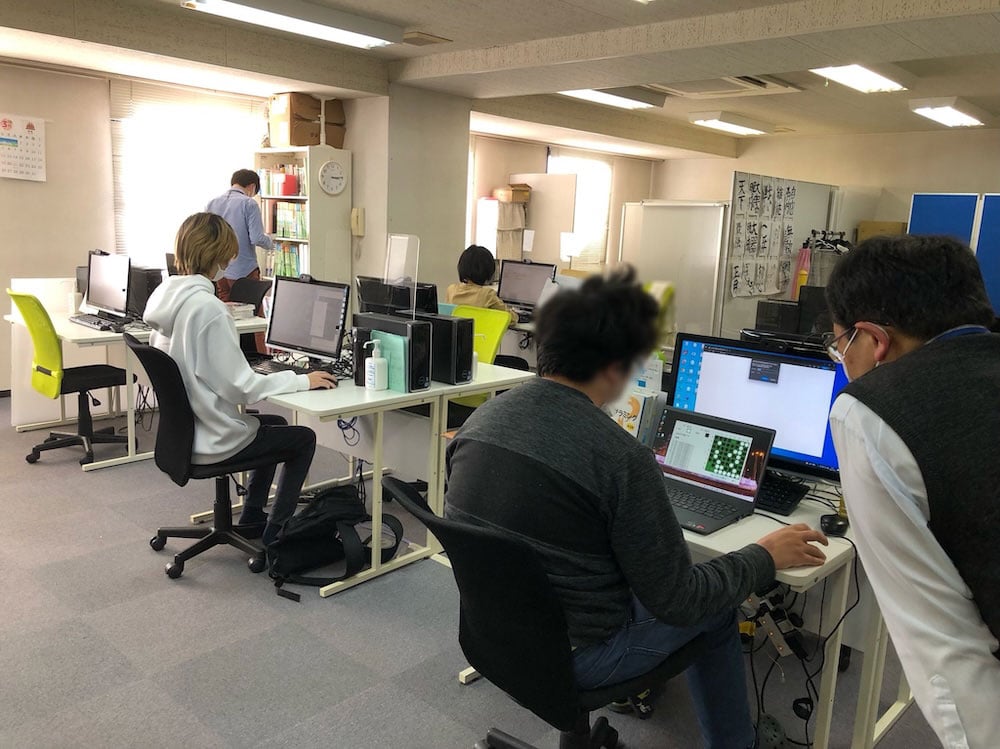
Here at Sustainable Support, we provide employment transition support through Knocks Gifu (external link, in Japanese), and its users learn the knowledge and skill which are essential in finding a job. Additionally, we also operate Alley (external link, in Japanese), a lodging facility, and Schanze (external link, in Japanese), a rescue cat café, both providing Type B continuous support for employment services. We introduce our users to each of these facilities depending on their needs. After all, what matters most in working at these facilities, is our users’ own will.
Companies that accept individuals who struggle to find work also need to deepen their understanding
Journal: Is there a common challenge that confronts young people who struggle to find work?
Goto: It’s hard to generalize, but perhaps it’s the difficulty in connecting them to support. Some people think to themselves “I must not receive support,” and don’t even think about receiving support, or feel reticent about the very notion of receiving support.
If they have been receiving support since they were young and had a positive experience of doing so, they can give a cry for help when it matters, but many of them lack such experience, so they are unable to come forward to ask for help.
Journal: How are such people who struggle to find work perceived by the companies who don’t proactively hire them?
Goto: Insofar as the employment of persons with disabilities is concerned, many companies appear to think that hiring persons with disabilities poses a challenge because they lack the organizational framework to accommodate people with disabilities. However, in our view, it is fundamentally important for both the companies and the persons with disabilities to start by deepening their mutual understanding. In our view, such an understanding is best developed through a process of trial and error, with us acting as an intermediary for both sides.
Those who don’t hold disability certificates face an even higher hurdle; hiring them does not count toward the statutory employment rate of persons with disabilities, so companies tend to think, “What is the point of going out of our way to hire them as ordinary employees?” In order to overcome such concerns, it might be necessary to consider a legal reform so that some form of incentive can be provided to companies that employ individuals who struggle to find work, as part of their ordinary workforce.
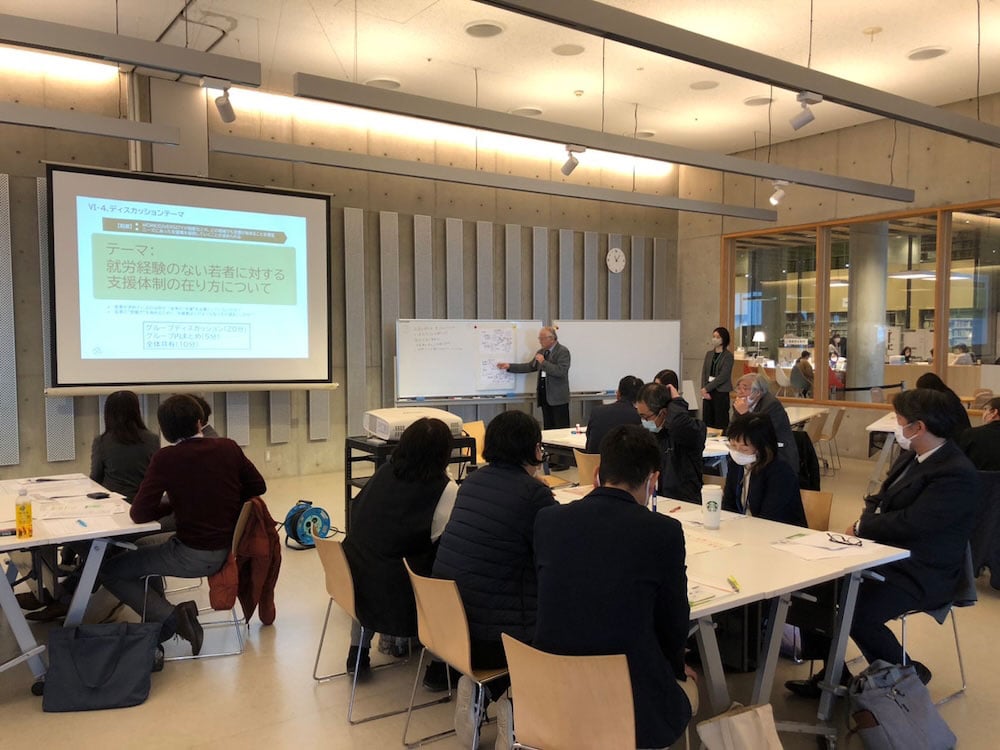
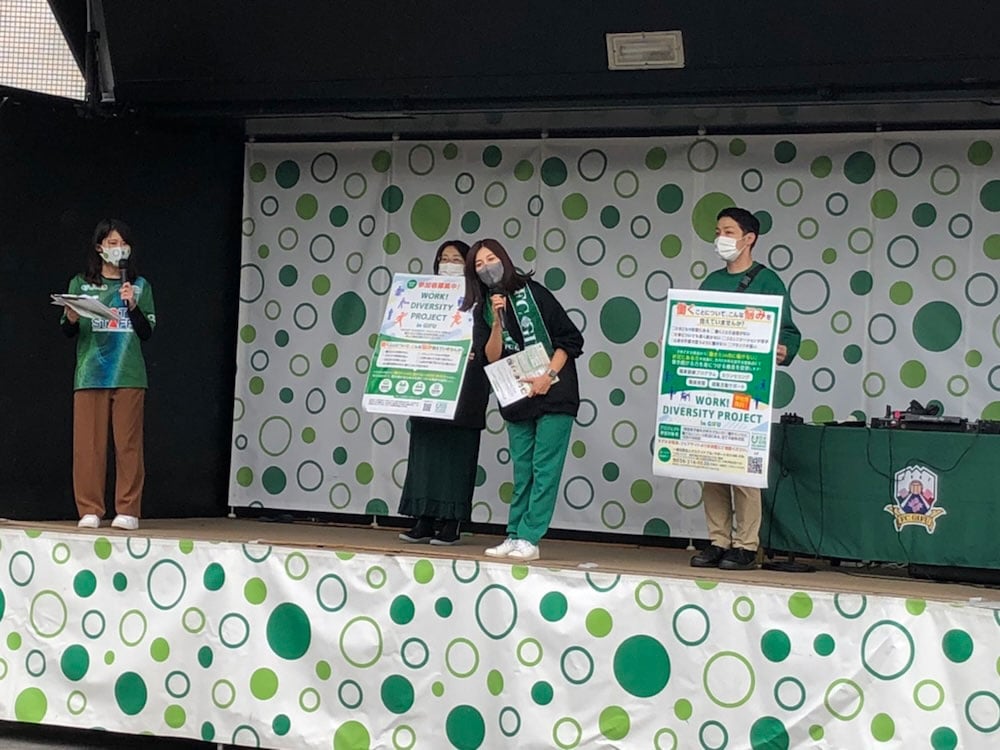
Gifu City is now holding meetings that involve listed companies to discuss these issues. 18 companies that are interested in the efforts of WORK! DIVERSITY Project, including small and medium-sized enterprises, have come together and are sharing ideas about promoting the hiring of individuals who struggle to find work.
Journal: The manner in which companies engage individuals who struggle to find work is surely a key consideration?
Goto: It is indeed. Since its inception, WORK! DIVERSITY Project in Gifu has had 47 users in total, and currently, 13 of them have found work. One aspect of this outcome is the fact that companies based in Gifu City — where the working-age population is shrinking because of a declining birthrate and aging population — are relatively speaking cooperative. However, we believe that a system that will not be influenced by regionality is necessary if we were to think on a nationwide scale.
Stepping one step forward into a happy dilemma
The individual circumstances faced by those who struggle to find work vary. We have heard from Mr. Mabuchi and Ms. Yamada (a pseudonym), who have used WORK! DIVERSITY Project in Gifu, to see what kind of challenges they were actually facing.
Journal: Please tell us how things were for both of you before you received support.
Mabuchi: I used to work at a place where the relationship with others was dire and the working conditions were awful, and as a result, I ended up being a shut-in for nearly 10 years. I simply couldn’t be bothered with anything anymore, and I was living on welfare. However, I eventually felt that I wanted to get back on my feet, and that’s when I learned about this project.
Apparently, you could use the service even if you don’t have a disability, so I decided to give it a try and have a chat.
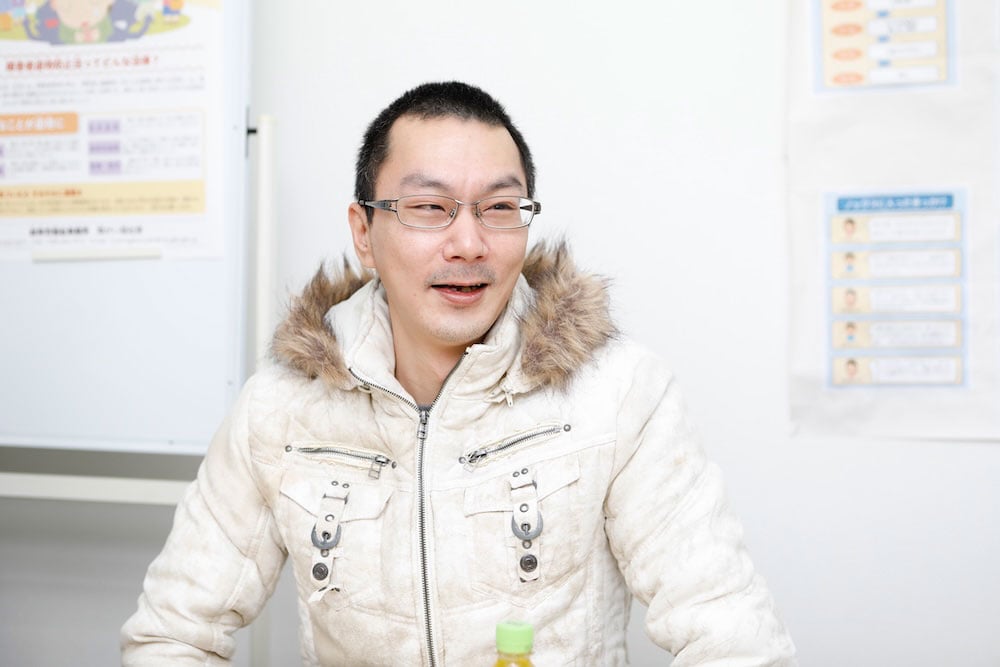
Yamada: I was initially studying at the education faculty of a university to become a teacher, but things didn’t go well for me and I developed depression. Following graduation, I continued my job search while making ends meet working part-time jobs.
However, I was getting nowhere; I eventually became unable to move, gradually becoming withdrawn. But at the most opportune moment, just when I started thinking that I had to find a way out of this situation, I was introduced to Sustainable Support.
Journal: What kind of job do you have now?
Mabuchi: I work at a food manufacturer’s factory. The working environment is good, and because I’m employed as a regular employee, I receive bonuses on top of the salary. The work starts early in the morning, but I also finish by 4 p.m., so I get to live a really healthy life. I have some money to spare too, and I’m really happy.
Yamada: I work at a facility that provides after school day services.[5] The work involves supporting children who have trouble integrating into school life. When I was studying to become a teacher, I had an opportunity to attend a school as part of teaching practice, and what concerned me the most was children who cannot adapt to communal life. I always wanted to offer a helping hand to such children, so my current job is ideal.
- Note 5: These services are targeted at children with disabilities who require support, and provide them with developmental assistance through exposure to time, space, people, and experience that differ from those at home or school, tailored for each individual child’s circumstances.↩︎
Mabuchi: I distinctly remember having an increasingly positive feeling about things, naturally after I started working, but also after I started participating in WORK! DIVERSITY Project in Gifu. I used to think, “why would anyone in this world need someone like me,” but I was able to adopt a positive outlook because the supporters all took time to listen to what I had to say.
Journal: Do you have any message for others who are suffering in similar circumstances?
Mabuchi: It’s definitely the importance of taking a step forward. No one at Sustainable Support is nasty or scary, so I want them to have the courage to attend.
Yamada: And you can trust them.
Mabuchi: Precisely, you can trust them. They listen to your story with empathy, and I think that will help to lighten the worries and troubles that burden you.
Yamada: I also feel that it’s important to take that step forward. However, in order to take that step, it would be better if you know what your strengths are. When you speak to the various supporters here, you will come to realize what your strengths are, I think.
Journal: Please tell us about your future dreams.
Mabuchi: I can now afford it, so I would like to get a driver’s license.
Yamada: A year has passed since I started working, and I’m beginning to have more responsibilities. My workplace also runs a cram school, and I look after two students as their tutor, so I would like to live up to their expectations.
Reflect on yourself to find a desirable working environment
Thanks to WORK! DIVERSITY Project in Gifu, its users have made a successful comeback to the society and are leading fulfilling lives. Ms. Goto and Ms. Abe will continue their challenge to increase the number of such people.
Journal: What is the one thing you value most about the activities of WORK! DIVERSITY Project in Gifu?
Goto: We place great emphasis on self-awareness on the part of our users. We start by providing opportunities to participate in our programs and internships, for example, while building trust. We repeatedly hold meetings to reflect on the different experiences our users had, and ask them to turn their abstract feelings and thoughts into words. Our users will then gradually develop a better understanding of themselves. They gradually become able to say, “perhaps I’m best suited to this type of job.”
They are then less likely to become depressed by comparing themselves with others. They start to realize that “I’m not good at this, but I can handle that” or “these are my strengths.” That will in turn enable them to find a way of working that is satisfying for them, or to become employed by a company that’s a good fit for them.
Abe: Regular meetings are crucial to that end. If they start saying things like “I want to build more confidence,” we might devise a plan to study toward a qualification, and if they start showing a proactive stance by saying things like “I think it’s about time I found a proper job,” we might coordinate with Hello Work (a job-placement center), and that’s how we help them to hit their goals.

Goto: Employment support never works unless you properly engage the users. That is why, here at Sustainable Support, we value dialogue above all else. Thanks to this approach, we have been able to deepen our rapport with our users, and we have also been able to maintain a joyous bond with those who found a job.
A while ago, we organized crowdfunding campaigns in connection with the launch of Alley and Schanze. We then received support from several of our former users!
They found regular jobs through us, started earning their own money, and then they came forward saying “now it’s my turn to help.” We were so happy to receive these offers from our users, and I’m really glad that I continued this work. I feel that, by fostering such connections through WORK! DIVERSITY Project, perhaps we can build a much kinder society.

Editor’s Note
Who are the “individuals who struggle to find work”? Moreover, in modern society, what does “struggle to find work” mean? We interviewed Sustainable Support with a view to finding answers to these questions.
What has emerged from this was a portrayal of individuals who do not fit into or have fallen through the cracks of the homogenized framework of the society. Some people face an unavoidable struggle, even when they are not diagnosed as having a disability or illness. We feel that, going forward, it is incumbent on our society to accept this reality, instead of treating it solely as a matter of individual responsibility.
We also consider that true welfare ought to lead to the removal of barriers between those who provide support and those who receive support, as demonstrated by the relationship between Sustainable Support and its former users.
We were left with the thought that, if we come across those in need, we will want to be offering a helping hand, because we might one day be the ones who need be rescued.
Text: The Nippon Foundation Journal Editing Department
Photo: Emi Enishi
- Official site of WORK!DIVERSITY Project in Gif (external link, Japanese only)
- Official site of Sustainable Support, a general incorporated association (external link, Japanese only)