What Exactly Is an “NPO”?An expert discusses why NPOs affect everyone
Key Points in this Article
- NPOs are nonprofit organizations engaged in activities that serve the public interest, yet their actual roles and operations remain poorly understood.
- Although often viewed as unfamiliar, NPOs in fact serve as a safety net in society.
- Moving across sectors and stepping into NPO activities can empower you to bring about social change.
- Note: The term “NPO” is commonly used in Japan to refer to nonprofit organizations as defined under relevant tax and other regulations, and is roughly equivalent to “NGO” (non-governmental organization) in English.
When you hear the term “NPO,” what comes to mind? Most people have probably encountered the word somewhere, but many may only have a vague impression: something like, “I don’t really get it” or “some group doing good things, I guess.”
In recent years, criticism of NPOs has also become more visible, especially on social media. If a particular NPO has committed wrongdoing, it should of course be held accountable, but some people see these cases and conclude that NPOs as a whole are “devious groups that present themselves as charities but are actually making money.”
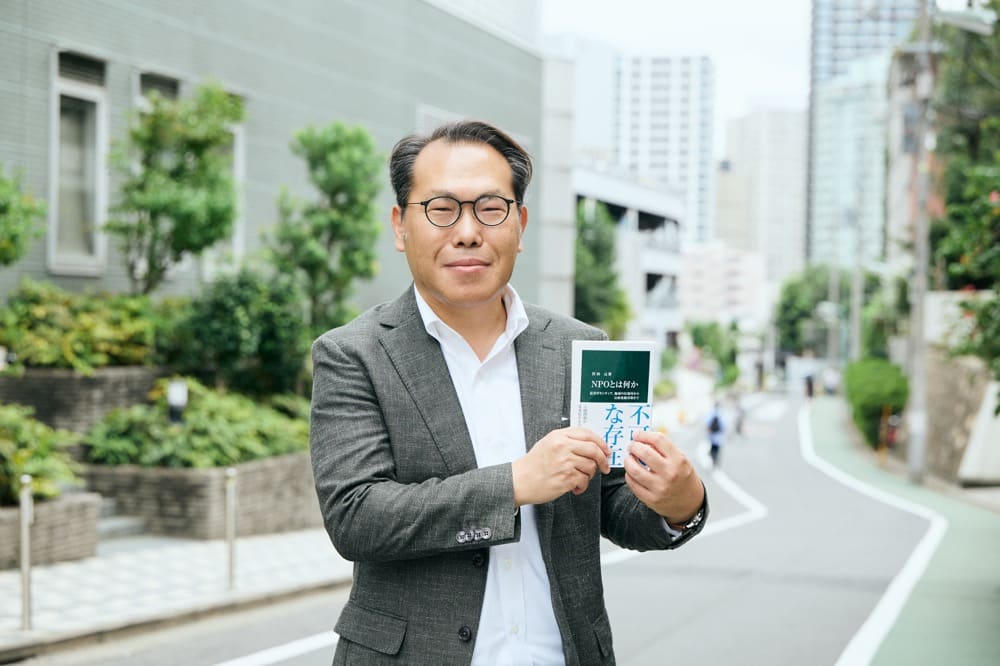
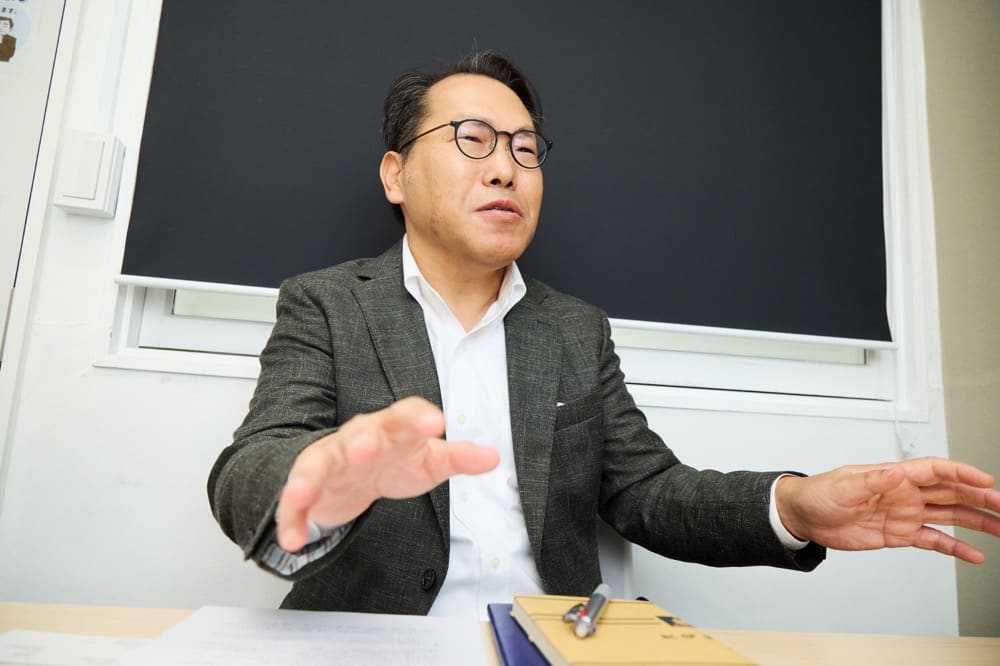
Gen Miyagaki, a professor at Keio University and author of NPO Towa Nanika [What Is an NPO?] (published by Chuko Shinsho) (external link, Japanese only), points out, “Plenty of corporations engage in wrongdoing, too. But because many people don’t really understand what NPOs are, there’s a tendency in some circles to criticize the whole sector.”
NPO stands for nonprofit organization, referring to private entities that act independently from the government and operate on a voluntary basis. Even when looking only at NPO corporations (with legal status of Specified Nonprofit Corporation*), there are around 50,000 NPOs in Japan. Yet their actual role and structure remain poorly understood.
- Organizations that are certified by a competent government authority pursuant to the NPO Act (Act on Promotion of Specified Non-profit Activities)
Because the term “nonprofit” is attached to them, NPOs are often misunderstood as organizations that “must not make any profit at all” or “must work entirely for free.” In reality, they can earn revenue and use it to fund their activities, and their staff can receive salaries.
So, what exactly are NPOs, and why does society need them? We asked Professor Miyagaki to explain.
Nonprofit organizations that serve the public interest – and the misconception that their work is unpaid
The Nippon Foundation Journal Editing Department:First of all, what exactly is an NPO?
Gen Miyagaki: The common Japanese terms for NPO translate back to English as “private nonprofit organization” or “private nonprofit activity organization.” So, they are private-sector entities that operate independently of the government and carry out activities on a voluntary basis.
To be more precise, their ultimate objective is not to pursue economic gain for individuals or organizations, but to work for social good: that is, to engage in activities that serve the public interest. So, for example, a casual tennis club among friends wouldn’t be considered an NPO, whereas a group running a children’s cafeteria that serves as a community space would be.
Journal: When did NPOs start appearing in Japan?
Miyagaki: The term “NPO” came into widespread use in Japan from the mid‑1990s. But even before this time, groups engaging in what we would now call “NPO‑like activities” existed all across the country.
A major catalyst for the spread of the term NPO specifically was the Great Hanshin-Awaji Earthquake of 1995. It is said that within three months of the disaster, a total of 1.17 million people participated as disaster‑relief volunteers. This occurred during a period when Japan was grappling with the collapse of the bubble economy and growing revelations of collusion among politicians, bureaucrats, and business leaders. It was a time marked by a pervasive sense of stagnation, so this surge of volunteerism came as a surprise to many.
Discussions then began on how to harness this civic energy for society, and in 1998, the NPO Act was enacted, leading to the birth of NPO corporations.
Journal: What’s an NPO corporation?
Miyagaki: These are organizations that meet certain requirements and are certified under the NPO Act by the competent authorities. An NPO can also operate as a voluntary organization without becoming a corporation, but obtaining formal corporate status gives it legal standing, social credibility, and other advantages that make continued activity easier.
Later, reforms to Japan’s public‑interest corporation system diversified the types of corporate entities, including incorporated associations and foundations. Many of these also engage in public‑interest activities. In addition, organizations that meet certain public‑interest criteria can become certified NPO corporations, public‑interest incorporated associations, or general incorporated associations. As of January 2025, Japan had 49,554 NPO corporations.
Journal: Since an NPO corporation is a “specified non-profit corporation,” does that mean it’s not allowed to earn a profit?
Miyagaki: This is one of the biggest misconceptions about NPOs. There’s actually no problem with running business activities and earning revenue. People often confuse “not being profit‑seeking” with “working for free,” and that’s where the misunderstanding comes from. Any activity incurs costs, so it’s completely acceptable for an NPO to earn revenue to cover those costs.
To explain a bit more about the funding sources of NPO corporations: in addition to revenue from their projects, NPOs gain the bulk of their income from membership fees, donations, government subsidies, and grants. The mix and proportions vary by organization.
Journal: If NPOs are allowed to generate revenue, then what really differentiates them from for‑profit businesses like joint‑stock companies?
Miyagaki: The biggest factor is that NPOs don’t distribute profits to members such as shareholders. Even when an activity is highly beneficial to society, it may be difficult to increase its commercial viability. In those cases, the NPO structure is often chosen.
For example, consider the field of elderly care. If you wanted to make the business side more profitable, you might limit services to areas where many older people reside. You could concentrate your resources there and reduce costs. But people’s lives don’t fit neatly into such efficiencies: there may be a single elderly person living in a remote location who also needs your help. NPOs exist to address precisely these kinds of situations by drawing on the strength of society as a whole.
Journal: Some might argue that these kinds of social issues should be addressed by the government. What’s your view?
Miyagaki: It’s natural to think that way, since we all pay taxes. And we also have elections as a means of expressing our views and needs. In reality, though, in a society that has become as diverse as ours, there are many problems that may be small in scale but serious in impact, and it’s difficult for the government to respond to all of them. In many cases, adequate solutions cannot be delivered either by reference to an average or by majority decision. At the same time, there are limits to personal responsibility and self‑help too.
As people’s life paths, ways of living, and relationships with others diversify, so do their needs, creating an increasingly complex society. In this context, NPOs have taken the lead in assuming certain roles. This goes beyond simply substituting for or complementing the work of government. There are cases where NPOs identify issues that the authorities have overlooked, prompting the government to take action. A representative recent example is children’s cafeterias. As NPOs began operating children’s cafeterias in communities across Japan, awareness of the underlying issues spread through society, leading to increased government support and policy initiatives.
Journal: I see! So, conversely, does that mean that if there were no dissatisfaction or hardship in society, NPOs would no longer be needed?
Miyagaki: If you see NPOs’ existence simply as a reflection of social dissatisfaction, then yes, that conclusion would follow. But I think it’s important to remember that NPO activities also provide value in life, roles for people to play, enjoyment, and irreplaceable places of belonging.
No matter how perfect society might become, surely there will still be a need for organizations like NPOs, which link individuals to the broader community and function as places where we live our lives and interact with society and others.
Misconduct is common in for‑profit companies, too – so why does the NPO-bashing never end?
Journal: In recent years, especially on social media, we’ve seen criticism of NPOs for receiving public subsidies and grants. How do you feel about this?
Miyagaki: NPO corporations are obliged to disclose information, so if problems or wrongdoing are uncovered through public scrutiny, they should of course be corrected. But it strikes me as a leap too far when people take misconduct or suspected misconduct at a specific organization and use it to shape negative perceptions of the entire NPO sector.
Accounting fraud occurs at for‑profit companies as well, yet while some people say “NPOs are suspicious,” no one claims that “all corporations are suspicious.” People understand that for‑profit companies come in many different forms, but because the reality of NPOs is not well known, some people may simply react based on preconceived notions.
This is indeed a challenge. But even putting the knowledge gap aside, NPOs are actually far more closely connected with our lives than people may realize. There are nearly as many NPO corporations as there are major convenience‑store outlets in Japan, and they operate routinely in both local communities and the international arena. Over the course of a lifetime, it’s not uncommon for you, your family, or your friends to be involved with an NPO in some way, either as participants or as beneficiaries.
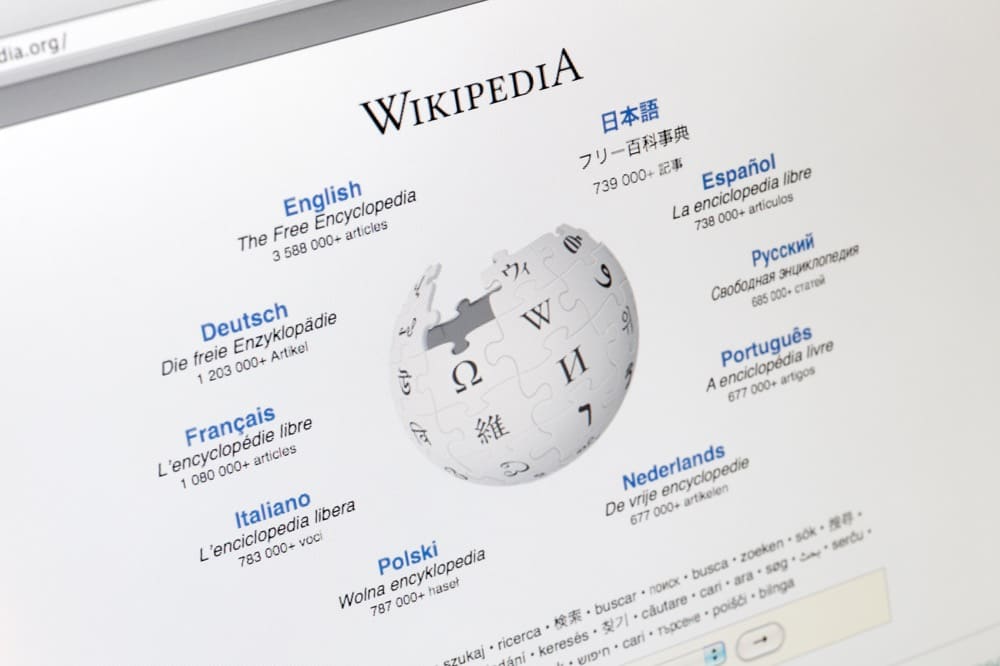
For example, it’s hard to imagine anyone who uses the internet not using Wikipedia. Yet Wikipedia is not run by a company: it’s operated by a U.S. non-profit organization and sustained through donations rather than advertising revenue.
Miyagaki: In 2024, there was a major earthquake in the Noto region, followed by severe flooding. A great deal of assistance was needed, yet there were also statements that seemed to discourage people from volunteering. I assume the intention was to warn against entering disaster areas unprepared and causing problems. Treating it like sightseeing is obviously out of the question. However, I suspect that some people hesitated to volunteer after seeing such posts on social media.

Miyagaki: Earlier, I mentioned that more than a million people in contributed as disaster relief volunteers after the Great Hanshin-Awaji Earthquake, but the media environment has changed since then, and I feel the situation today is quite different. Spontaneity is powerful, but it is also fragile. In the initial phase, spontaneous motivation pushes people forward. But once they start weighing pros and cons, worrying about where responsibility lies, or listening too closely to the voices of others, that resolve can suddenly snap.
Journal: You’re saying that spontaneity is being constrained by the presence of social media today?
Miyagaki: Social media posts are themselves spontaneous and free, so they can act as an accelerator — or as a brake. But if all we do is hold back and restrain one another, we risk becoming a society that fails to make full use of spontaneous support activities. Of course, being able to imagine that your actions might cause trouble for disaster victims is essential. But there are also many people in affected areas who are genuinely in need right now.
This is something a person who was deeply involved in volunteer work during the Great Hanshin-Awaji Earthquake once said: “No — just go.” They said, “If you feel you want to help people who are struggling, then you have to push that feeling forward.” I find myself thinking in much the same way. When faced with difficulty, I think the more “NPO‑like” approach is not to search for reasons why something can’t be done, but to think about how it CAN be done.
Deeper understanding of NPOs leads to cross‑sector collaboration
Journal: What kinds of actions can readers take to make it easier for NPOs to operate?
Miyagaki: If you already have a fixed image of what NPOs are “supposed to be,” the first step might be to question that assumption. There is a much wider range of activities than many people imagine. Some may go far beyond what you expect, or even be the complete opposite. The same is true of corporations and governments. What matters is recognizing the value of having such a diversity of organizations within society.
This is my personal view, but I would like to see more cross‑sector initiatives that bring together NPOs and businesses, creating more opportunities for people to encounter and engage with NPO‑style approaches. For example, many companies are now involved in various SDG‑related initiatives, and there are cases where companies partner with NPOs. But because they occupy different positions, these collaborations don’t always go smoothly. Everyone comes with their own titles and organizational affiliations.
Before that collaboration stage, it may be important to create more movement of individuals across sectors, so that people develop a hands‑on, intuitive understanding of NPO activities. Parallel careers, second careers, or pro bono work could all be effective ways to do this. With that kind of foundation in place, companies, government, local communities, and NPOs could collaborate across sectors and become a force capable of changing society.
Editor’s Note
Before speaking with Professor Miyagaki, I had thought of social issues as problems that should be solved by the national or local governments. But I came to feel that in an increasingly diverse society, NPOs – organizations that allow individuals to contemplate what kind of society they want and act voluntarily, with agility and flexibility – can themselves be a source of hope. Rather than restraining one another’s voluntary efforts, isn’t it most important for us to evolve into a society that encourages and supports people to take action?
Text: The Nippon Foundation Journal Editing Department
Photo: Eizaburo Sogo
Profile
Gen Miyagaki
Professor, Faculty of Policy Management, Keio University. Born in Kobe, Hyogo Prefecture. Graduated from the Faculty of Environment and Information Studies, Keio University; completed coursework in the doctoral program at the Graduate School of Media and Governance. Ph.D. in Media and Governance.
Professor Miyagaki took up his current post after serving in roles including Professor in the Faculty of Letters at Konan University. He has also been a visiting professor at National Chengchi University in Taiwan and a visiting scholar at UC Berkeley.
His areas of expertise include sociology, economic sociology, nonprofit organization studies, and community studies. He has published widely, with major works (in Japanese) including Volunteerism After Year One (Koyo Shobo), Introduction to the Social Sector (Minerva Shobo), Methods and Practice of Social Innovation (Keio University Press), and What Is an NPO? (Chuo Koron Shinsha), among many others.
Related Themes
Related Link
Related Articles
Field Notes