What Does a ‘Fundraiser’ Do?A look at their day-to-day work

Key Points
- A “fundraiser” is a professional who secures donations and other resources essential for the activities of nonprofit organizations.
- Fundraising is not just about collecting money: it’s about building a community of allies.
- Fundraisers play a vital role in expanding the activities of nonprofit organizations and driving social change.
For nonprofit organizations, donations are one of the most important sources of funding. The specialized role of a fundraiser — someone who communicates the significance of an organization’s activities and solicits donations from individuals and companies — requires a wide range of skills, including management, sales, and public relations.
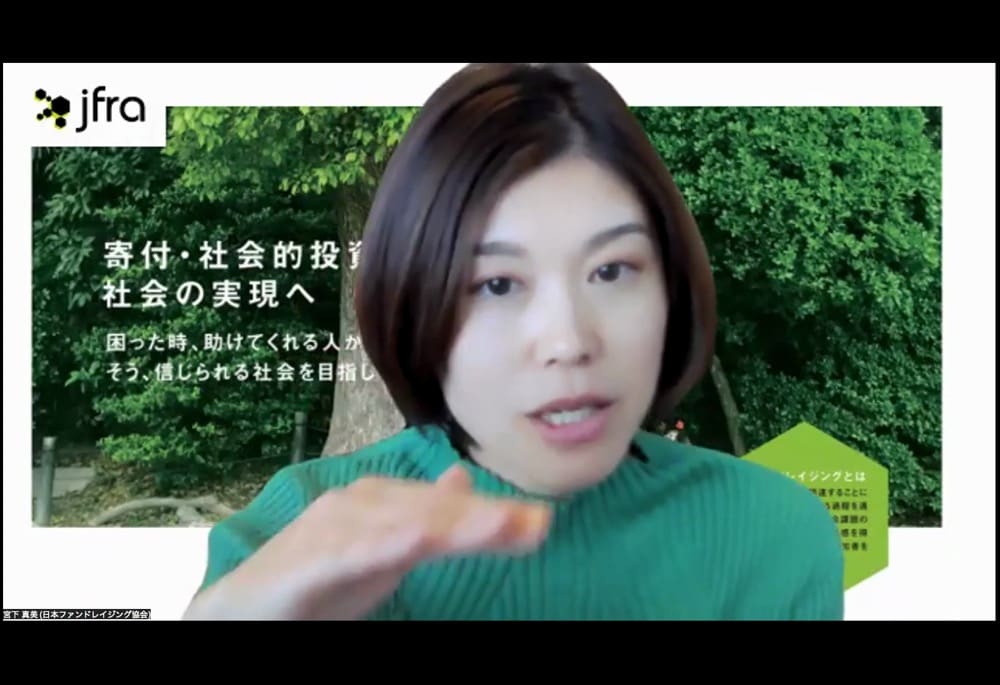
For this article, we spoke with Mami Miyashita, Deputy Administrative Director of the Japan Fundraising Association (external link), about the practical work of fundraisers, the roles they play, and the skills they need.
Fundraisers: connecting nonprofit organizations and the public
The Nippon Foundation Journal Editing Department: So, what exactly is a “fundraiser”?
Mami Miyashita: As the word itself suggests, fundraising involves raising funds, in forms such as donations and grants, needed for the activities of nonprofit organizations. At the same time, we define a fundraiser as someone who not only raises funds but also communicates the issues behind donations and shares solutions, while bringing people together as allies in a common cause.
Journal: The Japan Fundraising Association has established a certification system for fundraisers and offers training programs. What exactly do participants learn?
Miyashita: We use on-demand courses and textbooks to develop foundational knowledge such as the definition and roles of a fundraiser, communication skills, and strategies and techniques for securing funds. Technically, you can work as a fundraiser without certification, but many participants enroll because they wonder, “Is it okay to keep doing things my own way?” or because they want to learn about fundraising systematically.
Journal: What skills do you need to become a fundraiser?
Miyashita: We define the following five core competencies as essential to a fundraiser’s role:
- Knowledge and skills in fundraising
- Ability to execute and implement fundraising activities
- Pride, ethics, and integrity
- Management and coordination skills
- Interpersonal communication skills
Miyashita: As I mentioned earlier, fundraising is more than just securing funds. It also requires management and coordination skills to build relationships with a wide range of people — supporters, board members, volunteers — both inside and outside the organization. And because fundraisers are entrusted with donations, which represent goodwill, maintaining pride and ethical standards is essential.
Those who pass the certification exam sign a code of conduct for fundraisers, created based on international standards, and are then recognized as either Certified Fundraisers or Associate Certified Fundraisers.
Journal: How many certified fundraisers are there in Japan?
Miyashita: As of April 1, 2025, around 1,600 people in Japan are working as Certified or Associate Certified Fundraisers.
Journal: What kinds of organizations do fundraisers typically work for, and what do they do on a daily basis?
Miyashita: When we surveyed our certified members about their fundraising work, about half of respondents said they were affiliated with nonprofit organizations. On the other hand, some are not tied to any organization and instead work as external supporters involved in fundraising.
Miyashita: When I say “organization,” it can mean many things: nonprofit organizations, or even private companies where fundraising is combined with public relations or handled within corporate planning departments. This is true both in Japan and overseas.
As a result, job responsibilities and work styles vary greatly from person to person. For example, some fundraisers stand on the street to solicit donations, others visit donors directly, and still others focus on online outreach to attract more supporters. There are also fundraisers who act as a kind of right-hand to management, analyzing donor data and developing approach strategies and business plans.
Fundraising is about “building a community”: organization-wide understanding is essential
Journal: What is the most difficult part of a fundraiser’s job?
Miyashita: People often assume it’s collecting donations or communicating with supporters, but in reality, the hardest part may be building understanding within the organization. That’s because people committed to helping those facing challenges often feel resistance or even discomfort about receiving monetary donations.
And in organizations that receive subsidies or grants from the government, there are cases where people don’t understand the significance of donations or how to raise them, and struggle to see why private funding is necessary in addition to government support.
I believe the key to attracting more donors and supporters is for the entire organization to understand that fundraising is about bringing people together as allies.

Journal: So that’s why a management perspective is also essential.
Miyashita: Precisely. It’s also crucial to get people interested in the activities themselves and help them understand “why this work needs funding.” If an issue feels distant to donors, it’s harder for them to imagine or empathize, and that makes support and donations less likely. For example, homelessness in Japan is often framed as a matter of personal responsibility, so many people find it difficult to see it as their own concern.
Rather than just showing how their work aids their immediate beneficiaries, organizations that successfully attract many supporters and donors communicate on three levels: community, industry, and society. By explaining step by step how their activities and donations create meaning and impact, they gain empathy from a wider audience.
Journal: Surely there are many challenges, such as when donations don’t come in as much as you hoped.
Miyashita: That’s true. Sometimes our requests for donations are declined. But here’s something that might surprise you: many fundraisers have experienced donors saying, “I’m glad I donated — thank you.” There are encounters like this, and relationships that allow us to go beyond conventional giver and receiver roles and become partners driving social change. This is what makes fundraising rewarding and helps the work expand.
The more active nonprofit organizations become, the more essential fundraisers are
Journal: By the way, what made you decide to become a fundraiser?
Miyashita: I previously worked in web marketing. While I found the work rewarding, I often felt uneasy, like I was using various techniques to sell things that people might not really need. Around that time, I learned about fundraisers and became interested.
I know many other people who have switched from different professions and industries. One person who transitioned from a sales role told me: “Unlike the products I sold before, it’s harder to ask for money for something intangible – but the psychological safety is much higher. I feel fulfilled knowing I can use my skills for something society truly needs.”
Journal: According to the Cabinet Office, there were about 50,000[1] specified nonprofit corporations in Japan that have been certified as of September 2024, and the number of government-approved corporations eligible for tax-deductible donations continues to grow. Does that mean fundraisers will be even more necessary?
Miyashita: It does. We believe the ideal is for every active organization to have at least one fundraiser involved. According to a 2023 survey by CFRE International (external link to PDF), which is the world’s largest certification body for fundraising professionals, more than 8,000 certified fundraisers are active in the United States. It’s a widely recognized profession, and has appeared among the top 30 jobs in the U.S. News & World Report’s “Best Jobs” rankings (external link).
In Japan, we want to instill the understanding that social contribution activities require funding, and there are some kinds of support that only donations can provide. By raising awareness of fundraisers as trusted professionals who handle these vital donations ethically, we hope more people will aspire to this role.
- Reference: “Number of Certified and Approved Organizations Year-on-Year (external link, in Japanese)
Journal: Incidentally, can someone with no prior knowledge or experience — and who may not be comfortable with sales or social media — still aim to become a fundraiser?
Miyashita: Absolutely! You can learn from scratch. As I mentioned earlier, the roles of a fundraiser are diverse. Some people excel at analysis and strategy but find interpersonal communication challenging; others are great at managing social media but less confident with website knowledge. That’s why we focus on building communities among fundraisers. No one needs to handle everything alone: leveraging each person’s expertise and strengths is what matters.
Journal: How do you think we can increase the number of fundraisers and people who back nonprofit organizations?
Miyashita: Many people are still unfamiliar with the idea of a fundraiser and wonder what such a job actually entails. If each fundraiser shares information about their own activities while we continue efforts to raise awareness about the profession as a whole, recognition will grow.
Nonprofit organizations also need to offer diverse ways for fundraisers to get involved — not just as full-time staff, but through things like outsourcing, pro bono work, and volunteering. This flexibility will allow more people to contribute their skills.
Journal: What’s needed to get more people involved in the activities of nonprofit organizations and interested in social contribution work?
Miyashita: Increasing opportunities to engage with nonprofit organizations and their activities is key. As I mentioned earlier, creating more chances for people to participate is one approach, regardless of whether they are pro bono professionals, volunteers, or students.
I sometimes speak about my work at my alma mater, and students usually learn about the existence of fundraisers for the first time there. Through activities like this, we can broaden students’ career options and show them that jobs related to nonprofit organizations and social contribution can be viable professions.
Editor’s Note
During the interview, one phrase from Ms. Miyashita stood out: “Fundraisers are professionals who change society.”
The entry-level qualification, Associate Certified Fundraiser, is open to anyone aged 18 or older: even those with no prior experience. And among those who have earned the Certified Fundraiser credential, which requires at least three years of paid practical experience, many are in their 40s or older.
We hope this article has sparked readers’ interest in this meaningful profession.